Homeowners: Why Select Cabinet Door Grade Can Cost 20–80% More

BY Ksenija Lebec, Blog Sep 7 2026

Homeowners: Why Select Cabinet Door Grade Can Cost 20–80% More

Cabinet door quality grading is a manufacturer-assigned system for describing appearance, not a lumber mill classification of wood quality. If you’re painting your doors, choose paint grade or MDF. Budget-friendly dark stains call for standard or builder grade. Light or clear finishes need select grade to avoid visible mismatches. Rustic character calls for knotty or rustic grade.


TL;DR:

  • Select grade offers the most uniform appearance, but it is more expensive and takes longer to produce than builder or standard grades.
  • MDF is the best substrate for painted doors due to its flatness and resistance to warping, though it is heavier than wood alternatives.
  • Construction quality and hardware ratings matter more for durability than face grade, with plywood boxes and BHMA-rated hinges providing long-term performance.
  • Certification standards like ANSI/KCMA A161.1 validate that doors will withstand years of daily use, unlike face grade which only indicates initial appearance.
  • Properly matching finish to grade is crucial, with paint and MDF suited for painted projects, standard grade for darker stains, and select grade for light or transparent finishes.

Tdm-thedoormaker
Refresh Your Cabinets With Precision
TDM offers custom cabinet door refacing with broad style choices, precise sizing, and a straightforward measure, design, and order process.

Explore custom cabinet doors

Table of Contents

What Do the Different Cabinet Door Grades Actually Mean?

Every cabinet door supplier uses grade names slightly differently, but the underlying logic is consistent: each grade sets expectations for how much wood character (knots, mineral streaks, color variation, grain shifts) shows up on the finished door. Manufacturers assign these grades, not sawmills, which is why the same species can appear in three different grades depending on how the boards were sorted.

Here’s how the common categories break down:

  • Builder grade allows the most natural variation. Expect visible knots, some color inconsistency, and mineral streaks. It’s the least expensive option and usually the fastest to produce.
  • Standard grade trims back some of that variation. It works well under medium or dark stains, which mask color shifts without hiding grain entirely.
  • Select grade restricts knots and streaks significantly, producing the most uniform look. It’s built for light or clear finishes where every imperfection would otherwise be visible.
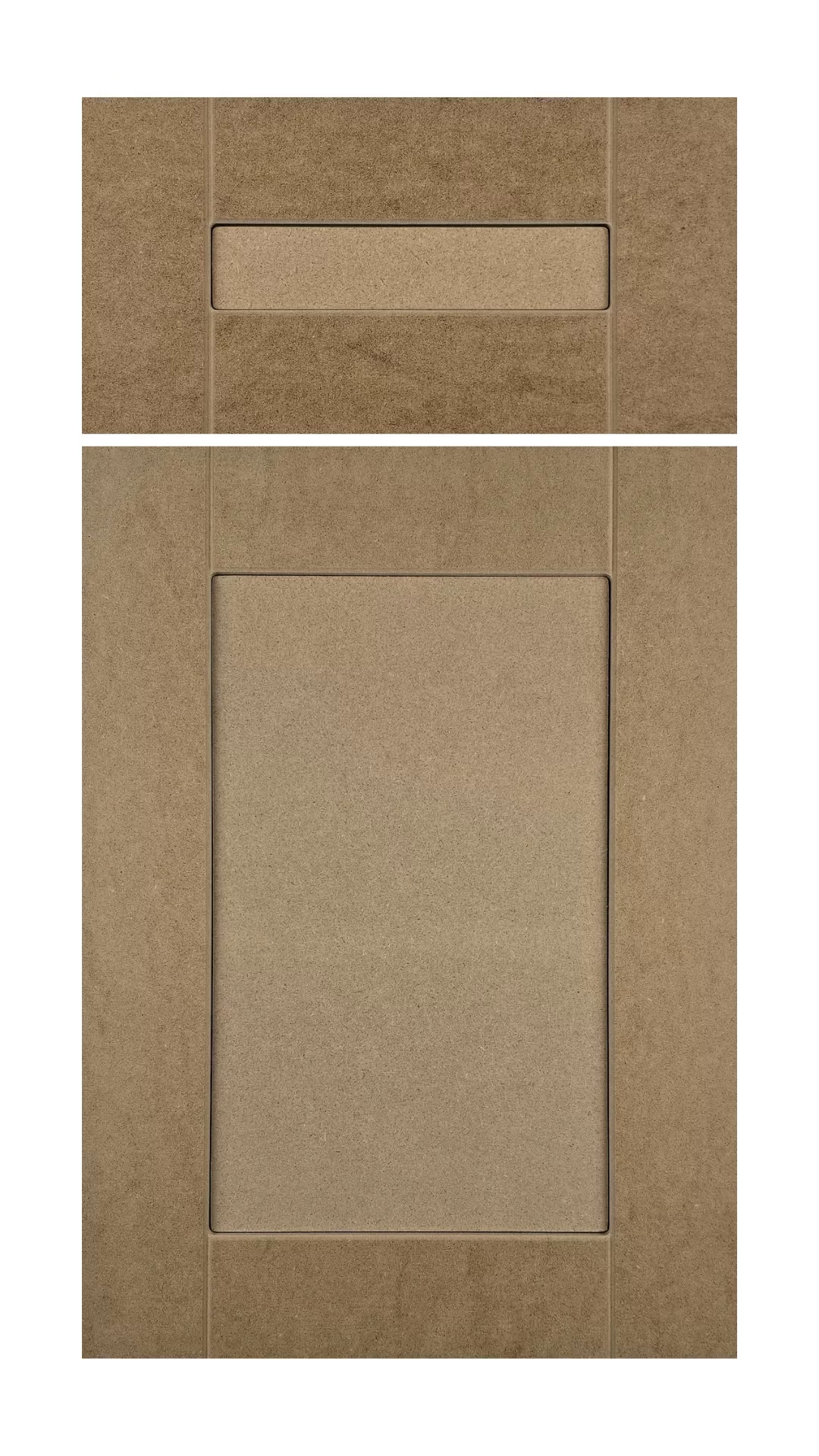
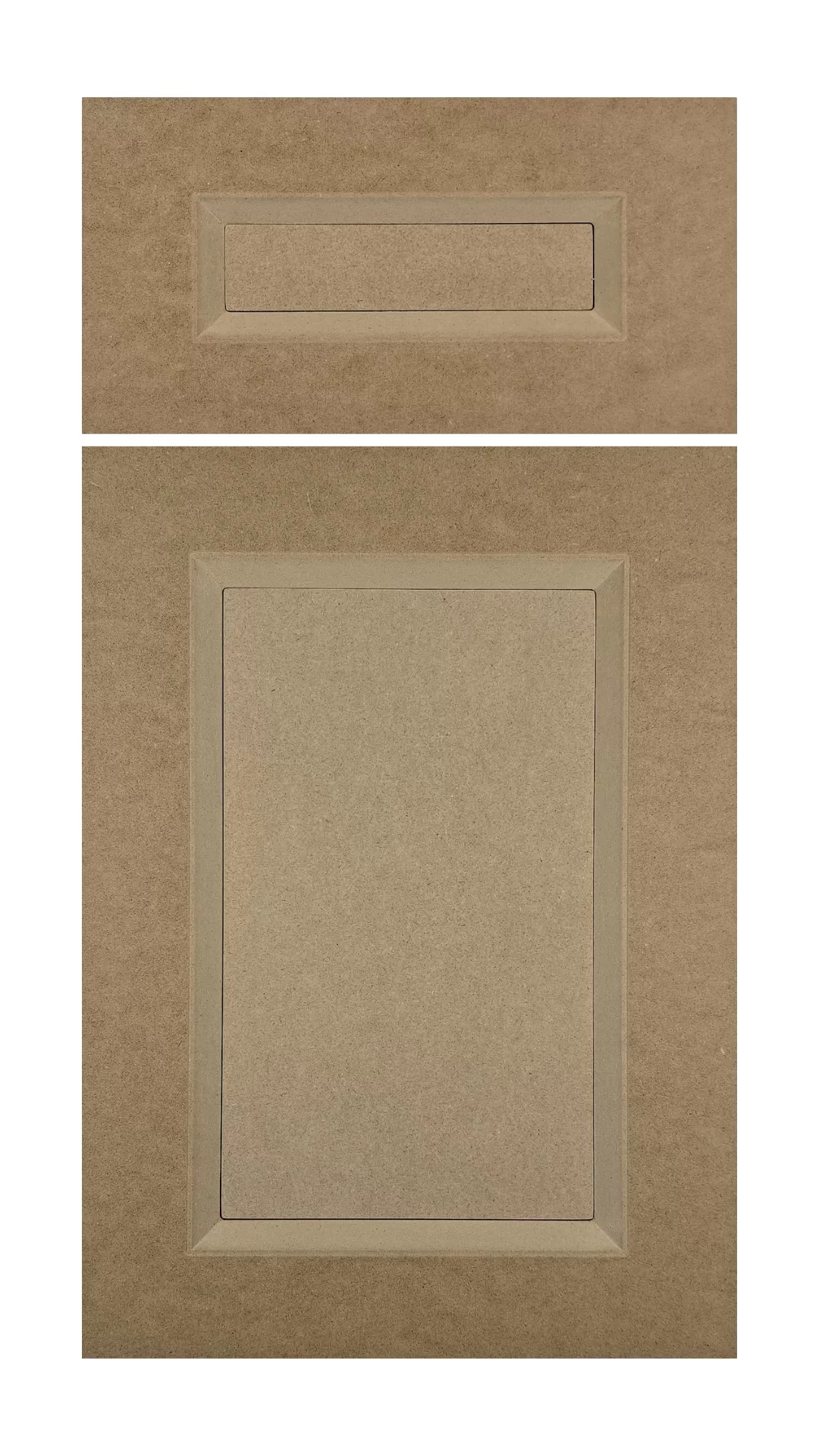
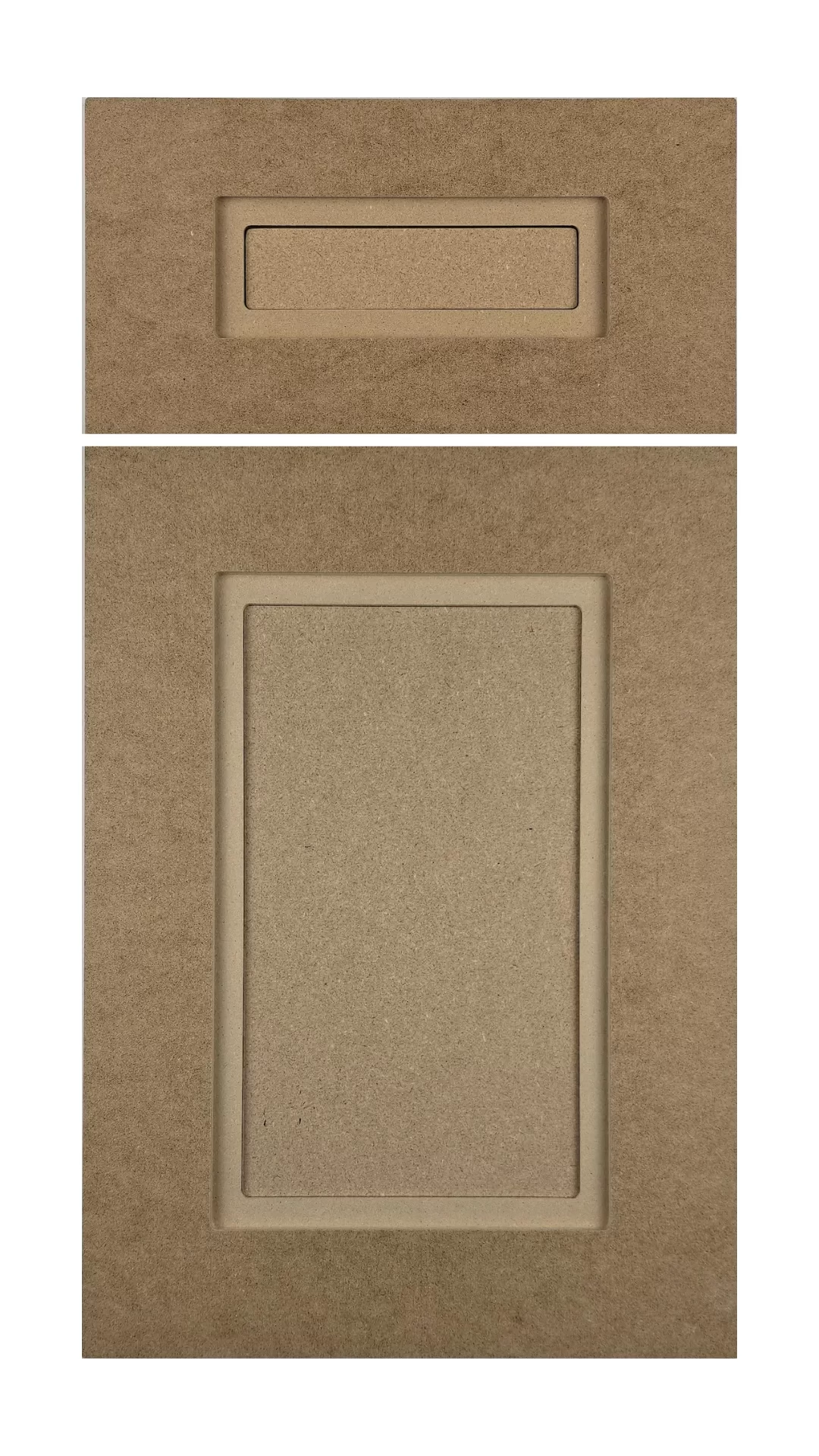
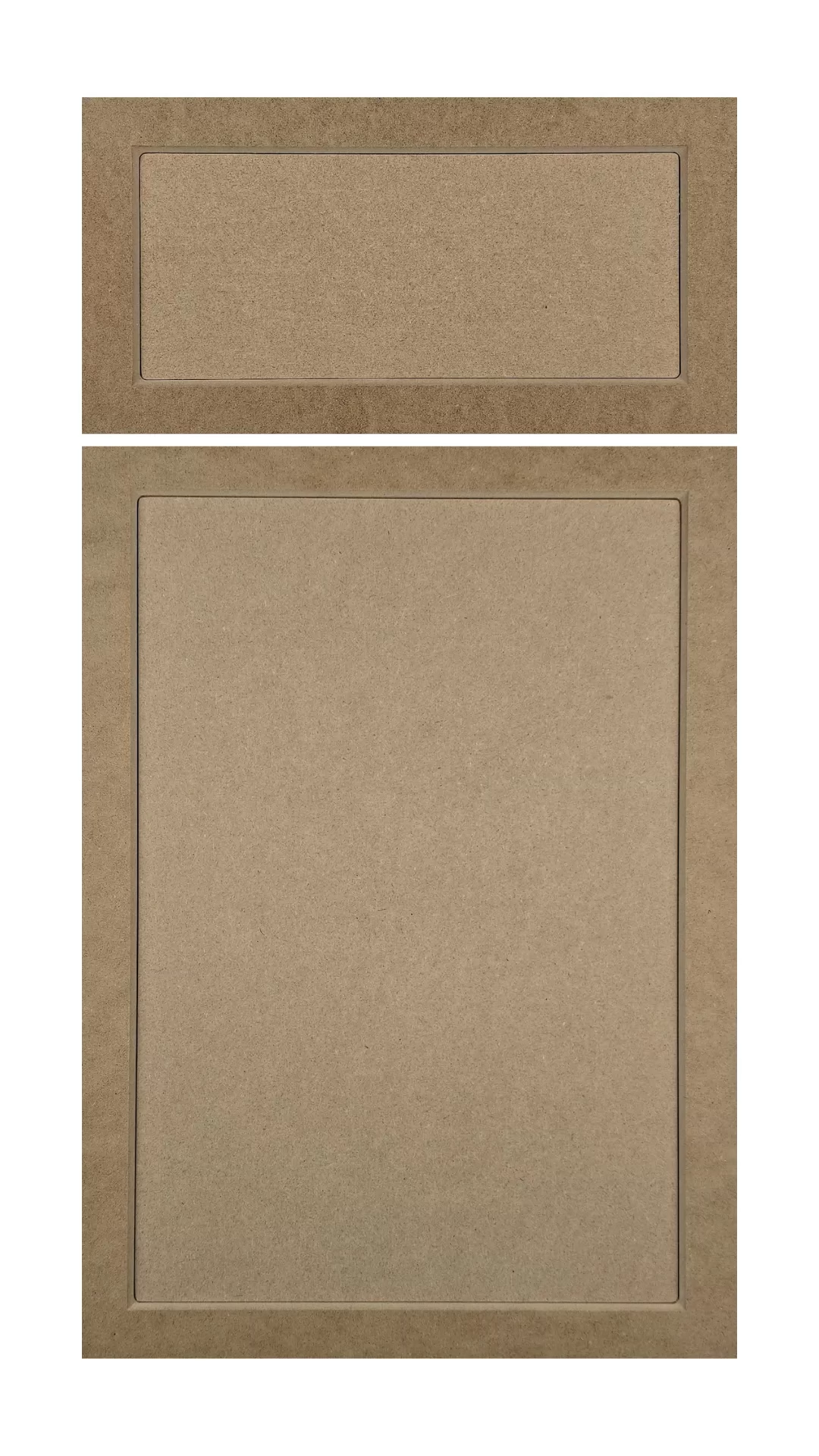
  • Paint grade doesn’t care about grain character at all, since the wood or MDF gets fully covered. This is the least restrictive (and often least expensive) category once you commit to paint.
  • Knotty or rustic grade flips the entire premise, actively selecting boards with pronounced character for a farmhouse or reclaimed look.

Cost and lead time track directly with restriction level. Select grade can run 20% to 80% more than standard grade, and because sorting select-quality boards takes longer, lead times often stretch too. Builder and paint grades tend to ship faster simply because there’s less quality control filtering to do before a board qualifies.

Which Substrate Should You Choose: MDF, Plywood, or Solid Wood?

Cabinet doors are built from various substrates, each behaving differently under paint, stain, and daily kitchen use.

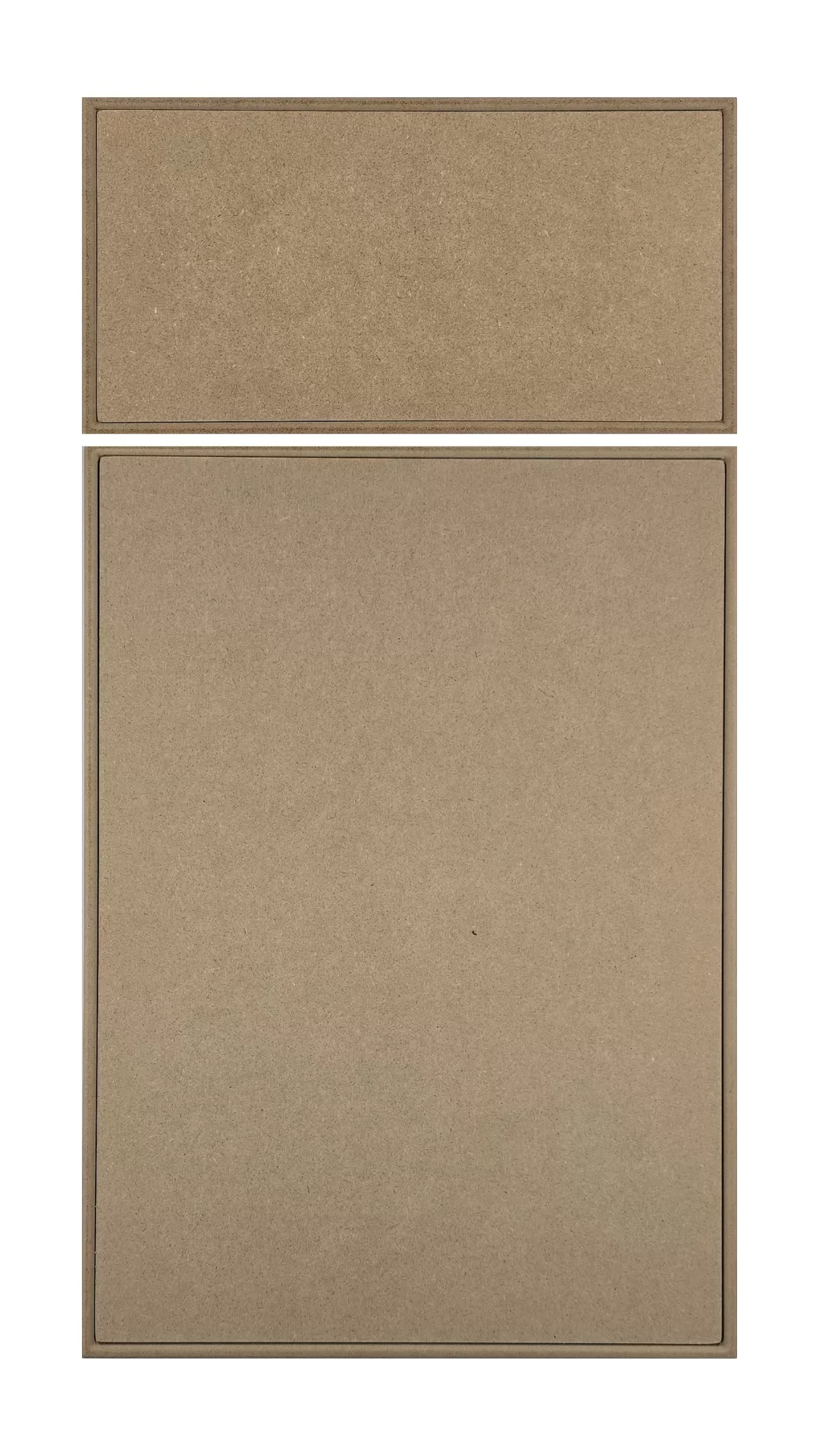
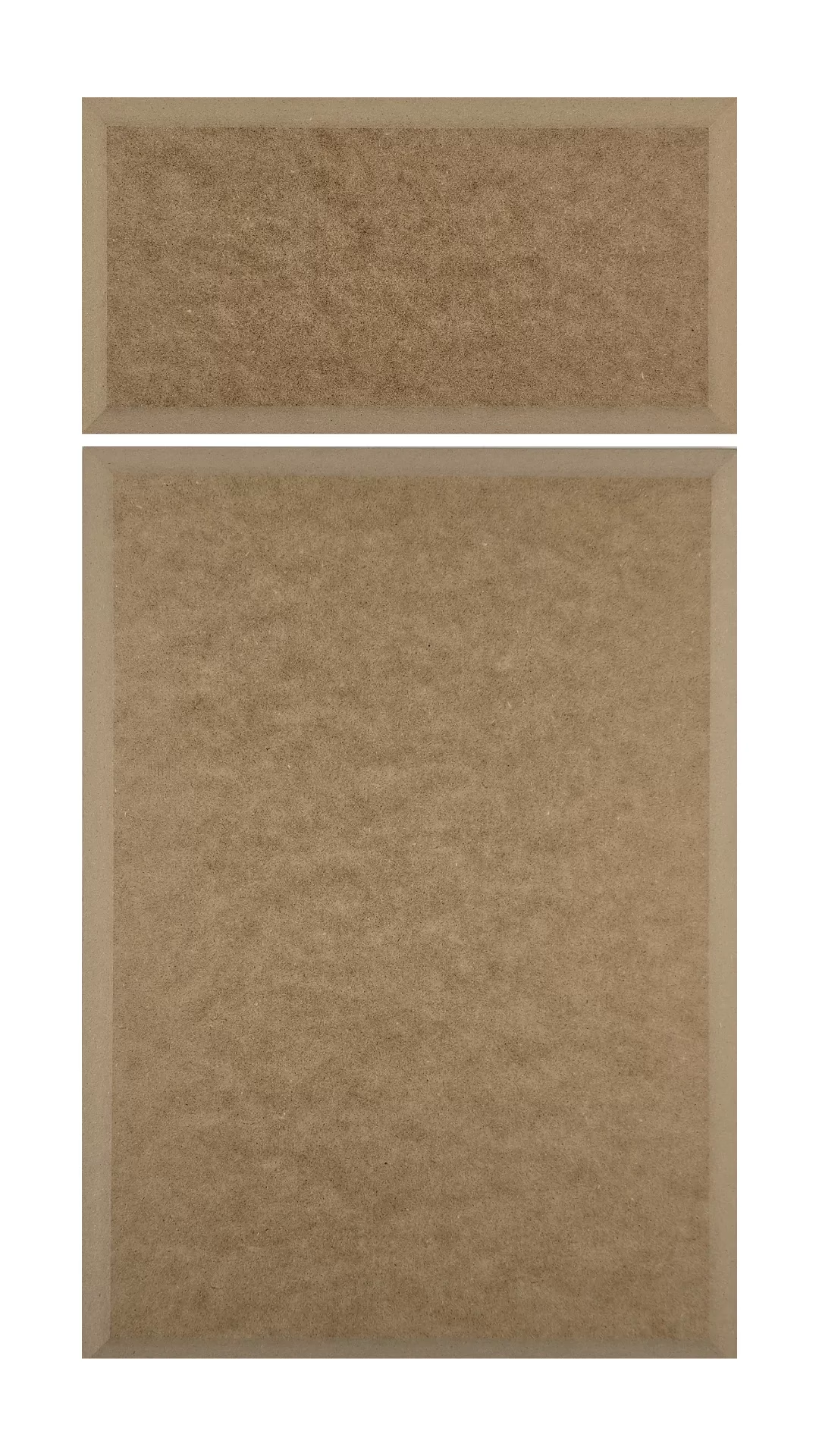
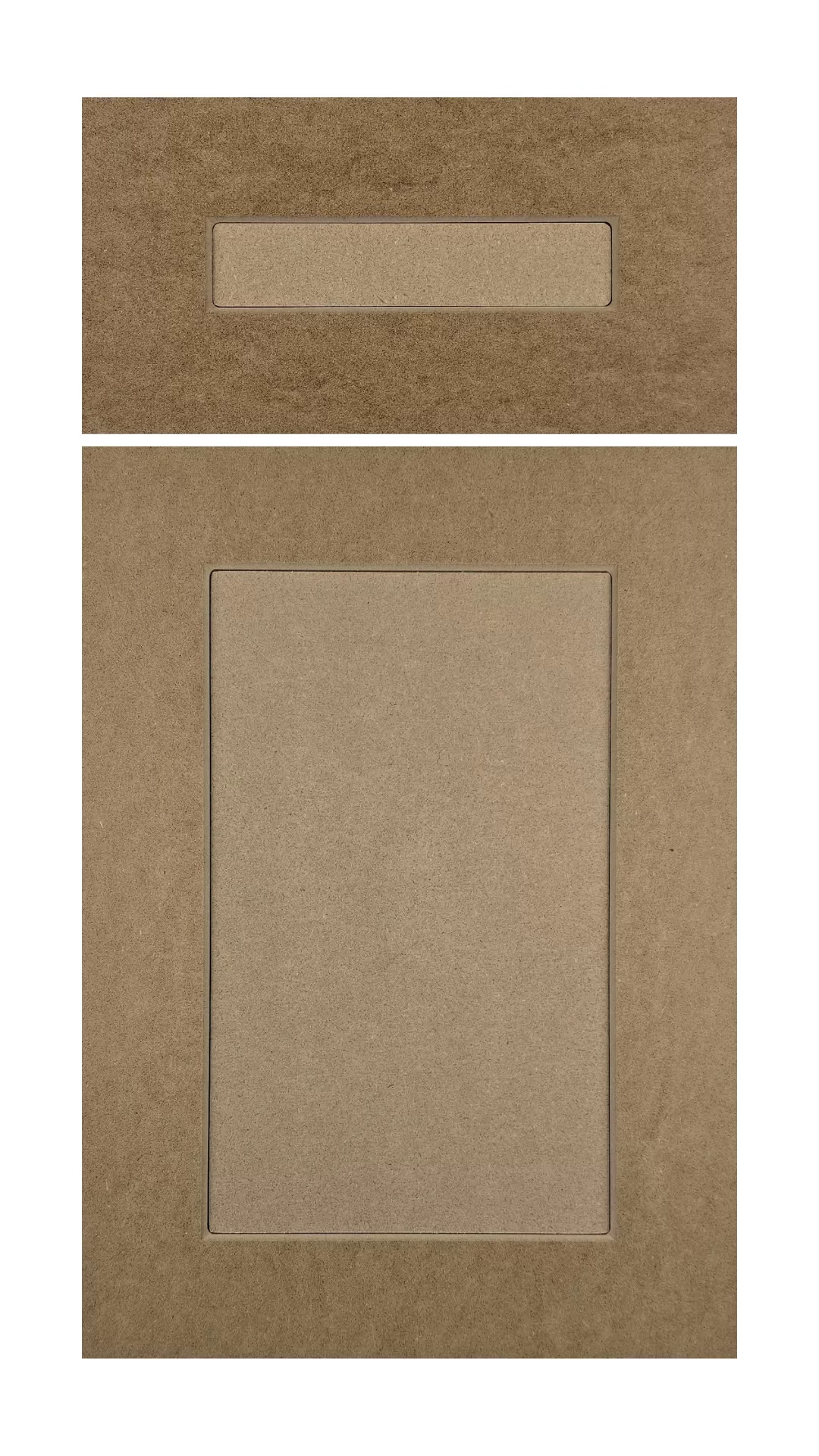
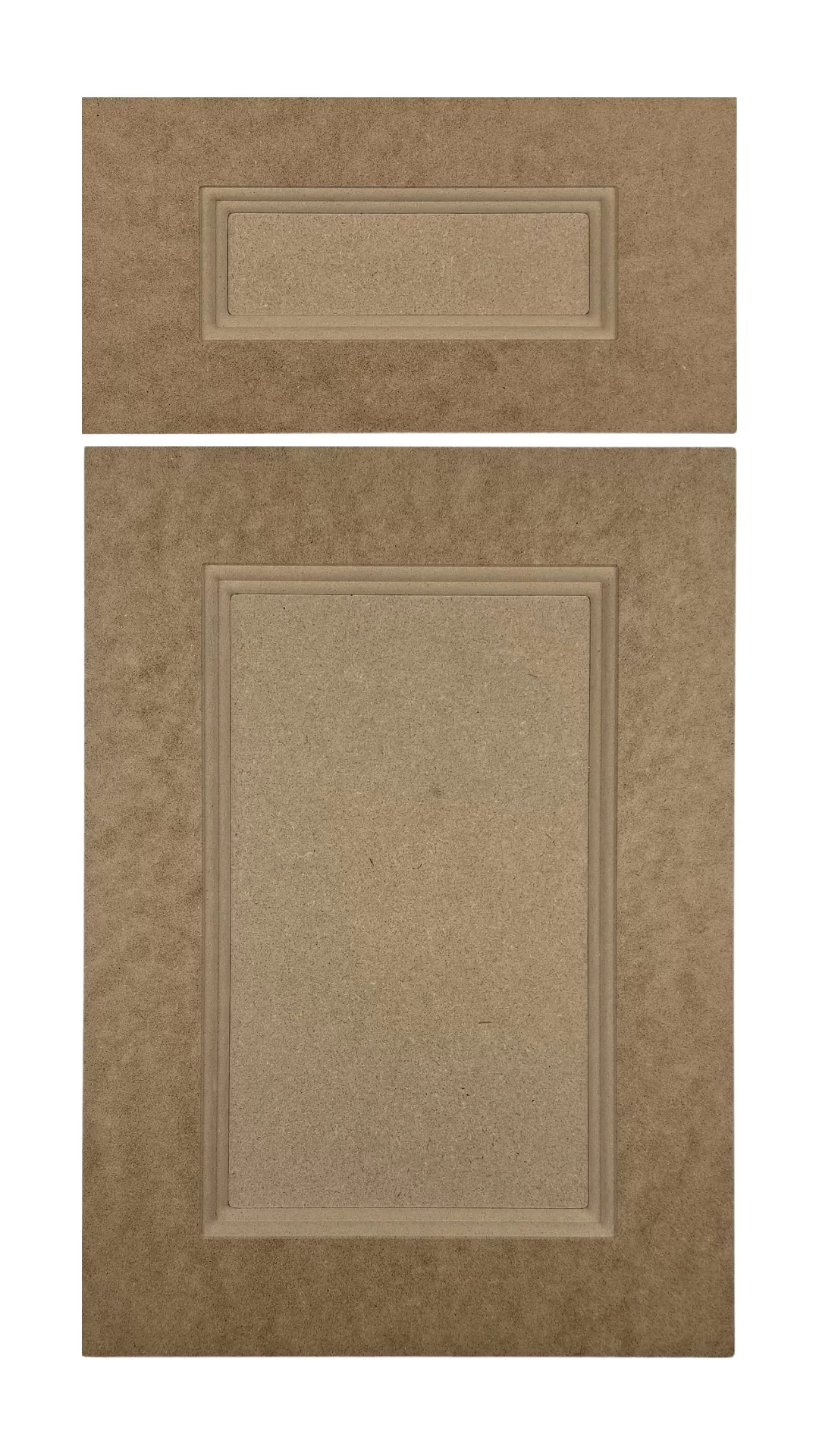
  • MDF is dead flat, routes cleanly for detailed profiles, and resists warping better than solid wood. It’s widely considered the strongest substrate for painted doors because it won’t telegraph seams or expand with humidity the way natural wood can. The tradeoff is weight. MDF doors are noticeably heavier than their wood counterparts.
  • Plywood and wood veneer give you a real wood surface with better dimensional stability than solid boards, which makes it a strong option when you want a stained finish without solid wood’s movement.
  • Solid wood delivers the premium look many homeowners want under a clear or light stain, but it reacts to humidity swings by expanding and contracting. That movement can eventually stress joints or cause slight surface irregularities to show through certain finishes.
  • Particleboard shows up mostly in lower cost cabinet boxes rather than door faces, since it doesn’t hold detailed routing well and is more prone to moisture damage.

One requirement applies across all engineered wood substrates sold in North America: composite panels must meet TSCA Title VI formaldehyde emission limits, a federal standard that governs how much formaldehyde MDF, plywood, and particleboard products can emit.

Pro Tip: If you’re set on a painted finish, don’t default to solid wood just because it “feels” premium. MDF’s flatness usually produces a smoother, more professional paint job at a lower long-term risk of joint lines showing through.

What Construction Details Matter More Than Face Grade?

Door grade tells you almost nothing about how the cabinet holds up over years of daily use. That comes down to box construction and hardware, and it’s where a lot of buyers get misled by a nice-looking door front on a weak frame.

  1. Check the box material. Plywood boxes resist moisture and hold screws better over time than particleboard boxes, which can weaken with repeated stress near hinges.
  2. Look at drawer joinery. Dovetailed drawers distribute load across interlocking joints and last far longer than stapled or cam-locked boxes, which tend to loosen within a few years of daily use.
  3. Inspect the hinges. Adjustable, soft-close hinges rated under ANSI/BHMA A156.9 hold alignment longer than unrated hardware and are easier to service without replacing the whole door.
  4. Test the slides. Full-extension undermount slides handle heavier loads and smoother travel than basic side-mount slides, which is worth checking by pulling a display drawer all the way open.
  5. Ask about the finish system. Factory multi-stage, catalyzed, or UV-cured finishes hold up to kitchen heat and moisture far better than a single coat of site-applied paint.

Higher quality tiers consistently combine plywood boxes, dovetailed drawers, and BHMA-rated hardware. That combination, not the door’s face grade, is what predicts how the cabinet performs a decade from now.

What Do KCMA and AWI Certifications Actually Test?

Face grading tells you what a door looks like on delivery day. Performance certifications tell you what happens after five years of steam, slammed drawers, and kids leaning on cabinet fronts. That distinction is why certification matters more than grade name when durability is the priority.

The 25,000-cycle benchmark: ANSI/KCMA A161.1 certification requires cabinet doors and hinges to survive 25,000 open and close cycles without failure, alongside impact testing and finish resistance checks for heat and humidity. That’s roughly seven cycles a day, every day, for a decade.

Passing A161.1 means a cabinet line has been tested under controlled stress, not just visually inspected. AWI architectural woodworking standards add a second layer, documenting dimensional tolerances for fit and finish and setting reference points for how veneer grain should be matched across adjacent doors.

Ask any supplier directly whether their line carries A161.1 certification and whether they can produce a test report. A supplier who can’t answer clearly, or who conflates “select grade” with “certified durable,” is telling you they’re grading for looks alone.

How Do You Choose the Right Grade for Your Project?

Once you know your finish, the rest of the decision follows a short, logical sequence rather than guesswork.

Step 1: Match finish to substrate to grade. Painted doors point to MDF and paint grade. Dark or medium stain points to standard or builder grade on plywood or solid wood. Light or clear finishes point to select grade, almost always on plywood or carefully sorted solid wood.

Step 2: Verify construction and hardware. Before approving any order, confirm box material, drawer joinery style, and hinge rating. A beautiful select-grade door on a particleboard box with unrated hinges is a short-term win and a long-term problem.

Step 3: Request certifications and samples. Ask for A161.1 documentation if longevity is a priority, and request a physical sample door rather than a color swatch. Confirm lead time and warranty terms before you commit, since select-grade orders can take noticeably longer to fill.

  • Painted kitchen, tight budget: MDF, paint grade.
  • Dark stain, moderate budget: standard grade, plywood or solid wood.
  • Light or natural finish, longer timeline acceptable: select grade.
  • Farmhouse or cabin aesthetic: knotty or rustic grade.

Pro Tip: Order one physical sample door before committing to a full kitchen order, especially for light stains. Photos and digital swatches consistently understate how much grain and color variation will show once a clear coat goes on.

How Does Grading Work for Refacing and Custom Door Orders?

Grading gets easier to control when you’re ordering custom doors instead of buying pre-graded stock. A custom order lets you specify substrate, finish, and match preferences up front instead of hoping a supplier’s “select grade” batch happens to match your existing cabinets.

Refacing is where this matters most for renovators. Swapping doors and drawer fronts while keeping the existing boxes can deliver a select-grade look, at a fraction of what full replacement costs, as long as the new fronts are ordered with consistent substrate and finish specs. The Door Maker’s custom cabinet door ordering process is built around exactly that: measure, design, and order, with sample doors and swatches available before you commit to a full run.

Before ordering from any custom-door vendor, ask about:

  • Their sample door policy versus swatch-only options.
  • How they handle sequence or pair matching across adjacent doors.
  • Sizing tolerances, since precision here directly affects fit once doors arrive.
  • Realistic turnaround time for your specific grade and finish combination.

Quick Recap: Pick Your Grade by Finish

Painted cabinets call for paint grade or MDF. Tight-budget dark stains call for standard or builder grade. Light or clear natural finishes call for select grade. A farmhouse or cabin look calls for knotty or rustic grade. In every case, verify box construction, hardware ratings, and A161.1 certification before you sign off. Face grade tells you what a door looks like on day one; certifications and hardware tell you what it will look like in year ten.

How Do You Spot Each Grade Just by Looking?

You can identify most grades within a few seconds of close inspection, without needing a spec sheet. Builder grade shows the most obvious tells: multiple visible knots per door, noticeable color streaking, and grain that shifts direction from one board to the next within the same door. Standard grade tightens that up. Knots shrink in number and size, and color variation becomes more subtle, though you’ll still spot minor streaking if you look at the door under angled light.

Select grade is where things get harder to catch by eye. Boards are matched for consistent tone, knots are largely eliminated, and grain direction flows in one consistent pattern across the door face. This is the grade where “pair matching” between adjacent doors becomes visible if a supplier skips it. Two select-grade doors side by side should look like they came from the same tree section. If they don’t, that’s a red flag on sourcing, not a normal variation.

Matched wood grain on adjacent cabinet surfaces

Knotty and rustic grades invert the whole exercise. Look for larger, darker knots (sometimes with visible checking or cracks), saw marks left intentionally on the surface, and pronounced mineral streaking. Paint grade is the easiest to identify since you’re not looking at wood character at all. You’re checking for a smooth, consistent surface with no visible seams once primer and topcoat go on, regardless of what’s underneath.

Factory Grading Versus Custom Grading: What’s the Difference?

Factory grading happens in bulk. Large manufacturers sort boards into grade categories as they move through production, and a batch labeled “select grade” reflects an average consistency standard applied across hundreds or thousands of doors. That’s efficient, but it means your specific order gets whatever boards fell into that grade bin that week. Some natural variation between your doors and someone else’s “select grade” order is normal.

Custom grading practices reverse that logic. Instead of pulling from a general grade bin, a custom-door supplier sorts and matches boards specifically for your order, often offering sequence matching so adjacent doors in a kitchen come from the same board run. That labor-intensive sorting is exactly why select-grade consistency costs more. Manufacturers absorb yield loss by repurposing offcuts into lower grades, and that cost gets passed forward.

The practical difference shows up most in light and clear finishes, where mismatches are impossible to hide. If you’re ordering stock cabinets sight unseen, factory grading is what you get, with all its batch-to-batch variability. If you’re refacing or ordering custom doors, you gain the ability to request physical samples, specify pair matching, and confirm consistency before the doors ever arrive at your house. That control is the main advantage custom ordering has over buying pre-graded stock from a big box retailer.

Factory Grading Versus Custom Grading: What's the Difference? — overview diagram

How Do Manufacturers Actually Test Door Durability?

Visual grading and durability testing measure two completely different things, and understanding the tests explains why a select-grade door can still fail early if it’s not also certified.

Door cycling tests simulate years of daily use in a lab setting. ANSI/KCMA A161.1 requires doors and hinges to withstand 25,000 open and close cycles without hinge failure, sagging, or joint separation. That number isn’t arbitrary. It approximates roughly a decade of normal kitchen use, accounting for multiple openings per day.

Impact testing checks how the door face and edges hold up to sudden force, the kind of stress a dropped pan or a slammed drawer creates. Finish resistance testing exposes coated surfaces to heat and humidity cycles that mimic dishwasher steam, cooking heat, and seasonal humidity swings, checking for cracking, peeling, or discoloration over repeated exposure.

Warping resistance ties back to substrate choice more than finish. MDF and plywood are tested and generally rated for dimensional stability under humidity shifts, while solid wood dimensions in WDMA technical guidance specify maximum door sizes precisely because larger solid wood panels are more prone to warping as they age. None of these tests appear on a grade label. They only show up in certification documentation, which is exactly why asking for it matters more than trusting the grade name alone.

The Real Lesson Buried in Cabinet Door Grading

The industry sells grading as a quality signal, but it’s really a cosmetic sorting system dressed up to sound technical. That’s not a criticism of manufacturers. It’s just a mismatch between what “select grade” implies and what it actually guarantees. Nothing about select grade tells you whether the hinges will survive a decade of use.

Where conventional advice falls short is treating grade choice as the main decision. Most buying guides walk you through builder versus select versus rustic and stop there, as if picking the right face grade solves the durability question too. It doesn’t. A gorgeous select-grade door on a particleboard box with unrated hinges will look better on delivery day and worse in three years than a standard-grade door built with plywood construction and BHMA-rated hardware.

If you take one thing from this article, prioritize construction specs and certification documentation before you fall in love with a grain pattern. Grade determines whether your kitchen looks the way you pictured it. Construction and hardware determine whether it still looks that way in 2036.

— David

Sources

FAQ

What Are the Three Grades of Cabinets?

Cabinets are typically grouped into three broad tiers: stock, semi-custom, and custom, which differ by box construction, hardware, and finish quality rather than door face appearance alone.

What Type of Kitchen Cabinet Door Is Most Durable?

Durability depends more on certification and construction than on face grade. Doors built to ANSI/KCMA A161.1 standards, with plywood boxes and BHMA-rated hinges, consistently outperform doors chosen for grade name alone.

What Is the Best Paint-Grade Wood for Cabinet Doors?

MDF is generally considered the strongest paint-grade substrate because it’s dead flat and resists telegraphing joints or warping better than solid wood under a painted finish.

What Is the Best Material for Cabinet Doors?

There’s no single best material. MDF suits painted doors, plywood and veneer suit stained finishes with better stability than solid boards, and solid wood delivers a premium stained look but reacts more to humidity.

How Do I Know If a Cabinet Door Grade Matches My Finish Choice?

Match the finish first. Paint hides grain entirely, so paint grade or MDF works. Dark stains hide moderate variation, fitting standard grade. Light or clear finishes expose every knot and streak, requiring select grade for consistency.

FROM THE SAME CATEGORY

Sep 5 2026 BY Ksenija Lebec, Blog

Measure, design, and order custom odd size cabinet doors in Canada. Learn precise measuring steps, 1/16 inch tolerance tips, hinge prep, fit fixes, and...

Sep 4 2026 BY Ksenija Lebec, Blog

Decide between HDF and MDF doors for painted kitchens. Learn density ranges, MR rated options, hinge and finish requirements, plus a supplier checklist...

Sep 4 2026 BY Ksenija Lebec, Blog

Decide between tempered, annealed, or laminated glass for cabinets and projects. Learn the 69 MPa strength threshold, fabrication rules, and safety...

Build a Door MADE TO FIT YOU!