
Picking a cabinet color from a screen is where a lot of good remodel plans go sideways. What looks like a warm white on your phone can turn cream in your kitchen, and a gray that felt modern online can read blue once it sits next to your flooring. That is exactly why cabinet door sample colors matter. They let you see the finish in your own light, against your counters, walls, and hardware, before you commit to a full order.
If you are refacing instead of replacing your cabinet boxes, color choice carries even more weight. You are not starting from scratch. You are working with existing flooring, backsplash, paint, and room layout, and the new doors have to make all of it feel intentional. A sample is not a small extra. It is one of the smartest parts of the project.
Why cabinet door sample colors matter more than online swatches
Digital swatches are useful for narrowing down options, but they are not reliable enough for final decisions. Every screen displays color differently. Brightness settings, device quality, and even the time of day can shift how a finish appears.
A physical sample gives you something much more useful – a real surface with real texture, sheen, and undertone. That matters because cabinet finishes do not live in isolation. A white door can look crisp next to marble but yellow next to a cool quartz. A wood-tone PVC finish can feel rich in daylight and muddy under warm recessed lighting. Sample colors let you test those changes before your order goes into production.
For DIY homeowners, samples also reduce the kind of mistake that gets expensive fast. Cabinet refacing saves money because you keep the boxes and replace what people actually see. If the color is off, the whole upgrade can feel disappointing even if the fit and style are perfect.
What to look for when comparing cabinet door sample colors
The first thing to pay attention to is undertone. Two colors can both be labeled white, gray, or beige and still behave very differently in a room. One white may lean creamy. Another may lean icy. One gray may carry a green base while another looks taupe. Those subtle differences are usually what decide whether a kitchen feels clean and current or slightly off.
Finish is the next factor. Matte, textured, and smoother surfaces reflect light differently. A color with a low-sheen finish often reads softer and more forgiving. A smoother or brighter finish can feel more modern, but it may also show fingerprints and glare more clearly depending on the room.
Then there is context. Hold samples next to the elements you are keeping. That usually means countertop material, wall paint, flooring, and backsplash. If you are adding new hardware, place the finish beside the sample too. Brushed gold, black, chrome, and bronze can all push the same cabinet color in a different visual direction.
How to test sample colors in your space
The best way to evaluate samples is simple. Move them around. Set them in the kitchen in the morning, again in the afternoon, and once more at night with the overhead lights on. Light is not consistent throughout the day, and your cabinet color will not be either.
Try placing the sample vertically as well as flat. Cabinet doors are seen upright, so a finish may catch light differently when held against the face of a cabinet box or wall. If possible, view it from a few steps back instead of only at arm’s length. That gives you a better sense of how the color will read across an entire run of cabinetry.
It also helps to compare fewer options at once. Homeowners often start with six or eight colors, which is fine for browsing, but final decisions are easier when you narrow it down to two or three. Too many samples side by side can make small differences feel bigger than they really are.
Popular directions homeowners take with cabinet color
Most cabinet projects fall into a few broad color directions, but each one comes with trade-offs.
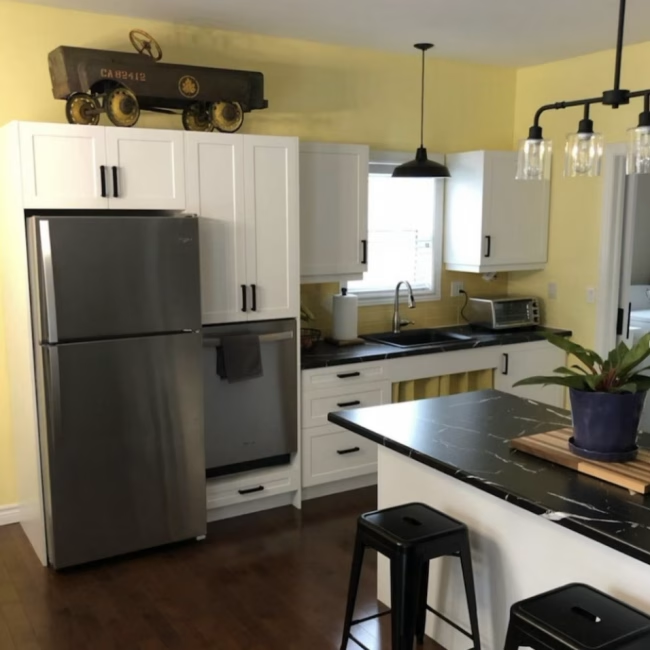
White and off-white finishes remain popular because they brighten a room and work with many design styles. They are especially strong for smaller kitchens, darker spaces, and homeowners who want a clean update without chasing a short-term trend. The trade-off is that whites are the most sensitive to undertone. A white that looks safe online can be the trickiest color to get right in person.
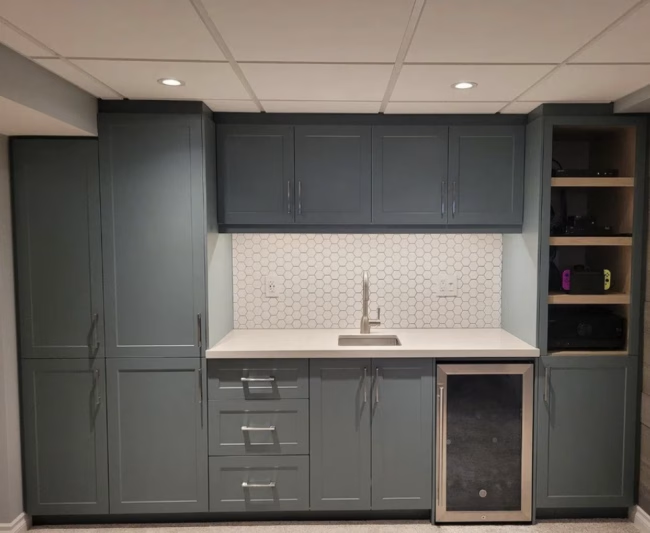
Gray tones still appeal to homeowners who want something neutral but less expected than white. They can feel tailored and contemporary, especially with simple shaker-style doors. The challenge is that some grays age better than others. A warm greige can feel timeless, while a cooler blue-gray may depend more heavily on the rest of the room.
Wood-look finishes and warm neutrals have gained ground because they add depth without making a space feel heavy. These colors work well in kitchens where people want warmth, especially when paired with white counters or lighter walls. The key is balance. Too much warmth in the floor, door finish, and paint can make the room feel dated instead of inviting.
Darker finishes create contrast and can look high-end in the right layout. They often work best where there is good natural light or when used selectively, such as on an island or lower cabinets. In a smaller or dim kitchen, going too dark across every cabinet can make the room feel tighter.
Matching sample colors to cabinet style
Color is only half the decision. Door style changes how that color feels once installed.
A shaker door in a soft white usually reads classic and versatile. The same color on a slab door looks cleaner and more modern. Raised panel doors can make traditional colors feel richer, while flatter profiles often support a simpler, more contemporary palette.
This is why sample colors should be considered alongside the door design you plan to order. A warm beige on an ornate door may lean formal. On a sleek, flat-front style, it may feel understated and current. When homeowners think a color is wrong, sometimes the issue is really the combination of style and finish.
Why samples help budget-conscious remodelers make better decisions
One of the biggest advantages of cabinet refacing is value. You keep the cabinet structure that still works and upgrade the visible pieces for a dramatic change without the cost of a full tear-out. But that value only holds if the final result looks right.
Ordering cabinet door sample colors first is a practical step that protects your budget. It is far less expensive to test colors up front than to second-guess a full custom order later. Samples also make decision-making faster once you are ready to choose your exact measurements, door style, and finish.
For homeowners comparing custom refacing against stock options from a big-box store, this is where custom often shows its strength. Stock cabinetry limits your sizing and finish choices. Custom doors let you tailor the fit and the look, but that flexibility works best when you use samples to confirm your direction with confidence.
Turning inspiration into a confident final choice
A good cabinet update is not about chasing the trend of the month. It is about choosing a finish that works in your home, with your lighting, your layout, and the features you are keeping. Cabinet door sample colors give you a chance to slow down and make that call based on what you actually see, not what a product image suggests.
If you are planning a refacing project, start with the room you have. Look at what stays, gather a few strong sample options, and test them honestly in real conditions. Once the right color becomes obvious, the rest of the project tends to move much more smoothly. At The Door Maker, that kind of clarity is what turns a DIY upgrade into a finished space that looks custom, feels intentional, and stays satisfying long after the install is done.