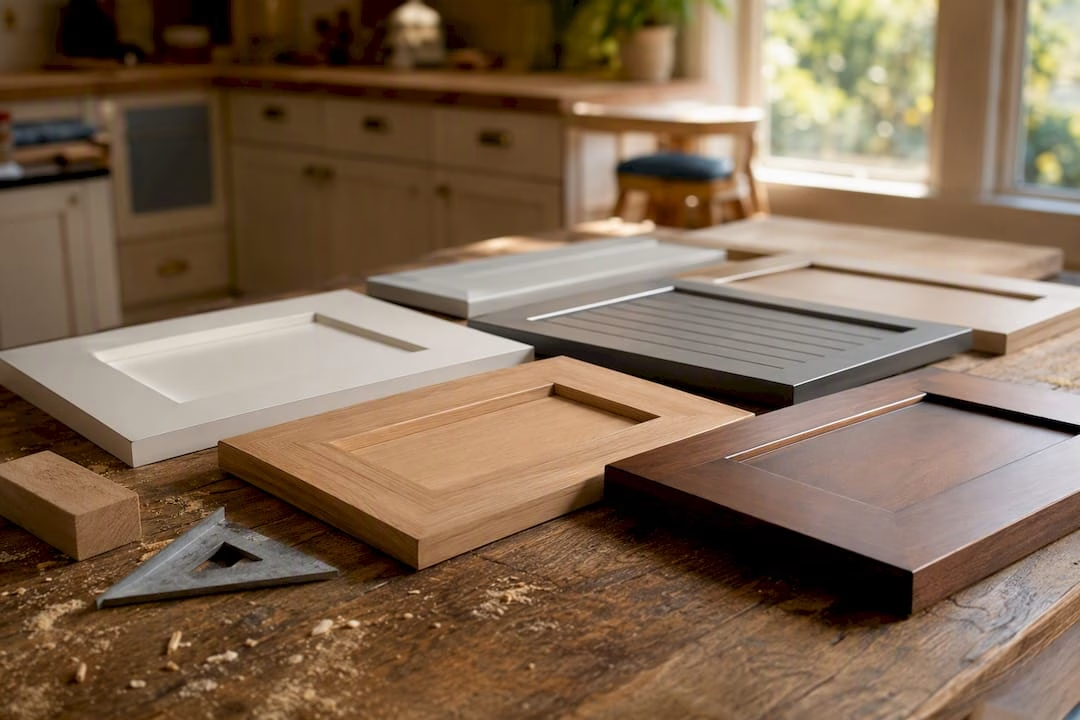
A drawer front is the visible face attached to a drawer box, and the style you pick sets the tone for your whole kitchen or bathroom. The styles worth knowing are:
- Shaker — clean, recessed panel, works almost anywhere
- Slab/flat-panel — smooth modern face, no frame
- Raised-panel — traditional, dimensional profile
- Inset — furniture-grade, flush with the cabinet frame
- Beadboard/fluted — grooved, cottage character
- Five-piece/mitered — matches framed door construction
Unless you’re deliberately mixing textures, match your drawer fronts to your cabinet doors for a cohesive look.
Key Takeaways
Choosing the right drawer front style comes down to matching profile and construction to your existing cabinetry, then getting the reveal and hardware placement right during installation.
| Point | Details |
|---|---|
| Match your doors first | Pick a drawer front profile that matches your existing cabinet doors unless you’re intentionally contrasting. |
| Slab favors modern, MDF favors paint | Slab construction suits contemporary looks, and MDF is the practical default for painted finishes. |
| Keep your reveal consistent | Target roughly 1/8 to 1/4 inch and use spacer blocks to mount slides at a repeatable height. |
| Order fronts as a set | Cutting fronts from the same sheet keeps grain and color matched across a stacked bank of drawers. |
| Custom sizing reduces install risk | Tdm-thedoormaker’s configurator offers 30+ styles, 130+ finishes, and sizing to 1/10,000 of an inch for an exact-fit replacement. |
A Closing Note on Getting This Right
Most drawer front regrets come from rushing the measuring step, not from picking the wrong style. If you’re on the fence, order a sample before committing to a full run, and lean on our replacement drawer front guide for the specific measurements to double-check first.
— David
Table of Contents
- Popular Drawer Front Styles and Where They Work Best
- How Drawer Fronts Are Built and What They’re Made From
- How to Choose the Right Drawer Front for Your Space
- Custom Drawer Fronts vs. Stock Replacements
- Installation Tips That Make a DIY Job Look Professional
- How the Door Maker Simplifies Custom Drawer Fronts
- Where Today’s Drawer Front Styles Actually Came From
- Drawer Front Trends Worth Watching in 2026
- Order Your Custom Drawer Fronts
- Sources
Popular Drawer Front Styles and Where They Work Best
Choosing among the common cabinet drawer designs comes down to how much detail you want and which room you’re outfitting. Here’s how the six main styles actually perform once they’re installed.
1. Shaker
Shaker fronts have a recessed center panel framed by flat rails and stiles, and they’ve become the default choice in most new kitchens because they read as both classic and current. They pair well with brushed nickel or matte black bar pulls, and they take paint or stain equally well. You’ll see them in kitchens, bathrooms, and laundry rooms without exception.
2. Slab/Flat-Panel
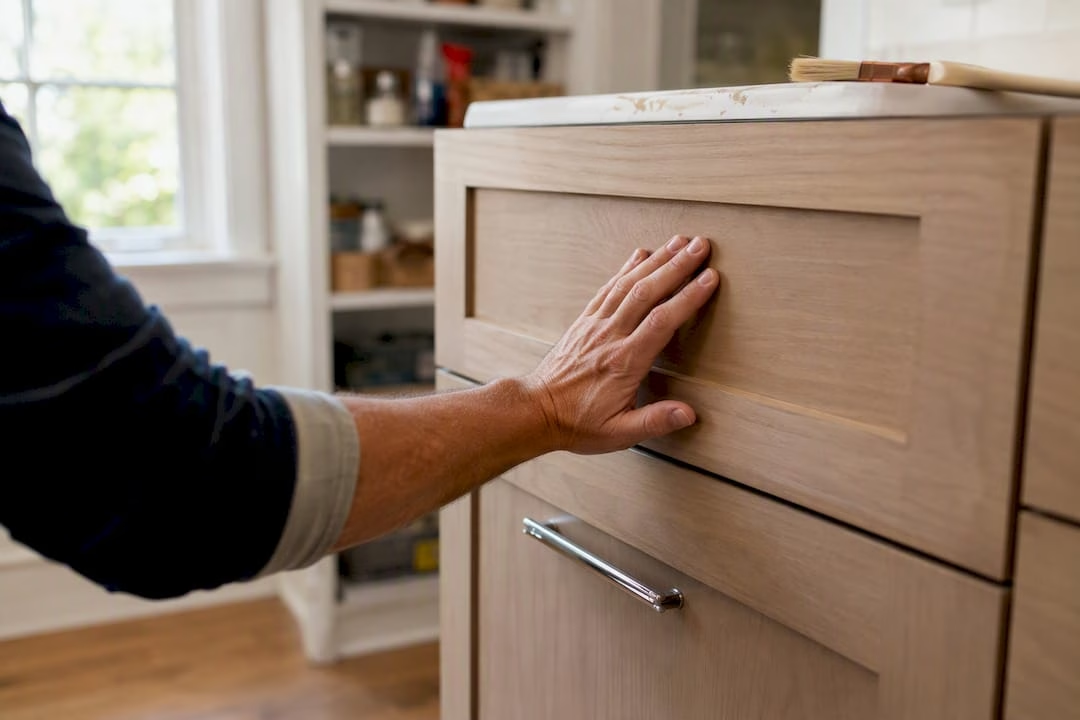
A slab front is a single flat piece with no frame or panel detail, which makes it the go-to for modern drawer fronts. Painted slab doors show every imperfection in the substrate, so the material underneath matters more here than with any other style. Stained slab fronts work best in wood species with tight, even grain like maple or birch.
3. Raised-Panel
Raised-panel fronts have a center panel that’s milled to stand higher than the surrounding frame, giving real shadow and depth. This style reads as traditional or transitional, and it tends to look out of place in a strictly contemporary kitchen. It shows up most often in dining rooms, formal kitchens, and older homes being renovated to match existing trim.
4. Inset
Inset drawer fronts sit flush within the cabinet frame rather than overlapping it, which is why they’re associated with furniture-grade cabinetry. The trade-off is precision: an inset front needs a tight, even reveal on all four sides, and even minor humidity swings in solid wood can throw that gap off. If you’re set on this look, budget extra time for fitting.
5. Beadboard/Fluted
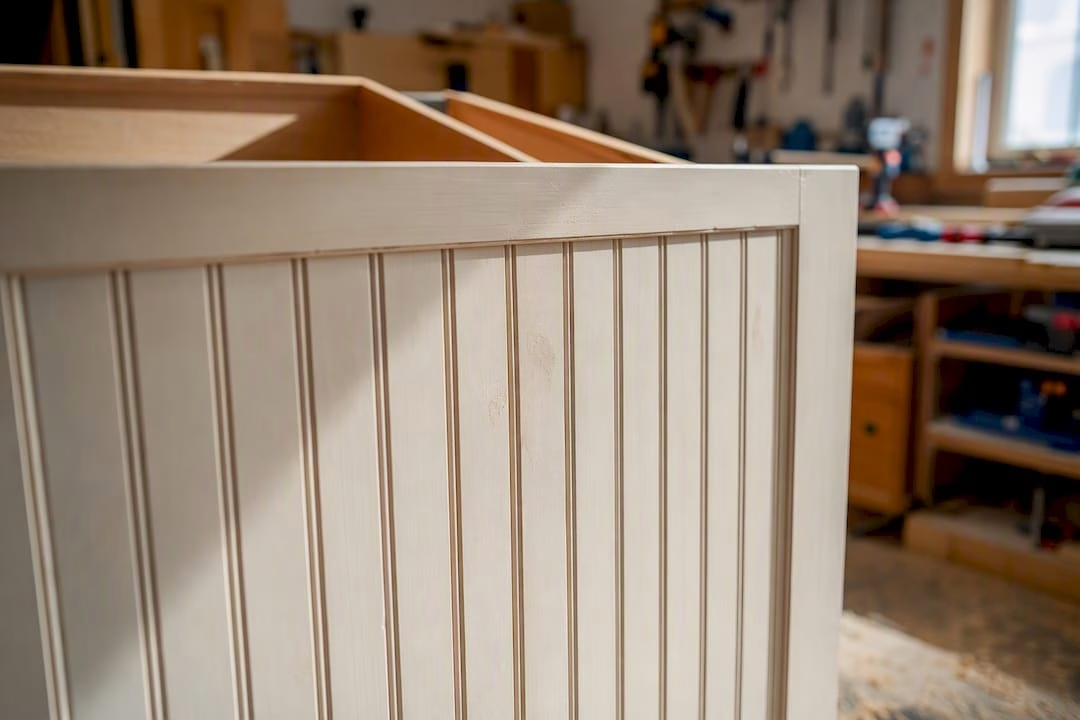
Beadboard fronts carry vertical grooves milled into the panel face, giving a cottage or farmhouse feel that slab and Shaker fronts can’t replicate. Those grooves collect dust and grease faster than a flat surface, so plan on more frequent wipe-downs in a working kitchen.
6. Five-Piece/Mitered
A five-piece front is built from a frame and panel, mitered at the corners to mirror the construction of a matching cabinet door. Use this style specifically when your doors are already five-piece and you need drawer fronts that read as part of the same set. It costs more than slab construction because of the added joinery, but the visual payoff is a seamless bank of doors and drawers.
Pro Tip: If you’re mixing drawer styles across a kitchen, keep the profile consistent on any run of drawers you’d see in a single glance, like a stack under the cooktop. Small inconsistencies are far more noticeable stacked vertically than spread across a room.
How Drawer Fronts Are Built and What They’re Made From
Every drawer front falls into one of two construction types. A slab front is one solid or engineered panel with no joinery, which is why it dominates the modern cabinet door styles you’ll see in current kitchens. A five-piece front is assembled from a frame and center panel, and it’s the only way to authentically match a framed door profile like Shaker or raised-panel.
Material choice matters as much as construction type:
- Solid wood takes stain beautifully but moves with humidity, so gaps can shift over a season.
- MDF sands to a glass-smooth surface and resists warping, making it the practical default for painted slab fronts.
- Plywood offers good stability at a lower cost than solid hardwood.
- Thermofoil and PVC resist moisture well.
DIY frameless cabinet plans commonly specify MDF for painted slab fronts precisely because it primes and sands so evenly. Edge-banding and veneer quality determine how well a finish holds up over time, and in kitchens or bathrooms where moisture is constant, a properly sealed edge is what keeps a painted MDF front from swelling at the seams.
How to Choose the Right Drawer Front for Your Space
Start with cohesion. If your cabinet doors are Shaker, matching Shaker drawer fronts is the safer call, and style guides for cabinet drawer fronts consistently point toward consistency over contrast unless you have a specific design reason to break the pattern.
- Check hardware compatibility. Confirm handle or knob center-to-center spacing before ordering, especially if you’re keeping existing hardware or switching to push-to-open mechanisms.
- Set your budget tier. Painted MDF slab fronts cost less than stained solid wood five-piece fronts, and that gap widens further with inset construction.
- Weigh lead time against fit. Stock sizes ship faster, but custom sizing avoids the shims and trims that stock often requires.
- Build your measurement list. Note opening width, height, and depth for every drawer, and photograph your existing hardware before removal.
- Ask your supplier the right questions. Confirm reveal tolerances, finish options, and whether hinge-hole or hardware drilling comes pre-installed.
Pro Tip: Measure every opening even if they look identical. Cabinet boxes settle unevenly over the years, and a front cut to one universal size rarely fits the whole run perfectly.
For a full walkthrough before you order, our guide to choosing replacement drawer fronts covers supplier questions in more depth.
Custom Drawer Fronts vs. Stock Replacements
Custom sizing earns its cost when your openings aren’t standard, when you need matched grain across a long run of drawers, or when color fidelity to existing cabinetry matters. Stock fronts make sense for straightforward, standard-size openings where speed matters more than an exact match.
- Choose custom for precise fit, consistent grain, and finish that matches existing doors.
- Choose stock when your openings are standard sizes and you need a fast, budget-friendly turnaround.
- Expect custom orders to take longer to arrive but require far less on-site trimming and shimming than stock pieces forced into odd openings.
Replacing drawer fronts instead of full cabinets is one of the highest-impact, lower-cost upgrades available to homeowners who like their cabinet layout but want a new look.
Installation Tips That Make a DIY Job Look Professional
Getting the fit right during install is what separates a front that looks custom from one that looks like an afterthought.
- Set a consistent reveal. A tight, even gap between fronts is an industry standard for a professional look, with many woodworkers targeting a small, tight gap around one eighth of an inch for a furniture-like fit, or a slightly larger margin for a more forgiving DIY build.
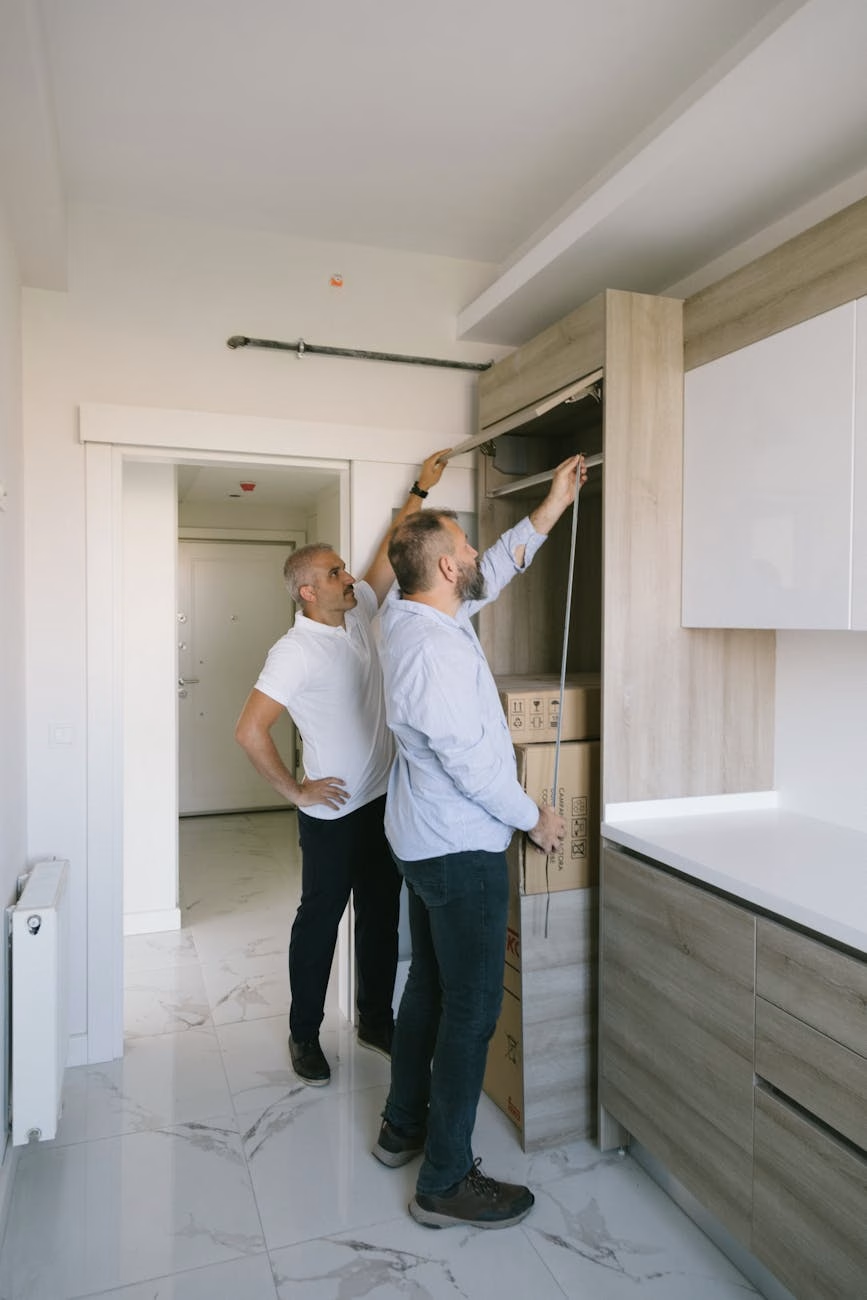
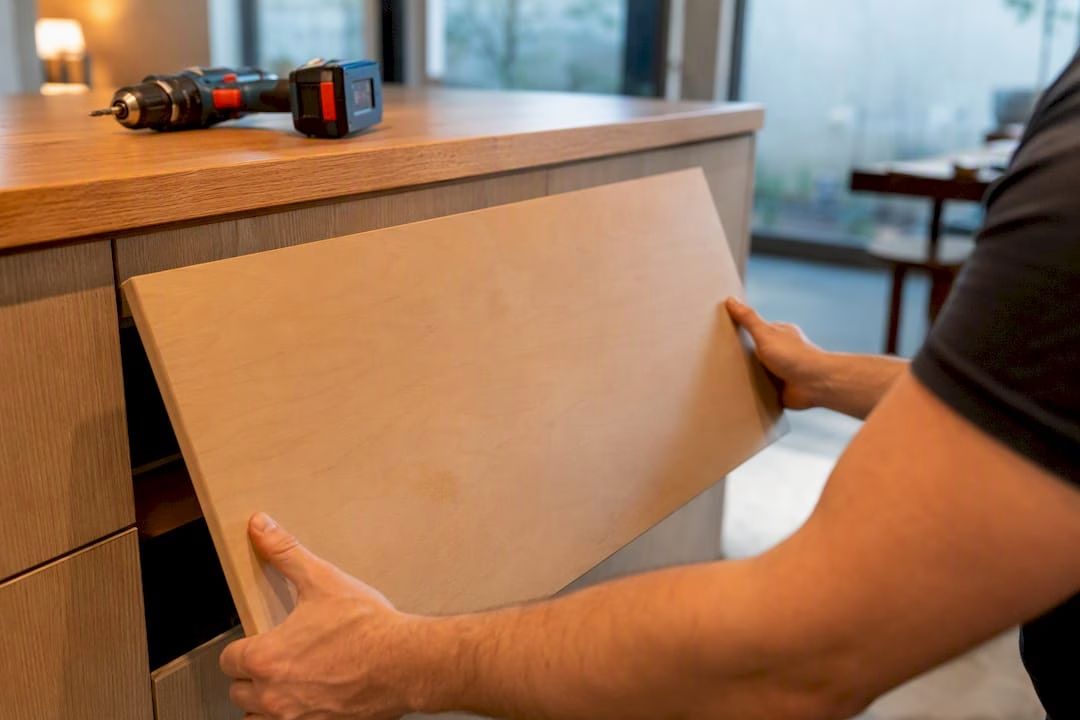
- Use spacer blocks for slide mounting. Cutting a scrap block to your desired reveal height and resting the drawer slide on it while you screw it in gives you a repeatable, accurate setup across every drawer in the run.
- Order and cut fronts as a set. Cutting drawer faces from the same sheet keeps grain and color consistent across a stacked bank.
- Drill hardware with a jig, then fasten front to back. Driving screws in a front-to-back sequence while the front is clamped in position avoids shifting the reveal at the last step.
Practical shop wisdom holds that screwing slides to spacer blocks and mounting them with the cabinet laid on its side turns an awkward, one-drawer-at-a-time job into a fast, repeatable process across an entire bank of drawers.
For the drilling step specifically, our hardware hole drilling guide walks through jig setup for clean, consistent holes.
How the Door Maker Simplifies Custom Drawer Fronts
Tdm-thedoormaker built its ordering process around three steps: measure, design, and order, all through an online configurator instead of a showroom visit. That process removes most of the guesswork that trips up DIY refacing projects.
- Over 30 styles and 130-plus colors and finishes to match or intentionally contrast existing cabinetry
- Sizing precision down to 1/10,000 of an inch, which matters most for inset and tight-reveal projects
- Sample doors and color swatches available before you commit to a full order
- Optional hinge-hole drilling so fronts arrive ready to hang
For readers comparing this against hiring a local carpenter, a configurator-based order tends to make more sense when you already know your measurements and want predictable pricing.
Where Today’s Drawer Front Styles Actually Came From
Shaker style traces back to 18th and 19th century Shaker religious communities, whose furniture makers valued plain construction over ornamentation for religious reasons rather than aesthetic ones. That utilitarian frame-and-panel design happened to age well, and it’s why Shaker cabinetry still dominates new kitchen builds two centuries later.
Raised-panel fronts descend from European furniture traditions, particularly French and English cabinetry, where a milled, dimensional panel signaled craftsmanship and status. That association with formality is exactly why raised-panel still reads as traditional today, even in a kitchen with none of the surrounding period detail.
Slab fronts are a newer development, tied closely to the rise of mid-century modernism and, later, the minimalist design movements of the 2000s and 2010s. Flat, unornamented surfaces became a design statement in their own right rather than a cost-cutting shortcut, which is part of why painted MDF slab fronts now command a premium finish reputation rather than a budget one.
Beadboard’s roots run through Victorian-era interior paneling, originally used on walls and wainscoting before cabinetmakers adapted the grooved profile for smaller-scale drawer and door fronts. Five-piece and mitered construction has been standard cabinetry practice for centuries, simply because it’s the most direct way to build a stable frame around a panel using hand tools, long before machine-milled slab fronts were even possible to produce at scale.
Drawer Front Trends Worth Watching in 2026
Modern kitchens are leaning further into slab fronts in matte, textured finishes rather than the high-gloss look that dominated a decade ago. Matte painted MDF and PVC finishes hide fingerprints better than gloss and photograph well, which matters if resale value is part of your calculation.
Rustic and farmhouse styling hasn’t faded, but it has shifted from heavy beadboard toward simpler Shaker profiles paired with warm wood tones and black iron hardware. That combination reads as rustic without the maintenance burden of deep grooves collecting grease.
Transitional kitchens, blending a Shaker or five-piece frame with simplified, streamlined hardware, remain the safest resale choice because they don’t commit fully to either a traditional or contemporary look. If you’re renovating a home you might sell within five to ten years, transitional styling tends to age the most gracefully.
Color is doing more of the design work than profile shape right now. A slab front in a deep green or navy paired with brass hardware can look just as current as a stark white Shaker front, so before committing to a shape, look at current cabinet door design trends for finish and color direction, since that’s where most of the visual change is happening. For general principles on matching a door style to your home’s existing character, this guide to choosing interior door styles applies the same logic to cabinetry decisions.
Order Your Custom Drawer Fronts
Tdm-thedoormaker gives you exact sizing down to 1/10,000 of an inch and a sample swatch before you commit, which removes the two biggest risks in any drawer front replacement: a bad fit and a color that looks different once it’s on the wall.
If your cabinet boxes are in good shape but the fronts are dated, worn, or simply the wrong style for how you live now, replacing them is almost always cheaper than a full cabinet swap. Start by measuring your openings, then head to our custom cabinet door ordering page to walk through the configurator and request a sample before placing your full order.
Sources
- Architectural Woodwork Institute — Specialty casework: aesthetic requirements
- Obsessed Woodworking — Shop-friendly pocket-hole drawer build
- Oldenkamp — Cabinetry terminology 101
- TheDIYPlan — DIY frameless base cabinet 21″ wide with three drawers slab style