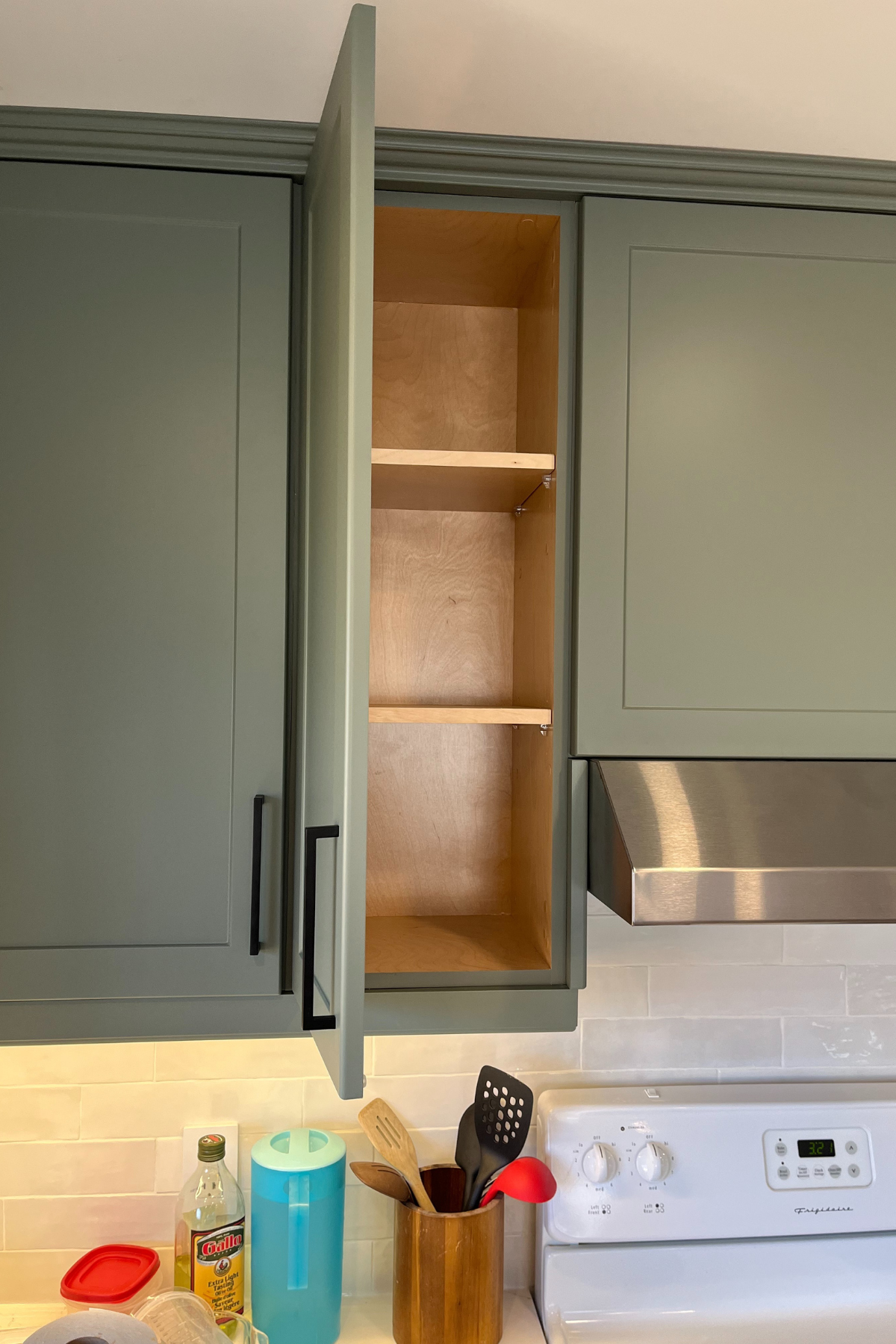

Slim shaker cabinets are defined by their narrower frame rails and stiles, typically measuring 0.75 to 1.75 inches wide compared to the 2 to 2.5 inch frames found on traditional shaker doors. That reduction in frame width is not just cosmetic. It shifts the visual weight of each door toward the center panel, creating a cleaner, more architectural look that works especially well in modern and compact kitchens. In 2026, slim shaker cabinet doors rank among the most requested styles for budget-conscious kitchen remodels, offering a middle ground between classic craftsmanship and contemporary minimalism.
What are slim shaker cabinets made of?
The substrate you choose for slim shaker cabinets determines how long they last and how well they hold their finish. The most common options are MDF (medium-density fiberboard), HDF (high-density fiberboard), engineered wood, and solid hardwoods like oak, maple, and walnut. Each material carries different trade-offs in cost, stability, and appearance.
MDF and HDF are the most popular choices for painted finishes. They resist grain telegraphing and accept paint evenly, which matters a great deal on slim profiles where surface imperfections are more visible. Solid hardwood frames offer natural beauty and strength, but they expand and contract with humidity changes, which can stress the joints on narrower rails.

Construction method also plays a major role. Slim shaker doors are built using one of two approaches: a traditional five-piece frame-and-panel assembly, or a one-piece CNC-carved MDF design that eliminates the seam between frame and panel entirely. The one-piece method reduces cracking risk because there are no separate pieces to shift with temperature and moisture changes.
Finish choices affect both maintenance and longevity. Painted matte finishes on MDF or HDF routed as a single piece prevent the cracking common in multi-piece wood doors caused by expansion and contraction. Natural wood veneers offer warmth and character while keeping costs lower than solid wood.
- MDF/HDF: Best for painted finishes; stable and budget-friendly
- Solid hardwood (oak, maple, walnut): Premium look and feel; higher cost; requires climate control
- Wood veneer over MDF core: Good balance of appearance and stability
- Five-piece frame-and-panel: Traditional construction; allows real wood frames
- One-piece CNC-carved MDF: Consistent finish; lower cracking risk
Pro Tip: Pros recommend using a high-quality veneer center panel instead of solid wood in slim shaker designs. MDF center panels combined with solid wood frames offer the best balance of stability and visual appeal, especially in kitchens with fluctuating humidity.
How much do slim shaker cabinets cost?
Slim shaker cabinets cost 5–15% more than traditional shaker cabinetry on average. That premium reflects tighter manufacturing tolerances and the precision cutting equipment required to produce narrower rails consistently. For most homeowners, the price difference is manageable, especially when weighed against the visual upgrade.
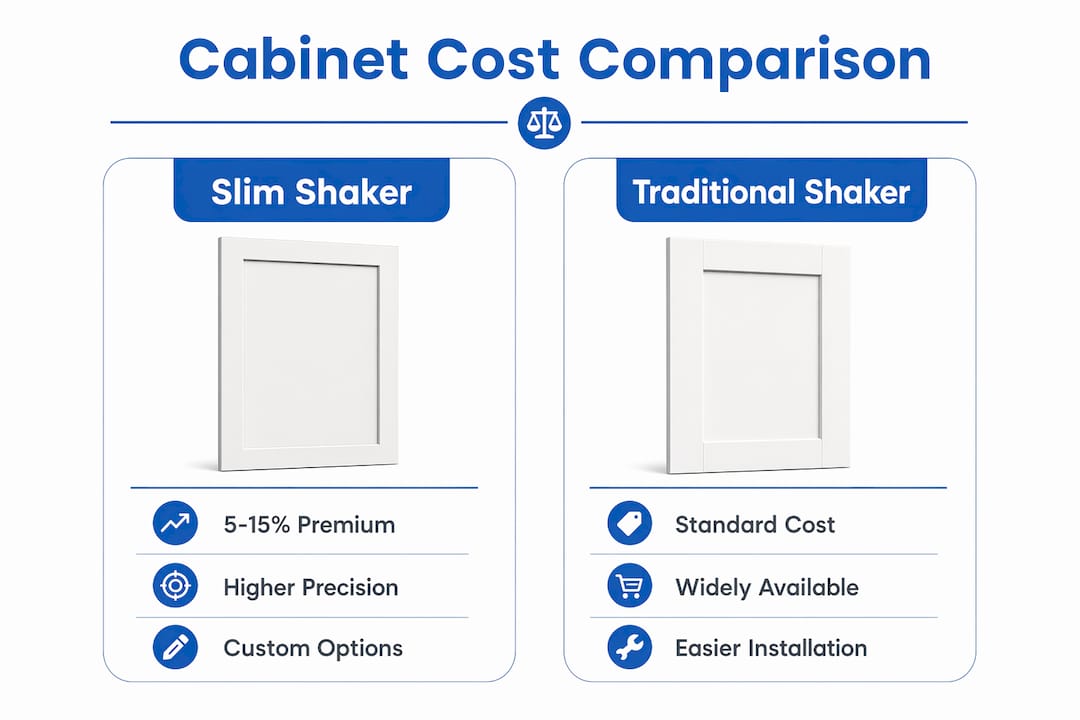
Stock slim shaker cabinets start at around $150 per linear foot. Semi-custom options typically fall in the $300 to $600 range per linear foot. Full custom work, where you specify exact dimensions, materials, and finishes, can run from $500 to over $1,200 per linear foot. The gap between stock and custom is wide, so knowing your priorities before you shop saves real money.
Several factors push costs up or down within those ranges:
- Material choice: Solid hardwood costs more than MDF or veneer
- Finish type: Painted finishes cost less than stained or specialty coatings
- Customization level: Non-standard sizes and configurations add to manufacturing time
- Door construction method: CNC-carved one-piece doors often cost less than hand-assembled five-piece doors at scale
| Cabinet type | Stock price per linear foot | Custom price per linear foot |
|---|---|---|
| Traditional shaker | $130–$550 | $450–$1,100 |
| Slim shaker | $150–$600 | $500–$1,200+ |
The table makes the cost gap clear. For most remodels, the difference between traditional and slim shaker options is modest at the stock level. The gap widens significantly in the custom tier, where precision manufacturing commands a higher price. If budget is your primary concern, exploring refacing versus full remodel options can cut total project costs substantially.
What installation details matter most for slim shaker cabinets?
Slim shaker doors require a higher level of installation precision than traditional cabinetry. Minor cabinet misalignments become very noticeable on narrow frames. Uneven reveals and sagging that might go unnoticed behind a 2.5-inch frame stand out clearly on a 1.5-inch rail.
Reveal consistency is the most critical factor. The reveal is the gap between adjacent doors and between a door and its cabinet box. On slim shaker cabinets, that gap needs to stay uniform across every door in the run. Even a 1/16-inch variation reads as a visible flaw. This is why many experienced remodelers recommend professional installation for full kitchen runs, even if individual cabinet boxes are DIY-friendly.
Hinge selection also matters more than most homeowners expect. Soft-close concealed hinges distribute stress evenly across the door and reduce the risk of warping over time. Overlay amount affects how much of the cabinet box the door covers, and getting that measurement right before ordering prevents costly remakes.
Hardware choice completes the picture. Chunky or oversized hardware looks disproportionate on slim shaker profiles. Minimal bar pulls, small knobs, or finger-edge hardware maintain the clean silhouette the style is designed to deliver.
- Check cabinet box squareness before hanging any doors
- Use a laser level to confirm consistent reveal across the full run
- Choose concealed soft-close hinges rated for your door weight
- Measure overlay precisely and confirm with your door supplier before ordering
- Select hardware scaled to the frame width to keep proportions balanced
Pro Tip: Bar pulls in the 3-inch to 4-inch range or simple finger-edge pulls work best on slim shaker cabinet doors. They add function without competing visually with the narrow frame profile.
How do slim shaker cabinets fit into modern kitchen design?
Slim shaker cabinets increase the perceived surface area of the center panel by reducing the visual mass of the frame. That shift makes compact kitchens feel more open and organized without any structural changes to the room. For urban kitchens and smaller homes, that optical effect is one of the strongest arguments for choosing this style.
The style sits comfortably in modern, transitional, and even some traditional kitchen designs. Its middle-ground appeal comes from preserving the classic recessed-panel structure that homeowners recognize while stripping away the visual heaviness of wider frames. That balance makes slim shaker cabinetry broadly accepted across remodeling projects, regardless of the home’s overall architectural style.
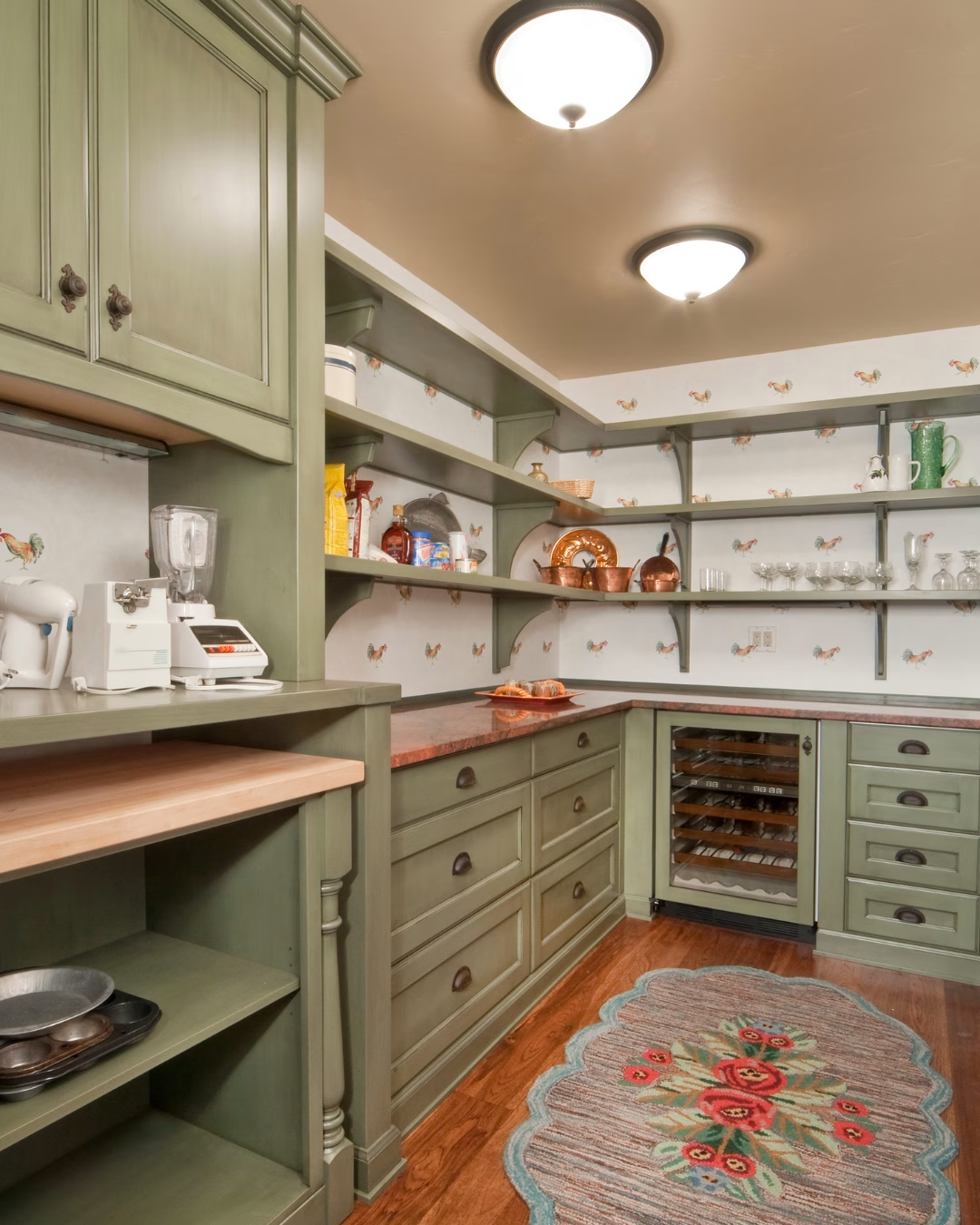
Color and finish choices reinforce the modern feel. Matte painted finishes in white, soft gray, navy, and sage green are the most popular options in 2026. Natural wood veneers in oak and walnut add warmth without adding visual clutter. Both directions pair well with quartz or concrete countertops and minimal hardware.
- White and off-white matte paint: Timeless, brightens small spaces
- Sage green and navy: On-trend for 2026, works in transitional kitchens
- Natural oak veneer: Warm, organic, pairs well with black hardware
- Walnut veneer: Rich tone, best in larger kitchens to avoid feeling heavy
- Two-tone combinations: Upper cabinets in white, lower in a deeper color, adds depth without complexity
Pairing slim shaker cabinet doors with flat-front drawers and integrated appliances creates a fully cohesive modern look. The reduced frame width aligns visually with the flat surfaces around it, making the kitchen feel intentionally designed rather than assembled from mismatched parts. You can explore popular finish options to see how different materials photograph in real kitchen settings before committing.
Key Takeaways
Slim shaker cabinets deliver a modern, minimalist look through narrower frames, and their success depends on precise installation, smart material choices, and hardware scaled to the profile.
| Point | Details |
|---|---|
| Frame width defines the style | Slim shaker rails measure 0.75–1.75 inches, versus 2–2.5 inches on traditional shaker doors. |
| Material choice drives durability | MDF or HDF with veneer panels resists warping better than solid wood in slim profiles. |
| Cost premium is modest at stock level | Slim shaker cabinets cost 5–15% more than traditional options, starting around $150 per linear foot. |
| Installation precision is non-negotiable | Narrow frames expose misalignments that wider traditional frames would hide. |
| Hardware must match the scale | Bar pulls of 3–4 inches or finger-edge pulls keep the slim profile visually balanced. |
Why slim shaker cabinets reward careful planning
I have seen a lot of kitchen remodels go sideways not because of the cabinets themselves, but because of the decisions made before a single door was hung. Slim shaker cabinetry is genuinely one of the best style choices available to homeowners in 2026. It threads the needle between traditional and contemporary better than almost any other door profile. But it is also less forgiving than most people expect.
The installation precision requirement is real, not a technicality. I have watched beautiful slim shaker doors lose their entire visual effect because the cabinet boxes were not perfectly plumb and level. On a wide traditional frame, a small error disappears. On a 1.5-inch rail, it becomes the first thing every visitor notices. If you are a confident DIYer, take extra time on the box installation before the doors go on. That investment pays off every day you walk into your kitchen.
Material selection is the other decision that separates a good outcome from a great one. Choosing a quality veneer panel over solid wood for the center panel is not a compromise. It is the technically correct choice for a slim profile in a kitchen environment. The frame can be solid wood for strength and beauty. The panel should be stable. That combination gives you the look you want and the durability your kitchen demands.
— David
Custom slim shaker doors from Tdm-thedoormaker
Tdm-thedoormaker specializes in custom cabinet doors built to your exact measurements, including slim shaker profiles in a wide range of materials and finishes. The ordering process covers three steps: measure your existing cabinet openings, choose your style and finish, and place your order. That process is designed to fit both full remodels and targeted door replacements.

If you are weighing a full cabinet replacement against a door refacing project, Tdm-thedoormaker’s refacing versus remodel guide lays out the cost and scope differences clearly. For most homeowners, replacing just the doors delivers the visual upgrade they want at a fraction of the full remodel cost. Tdm-thedoormaker’s pricing is built to make that option accessible without sacrificing craftsmanship or fit.
FAQ
What is the standard frame width for slim shaker cabinet doors?
Slim shaker cabinet doors feature frame rails and stiles measuring 0.75 to 1.75 inches wide, with 1.5 inches being the most common. Traditional shaker frames measure 2 to 2.5 inches wide by comparison.
Are slim shaker cabinets more expensive than traditional shaker cabinets?
Slim shaker cabinets cost 5–15% more than traditional shaker options due to tighter manufacturing tolerances. Stock units start around $150 per linear foot, while custom work can exceed $1,200 per linear foot.
Can I install slim shaker cabinet doors myself?
DIY installation is possible, but slim shaker doors require very precise alignment because narrow frames make even small errors visible. Confirm your cabinet boxes are perfectly plumb and level before hanging any doors.
What hardware works best with slim shaker cabinets?
Bar pulls in the 3-inch to 4-inch range, small knobs, or finger-edge hardware work best. Oversized or chunky hardware looks disproportionate on narrow frames and undermines the clean look the style is designed to create.
What finish holds up best on slim shaker cabinet doors?
Matte painted finishes on one-piece MDF or HDF doors offer the best durability for slim shaker profiles. Single-piece construction eliminates the seams where cracking typically starts in multi-piece wood doors.