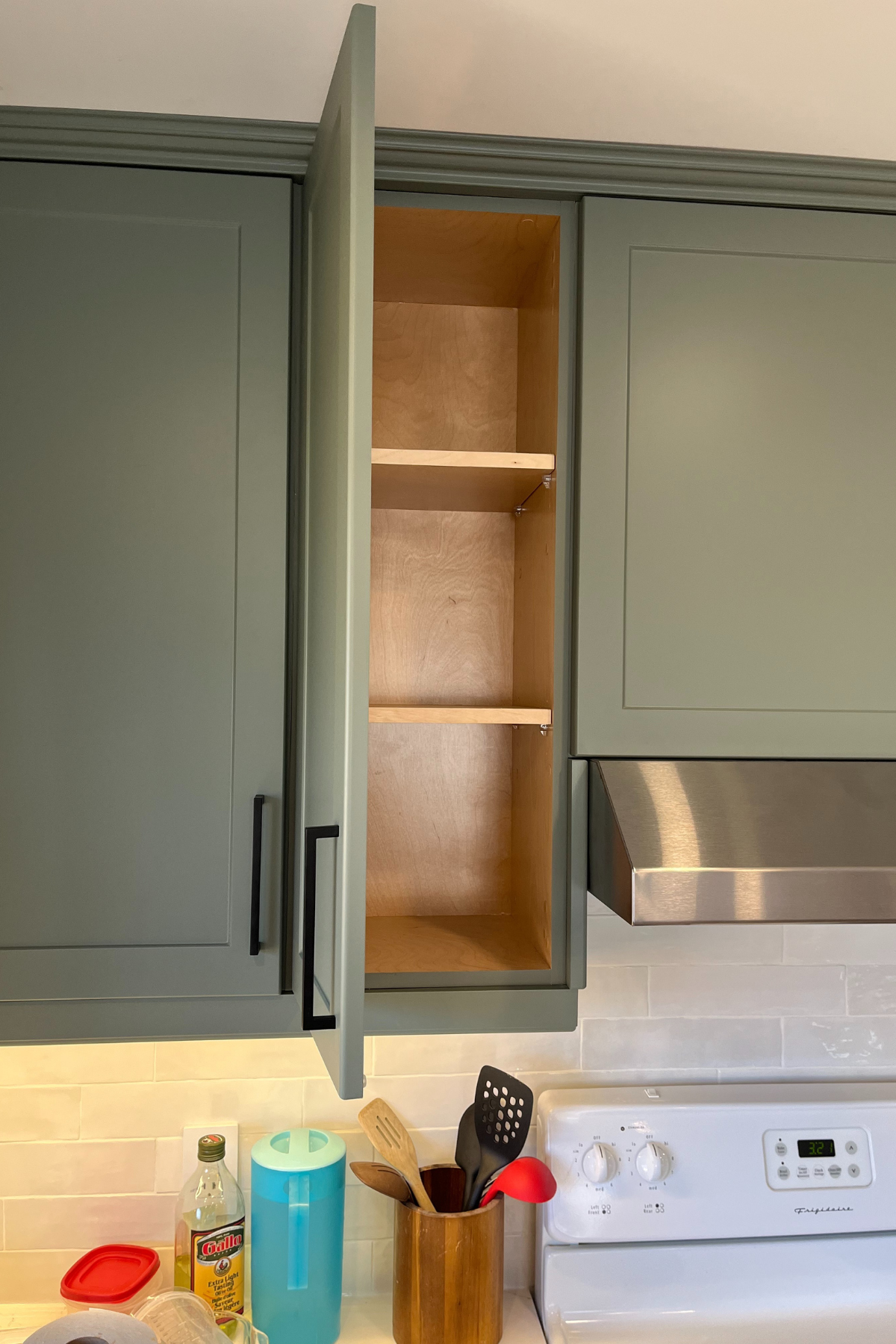
Bathroom furniture replacement doors are custom or stock cabinet door panels designed to fit over your existing cabinetry frames, giving your bathroom a fresh look without tearing out a single cabinet box. The appeal is straightforward: you keep the structure that works, replace only what you see, and spend a fraction of what a full remodel would cost. Choosing the right replacement doors comes down to five factors: accurate measurements, style compatibility with your existing décor, material durability in a humid environment, finish selection, and hinge hole placement.
Here is a quick summary of what makes replacement doors a practical upgrade:
- Affordability: Replacing only the doors costs far less than full cabinet replacement, with no structural demolition required.
- Customization: Tdm-thedoormaker offers over 30 styles and 130+ colors with sizing precision to 1/10,000 of an inch, so your new doors fit exactly.
- Style flexibility: From shaker to flat panel to contemporary, you can match your current décor or shift the entire aesthetic.
- Measurement accuracy: Height, width, and hinge placement must all be recorded before ordering to guarantee compatibility.
- Moisture resistance: Bathroom environments demand materials and finishes rated for humidity, not just standard interior conditions.
- Ease of installation: Most bathroom vanity cabinet door replacements require only basic tools and can be completed in a single afternoon.
Table of Contents
- What door styles work best for bathroom cabinet replacement?
- Which materials and finishes hold up in a bathroom environment?
- How do you order and customize bathroom vanity replacement doors?
- How to install bathroom cabinet replacement doors step by step
- Why factory-drilled hinge holes make a real difference
- Key Takeaways
- Tdm-thedoormaker gives you custom doors without the remodel price tag
What door styles work best for bathroom cabinet replacement?
The style you choose shapes the entire feel of your bathroom, so it is worth understanding what each option actually delivers before you order. Popular bathroom cabinet door styles include shaker, raised panel, flat panel, louvered, and contemporary slab designs, each with a distinct visual character and practical profile.
Shaker doors are the most requested style in American homes right now, and for good reason. Their recessed center panel and clean frame work equally well in traditional and modern bathrooms. They are easy to wipe down, and the simple geometry means fewer crevices where moisture can collect.
Raised panel doors bring a more formal, traditional look. The center panel sits above the frame, creating shadow lines that add visual depth. They suit classic or transitional bathrooms well, though the additional detail means slightly more surface area to clean.
Flat panel (also called slab) doors are the go-to for contemporary and minimalist spaces. No frame, no detail, just a smooth face. They photograph beautifully and pair naturally with integrated pulls or touch-latch hardware.
Louvered doors feature horizontal slats that allow airflow, which can be genuinely useful in a bathroom where ventilation matters. The trade-off is that the slats collect dust and require more careful cleaning. If you like the look but want lower maintenance, Tdm-thedoormaker offers louvered door alternatives worth considering.
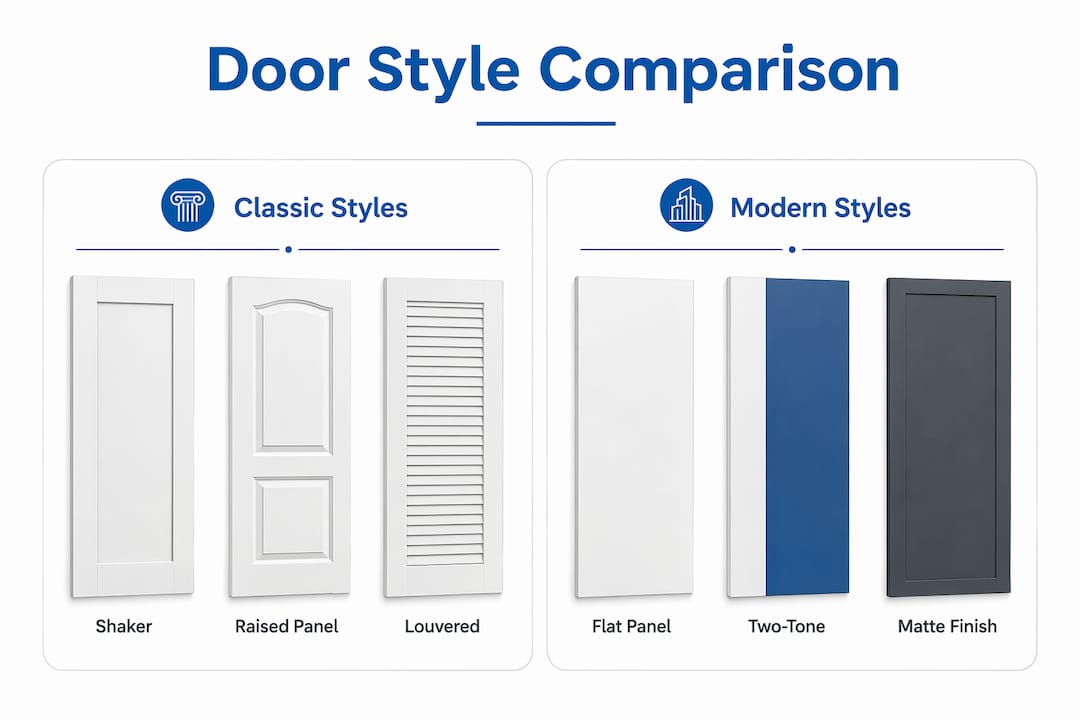
Contemporary designs often combine elements: a flat center with a thin frame, or a V-groove detail that adds dimension without the bulk of a raised panel. These work well in bathrooms with modern fixtures and clean-line hardware.
A few practical notes on each style:
- Shaker: Low maintenance, versatile, widely available in moisture-resistant finishes.
- Raised panel: Elegant but requires more cleaning attention around the panel edges.
- Flat panel: Best for modern aesthetics; shows fingerprints more readily on high-gloss finishes.
- Louvered: Good ventilation, higher cleaning effort.
- Contemporary: Flexible design language; pairs well with brushed nickel or matte black hardware.
Pro Tip: If your bathroom has existing trim or molding with a traditional profile, a shaker door will usually coordinate better than a flat panel. If your fixtures are modern, flat panel or contemporary styles will feel more cohesive.
Current cabinet door design trends in 2026 lean toward two-tone color schemes, matte finishes over high-gloss, and integrated hardware or touch-latch systems. Warm wood tones paired with white or off-white frames are particularly popular in bathroom vanity cabinet door replacement projects this year.
Which materials and finishes hold up in a bathroom environment?
Bathrooms are hard on cabinet doors, and choosing the right doors for bathrooms is essential to ensure durability and style. Steam from showers, splashed water near the sink, and fluctuating humidity all stress materials that would perform fine in a kitchen or bedroom. Choosing the wrong material means warping, peeling, or swelling within a year or two.
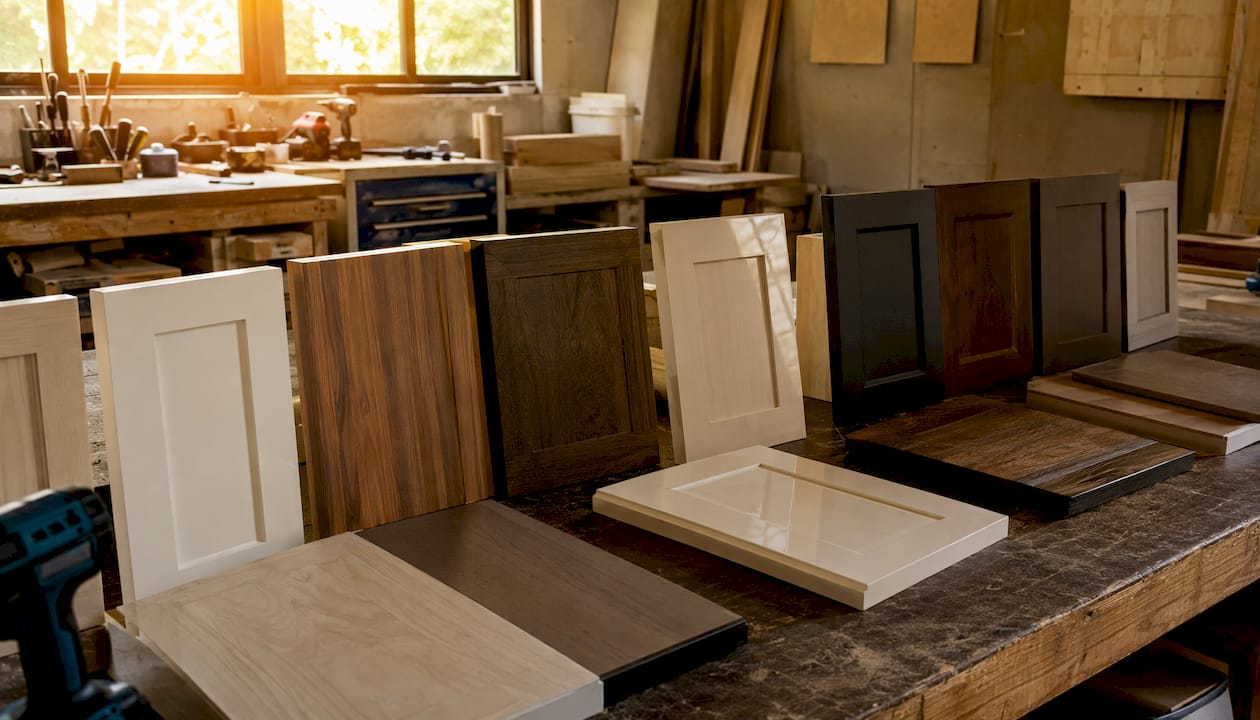
Materials like solid wood, MDF, PVC, and thermofoil each behave differently in humid conditions. Here is how they compare:
| Material | Moisture Resistance | Durability | Maintenance | Relative Cost |
|---|---|---|---|---|
| Solid wood | Moderate (sealing required) | High | Medium | Higher |
| MDF | Low (unless sealed/painted) | Medium | Low | Lower |
| PVC | Excellent | High | Very low | Medium |
| Thermofoil (vinyl-wrapped MDF) | Good | Medium-High | Low | Medium |
| Wood veneer | Low-moderate | Medium | Medium | Medium-Higher |
Solid wood doors look premium and can be refinished, but they require proper sealing in a bathroom and may expand or contract with humidity swings. MDF is stable and takes paint well, but it is vulnerable to water at the edges if the finish is compromised. PVC doors are the most moisture-resistant option and require almost no maintenance, making them a practical choice for bathrooms with heavy daily use. Thermofoil wraps an MDF core in a vinyl film, offering a smooth, easy-clean surface that resists moisture reasonably well as long as the film stays intact and away from direct heat sources.
For finishes, paint is the most common choice and works well on MDF and PVC substrates. High-gloss coatings add a sleek look but show water spots and fingerprints more readily. Matte and satin finishes are more forgiving in daily use. Laminate finishes offer excellent durability and are available in a wide range of colors and wood-grain patterns. Stain works only on solid wood or veneer and requires a clear topcoat for moisture protection.
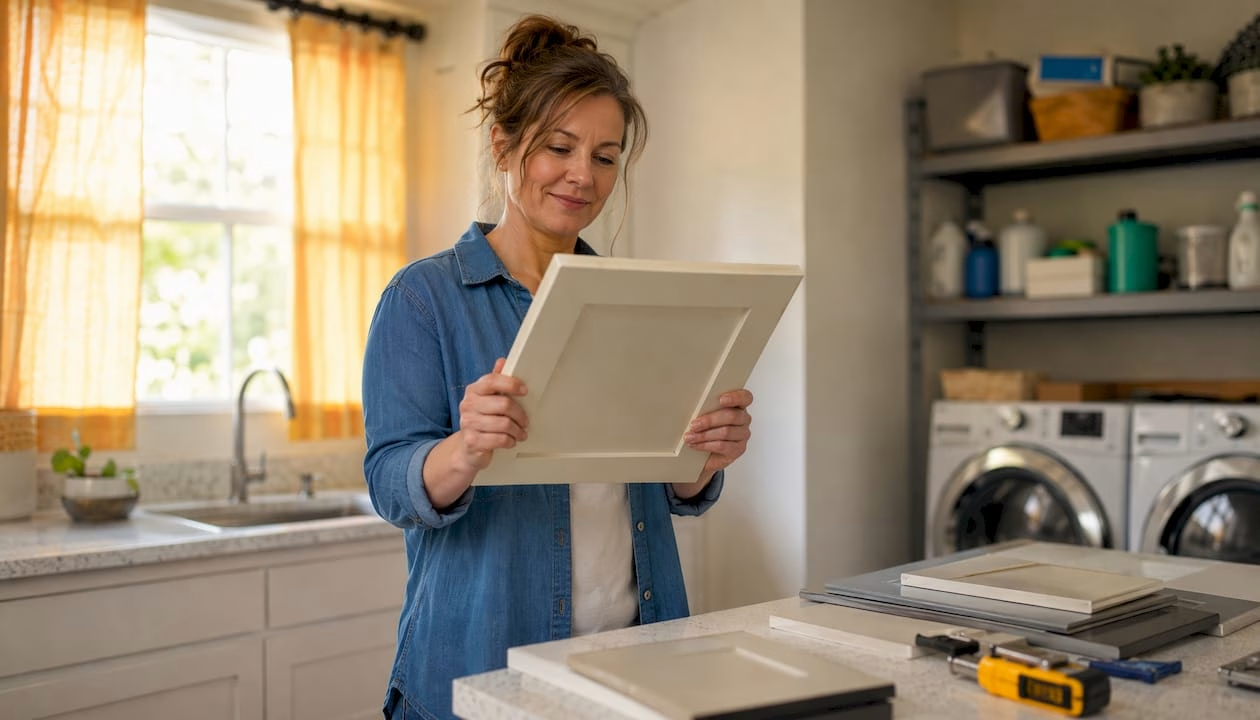
Tdm-thedoormaker’s finish selection covers more than 130 colors across paint, laminate, and specialty coatings, with options specifically suited for bathroom humidity. Ordering a sample door or color swatch before committing to a full order is a practical step that prevents costly mismatches.
How do you order and customize bathroom vanity replacement doors?
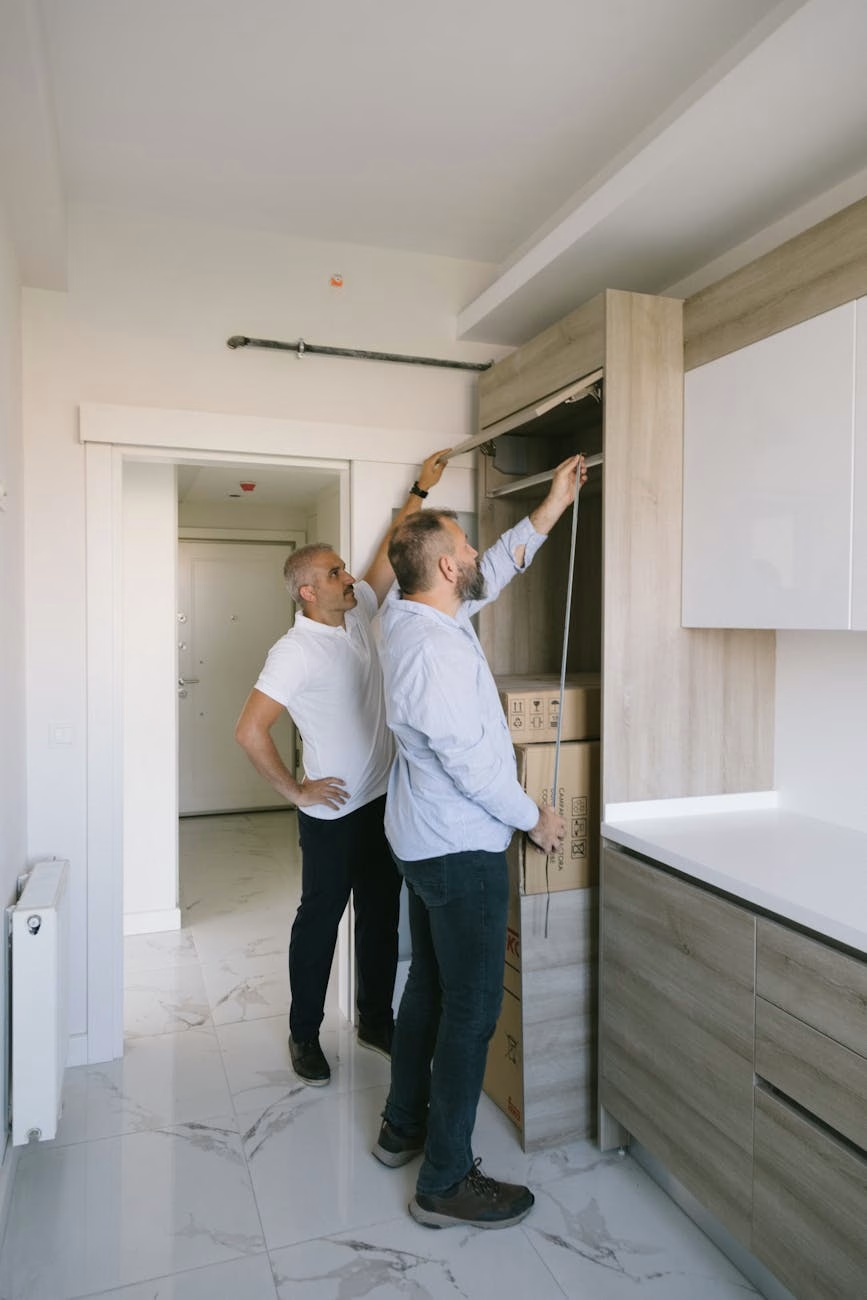
The ordering process is more straightforward than most homeowners expect, provided you take accurate measurements before you start. Measuring existing doors means recording height, width, and thickness, plus noting the exact position of hinge holes and any hardware cutouts. Write these down for every door individually, because bathroom vanity cabinets often have doors of slightly different sizes even within the same unit.
Customization options available through Tdm-thedoormaker’s online configurator include:
- Style selection: Choose from over 30 door profiles.
- Material and finish: Select your substrate and surface finish from 130+ color options.
- Exact sizing: Enter dimensions to 1/10,000 of an inch for a precise fit.
- Hinge hole drilling: Order doors with factory-bored hinge holes pre-drilled to your specified pattern.
- Sample doors and swatches: Test color and finish in your actual bathroom lighting before ordering the full set.
- Drawer fronts and accessories: Match replacement doors with coordinating drawer fronts and mullions.
The online configurator walks you through each decision step by step, with video tutorials available for measurement and ordering. This is particularly useful if you are replacing bathroom vanity doors only and want to match an existing finish without guessing.
Pro Tip: Always order factory-drilled hinge holes when available. Pre-bored holes are positioned with machine precision, which means your doors hang level on the first try without any measuring or drilling on your end.
Compatibility with existing vanity brands is achievable when you record hinge placement accurately. Replacement doors fit many existing vanity cabinet brands when the sizing and hinge pattern match the original. If your current doors use European-style cup hinges (the most common type in modern bathroom furniture), the 35mm boring pattern is standard and easy to replicate.
How to install bathroom cabinet replacement doors step by step
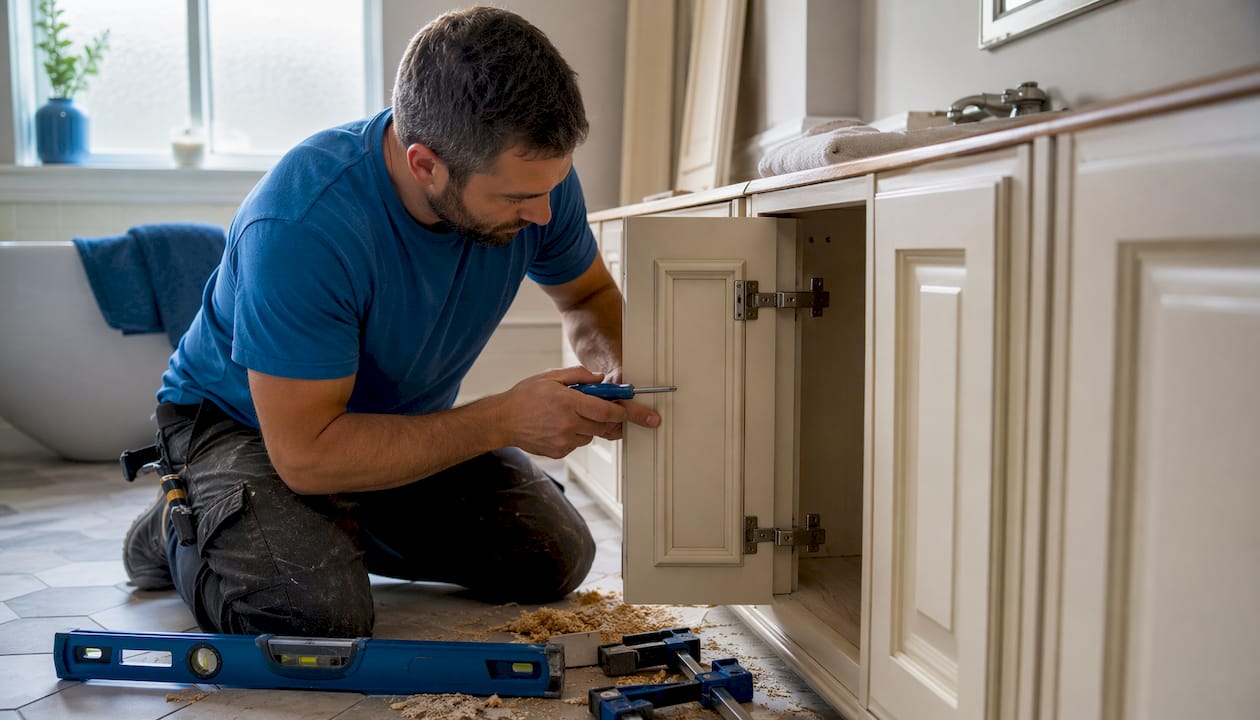
Installation is the part that intimidates most homeowners, but the actual process is manageable with basic tools and a clear sequence. Replacing only the cabinet doors is far less disruptive than a full cabinet tearout, and most bathroom vanity door swaps can be completed in two to four hours.
- Remove the old doors. Open each door fully, then unscrew the hinges from the cabinet frame. Have a helper hold the door while you remove the last screws to avoid dropping it.
- Label each door before setting it aside. Mark the door’s location (top left, bottom right, etc.) with painter’s tape and a marker. This prevents confusion when you are cross-referencing sizes during installation.
- Transfer or remove existing hinges. If your new doors arrive without hinges, remove the hinges from the old doors and set them aside. If your new doors have factory-bored hinge holes, your existing cup hinges will clip directly into the new cups.
- Verify hinge hole alignment. Hold the new door against the cabinet opening before attaching anything. Check that the hinge holes line up with the mounting plates on the cabinet frame.
- Mount the new doors. Clip or screw the hinges into the cabinet frame mounting plates. Most European-style hinges allow for three-axis adjustment (up/down, left/right, in/out), so you can fine-tune alignment after hanging.
- Attach hardware. Install pulls, knobs, or push-to-open mechanisms. Use a template or a simple cardboard jig to keep hardware placement consistent across all doors.
- Check alignment and adjust. Open and close each door several times. Adjust hinge screws as needed until every door sits flush and swings smoothly.
Common installation issues include doors that sit crooked (usually a hinge adjustment), gaps that are uneven (check that the cabinet frame is level), and hinges that do not clip securely (confirm the cup size matches the boring diameter). Most of these resolve with minor hinge adjustments rather than any re-drilling.
Pro Tip: Keep your old doors in place until your new ones arrive. They serve as a physical reference for hinge positions and sizing, and they keep your bathroom functional during the wait.
Tdm-thedoormaker provides installation guides and video tutorials on refacing bathroom vanity doors that walk through each step with visual support, which is especially helpful if this is your first replacement project.
Why factory-drilled hinge holes make a real difference
Drilling hinge holes by hand is one of the most common sources of installation problems in DIY door replacement. A boring bit that drifts even 1–2mm off center produces a door that hangs visibly crooked, and correcting it often means filling the hole and re-drilling, which damages the door face.
Factory-bored hinge holes are drilled with CNC equipment to exact depth and diameter specifications, which eliminates the drift problem entirely. The result is consistent hole placement across every door in your order, so all your doors hang at the same height and depth without individual adjustment.
Practical advantages of factory drilling include:
- Consistent depth: Every hole is bored to the same depth, so cup hinges seat fully and clip securely.
- Accurate positioning: Hole centers are placed exactly where specified, matching your existing cabinet mounting plates.
- Faster installation: No measuring, no drilling, no cleanup. You clip the hinge into the pre-bored cup and hang the door.
- Fewer errors: Eliminates the risk of splitting the door face or boring at the wrong angle.
For DIY renovators, the time savings alone justify the add-on cost. Professional cabinetmakers order factory-bored doors as a matter of course precisely because it removes a variable that is easy to get wrong with hand tools. When you order through Tdm-thedoormaker, factory hinge hole drilling is available as a configurable option during checkout, and the boring pattern can be specified to match your existing hardware layout.
Key Takeaways
Replacing bathroom cabinet doors is the most cost-effective way to refresh your vanity’s appearance without structural work, provided you measure accurately, choose moisture-resistant materials, and order factory-drilled hinge holes.
| Point | Details |
|---|---|
| Measure before you order | Record height, width, and hinge positions for every door individually before placing your order. |
| Match material to the environment | PVC and thermofoil resist bathroom humidity best; solid wood requires proper sealing to perform well. |
| Style drives the aesthetic | Shaker suits most bathrooms; flat panel works for modern spaces; louvered adds ventilation at the cost of cleaning effort. |
| Factory hinge holes save time | Pre-bored holes from CNC equipment eliminate alignment errors and speed up installation significantly. |
| Tdm-thedoormaker for custom orders | Over 30 styles, 130+ colors, and precision sizing to 1/10,000" with factory hinge drilling available at checkout. |
Tdm-thedoormaker gives you custom doors without the remodel price tag
Spending thousands on a full bathroom remodel to fix doors that are dated or damaged is rarely the right call. Tdm-thedoormaker offers a direct path to the same result: custom-sized bathroom furniture replacement doors in over 30 styles and 130+ colors, ordered entirely online, cut to your exact dimensions to 1/10,000 of an inch, and shipped ready to hang.
What sets Tdm-thedoormaker apart from off-the-shelf options is the precision. Doors are sized to 1/10,000 of an inch, factory hinge holes are drilled to your specified pattern, and the online configurator walks you through every decision from style to finish to hardware. You can order sample colors and swatches before committing, so there are no surprises when the doors arrive. Whether you are replacing a single vanity door or refacing an entire bathroom, the process is the same: measure, configure, order. Head to Tdm-thedoormaker’s custom cabinet doors page to configure your replacement doors and get an instant price.