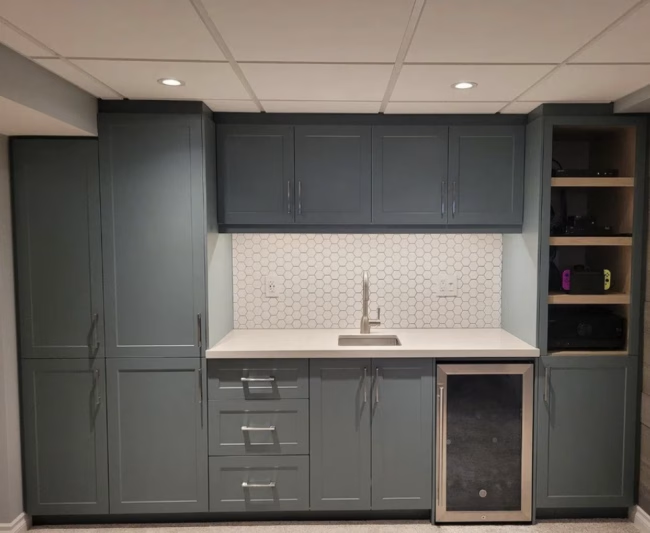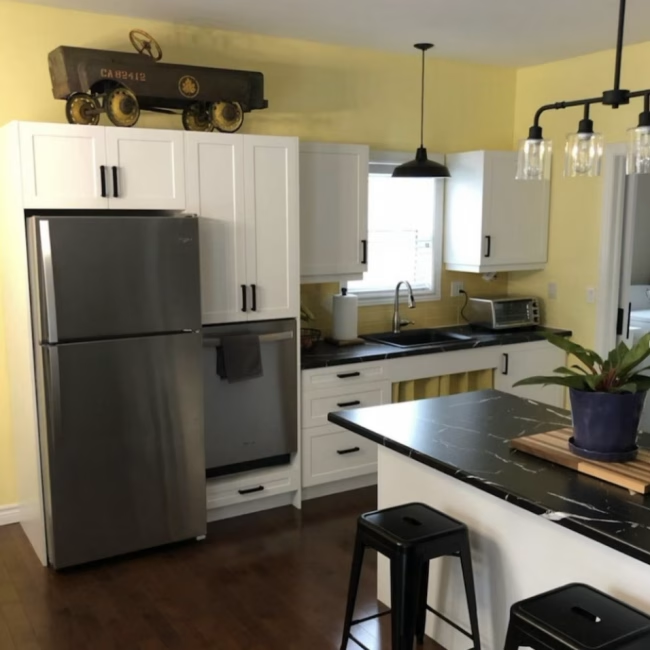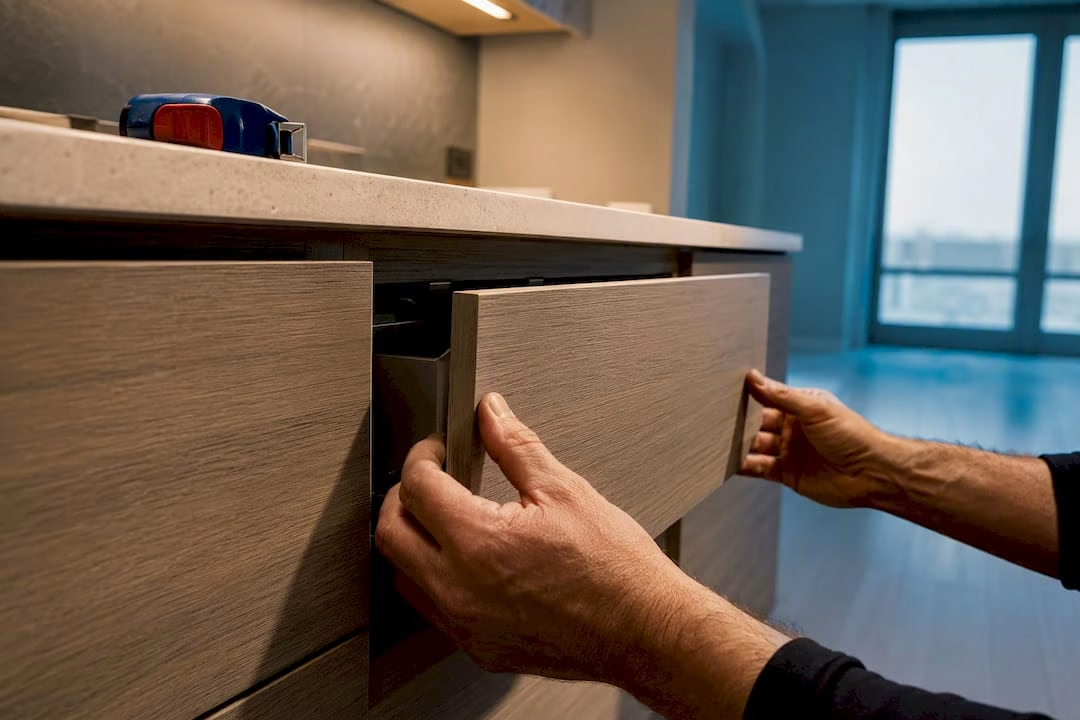
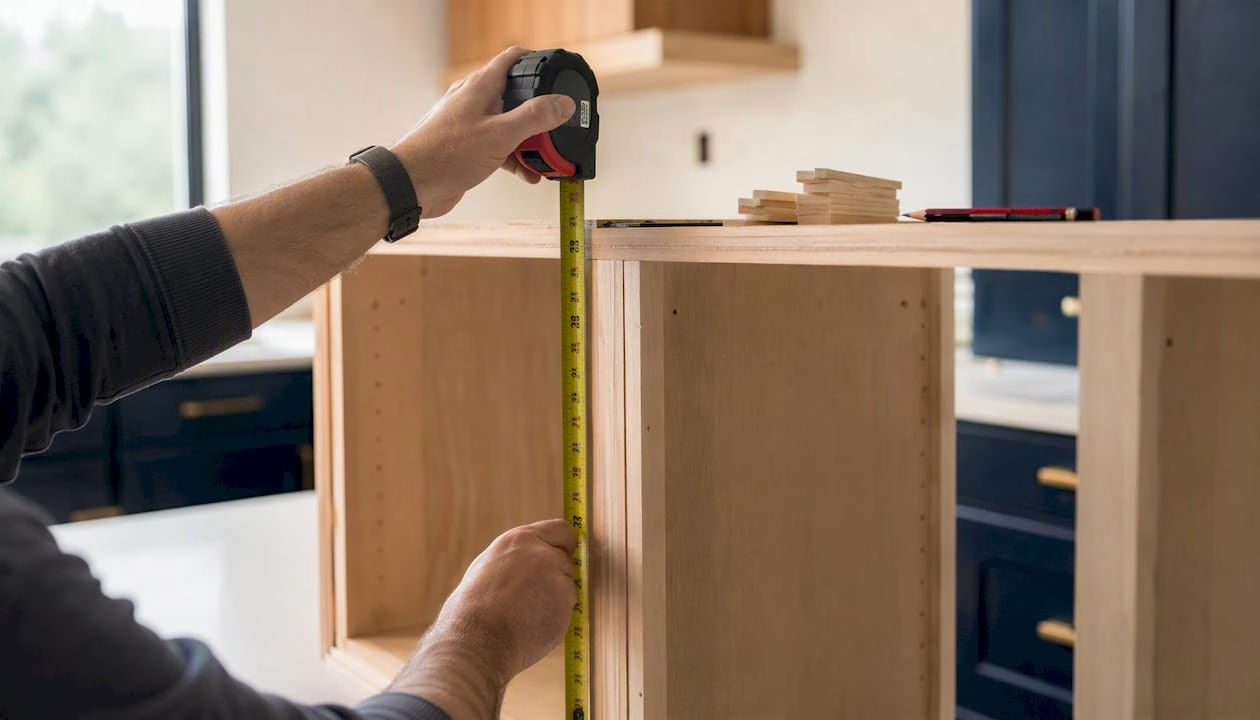
For frameless cabinet refacing, size every door so adjacent reveals are 1/8" (3 mm), and choose your hinge before you finalize any width. Those two decisions control everything else in the process.
The standard reveal for full-overlay frameless cabinets is 1/8". When two doors meet at the center, each door loses 1/16" from its width so the pair together totals that 1/8" clearance. Frameless cabinetry uses 35 mm concealed European hinges with a cup drilling depth of typically 12–13 mm, mounted directly to the cabinet side panel.
Before you measure a single opening, run through this quick checklist:
- Identify your cabinet type (frameless vs. face frame) using the field test below
- Choose your hinge type and overlay rating
- Measure each opening inside-to-inside for both width and height
- Apply the correct formula for your overlay style
- Confirm hinge cup depth matches your door thickness
- Order with tolerances noted
Key Takeaways
Frameless door sizing requires choosing your hinge and overlay before measuring, applying the 1/8" reveal formula to every opening, and supplying calculated door dimensions (not raw opening sizes) when you order.
| Point | Details |
|---|---|
| Hinge first, then measure | Lock in hinge type and overlay rating before calculating any door width or height. |
| Standard reveal is 1/8" | Each door edge needs 1/8" clearance; double doors each lose 1/16" at the center seam. |
| 35 mm hinge, 12–13 mm cup | Confirm cup depth matches door thickness before ordering pre-drilled doors. |
| Use the formula | Door Width = Opening + (2 × Overlay) − (2 × Gap); run it through a calculator to verify. |
| Tdm-thedoormaker configurator | Accepts measured openings, hinge and bore options, and cuts to 1/10,000" for Canadian orders. |
Table of Contents
- What are the right formulas for frameless door sizing?
- How do you measure frameless cabinet openings accurately?
- What hinge specs do you need to confirm before ordering?
- What mistakes cause frameless doors to fit poorly?
- How do you prepare a complete order for The Door Maker’s configurator?
- A supplier’s perspective on what actually saves time
- Tdm-thedoormaker makes frameless door sizing straightforward for Canadians
- Sources
What are the right formulas for frameless door sizing?
The math behind custom frameless door sizing is straightforward once you know your overlay and reveal. Here are the core formulas:
Full-overlay single door:
Door Width = Opening Width + (2 × Overlay) − (2 × Reveal)
Door Height = Opening Height + (2 × Overlay) − (2 × Reveal)
Double doors meeting at center:
Each Door Width = (Opening Width ÷ 2) + Overlay − Reveal
Inset door:
Door Width = Opening Width − (2 × Gap)
Door Height = Opening Height − (2 × Gap)
The cabinet door calculator formula used by most online tools follows: Door Width = Opening + (2 × Overlay) − (2 × Gap). Running your numbers through a calculator before ordering cuts errors significantly.
Three worked examples
-
Single full-overlay door. Opening is 14" wide × 28" tall. Standard overlay is 1/2" per side, reveal is 1/8" per side.
Door Width = 14 + (2 × 0.5) − (2 × 0.125) = 14 + 1 − 0.25 = 14.75"
Door Height = 28 + 1 − 0.25 = 28.75" -
Double doors meeting at center. Opening is 24" wide × 30" tall. Same overlay and reveal.
Each Door Width = (24 ÷ 2) + 0.5 − 0.0625 = 12 + 0.5 − 0.0625 = 12.4375" (≈ 12-7/16")
Door Height = 30 + 1 − 0.25 = 30.75"
Note: each door subtracts 1/16" (not 1/8") at the center seam so the pair totals 1/8" clearance. -
Inset door. Opening is 15" wide × 24" tall. Gap is 1/8" per side.
Door Width = 15 − (2 × 0.125) = 14.75"
Door Height = 24 − (2 × 0.125) = 23.75"
Always round to your supplier’s stated tolerance, typically 1/32" or finer. Tdm-thedoormaker cuts to 1/10,000" precision, so you can supply decimal dimensions with confidence.
How do you measure frameless cabinet openings accurately?
Measuring doors for frameless cabinets starts with one non-negotiable rule: measure inside-to-inside across the cabinet opening, not across the exterior box. Record both width and height, then measure again to confirm.
Quick field test to identify your cabinet type. Open a door and look at the opening edge. If you see a 1–2" solid-wood border framing the opening, you have a face-frame cabinet. If the opening goes straight to a plywood side panel with no wooden border, it’s frameless. Using face-frame overlay logic on a frameless box is the most common refacing error, and it causes doors to sit proud or bind on the side panel.
Tools you need:
- Steel tape measure (lock it at the opening edge, not the door face)
- Feeler gauge or digital caliper for reveal verification
- Straightedge to check for out-of-square openings
- Pencil and notepad or a phone for photos
Measurement template to copy into your order form:
- Opening W × H: _____ × _____
- Hinge side: Left / Right
- Overlay desired: _____
- Reveal per side: _____ (standard 1/8")
- Door thickness: _____
- Hinge cup option: Pre-bored / No bore
- Quantity: _____
Use Tdm-thedoormaker’s step-by-step measuring guide to print a ready-made template before you start.
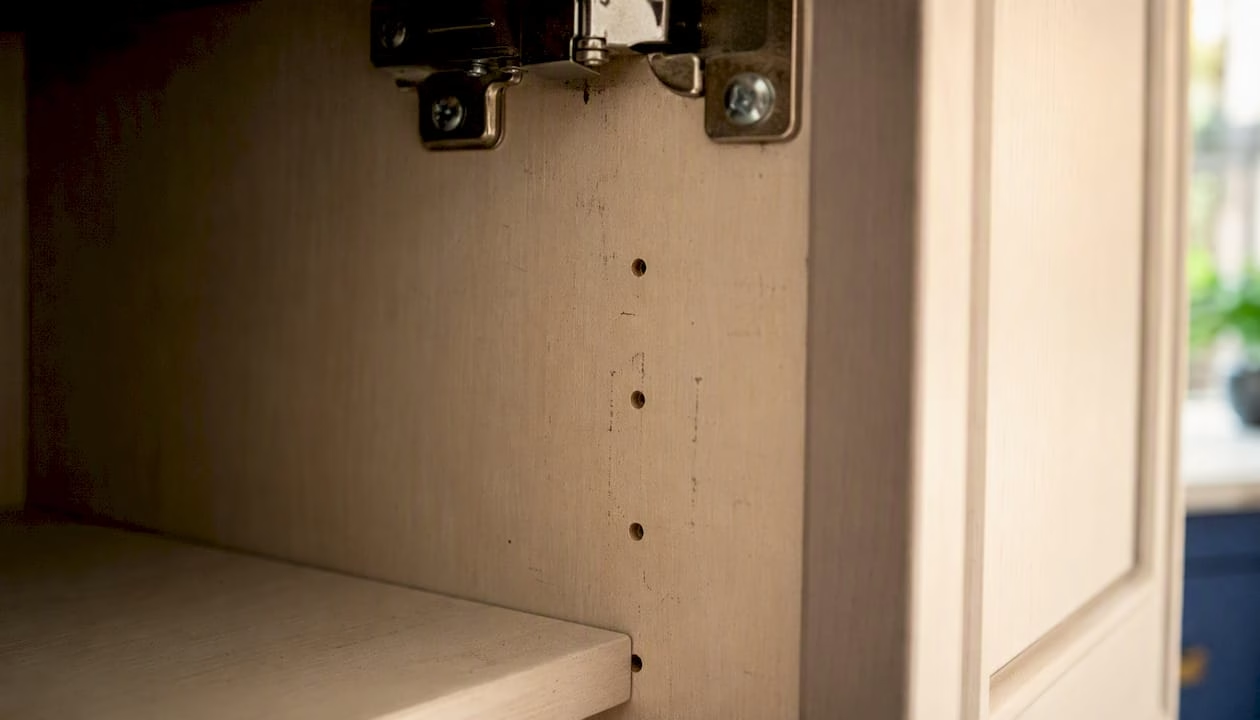
Pro Tip: Photograph the hinge mounting area and the inside face of the side panel before ordering. That image confirms whether your existing hinge plate holes are standard 32 mm system spacing, which affects whether pre-drilled doors will drop straight in.
What hinge specs do you need to confirm before ordering?
Frameless cabinets use 35 mm concealed European hinges, and the cup drilling depth is typically 12–13 mm. That depth is not universal across all door thicknesses, so confirm it before you finalize dimensions.
| Overlay Type | Where Overlay Is Measured | Typical Use Case |
|---|---|---|
| Full overlay | Door covers full cabinet side panel face | Single door per opening, frameless box |
| Half overlay | Door covers half the shared partition | Two doors sharing one center partition |
| Inset | Door sits flush inside the opening | Furniture-style or traditional look |
Hinge geometry directly sets the overlay. Change the hinge model and you change the required door width, which is why industry guides consistently recommend choosing the hinge before measuring. A full-overlay hinge rated for 1/2" overlay on a frameless box is not interchangeable with a half-overlay hinge without recalculating every door on that run.
Before placing an order, confirm these hinge-related specs on your job sheet:
- Cup diameter: 35 mm (standard for European concealed hinges)
- Cup depth: 12–13 mm (verify against your door thickness)
- Overlay rating: full, half, or inset
- Hinge side: left or right per opening
- Soft-close: yes or no
- Pre-boring: requested or field-drilled
For a deeper look at hinge selection and compatibility, Tdm-thedoormaker’s full overlay cabinet hinges guide covers European hinge models and plate offsets in detail.
What mistakes cause frameless doors to fit poorly?
Most fit problems trace back to one of four errors, and most are fixable without reordering.
- Using face-frame overlay logic on a frameless box. Overlay is measured from a different reference point in each system. On a frameless box, overlay is measured from the cabinet opening edge to the door edge. Applying face-frame math here causes doors to overhang or bind the side panel.
- Ordering before choosing a hinge. If you swap hinge models after ordering, the overlay changes and the door width is wrong. Lock in the hinge first.
- Wrong cup depth. A 12 mm cup in a door that needs 13 mm leaves the hinge arm proud of the door face. Re-boring is possible in the field, but it adds time and risk of tear-out.
- Insufficient reveal between doors. Anything tighter than 1/8" raises the risk of binding from seasonal wood movement. MDF is more stable than solid wood, but even MDF doors in Canadian kitchens see enough humidity swing to make a 1/16" reveal a gamble on a wide run.
Troubleshooting after installation:
- Gaps uneven across a run: re-check hinge plate position; most European hinges allow 2–3 mm of lateral adjustment without re-drilling.
- Door rubs on adjacent door: confirm each door was cut 1/16" short at the center seam, not 1/8".
- Soft-close doesn’t engage: hinge arm may be set too shallow; adjust the mounting screw depth.
- Door sits proud of box face: cup depth is too shallow for the door thickness; re-bore or swap hinge model.
For DIY renovators tackling door replacement for the first time, common pitfalls in door replacement projects covers field-level installation errors worth reviewing before you hang the first door.
How do you prepare a complete order for The Door Maker’s configurator?
To avoid rework, supply your measured opening dimensions, specify hinge type and overlay, and request a sample door if you are unsure of finish or thickness. Complete specs on the first submission mean doors that fit without a second order.
Order workflow:
- Measure each opening inside-to-inside; record W × H for every opening
- Choose door style, thickness, and finish in the configurator
- Select hinge cup option (pre-bored 35 mm or no bore) and overlay type
- Upload photos of the hinge mounting area and side panel
- Enter calculated door dimensions (not raw opening dimensions)
- Add tolerance notes and confirm quantity per opening
- Place order; request color swatch or sample door if finish is undecided
Each line on your order form should include: opening W × H, finished door W × H (your calculated figure), hinge cup depth option, door thickness, hinge side (L/R), quantity, and any tolerance notes.
Tdm-thedoormaker’s cabinet door calculator lets you validate your numbers before checkout. Run every opening through it, especially double-door pairs where the center-seam math is easy to get wrong. Sample doors and color swatches are available as add-ons, and they are worth ordering when you are matching existing finishes in a kitchen that has seen a few years of use.
A supplier’s perspective on what actually saves time
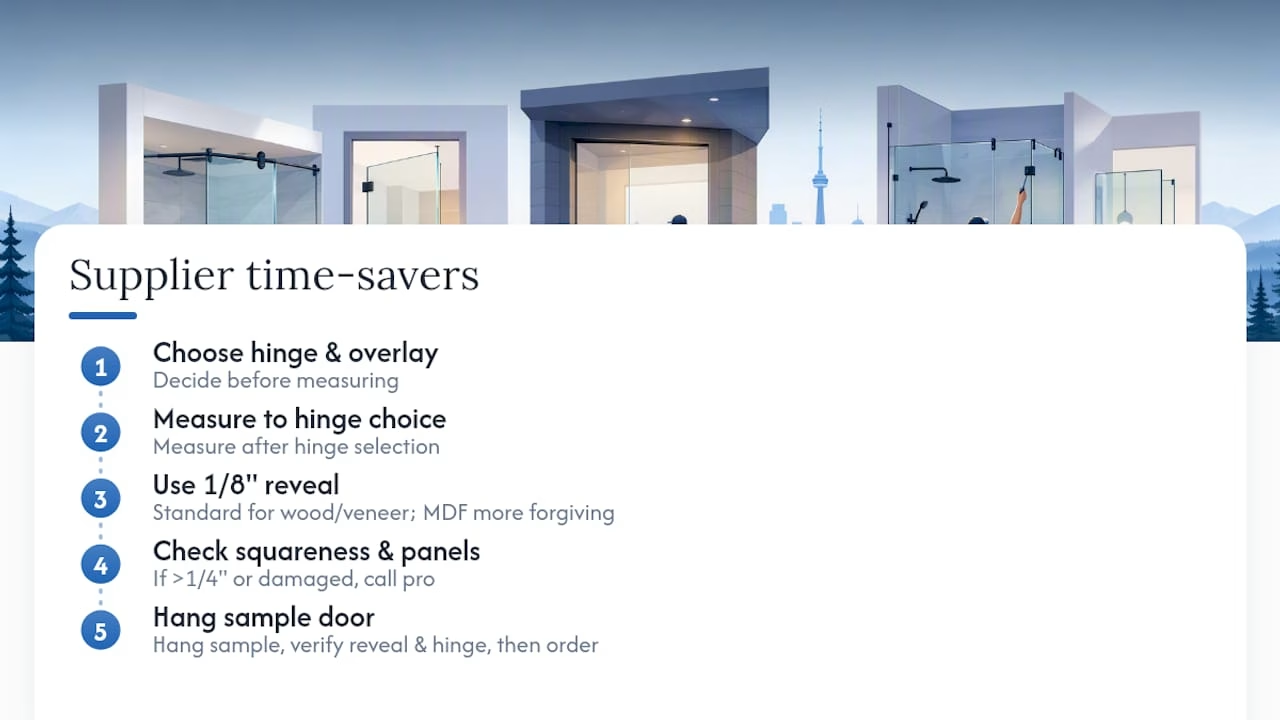
Pick the hinge and overlay first, then measure to that choice. Every experienced contractor who calls in with a reorder problem started by measuring before deciding on a hinge.
The 1/8" reveal standard exists for a reason. Canadian kitchens cycle through meaningful humidity changes between winter and summer, and a reveal tighter than 1/8" on a wood or wood-veneer door is a binding problem waiting to happen. MDF doors are more forgiving, but the standard still holds as a safe default.
When openings are out of square by more than 1/4", or when the side panels show damage or non-standard hinge patterns, call a pro before ordering. Pre-drilled doors from Tdm-thedoormaker drop in cleanly when the box is sound, but a damaged side panel needs repair before new doors will hang correctly. Sample doors are available for exactly this situation: hang one, check the reveal and hinge engagement, then order the full run.
Tdm-thedoormaker makes frameless door sizing straightforward for Canadians
Getting from accurate measurements to doors that fit is the whole job, and Tdm-thedoormaker’s configurator is built around that sequence. You enter your measured openings, choose your overlay and hinge cup option, and the system cuts doors to your calculated dimensions with precision to 1/10,000".

Pre-drilling for 35 mm European hinge cups is available as an add-on, so doors arrive ready to hang. Over 30 door styles and 130+ colors and finishes are available, with sample doors and color swatches to confirm your choice before committing to a full order. Canadian shipping and support are included. When you are ready to move from measuring to ordering, start your custom door order through the configurator and supply your specs directly.
Sources
These guides and tools support the measurement and ordering steps covered above. Save the measurement template and your opening photos before placing any order.
- Face Frame vs Frameless Cabinet Hinges – Woodworker Express Blog
- How to Determine Cabinet Door Size | Beginner’s Guide
- How to Measure Doors for Frameless Cabinets
- Cabinet door calculator
- Face Frame vs Frameless Cabinets