Cabinet refacing is the right call for a rental unit when the cabinet boxes are structurally sound. It costs less and moves faster than full replacement, which makes it a strong fit for tight turnover windows. But refacing cannot fix a warped box, a moisture-damaged frame, or a layout that no longer works for the space. Before you order anything, inspect the boxes. The checklist below tells you exactly what to look for.
TL;DR:
- Refacing only works if cabinet boxes are in good condition, as it does not fix warping, water damage, or layout issues.
- Typical refacing takes one to three days and costs a third to a half of full replacement, mainly including new doors, veneer, and hardware.
- Major structural damage or failed joints make refacing ineffective, leading to higher costs for full cabinet replacement instead.
- Ordering pre-sorted kits, scheduling around lease turnovers, and labeling parts improves efficiency and reduces delays on multi-unit projects.
- Refacing enhances tenant perception and reduces maintenance complaints but offers little value if the kitchen’s structural condition is poor or if the unit’s turnover is driven by location or price.
Table of Contents
- Why Rental Cabinet Refacing Makes Sense for Landlords
- What Does Cabinet Refacing Include and How Long Does It Take?
- Cost and ROI: Real Numbers Landlords Should Use to Decide
- A Landlord’s Checklist: Inspect, Grade, Decide
- Scaling Refacing Across a Rental Portfolio
- How The Door Maker’s Custom Doors Fit Rental Refacing Projects
- Permitting and Regulatory Considerations for Rental Upgrades
- Coordinating Cabinet Refacing With Other Unit Maintenance
- How to Communicate With Tenants During Refacing Work
- Warranty and Service Considerations After Installation
- What Refacing Does for Rental Value and Tenant Satisfaction
- Author Perspective: A Short, Practical Recommendation
- Quick CTA: Where to Order Custom Doors and Next Steps
- Sources
- FAQ
Why Rental Cabinet Refacing Makes Sense for Landlords
Refacing works for landlords because it solves the two problems that matter most in property management: cost and downtime. Full cabinet replacement often costs significantly more than refacing, and that gap changes the math on a portfolio with multiple units due for a kitchen update. Refacing projects also tend to wrap up in days rather than the weeks a full replacement demands, which matters when every vacant day costs you rent.
The trade-offs that actually move the needle for rentals:
- Lower material and labor cost than tearing out and rebuilding cabinet boxes
- Faster turnaround means fewer vacant days between tenants
- Durable finishes hold up to the wear tenants put on kitchens over multiple leases
- Refacing does not fix a warped, cracked, or moisture-damaged box, and it will not change your kitchen’s layout
Pro Tip: Run refacing costs against your average vacancy loss per unit, not just against a full remodel quote. A three-day install versus a three-week gut job often saves more in lost rent than in materials.
The catch is real. If a box has failed, refacing just puts a new face on an old problem, and you will likely redo the work within a lease cycle or two.
What Does Cabinet Refacing Include and How Long Does It Take?
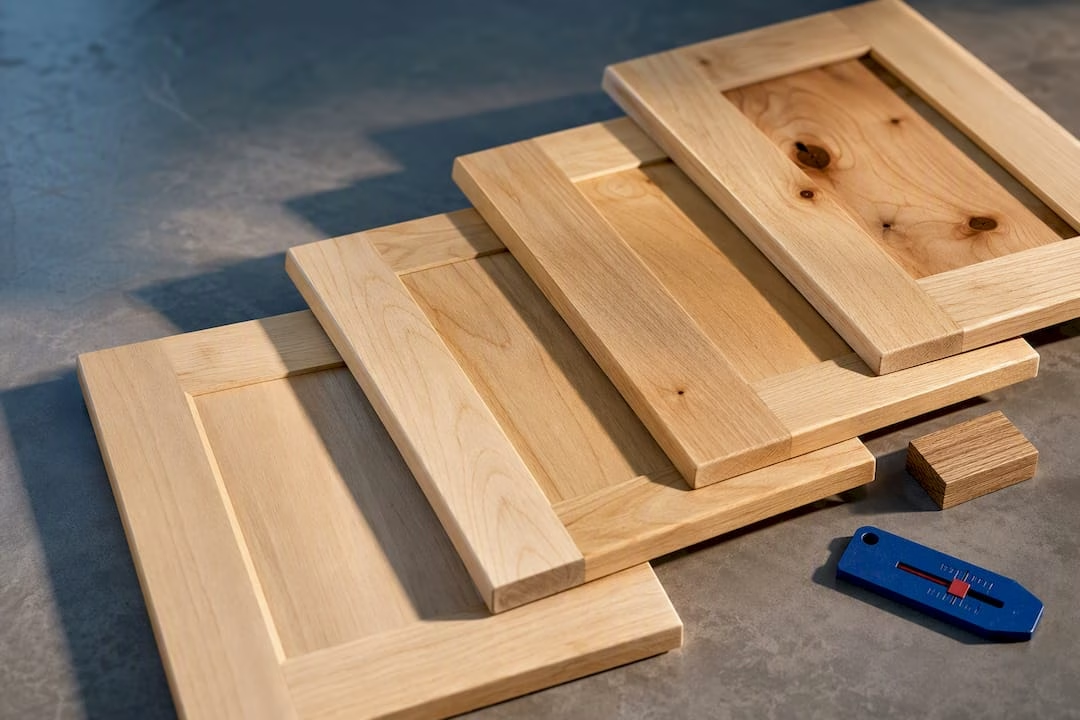
Refacing has three components, and understanding them helps you scope a job accurately before you get a quote. The standard scope covers new doors and drawer fronts, fresh veneer applied to exposed face frames and side panels, and upgraded hardware like hinges and pulls. Nothing about the box itself changes. That is the whole point.
For a standard rental kitchen, here’s how the process typically runs:
- Inspect the boxes. Probe the base and sides for soft spots or hidden moisture damage before you commit to ordering anything.
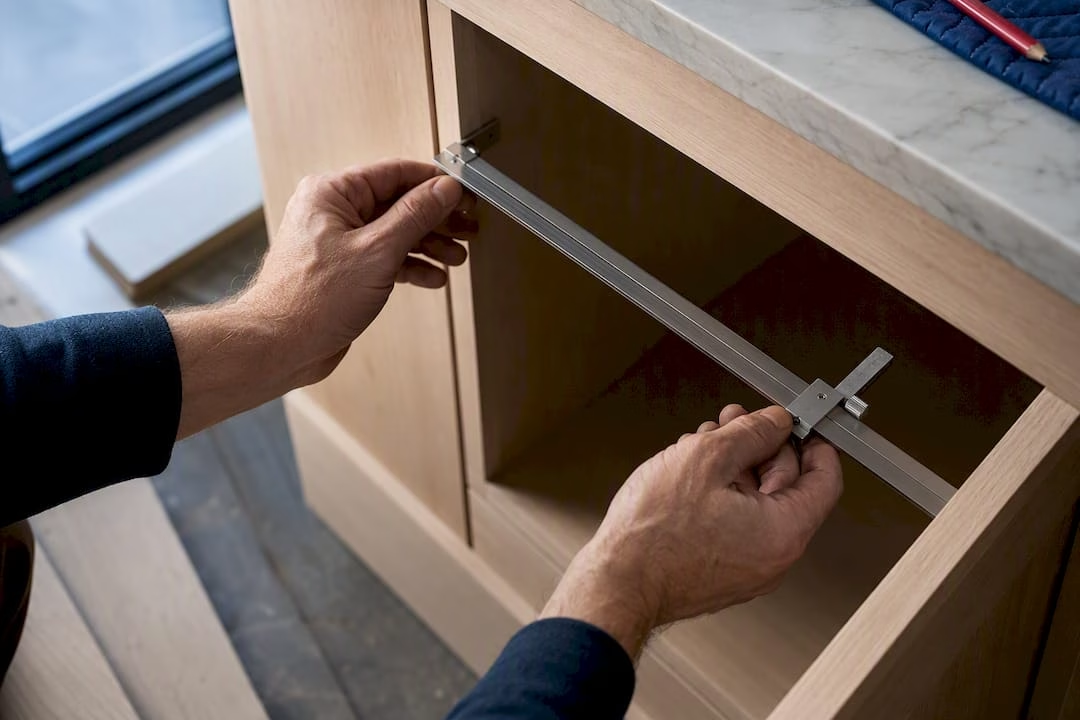
- Measure precisely. Take exact dimensions of every opening, since a fraction of an inch off can mean a door that won’t sit flush.
- Order doors, veneer, and hardware. Match finishes across the kit so nothing looks patched together.
- Prep the frames. Sand face frames, apply veneer strips, and rout the edges flush before new doors go on.
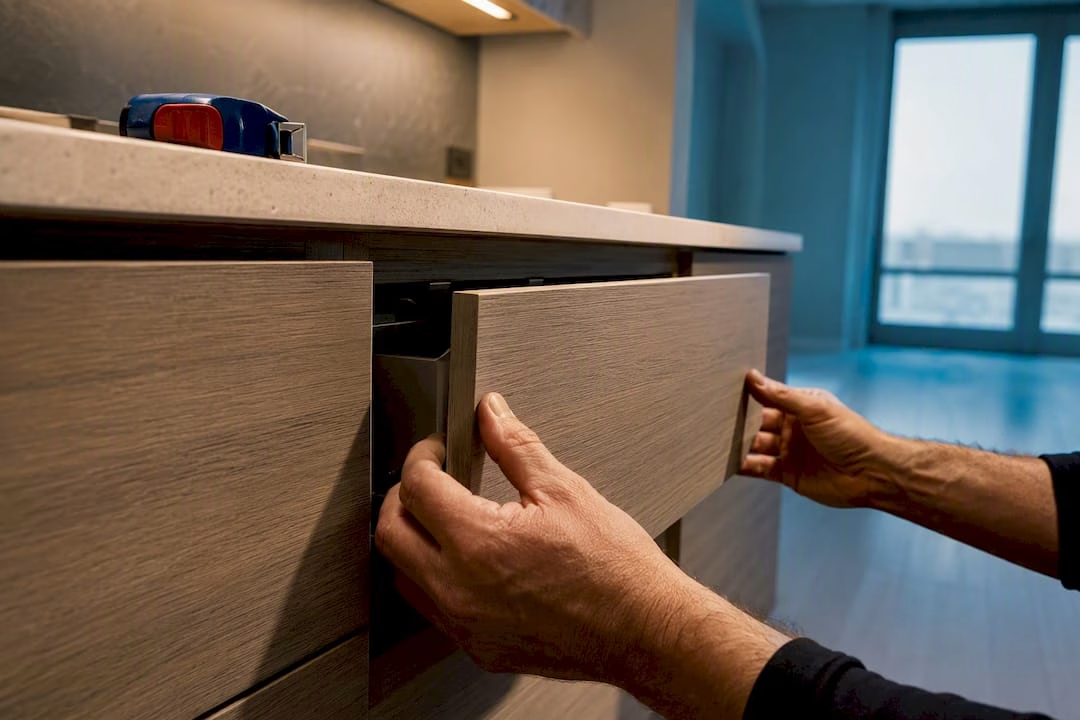
- Install doors and hardware. New hinges and drawer slides go in last, once every surface is prepped and finished.
Most standard units finish in one to three days once materials arrive, according to the step-by-step process Wood Magazine outlines for veneer application and routing.
Pro Tip: If a unit needs a fast turn and the boxes check out, order loose doors and veneer instead of waiting on a full custom kit; you can always order matching kits for the next batch of units.
Cost and ROI: Real Numbers Landlords Should Use to Decide
DIY refacing on a standard kitchen typically runs $1,000 to $4,000 in materials, while professional installs land between $4,500 and $13,000 depending on kitchen size and finish selection. Either way, you’re generally looking at roughly a third of what full replacement costs.
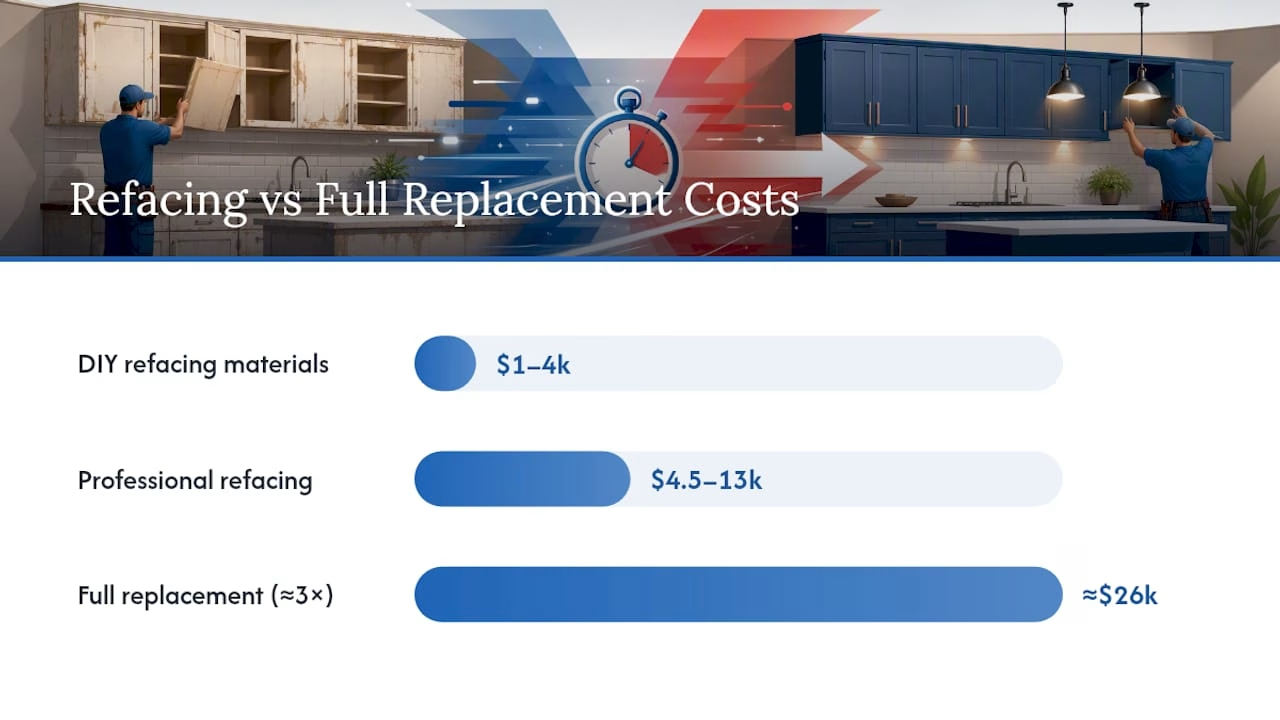
Run the ROI math against vacancy, not just materials. If refacing shaves ten days off a turnover compared to a full remodel, and your unit rents for $1,800 a month, that’s roughly $600 in avoided vacancy loss on top of whatever you save on the job itself.
Where the math flips against you:
- Box repair costs that creep toward 60 to 70% of replacement cost erase most of the savings refacing offers
- Multi-unit orders with long lead times can quietly cost you if installs stall waiting on parts
- A supplier that misses a promised ship date turns a planned three-day turn into a two-week vacancy
Pro Tip: Get lead times in writing for any bulk order. Missed delivery dates on multi-unit projects impose vacancy risk that can wipe out the savings refacing was supposed to deliver.
For a side-by-side breakdown of where each dollar goes, see how cabinet refacing cost compares to full replacement.
A Landlord’s Checklist: Inspect, Grade, Decide
Before you order a single door, walk the unit and grade the cabinets honestly. This ten-minute check saves you from a costly do-over.
- Probe the box. Press an awl or screwdriver into the base and lower side panels near the sink and dishwasher, where leaks do the most damage.
- Check the drawer boxes. Loose joints or sagging bottoms usually mean the drawer box itself needs replacement, not just a new front.
- Confirm face-frame integrity. The frame has to hold screws and hinges securely; if it’s crumbling or delaminated, veneer won’t fix that.
- Ask about layout. If tenants or you want a different configuration, replacing interior doors is worth considering since refacing can’t deliver that. Only replacement can.
- Vet your supplier. Ask about lead time in writing, kit completeness, sample swatches before you commit to a finish, and warranty terms.
Failed joinery, soft spots that don’t resist a firm probe, or visible water staining on the box interior are your signal to stop planning a reface and start pricing a full remodel instead.
Scaling Refacing Across a Rental Portfolio
Running refacing across ten or twenty units at once is a logistics problem as much as a renovation one. The biggest time saver is ordering kits that ship pre-sorted by unit, since a kit with labeled packing lists and clear instructions lets a general maintenance crew install correctly without a finish carpenter on site.
Schedule installs around lease turnover dates, not around when materials happen to arrive. That means placing bulk orders early enough to buffer against any delay.
- Order kits pre-sorted and labeled by unit number to prevent parts from getting swapped between apartments
- Train one crew member on the install sequence, then let that person lead every unit for consistency
- Order at least one extra door and hinge set of each finish per ten units, so a shortage doesn’t stall an install mid-project
- Standardize on one or two finishes across the portfolio to simplify reordering and touch-ups later
Pro Tip: Label every box by unit number the moment it arrives. A mislabeled kit is the single most common cause of install delays on multi-unit jobs.
How The Door Maker’s Custom Doors Fit Rental Refacing Projects
Once a unit passes the sound-box check, the remaining decision is simply which doors to order and how quickly you can get them. Custom cabinet doors, drawer fronts, and frames sized to precise measurements are available in a variety of styles and finishes. That range matters when you’re matching an existing kitchen’s footprint without touching the box itself.
An online configurator helps guide through measuring, designing, and ordering, with video tutorials for each step. For a landlord managing several units, that means you can spec a kit for one apartment and repeat the process for the next without guesswork. Add on hinge holes, request sample doors, or order color swatches to help select finishes before committing to one.
Permitting and Regulatory Considerations for Rental Upgrades
Cabinet refacing rarely triggers a building permit, since you’re not moving plumbing, altering electrical, or changing the structure of the kitchen. Most municipalities treat door and drawer front replacement, veneer application, and hardware swaps as cosmetic work, similar to repainting or replacing flooring.
That changes the moment your project expands. If you’re relocating a sink, adding new cabinet runs, or altering the kitchen footprint, you’ve moved from refacing into remodeling territory, and that typically does require a permit in most jurisdictions. The distinction matters for landlords juggling multiple properties, because pulling a permit unnecessarily adds inspection delays you don’t need for a job that’s purely cosmetic.
Local landlord-tenant law is a separate question from building code. Many jurisdictions require advance written notice before entering a unit for non-emergency work, even routine upgrades like a cabinet reface. Check your local requirements before scheduling, since notice periods and acceptable entry windows vary by province and municipality.
If your property is under rent control or has a rent board overseeing capital improvement pass-throughs, a kitchen upgrade could factor into an allowable rent increase calculation. That’s worth confirming with your local housing authority before you assume refacing is purely a maintenance expense with no rent implications. Most refacing jobs stay well below the threshold that triggers those reviews, but a full-kitchen overhaul across many units might not.
Coordinating Cabinet Refacing With Other Unit Maintenance
Refacing rarely happens in isolation on a well-run turnover. If you’re already sending a crew in to paint, replace flooring, or service appliances between tenants, cabinet refacing slots naturally into that same window rather than requiring a separate visit.
Sequence matters. Do flooring and paint before hanging new cabinet doors, since dust and splatter are easier to clean off bare boxes than off freshly installed hardware and finished panels. Save countertop work, if you’re doing any, for after door installation, since fitting new fronts against an existing counter is more forgiving than working around a fresh installation you don’t want to scratch.
If your maintenance crew already handles appliance swaps or plumbing fixture updates during turnovers, loop the cabinet work into that same punch list. One crew visit covering multiple upgrades cuts your total vacancy days more than staggering each project separately. It also means your team measures for cabinet hardware clearance once, rather than discovering a new dishwasher doesn’t clear a drawer front after the doors are already installed.
For portfolios doing rolling renovations across several buildings, batch your cabinet orders by renovation wave rather than unit by unit. Ordering doors for eight units on the same renovation schedule, even if they’re spread across two properties, gets you closer to bulk pricing and reduces the number of separate lead times you’re tracking.
How to Communicate With Tenants During Refacing Work
Occupied-unit refacing is rare. Most landlords schedule this work during vacancy between leases, which sidesteps the communication problem entirely. But if you’re refacing a kitchen while a tenant remains in place, whether for a partial upgrade or a portfolio-wide renovation, clear communication prevents most complaints before they start.
Give written notice that meets your local minimum, and go further than the legal minimum when you can. Tell tenants the exact days the crew will be present, how long the kitchen will be unusable for cooking, and whether water or power will be shut off at any point. A kitchen without functioning cabinet doors for a day is a minor inconvenience if tenants know it’s coming; it’s a source of real frustration if they’re caught by surprise.
Offer a practical workaround for the disruption window. Suggest tenants stock up on takeout or plan meals that don’t require full kitchen access during the install days. If the job stretches beyond the promised timeline, because a supplier missed a lead time or a hidden box issue turned up mid-install, tell the tenant immediately rather than letting them find out when the crew doesn’t show up as scheduled.
Post-install, do a quick walkthrough with the tenant to confirm doors close properly, drawers slide smoothly, and nothing was left unfinished. That five-minute check heads off a maintenance call later and signals that you followed through on the upgrade properly.
Warranty and Service Considerations After Installation
Ask what’s covered before you place an order, not after something goes wrong. Door and drawer front warranties typically cover manufacturing defects like finish peeling, warping, or hardware failure under normal use, but coverage terms vary by supplier, so get the specifics in writing.
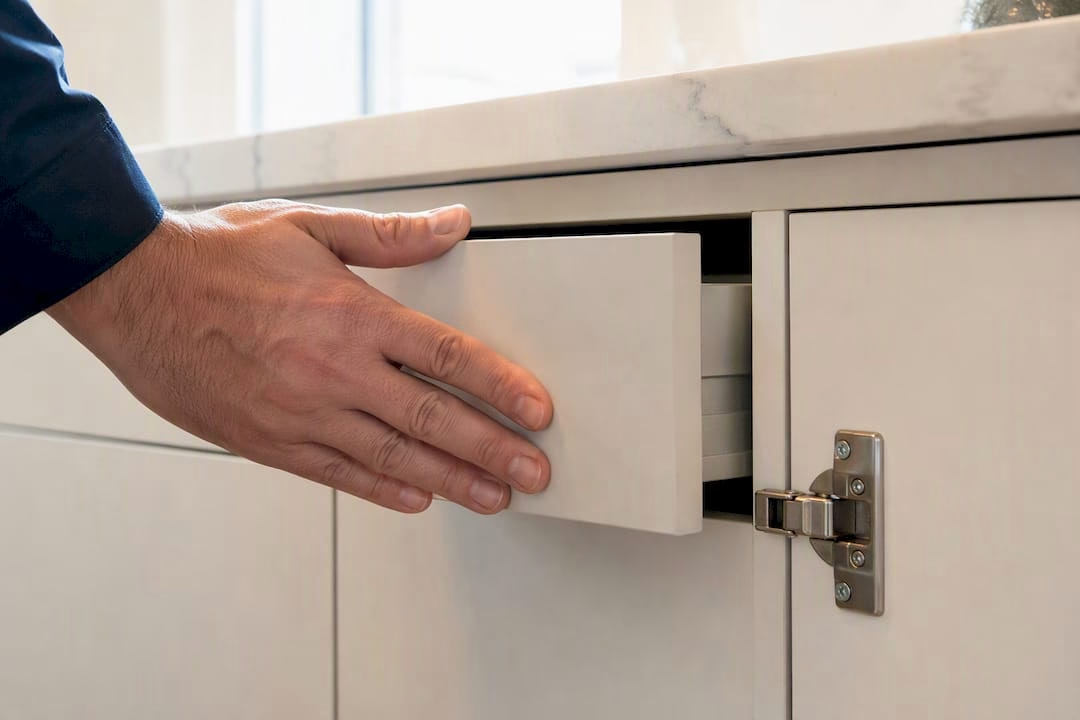
Hardware matters more than most landlords expect here. Upgrading to soft-close hinges and full-extension slides costs relatively little more than standard hardware, but it meaningfully cuts down on the maintenance calls landlords get about doors that won’t close right or drawers that stick. That’s a direct line item reduction in the small repair calls that eat into a property manager’s week.
Keep your original measurements and order details on file for every unit. If a door gets damaged years later, whether from a tenant accident or normal wear, having the exact specs on hand means a replacement order takes minutes instead of requiring a fresh site measurement. This is especially valuable across a multi-unit portfolio, where remembering which finish went into which apartment three years ago is otherwise guesswork.
Ask suppliers directly how they handle warranty claims: do they ship a replacement part, or do you need to return the original? What’s the typical turnaround on a warranty replacement? These answers matter more once you’re managing several units with refaced kitchens, since a slow warranty process on one unit is an inconvenience, but a slow process across a portfolio is a real cost.
What Refacing Does for Rental Value and Tenant Satisfaction
A kitchen’s appearance carries outsized weight in how a rental unit gets perceived, and remodeling projects that improve visual appeal tend to pay off for owners in ways that show up at lease renewal and during new tenant searches. A kitchen with dated, worn cabinet fronts reads as neglected even when everything else in the unit is well maintained.
Tenants notice cabinets constantly, more than almost any other surface in a rental, because they touch them every day. Doors that close smoothly, hardware that doesn’t wobble, and finishes that wipe clean without staining all signal a well-run property. That perception often translates into fewer maintenance complaints and a tenant who’s more inclined to renew rather than start hunting for a nicer unit at the same price point.
The value impact tends to be strongest when refacing happens alongside other visible turnover work like paint and flooring, since a kitchen that looks fresh in isolation against tired walls elsewhere reads as inconsistent. Where refacing pays off least is in units where the kitchen was never the reason a tenant would leave in the first place. If your vacancy problem is really about price, location, or unit size, new cabinet doors won’t move the needle much. But in a competitive rental market where units are otherwise comparable, a refaced kitchen is often the visible difference that gets a listing more interest.
Author Perspective: A Short, Practical Recommendation
For most portfolios, the approach that actually scales is simple: inspect every box before you commit, choose a durable kit built for repeat tenant wear, and schedule installs around your existing turnover windows rather than treating refacing as a separate project. Skipping the inspection step is the most common reason landlords redo work within a year. Before rolling refacing across a dozen units, order sample doors and run one pilot unit first. It’s cheaper to catch a fit or finish problem on one kitchen than on ten.
— David
Quick CTA: Where to Order Custom Doors and Next Steps
Tdm-thedoormaker is the direct alternative to waiting on a full-service remodeler for every unit turn. You get custom-sized doors and drawer fronts ordered online, without hiring a contractor to quote, measure, and schedule a full kitchen job for a cosmetic fix.

Getting started follows the same three steps regardless of how many units you’re updating: measure the openings, configure your doors and finishes in the online tool, and place your order. The configurator walks you through sizing to a precise tolerance, so a door ordered for unit 4B fits unit 4B, not an approximation. Browse the full catalog of custom cabinet doors to see current styles and finishes, or start with a sample door and a few color swatches before committing an entire portfolio to one look. If you’re still weighing refacing against a full remodel for a specific unit, this comparison of refacing versus full replacement costs breaks down where each option makes financial sense.
Sources
FAQ
How Do You Update Kitchen Cabinets in a Rental Unit?
Inspect the boxes first for moisture damage or failed joints, then order new doors, drawer fronts, veneer, and hardware to reface around the existing structure. Refacing avoids removing tenants from a unit for extended periods since most jobs finish in one to three days.
What Does It Cost to Reface a Standard 10×10 Kitchen?
DIY refacing on a standard kitchen typically runs $1,000 to $4,000 in materials, while professional installs range from about $4,500 to $13,000 depending on finish choices and kitchen size.
What Is the Downside of Cabinet Refacing?
Refacing can’t fix a warped, cracked, or moisture-damaged cabinet box, and it won’t change your kitchen’s layout. If the boxes have failed structurally, you’re better off pricing a full replacement instead.
How Can You Reface Kitchen Cabinets on a Tight Budget?
Order loose doors and veneer instead of a full custom kit, and handle prep and installation yourself if you have basic tools and time. DIY refacing generally costs a fraction of a professional install, though it takes longer and requires more hands on work.
Does Cabinet Refacing Add Value to a Rental Property?
Refacing improves how a kitchen presents to prospective tenants and often reduces maintenance complaints tied to worn doors and loose hardware. Its value impact is strongest when paired with other visible turnover work like fresh paint and updated flooring.