A cabinet door that is off by even 1/8 inch can turn a smart refacing project into a frustrating one. If you’re learning how to measure cabinet doors, the good news is that the process is straightforward once you know what you’re actually measuring – and why. The goal is not just to get numbers on paper. It’s to end up with doors that fit cleanly, look balanced, and give your cabinets that finished custom feel.
For most homeowners, the biggest mistake is measuring the old door and assuming that number should be reordered. Sometimes that works. Often, it doesn’t. Older homes, replacement hinges, sagging frames, and uneven reveals can all throw things off. A better approach is to measure the cabinet opening and determine the right overlay for your setup.
What you need before you measure
Keep it simple. You need a tape measure with clear 1/16-inch markings, a pencil, paper, and a way to label each opening. A small notebook works well if you’re measuring a full kitchen or bath. If you want extra peace of mind, a second person can help confirm numbers, but this is still very doable on your own.
Measure carefully and write everything down immediately. Do not trust memory, especially if several doors are close in size. One transposed number can hold up an entire project.
How to measure cabinet doors for the best fit
The first step is identifying what kind of cabinet you have. Most refacing projects involve framed cabinets, where a face frame surrounds the cabinet opening. In that case, your cabinet door usually overlays, or covers, part of that frame. The amount of overlay affects the final door size.
If you have a frameless cabinet, the process can be different because the door is sized relative to the cabinet box and hinge style. But for many US homes, framed cabinets are the standard, so that’s where most DIY measurements begin.
Start with the cabinet opening, not the old door
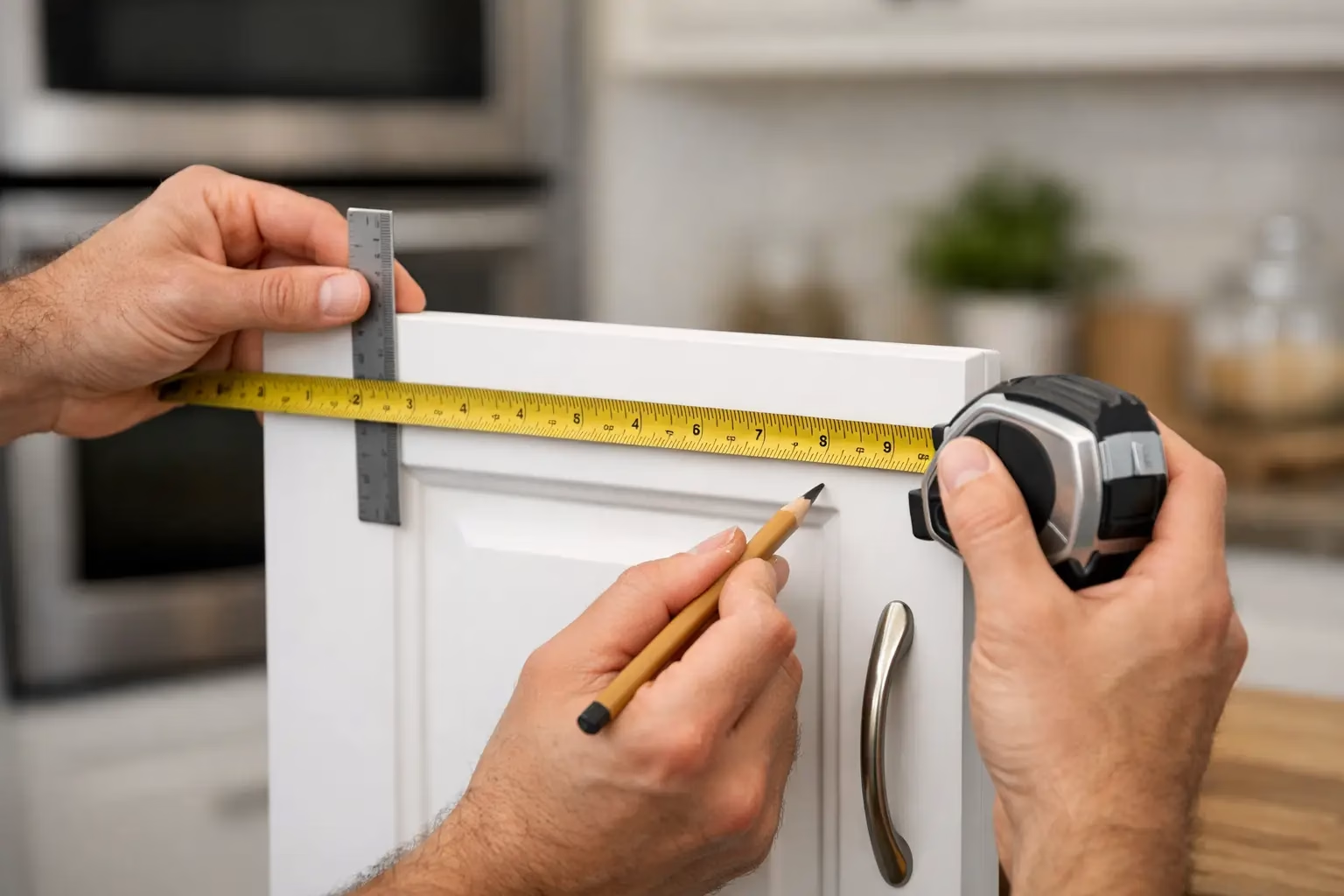
Measure the width and height of the cabinet opening itself. Take the width from inside edge to inside edge of the opening. Then measure the height from the inside top to the inside bottom. Write those numbers down for each cabinet.
This gives you the true opening size. From there, you add overlay to determine the door size. That matters because the visible proportions of the finished cabinet depend on consistent overlay, not just matching whatever was there before.
Understand overlay before you calculate size
Overlay is how much the door extends beyond the cabinet opening. A common example is a 1/2-inch overlay on all four sides. If your opening is 12 inches wide and 20 inches high, and you want 1/2 inch overlay on each side, the finished door size would be 13 inches wide by 21 inches high.
That math works because you add the overlay twice – once for each side. So the formula is simple: opening width plus left overlay plus right overlay, and opening height plus top overlay plus bottom overlay.
Where people get tripped up is assuming every cabinet should use the same overlay without checking hinge requirements and spacing between doors. It usually does, but not always.
Choosing the right overlay for your cabinets
If you’re replacing doors on an existing cabinet and want the same look, measure how much the current door overlays the frame. Close the door and measure from the edge of the opening to the edge of the door. Do that on the hinge side, the top, and the bottom. Then confirm whether the reveal, or visible frame around adjacent doors and drawers, looks consistent.
If the cabinets were installed well and the old doors fit properly, matching that overlay is often the safest route. If the doors are misaligned, rubbing, or visibly uneven, use the opening measurements and plan your overlay more intentionally.
Single doors versus double doors
For a single door cabinet, the calculation is fairly direct. You measure the opening and add the chosen overlay.
For a pair of doors on one opening, there’s one extra consideration: the gap between the two doors. You still start with the opening width, add the total overlay, and then divide by two. But you also need to allow for a clean center gap so the doors can open without rubbing.
That gap is usually small, but it matters. Too tight and the doors may bind. Too wide and the center line can look sloppy. This is one of those cases where precision pays off.
Watch for hinge and clearance issues
A beautiful door is only beautiful if it opens properly. Before finalizing your measurements, check for nearby walls, appliances, moldings, and inside corners that could affect swing clearance. A wider overlay may look great on paper but create problems next to a refrigerator panel or a perpendicular wall.
Hinge style matters too. Concealed hinges, surface-mount hinges, and specialty hinges can all have different overlay requirements. If you are reusing existing hinges, measure with extra care to make sure your new doors are sized to work with that hardware. If you are replacing hinges as part of the refacing project, choose the hinge first or at least confirm the overlay it supports.
This is one of the biggest it-depends parts of learning how to measure cabinet doors. The correct number is not just about the opening. It also has to match the way the door will function.
Measuring drawer fronts is similar, but not identical
Many homeowners measure doors and drawer fronts at the same time, but don’t assume the same rules apply automatically. A drawer front may be sized to match surrounding doors visually rather than simply cover an opening with equal overlay on all sides.
For example, the top drawer above a sink base may need to align with neighboring reveals or account for false front construction. Measure each drawer front area individually and pay attention to the spacing around it. The goal is consistent lines across the whole cabinet run.
Best practices that prevent expensive mistakes
Measure every opening twice. If the two numbers don’t match, measure a third time. It sounds basic, but this step catches most problems before they turn into a reorder.
Label every cabinet clearly. Use a simple system like A1, A2, B1, and sketch a quick layout of the room. On a full kitchen project, this keeps your measurements organized and makes ordering much easier.
Record width first, then height, every time. Staying consistent prevents mix-ups. Also write measurements to the nearest 1/16 inch if needed. Rounding casually may not seem like much, but cabinet doors are custom parts, not rough framing lumber.
It also helps to check whether your cabinet openings are square. Measure diagonally from top left to bottom right, then top right to bottom left. If those numbers are noticeably different, the opening may be out of square. That does not always stop the project, but it tells you to expect some installation adjustment and to pay close attention to reveals.
When measuring the old door does make sense
There are cases where measuring the existing door is useful. If the current doors fit well, the hinges are staying the same, and you want an exact replacement in the same style, the old door can serve as a reference point. Still, it should be a reference, not the only source of truth.
Compare the old door size against the cabinet opening and overlay. If everything checks out, you can move forward with more confidence. If it doesn’t, trust the cabinet structure over a worn or previously replaced door.
If you’re ordering custom doors online
Custom ordering works best when your measurements are organized before you start selecting styles and finishes. Once you have each opening, overlay, and door size mapped out, the rest of the process gets much easier. That’s where a tool like the Build a Door feature at TDM – The Door Maker can help turn your measurements into a clear, made-to-order plan without forcing you into stock sizes.
If you’re unsure about one or two openings, pause and verify them before placing the order. Most homeowners do very well with DIY measuring, but confidence should come from checking the details, not rushing through them.
A simple measuring example
Let’s say your cabinet opening measures 14 inches wide by 24 inches high, and you want a 1/2-inch overlay on all sides. Your finished door size would be 15 inches wide by 25 inches high.
Now let’s say the same opening has two doors instead of one. Add the total overlay first, giving you 15 inches overall width, then allow for the center gap and divide into two equal doors. That extra step is why double-door openings deserve a little more attention.
A good measuring process should leave you feeling certain, not confused. Take your time, check the opening rather than guessing from the old door, and make sure your overlay works with your hinges and surrounding clearances. When the numbers are right, everything that follows – design, ordering, and installation – gets a whole lot easier.