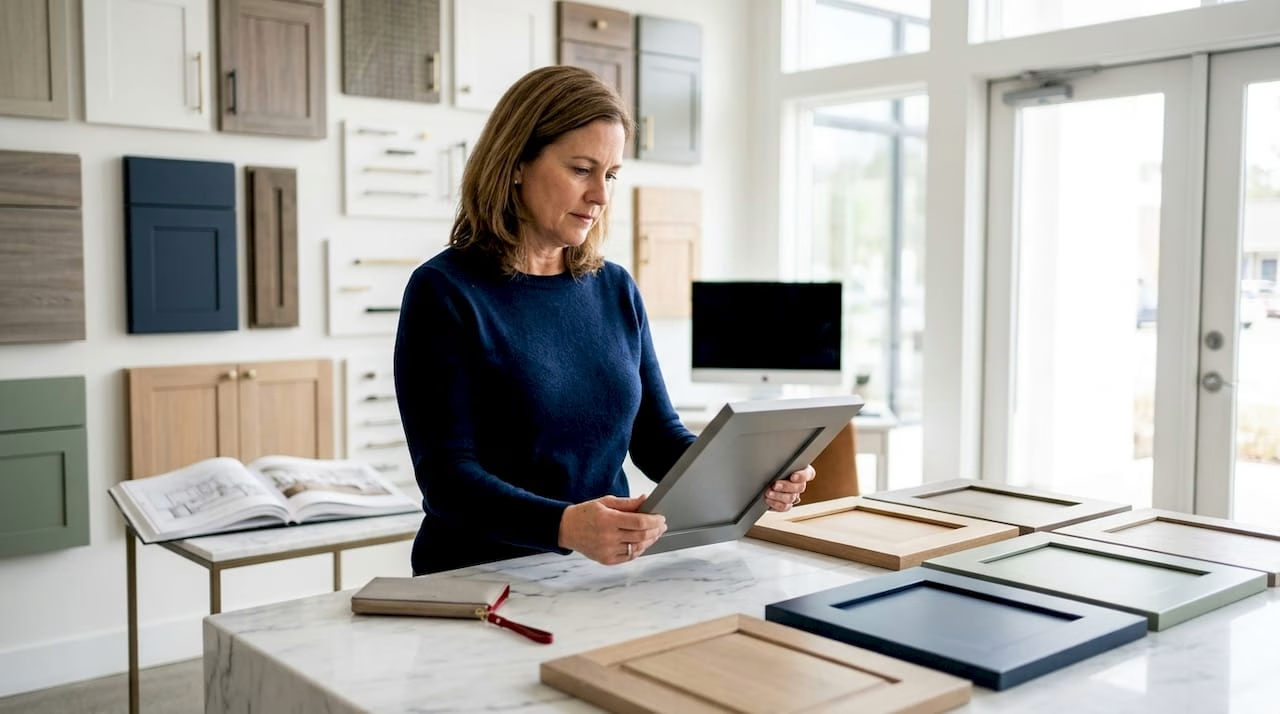
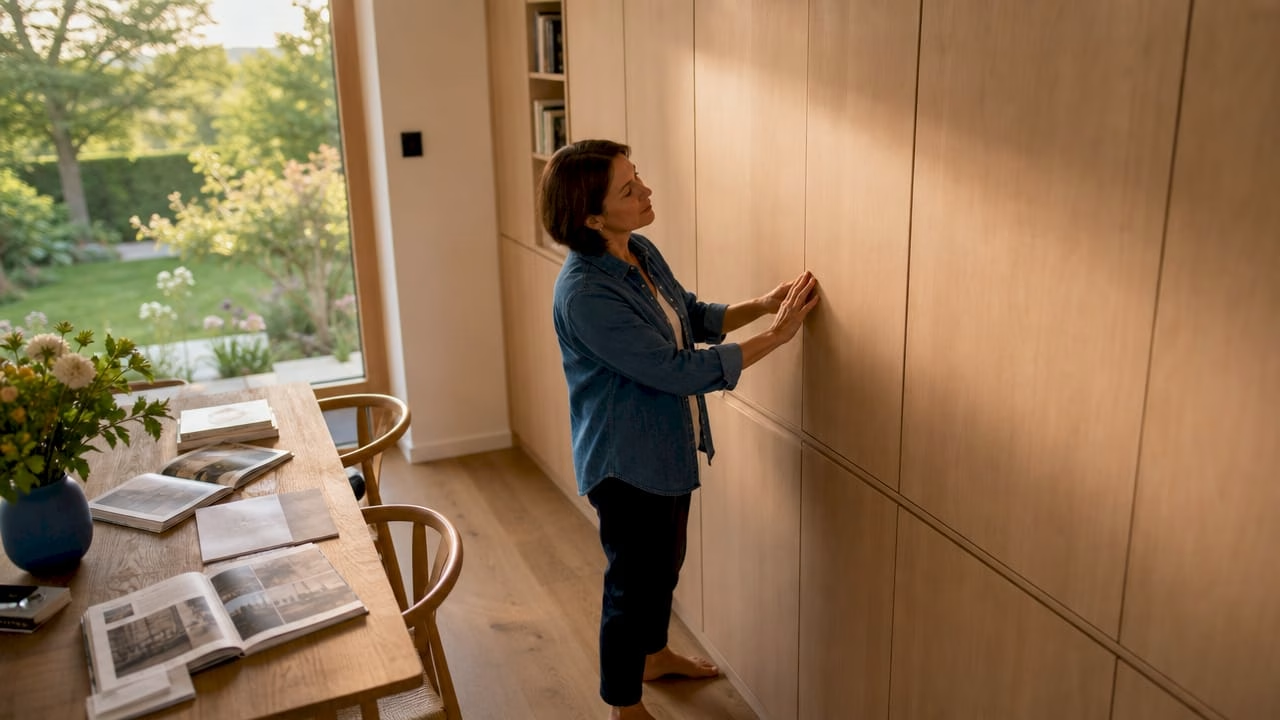
Inset cabinets are defined by doors and drawers that sit fully inside the cabinet face frame, creating a flush, furniture-grade surface across the entire cabinet front. This construction style is the hallmark of traditional American cabinetry and delivers a timeless, furniture-like appearance that overlay and frameless designs simply cannot replicate. The look is precise, architectural, and unmistakably intentional. If you are planning a kitchen remodel and want cabinetry that reads more like built-in furniture than standard millwork, inset cabinets are worth understanding in full before you commit.
What are inset cabinets and how are they built?
Inset cabinets are framed cabinets where the door fits inside the face frame rather than covering it. The face frame is a solid wood border attached to the front of the cabinet box. It provides structural support and, in the inset style, remains fully visible around each door and drawer. That visible frame is what gives these cabinets their distinctive, paneled look.
The construction demands cabinet squareness within fractions of a sixteenth of an inch. Any deviation shows up immediately as an uneven gap around the door. This level of precision is why inset cabinetry is considered a benchmark of skilled woodworking.
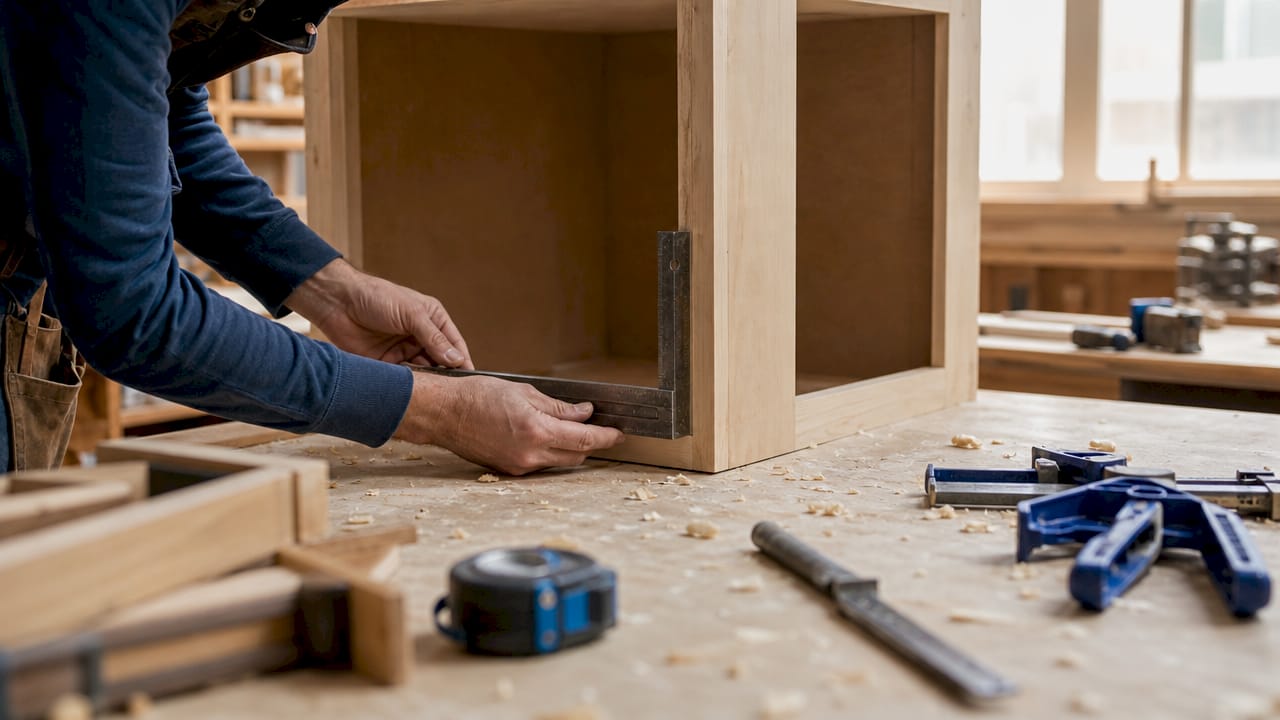
A continuous face frame spanning multiple cabinet boxes creates consistent reveals and a unified, furniture-grade look across the entire run. This is different from isolated cabinet units, where each box stands alone. The result is a kitchen that looks like it was built in place, not assembled from parts.
Key construction details include:
- Face frame material: Solid hardwood, typically maple, cherry, or oak, for dimensional stability
- Reveal gap: A recommended 1/8" reveal around each door to allow for seasonal wood movement without binding
- Hinge type: Decorative exposed hinges, often in brass or nickel, which serve as both functional hardware and a stylistic detail
- Joinery quality: Mortise-and-tenon or dowel joinery in the face frame for long-term rigidity
Pro Tip: When reviewing inset cabinet samples, check the reveal gap at all four corners of the door. An uneven gap is a direct sign of poor squareness in the cabinet box, and that problem only gets worse after installation.
The decorative exposed hinges on inset cabinets are a design feature you cannot replicate with overlay or frameless styles. Finial-style hinges in antique brass or polished nickel add a period-appropriate detail that elevates the entire kitchen. They are functional jewelry for your cabinetry.
How do inset cabinets compare to overlay cabinets?
The core difference between inset and overlay cabinets comes down to where the door sits relative to the face frame. Overlay doors cover the frame. Inset doors sit inside it. That single construction choice affects style, storage, cost, and maintenance in meaningful ways.
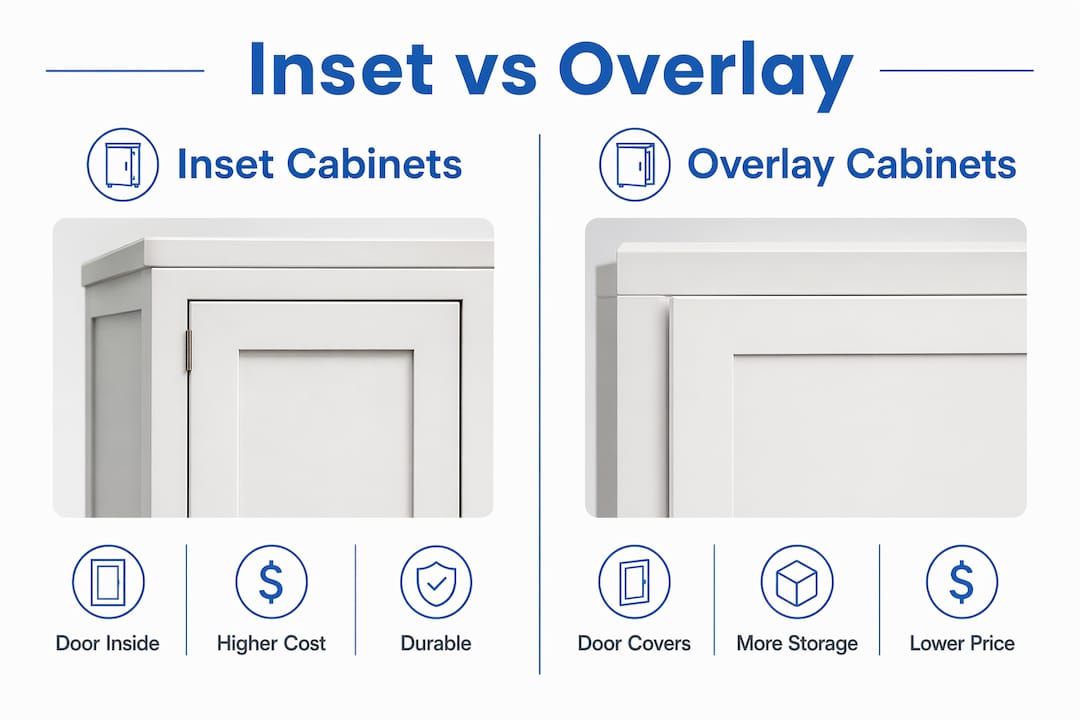
| Feature | Inset cabinets | Overlay cabinets |
|---|---|---|
| Door position | Sits inside the face frame | Covers the face frame |
| Aesthetic | Furniture-grade, traditional | Clean, modern, or transitional |
| Cost premium | 25–35% higher than overlay | Standard baseline cost |
| Interior storage | Slightly reduced (about 1–1.5 inches per cabinet) | Full depth available |
| Maintenance | More frequent cleaning of ledge; hinge adjustments needed | Easier to clean; more forgiving |
| Installation | Requires skilled labor; tight tolerances | More forgiving of minor imperfections |
The cost premium for inset cabinetry runs 25–35% above comparable overlay cabinets. That increase reflects the higher precision required in manufacturing and the specialized labor needed for installation. For a full kitchen, that gap can represent thousands of dollars.
Storage is a real trade-off. Inset doors reduce usable interior space by roughly 1–1.5 inches per cabinet. Across a full kitchen, that adds up. If you are working with a smaller kitchen and need every inch of storage, overlay cabinets give you more room inside each box.
Maintenance is another honest consideration. The small ledge between the door and the frame tends to collect dust and debris more than overlay designs. You will wipe down that ledge more often. Overlay cabinets are simply more forgiving on the cleaning front.
Pro Tip: If you love the inset look but want easier maintenance, choose a painted finish over a stained wood finish. Paint makes the reveal ledge easier to wipe clean and hides minor dust accumulation better than a natural wood grain.
What are the real advantages and challenges of inset cabinetry?
The strongest argument for inset cabinets is durability. The visible face frame protects door edges from daily contact, which is the most common source of wear on cabinet doors. Overlay doors take every bump and knock directly. Inset doors are shielded by the frame on all four sides. That protection adds up over years of daily use.
Space efficiency in tight layouts is a genuine advantage. Inset doors require less clearance in corners, reducing the need for filler strips and saving 1–2 inches in corner configurations. If you have an L-shaped or U-shaped kitchen where corner clearance is tight, that savings matters for both function and appearance.
The challenges are real and worth planning for:
- Humidity sensitivity: Door binding or rubbing can occur as wood expands and contracts with seasonal humidity changes. Climate control in your kitchen helps, but periodic hinge adjustments are part of owning inset cabinets.
- Reduced interior depth: The face frame takes up space at the front of the cabinet box. Shelves and pull-out organizers may need to be sized slightly smaller.
- Installation accuracy: Professional installation is critical because misalignment shows immediately. A door that is off by 1/16 of an inch looks crooked. There is no hiding imprecision with this style.
- Longer lead times: Custom inset cabinetry takes longer to manufacture than standard overlay options. Plan your project timeline accordingly.
Pro Tip: Ask your installer specifically about their experience with inset cabinetry before hiring. General cabinet installers who primarily work with overlay designs may not have the three-dimensional hinge adjustment skills that inset installation requires.
The long-term value argument for inset cabinets is strong. Homeowners who prioritize architectural detail and craftsmanship consistently favor this style for its design consistency over time. Trends in kitchen design shift, but the furniture-grade look of inset cabinetry has remained desirable across decades.
How do you decide if inset cabinets are right for your remodel?
Budget is the first filter. If inset cabinets cost 25–35% more than overlay, you need to decide whether that premium fits your overall remodel budget. For a kitchen where cabinetry is the centerpiece, the investment often makes sense. For a budget remodel where appliances and countertops are also being replaced, the premium may be harder to justify.
Style compatibility is the second consideration. Inset cabinets work best in:
- Traditional kitchens with raised panel doors, decorative molding, and period hardware
- Transitional kitchens where shaker style cabinets provide a clean but warm aesthetic
- Craftsman or farmhouse kitchens where exposed joinery and visible frames feel intentional
- High-end modern kitchens where flush inset cabinet doors create a minimal, architectural look
Overlay or frameless cabinets are the better choice when your priority is maximum storage, easier maintenance, or a lower upfront cost. Full-overlay cabinets are more forgiving of installation imperfections and require less ongoing maintenance. That is a genuine advantage for busy households.
Your lifestyle matters too. If you cook daily, have young children, or simply prefer low-maintenance cabinetry, the dust ledge and hinge adjustments of inset doors add friction to your routine. If you value craftsmanship and are willing to give your kitchen a little more attention, inset cabinetry rewards that care with a look that holds up beautifully over time.
Pro Tip: Before committing to inset shaker cabinet doors for your full kitchen, order a sample door and hold it against your existing cabinets or wall color. The reveal gap and frame visibility look different in person than in photos, and seeing the actual scale helps you confirm the style fits your space.
You can also explore cabinet refacing versus full remodel as a way to get the inset look without replacing every cabinet box, which can significantly reduce your total project cost.
Why I think inset cabinetry is worth the investment
Spending time around custom cabinetry teaches you something quickly: the gap between a well-built inset cabinet and a poorly built one is enormous. I have seen inset doors installed with perfect, even reveals that look like they belong in an architectural magazine. I have also seen inset doors that were slightly off-square, and the result was a kitchen that looked perpetually unfinished, no matter how beautiful the countertops or appliances were.
The craftsmanship requirement is not a flaw of the style. It is the point. Inset cabinetry forces every person in the supply chain, from the cabinet maker to the installer, to work at a higher standard. When that chain holds, the result is genuinely special. When it breaks down anywhere, the problems are visible and hard to fix.
My honest advice: do not choose inset cabinets because they are fashionable. Choose them because you want cabinetry that functions like furniture and ages like a well-built house. The inset shaker doors I find most satisfying are the ones where the homeowner understood the trade-offs, planned for the maintenance, and hired someone who had done it before. Those kitchens look just as good ten years later as they did on day one.
The cost premium is real. So is the payoff, if you go in with clear expectations.
— David
Custom inset cabinet doors from Tdm-thedoormaker
Tdm-thedoormaker specializes in custom cabinet doors built to the exact dimensions your inset cabinetry requires. The process is straightforward: measure your openings, choose your style and finish, and place your order. Tdm-thedoormaker offers inset shaker doors, flush inset profiles, and a wide range of painted and stained finishes that match the precision tolerances inset cabinetry demands.
Whether you are refacing existing cabinets or starting a full kitchen remodel, Tdm-thedoormaker delivers custom doors sized to your specifications, with craftsmanship that meets the tight tolerances inset installation requires. Pricing undercuts many larger retailers, and turnaround times are built to keep your project on schedule. Visit Tdm-thedoormaker to browse styles and get started.
Key takeaways
Inset cabinets deliver a furniture-grade aesthetic that requires precision manufacturing, skilled installation, and a budget premium of 25–35% over overlay cabinetry.
| Point | Details |
|---|---|
| Construction precision | Cabinet boxes must be square within fractions of a sixteenth of an inch for doors to fit correctly. |
| Cost premium | Inset cabinets cost 25–35% more than overlay due to tighter tolerances and specialized labor. |
| Storage trade-off | Inset doors reduce interior cabinet depth by roughly 1–1.5 inches per cabinet. |
| Maintenance needs | The reveal ledge collects dust, and humidity changes may require periodic hinge adjustments. |
| Best style fit | Inset cabinetry suits traditional, transitional, shaker, and craftsman kitchen designs best. |
FAQ
What is an inset cabinet door?
An inset cabinet door sits fully inside the cabinet face frame rather than covering it, creating a flush surface across the cabinet front. This construction requires tight tolerances and is associated with traditional, furniture-grade cabinetry.
How much more do inset cabinets cost than overlay?
Inset cabinets typically cost 25–35% more than comparable overlay cabinets. The premium reflects the higher precision required in manufacturing and the specialized labor needed for installation.
Are inset shaker cabinet doors a good choice for modern kitchens?
Yes. Inset shaker doors work well in transitional and modern kitchens because the clean, flat-panel profile reads as minimal while the visible frame adds architectural warmth. They suit a wide range of design styles beyond traditional.
Do inset cabinets require more maintenance than overlay?
Inset cabinets require more frequent cleaning of the small ledge between the door and frame, and humidity changes can cause door binding that requires hinge adjustment. Overlay cabinets are more forgiving on both counts.
Can I get inset cabinet doors without replacing my entire cabinet boxes?
Yes. Cabinet door refacing lets you replace only the doors and drawer fronts while keeping your existing cabinet boxes. This approach delivers the inset look at a significantly lower cost than a full cabinet replacement.