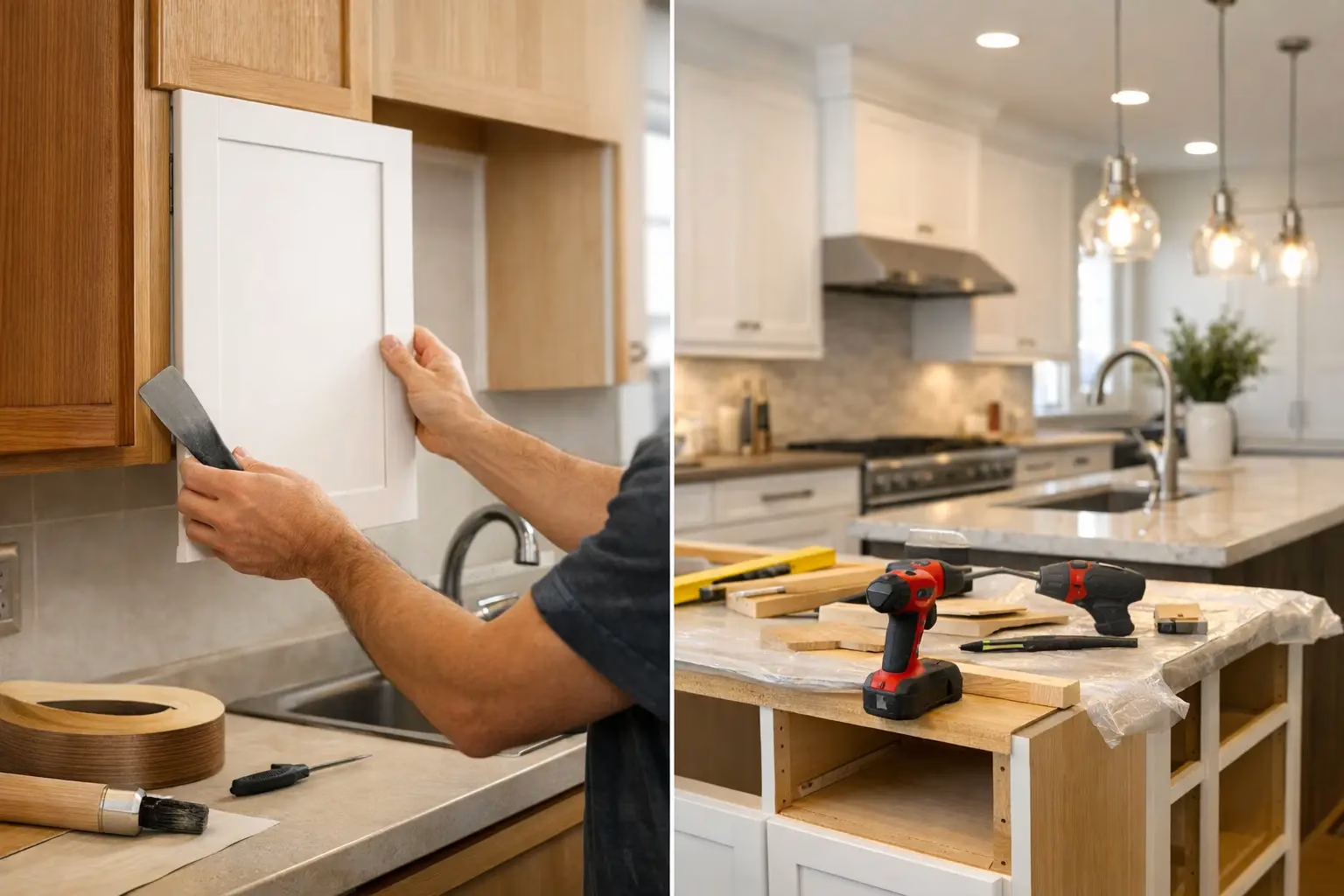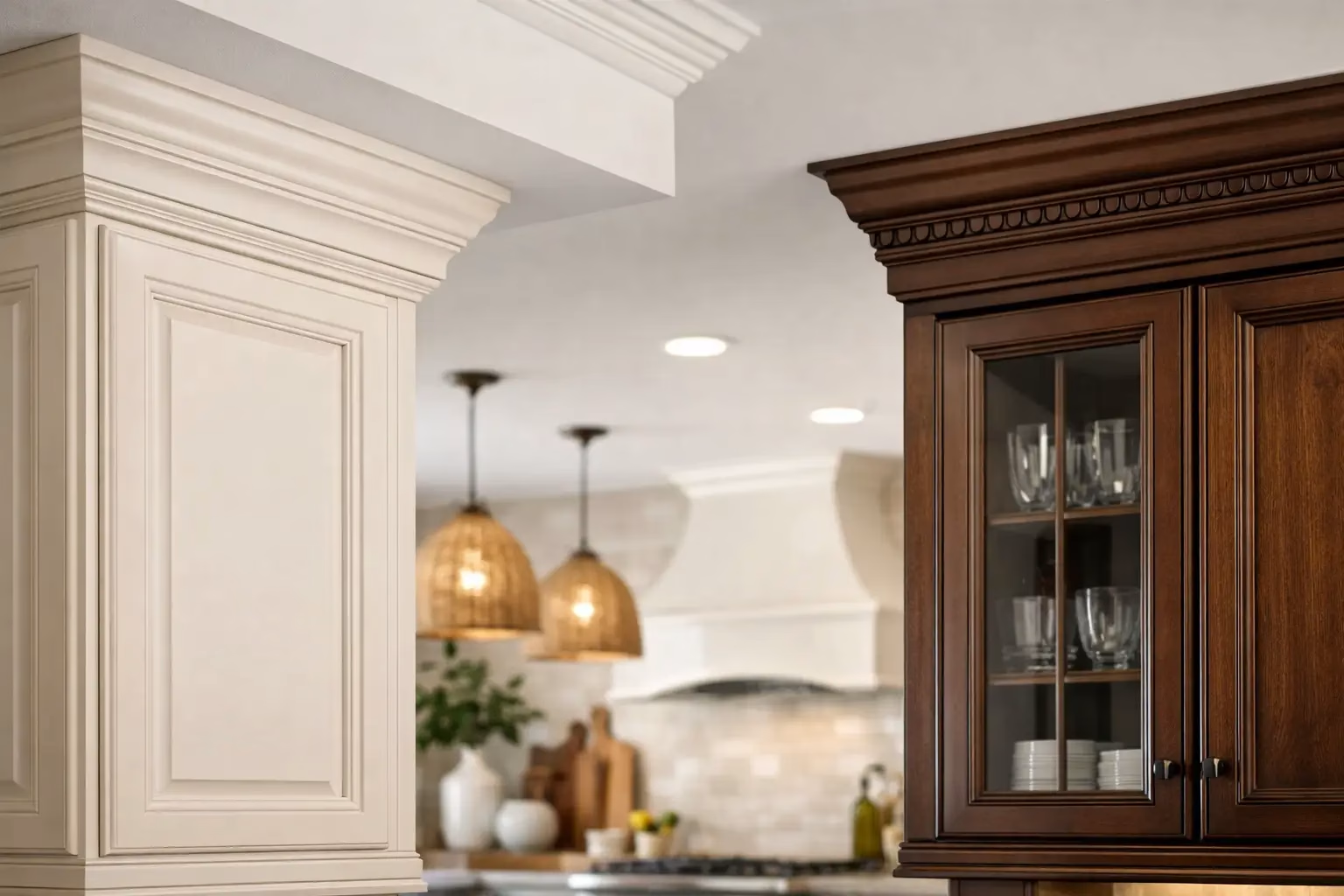
Framed vs frameless cabinets is the defining structural choice in any kitchen remodel. Framed cabinets feature a solid wood face frame attached to the front of the cabinet box, giving them a traditional American look and added structural rigidity. Frameless cabinets omit that frame entirely, mounting doors directly to the box for a clean, modern European appearance and more accessible interior space. The right choice depends on your kitchen’s age, your design goals, and how much storage you need. This guide breaks down every factor so you can decide with confidence.
1. What are framed cabinets and their key features?
Framed cabinets are the dominant cabinet style in American kitchens. Framed cabinets use a solid wood face frame that attaches to the front of the box, concealing small gaps between the cabinet and the wall. That structural layer makes installation more forgiving, especially in older homes where walls are rarely perfectly plumb or level.
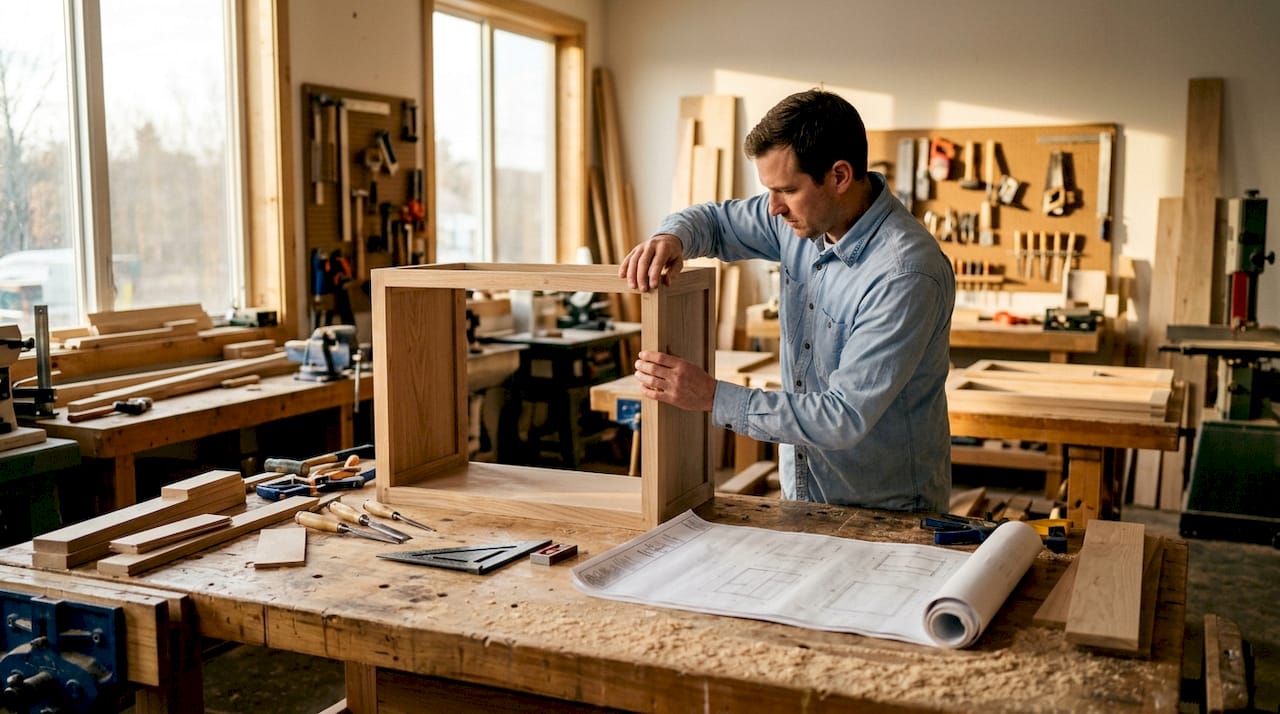
The face frame also supports classic door styles like shaker, raised panel, and inset designs. Inset doors sit flush inside the frame opening, creating a furniture-grade look that many homeowners love. The trade-off is that the frame narrows the cabinet opening slightly, which limits the size of drawers and pull-out accessories you can fit inside.
Pros of framed cabinets:
- More forgiving installation in older or uneven homes
- Supports traditional American door styles including shaker and inset
- Generally lower cost than frameless equivalents
- Face frame hides minor wall imperfections
- Easier to repair or replace individual components
Cons of framed cabinets:
- Narrower cabinet opening reduces storage accessibility
- Inset door styles cost significantly more due to precision labor
- Wood expansion in humid climates can cause inset doors to stick
Pro Tip: If your home was built before 1990, framed cabinets are almost always the safer choice. Older homes rarely have walls straight enough for frameless installation without costly prep work.
2. What are frameless cabinets and their defining characteristics?
Frameless cabinets, also called European-style or full-access cabinets, have no front face frame. Doors and drawer fronts mount directly to the sides of the cabinet box using concealed hinges. The result is a flat, uninterrupted surface that suits modern and contemporary kitchen designs.
The absence of a face frame does more than change the look. Frameless cabinets provide 10–15% more usable interior storage per cabinet than framed versions. That gain comes from the wider, unobstructed opening that lets you fit larger drawers, full-size pull-out trays, and organizational hardware without restriction.
Pros of frameless cabinets:
- 10–15% more interior storage space per cabinet
- Full-overlay or slab doors create a sleek, modern look
- Wider openings accommodate larger drawers and roll-out trays
- Concealed hinges are adjustable and easy to align
- Ideal for small kitchens where every inch of storage counts
Cons of frameless cabinets:
- Require precise installation on level, plumb walls
- Cost 10–15% more than comparable framed cabinets
- Less forgiving in homes with structural irregularities
- Fewer traditional door style options
Pro Tip: Frameless cabinets demand a skilled installer. Even a small deviation in wall or floor level creates visible misalignment across the entire run of cabinets. Get quotes from installers who specialize in European-style cabinetry.
3. How do framed and frameless cabinets compare in cost, installation, and maintenance?
Cost is one of the clearest differences between the two styles. Frameless cabinets typically cost 10–15% more than equivalent framed cabinets. If you choose inset door styles on framed cabinets, that premium jumps further. Inset styles can cost 15–50% more than overlay styles because of the precision labor required to fit doors flush inside the frame.
Installation difficulty also separates the two. Framed cabinets are more forgiving during installation and are the preferred choice for older homes with uneven walls. Frameless cabinets need precise leveling and squareness throughout the entire installation. A single misaligned cabinet box creates a ripple effect that shows up across every door and drawer front.
Maintenance differences are real but often overlooked. Inset framed cabinets have a tight tolerance of about 1/8 inch, which means wood expansion in humid climates can cause doors to rub or stick. Frameless and overlay styles avoid this problem because doors do not sit inside a frame opening.
| Factor | Framed cabinets | Frameless cabinets |
|---|---|---|
| Base cost | Lower | 10–15% higher |
| Inset door premium | 15–50% more than overlay | Not applicable |
| Installation difficulty | Moderate, forgiving | High, requires precision |
| Climate sensitivity | High for inset styles | Low |
| Maintenance needs | Hinge and door adjustments in humid climates | Minimal with concealed hinges |
| Best home type | Older homes, uneven walls | New construction, level walls |
4. Which cabinet style offers better storage and accessibility?
Frameless cabinets win on storage, and the difference is measurable. The face frame on a framed cabinet typically reduces the usable opening by 1–2 inches on each side. That reduction limits the width of drawers and pull-out organizers you can install. In a kitchen with 20 or more cabinets, those inches add up to a meaningful loss of functional space.
Frameless cabinets allow easier installation of full-size roll-out trays and standard-sized organizational accessories because nothing obstructs the opening. This matters most in base cabinets, where pull-out shelves, trash organizers, and deep drawer inserts are most commonly used. If kitchen organization is a priority for you, frameless construction gives you more options.
Framed cabinets are not without storage advantages. The face frame itself can support certain door-mounted accessories, and the structural rigidity of the box means shelves and hardware have a solid anchor point. For wall cabinets where depth is fixed, the storage difference between the two styles is less pronounced.
Storage and accessibility comparison:
- Frameless: 10–15% more interior space per cabinet
- Frameless: accommodates wider drawers and full-size pull-out trays
- Framed: narrower openings limit organizational hardware options
- Framed: door-mounted accessories attach well to the face frame
- Both: wall cabinet storage difference is minimal
5. Inset cabinets vs overlay: understanding door placement options
Door placement is a separate but related decision that applies to both framed and frameless cabinets. The three main options are inset, full overlay, and partial overlay. Each affects how the door sits relative to the cabinet box or face frame.
Inset cabinets vs overlay is a question of precision versus practicality. Inset doors sit fully inside the face frame, flush with the cabinet front. This creates a refined, furniture-like appearance but requires exact manufacturing tolerances. Full overlay cabinets vs inset styles are easier to produce and install because the door covers the frame rather than fitting inside it.
Full overlay vs partial overlay is a simpler comparison. Full overlay doors cover nearly the entire face frame, leaving only a small gap between adjacent doors. Partial overlay doors cover only part of the frame, leaving more of the frame visible. Full overlay cabinets vs frameless styles look similar from a distance, but frameless construction still provides more interior access because no frame exists at all.
For homeowners choosing between full overlay vs inset cabinets, the decision often comes down to budget and climate. Full overlay styles cost less and perform better in humid conditions. Inset styles cost more and require more maintenance but deliver a premium, classic look that many buyers find worth the investment.
6. When should homeowners choose framed vs frameless cabinets?
The right cabinet style depends on four factors: your home’s age and condition, your local climate, your design preference, and your budget. Framed cabinets remain more resilient in high humidity or older homes where walls are not perfectly straight. Frameless cabinets perform best in newer construction where walls are level and the kitchen layout is precise.
Framed cabinets generally cost less and have broader resale appeal, which matters if you plan to sell your home within a few years. Traditional buyers in most American markets respond well to classic shaker or raised-panel framed styles. Frameless cabinets appeal strongly to buyers who prioritize modern aesthetics and storage efficiency.
Decision guide:
- Choose framed if your home is older than 30 years or has uneven walls
- Choose framed if you live in a humid climate and want inset doors
- Choose frameless if you want a modern, minimalist kitchen design
- Choose frameless if storage space is your top priority
- Choose frameless if your kitchen is in new construction with level surfaces
- Consider cabinet refacing vs full remodel if your existing boxes are in good condition
Pro Tip: Before committing to frameless cabinets, have a contractor assess your wall and floor levels. If the deviation exceeds 1/4 inch across a 10-foot run, budget for shimming and prep work before installation begins.
Key takeaways
The most effective cabinet choice for a kitchen remodel matches your home’s structural condition, your climate, and your design priorities rather than following trends alone.
| Point | Details |
|---|---|
| Framed suits older homes | Face frames hide wall imperfections and make installation more forgiving. |
| Frameless maximizes storage | Frameless cabinets offer 10–15% more interior space per cabinet. |
| Cost difference is real | Frameless costs 10–15% more; inset framed styles cost 15–50% more than overlay. |
| Climate affects maintenance | Inset framed doors can stick in humid climates due to wood expansion. |
| Door style is a separate choice | Inset, full overlay, and partial overlay options apply across both cabinet types. |
What I’ve learned after seeing both styles in real kitchens
After working with homeowners on dozens of kitchen projects, the pattern I see most often is this: people fall in love with frameless cabinets in showrooms, then run into installation surprises at home. Showrooms have perfectly level floors and straight walls. Most homes do not.
The advice I give every time is to assess your walls before you choose your cabinets, not after. A frameless run of cabinets on a wall that dips 3/8 of an inch over 12 feet will show every gap and misalignment. No amount of hinge adjustment fully corrects that. Framed cabinets absorb those imperfections quietly.
That said, I genuinely believe frameless construction is the better product in the right conditions. The storage gain is real, the hardware compatibility is better, and the clean look ages well. If you are building new or doing a full gut renovation with a skilled installer, frameless is worth the extra cost.
The factor most homeowners miss is hardware compatibility. Frameless cabinets use European-style concealed hinges that are adjustable in three directions. Framed cabinets often use traditional hinges with less adjustability. When you are planning a custom cabinet door upgrade years down the road, frameless boxes give you more flexibility.
My honest recommendation: match the cabinet style to your home, not to a magazine photo. A beautifully installed framed kitchen beats a poorly installed frameless one every time.
— David
Custom cabinet doors that work with your cabinet style
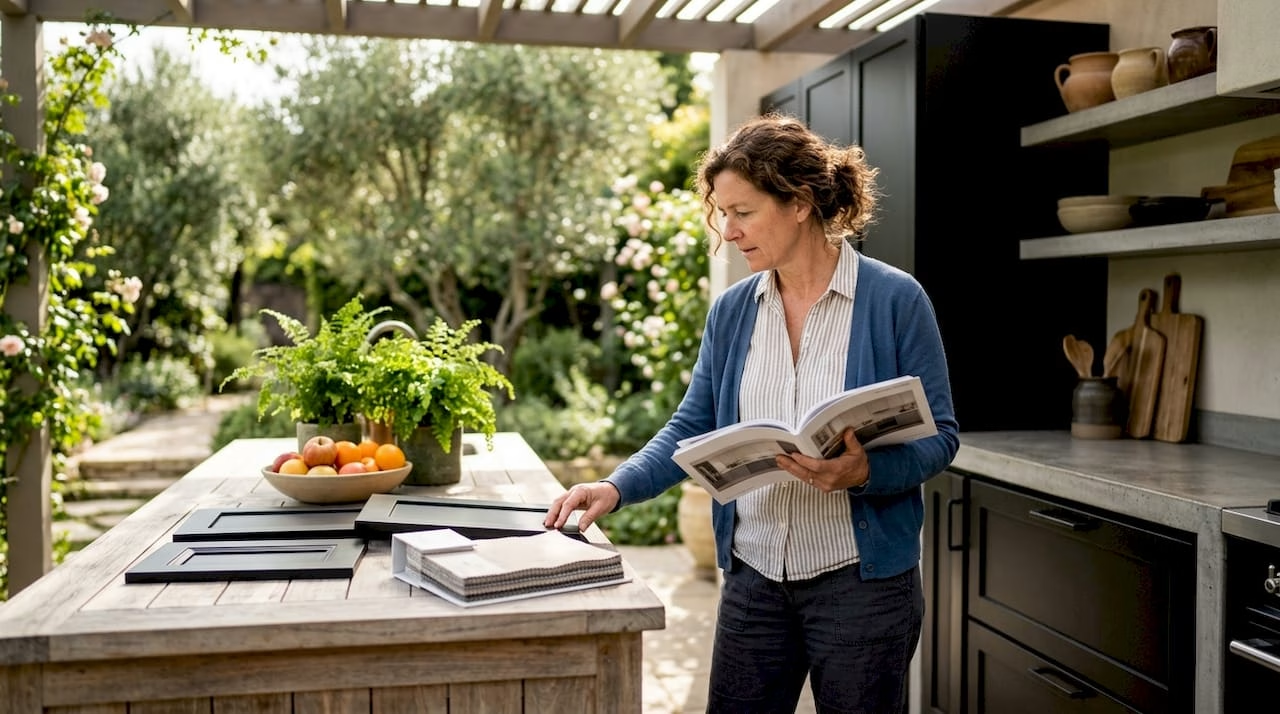
Whether you have framed or frameless boxes, the cabinet doors you choose define the final look of your kitchen. Tdm-thedoormaker specializes in custom cabinet doors built to exact measurements, so you get a precise fit regardless of your cabinet construction type.
Tdm-thedoormaker’s process covers three steps: measure your existing openings, choose your door style and finish, and place your order. The result is a high-quality door that fits your specific cabinet boxes without the cost of a full cabinet replacement. If you are weighing a full remodel against a targeted upgrade, the cabinet refacing vs full remodel comparison on the Tdm-thedoormaker site walks through the cost and scope differences in detail. Custom doors are one of the most cost-effective ways to refresh a kitchen that has good bones but dated fronts.
FAQ
What is the main difference between framed and frameless cabinets?
Framed cabinets have a solid wood face frame on the front of the box; frameless cabinets do not. The face frame adds structure and a traditional look but reduces the usable interior opening.
Do frameless cabinets really offer more storage?
Yes. Frameless cabinets provide 10–15% more usable interior storage per cabinet because the full opening is accessible without a frame in the way.
Are frameless cabinets harder to install?
Frameless cabinets require precise installation on level, plumb walls. Minor unevenness creates visible misalignment, so they are best suited for new construction or fully prepped walls.
What is the difference between inset and full overlay cabinet doors?
Inset doors sit flush inside the face frame; full overlay doors cover the face frame entirely. Full overlay styles cost less and perform better in humid climates where wood expansion can cause inset doors to stick.
Which cabinet style is better for resale value?
Framed cabinets have broader resale appeal in most American markets because they suit traditional design preferences. Frameless cabinets appeal to buyers who prioritize modern aesthetics and storage capacity.