If your cabinet boxes are still solid but the fronts look dated, worn, or builder-grade, replacing the doors is usually the smartest place to start. The best cabinet doors for DIY remodels are the ones that fit your existing layout, match how you live, and give you a cleaner finished look without turning the project into a full kitchen replacement.
That last part matters more than most homeowners expect. A DIY remodel can save real money, but only if you choose doors that are practical to measure, easy to design around, and durable enough to justify the effort. A beautiful door style that fights your budget, your timeline, or your cabinet box dimensions is not really the best choice. The right pick is the one that makes your remodel feel custom without making it complicated.
What makes cabinet doors the best choice for a DIY remodel?
For most remodelers, the answer is a mix of fit, style, durability, and value. You are not shopping the way a builder outfitting a hundred units would shop. You are trying to improve one home, often one room at a time, and you need doors that work with the cabinets you already have.
That is why custom sizing is such a big advantage in DIY refacing. Older homes, semi-custom layouts, and previous renovations often leave you with openings that are not ideal for stock replacements. If you try to force standard-size doors onto non-standard cabinets, the finished result can look off even when the color and style are right. Gaps become inconsistent. Overlays look uneven. The project starts to feel homemade in the wrong way.
The best cabinet doors for DIY remodels solve that problem by meeting the cabinet where it is. Precise sizing gives you a more professional result and makes the rest of the design decisions easier.
Start with door style, not just color
Many homeowners begin with paint color or wood tone, but style has a bigger impact on the final look than people think. Before you choose a finish, decide whether you want your space to read traditional, transitional, modern, or somewhere in between.
Shaker doors are the safest bet for most DIY projects
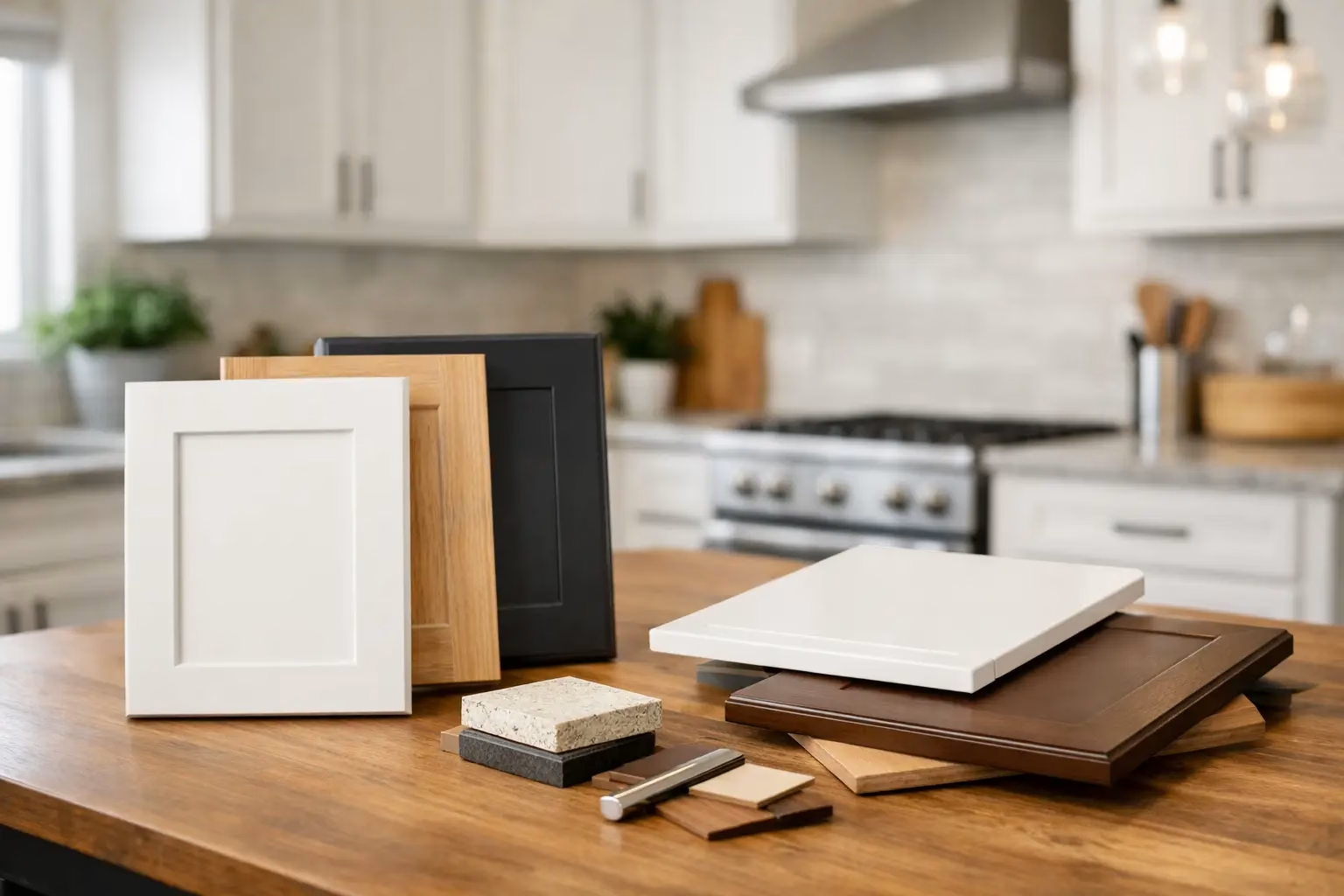
If you want one style that consistently works across kitchens, bathrooms, offices, and built-ins, Shaker is usually it. The clean frame-and-panel design is versatile, easy to coordinate with different hardware, and forgiving in both modern and classic homes.
For DIY remodels, Shaker doors also make sense because they do not rely on heavy ornament or trend-driven detailing. They can be painted for a bright, updated look or finished in wood tones for something warmer and more timeless. If you are trying to increase visual appeal without overcommitting to a style that may date quickly, Shaker is hard to beat.
Raised panel doors suit more traditional spaces
Raised panel doors bring depth and a more formal look. They work well in homes with traditional trim, warmer palettes, and classic design details. If your cabinets are part of a space with crown molding, decorative accents, or more ornate hardware, a raised panel can feel like the natural fit.
The trade-off is that they tend to look more specific stylistically. That is not a flaw. It just means you should be sure the rest of the room supports the look. In a very clean, contemporary remodel, they can feel out of place.
Flat panel and slab doors create a more modern finish
If you want a remodel that feels streamlined and current, flat panel or slab-style cabinet doors are strong options. They bring simple lines and a more minimal appearance, especially in smooth painted finishes or contemporary wood looks.
These styles can be excellent for DIY remodels in smaller kitchens because they keep visual clutter down. The main consideration is that modern styles tend to look best when the measurements, reveals, and hardware placement are very consistent. Precision matters more when the design is this simple.
Material matters more than trend
A cabinet door can look great in a photo and still be the wrong fit for your project. Material choice affects durability, paint performance, maintenance, and cost.
Solid wood offers warmth and long-term appeal
Solid wood remains a favorite for homeowners who want natural character and a high-end result. It works especially well for stained finishes where grain and variation are part of the appeal. Wood also brings flexibility across design styles, from rustic to refined.
That said, wood is a natural material, and that comes with normal movement depending on temperature and humidity. In many homes, that is not a problem at all, but it is worth understanding if your project is in a space with changing conditions.
MDF is often a smart painted-door option
For painted cabinet doors, MDF can be an excellent choice because it provides a smooth surface and avoids the grain pattern you see in many wood species. If your goal is a crisp white, soft neutral, or bold painted color, MDF often helps create that clean, consistent finish.
This is one of those areas where the best option depends on the finish you want. If you are painting, MDF deserves serious consideration. If you want visible wood grain, it is obviously not the right material.
Rigid thermofoil and PVC finishes can simplify maintenance
For homeowners focused on easy care and a clean, uniform appearance, thermofoil or PVC-based options can be appealing. These finishes can offer strong color consistency and a wipe-clean surface that fits busy households well.
The key is choosing quality construction and understanding the look you want. Some homeowners prefer the natural variation of painted wood or stained hardwood. Others want a more controlled, low-maintenance finish. Neither is automatically better. It depends on the room, the budget, and your expectations.
The best cabinet doors for DIY remodels are usually custom-sized
This is where many projects are won or lost. Homeowners often assume they need to work around stock sizing because custom sounds expensive or difficult. In reality, custom-sized replacement doors can save time, reduce frustration, and deliver a much more finished look.
If your cabinet boxes are in good shape, replacing doors and drawer fronts lets you keep the structure you already have while changing the visible design almost completely. That is the value of refacing. You are not paying to tear out usable cabinetry just to update the face of it.
Custom sizing also gives you more control over overlay, proportions, and design continuity across the room. In a kitchen with mixed cabinet widths, corner units, or older built-ins, that control matters.
How to choose the right door for your remodel
Start with the cabinet boxes themselves. If they are square, stable, and worth keeping, door replacement is usually a practical investment. Then think about the room honestly. A busy family kitchen needs durability and easy cleaning. A home office or bar area may give you more freedom to prioritize style.
Next, match the door style to the house, not just to current trends. The best remodels feel updated, but they still belong in the home. A super sleek slab door may look great online and still feel wrong in a traditional kitchen with detailed trim and warm flooring.
After that, focus on finish. Painted doors brighten spaces and work especially well in kitchens that need a cleaner, more open feel. Wood tones bring warmth and can hide minor wear more naturally over time. Dark finishes can look rich and dramatic, but they may also show dust, fingerprints, or room limitations more clearly.
Finally, measure carefully. Good doors cannot fix bad numbers. Precise measurements are what turn a cabinet refacing project from almost right into genuinely polished. This is one reason many DIY homeowners prefer ordering through a system designed around measuring, designing, and ordering in a clear sequence. At TDM – The Door Maker, that kind of structure helps customers move forward with more confidence and fewer surprises.
Common mistakes DIY remodelers can avoid
One of the biggest mistakes is choosing based only on appearance. It is easy to fall for a style photo and overlook whether the door works with your cabinet setup, your finish goals, or your skill level.
Another mistake is underestimating the visual impact of consistency. Even a simple door style looks premium when sizing, overlay, finish, and hardware all work together. On the other hand, a more expensive style can still feel off if those details are uneven.
Homeowners also sometimes assume full cabinet replacement is the only way to get a dramatic update. In many cases, it is not. If the boxes are sound, replacing doors, drawer fronts, and visible exterior surfaces can transform the room at a far better value.
So what are the best cabinet doors for DIY remodels?
For most homeowners, the best choice is a custom-sized door in a versatile style like Shaker, built in a material that suits the finish and wear level of the room. That answer may sound less flashy than chasing a trend, but it is what tends to hold up best both visually and financially.
If you want classic flexibility, choose Shaker. If your home leans traditional, consider raised panel. If your remodel is modern and minimal, flat panel or slab doors may be the better fit. Then choose wood, MDF, or a low-maintenance finish based on how you want the room to look and perform.
A good DIY remodel does not start with tearing everything out. It starts with seeing what is worth keeping, improving what people actually notice, and choosing cabinet doors that make the whole space feel intentional. When the fit is precise and the style is right, you can get a custom look without taking on a full custom build.