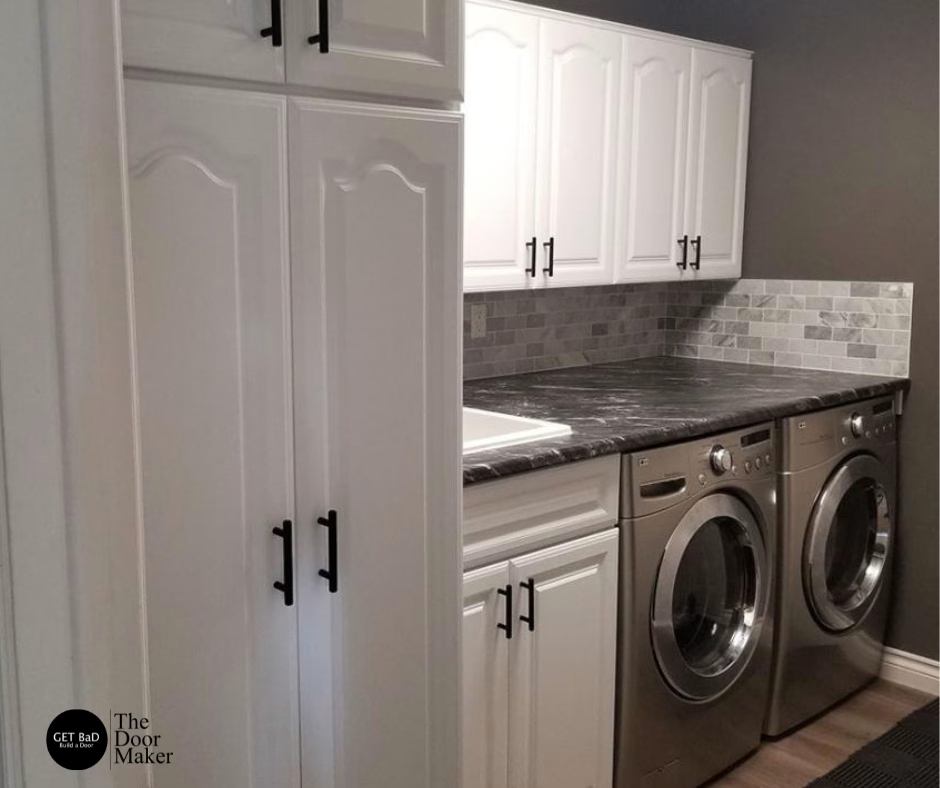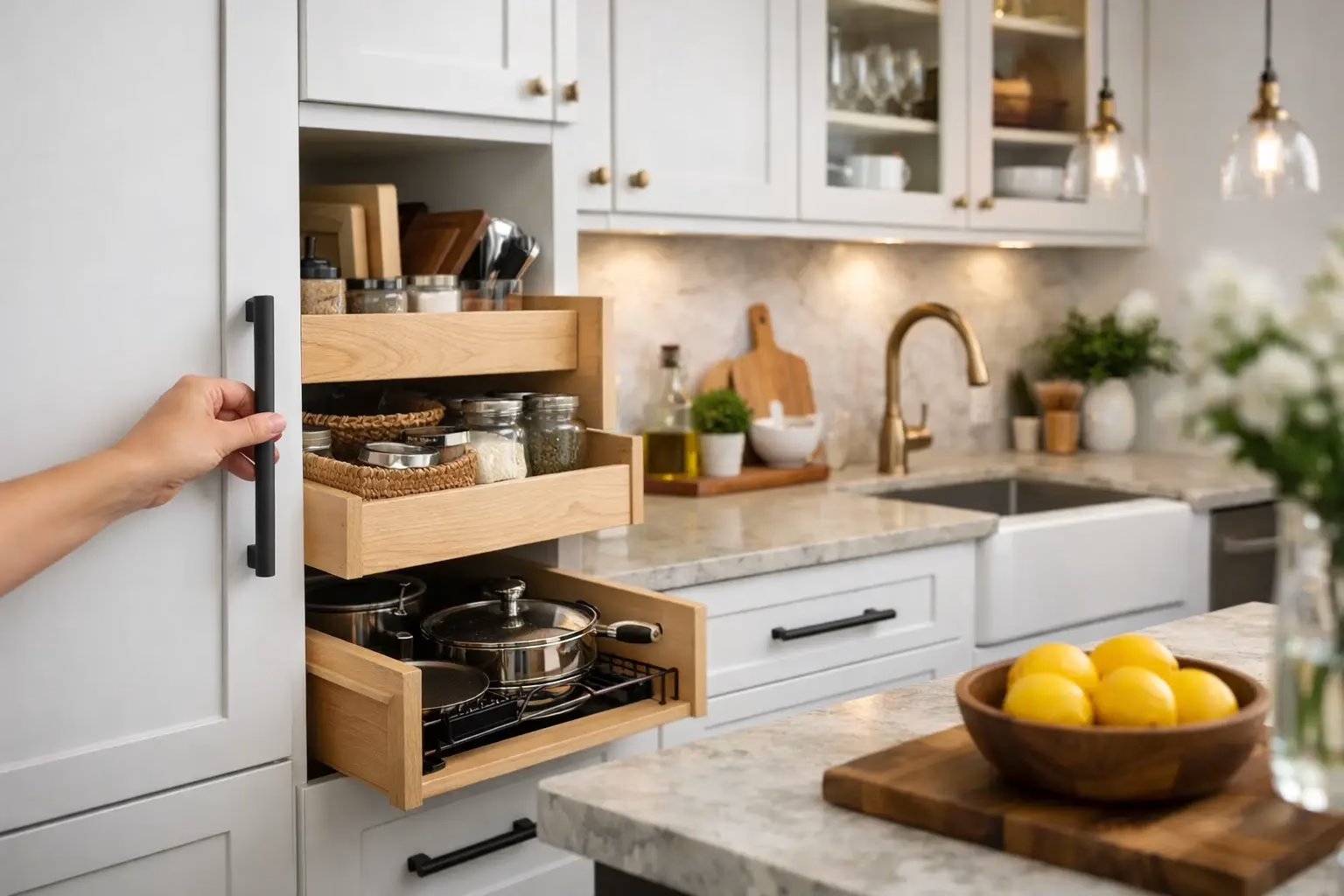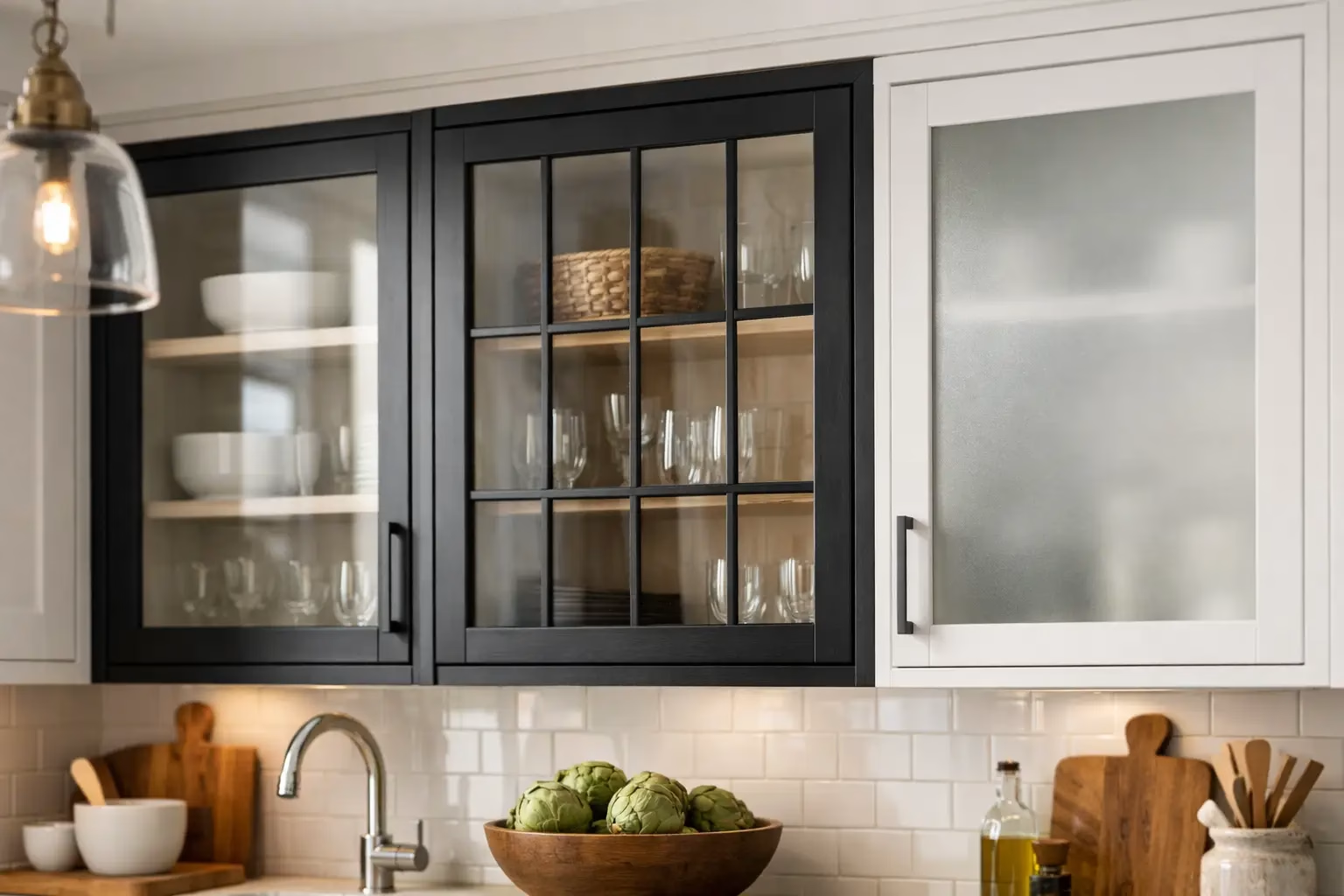

Replacing cabinet boxes is expensive. Living with dated cabinet fronts is frustrating. That is exactly why the custom cabinet ordering process explained matters to so many homeowners – it shows you how to get a tailored, high-end look without tearing out a kitchen, bathroom, or built-in that still works.
If you are refacing instead of replacing, the ordering process is where the project either stays simple or becomes stressful. Good results depend less on guesswork and more on understanding what happens before you click order. Once you know how custom sizing, style selection, and final review work together, the project starts to feel a lot more manageable.
Why the custom cabinet ordering process explained matters
Stock cabinet parts work well when your layout happens to match standard sizes. Many homes do not. Older kitchens, custom-built-ins, and remodeled spaces often have openings that are just different enough to create gaps, alignment issues, or a patchwork look if you try to force an off-the-shelf solution.
Custom ordering solves that problem by building doors and drawer fronts to your actual measurements. That gives you cleaner lines, more consistent reveals, and a finished result that looks intentional. It also helps you keep the cabinet boxes you already have, which is usually where the real savings come in.
There is a trade-off, of course. Because custom products are made to order, accuracy matters more. You are not grabbing a replacement off a shelf if a measurement is wrong. That is not a reason to avoid custom work. It is simply why the process needs to be clear from the start.
Step 1: Measure before you shop
The first real step is measuring what you already have. Not browsing styles. Not choosing colors. Measuring.
For cabinet refacing, you are usually replacing doors and drawer fronts while keeping the cabinet boxes in place. That means every opening, hinge setup, and overlay decision affects what you order. A door that is even slightly off can change the way the whole run looks.
Most DIY homeowners do best when they measure slowly and write everything down in an organized way. Label each cabinet opening, note whether it is a door or drawer front, and record width and height clearly. If you have double doors, measure each opening carefully rather than assuming both sides are identical. In many older homes, they are not.
This is also the stage where you confirm practical details. Are your current doors full overlay, partial overlay, or inset? Are you reusing hinges or switching hardware? Do you need matching drawer fronts, mullions, or decorative pieces to complete the look? These are not small details. They shape the final order.
If you feel unsure here, that is normal. Measuring is the part that deserves the most patience because it supports every decision that follows.
Step 2: Choose the door style that fits the room
Once measurements are in hand, design choices become much easier. Instead of imagining possibilities in the abstract, you are selecting a style for a real project with real dimensions.
This is where many homeowners discover that custom does not just mean size. It also means control over the finished look. You can choose a shaker profile for a clean, updated kitchen, a raised panel for a more traditional space, or a slim modern style for an office or built-in. Matching the door style to the room matters just as much as matching the measurements.
Material and finish decisions come next. Painted looks, wood species, and PVC color options each have strengths depending on the space. A busy family kitchen may call for a finish that is easy to clean and durable in everyday use. A home office or bar area may leave more room for decorative detail. If you are ordering samples, this is the point where they can save you from an expensive second guess.
There is no single best choice for every home. White shaker doors remain popular for good reason, but they are not automatically the right fit for every cabinet layout or design goal. The best result usually comes from balancing style, maintenance, lighting, and the other surfaces already in the room.
Step 3: Use your measurements to build the order
This is the part many customers worry about most, but it is usually the point where the project becomes more concrete and more exciting. After measuring and choosing your style, you enter the specifications for each piece.
With a tool like a Build a Door configurator, you are not shopping by approximate category. You are building each door or drawer front to the dimensions and options your project requires. That is a major advantage over trying to adapt stock pieces from a big-box retailer.
The key here is consistency. Enter measurements exactly as recorded. Double-check fractions. Confirm quantity. Make sure the style, panel option, and finish selections match from piece to piece unless you intentionally want variation. For example, a kitchen might use one door style throughout but different drawer-front sizes depending on the cabinet base. That is normal. What you want to avoid is accidental inconsistency caused by rushing through the order.
This is also when add-on components can make sense. If your refacing project includes visible end panels, crown molding, valances, fluted columns, or other decorative elements, ordering them together can help create a more cohesive finished result. It also reduces the risk of trying to match details later.
Common mistakes during the custom cabinet ordering process explained
Most ordering problems are preventable. They usually come from moving too fast, not from the project being too complex.
One common issue is measuring the old door instead of confirming the cabinet opening and intended overlay. That shortcut can work sometimes, but not always. If the existing installation was uneven or if you are changing the style, copying the old size may repeat the same problems.
Another mistake is choosing a look before considering how the room functions. Decorative profiles can be beautiful, but a simpler style may make more sense in a smaller kitchen or a modern remodel. Likewise, a finish that looks perfect on a screen may read very differently under warm interior lighting.
The last big mistake is failing to review the order as a whole. A custom order is not just a stack of separate parts. It is a system. Doors, drawer fronts, colors, profiles, and accessories should all make sense together.
What happens after you place the order
Once the order is submitted, custom manufacturing begins. Unlike stock inventory, these pieces are made specifically for your project. That is the value of custom, and it is also why final review before purchase matters so much.
During production, your choices are translated into finished components built to your specifications. That includes the selected dimensions, style, and finish options you approved. The timeline can vary depending on the order size, product type, and level of customization.
For homeowners, this waiting period is actually useful. It gives you time to prep the space, organize hardware, paint cabinet boxes if needed, and plan installation. If you are refacing a kitchen, doing this work before the new fronts arrive can make the install feel much smoother.
How to order with more confidence
If this is your first refacing project, confidence usually comes from preparation, not experience. You do not need to be a cabinet maker to place a good order. You do need a clear measuring process, a realistic design plan, and the discipline to review your choices before submitting them.
That is where an approachable custom manufacturer makes a difference. The right support, clear product information, and an ordering system built for DIY customers can remove a lot of unnecessary friction. TDM – The Door Maker is built around that idea, helping homeowners move from measuring to design to ordering without making the process feel harder than it needs to be.
A custom project should still feel custom, but it should not feel mysterious. If you know your dimensions, understand your style goals, and take the time to verify the details, ordering becomes far less intimidating.
The real payoff of getting it right
The best part of a cabinet refacing project is not the order confirmation. It is the moment the new doors go on and the room finally looks finished.
That result starts long before installation day. It starts when you measure carefully, choose with intention, and treat the order as the foundation of the project rather than a quick transaction. When the custom cabinet ordering process is handled the right way, you get more than new doors. You get a space that looks upgraded, fits your home properly, and feels worth the effort every time you walk into the room.