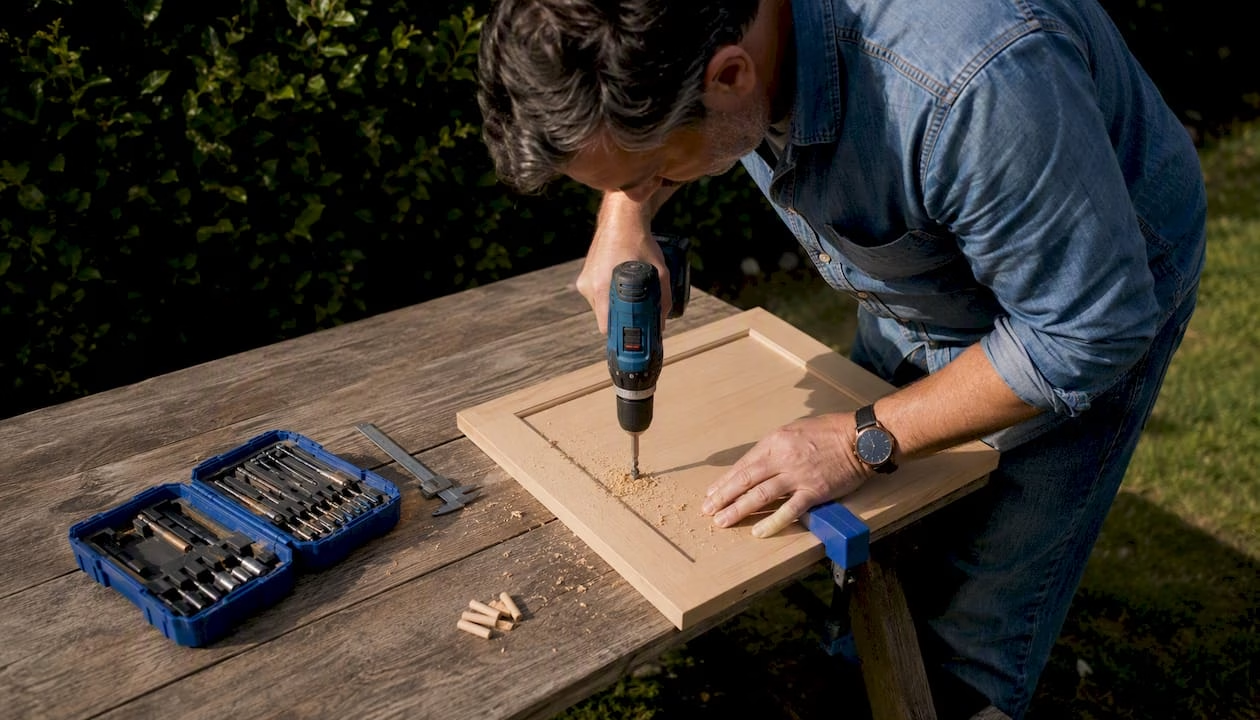

For most homeowners, custom cabinet doors ordered through a configurator-first vendor deliver the best combination of precise fit, finish variety, and long-term value. Tdm-thedoormaker’s The Door Maker is the recommended pick for DIY refacing and replacement projects, offering over 30 styles and 130+ colors and finishes with sizing accurate to 1/10,000" — a level of precision that stock and semi-custom options simply don’t match.
Here’s why it stands out for most homeowners:
- Fit: Custom sizing to your exact dimensions eliminates the gaps and shimming that come with stock doors.
- Selection: A wide range of door styles and finishes cover everything from classic Shaker to ornate raised-panel profiles.
- Price: Refacing with custom online doors typically costs a fraction of full cabinet replacement, without sacrificing the finished look.
Pro Tip: Order a sample door or color swatch before placing your full order. Seeing the finish in your actual kitchen lighting prevents costly surprises and reduces the chance of a return.
Table of Contents
- What are the best online cabinet doors to compare?
- How do you pick the right cabinet doors for your project?
- Which cabinet door styles can you buy online, and when does each work best?
- What materials and finishes hold up best for kitchen cabinet doors?
- How do you measure, order samples, and install cabinet doors bought online?
- Why The Door Maker is the recommended pick for online cabinet doors
- Key Takeaways
- The case for going custom: a perspective worth considering
- Ready to order? Start with a sample from The Door Maker
- Useful resources for going deeper
What are the best online cabinet doors to compare?
The table below compares the main options available through Tdm-thedoormaker, covering the key dimensions that matter most when you’re planning a refacing or replacement project.
| Option | Best for | Customization level | Material & durability | Lead time & shipping | Ease of ordering |
|---|---|---|---|---|---|
| The Door Maker | Homeowners wanting precise custom sizing and wide style/finish selection for refacing | Fully custom: exact sizing, 130+ finishes, hinge hole add-ons | Solid wood, MDF, thermofoil, veneer; high durability options available | Custom lead times; ships direct | Online configurator, sample program, measurement guides, video tutorials |
| The Shaker Cabinet Door | Timeless, transitional look that works in most kitchen styles | Wide finish options, custom sizing | MDF or solid wood; durable and consistent | Standard custom lead time | Straightforward configurator selection |
| The Adobe Cabinet Door | Farmhouse, cottage, or warm traditional aesthetics | Custom sizing, rustic finish options | Solid wood or MDF with molding details | Standard custom lead time | Configurator with style preview |
| The Heritage Cabinet Door | Restoration projects or classic, ornate looks | Custom sizing, raised panel, period detailing | Solid wood preferred; high durability | Standard custom lead time | Configurator with detailed profile options |
| The Revere Cabinet Door | Slightly decorative but restrained, transitional style | Custom sizing, broad finish range | MDF or solid wood; durable | Standard custom lead time | Configurator selection |
| The Delaware Cabinet Door | Contemporary-traditional hybrid with clean lines | Custom sizing, painted or stained finishes | MDF or solid wood; durable | Standard custom lead time | Configurator with finish options |
| The Executive Cabinet Door | Upscale, statement cabinet look | Custom sizing, premium panel and edge detailing | Premium solid wood or MDF; high durability | Standard custom lead time | Configurator with premium profile options |
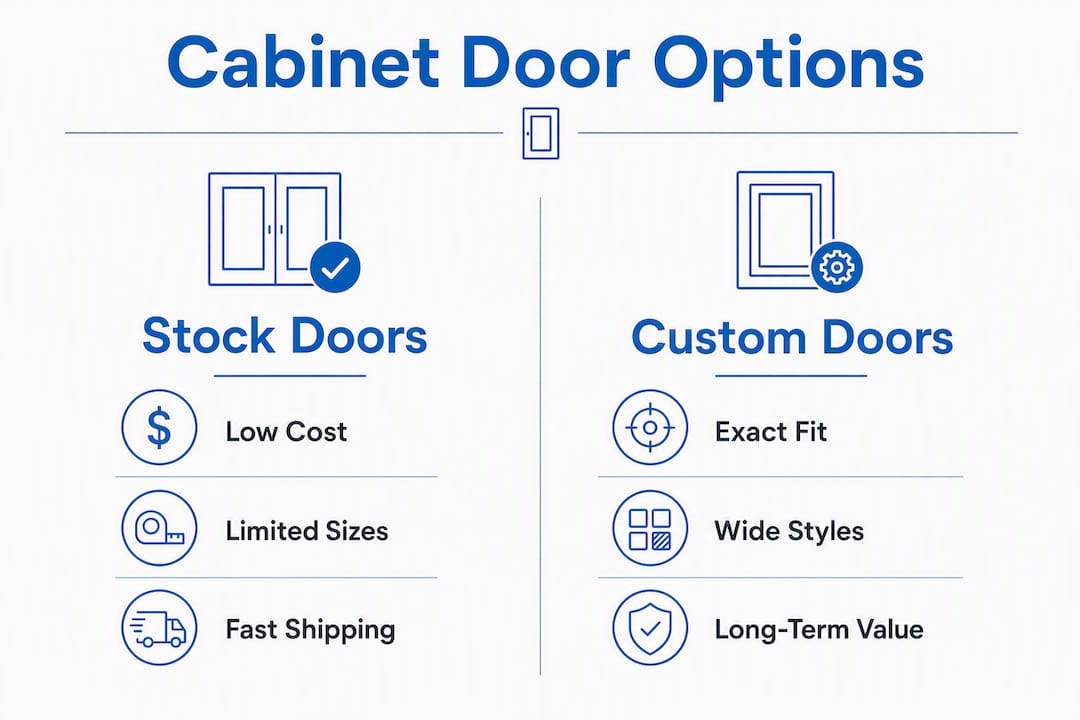
A few things worth noting after scanning that table. The Door Maker bundles the full ordering infrastructure — configurator, sample program, measurement tools, and video tutorials — into a single direct-to-consumer experience. The individual door styles (Shaker, Adobe, Heritage, and the rest) are profiles you choose within that system, not separate vendors. Stock options from big-box retailers offer faster turnaround for standard sizes, but you give up precise fit and finish depth. Custom doors versus stock cabinetry is a genuine tradeoff worth understanding before you commit to either path.
How do you pick the right cabinet doors for your project?
The single most important question is: what is your project goal? Refacing an existing kitchen to update its look is a very different job from replacing a few damaged doors or building new cabinetry. Your answer shapes every other decision.
Work through this checklist before placing any order:
- Style match: Does the door profile fit your kitchen’s overall aesthetic — transitional, traditional, contemporary, or farmhouse?
- Material: Will the doors be in a high-humidity area (near a sink or dishwasher) or a high-traffic zone? Material choice matters more in those spots.
- Measurement accuracy: Do you have exact opening dimensions, or do you need a measurement guide to get there?
- Hardware preparation: Do your existing hinges require specific boring patterns? Confirm hinge hole specs before ordering.
- Finish options: Do you want painted, stained, or a wrapped finish like thermofoil? Not every supplier offers all three.
- Sample availability: Can you order a physical sample door or color swatch to check the finish in your space?
- Return policy: What happens if a door arrives damaged or the finish doesn’t match?
- Warranty: Is there a documented warranty on finish and construction?
Before placing a full order with any online seller, ask these four questions directly:
- Can I order a sample door or swatch in my chosen finish before committing to the full quantity?
- What are your exact lead times from order confirmation to shipping?
- Do you support custom sizing to fractional dimensions, and what is your tolerance?
- What does your warranty cover, and how do I file a claim if a door arrives damaged?
Watch for these red flags: no sample program, vague or missing warranty language, no measurement guide or video support, and pricing that excludes shipping until checkout. Common DIY pitfalls like measurement errors and hinge misalignment are far more likely when an online seller provides no measurement guidance. Choosing the right cabinet doors starts with knowing what questions to ask.
Which cabinet door styles can you buy online, and when does each work best?
Shaker and slab doors dominate online sales because they work across the widest range of kitchen styles. Raised panel and ornate profiles are trend-stable for traditional homes, while louvered and glass-front options serve specific functional or aesthetic needs.
Here’s a quick-reference breakdown of the styles most commonly available online:
- The Shaker Cabinet Door: Recessed center panel, clean lines. Works in transitional, modern farmhouse, and contemporary kitchens. The most resale-friendly profile on the market.
- Slab/Flat-panel: No frame, no detail. Best for ultra-modern or minimalist spaces. Shows surface imperfections more readily, so material quality matters.
- Raised panel: A center panel that sits above the frame. Classic and formal; suits traditional and period-style kitchens.
- Louvered: Horizontal slats allow airflow. Practical for pantry doors or areas needing ventilation; less common for full kitchen suites.
- Glass-front: Replaces the solid panel with glass. Opens up upper cabinets visually and works well in smaller kitchens where light matters.
- The Adobe Cabinet Door: Warmer molding lines with a rustic profile. Best for farmhouse, cottage, or country-style kitchens.
- The Heritage Cabinet Door: Period-correct raised panel detailing. The right choice for restoration projects or homes with traditional architectural character.
- The Revere Cabinet Door: Shaker simplicity with a subtle decorative line. Sits between plain and ornate — a good fit for homeowners who want a little detail without committing to a full traditional look.
- The Delaware Cabinet Door: Clean, slightly contemporary framing with painted or stained finish options. Works well in kitchens that blend modern and traditional elements.
- The Executive Cabinet Door: Premium panel and edge detailing for an upscale, statement look. Best when the kitchen is a focal point of the home.
When you’re deciding between profiles, manufacturer photos are a starting point, but customer before-and-after galleries tell you far more. They show how a door looks under real kitchen lighting, next to real countertops and backsplashes. For contemporary cabinet door styles, browsing a gallery of completed kitchens is the fastest way to narrow your shortlist.
Pro Tip: If resale value matters to you, Shaker doors in a neutral painted finish photograph well in listing photos and appeal to the broadest pool of buyers. In smaller kitchens, glass-front uppers on a few key cabinets add perceived depth without a major cost increase.
What materials and finishes hold up best for kitchen cabinet doors?
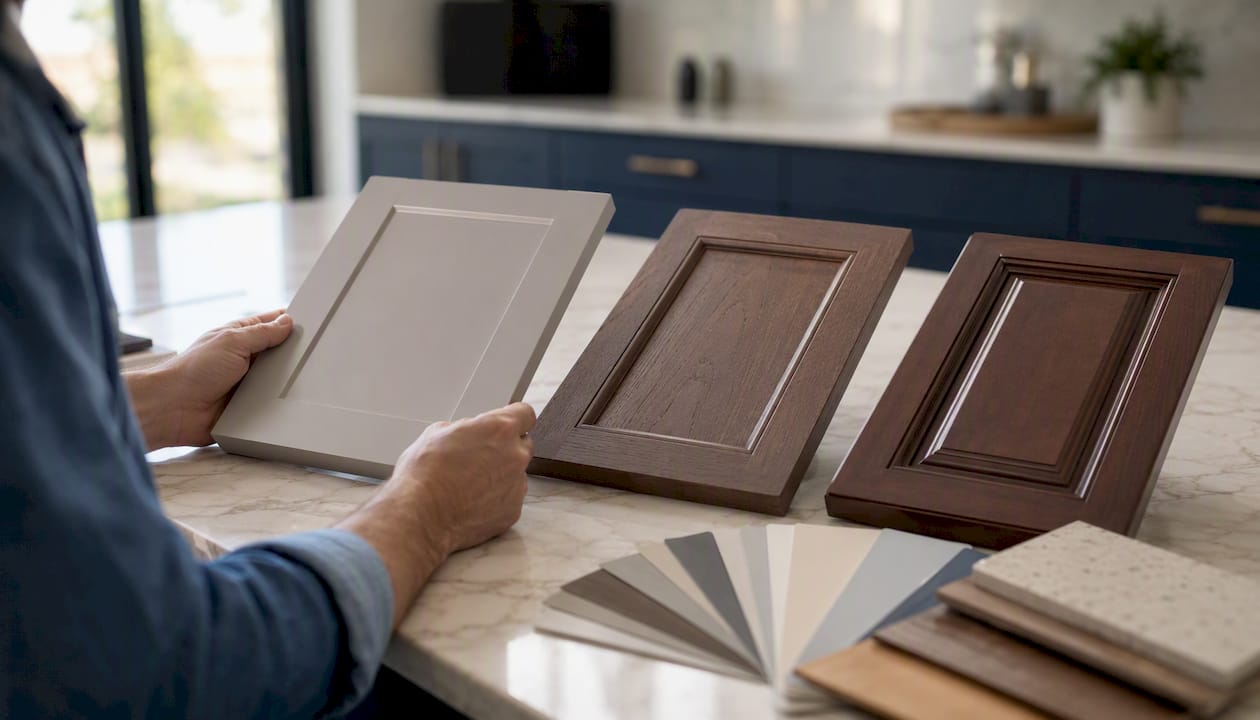
Material choice is the single biggest driver of how long your cabinet doors look good, especially in a kitchen where heat, moisture, and daily contact are constant. The right material depends on your budget, the room’s conditions, and whether you plan to refinish the doors later.
Here’s how the main options compare:
| Material | Pros | Cons | Best use case |
|---|---|---|---|
| Solid wood | Refinishable, premium look, long lifespan | Higher cost, can expand/contract with humidity | High-end kitchens, areas where refinishing is expected |
| MDF (painted) | Smooth, consistent surface; holds paint well | Not water-resistant at edges; heavier than solid wood | Painted finishes in moderate-humidity areas |
| Thermofoil | Budget-friendly, moisture-resistant surface | Can peel near heat sources; not refinishable | Budget kitchens, rentals, low-heat zones |
| Veneer | Real wood look at lower cost than solid | Thin layer limits sanding/refinishing | Mid-range kitchens wanting a wood grain look |
| Lacquer/painted finish | Durable, cleanable, wide color range | Chips can show on high-traffic doors | Any kitchen; best on MDF substrate |
| Stained finish | Highlights natural wood grain | Requires solid wood or veneer substrate | Traditional and warm-toned kitchens |
For kitchens and bathrooms, durability near moisture sources is the priority. Thermofoil works for budget projects in lower-heat zones, but it can delaminate near a dishwasher or range over time. Painted MDF is the mid-range standard: consistent, smooth, and available in virtually any color. Solid wood is the right call when you expect to refinish or when the kitchen is a long-term investment. A full breakdown of kitchen cabinet door materials covers these tradeoffs in more detail, and the durable cabinet door options guide is worth reading before finalizing your material choice for high-traffic areas.
On pricing, stock doors from big-box retailers are the lowest entry point but come in fixed sizes and limited finishes. Semi-custom options add some sizing flexibility at a moderate price increase. Fully custom doors from a direct-to-consumer vendor like The Door Maker cost more per door than stock but typically deliver significant savings versus a full cabinet replacement. Refacing saves money compared to ripping out and replacing entire cabinet boxes — often by a substantial margin.
How do you measure, order samples, and install cabinet doors bought online?
Accurate measurement and a physical sample are the two steps that prevent the most common ordering mistakes. Getting both right before you commit to a full order reduces the risk of a poor fit or a finish that looks different in your kitchen than it did on a screen.
Follow this sequence for a smooth online order:
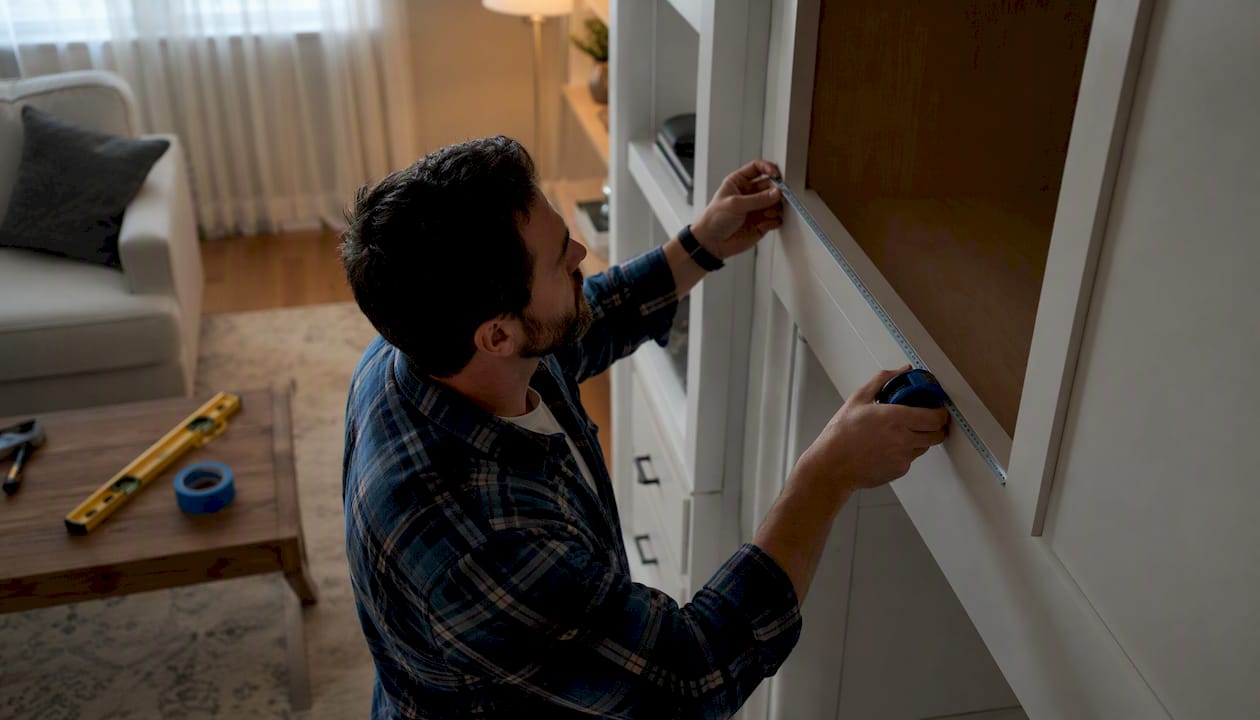
- Measure your cabinet openings — width and height to the nearest 1/16". For overlay doors, add your desired overlay amount to each dimension. For inset doors, measure the opening precisely and subtract a small gap for clearance.
- Request a sample door or color swatch in your chosen finish. Ordering samples lets you check color accuracy under your kitchen’s actual lighting before committing.
- Use the online configurator to enter your dimensions, select your style, finish, and any add-ons (hinge holes, specific boring patterns).
- Confirm hinge and drilling prep — specify your hinge cup size and boring pattern to match your existing hardware. Pre-drilled hinge locations cut installation time significantly.
- Place your order and save your order confirmation with all dimensions and specs listed.
- Receive and inspect each door before installation. Check finish consistency, dimensions, and any pre-drilled holes against your order specs.
- Install or hire a pro. For a full kitchen refacing, a step-by-step DIY refacing guide walks you through the process.
On lead times: stock doors from big-box retailers ship in days. Semi-custom options typically run 2–4 weeks. Fully custom doors from direct-to-consumer vendors vary by order complexity, so confirm the lead time at checkout and factor it into your project timeline.
Before installation, verify these items:
- All door dimensions match your order confirmation.
- Finish is consistent across the full set (check in the same light).
- Pre-drilled hinge holes align with your hardware.
- No shipping damage to edges or corners.
The most common installation pitfalls are hinge misalignment and doors that bind because the overlay wasn’t calculated correctly. Measure twice, confirm your overlay spec with the vendor, and test-fit one door before hanging the full set.
Why The Door Maker is the recommended pick for online cabinet doors
The Door Maker matches the core buyer job better than most online options: you need doors that fit precisely, look the way you expect, and arrive with enough support to install them yourself without a contractor.
The features that make it the recommended choice for DIY refacing:
- Precise custom sizing to 1/10,000" — eliminates the gaps and shimming that come with stock or semi-custom doors.
- 30+ styles and 130+ colors and finishes — enough range to match virtually any kitchen aesthetic, from Shaker to Executive.
- Online configurator with step-by-step design, measurement, and ordering tools built in.
- Sample door and color swatch program — order before you commit to the full quantity.
- Hinge hole add-ons — specify your boring pattern at order time so doors arrive ready to hang.
- Video tutorials and measurement guides — practical support for homeowners doing this for the first time.
- Competitive pricing that typically undercuts full cabinet replacement by a significant margin.
The ordering process follows three clear steps: measure your openings, configure your doors (style, finish, size, hardware prep), and place your order. For a full kitchen refacing project, the recommended approach is to stagger delivery: order samples first, then a small test batch to validate fit and finish, then the full order. This staged approach catches any sizing or finish issues before you’re committed to the whole kitchen.
For homeowners comparing refacing against a full remodel, the cabinet refacing versus full remodel page lays out the cost and timeline tradeoffs clearly.
Key Takeaways
Custom cabinet doors from a configurator-first vendor deliver the best fit, finish range, and value for DIY refacing — but only when you measure accurately and order a sample before committing to the full set.
| Point | Details |
|---|---|
| Custom sizing prevents fit problems | Precise sizing to your exact dimensions eliminates gaps, shimming, and binding at installation. |
| Order samples before the full set | A physical sample door or swatch confirms color and finish accuracy under your kitchen’s real lighting. |
| Material choice drives durability | Match material to room conditions: thermofoil for budget/low-heat zones, painted MDF for mid-range, solid wood where refinishing is expected. |
| Stagger your order for a full kitchen | Order samples first, then a test batch, then the full quantity to catch sizing or finish issues early. |
| Tdm-thedoormaker’s The Door Maker | Offers 30+ styles, 130+ finishes, precise custom sizing, a configurator, and a sample program for DIY refacing projects. |
The case for going custom: a perspective worth considering
The conventional advice for cabinet updates is to price out stock doors first and upgrade only if the budget allows. That logic made sense when custom meant calling a local millwork shop and waiting months. Online configurators have changed the math.
What most homeowners underestimate is how much a poor fit costs downstream. A stock door that’s a quarter-inch too narrow looks fine in the store and wrong in the kitchen. You adjust, shim, or live with it. A custom door sized to your actual opening doesn’t require that compromise. The price difference between stock and custom online is often smaller than people expect, and the installation experience is genuinely different.
The other thing worth saying plainly: the sample step is not optional if you care about the result. Finish colors look different on a screen than they do under incandescent or LED kitchen lighting. Ordering a swatch or a sample door costs a small amount and saves the frustration of a full set in the wrong color. Video tutorials and measurement guides matter for the same reason: the homeowners who run into trouble during installation are almost always the ones who skipped the measurement check or didn’t confirm their hinge boring pattern before ordering.
The Door Maker’s model — measure, configure, order — is the right sequence. It’s not complicated, but it does require doing the steps in order.
Ready to order? Start with a sample from The Door Maker
Refacing your cabinets with custom doors doesn’t require a contractor or a big-box budget. The Door Maker gives you a direct path: configure your doors to your exact dimensions, choose from 30+ styles and 130+ finishes, and order a sample door or color swatch before you commit to the full set.
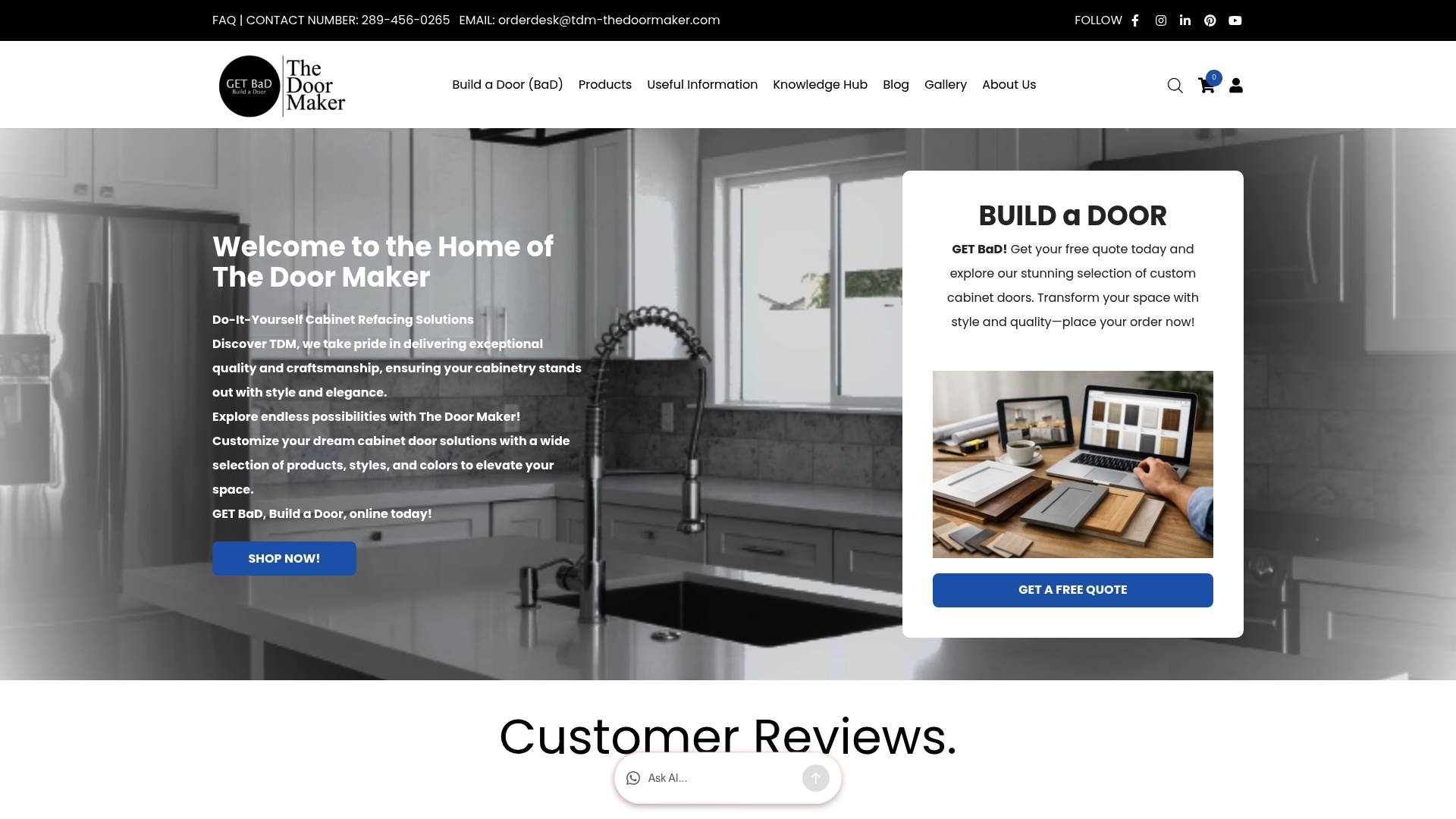
The sample program is the lowest-risk way to start. You see the finish in your kitchen, confirm the sizing approach works for your cabinets, and move forward with confidence. Visit the custom cabinet doors ordering page to configure your doors, request a sample, and get your project moving. If you’re still deciding on materials, the kitchen cabinet door materials guide is a practical next read.
Useful resources for going deeper
These pages cover the topics most homeowners need when planning a cabinet door project:
- Custom Cabinet Doors Online: Style on a Budget — The Door Maker’s full ordering guide, covering the configurator, sizing, and sample program.
- How to Reface Cabinets Yourself — Step-by-step DIY refacing instructions and a checklist for a successful installation.