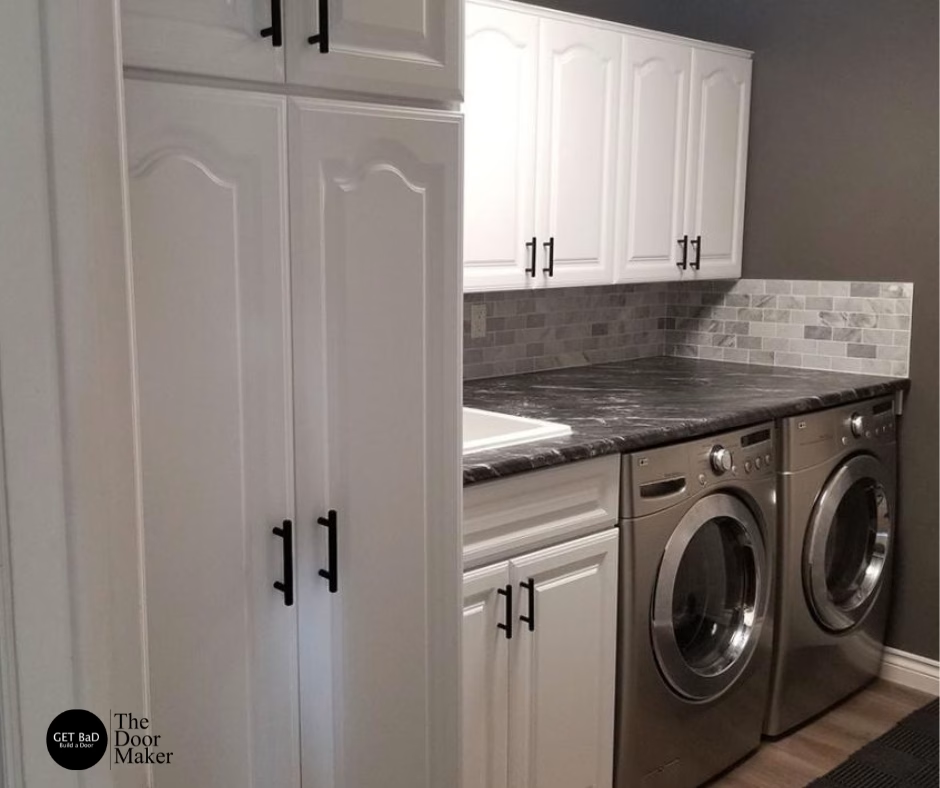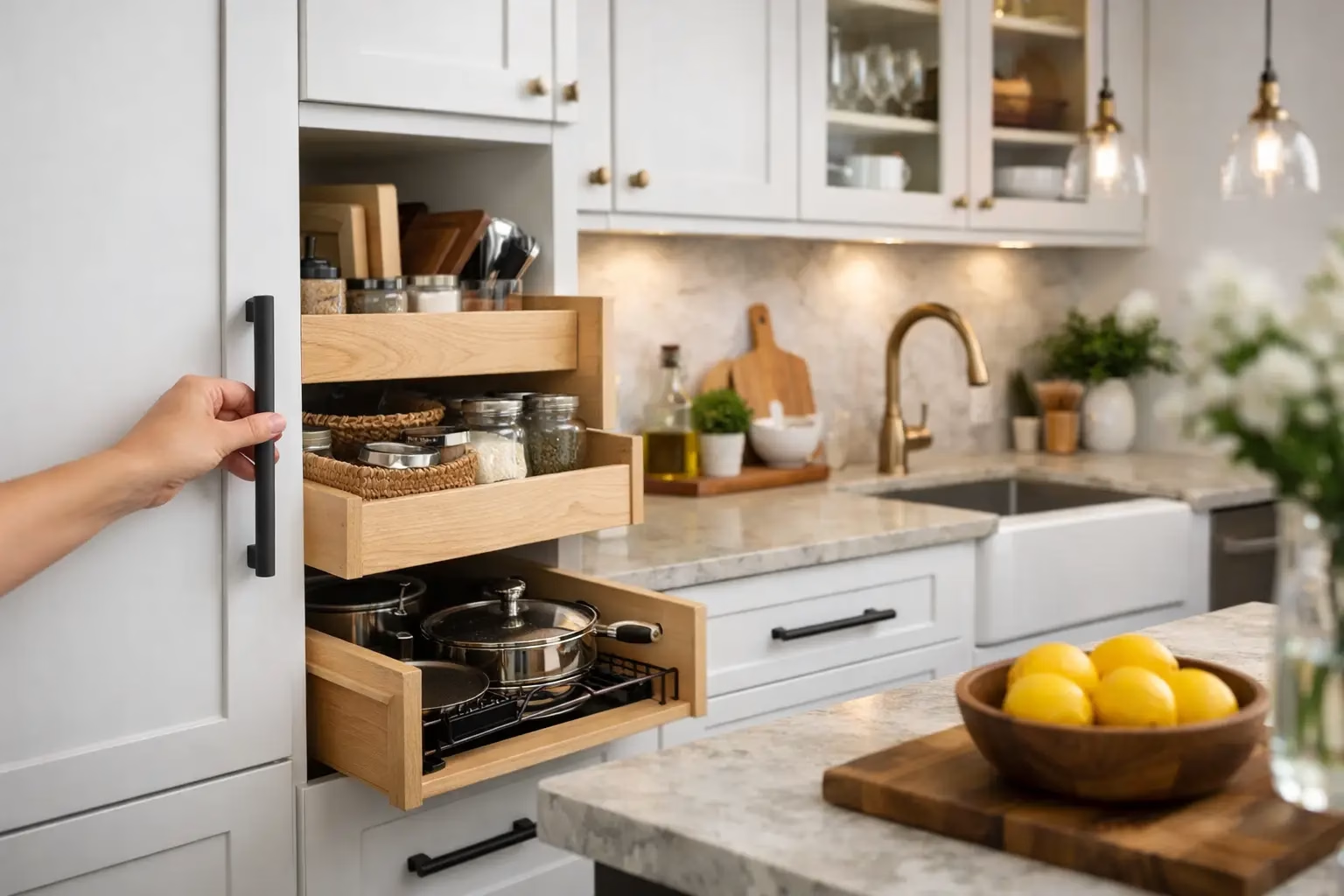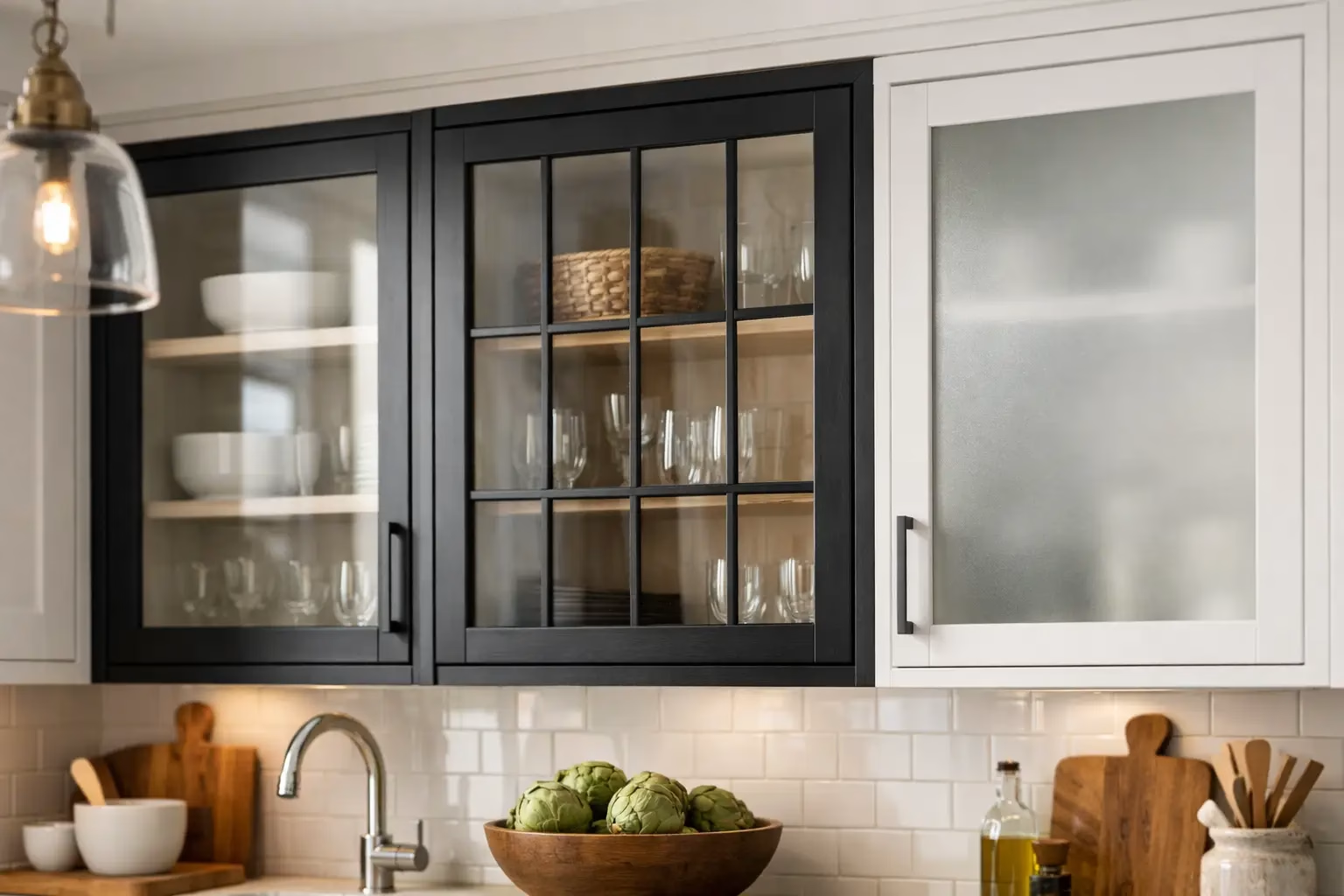

That wall of built-ins might still be solid, but if the doors are warped, dated, or just plain tired, the whole room pays for it. Built in cabinet door replacement is often the fastest way to change the look of a home office, living room, mudroom, or dining area without tearing out well-built cabinet boxes.
For many homeowners, that is the sweet spot. You keep the structure that already fits the space, skip the mess of a full replacement, and focus your budget where people actually notice it first – the visible front of the cabinetry. When the doors are custom-made to the right size and style, the result can look far more like a full renovation than a simple update.
Why built in cabinet door replacement makes sense
Built-ins are different from freestanding furniture and stock cabinets. They are usually designed around the room, often with odd widths, uneven openings, or trim details that would be expensive to recreate from scratch. That is exactly why replacing only the doors makes so much sense.
If the cabinet boxes are level, secure, and in decent condition, there is rarely a good reason to remove everything. New doors and drawer fronts can dramatically improve appearance while avoiding demolition, drywall repair, flooring patches, and the cost of new cabinet construction. In older homes especially, built-ins may have non-standard dimensions that make stock replacement options frustrating or impossible.
This approach also gives you more design freedom than many homeowners expect. A built-in that feels traditional today can be updated with a clean Shaker door, a slim modern profile, or a more decorative front that better matches the architecture of the room. The transformation comes from the fit and finish, not from replacing every cabinet component.
When replacing the doors is enough
Not every project needs a full rebuild. In many cases, the existing framework is doing its job just fine, and the problem is cosmetic.
Built in cabinet door replacement is usually the right move when your cabinet boxes are structurally sound, the shelves still function well, and the layout works for your needs. Maybe the finish is worn, the hinges are failing, or the door style dates the room. Those issues can often be solved without touching the bones of the built-in.
It is also a strong choice if you are trying to match a new design direction in the home. A once-popular raised panel door may feel heavy next to newer trim and flooring. Swapping in updated custom doors can bring the built-ins in line with the rest of the space at a much lower cost than starting over.
There are times when replacement alone is not enough. If the cabinet boxes have water damage, serious sagging, broken face frames, or a layout that no longer works, you may need a bigger renovation. The same is true if hinge locations are badly worn out and the surrounding material cannot reliably hold new hardware. Still, most homeowners are surprised by how often the boxes are worth keeping.
Measuring is where good results start
The difference between cabinet doors that look custom and cabinet doors that look almost right usually comes down to measuring. Built-ins are rarely as uniform as they appear from across the room, so you want exact opening sizes and a clear understanding of overlay.
For overlay doors, you are measuring the cabinet opening and then determining how much larger the door should be on each side. For inset doors, you measure with even more care because the door sits inside the frame and reveals are visible all around. Inset can look beautiful on built-ins, but it is less forgiving. If your project involves older cabinetry with slight inconsistencies, overlay doors are often the simpler path.
It also helps to inspect each opening individually rather than assuming all upper or lower doors are the same size. Built-ins may have been site-built, adjusted over time, or trimmed to fit uneven walls. Small variations are normal. Ordering custom-sized doors based on each opening prevents the headaches that come with trying to make stock sizes work.
If you are replacing drawer fronts too, measure those separately. A built-in desk, entertainment wall, or window seat may combine doors and drawers in ways that do not follow standard kitchen sizing. Precision matters here because the eye notices misalignment quickly.
Choosing a style that fits the room
The best door style is not always the trendiest one. Built-ins usually play a strong visual role in a room, so the replacement doors should work with nearby trim, molding, flooring, and furniture.
Shaker-style doors remain a popular choice because they bridge traditional and modern spaces well. They can make an older built-in feel cleaner without looking out of place. Slab doors create a more contemporary look, especially in offices or media walls. Raised panel or more detailed profiles may suit formal living rooms, libraries, or homes with classic millwork.
Color and finish matter just as much as profile. A bright painted finish can make a heavy built-in feel lighter. Wood grain or warm neutral tones can add depth and furniture-like character. If your built-in includes glass sections, mullion doors can break up solid expanses and give display areas more intention.
This is also where custom ordering earns its value. Built-ins are often focal points, and generic doors can make them feel like an afterthought. A made-to-order door lets you match the proportions of the piece instead of forcing the piece to accept a standard size.
Hardware, hinges, and the details that change everything
New doors alone help, but the finished result depends on the small decisions too. Hinges, knob placement, drawer pull sizing, and even reveal consistency all affect whether the project feels polished.
If you are reusing hinge locations, make sure the new doors are prepared correctly for your existing hardware or confirm that the cabinets can accept updated concealed hinges. Many homeowners use door replacement as an opportunity to improve function as well as appearance. Soft-close hardware and properly aligned hinges can make an older built-in feel much newer in daily use.
Decorative accents may also be worth considering if you are refreshing a larger wall unit. Crown molding, valances, columns, or matching drawer fronts can help the entire installation feel intentional rather than pieced together. That does not mean every project needs embellishment. Sometimes a cleaner door style and fresh finish are enough. It depends on the room and how built-up the original cabinetry is.
Stock doors vs. custom doors for built-ins
This is where many projects go sideways. Stock doors can seem like the budget option at first, but built-ins often expose their limitations fast.
Most built-ins were not built to standard modular sizes. Even when a stock door is close, close is not the same as correct. You may end up adjusting overlays, living with uneven gaps, redrilling hardware locations, or compromising on the style you actually want. By the time you factor in the extra work and the visual trade-offs, the savings can disappear.
Custom doors are built for the exact opening and the look you are trying to achieve. That is especially important for older homes, one-off office built-ins, entertainment centers, and alcove cabinetry where every fraction matters. A company like The Door Maker supports that process with made-to-order sizing and a Build a Door system that helps DIY homeowners move from measurements to finished design with more confidence.
What to expect from the project
Built in cabinet door replacement is manageable for many DIY homeowners, but it still rewards patience. The project usually involves removing existing doors and drawer fronts, checking openings, confirming measurements, choosing style and finish, ordering the new components, then installing and adjusting for even alignment.
The timeline depends on whether you are also painting boxes, changing hardware, or adding decorative pieces. If the cabinet frames need refinishing, plan for that before installation. If the boxes are already in good shape, the project can move quickly once the new doors arrive.
The biggest payoff is visual. Built-ins take up a lot of wall space, so even a door-only update has outsized impact. Rooms feel cleaner, more current, and more custom. And because you are keeping the cabinet structure, your budget stretches further than it would with a full replacement.
If your built-ins still serve the room but no longer match your standards, replacing the doors is not a shortcut. Done well, it is a smart renovation choice that respects what already works and upgrades what people actually see every day.