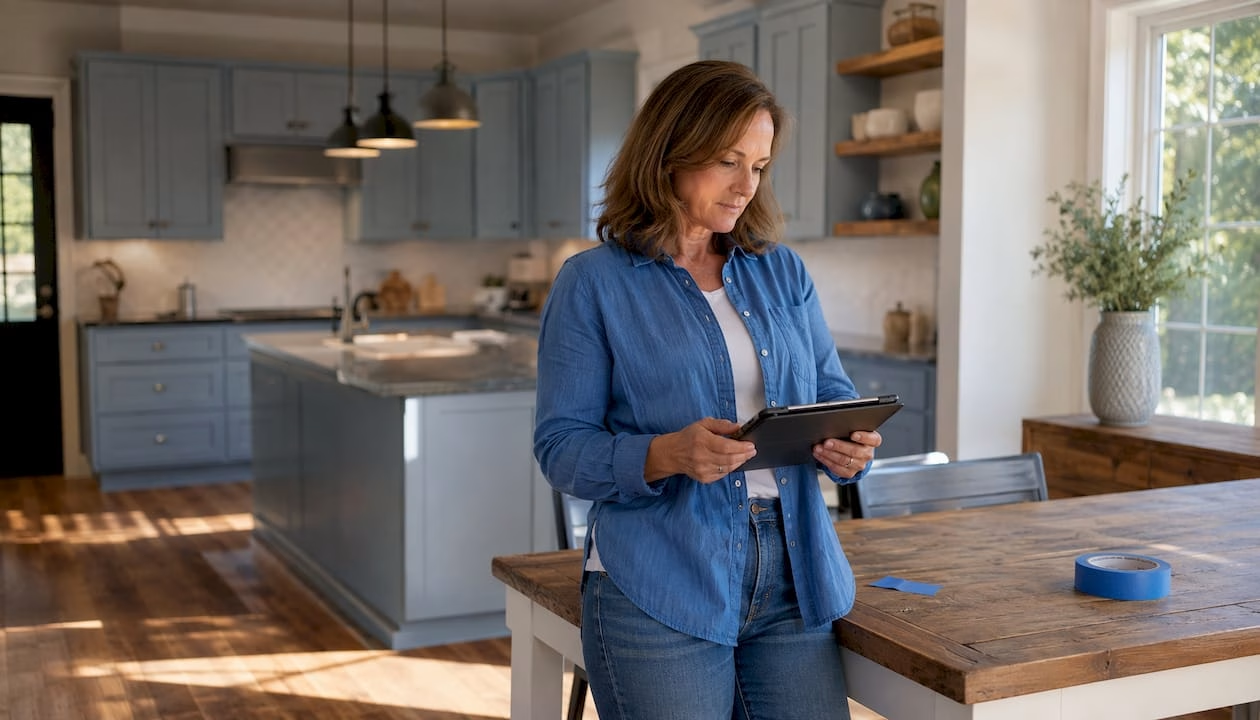
Professional painting kitchen cabinets cost falls between $2,000 and $7,000 for a typical kitchen in 2026, with the full market range running from $800 on a small galley to over $12,000 for a large luxury layout. By the linear foot, expect typical costs for brush-and-roll and higher costs for HVLP spray. Per door, professional painters charge a range of fees per cabinet door and drawer front.
Here is what drives those numbers at a glance:
- Average professional cost: $2,000–$7,000 (typical kitchen)
- Full market range: $800–$12,000 depending on size and finish
- Cost per linear foot: $30–$60 brushed; $40–$100 sprayed
- Cost per cabinet door: $90–$175; per drawer front: $30–$50
- Cost per square foot: $3–$10, all-in with labor and materials
- Labor share: 70–85% of the total quote
- DIY materials only: $200–$600, but requires 30–50 hours of your time
Painting is still far cheaper than replacement. Full cabinet replacement can run $28,000 or more, while even a high-end paint job rarely exceeds $12,000. That gap is why so many homeowners treat painting as the first serious option before considering anything more disruptive.
What factors affect the cost of painting kitchen cabinets?
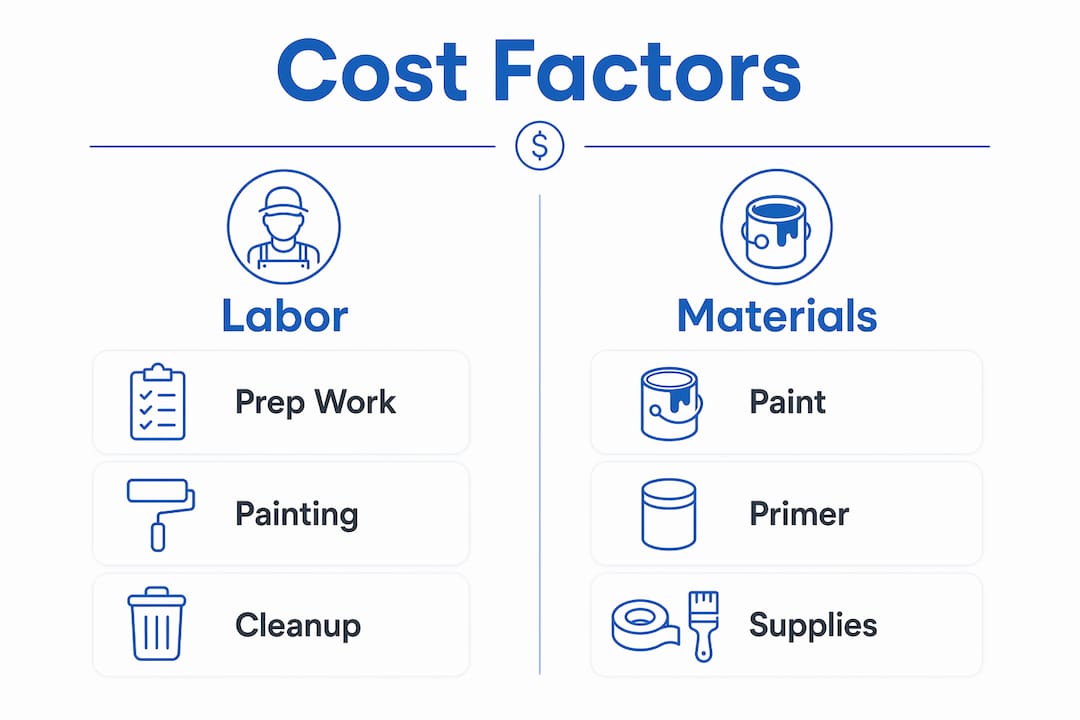
Labor is the single largest variable, but it is far from the only one. Understanding what moves the quote helps you budget realistically and spot inflated bids before you sign anything.
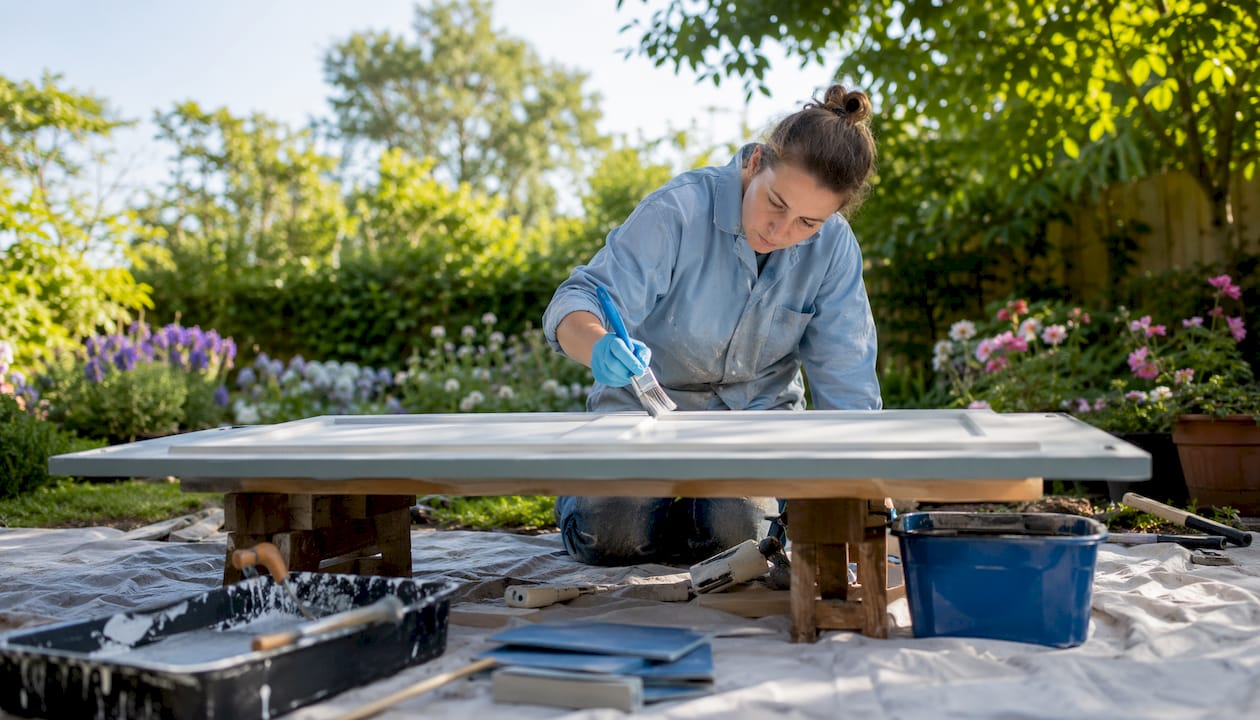
Cabinet material shapes both prep time and primer cost significantly. Wood cabinets require sandpaper and chemical deglosser; laminate cabinets require bonding primer and more labor., or the paint peels within months. MDF needs drywall joint compound to seal edges plus an oil-based primer at $30–$60 per gallon. Wood veneer calls for wood glue repairs before any primer goes on.
Kitchen size and layout directly scale labor and materials. A small galley with around 15 linear feet typically costs a few thousand professionally; a large kitchen with around 35 linear feet costs several thousand, varying by finish and complexity. Complex layouts with corner units or decorative molding significantly increase labor requirements compared to straightforward flat-panel cabinetry.
- Paint type and finish: Latex and acrylic paints run $20–$50 per gallon; oil-based runs $20–$80. Semi-gloss and high-gloss finishes cost slightly more per gallon but hold up better in a kitchen environment.
- Application method: HVLP spray typically increases cost over brush-and-roll but produces a smoother, factory-grade finish without brush marks.
- Prep work scope: Stripping a failed finish adds $600–$1,500 to the project. Standard prep (cleaning, sanding, priming) adds $400–$1,200 depending on cabinet condition.
- Regional labor rates: Metro areas like Los Angeles can cost nearly twice what the same scope runs in Midwestern cities like Omaha. Regional labor multipliers can effectively double the total.
- Color direction: Switching from dark to light colors requires additional primer for full coverage, increasing the prep work needed.
- Door style: Raised-panel and shaker doors require more labor due to their detailed surfaces compared to flat-panel doors.
Pro Tip: Get quotes from at least three painters and ask each one to break out labor, materials, and prep separately. A painter who bundles everything into one number is harder to compare and easier to overpay.
DIY versus professional cabinet painting: what does each actually cost?
The honest comparison here is not just dollars. It is dollars plus time plus the real risk of having to redo the job.
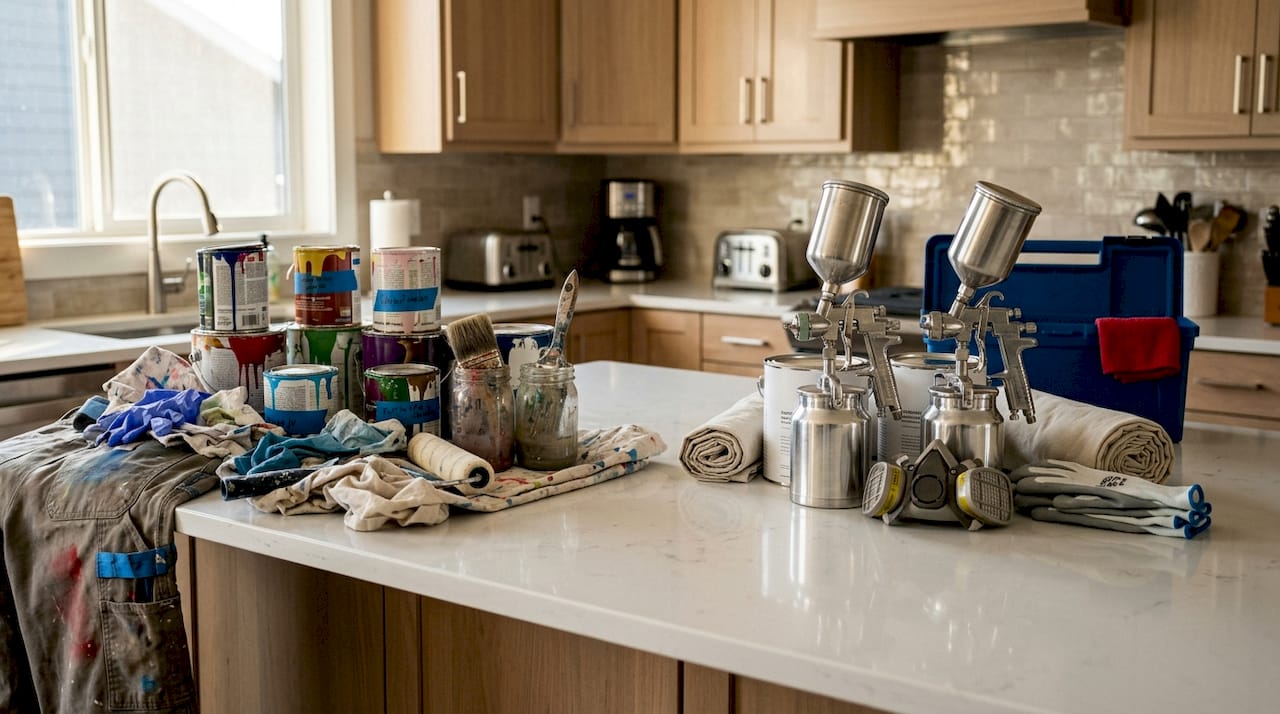
DIY materials for a 25-linear-foot kitchen run $200–$600, covering paint, primer, sandpaper, brushes or rollers, and drop cloths. Add $100–$300 for tools like an orbital sander if you do not already own one. The catch is the time: plan on 30–50 hours spread across three to five weekends. That is a real commitment, and the finish quality depends heavily on how well you prep.
Professional painting on the same 25-linear-foot kitchen generally costs several thousand dollars all-in. You get a crew that finishes in 2–5 business days, HVLP spray equipment that produces a smooth factory finish, and typically a 2–5 year warranty on the work.
| Factor | DIY | Professional |
|---|---|---|
| Paint and primer | $200–$600 | Included |
| Tools (sander, brushes) | $100–$300 | Included |
| Labor cost | — | $2,000–$7,000 |
| Time to complete | 30–50 hours over 3–5 weekends | 2–5 business days |
| Finish quality | Good with patience; brush marks common | Factory-grade spray finish |
| Warranty | None | 2–5 years typical |
| Total cost (25 LF kitchen) | $200–$600 | — |
| Risk of needing a redo | High on laminate | Low |
Where DIY makes sense: wood cabinets in good condition, a homeowner with painting experience, and a willingness to invest the prep hours properly. Where it gets risky: laminate or thermofoil surfaces, heavily damaged cabinets, or any situation where you are tempted to skip sanding to save time. Cutting corners on prep is the most common reason DIY cabinet paint jobs fail within a year. You can read more about avoiding refacing mistakes that apply equally to painting projects.
- DIY works well when: cabinets are solid wood, in decent condition, and you have prior painting experience
- Hire a pro when: cabinets are laminate, thermofoil, or MDF; when you want a spray finish; or when the kitchen is large and complex
- Hidden DIY cost: if the finish fails and you need to repaint within 2–3 years, your total cost often exceeds what a professional would have charged initially
Additional costs and maintenance considerations for painted cabinets
The quoted price for painting rarely tells the whole story. Several line items tend to appear once a painter actually looks at your cabinets up close.
Pre-painting repairs are the most common add-on. Damaged cabinetry with scratches, loose hinges, or peeling paint needs fixing before primer goes on. Budget $140–$500 for cabinet repairs depending on the extent of the damage. Skipping repairs and painting over them produces visible imperfections that no amount of topcoat can hide.
Hardware removal and replacement adds another layer. Painters typically charge to remove and reinstall hardware, and if you want new pulls or knobs, new cabinet hardware usually costs under $100 for standard options but can climb to $1,000 or more for designer or antique styles.
- Finish stripping: If the existing finish is failed or incompatible with new paint, stripping adds $600–$1,500 to the project total.
- Touch-up costs: Even a quality paint job chips eventually in a high-traffic kitchen. Budget for periodic touch-ups every few years, especially around handles and drawer edges.
- Disposal and cleanup fees: Some contractors include this; others charge separately. Confirm upfront whether masking, cleanup, and material disposal are in the quote.
- Longevity by finish type: Semi-gloss and high-gloss finishes hold up better to grease, moisture, and daily cleaning than satin or eggshell. Paying slightly more per gallon for a higher sheen pays off in a kitchen setting.
Painted cabinets can last 8–15 years with proper care, but kitchen cabinets live a hard life. Grease, steam, and constant handling all work against the finish. Wiping cabinets down with a gentle cleaner regularly and avoiding abrasive scrubbers extends the paint life considerably. For a detailed look at care and maintenance practices that protect your finish, Tdm-thedoormaker covers the specifics.
How to reduce your cabinet painting costs without cutting quality
Saving money on a cabinet painting project does not require sacrificing the result. It requires knowing where the real cost levers are.
The single most effective move is doing your own prep cleaning before the professionals arrive. Grease embedded in cabinet surfaces is one of the hardest problems painters face, and if they have to degrease thoroughly, that time goes on your bill. Scrubbing cabinets with a TSP substitute or a strong degreaser before the crew shows up can meaningfully reduce labor hours.
Pro Tip: Choose a cabinet-grade acrylic enamel or alkyd-hybrid paint rather than standard wall paint. The price difference per gallon is modest, but cabinet-grade coatings resist chipping and peeling far longer, which means fewer touch-ups and a longer interval before repainting.
- Bundle projects: If you are also repainting walls or trim, combining jobs in one mobilization often earns a 10–20% discount since the painter is already set up on-site.
- Avoid unnecessary stripping: If your existing finish is in good condition and compatible with new paint, a quality bonding primer is usually enough. Full stripping adds significant cost and is only necessary when the old finish is failing.
- Get multiple quotes: Pricing for the same scope can vary by hundreds of dollars between painters. Three quotes give you a realistic market rate and help you identify outliers.
- Choose mid-range paint: A proven mid-range cabinet paint at $40–$60 per gallon performs comparably to premium brands at $80–$100 per gallon for most kitchens. The finish quality depends more on prep and application than on the paint brand alone.
- Consider kitchen budget upgrades that pair with painting: Replacing just the hardware while painting can refresh the entire look for a fraction of a full renovation cost.
If you are weighing painting against other options, the cost of cabinet refacing is worth reviewing. Refacing replaces doors and drawer fronts with factory-finished surfaces, which sidesteps the durability concerns that come with painting entirely.
How long does a professional cabinet painting project take?
A professional crew typically completes a kitchen cabinet painting project in 2–5 business days, though the exact timeline depends on kitchen size, cabinet condition, and how much prep work the job requires.
Day one is almost entirely prep: removing doors and drawer fronts, cleaning, degreasing, sanding, and masking the surrounding area. This stage takes longer than most homeowners expect, and rushing it is where most finish failures begin. Day two typically covers priming and the first coat of paint. Days three and four allow for drying between coats and the application of the final topcoat. Day five, when needed, covers reinstallation and any touch-up work.
- Prep phase: 1–2 days for cleaning, sanding, and priming
- Paint application: 1–2 days for two coats with adequate dry time between
- Curing period: Paint may be dry to the touch in hours, but full cure takes 2–4 weeks. Treat cabinets gently during this window.
- DIY timeline: The same scope typically stretches across 3–5 weekends when done by a homeowner, since you are working in shorter sessions and waiting for full dry time between coats.
- Kitchen disruption: Expect limited access to your kitchen for the duration. Painters need to work with doors off and surfaces masked, so plan meals accordingly.
Larger kitchens with 35 or more linear feet, heavily damaged cabinets, or complex layouts with corner units and decorative molding push toward the longer end of that range. A straightforward galley with flat-panel doors in good condition can realistically finish in two days.
Why prep work and paint quality determine your long-term costs
The most expensive cabinet painting mistake is not choosing the wrong color. It is skipping prep steps to save time or money upfront.
Experts consistently note that a successful cabinet paint job is roughly 80% prep work and 20% painting. That ratio sounds extreme until you see what happens when it is reversed. Paint applied over greasy, unsanded, or unprimed surfaces peels within months, regardless of how good the paint itself is. The repair cost, plus the cost of stripping and repainting, typically exceeds what proper prep would have added to the original quote.
HVLP spray systems are the other major quality factor. Professional painters use HVLP because it achieves a factory-smooth finish that brush or roller application simply cannot replicate on raised-panel or shaker doors. The equipment is expensive and requires an experienced operator, which is part of why HVLP spray adds 30–70% over brush-and-roll per linear foot. For most homeowners, that upcharge is worth it on visible upper cabinets and door faces.
- Use specialized cabinet primers: Standard drywall primer does not bond well to cabinet surfaces. A shellac-based or bonding primer is the right starting point, especially on MDF and laminate.
- Sand between coats: Light sanding between primer and topcoat removes dust nibs and creates better adhesion. Skipping this step is visible in the finished surface.
- Allow full cure time: A finish that feels dry is not necessarily cured. Hanging doors too soon or cleaning aggressively within the first few weeks damages the surface before it has fully hardened.
- Hire contractors with cabinet-specific experience: General interior painters and cabinet specialists use different techniques. A contractor who primarily paints walls may not have the spray equipment or prep discipline that cabinet work demands.
Painter expertise and professional-grade equipment matter more to finish longevity than paint brand alone. A skilled contractor with mid-range paint and proper prep will consistently outperform a less experienced one using premium paint with shortcuts.
Is painting the right move, or is there a better option?
Painting delivers real value when your cabinet boxes are structurally sound and you want a fresh look without a full renovation budget. The cost advantage over replacement is substantial, and a quality paint job can last a decade with proper maintenance.
That said, painting is a surface fix. If your cabinet doors are warped, the finish is repeatedly failing, or you want a more durable factory finish, cabinet refacing is worth comparing directly. Refacing replaces the doors and drawer fronts with new factory-finished panels while keeping the existing cabinet boxes, which gives you a result closer to new cabinets without the full replacement price.
Tdm-thedoormaker offers custom cabinet doors online in over 30 styles and 130+ colors, sized to the nearest 1/10,000 of an inch. For homeowners who have already priced out painting and want to compare what new doors would cost, it is a straightforward way to get a number without a contractor visit.

Key Takeaways
Professional cabinet painting costs vary widely for a typical kitchen in 2026, with labor typically comprising the largest portion of the total cost, making the painter’s skill and prep discipline the most important factors in long-term value.
| Point | Details |
|---|---|
| Average professional cost | Expect $2,000–$7,000 for a typical kitchen; the full range runs $800–$12,000. |
| Labor dominates the quote | Labor accounts for 70–85% of the total cost, so the painter you hire matters more than the paint brand. |
| DIY saves money upfront | DIY materials run $200–$600 but require 30–50 hours and carry a higher risk of finish failure. |
| Prep is 80% of the job | Skipping cleaning, sanding, or priming leads to peeling within months regardless of paint quality. |
| Refacing is worth comparing | If doors are warped or paint keeps failing, replacing doors through refacing often costs less long-term than repeated repainting. |