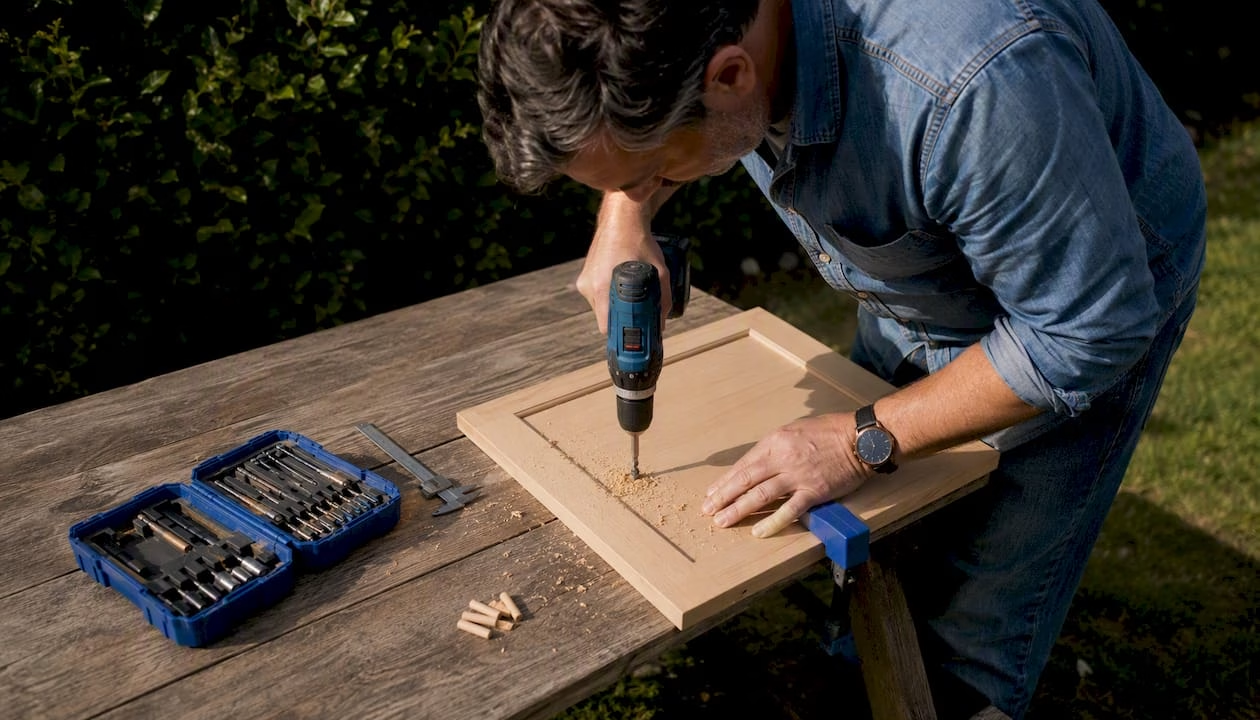
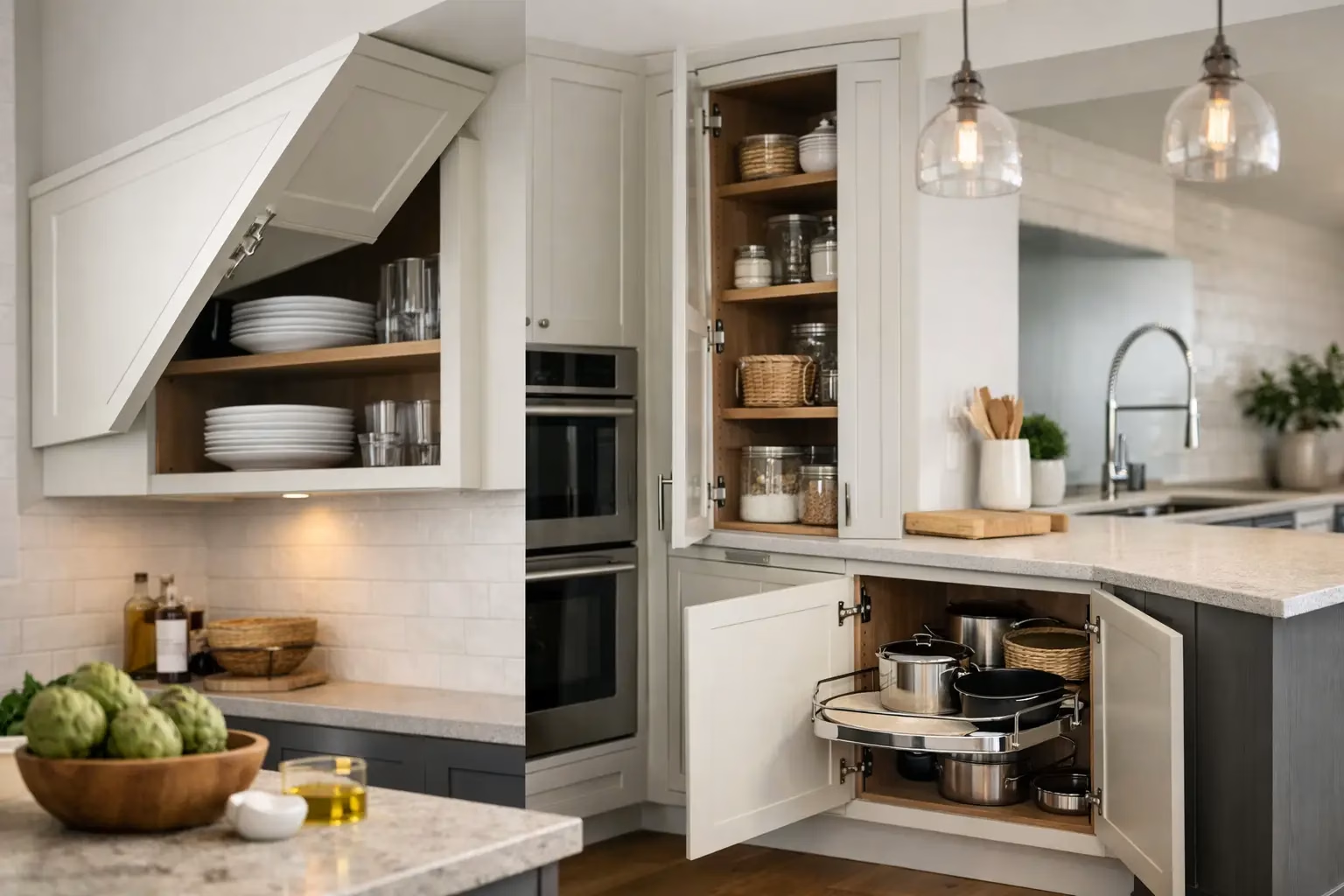
Older homes rarely read the rulebook. One cabinet opening is 11 7/8 inches wide, the one next to it is 12 1/16, and the drawer stack somehow lands in between. That is exactly why cabinet doors for nonstandard openings matter. If you are refacing instead of ripping out cabinet boxes that still have life left in them, getting the door size right is what makes the whole project look intentional instead of improvised.
Stock sizes work well when your cabinets were built to modern standards and stayed that way. Many homes are not that simple. Kitchens settle, original builders improvise, and past remodels leave behind odd dimensions that do not match what you will find in a big-box aisle. The good news is that a nonstandard opening is not a dead end. It is usually a measuring and design problem, not a replacement problem.
Why cabinet doors for nonstandard openings are so common
If your cabinets are older, custom-built, site-built, or modified over time, unusual openings are normal. This comes up often in kitchens from previous decades, built-ins around fireplaces, laundry rooms, offices, and bathrooms where cabinetry was made to fit around plumbing, soffits, walls, or appliances.
Even in homes that look fairly straightforward, openings can vary more than people expect. Face frames are not always perfectly even. Hinges may have been replaced. Layers of paint can hide slight differences until you start measuring. Once old doors come off, those small inconsistencies become very obvious.
This is also why homeowners get frustrated when they try to force stock replacement doors into a custom situation. A door that is close is not the same as a door that fits. Gaps look uneven, reveals shift from one cabinet to the next, and hardware alignment can become a chore. Saving a little on a standard size often costs more in time, compromise, and final appearance.
What makes a cabinet opening nonstandard
A nonstandard opening is simply one that does not align neatly with common replacement sizes or standard overlay assumptions. That can mean the width or height is unusual, but it can also mean the surrounding cabinet conditions call for a custom approach.
Sometimes the issue is size alone. A narrow spice cabinet, a shallow built-in, or a tall pantry section may need doors outside the typical range. In other cases, the opening itself is not odd, but the overlay needed to create a balanced look is. A cabinet near a wall, appliance, or decorative end panel may need a tighter overlay on one side than another.
Then there are paired doors. An opening may be wide enough for two doors, but not in a way that divides evenly once you account for desired gaps and hinges. This is where precision matters. Two doors that are technically usable can still look off if the meeting line is not centered or the reveal changes from top to bottom.
Measuring cabinet doors for nonstandard openings
This is the part that makes or breaks the project, and it is worth slowing down for. When you measure for custom replacement doors, you are not just recording the opening size. You are deciding how the finished door will sit on the cabinet and how much overlay you want around the opening.
For most face-frame cabinets, start by measuring the cabinet opening width and height to the nearest 1/16 inch. Measure each opening separately. Do not assume matching cabinets are actually the same, even if they are side by side.
Next, determine your overlay. Many homeowners want a full overlay look, but actual overlay depends on hinge choice, cabinet construction, and clearance around nearby doors, drawers, walls, and trim. A larger overlay can create a more updated appearance, but only if the cabinet layout has room for it. If two doors sit next to each other, or if a drawer front needs to line up with a door below, those relationships matter.
For inset cabinets, the process is different. The door fits inside the frame opening, so tolerances are tighter. That can look beautiful, but it leaves less room for error. If you are ordering inset doors, measure carefully and verify how much clearance is needed for operation.
One practical tip matters more than people think: measure in more than one place. Width at the top and bottom. Height on both sides. Diagonal if the cabinet seems out of square. If your numbers vary, the cabinet opening may not be perfectly true. In that case, the best door size depends on which imperfection is most important to accommodate.
Choosing the right style for unusual cabinet sizes
Custom sizing solves the fit problem, but style still shapes the final result. A door that fits perfectly can still feel awkward if the proportions are wrong for the opening.
For very narrow doors, simple styles usually look best. Wide rails or heavily detailed profiles can make a small door feel crowded. Shaker and other clean panel designs tend to scale well because they stay balanced even when dimensions get tight.
For tall doors, proportion becomes more noticeable. Some openings benefit from a longer panel layout, while others look better broken up visually with a drawer front above or a matching multi-piece arrangement. If you are refacing a whole room, think beyond one cabinet at a time. The goal is not just to make each opening work. It is to make the full run feel cohesive.
Color and finish also influence how custom sizing reads. Lighter finishes can make size differences less obvious. Darker colors and strong grain patterns can emphasize alignment, which is beautiful when everything is measured well, but less forgiving if reveals vary.
When custom beats stock every time
Cabinet doors for nonstandard openings are one of the clearest cases for going custom. Stock options are built around averages. Your cabinets are not averages.
Custom doors let you match the exact width and height each opening needs, choose a style that suits the proportions, and maintain a consistent visual rhythm across the room. That matters in refacing because the cabinet boxes stay in place. The doors and drawer fronts do most of the visual work.
This is also where value becomes real, not theoretical. Replacing full cabinets because the doors are odd-sized is usually unnecessary if the boxes are still sound. Custom replacement doors let you keep the structure you have and invest where the transformation is visible.
For many homeowners, that is the sweet spot – a high-end finished look without the cost, disruption, and waste of a full tear-out.
Common mistakes with cabinet doors for nonstandard openings
The biggest mistake is assuming one measurement method fits every cabinet. Overlay, inset, partial overlay, paired doors, corner cabinets, and drawer banks all need slightly different thinking. If you rush that part, the order can be accurate to your numbers and still wrong for the project.
Another common issue is ignoring surrounding conditions. A door might fit the opening on paper but hit an appliance handle, wall, or neighboring pull once installed. Clearances matter just as much as raw dimensions.
People also get into trouble by measuring old doors instead of openings without checking whether the existing doors were sized correctly in the first place. If the old installation had poor reveals or binding problems, copying those measurements repeats the issue.
And finally, there is the temptation to round. Do not round to the nearest quarter inch because it feels easier. Cabinet refacing rewards precision. Sixteenth-inch accuracy is not overkill here. It is what gives the finished project that custom, fitted appearance.
Ordering with confidence
If you are planning a refacing project, the best approach is to treat each opening as its own part of a larger design. Measure carefully, think through overlay and hardware, and choose a door style that suits both the cabinet size and the room around it.
This is where a made-to-order process helps. Instead of adapting your project to the door sizes available, you adapt the doors to the cabinets you already own. That is a much better fit for older homes, custom built-ins, and any space where standard dimensions fall short. With The Door Maker, homeowners can use a Build a Door process to configure exact sizes and design details before ordering, which makes custom work much more approachable than many people expect.
A nonstandard opening does not mean your cabinets are a problem. More often, it means they were built for a real house, with real conditions, and they need doors made with the same level of care. When the measurements are right and the style fits the space, those odd openings stop looking like obstacles and start looking like custom cabinetry done well.