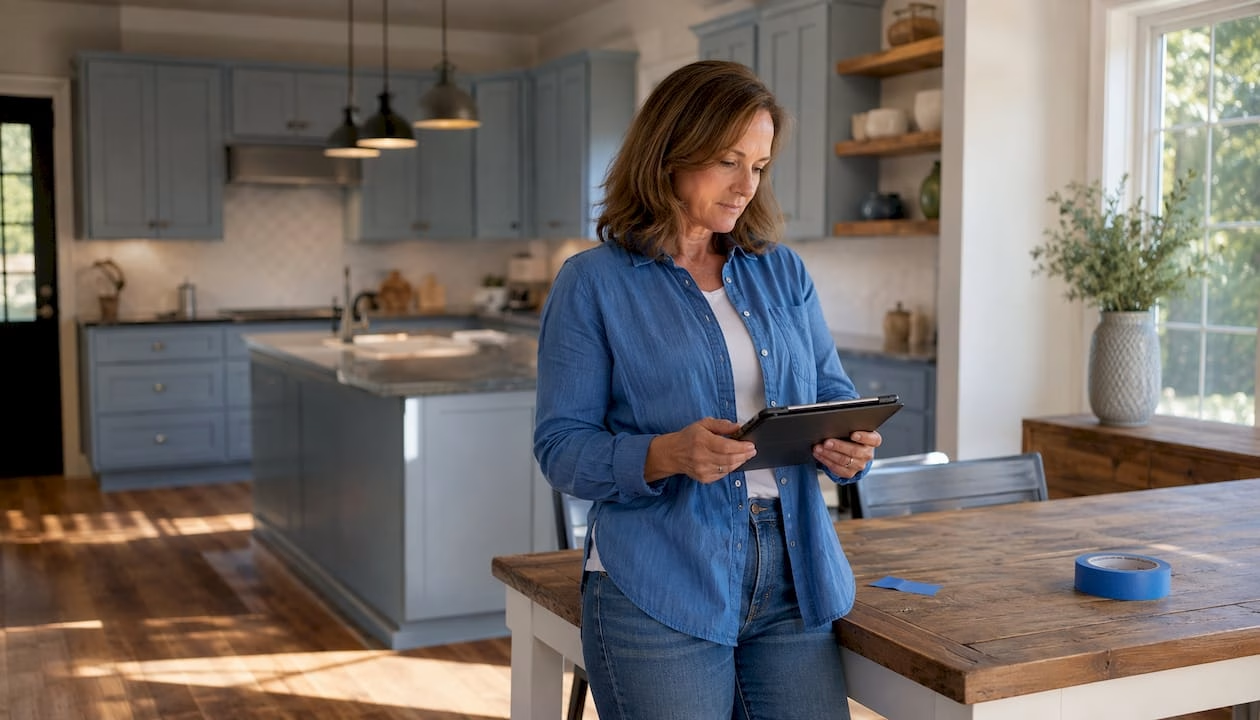
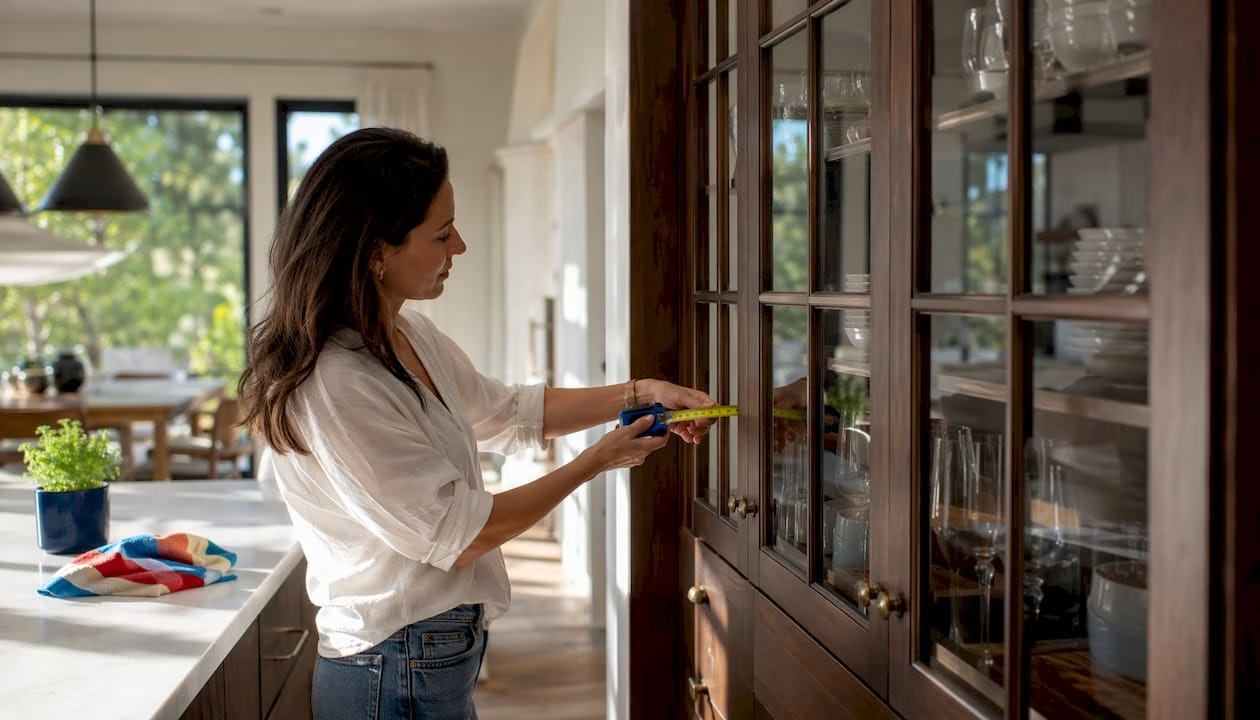
Glass doors with mullions are cabinet doors built with glass panels divided by decorative bars, called mullions, that run vertically, horizontally, or in geometric patterns across the frame. The mullion itself is the structural and decorative divider. It segments the glass surface into smaller “lites,” giving the door its characteristic grid or pattern look. These doors create an open, airy feel while still providing closed storage that keeps items clean and protected.
What makes mullion cabinet doors so appealing is their dual role. They let you show off your best dinnerware or decorative pieces without leaving everything fully exposed, and they break up the visual mass that solid doors create across a wall of cabinetry. You get the warmth of a framed door with the lightness of glass. Design flexibility is wide: mullion patterns range from simple two-pane splits to elaborate diamond grids, and framing materials span painted wood, stained hardwood, and aluminum.
- Mullions are the bars that divide the glass into sections
- Lites are the individual glass panes created by those divisions
- Frame profiles are the shaped edges of the door’s outer border and mullion bars
- Glass types include clear, frosted, reeded, and textured options
What styles and patterns do mullion glass cabinet doors come in?
The pattern you choose does more for a cabinet’s character than almost any other single decision. A simple two-lite vertical split reads clean and contemporary. A classic six-pane grid, often called a six-lite or Colonial pattern, anchors a traditional or farmhouse kitchen. Beyond those two workhorses, you have real range.
- Grid or Colonial patterns (four-lite, six-lite, nine-lite): the most recognized style, with evenly spaced horizontal and vertical bars forming a rectangular grid; works in traditional, transitional, and cottage kitchens
- Arch or cathedral patterns: a curved top mullion that follows the door’s arched frame; suited to formal or European-style cabinetry
- Diamond patterns: mullions set at 45-degree angles to form diamond-shaped lites; adds visual energy and works well as an accent door among solid panels
- Chevron up-and-down patterns: chevron mullion configurations where bars angle in opposing directions, popular in transitional and modern-traditional kitchens
- Single-lite framed doors: no internal mullions at all, just a full glass panel in a wood or aluminum frame; the cleanest option for modern or minimalist spaces
- Showcase or display patterns: wider lites with fewer bars, designed to maximize visibility of what’s inside
- Bistro or traditional mullion combinations: a classic mullion profile paired with textured glass for a softer, more period-appropriate look
Wood species and frame profile shape the personality of any pattern. A thick, routed ogee profile in cherry reads formal. The same grid pattern in a thin, square-edge profile in painted MDF reads crisp and modern. Matching the mullion profile to the door’s outer frame is what separates a custom result from a generic one.
Why do homeowners choose mullion glass doors over solid ones?
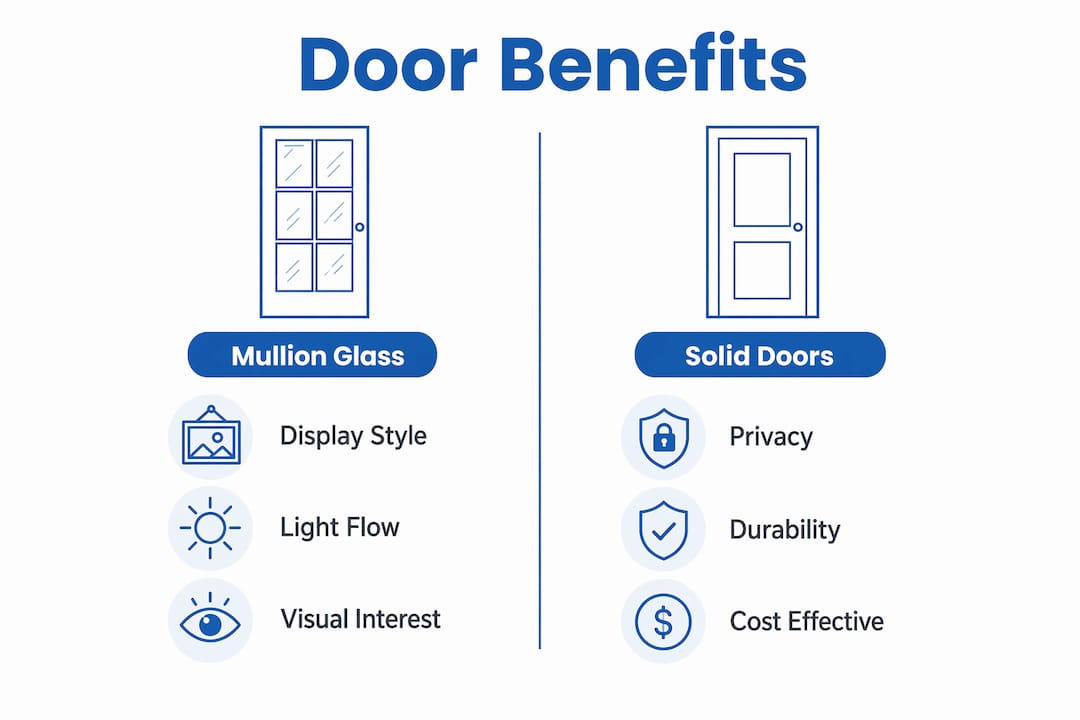
Solid cabinet doors are practical, but they can make a kitchen feel closed off, especially in smaller spaces. Mullion glass doors solve that without sacrificing storage. The glass panels reflect light and visually open up the room, while the mullion bars keep the door from feeling like a plain sheet of glass.
- Display without full exposure: you can show off curated items while the frame and glass still provide a layer of enclosure
- Light reflection: glass panels bounce natural and artificial light around the room, making the space feel larger
- Visual relief: breaking a long run of upper cabinets with two or three mullioned glass doors prevents the wall from feeling heavy
- Privacy control: pairing mullions with frosted, reeded, or bistro glass lets you obscure cabinet contents while keeping the elegant glass look
- Design layering: the combination of frame, mullion pattern, and glass type gives you three separate design variables to work with, which solid doors simply don’t offer
The privacy point is worth dwelling on. Not every cabinet holds display-worthy items. Textured glass, like reeded or bistro styles, obscures cabinet contents while maintaining an elegant glass appearance. You get the aesthetic of a glass door without putting everyday clutter on show.
Materials, construction, and what to know before you install
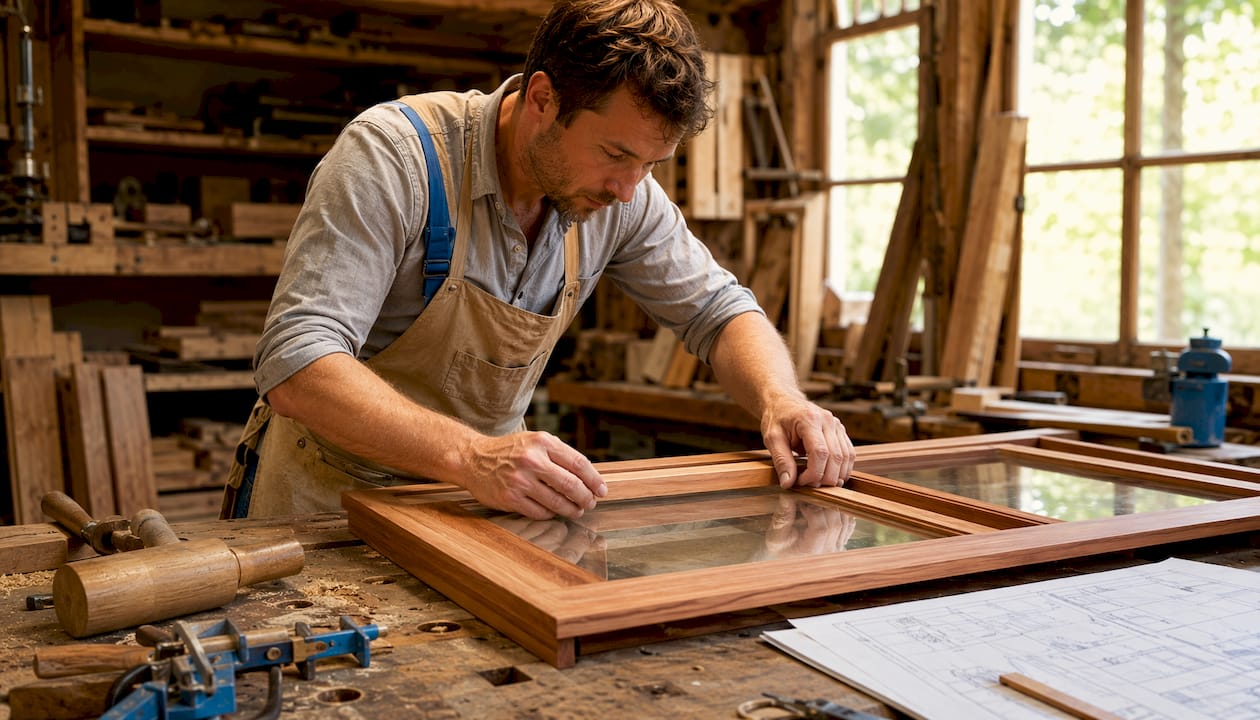
The frame material sets the tone for durability, finish options, and cost. Solid wood species like maple, cherry, oak, and alder are the traditional choice. They take stain beautifully and can be routed into detailed profiles. Painted MDF is a popular alternative for contemporary kitchens because it holds paint without grain telegraphing through the finish. Aluminum frames, common in commercial and modern residential applications, offer a slim profile and require no painting.
Glass selection matters just as much. Tempered safety glass is the standard for cabinet doors because it meets code requirements and, if broken, shatters into small blunt pieces rather than dangerous shards. Beyond clear tempered glass, you can specify frosted, reeded, rain, or etched glass depending on the privacy and aesthetic you want. Each texture interacts differently with light, so the same mullion pattern can look dramatically different depending on which glass you choose.
On the construction side, mullion bars are typically mortised and tenoned into the door frame or applied as surface-mounted grilles. True divided lite construction, where each lite is a separate piece of glass, is the traditional method and produces the most authentic look. Simulated divided lite uses a single glass panel with a grille applied to the surface, which is easier to clean and usually less expensive. For installation, accurate sizing and hinge placement are the two factors that most affect how well a retrofit door fits existing cabinetry. Measure the opening at multiple points, because cabinet openings are rarely perfectly square.
Maintenance is straightforward. Wipe glass panels with a standard glass cleaner and a lint-free cloth. For wood frames, avoid saturating the finish with liquid. A damp cloth followed by a dry one handles most everyday grime. Preserving the frame finish through regular, gentle cleaning extends the door’s life considerably. Aluminum frames need even less attention, just an occasional wipe-down.
Cost varies by material, glass type, and pattern complexity. A simple painted MDF door with a two-lite split and clear glass sits at the accessible end of the range. A solid hardwood door with a custom diamond pattern and reeded glass sits at the higher end. Custom sizing, which most mullion doors require for a retrofit project, adds to the price but eliminates the gaps and shimming that come with off-the-shelf sizing.
Expert advice on choosing and customizing your mullion cabinet doors
Choosing the right mullion pattern starts with the door’s frame profile, not the pattern itself. A thick, decorative frame profile calls for a mullion bar that matches its scale. Pair a delicate, narrow mullion with a heavy frame and the door looks unbalanced. Balancing framing profiles and wood species with the chosen pattern is what produces a unified, intentional result rather than a mismatched one.

Architectural context matters too. Mullions have a history stretching back to the Middle Ages, when they allowed builders to use smaller panes of glass in large openings. That architectural heritage is why certain patterns, like the six-lite Colonial grid, feel so at home in traditional American kitchens. If your home has strong period character, leaning into historically appropriate patterns pays off. For contemporary spaces, a single-lite framed door or a minimal two-lite split keeps the look clean without the historical reference.
Custom framing beads and profiles can be matched to existing cabinetry details, so a new set of mullion doors reads as original rather than added on. Custom framing beads matched to existing profiles are one of the most effective ways to make a refacing project look like a full renovation.
Pro Tip: Pair a traditional grid mullion pattern with reeded or bistro glass rather than clear glass. You get the classic look of divided lites while keeping the cabinet’s contents private, which is especially useful for upper cabinets that store everyday items rather than display pieces.
Tdm-thedoormaker makes the customization process accessible for homeowners who want quality results without navigating a complex trade ordering system. You can browse mullion and frame options across more than 30 styles, specify exact dimensions to a fraction of an inch, and order directly online. For anyone considering a DIY cabinet refacing project, having a supplier that handles custom sizing and ships ready-to-install doors removes the biggest friction point in the process.
Key Takeaways
Mullion glass cabinet doors combine decorative framing bars with glass panels to deliver both display function and visual depth that solid doors cannot match.
| Point | Details |
|---|---|
| Mullion pattern sets character | Grid, arch, diamond, and chevron patterns each suit different kitchen styles; match the pattern scale to the frame profile. |
| Glass type controls privacy | Reeded, bistro, and frosted glass obscure contents while keeping the glass door aesthetic intact. |
| Material choice drives cost and finish | Solid hardwood takes stain; painted MDF suits contemporary looks; aluminum frames suit modern or commercial applications. |
| Accurate sizing is critical for retrofit | Measure cabinet openings at multiple points before ordering, as openings are rarely perfectly square. |
| Custom ordering simplifies refacing | Suppliers like Tdm-thedoormaker offer precise custom sizing and ready-to-install doors that make DIY refacing practical. |