A drawer front that is off by even a quarter inch can throw off the whole look of a kitchen. Gaps look uneven, lines stop matching, and what should feel like a clean upgrade starts to feel like a compromise. That is why a good guide to ordering drawer fronts online starts with one simple idea: custom work only looks custom when the measurements, style choices, and finish details all work together.
If you are updating cabinet boxes that are still in good shape, replacing drawer fronts is one of the smartest ways to change the look of a room without taking on a full remodel. It costs less than replacing cabinetry, creates far less mess, and gives you control over the final style. The key is knowing exactly what to order before you click buy.
Why order drawer fronts online instead of buying stock sizes?
For many homeowners, stock options sound easier at first. Then the measuring starts. Older homes often have non-standard openings, previous remodels can leave you with inconsistent drawer sizes, and builder-grade cabinets rarely match current style goals. That is where online custom ordering makes more sense.
A made-to-order drawer front gives you the flexibility to match your existing cabinet layout instead of forcing your project into preset dimensions. You can choose the right width and height, coordinate the profile with cabinet doors, and select a finish or material that fits the room you are actually designing.
There is also a value advantage. If your cabinet boxes are structurally sound, replacing just the visible fronts can dramatically improve the appearance of the space for a fraction of the cost of full replacement. For DIY homeowners, that balance of customization and cost is often what makes refacing worth doing.
The guide to ordering drawer fronts online begins with measuring
Before you think about styles or colors, measure carefully. This is the step that affects everything else.
If you are replacing an existing drawer front, the safest starting point is to measure the current front itself, not just the drawer box behind it. Measure width and height to the nearest one sixteenth of an inch. Double-check each piece individually. Even in the same kitchen, drawer fronts are not always identical.
If the old fronts are missing or you are changing the overlay, measure the cabinet opening and determine how much reveal you want around each drawer front. In many projects, the desired look is based on consistent spacing between adjoining doors and drawers. That means the right size is not just about covering the opening. It is about creating balanced lines across the entire cabinet run.
This is where many first-time buyers get tripped up. A drawer front may technically fit, but still look wrong if the overlay does not align with neighboring doors. If your project includes both cabinet doors and drawer fronts, order them as part of one coordinated plan rather than as isolated pieces.
Know whether you need slab, raised panel, or recessed panel fronts
Style matters, but so does compatibility. The drawer front should work with the rest of the cabinetry, not compete with it.
Slab drawer fronts are clean and simple. They work well in modern kitchens, contemporary offices, and projects where you want a minimal look. They are also a practical choice if you are trying to refresh dated cabinets without adding visual weight.
Raised panel drawer fronts have a more traditional appearance. They add depth and detail and often suit classic kitchens, formal built-ins, or homes with more decorative trim throughout.
Recessed panel, often associated with Shaker styling, sits in the middle. It is versatile, widely used, and fits both transitional and farmhouse-inspired spaces. For many homeowners, it offers the best mix of timeless design and broad appeal.
There is no single right answer here. If you are refacing only part of a room, matching the existing profile usually makes the most sense. If you are redoing the whole kitchen or bath, choose the style that supports the overall feel you want and can live with for years.
Material and finish choices affect durability as much as appearance
Online ordering gives you more options than the average shelf at a big-box store, but more options also mean more decisions.
Wood species, paint-grade materials, and rigid thermofoil or PVC-based options all have different strengths. Real wood can offer warmth, grain character, and a furniture-quality look, but it may require more finish planning if you are staining or trying to match other wood tones in the room.
Paint-grade options are popular when the goal is a smooth, consistent painted finish. They can be ideal for bright whites, soft neutrals, and other colors where grain visibility is not part of the design.
Rigid surface finishes can be especially appealing in high-use areas because they offer a clean, uniform look and can be easier to maintain. If durability, color consistency, and lower maintenance are high priorities, that may be the better fit.
The trade-off is mostly about look, budget, and how exact you want the finish to be. If you are unsure, samples can save you from an expensive wrong turn. A finish that looks perfect on a screen can read very differently in your kitchen lighting.
Don’t overlook drawer front thickness and edge details
This is one of the most overlooked parts of ordering custom components online. Thickness and edge profile affect both appearance and how the drawer front feels in daily use.
A thicker drawer front can create a more substantial, higher-end look. It may also better match existing cabinet doors if those doors have a certain profile depth. Edge details matter just as much. A square edge feels simpler and more modern, while a softened or decorative edge can make the cabinetry feel more traditional.
If your goal is a polished refacing result, these details should be chosen as part of the full design, not as afterthoughts. Consistency across doors and drawer fronts is what gives cabinetry that built-for-the-room appearance.
Hardware planning should happen before you place the order
Some homeowners choose hardware-free slab fronts for a sleek look. Others are updating pulls and knobs at the same time. Either way, your hardware plan should be settled before ordering.
Why? Because drawer front size, style, and rail width can affect hardware placement. If you love a long bar pull, make sure the front proportions support it. If you are reusing existing hardware, confirm hole spacing and think through whether the old placement still makes sense with the new style.
This is especially important in larger drawer stacks. Oversized drawers often need a different visual approach than small top drawers. What looks balanced on one front may look undersized or awkward on another.
Use an online configurator, but do not rush through it
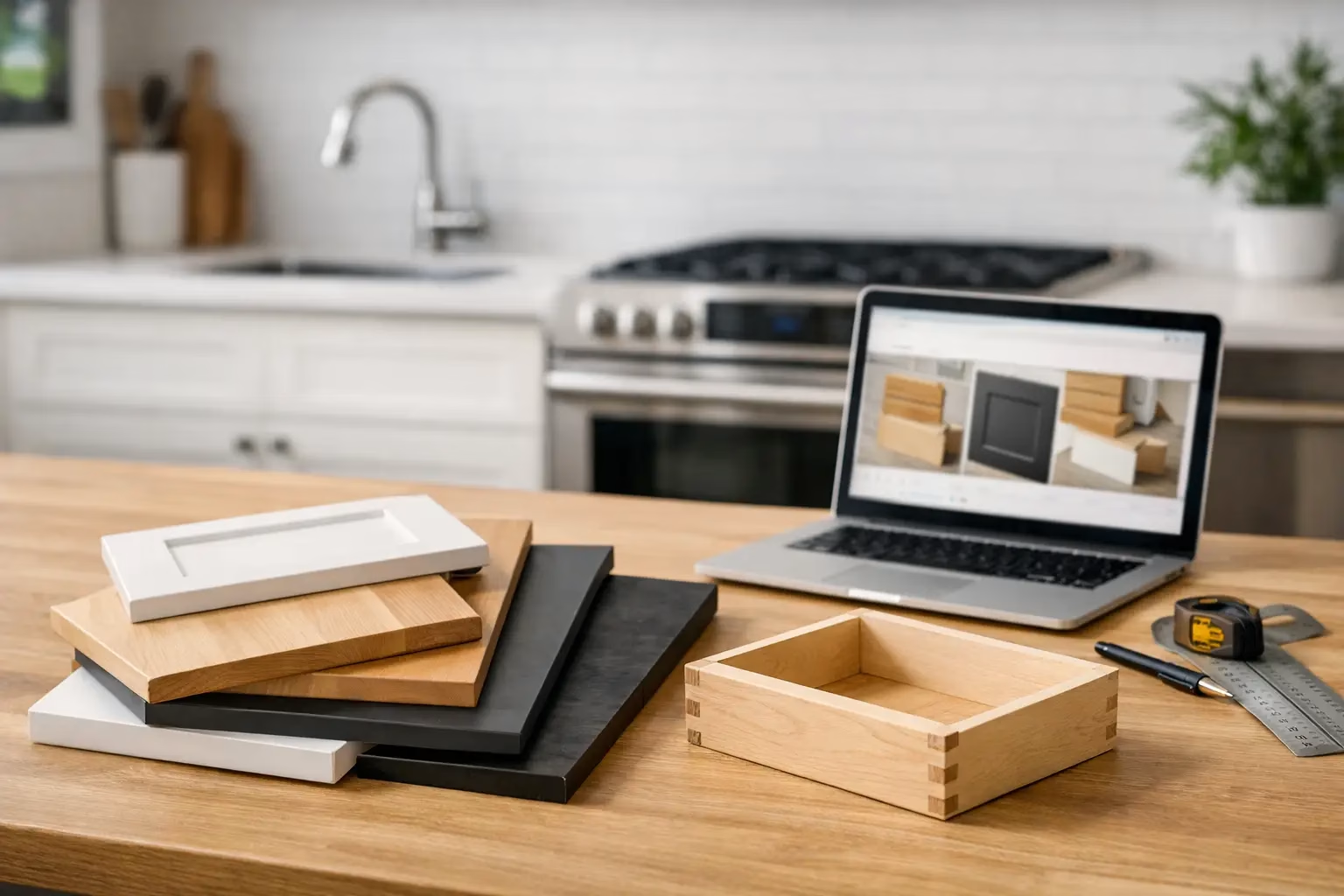
A build tool is helpful because it turns a custom order into a step-by-step process. You choose dimensions, style, material, and finish in a structured way instead of trying to piece together a product spec on your own.
Still, convenience is not a substitute for review. Before submitting the order, go back through every selection. Confirm width and height. Check quantity. Make sure the style matches what you intended. Verify that the finish selected is correct for every piece.
This is where a lot of avoidable mistakes happen. People move too fast because the ordering process feels easy. Custom manufacturing is precise, which is exactly why your input has to be precise too.
For homeowners who want more confidence, The Door Maker’s approach of measuring, designing, and ordering reflects the right order of operations. It sounds simple because it should be simple, but each step still deserves careful attention.
Common mistakes people make when ordering drawer fronts online
The biggest mistake is assuming all drawers in one room are the same size. They often are not. Measure each front separately.
The second is focusing only on dimensions and ignoring reveals, door alignment, and overall layout. Good cabinetry is about proportion as much as fit.
Another common issue is choosing a finish without considering the room. Bright white under cool showroom lighting can look stark at home. Warm painted tones, wood grain, and matte surfaces all shift depending on surrounding materials.
And finally, some homeowners order drawer fronts without planning the full project. If your cabinet doors are worn, mismatched, or visually outdated, new drawer fronts alone may not give you the transformation you want. Sometimes replacing both at once gives the best value because the result feels complete.
What a confident order looks like
A confident order is not one where you guessed right. It is one where you measured carefully, matched the style to the room, selected the right material for your priorities, and reviewed every detail before checkout.
That process may take a little more time up front, but it saves frustration later. More importantly, it gives you a finished result that looks intentional. That is the whole point of refacing – not just to replace old parts, but to make the room feel newer, cleaner, and more tailored to your home.
When you order well, drawer fronts do more than cover drawer boxes. They sharpen the lines of the room, support the style you want, and make the cabinets you already have worth keeping.