For most painted kitchen cabinet doors, HDF is the stronger base material because its higher density produces a smoother, longer-lasting painted finish that resists dents and edge chipping better than standard MDF. MDF still earns its place in budget-conscious or heavily profiled projects. Neither material tolerates standing water, so wet zones call for MR-rated panels or a different substrate entirely.
TL;DR:
- HDF offers better impact resistance, crisper edges, and greater dimensional stability than MDF due to its higher density ranging from 800 to 1,040 kg/m³.
- While HDF is more expensive and heavier, it provides a more uniform painted surface and holds intricate profiles better on simple, one-piece doors.
- MDF remains a cost-effective choice for budget-conscious, flat-panel, or detailed door styles but dents more easily and risks swelling with prolonged moisture exposure.
- For high-traffic or moisture-prone areas, insist on MR-rated panels regardless of material to prevent damage from water or impact.
- Always verify technical specifications with the supplier, request samples before ordering, and ensure hinges and installation gear are rated for the door weight, especially when choosing HDF.
Table of Contents
- HDF vs. MDF Doors: Comparing Density, Finish, and Cost
- Weighing the Trade-Offs: HDF and MDF Pros and Cons
- Matching the Material to Your Kitchen Scenario
- What to Ask Before You Order Cabinet Doors
- Installing and Maintaining Your Cabinet Doors for the Long Haul
- How The Door Maker Approaches HDF and MDF for Custom Doors
- Ready to Order Painted Cabinet Doors With Confidence?
- Sources
- FAQ
HDF vs. MDF Doors: Comparing Density, Finish, and Cost
The difference between these two materials starts with how tightly the wood fibers are pressed together, and that single variable explains almost every practical difference you will notice on a finished door.
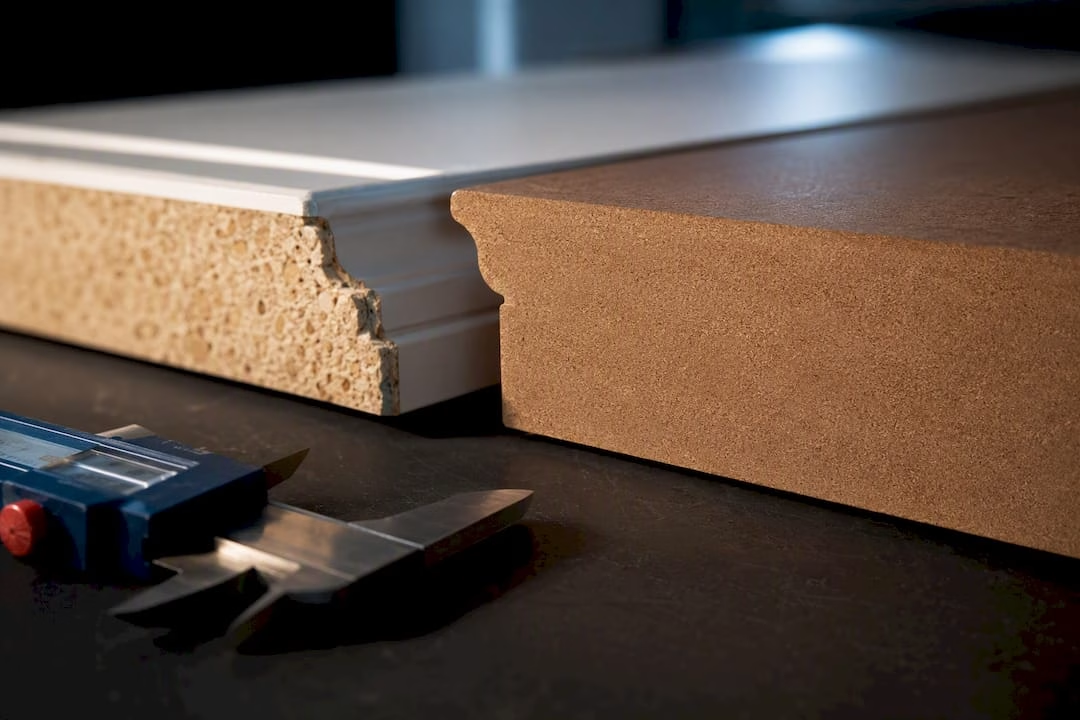
MDF (medium-density fiberboard) typically runs 600 to 800 kg/m³, while HDF (high-density fiberboard) is compressed to 800 to 1,040 kg/m³. That extra density is not just a manufacturing footnote. It changes how a door behaves in daily kitchen use.
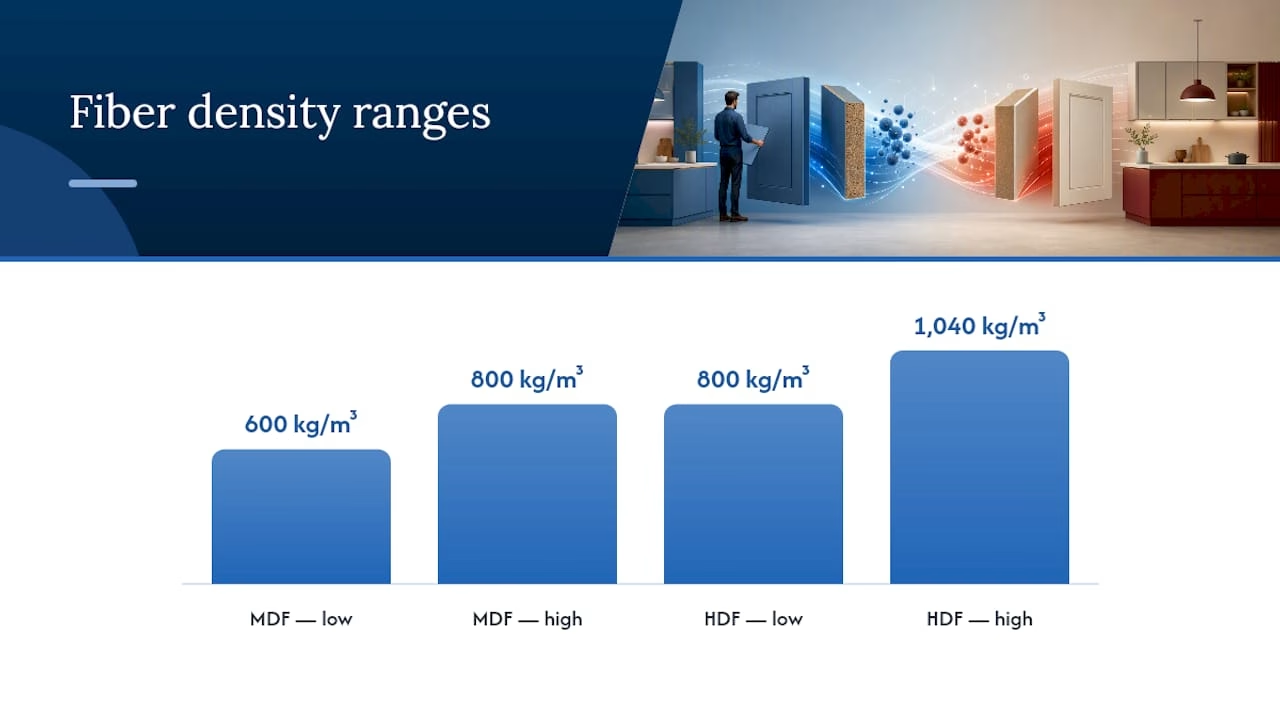
HDF’s density range (800–1,040 kg/m³) versus MDF’s (600–800 kg/m³) is the single biggest factor separating the two materials for cabinet applications. A denser panel resists dents from a dropped pan lid or a swinging drawer, holds a crisper edge profile when routed for shaker or beaded-inset styles, and stays flatter over time in a kitchen that swings between humid and dry.
Here’s how the two stack up on the metrics that actually matter when you’re ordering doors:
- Impact resistance: HDF shrugs off knocks and bumps far better than MDF, which dents more easily under the same pressure.
- Surface smoothness: Both sand to a fine finish, but HDF tends to hold a more uniform painted surface on one-piece routed doors because there are fewer seams to telegraph through paint.
- Moisture behavior: HDF has marginally better inherent moisture resistance than standard MDF, but that advantage is modest. Neither should be treated as waterproof without an MR (moisture-resistant) rating.
- Cost: HDF generally costs more per panel due to the extra pressing and material density involved in manufacturing.
- Weight: HDF doors weigh noticeably more, which matters for hinge selection and cabinet frame support, especially on larger doors.
Surface smoothness deserves a closer look because it drives the finish decision most homeowners actually care about. When a door is painted rather than stained, every imperfection in the substrate shows up under the topcoat. Designers frequently choose HDF for one-piece painted doors specifically because it reduces joints and hairline cracks that can appear at seams over time. MDF remains a valid, cost-effective substrate for painted doors when it is finished correctly, particularly on flatter panel styles that don’t stress the material at tight profile edges.
On moisture, be precise about what “resistance” means. Standard MDF and HDF both absorb water if exposed to sustained moisture, and swelling at that point is permanent, not cosmetic. If your kitchen layout puts a door near a sink run, dishwasher gap, or a stove without adequate clearance, ask for MR-rated versions of either material rather than assuming density alone will protect you.
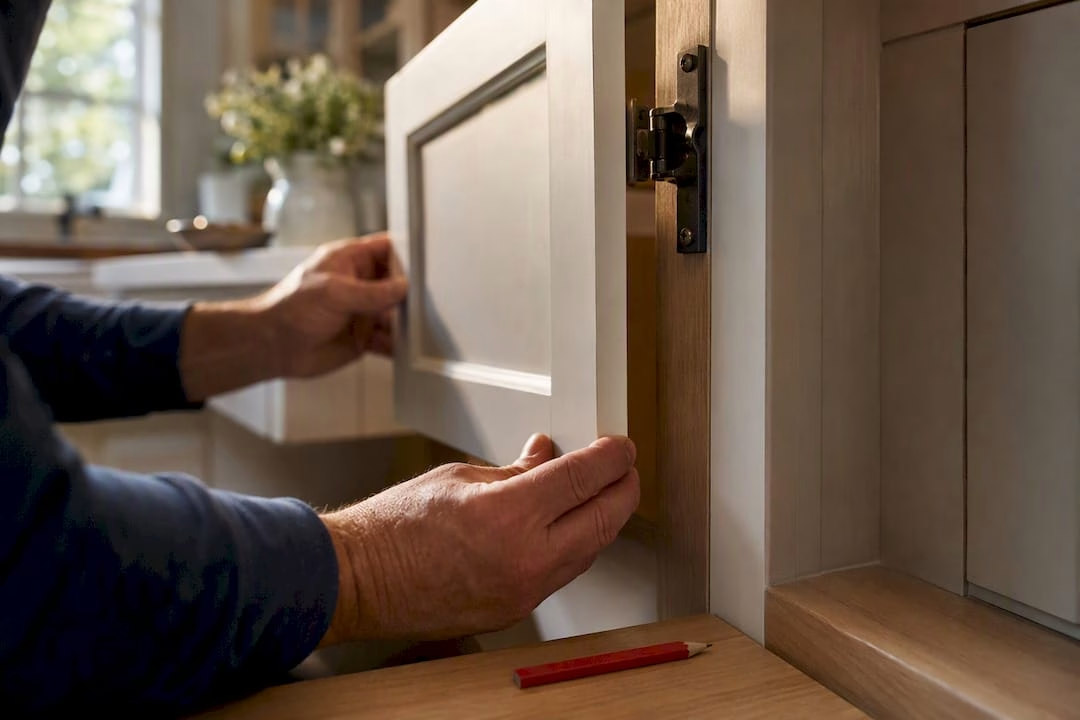
Weight has a downstream cost too. A heavier HDF door needs hinges rated for the added load, and a cabinet frame that was fine with lightweight MDF doors may need reinforcement to keep an HDF door from sagging over years of daily use. That’s a detail worth raising with whoever handles your installation, whether that’s a contractor or your own toolkit.
Weighing the Trade-Offs: HDF and MDF Pros and Cons
Every material choice is a trade-off, and this one comes down to how much you value durability versus how tightly you’re managing budget and profile complexity.
HDF advantages:
- Higher impact resistance, so doors near high-traffic zones (pantry, main walkway) hold up better against daily bumps.
- Better dimensional stability across seasonal humidity swings, meaning less risk of warping over time.
- Sharper edge detail on thin, one-piece profiles, which matters for slab and simple shaker styles where crisp lines are the whole look.
HDF disadvantages:
- Heavier, which raises hinge and installation requirements.
- More expensive per panel than comparable MDF.
- Harder to rout for intricate profiles, since the same density that resists dents also resists the router bit.
MDF advantages:
- Exceptionally smooth surface that takes paint evenly, which is why it remains the default substrate for painted cabinetry across the industry.
- Easier to machine and rout, making it the practical choice for detailed five-piece door profiles with raised panels or decorative molding.
- Lower cost, which matters on larger kitchens with dozens of doors and drawer fronts to order.
MDF disadvantages:
- Softer material, so it dents more readily under impact than HDF.
- Higher expansion risk if moisture exposure is sustained rather than incidental.
- Can telegraph substrate flaws through paint if edge sealing or primer application is rushed.
HDF is denser and harder than MDF, which is why it edges out MDF on pure durability metrics, but the softer profile of MDF is exactly what makes it easier to shape into detailed door styles without specialized equipment.
Pro Tip: If you’re set on a detailed raised-panel or five-piece door style, ask whether the rails and panel are MDF while the outer frame uses a denser material. Mixed construction is common and lets you get intricate profiles without sacrificing edge durability where it counts most.
Matching the Material to Your Kitchen Scenario
Not every kitchen needs the same substrate, and matching material to how the space actually gets used will save you money without sacrificing durability where it matters.
- Budget-sensitive, painted kitchen with moderate use. Standard MDF works well here as long as you specify quality primer and insist on sealed edges before painting. This is the most common and most cost-effective pairing for painted cabinetry.
- High-traffic family kitchen or doors near appliances. Favor HDF for its impact resistance and dimensional stability, particularly on lower cabinets and pantry doors that take the brunt of daily bumps from kids, pets, and grocery hauls.
- Thin, one-piece routed doors (slab or simple shaker). HDF is the better base here because its density holds a crisp edge without the joint lines that can develop hairline cracks on assembled MDF doors over time.
- Near a sink run, dishwasher, or open-plan kitchen with heavy steam exposure. Insist on MR-rated panels regardless of whether you choose HDF or MDF. Neither standard version is built for sustained moisture, and a leak under an unrated panel can mean a full door replacement.
- Detailed five-piece doors with raised panels or decorative molding. MDF’s machinability makes it the more practical choice for intricate profiles, since HDF’s density can make fine routing work slower and more prone to tool wear.
The construction style matters as much as the material label. A single-piece routed door under stress from humidity behaves differently than a five-piece assembled door with multiple joints, so factor in both variables, not just density, before you finalize your order.
What to Ask Before You Order Cabinet Doors
A supplier conversation should cover more than “HDF or MDF.” The material label alone doesn’t guarantee performance. Construction, edge prep, and finish system all shape the outcome as much as the panel type itself.
Before you place an order, confirm these specifics:
- Exact density (kg/m³) rather than a vague “high density” or “premium” label with no number attached.
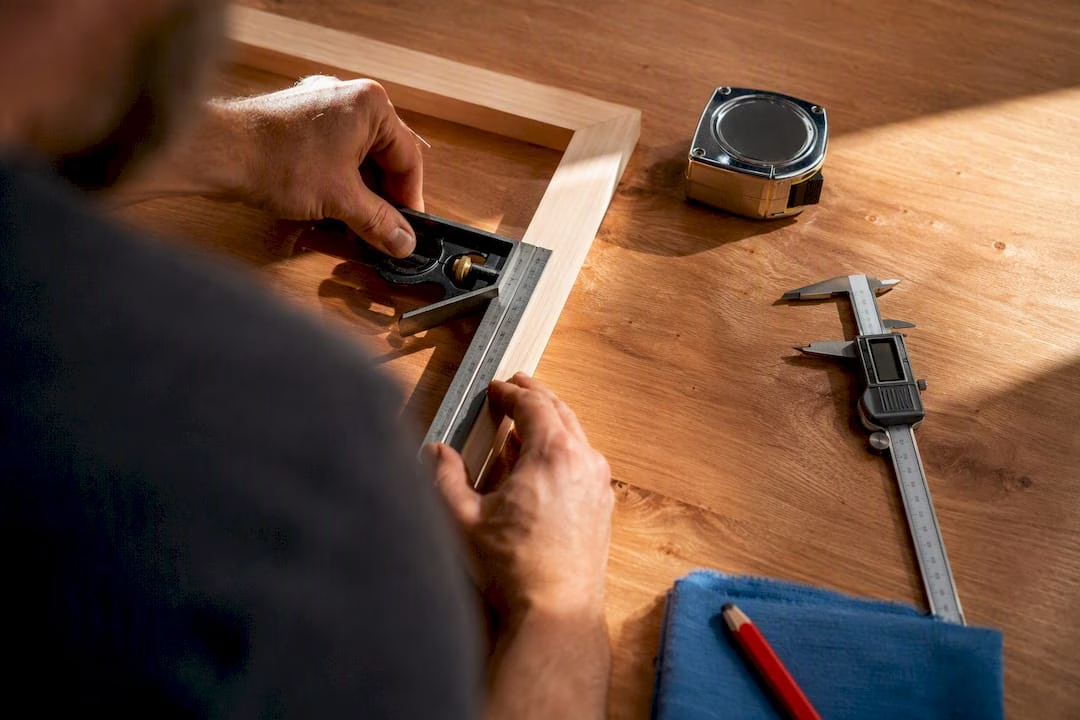
- Panel thickness and whether it matches your existing cabinet box dimensions.
- MR/moisture rating, and ask for the manufacturer’s test standard, not just a marketing claim.
- Single-piece vs. assembled construction, since this affects both finish longevity and price.
- Edge finishing and sealing method, particularly on cut edges that will be exposed to kitchen humidity.
- Approved finish system and cure process, including primer type, topcoat, and how long the door needs before it can handle daily use.
On installation, ask about hinge ratings for heavier doors, size limits for single-piece panels, and any warranty exclusions tied to moisture exposure. A supplier who can’t answer these clearly, or who has no technical sheet to share, is a red flag worth taking seriously.
Pro Tip: Request a sample door in your chosen material and finish before committing to a full kitchen order. A physical sample shows you exactly how the edge profile, sheen, and color will look under your kitchen’s lighting, which photos rarely capture accurately.
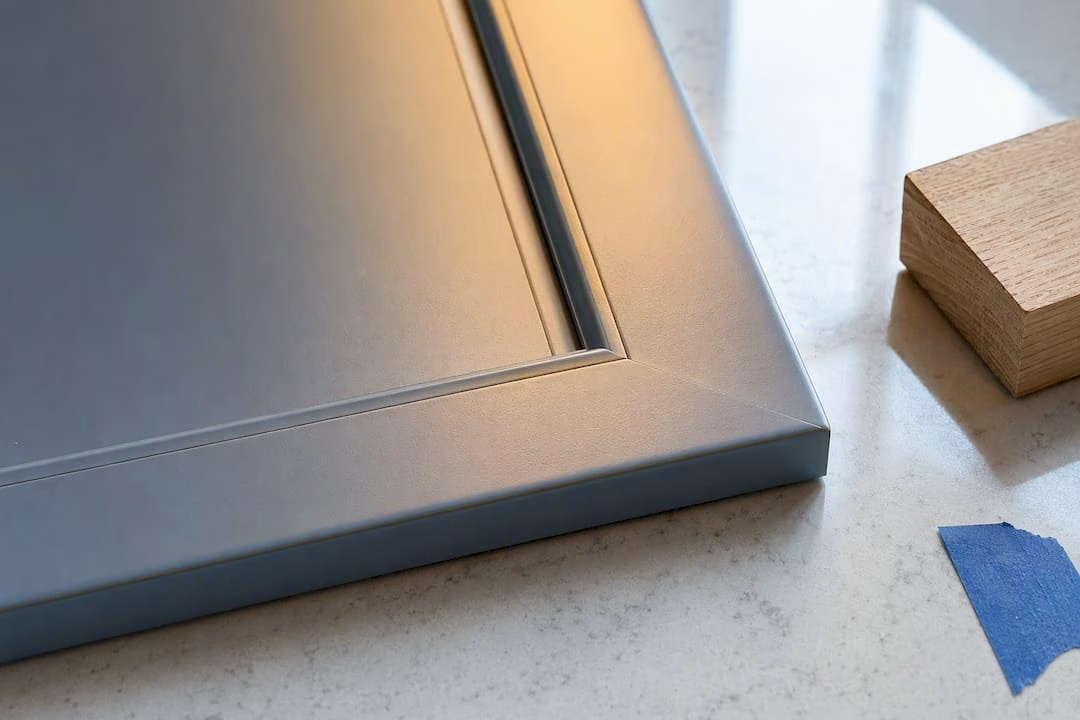
Vague labeling without backing documentation is one of the clearest warning signs in this category. If a supplier can’t produce a manufacturer technical sheet or explain their finish-system guidance, that gap tends to show up later as premature wear or paint failure.
Installing and Maintaining Your Cabinet Doors for the Long Haul
Getting the material right is only half the equation. How a door gets installed and finished determines whether it lives up to that material’s potential.
- Match hinges to door weight. Heavier HDF doors need hinges rated for the added load, and it’s worth checking that your cabinet face frame can support the extra weight before installation, especially on wall cabinets.
- Seal every edge before painting. Finish performance depends on the full system, not the substrate alone. Use the primer and topcoat combination your supplier recommends, and give the finish its full cure time before the doors see daily use.
- Keep water away from the panel. Standing water or slow leaks cause swelling in both MDF and HDF that can’t be reversed. Wipe up spills near sink cabinets promptly and check under-sink areas periodically for hidden leaks.
- Repair small dents early. A wood filler matched to your finish system, followed by a touch-up coat, handles minor dents before they become an excuse for water to work into the panel.
How The Door Maker Approaches HDF and MDF for Custom Doors
The ordering process can be simplified into three steps: measure, design, and order, with material selection presented clearly at each stage rather than buried in fine print. Customers can choose panel type and finish alongside a wide selection of styles and colors, with precision sizing built into the configurator.
Offering sample doors and color swatches before committing to a full order can help customers confirm how a painted HDF or MDF profile looks in their kitchen’s light. That lets you confirm how a painted HDF or MDF profile looks in your kitchen’s light before it arrives at your door in finished form.
— David
Ready to Order Painted Cabinet Doors With Confidence?
Once you know whether HDF or MDF fits your kitchen, using an online configurator to select panel type, finish, and exact dimensions with high sizing precision can ensure the door ordered fits the existing cabinet frame.
If you’re still deciding between substrates, order a sample door first. Seeing the actual panel, edge profile, and paint finish in your own kitchen removes the guesswork that photos and swatches can’t fully resolve. When you’re ready to move forward, you can browse custom cabinet door options and place an order directly through Tdm-thedoormaker’s configurator, using the density, MR-rating, and finish-system checklist covered above to specify exactly what your kitchen needs.
Sources
For deeper technical detail on panel density and moisture behavior, see BuildDirect’s comparison of MDF and HDF, Decor Cabinets Academy’s kitchen designer guide, WoodworkingAdvisor’s strength and use-case breakdown, and JWQ Cabinetry’s guidance on construction and finish systems. For product-specific context, explore Tdm-thedoormaker’s guide to MDF cabinet door advantages and selecting materials for your project.
- MDF wood vs HDF wood: How are they different? | BuildDirect
- MDF vs HDF Cabinet Doors: A Kitchen Designer’s Guide | Decor Cabinets Academy
- HDF vs MDF cabinet doors: Key Differences | JWQ Cabinetry
FAQ
Which is better, HDF or MDF, for kitchen cabinet doors?
HDF is generally better for painted kitchen cabinet doors because its higher density (800 to 1,040 kg/m³ versus MDF’s 600 to 800 kg/m³) gives better dent resistance and a more stable painted finish. MDF remains a solid, lower-cost option for detailed profiles and budget-conscious projects.
What are the disadvantages of using HDF?
HDF costs more, weighs more (which affects hinge and cabinet frame requirements), and is harder to rout for intricate profiles because its density resists fine machining work.
Does Ikea use MDF or HDF?
Cabinet door construction varies by manufacturer and product line, and specific material choices for any retailer’s current lineup aren’t reliably documented in public sourcing. Always check the manufacturer’s technical specifications for the exact door you’re considering rather than assuming based on brand alone.
What are the downsides of MDF doors?
MDF is softer than HDF, so it dents more easily, and it carries a higher expansion risk if exposed to sustained moisture. Poor edge sealing or a rushed primer job can also let substrate flaws show through the painted surface.
Are HDF or MDF doors waterproof?
Neither standard MDF nor HDF is waterproof. Both swell permanently under sustained water exposure, so kitchens with sink runs, dishwashers, or steam exposure need MR-rated panels or a different substrate entirely.