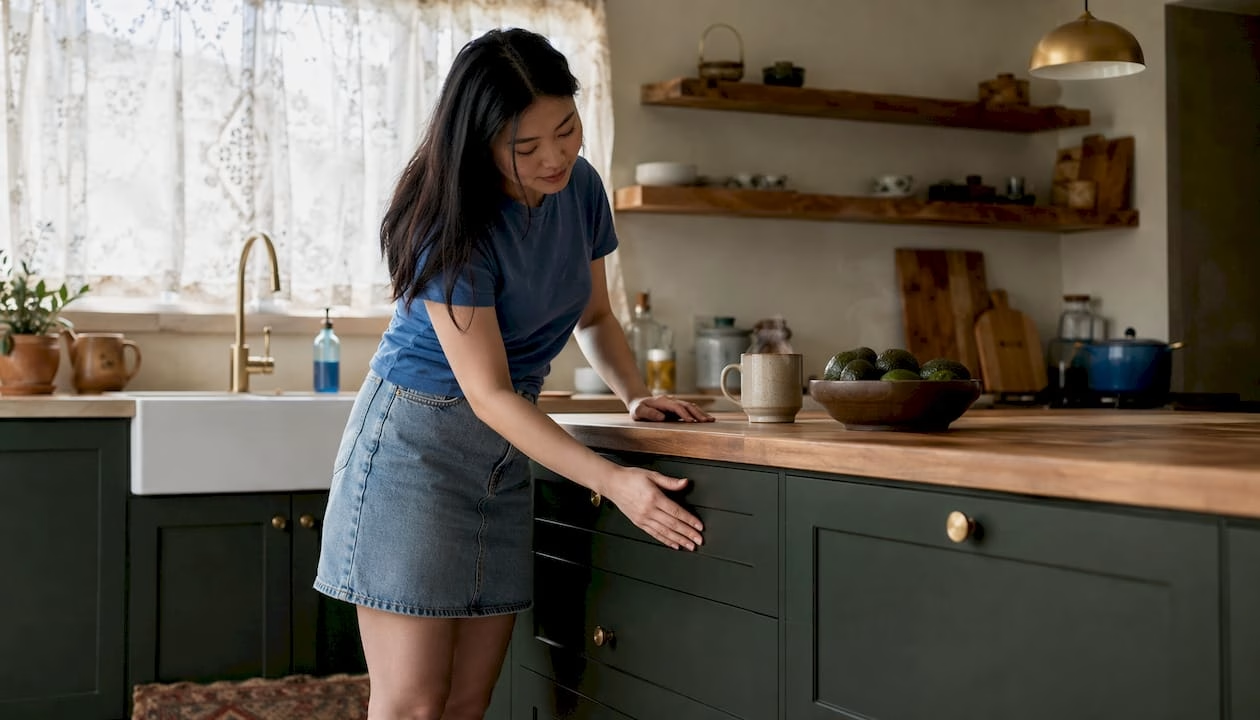
Matte finish kitchen cabinets deliver a soft, non-reflective surface that absorbs light rather than bouncing it back, giving your kitchen a calm, understated look that gloss simply cannot replicate. The finish hides fingerprints and scratches more effectively than glossy alternatives, making it a practical choice for households where the kitchen sees real daily use. Matte cabinetry suits modern, minimalist, Scandinavian, industrial, farmhouse, and transitional kitchens equally well. That said, it performs best in well-lit or naturally sunlit spaces, since the light-absorbing quality can make a dim or compact kitchen feel smaller.
Here is a quick snapshot before you read further:
- Pros: Conceals fingerprints, smudges, and minor scratches; creates a warm, tactile aesthetic; versatile across many kitchen styles
- Cons: Grease and oil cling more readily; can darken a poorly lit space; requires gentle, consistent cleaning
- Best fit: Low-to-moderate traffic kitchens, design-forward homes, well-ventilated spaces, and feature islands or accent cabinets
What makes matte finish kitchen cabinets so appealing?
Matte cabinetry has moved well past a passing trend. Designers point to a broader shift toward tactile, warm kitchen surfaces as the driving force, with homeowners actively moving away from the high-gloss, clinical look that dominated kitchens for years. The velvety texture adds depth to cabinet colors, making neutrals feel richer and deep tones feel grounded rather than flat.
The fingerprint and smudge resistance is one of the most practical advantages. Because the surface diffuses light instead of reflecting it, marks simply do not announce themselves the way they do on a polished gloss door. You are not wiping down handles after every meal.
Matte finishes also hide scratches and surface wear far better than gloss over time, benefiting from durability of various cabinet door finishes. A glossy door that looked pristine on installation day will show every scuff within a year of regular use. A matte door absorbs those minor imperfections into its texture without drawing the eye.
- Fingerprints and smudges are far less visible due to light diffusion
- Minor scratches, dents, and surface flaws blend into the finish naturally
- Colors appear more consistent across the door face, with no bright or dark patches from reflected light
- The warm, velvety aesthetic pairs naturally with wood veneers, stone countertops, and minimalist hardware
- Versatile across Scandinavian, industrial, farmhouse, and transitional kitchen styles
Pro Tip: Choose a smooth matte surface rather than a heavily textured one. Textured matte laminates attract significantly more grease and grime, making cleaning noticeably harder. A smooth matte finish gives you the same aesthetic with far less upkeep.
The real drawbacks you should know before committing
Matte finish cabinetry is not the right choice for every kitchen, and being honest about the limitations saves you from a costly surprise later.
Grease and oil are the biggest challenge. Matte surfaces can absorb splatters more readily than gloss, especially in kitchens without strong ventilation. If you cook frequently with high heat and oil, you will need to clean more often and more carefully than you would with a gloss door.
The light-absorption quality that creates that calm, sophisticated look also has a downside in smaller or dimly lit kitchens. Matte finishes do not reflect light, so they contribute nothing to making a space feel larger or brighter. In a compact kitchen with limited windows, gloss is the more practical finish.
- Grease and oil cling more readily, requiring more thorough cleaning in active cooking spaces
- Poorly lit or small kitchens can feel darker and more closed-in with matte cabinetry
- Painted matte finishes are more prone to chipping around handles and high-touch areas than thermofoil or laminate options
- Spills, particularly oily or colorful ones, can stain if not wiped up quickly
- High-quality matte finishes carry a higher price point than standard options, which matters on a tight renovation budget
Matte vs. glossy kitchen cabinets: how do they actually compare?
The difference between matte and gloss goes beyond appearance. It affects how your kitchen feels to live in every day.
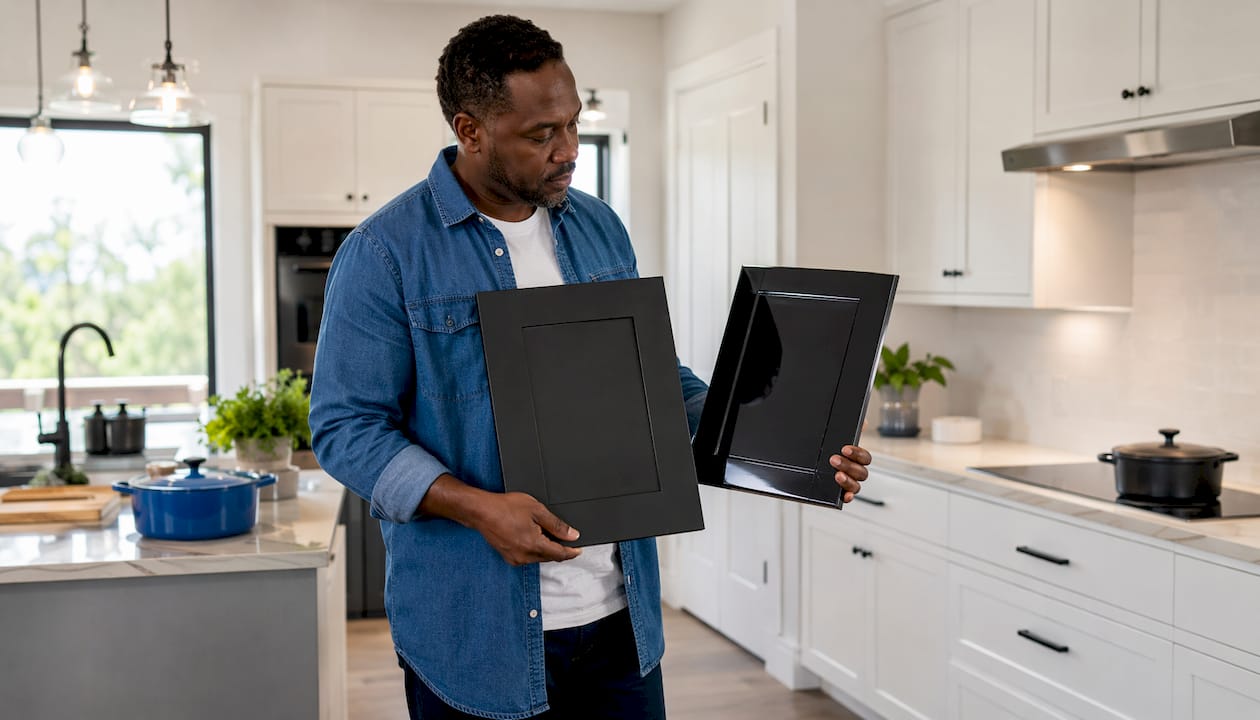
Gloss reflects light directly, which makes smaller kitchens feel brighter and more open. That reflective quality also means every fingerprint, dust particle, and surface scratch is immediately visible. Gloss is easier to wipe clean because the ultra-smooth surface does not trap grease, but it demands frequent wiping to stay looking sharp.
Matte finishes scatter light rather than bouncing it back, producing a softer, more consistent appearance throughout the day. They are forgiving with marks and wear, but their subtly textured surface can retain grease and requires more deliberate cleaning when buildup occurs.
| Feature | Matte finish | Gloss finish |
|---|---|---|
| Appearance | Soft, muted, velvety | Sleek, reflective, polished |
| Fingerprint visibility | Low | High |
| Light reflection | Diffused, absorbed | Direct, strong |
| Kitchen ambiance | Warm, calm, grounded | Bright, open, expansive |
| Durability | Material-dependent; hides wear well | Material-dependent; shows wear clearly |
| Cleaning ease | Requires gentle, consistent care | Quick wipe, easy to restore |
| Style compatibility | Scandinavian, transitional, farmhouse, industrial | Modern, luxury, small kitchens, open-concept |
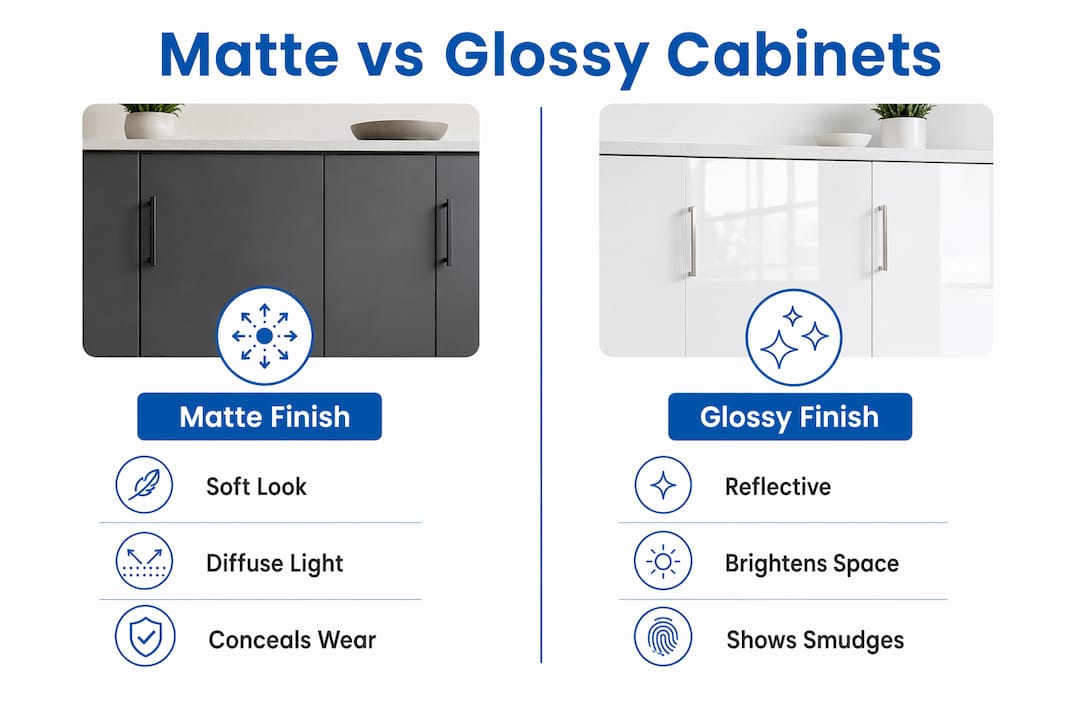
One point worth noting: durability depends far more on material quality than on sheen level. A high-quality matte cabinet will generally outlast a poorly manufactured gloss cabinet, and the reverse is equally true.
Popular colors and style trends for matte cabinetry in 2026
Matte and ultra-matte finishes are trending upward in 2026, particularly in open-concept homes where their soft, velvety look pairs naturally with wood tones, stone countertops, and modern hardware. The shift reflects a broader design preference for warmth and texture over high-shine surfaces.
Deep, grounded tones are leading the color conversation. Charcoal, navy, forest green, and matte black all work exceptionally well with a non-reflective finish because the matte surface adds depth rather than flattening the color. On the lighter end, warm whites, creamy off-whites, and soft sage greens are popular in Scandinavian and farmhouse kitchens. You can explore current 2026 color trends to see how these palettes translate into real refacing projects.
- Deep tones: charcoal, navy, forest green, matte black
- Warm neutrals: off-white, warm gray, greige, taupe
- Soft pastels: sage green, dusty blue, blush
- Natural wood-look matte laminates for a warm, organic feel
- Mixing matte island cabinets with semi-gloss perimeter cabinets for visual contrast
Layering sheens is one of the more interesting design moves gaining traction. A matte island paired with semi-gloss upper cabinets creates contrast without competing finishes, and it lets you enjoy the fingerprint-hiding benefits of matte where you touch most while keeping the brightness of gloss where it matters for the room’s overall light.
How to clean and maintain matte finish cabinets properly
Matte cabinets require a gentler cleaning approach than gloss, but the routine is straightforward once you know what to avoid. The surface texture can trap oils and dust more easily, so consistency matters more than intensity.
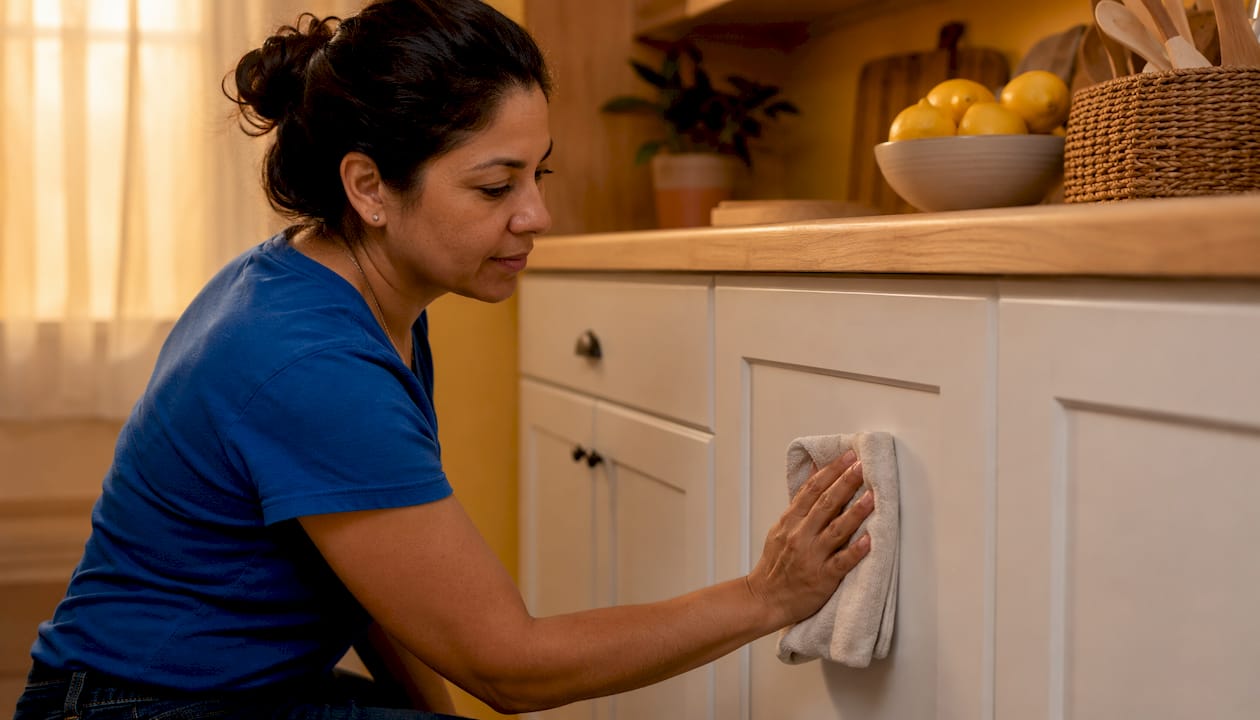
Always use a soft microfiber cloth. Abrasive sponges or rough cloths will dull the finish over time, and once the surface texture is compromised, it shows. Warm water with a mild dish soap handles most everyday cleaning. Wipe gently, then dry immediately with a clean cloth to prevent watermarks.
For stubborn grease near the stovetop, a diluted vinegar-water solution or a cleaner specifically formulated for matte surfaces works well. Avoid anything with alcohol, ammonia, or bleach.
- Use a soft microfiber cloth for all cleaning, never abrasive pads
- Warm water with mild dish soap covers most routine cleaning needs
- Dry immediately after wiping to prevent water spots
- Spot clean spills right away, especially oily or colorful ones, to prevent staining
- Avoid cleaners containing alcohol, ammonia, or bleach, which can dull or damage the finish
- Dust regularly to prevent buildup that becomes harder to remove over time
Pro Tip: Applying a protective topcoat or sealant during installation can extend the life of your matte finish and make routine cleaning noticeably easier. Some matte cabinet materials also come pre-treated with smudge-resistant coatings, so ask about this when ordering.
How Tdm-thedoormaker makes matte refacing affordable and straightforward
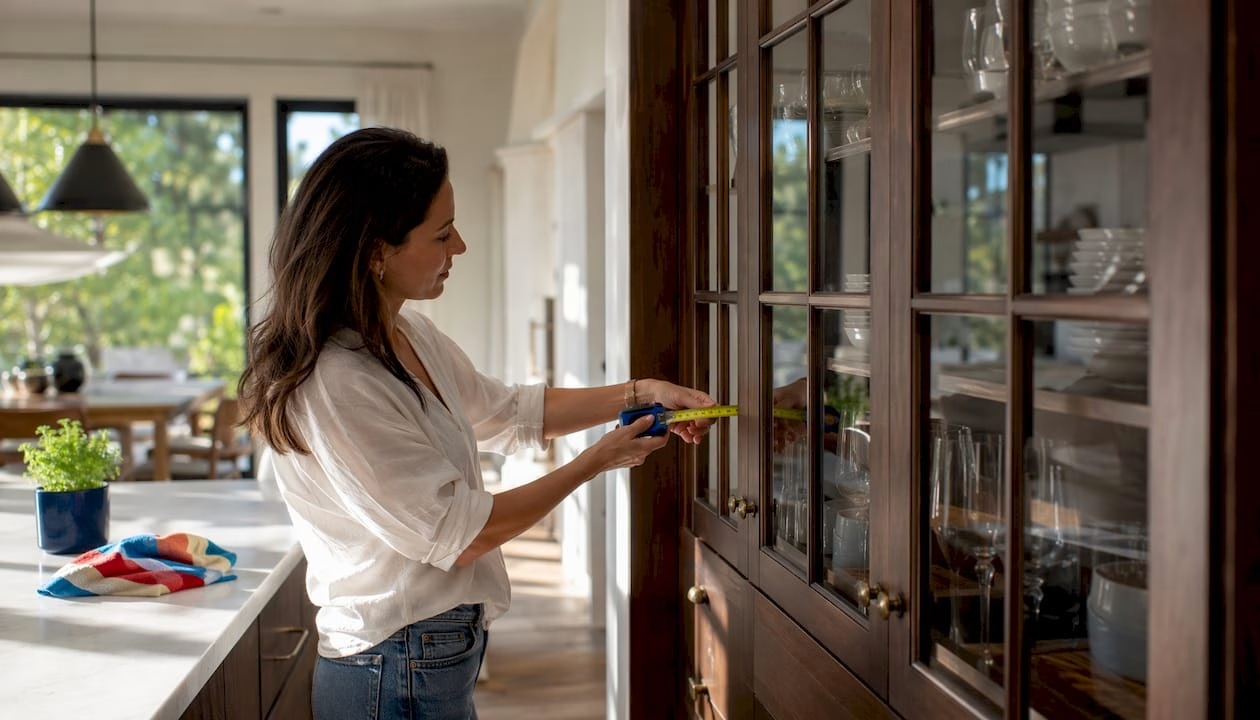
Replacing full cabinet boxes to get a matte finish is rarely necessary, and the cost difference between refacing and full replacement is substantial. Tdm-thedoormaker simplifies the process into three steps: measure your existing cabinet openings, design your doors using the online configurator, and order. Custom sizing is accurate to 1/10,000 of an inch, which means doors fit precisely without the gaps or adjustments that come with standard-size replacements.
The selection covers over 30 styles and 130+ colors and finishes, including a full range of matte options from warm neutrals to deep charcoals. You can order sample doors and color swatches before committing, which removes most of the guesswork from a remote purchase. For homeowners updating IKEA cabinet boxes, there are custom doors for IKEA cabinets designed to fit standard IKEA frames precisely.
Customers report that the refacing process transforms the look of their kitchen without the disruption and expense of a full remodel. You keep your existing cabinet boxes, replace only the doors and drawer fronts, and end up with a result that looks like a complete renovation. For a detailed look at custom cabinet doors online, Tdm-thedoormaker’s ordering page walks through every finish and style option available.

How durable are matte finish cabinets over time?
Durability in matte cabinetry depends primarily on the material underneath the finish, not the sheen level itself. A matte thermofoil or high-pressure laminate door will hold up far better than a painted MDF door in the same finish, regardless of how carefully you treat it.
Matte finishes hide wear and tear well but are generally less resistant to scratches than gloss. The areas around handles and high-touch zones are where chipping and scuffing tend to appear first, particularly on painted wood or MDF doors. Thermofoil and quality laminate options hold up better in those spots. You can review durable cabinet door options to compare material performance across finish types.
Moisture resistance also varies by material. Plywood-core doors with a matte laminate surface handle humidity and steam better than particleboard-core alternatives. In kitchens with heavy cooking activity, this distinction matters for long-term performance.
Which materials work best with a matte finish?
The material you choose for your cabinet doors affects how the matte finish looks, how long it lasts, and how easy it is to maintain. Not all substrates perform equally under a matte coating.
Thermofoil over MDF is one of the most popular choices for matte cabinetry. The thermofoil wraps tightly around the door, creating a consistent, smooth matte surface that resists moisture reasonably well and holds color evenly. It is cost-effective and available in a wide range of matte colors. For a direct comparison of thermofoil against painted options, Tdm-thedoormaker’s thermofoil vs. painted fronts guide covers the trade-offs clearly.
High-pressure laminate (HPL) offers excellent durability and is particularly well-suited to matte finishes. HPL resists scratches, moisture, and impact better than most painted surfaces, making it a strong choice for active kitchens. The matte texture on HPL tends to be smooth rather than heavily textured, which keeps cleaning manageable.
Painted wood or MDF gives you the most color flexibility and a genuinely custom look, but painted matte surfaces are the most vulnerable to chipping, especially around edges and hardware. They suit lower-traffic kitchens or design-focused spaces where appearance takes priority.
Acrylic matte is a newer category that delivers a soft, ultra-matte surface with good durability and a premium feel. It sits at a higher price point but offers a finish quality that is difficult to replicate with standard laminate or paint.
Common issues with matte cabinets and how to fix them
Matte cabinet fronts live a hard life near stovetops and sinks, and a few problems come up regularly. Knowing how to address them early prevents minor issues from becoming permanent damage.
Grease buildup is the most common complaint. It accumulates gradually near the stovetop and around handles, and because matte surfaces do not show it as obviously as gloss, homeowners often notice it only once it has become stubborn. A warm water and mild soap solution applied with a microfiber cloth handles most buildup. For heavier grease, a diluted dish soap with a few drops of white vinegar works without damaging the finish.
Chipping around hardware happens most often on painted MDF doors. Small chips can be touched up with a matching matte paint pen or touch-up kit, though the repair is rarely invisible on close inspection. If chipping is widespread, it usually signals that the original finish quality was low or that the door material is not well-suited to the location.
Staining from spills is preventable with quick action. Tomato sauce, coffee, and oil-based liquids can soak into a matte surface if left to sit. Blot the spill immediately rather than wiping, which can spread it further, then clean with mild soap and water. For set stains, a paste of baking soda and water applied gently with a soft cloth often lifts the discoloration without harming the finish.
Dullness over time can result from using the wrong cleaners. Products with alcohol or ammonia strip the surface gradually, leaving it looking flat and worn rather than intentionally matte. Switching to a pH-neutral cleaner and avoiding anything abrasive usually stops the progression.
Key Takeaways
Matte finish kitchen cabinets offer a warm, non-reflective aesthetic that conceals everyday wear well, but their performance depends heavily on material quality, kitchen lighting, and consistent gentle maintenance.
| Point | Details |
|---|---|
| Fingerprint and scratch resistance | Matte surfaces diffuse light, making smudges and minor scratches far less visible than on gloss doors. |
| Best kitchen fit | Matte performs best in well-lit, well-ventilated kitchens; avoid it in small or poorly lit spaces. |
| Cleaning approach | Use a soft microfiber cloth with mild soap and water; avoid alcohol, ammonia, or abrasive cleaners. |
| Material choice matters | Thermofoil and high-pressure laminate matte doors outlast painted MDF in high-traffic areas. |
| Refacing vs. replacement | Custom door refacing with a matte finish delivers a full kitchen transformation at a fraction of full replacement cost. |