Yes, custom cabinet doors are the reliable fix for odd-sized openings, and the process starts before you order anything. Reputable makers cut to fine tolerances, often within 1/16-inch increments, so precision isn’t the limiting factor. Your measurements are. Grab a tape measure, note whether you want full or partial overlay, and record your hinge preference before you touch a configurator.
TL;DR:
- Precise measurements of the actual opening, including width, height, and squareness, are essential to ensure a proper fit for custom cabinet doors.
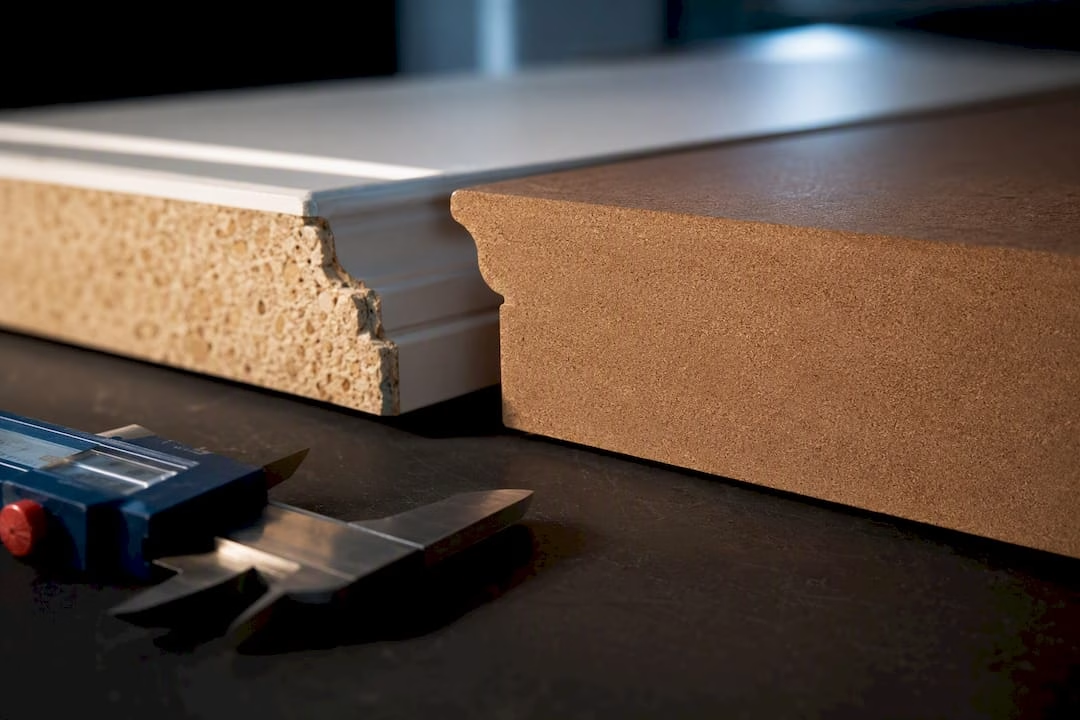
- Material choices such as MDF or thermofoil are more stable for oversized doors, while solid wood suits wider panels but may expand with humidity.
- Factory hinge boring and careful shimming can improve the fit, but doors more than 1/4 inch out of square typically require remaking rather than adjustments.
- Ordering a real sample door before placing a full order provides critical insights into finish quality and edge profiles, reducing costly mistakes.
- Custom sizes usually cost more based on material, finish, and quantity, with lead times generally ranging from several weeks to potentially expedited options.
Table of Contents
- Odd Size Cabinet Doors: Getting the Math Right
- How to Measure Odd Cabinet Openings the Right Way
- Choosing a Door Style and Material for Nonstandard Sizes
- Installing Custom Doors So They Actually Fit
- Ordering Odd Size Cabinet Doors Online
- What Custom Odd Size Doors Cost and How Long They Take
- Fixing Doors That Bind or Don’t Fit Right
- Working With a Custom Door Supplier Without the Headaches
- Why Measuring Twice Beats Ordering Twice
- Start Your Custom Door Order With The Door Maker
- Useful Measurement and Style Resources
- Sources
- FAQ
Odd Size Cabinet Doors: Getting the Math Right
Custom sizing hinges on three terms: overlay, inset, and reveal. Overlay is how much the door covers the cabinet frame’s face; inset means the door sits flush inside the frame, edge to edge. Reveal is the small gap you leave, usually intentional, so doors don’t rub against each other or the box.
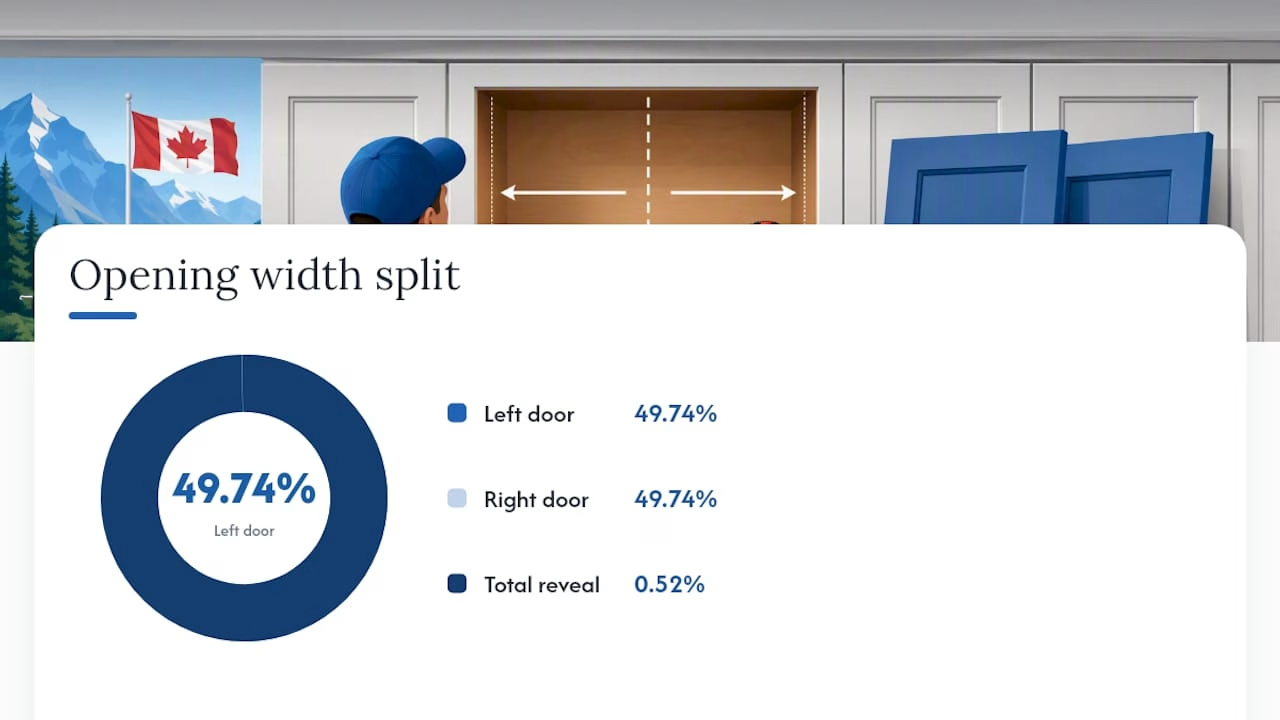
For a single door, finished width typically equals the opening width plus the overlay amount on each side. For two doors sharing an opening, the math shifts: subtract your total reveal gap, then split what’s left in half. Using a standard 1/8-inch reveal, a 24-inch-wide double-door opening becomes (24 minus 0.125) divided by two, or 11.9375 inches per door.
Three mistakes cause most fit failures:
- Measuring the old, warped door instead of the actual opening
- Forgetting to subtract the reveal gap on double-door openings
- Assuming height math works the same as width math when your cabinet box is out of square
How to Measure Odd Cabinet Openings the Right Way
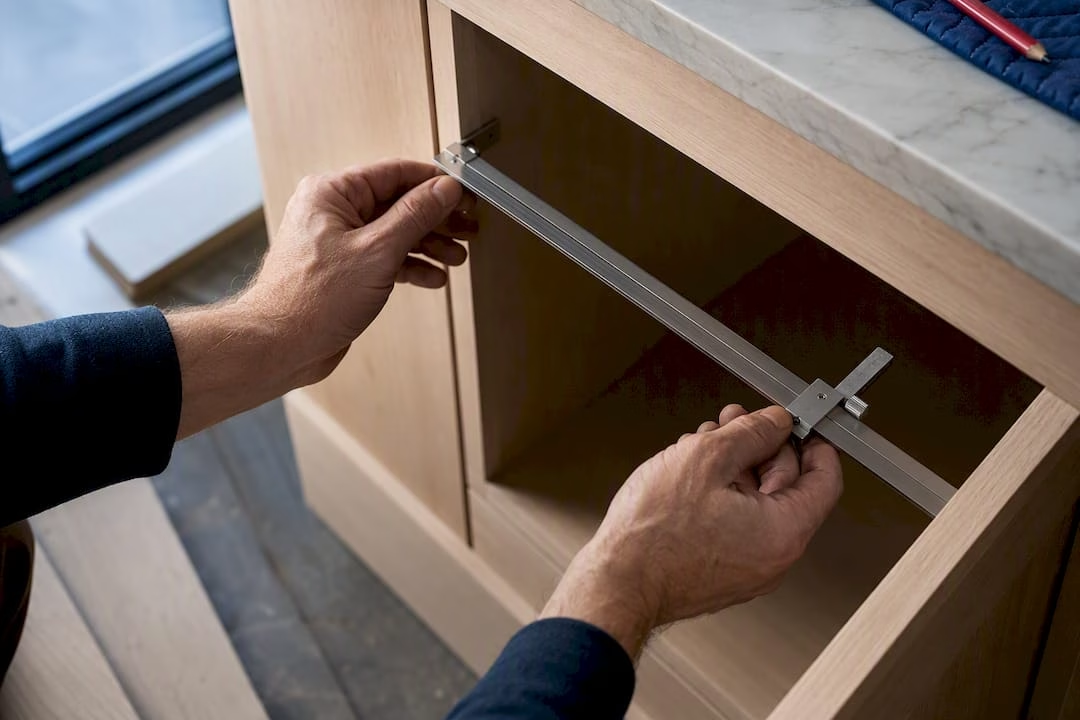
Odd openings punish sloppy measuring more than standard ones do, because there’s no size chart to fall back on if a number is off. You need a tape measure, a straightedge, and a small level.
- Measure width at the top, middle, and bottom of the opening.
- Measure height at the left, center, and right.
- Record the smallest width and the largest height from those readings.
- Note whether the cabinet is framed or frameless, your overlay preference, and hinge type.
- Photograph existing hinge cup locations if you’re reusing hardware.
Using the smallest width and largest height protects you against a slightly out-of-square box. A door sized to the largest width might bind against one side; a door sized to the smallest height might leave a visible gap at the top. This three-measure approach is why homeowners who measure carefully the first time rarely need a remake.
Pro Tip: Write your tolerance directly on the order form as a range, not a single number. If your opening varies by 1/16 inch across three readings, say so. Suppliers can account for it; guessing later cannot.
Choosing a Door Style and Material for Nonstandard Sizes
Slab doors handle odd dimensions with the fewest structural questions. There’s no frame-and-panel joinery to stretch or compress. Shaker doors, with their flat center panel and simple frame, scale well to unusual widths and remain a strong pick for smaller kitchens, while raised-panel doors suit larger rooms where the extra detail doesn’t overwhelm the space.
Material matters more as size grows unusual:
- Solid wood handles wide doors well but expands and contracts with humidity, which matters near dishwashers and sinks.
- MDF and HDF stay dimensionally stable and take paint cleanly, a good match for oversized slab or shaker fronts.
- Thermofoil resists moisture but can struggle on very large panels where heat and humidity cause edge lifting over time.
For doors well beyond typical dimensions, builders often widen the stiles or use a solid panel instead of a floating one to keep the door from sagging or twisting. If you’re chasing something genuinely unconventional, like branch-front or sculptural accents, treat that as a bespoke commission for one or two feature doors, not your whole kitchen.
Installing Custom Doors So They Actually Fit
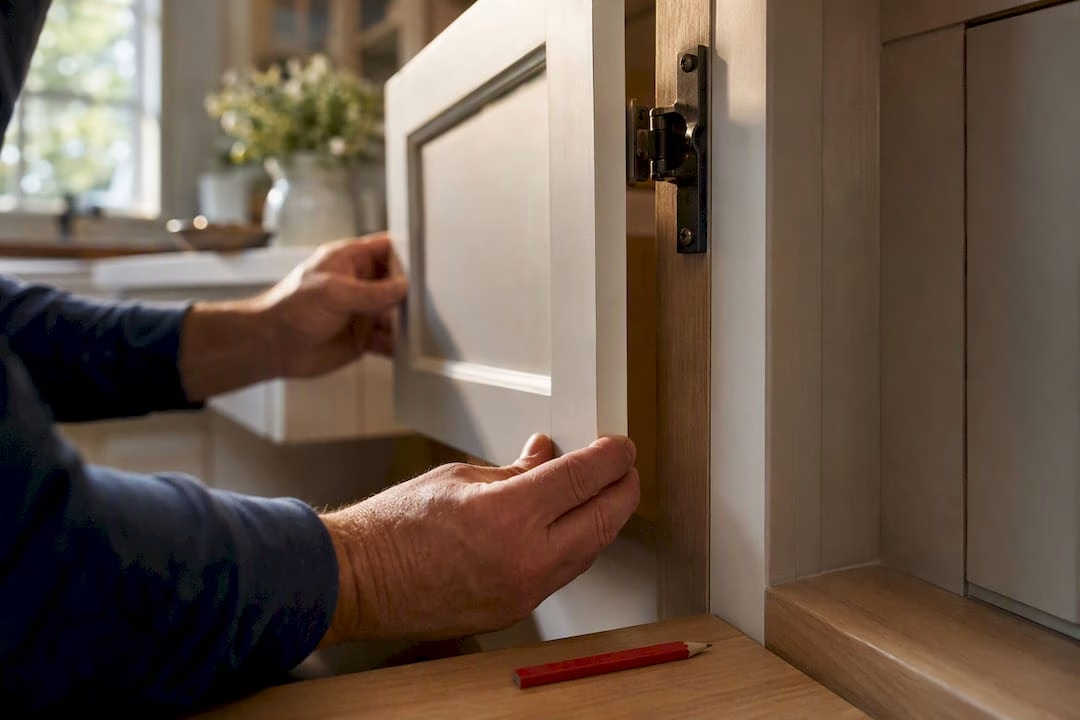
Getting a well-made door to seat correctly still takes some fieldwork. Specify factory hinge boring whenever possible. It’s more accurate than boring on-site, and it locks in your reveal before the door ever reaches your kitchen.
- Ask for factory boring on standard hinge types; save field boring for unusual or antique hardware.
- Plane or sand sparingly, and never touch a factory-finished face; trim only raw edges designed for site adjustment.
- Use shims behind hinges to correct minor out-of-square openings rather than trimming the door itself.
- Route a small relief on one edge if a box is slightly twisted, instead of resizing the whole door.
Pro Tip: If a door won’t sit flush after shimming and minor adjustment, stop. Warped doors, or boxes more than 1/4 inch out of square, need a remake, not more sanding.
Ordering Odd Size Cabinet Doors Online
A configurator is only as good as what you type into it. Enter the finished opening dimensions, not guesses, along with overlay type, hinge boring preference, and finish selection. The most common form trap is entering the old door’s size instead of the actual opening measurement, which reintroduces every gap you were trying to fix.
A leading custom door supplier built its ordering flow around three steps: measure, design, and order. Each step exists because odd sizes most often fail at handoff, when a homeowner’s numbers don’t match what the supplier assumes.
- Use the measurement and sizing calculator to convert raw opening numbers into finished door specs.
- Review the ordering process breakdown before submitting your first order.
- Order a real sample door instead of a swatch. A flat color chip won’t show you edge profile or how a finish reads under kitchen lighting.
What Custom Odd Size Doors Cost and How Long They Take
Price scales with material, finish complexity, hinge boring, and quantity, the same drivers as any custom door order. Odd sizing itself rarely adds a large premium, but some manufacturers apply minimum charges per door regardless of size, so a single oddly sized replacement can cost close to what a full set costs per door.
- Solid wood and specialty finishes cost more than MDF with a painted finish.
- Factory hinge boring adds a small per-door fee but saves fitting time.
- Small orders (one or two doors) sometimes hit a per-order minimum.
Lead times for custom doors commonly run several weeks from order to delivery, with rush production available from some suppliers for an added fee. Plan your installation date with that window in mind, especially if the odd opening is the last piece of a larger renovation.
Fixing Doors That Bind or Don’t Fit Right
A door that sticks or shows an uneven gap almost always traces back to one of a few causes.
- Check hinge screws first; a loose or over-tightened hinge throws off reveal fast.
- Look for a shim gap at the top or bottom hinge if the door binds only on one end.
- Confirm the box itself is square before blaming the door.
- If the gap is under 1/8 inch, adjust with shims or minor hinge repositioning.
- If the door is warped or the box is badly out of square, order a remake rather than keep adjusting.
When a custom door genuinely won’t work, whether the opening is too irregular or the budget doesn’t stretch that far, trimming a leftover door can serve as a stopgap, though it rarely matches a custom fit long term. Open shelving, applied molding to disguise an odd gap, or retrofit panel inserts are reasonable fallbacks for one troublesome opening in an otherwise standard kitchen.
Working With a Custom Door Supplier Without the Headaches
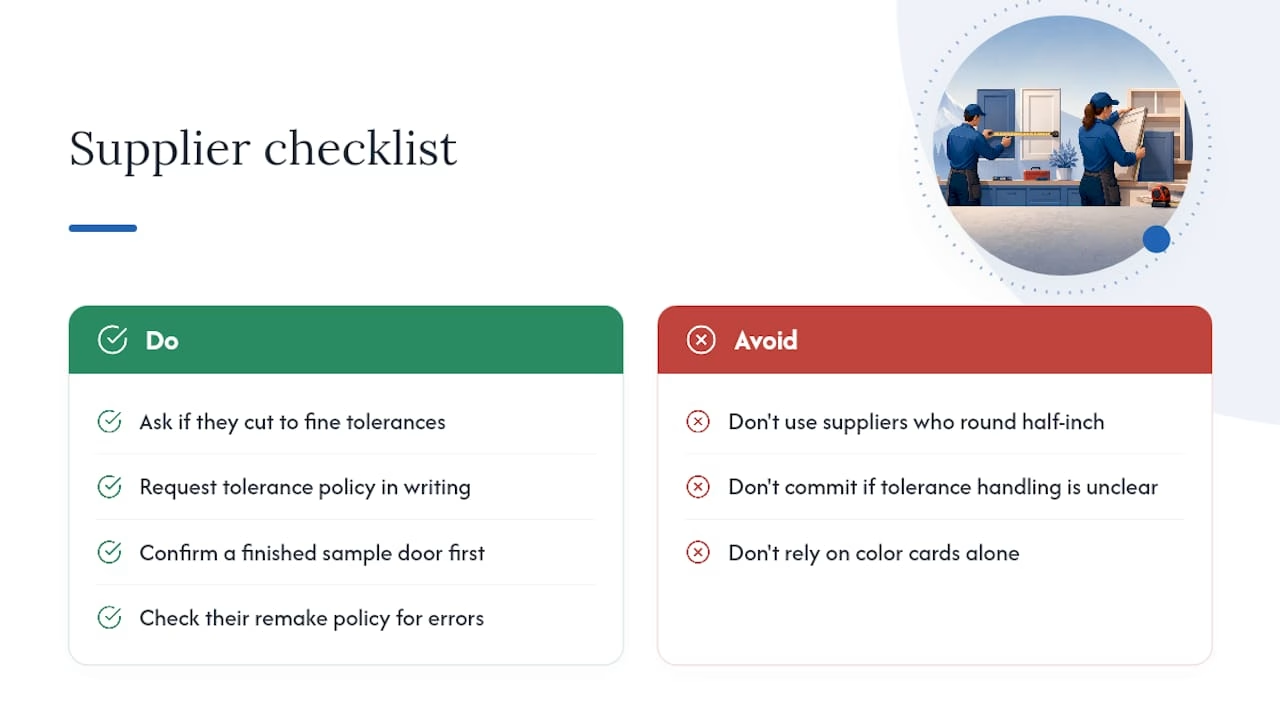
The supplier relationship matters as much as the measurements themselves. Start by asking directly whether the manufacturer cuts to fine tolerances or works off fixed size brackets. A supplier that rounds to the nearest half inch isn’t built for odd openings, no matter how good their finish selection looks online.
Ask about their tolerance policy in writing. A supplier confident in their process will tell you exactly how they handle a range you report, versus a single fixed number. If they can’t answer that clearly, that’s worth noting before you commit to a full kitchen order.
Confirm the sample policy before ordering anything larger. A real small door, cut from the same material and finished the same way as your full order, tells you far more than a color card ever will, particularly for edge profiles on shaker or raised-panel styles.
Finally, ask what happens if your measurements turn out to be slightly off after the door arrives. Some manufacturers offer remakes at a reduced cost for minor sizing errors caught early; others don’t. Knowing that policy before you order protects you from an expensive surprise on an opening that was already unusual to begin with. Good suppliers also publish clear size charts so you can sanity check your own numbers against typical ranges before submitting anything.
Why Measuring Twice Beats Ordering Twice
Most odd-opening problems are measurement problems wearing a manufacturing disguise. The math behind overlay and reveal isn’t complicated, but it punishes shortcuts, and a door cut to a wrong number looks exactly as wrong as a door cut by hand at home. That’s the part conventional advice glosses over: precision manufacturing doesn’t rescue bad input.
What earns Tdm-thedoormaker’s confidence in this process is the same thing that trips up most first-time custom orders: the measure, design, order sequence forces a homeowner to slow down at the one step people rush. Combine that discipline with fine sizing increments and a real sample door, and odd openings stop being the exception that ruins a renovation timeline.
— David
Start Your Custom Door Order With The Door Maker
This supplier turns odd openings into a straightforward order instead of a guessing game, offering precise sizing across numerous styles and finishes, so a nonstandard opening doesn’t limit style options the way stock inventory does.
If you haven’t measured yet, start with the DIY sizing calculator to convert your opening into finished door dimensions. If you want to see finish and edge quality in hand before committing to a full order, request a real sample door rather than a swatch. When your numbers are ready, head to the custom door ordering page to enter your specs and place your order.
Useful Measurement and Style Resources
- Cabinet Door Calculator: Your DIY Sizing Guide
- How to Measure Cabinet Doors for Perfect Fit
- Shaker Door Profiles Explained
Sources
FAQ
Can You Buy Custom Size Cabinet Doors?
Yes. Manufacturers that specialize in custom work cut doors to the exact opening dimensions you provide, often to fine tolerances, rather than forcing you into fixed size brackets.
Are There Standard Sizes for Cabinet Doors?
Stock cabinetry follows common width and height increments, but plenty of kitchens, especially older or renovated ones, have openings that fall outside those standards entirely.
What Can I Use Instead of Kitchen Cabinet Doors?
Open shelving, glass or acrylic panel inserts, and applied molding to disguise an odd gap are workable alternatives when a custom door isn’t the right fit for a particular opening.
How Can I Find Cabinet Doors That Match My Existing Cabinets?
Order a real sample door in your target finish and profile rather than relying on a color swatch, since finish and edge detail read very differently on an actual door than on a small chip.