If you’re standing in the middle of a kitchen update trying to decide between thermofoil versus painted cabinet fronts, you’re already asking the right question. The finish you choose affects how your cabinets look on day one, how they hold up after years of cooking and cleaning, and how much maintenance you’re willing to live with. For a refacing project, that choice matters just as much as door style or color.
Both options can give your space a clean, updated look without tearing out your cabinet boxes. But they behave very differently in real homes. One is usually favored for easy care and consistency. The other is often chosen for design flexibility and a more furniture-like finish. The better fit depends on your budget, your kitchen habits, and how exacting you are about the final look.
Thermofoil versus painted cabinet fronts: the real difference
Thermofoil cabinet fronts are typically made by applying a thin vinyl layer over an engineered wood core using heat and pressure. The result is a smooth, sealed surface with a consistent color and finish. It is commonly used for slab doors, simple profiles, and many contemporary styles, though it can also work in some traditional looks.
Painted cabinet fronts start with a wood or MDF door and go through a finishing process that includes prep, primer, and paint. When done well, painted fronts can look refined and custom, especially on shaker, raised panel, or detailed profiles. They offer a broader design range, but they also come with the normal realities of painted surfaces.
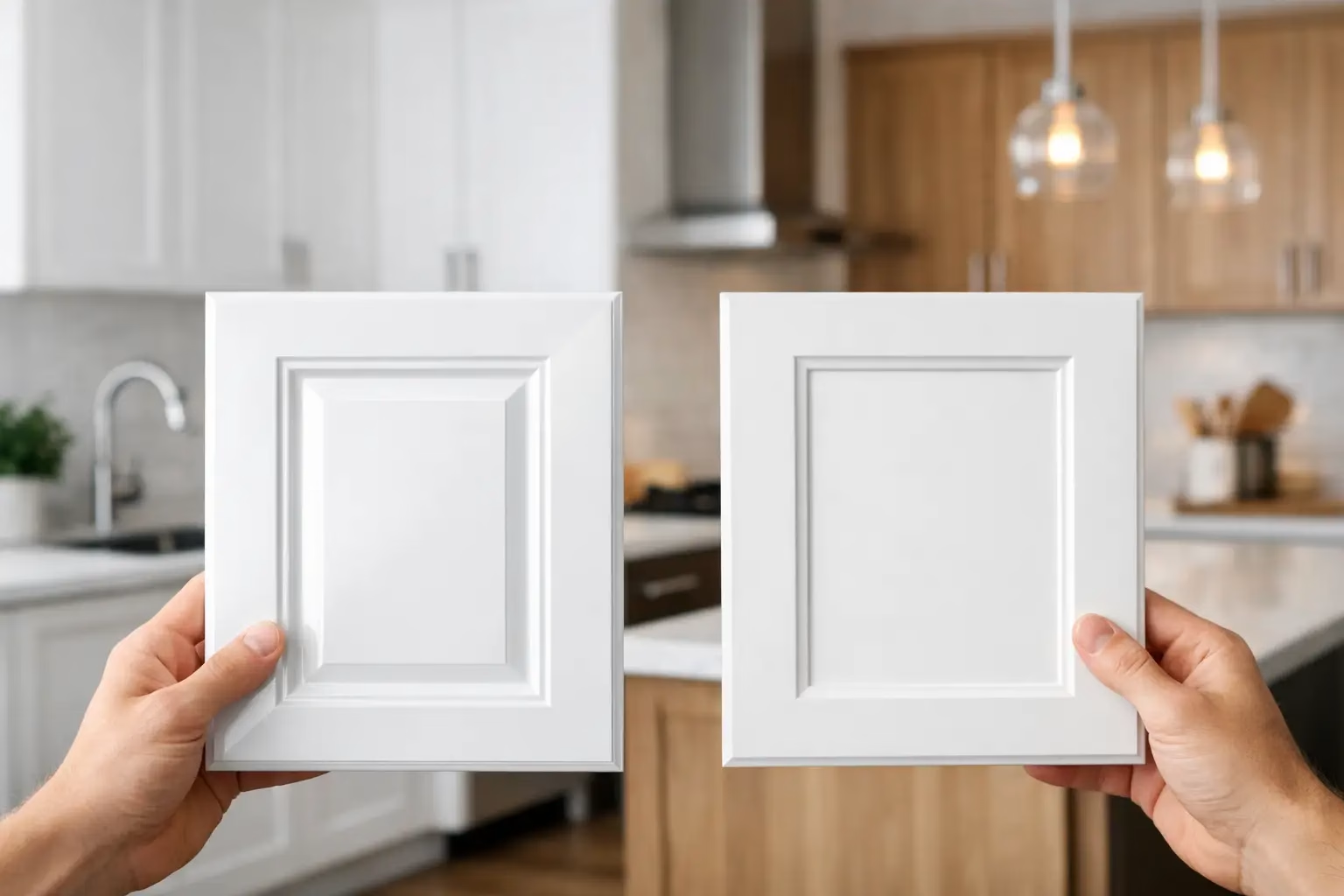
The main distinction is not just appearance. Thermofoil is a wrapped finish. Painted fronts are a coated finish. That changes how they respond to heat, impact, moisture, touch-ups, and time.
Cost and value for a refacing project
For many homeowners, price is where the decision starts. Thermofoil cabinet fronts are often more budget-friendly than painted options, especially when you are updating an entire kitchen, bathroom, office, or built-in wall of cabinetry. If your goal is a major visual change without the cost of full cabinet replacement, thermofoil can make a lot of sense.
That lower cost does not automatically mean lower value. In the right setting, thermofoil gives you a polished, finished appearance with predictable results. The color is factory-applied, the surface is uniform, and there is less variation from one door to the next.
Painted cabinet fronts usually cost more because the finish process is more labor-intensive. There is more prep involved, more handling, and more opportunity for the kind of detail work that people expect from a painted cabinet surface. If you’re after a higher-end, custom look and want specific color control, that added cost may feel justified.
Value, then, is not just about the invoice. It is about whether the finish matches the way you use the room and what you expect from it over time.
Appearance and style flexibility
This is where painted fronts often pull ahead. If you want a very specific shade, a classic shaker kitchen, or a detailed profile with crisp visual depth, paint usually gives you more room to get there. It tends to suit homeowners who care about design nuance and want the cabinet fronts to feel more like custom millwork.
Paint can also create a softer, more traditional look. Even in modern spaces, many homeowners prefer the visual character of a painted surface over the cleaner, more uniform appearance of thermofoil.
Thermofoil, on the other hand, shines when you want consistency. Whites are even. Solid colors are smooth. The finish is often sleek and controlled, which works especially well in contemporary, transitional, or utility-focused spaces. If your priority is a fresh, bright update that looks clean and finished without a lot of fuss, thermofoil may be the more practical choice.
There is a trade-off here. Painted fronts usually offer more design freedom. Thermofoil usually offers more finish consistency.
When painted fronts make more sense visually
Painted cabinet fronts are often the better option if you want decorative detailing, a custom color direction, or a more upscale furniture-style appearance. They also appeal to homeowners who are matching existing trim, island cabinetry, or built-ins where exact visual coordination matters.
When thermofoil fits the look
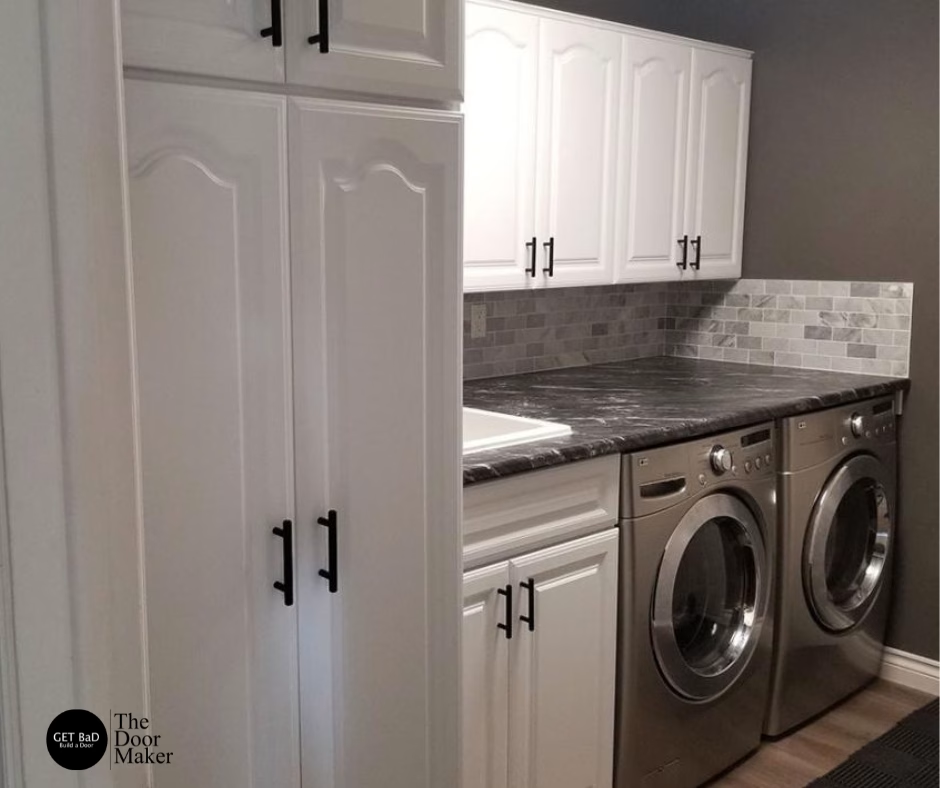
Thermofoil works especially well when the goal is a crisp, durable, low-maintenance finish in a straightforward color. It is a strong fit for simple shaker-inspired updates, flat-panel styles, laundry rooms, bathrooms, rental properties, and family kitchens where easy upkeep matters as much as appearance.
Durability in everyday use
Cabinet fronts live a hard life. They get touched with wet hands, bumped by dishes, splashed with grease, and cleaned over and over. So durability should be judged by real household use, not showroom impressions.
Thermofoil has a smooth outer layer that resists many everyday messes well. It is easy to wipe down, and it does not have the same kind of exposed painted surface that can chip at an edge from impact. For busy households, that can be a real advantage.
But thermofoil has a known weakness: heat. If cabinet fronts are installed too close to ovens, toaster ovens, ranges, or other high-heat areas without proper protection, the vinyl layer can loosen or peel over time. That does not mean thermofoil is a bad product. It means installation conditions matter. In a well-planned layout, it can perform very well. In a high-heat zone, it needs extra attention.
Painted cabinet fronts do not peel in the same way, but they can chip, scratch, or show wear at corners and edges. Darker painted colors may reveal marks more readily, while lighter colors may show grime around high-touch areas. Paint is durable when properly applied, but it is not maintenance-free.
This is one of those cases where neither option is perfect. Thermofoil is often easier to clean and less likely to show small finish inconsistencies. Painted fronts may age more gracefully in some heat-sensitive areas but can be more vulnerable to visible surface wear.
Maintenance and repair expectations
If you want the easier day-to-day finish, thermofoil usually has the edge. A damp cloth and mild cleaner are often enough to keep it looking good. Its non-porous surface is one reason many homeowners like it for kitchens, baths, and other high-use spaces.
Painted fronts require a little more care. You still do not need anything complicated, but harsher cleaning products and repeated scrubbing can wear on the finish. Over time, painted surfaces may also need touch-ups in active households.
That said, touch-up is where painted fronts have an advantage. Small chips or dings can often be repaired or improved. If thermofoil gets damaged, repair is usually less forgiving. Once the surface is compromised, you are more likely to be looking at replacement rather than a simple cosmetic fix.
So the maintenance question is really two questions: Which finish is easier to live with every week, and which one is easier to recover if something goes wrong?
Best uses for each option
If you are refacing cabinets in a busy family kitchen and want a clean update at a strong value, thermofoil is often a smart choice. It works well when you want custom-sized doors, a dependable finish, and straightforward care. For many DIY homeowners, that combination hits the sweet spot.
If you are designing a more tailored kitchen, matching a specific style, or prioritizing premium aesthetics over lowest cost, painted fronts may be the better investment. They are also worth considering for statement spaces where detailed profiles and color control carry more weight.
A lot depends on where the cabinets are located. Bathrooms, offices, mudrooms, and laundry spaces can be excellent candidates for thermofoil. Showcase kitchens, islands, and design-driven built-ins may be better suited to painted fronts if your budget allows.
How to choose with confidence
The most practical way to decide is to stop asking which finish is better in general and ask which one is better for your project. Consider how close your doors will be to heat. Think about who uses the room, how often you cook, and whether you care more about a highly customized appearance or a durable, easy-care finish.
It also helps to think in terms of the full refacing result. Door style, color, cabinet box condition, and accurate sizing all play a part in how professional the finished project feels. A well-measured, well-chosen cabinet front can completely change the look of a room without the cost and disruption of replacing everything.
That is why many homeowners start with samples, compare finishes in their own lighting, and choose based on how they actually live. At TDM – The Door Maker, that kind of decision-making is part of building a cabinet update that looks right, fits right, and holds up to real use.
If you are choosing between thermofoil versus painted cabinet fronts, the best answer is usually the one that balances style, durability, and budget without forcing compromise where it matters most to you. The right cabinet front should not just look good in a photo. It should make the whole room feel finished every time you walk into it.