If you are staring at older cabinet boxes and wondering what cabinet doors fit framed cabinets, the short answer is this: framed cabinets typically take overlay or inset cabinet doors sized around the face frame opening, not just the box itself. That detail matters more than most homeowners expect, because the wrong overlay, hinge choice, or measurement can throw off the entire look of a refacing project.
Framed cabinets are built with a face frame on the front of the cabinet box. That frame creates structure, but it also determines how the new doors sit, swing, and cover the opening. So when you shop for replacement doors, you are not just choosing a style. You are choosing how that style will work with the frame already in place.
What cabinet doors fit framed cabinets best?
In most cases, framed cabinets work best with overlay doors. These doors sit on top of the face frame and cover part of it when closed. This is the most common choice for cabinet refacing because it gives you flexibility in sizing, works with many hinge types, and delivers a clean finished look without changing the cabinet boxes.
Inset doors can also fit framed cabinets, but they are a more exacting option. Instead of laying over the frame, inset doors sit inside the frame opening. That creates a classic furniture-style look, but it requires very precise measuring and tighter installation tolerances. Even small inconsistencies in older cabinet frames can show up quickly with inset doors.
Partial overlay and full overlay are both possibilities on framed cabinets, but they create different visual results. Partial overlay leaves more of the face frame visible. Full overlay covers more of the frame and usually gives a more updated appearance. Neither is universally better. It depends on the style you want, the hinges you plan to use, and how much of the frame you want to see.
Why the face frame changes everything
With frameless cabinets, door sizing is based more directly on the cabinet box opening. Framed cabinets are different because the face frame becomes the reference point. That means your replacement door size has to account for how much overlay you want on each side of the frame opening.
For example, if your cabinet opening measures 12 inches wide by 24 inches high, the correct door size is rarely exactly 12 by 24. If you want a 1/2-inch overlay on all four sides, the finished door would typically be 13 by 25. If you want a larger overlay, the door gets larger too.
This is where many DIY projects go sideways. People measure the old door, reorder the same size, and assume that will work. Sometimes it does. Sometimes it does not, especially if the old doors were undersized, misaligned, or part of a previous repair. Measuring from the actual cabinet opening and face frame is the better approach.
Overlay doors for framed cabinets
Overlay doors are the practical favorite for most refacing projects. They are forgiving, versatile, and available in nearly every style, from simple shaker doors to raised panel and solid MDF designs.
A partial overlay door is a traditional choice and often pairs with visible hinges or standard concealed hinges designed for framed construction. It leaves a border of face frame showing around the door. That can be a good fit if you want to preserve a more classic kitchen look or match existing cabinetry in another part of the home.
A larger overlay creates a more current appearance. It reduces the amount of visible frame and can make older cabinets feel less dated without replacing the cabinet boxes. For many homeowners, this is the sweet spot – updated style, custom fit, and no full tear-out.
Inset doors for framed cabinets
Inset doors absolutely can fit framed cabinets, but they are not the easy path. The door must sit neatly within the frame opening with even reveals on all sides. On older cabinets, face frames are not always perfectly square, and that makes inset more challenging.
If you love the look, it can be worth it. Inset doors have a tailored, high-end feel that works especially well in traditional, transitional, and furniture-inspired spaces. Just know that they require more precision in both manufacturing and installation. If your goal is straightforward refacing with less room for adjustment, overlay is usually the safer choice.
How to tell what your framed cabinets need
The right answer depends on the cabinets you have now and the finish you want when the project is done. Start by looking at three things: the face frame opening, your hinge setup, and the amount of overlay on your existing doors.
If your current doors close over the frame and leave part of the frame visible, you likely have partial overlay doors. If they cover most of the frame, you likely have a larger overlay. If the doors sit flush inside the frame, they are inset.
Hinges offer clues too. Exposed decorative hinges are often used on partial overlay or inset doors. Concealed hinges can work with framed cabinets as well, but the hinge type has to match the overlay and the frame construction.
It is also worth asking whether you want to keep the same look or improve it. Matching your existing setup is one route. Upgrading from a smaller overlay to a larger one is another, and it is often a smart move if you are trying to modernize the room during refacing.
Measuring replacement doors for framed cabinets
When homeowners ask what cabinet doors fit framed cabinets, the real question is usually how to size them correctly. The process is simple once you know the logic behind it.
Measure the width and height of the cabinet opening, not just the old door. Then determine your desired overlay. Add that overlay amount to both sides of the opening width, and to both the top and bottom of the opening height.
So if the opening is 15 inches wide and 28 inches high, and you want a 1/2-inch overlay on all sides, your door size would be 16 by 29. If you want different overlay amounts because of cabinet spacing, adjoining doors, or drawer fronts, those numbers change accordingly.
Double doors need a little more attention. You have to account for the opening, the overlay on the outside edges, and the gap between the two doors in the center. That center reveal affects both appearance and function, especially on framed cabinets where alignment is more visible.
If your kitchen has older cabinets, measure more than one opening. Do not assume every cabinet is identical. Small variations are common, and custom sizing is one of the biggest advantages of ordering doors made for your exact project instead of forcing stock sizes to work.
Style matters, but fit matters first
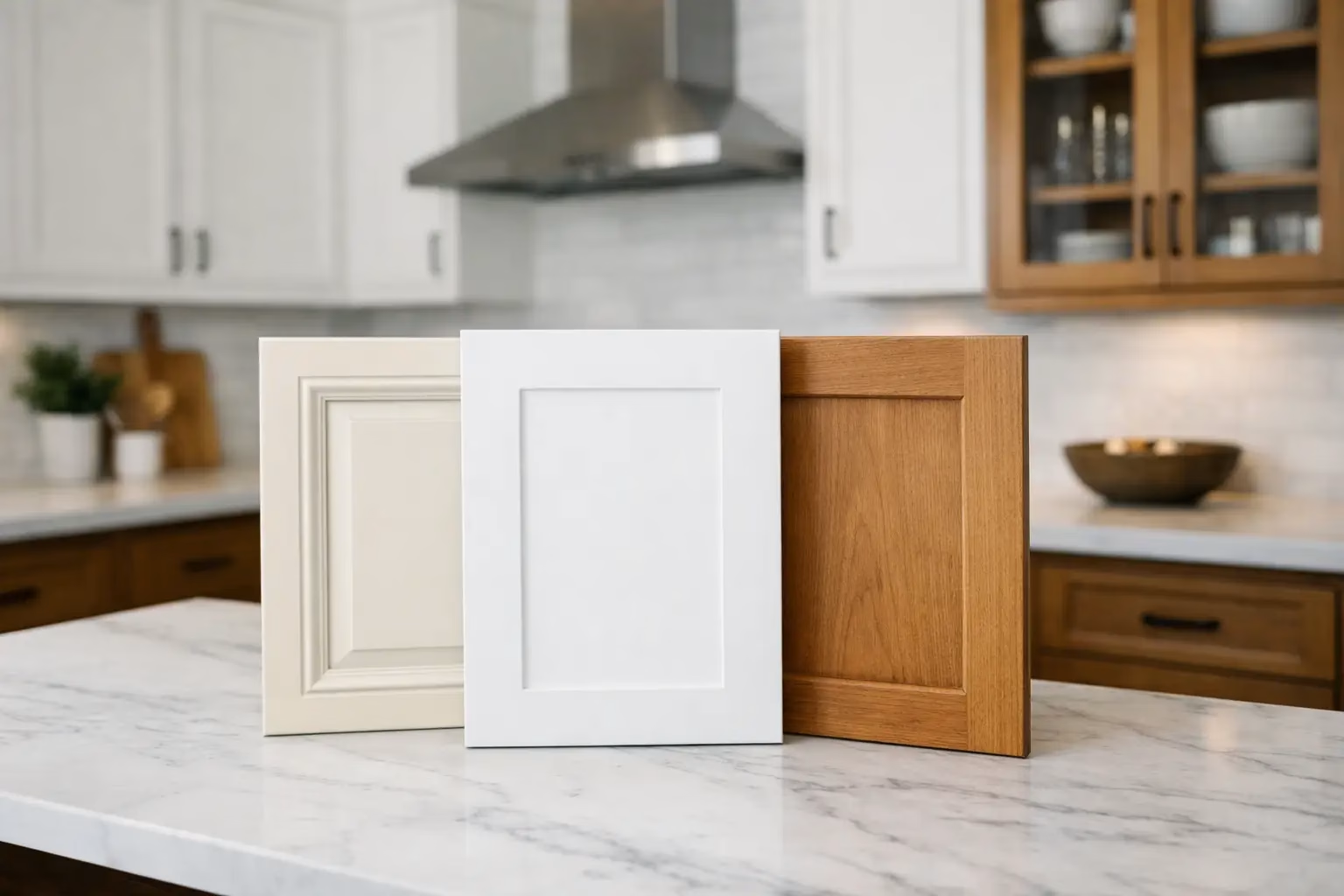
Almost any door style can be made to fit framed cabinets if the sizing and construction are correct. Shaker, raised panel, recessed panel, slab, and beadboard styles can all work beautifully on framed cabinet boxes.
The bigger decision is how the style interacts with the overlay. A slim shaker profile with a larger overlay often feels clean and current. A more detailed raised panel with partial overlay leans traditional. Inset pairs well with both classic shaker and formal profiles, but only if the cabinet frames are suitable for that level of precision.
This is also where custom manufacturing makes a real difference. Older homes rarely follow standard dimensions perfectly, and refacing works best when doors are built to your measurements rather than selected from the closest available size. That is one reason many DIY homeowners choose custom replacement doors from specialists like TDM – The Door Maker instead of trying to adapt big-box options.
Common mistakes to avoid
The most common mistake is ordering based on old door size alone. Another is choosing hinges before settling on overlay, when the two decisions should work together. Homeowners also run into trouble when they ignore face frame irregularities, especially if they are aiming for inset doors.
There is also a visual mistake that shows up late in the process: mixing overlays without planning the overall look. One cabinet with a larger overlay beside another with a smaller one can make the run look inconsistent, even when each door fits individually.
A better approach is to decide on the finished appearance first, then measure and order accordingly. That gives you a result that looks intentional, not patched together.
The right fit is the one built for your cabinets
Framed cabinets are not limiting, but they are specific. They usually work best with overlay doors, can support inset doors when conditions are right, and always depend on careful measurement around the face frame. Once that part is handled correctly, you can focus on the more satisfying decisions like style, color, and the overall transformation.
A good refacing project does not start with tearing everything out. It starts with doors that fit the cabinets you already have – and fit them well enough to make the whole room feel new.