
Most custom cabinet doors and drawer fronts for refacing projects ship within 4–8 weeks for standard finished orders, or as few as 1–3 weeks for raw, unfinished doors. Highly detailed finishes or complex profiles can push that to 8+ weeks. The biggest single causes of longer waits are finishing and curing time, design complexity, and holiday shop shutdowns.
Three things you can do right now to protect your schedule:
- Confirm your measurements and approve your design as quickly as possible — orders don’t enter production until both are finalized and payment clears.
- Choose a standard finish or substrate rather than a custom color match; it’s one of the most reliable ways to stay in the shorter range.
- Request a written production schedule from your supplier before you place the order.
Key Takeaways
Finishing time is the single biggest driver of custom cabinet door lead times — choosing a standard finish is the most reliable way to stay within the shorter range.
| Point | Details |
|---|---|
| Realistic lead-time range | Standard finished custom doors typically take 4–8 weeks; raw/unfinished doors often ship in 1–3 weeks. |
| Finishing drives the timeline | Paint and coating curing adds weeks that fabrication alone does not; ask your supplier to separate these windows. |
| Order samples early | Request color swatches and sample doors before final signoff to avoid rework and remakes. |
| Get a written production schedule | Verbal estimates are a red flag; a written schedule with an estimated ship date is the minimum standard. |
| Tdm-thedoormaker reduces uncertainty | The online configurator and instant checkout eliminate confirmation delays and secure your production slot faster. |
Table of Contents
- What custom door lead times actually look like in Canada
- Why some orders take much longer than others
- What happens between your order and your installation day
- Nine ways to shorten your wait without sacrificing quality
- When to place your order relative to your renovation timeline
- Questions to ask suppliers and red flags to watch for
- How Tdm-thedoormaker’s process reduces lead-time uncertainty
- The part of lead times most buyers underestimate
- Get a faster, predictable lead time with Tdm-thedoormaker
- Sources
What custom door lead times actually look like in Canada
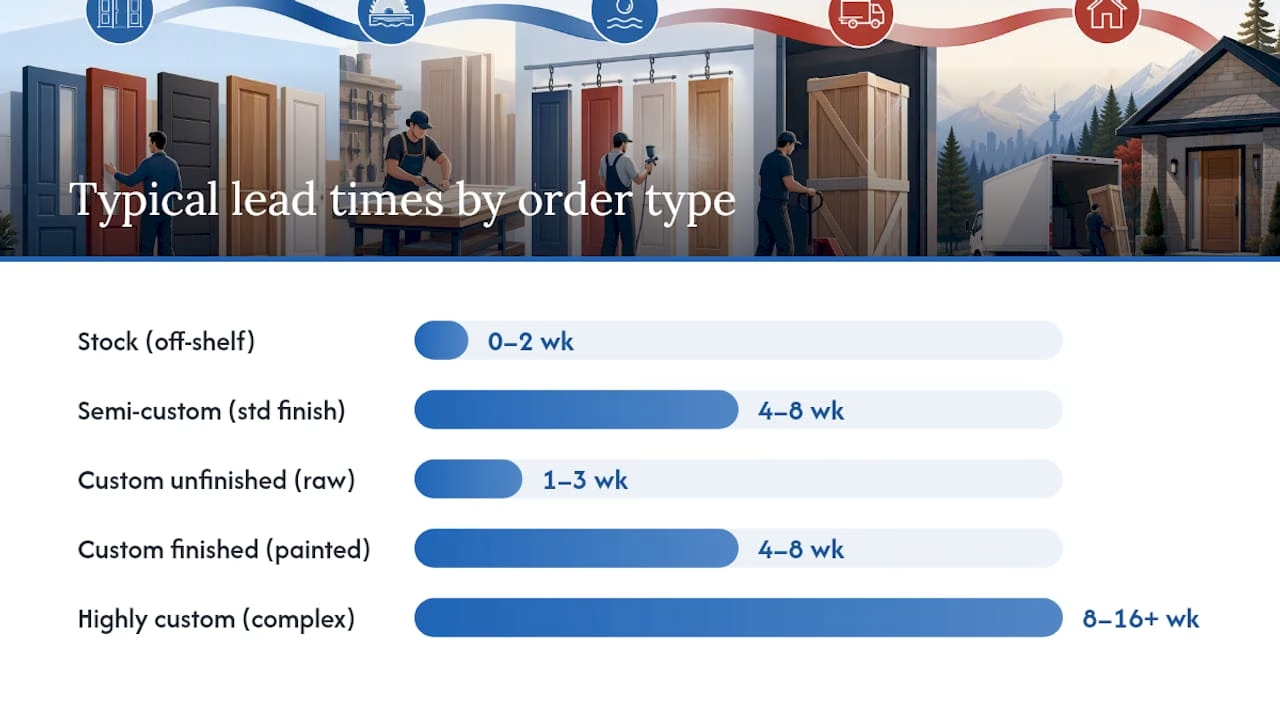
Understanding the realistic range for your order type is the foundation of any renovation schedule. According to Quay Construction, stock cabinets often arrive in 0–2 weeks, semi-custom in 4–8 weeks, and fully custom orders typically 8–16+ weeks, with local manufacturing capacity and project complexity determining where in that range your order lands.
| Order type | Typical range | Key driver |
|---|---|---|
| Stock / pre-made | 0–2 weeks | Off-the-shelf inventory |
| Semi-custom (standard sizes, limited finishes) | 4–8 weeks | Production queue + standard finishing |
| Custom unfinished / raw | 1–3 weeks | Cutting and machining only |
| Custom finished (paint, stain, thermofoil) | 4–8 weeks | Finishing coats + curing |
| Highly custom (complex profiles, rare substrates, color-matched finishes) | 8–16+ weeks | Hand-finishing, tooling, sourcing |
For refacing projects specifically, most Canadian homeowners are ordering finished, custom-sized doors and drawer fronts, which puts the realistic window at 4–8 weeks under normal conditions. KitchensByRemote notes that semi-custom lead times commonly run 6–12 weeks and custom 10–16+ weeks, and advises building your project schedule around cabinet delivery rather than the other way around.
A few factors that push Canadian orders toward the upper end:
- Regional manufacturing capacity varies; smaller shops in less-populated provinces may have longer queues.
- Finished doors require multiple coats with drying windows between each, adding weeks that raw doors skip entirely.
- Raw cabinet doors typically ship within about 7–15 working days, while finished orders carry multi-week finishing windows on top of that.
Why some orders take much longer than others
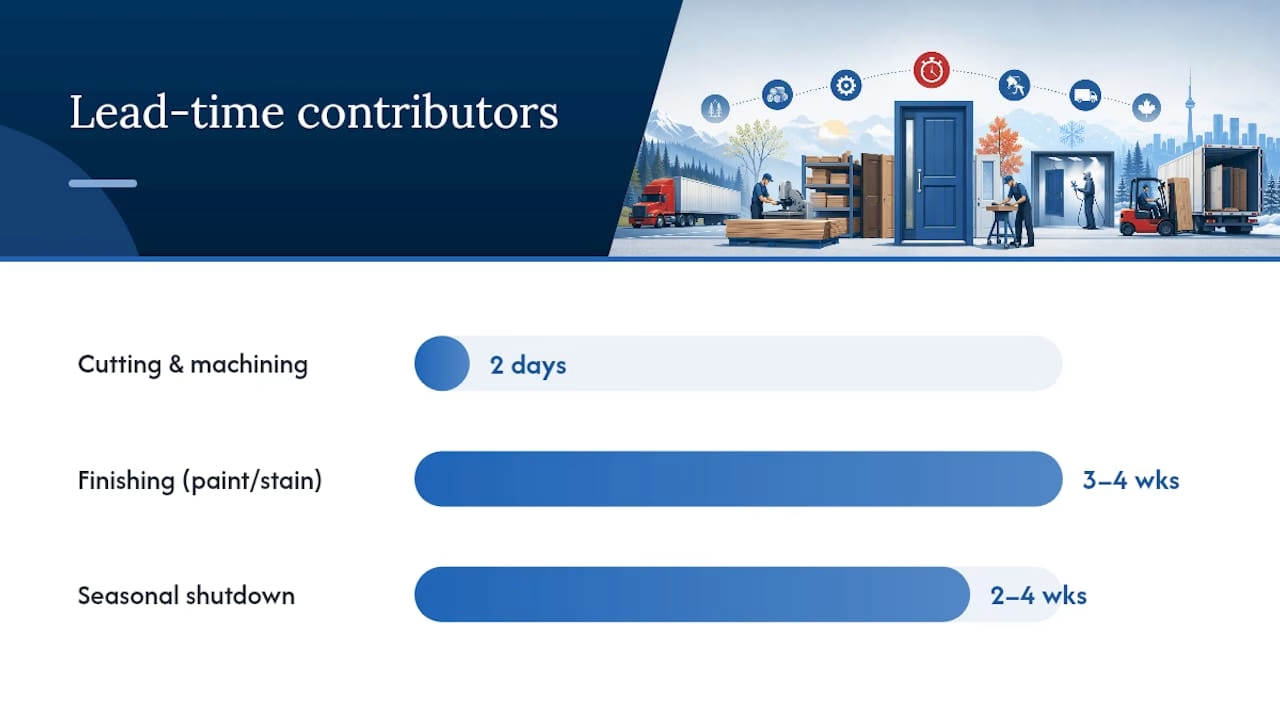
Finishing is the primary bottleneck in most custom cabinet door production schedules. Paint, stain, and protective coatings each require specific drying and curing windows between coats, and a custom color-match request adds another layer of complexity on top of that. A door that takes two days to cut and machine can spend three to four weeks in the finishing stage alone.
Design complexity is the second major driver. Wide rails, specialty edge profiles, multi-piece raised-panel doors, inset construction, and glass inserts all require additional tooling setup and, in many cases, hand-finishing work that automation can’t fully replace. Advanced automation can make some custom orders nearly as quick as semi-custom ones, but the real time cost sits in hand-finishing and complex tool changes.
Material availability matters too. Common substrates like MDF and standard plywood move quickly. Rare veneers, specialty laminates, or unusual core materials may need to be sourced before production can even begin.
Queue time is often the most misunderstood factor. Orders enter active production only after design confirmation, deposit payment, and material availability are all confirmed. Many buyers assume production starts the moment they pay, but the clock doesn’t actually start until all three conditions are met.
Seasonal shutdowns add hidden risk. Missing an ordering window in November can delay shipments into the new year, since many Canadian shops pause production for 2–4 weeks around Christmas for maintenance and scheduled downtime.
Pro Tip: The custom features that carry the biggest time premium are hand-applied finishes and multi-piece door profiles. If your timeline is tight, a flat-center or simple Shaker profile in a standard painted finish will almost always ship faster than a raised-panel door with a custom stain.
What happens between your order and your installation day
Knowing which steps are sequential and which can overlap helps you plan other trades around your cabinet delivery.
- Measurement and confirmation (0–3 days): You finalize dimensions and submit them for review. Errors here cause the most expensive delays later.
- Design approval and sample/finish signoff (2–7 days): The supplier confirms your style, finish, and sizing. If you haven’t ordered samples yet, this step stalls until you do.
- Deposit/payment and order confirmation (1–2 days): Payment clears and the order enters the production queue. This is the actual production start trigger, not the moment you submit the order.
- Queue time and material sourcing (1–5 days, can run in parallel with other prep): The shop schedules your job and confirms substrate availability.
- Cutting and fabrication (1–2 weeks): CNC cutting, machining, and assembly of door components.
- Finishing (1–4 weeks depending on finish type): Primer, base coats, color coats, and topcoat, each with required curing windows between applications.
- Quality control (1–3 days): Fit and finish inspection. Remakes are uncommon but do happen, and they add hidden days to the schedule.
- Packing and shipping (3–10 days): Freight transit within Canada varies by distance and carrier.
- On-site delivery and verification (1 day): Inspect every door and drawer front before scheduling your installer.
- Installation: Schedule only after on-site verification is complete.
Finishing is strictly sequential — each coat must cure before the next is applied. Sourcing and queue scheduling can overlap with your own prep work, so use that window to complete demo, electrical, and plumbing rough-ins.
Nine ways to shorten your wait without sacrificing quality
Getting your order through the shop faster is mostly about removing friction at every handoff point.
- Choose standard finishes. Painted MDF in a catalog color ships faster than a custom color-matched stain on a rare veneer. Browsing standard cabinet color options early in your planning narrows your choices to finishes that move quickly.
- Submit complete, accurate measurements immediately. Incomplete or corrected measurements push your order to the back of the queue. Use a supplier’s measurement guide and double-check before submitting.
- Order samples and swatches before final signoff. Waiting until after you’ve placed the order to evaluate a finish color is one of the most common causes of rework. Ordering cabinet door sample colors early eliminates that risk.
- Sign approvals and clear payment without delay. Proactive communication and cleared deposits are often the single fastest way to eliminate avoidable delays, because the production clock doesn’t start until both are done.
- Consolidate your order. One larger order is easier for a shop to schedule than multiple small ones. Batch all your doors and drawer fronts into a single submission.
- Ask about rush-order availability. Some suppliers offer expedited production for an additional fee, which can shorten delivery to a few working days for eligible styles. Availability depends on the production schedule and door type.
- Prefer local manufacturing. A Canadian-made door avoids cross-border shipping delays and customs clearance windows that can add unpredictable days to an otherwise tight schedule.
- Schedule installers after delivery, not before. Booking your installer for a date before your doors arrive is the most common cause of costly rescheduling.
- Batch across jobs if you’re a contractor. Placing a larger consolidated order across multiple projects can improve your priority in a supplier’s production queue.
Pro Tip: Online order flows that accept payment immediately and generate an instant order confirmation can save 1–2 working days compared to suppliers who require manual invoicing and bank transfer confirmation before entering your job into the queue.
When to place your order relative to your renovation timeline
Suppliers recommend ordering standard custom sizes 4–6 weeks ahead and allowing 6–8+ weeks for finished or highly customized doors. For a refacing project, that means your door order should go in before demo begins, not after.
Minimum ordering windows by complexity:
- Simple unfinished doors: 2–3 weeks before installation day.
- Standard finished doors (painted or thermofoil): 4–6 weeks minimum.
- Complex custom finishes or specialty profiles: 7–8+ weeks.
For contractors, building the project schedule around cabinet lead time rather than fitting doors into a pre-existing schedule is the clearest way to avoid installer idle time.
Seasonal dos and don’ts:
- Place fall and winter orders by early November to clear the Christmas shutdown window.
- Do not assume a supplier’s stated lead time accounts for holiday pauses — ask explicitly.
- Do schedule demo and rough-in trades during the door production window; that time is not dead time.
- Do not book flooring or countertop installation until doors are on-site and verified.
- For DIY kitchen renovation planning, treat the door order date as the anchor for every other milestone.
Questions to ask suppliers and red flags to watch for
Before you commit to a supplier, these questions will tell you a lot about how reliably they’ll hit their stated window.
- Do you provide a written production schedule with estimated ship dates?
- Are sample doors and color swatches available before I finalize my order?
- What triggers a remake, and how does that affect my delivery date?
- What are your deposit and payment terms, and when does production actually start?
- Do you schedule shipments or confirm delivery windows in advance?
- Do you have seasonal shutdowns or planned capacity limits I should know about?
Red flags that predict delays: vague verbal-only estimates with no written confirmation; no sample or swatch policy; unclear deposit or refund terms; no documented QC process; refusal to commit to an estimated ship date even after payment clears.
Pro Tip: Ask your supplier directly: “What’s your contingency if my order misses its production slot?” A supplier with a clear answer has thought through their scheduling. One who deflects probably hasn’t.
How Tdm-thedoormaker’s process reduces lead-time uncertainty
Tdm-thedoormaker’s three-step process — measure, design, order — is built to eliminate the confirmation delays that push most custom door orders to the back of the queue. The online configurator walks you through sizing, style selection, and finish choice in a single session, and the checkout flow accepts payment immediately, so your order enters production without the 1–2 day lag that manual invoicing creates.
The trust signals you should expect from any serious supplier are all present here:
- A written production schedule with your order confirmation.
- Sample doors and color swatches available before you finalize.
- Clear deposit and payment terms stated upfront, with no ambiguity about when production starts.
- Documented QC and remake procedures so you know what happens if an issue is found.
Tdm-thedoormaker stocks common substrates and offers over 130 colors and finishes in standardized options, which keeps finishing windows predictable. Precision sizing to 1/10,000" means fit issues at installation are rare, reducing the likelihood of remakes.
Customers consistently report that the combination of an accurate online configurator and fast order confirmation made their refacing project easier to schedule than they expected — doors arrived on time and fit correctly the first time.
For a firm lead-time estimate on your specific door style and finish, configure and order your custom cabinet doors directly through the Tdm-thedoormaker online store.
The part of lead times most buyers underestimate
The finishing window is where most renovation schedules quietly fall apart, and it’s the part buyers consistently underestimate because it’s invisible. You place an order, you wait, and somewhere in that wait, three or four coats of paint are being applied and cured in sequence, each one adding days you never see on a calendar.
The practical implication: when a supplier quotes you a lead time, ask specifically how much of that window is finishing time versus fabrication time. A shop that can articulate that breakdown has a real production schedule. One that gives you a single number without explanation probably doesn’t.
The other underestimated factor is on-site verification. Scheduling your installer before your doors arrive is a bet that everything went perfectly, from the first coat of primer to the last kilometer of freight. Most of the time it does. But when it doesn’t, the cost of rescheduling a trade is almost always higher than the cost of a few extra days of patience.
Get a faster, predictable lead time with Tdm-thedoormaker
The quickest path to an accurate lead-time estimate is also the simplest: use Tdm-thedoormaker’s online configurator to select your door style, choose from the standard finish library, and complete checkout in one session. Standard finishes and common substrates ship faster than custom color-matched orders, and the instant order confirmation means your production slot is secured without the back-and-forth that delays most custom door orders by days.
Order replacement cabinet drawer fronts or full door sets through the Tdm-thedoormaker store, or configure your custom cabinet doors online to get a firm lead-time quote for your specific style and finish today.
Sources
- What Are Cutting Edge’s Lead Times for Cabinet Doors?
- Kitchen cabinet lead times — Quay Construction
- Cabinet lead time — what it means and how to plan around it