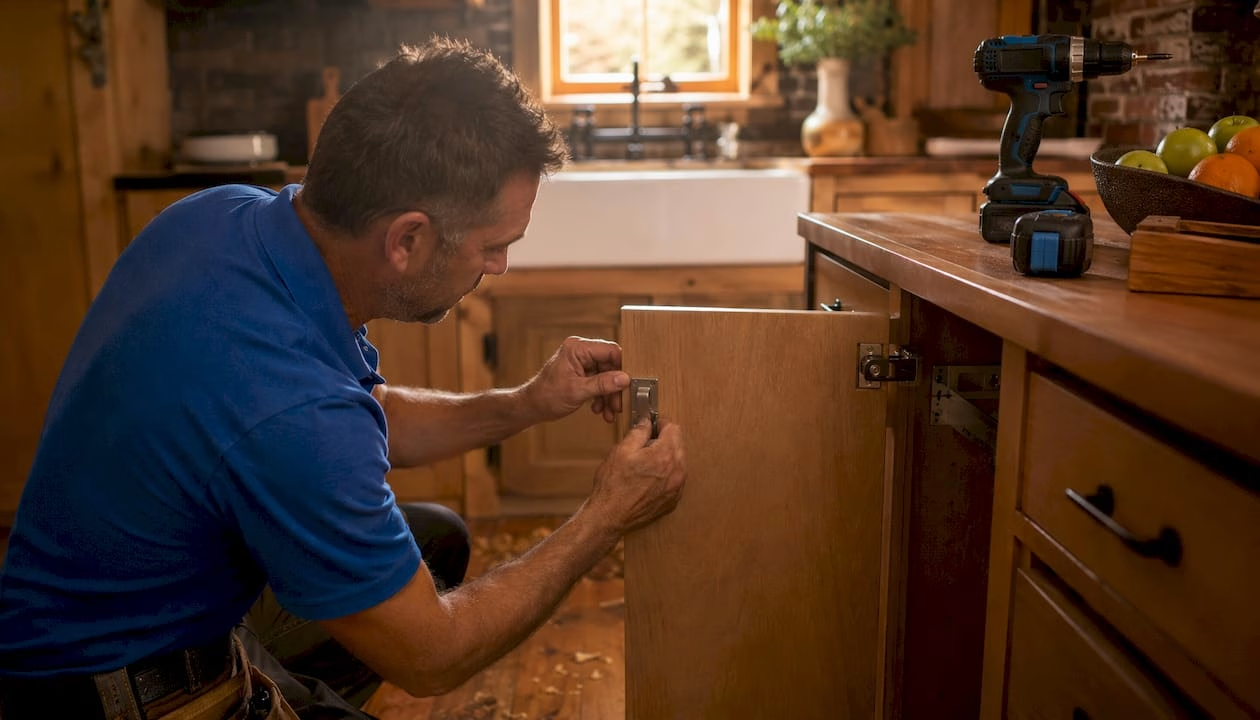
Full overlay cabinet hinges are the go-to hardware for frameless cabinets, where the door panel completely covers the front edge of the cabinet box. Unlike half overlay cabinet hinges designed for face frame cabinets, full overlay hinges create a flush, uninterrupted surface across the cabinet front. The result is a clean, modern look that has made frameless construction the dominant choice in contemporary kitchen renovations.
Here is what sets full overlay hinges apart at a glance:
- Door coverage: The door fully covers the cabinet box edge, leaving no visible frame gap
- Cabinet type: Designed for frameless (European-style) construction
- Standard cup size: 35 mm diameter borehole, the industry standard for concealed European hinges
- Mounting: Concealed inside the cabinet when closed, preserving a sleek exterior
- Contrast with half overlay: A 1/2 overlay hinge leaves the center stile of a face frame cabinet exposed between adjacent doors, while a full overlay hinge covers the entire edge
If you are upgrading a kitchen or bathroom with frameless cabinets, full overlay hinges are the correct choice. Getting this right from the start saves you from mismatched gaps, misaligned doors, and a frustrating reinstall.
What makes full overlay cabinet hinges worth the upgrade?
The features built into modern full overlay hinges go well beyond simply holding a door open. Soft-close mechanisms, multi-directional adjustability, and thoughtful mounting options combine to make these hinges genuinely functional hardware, not just a commodity part.
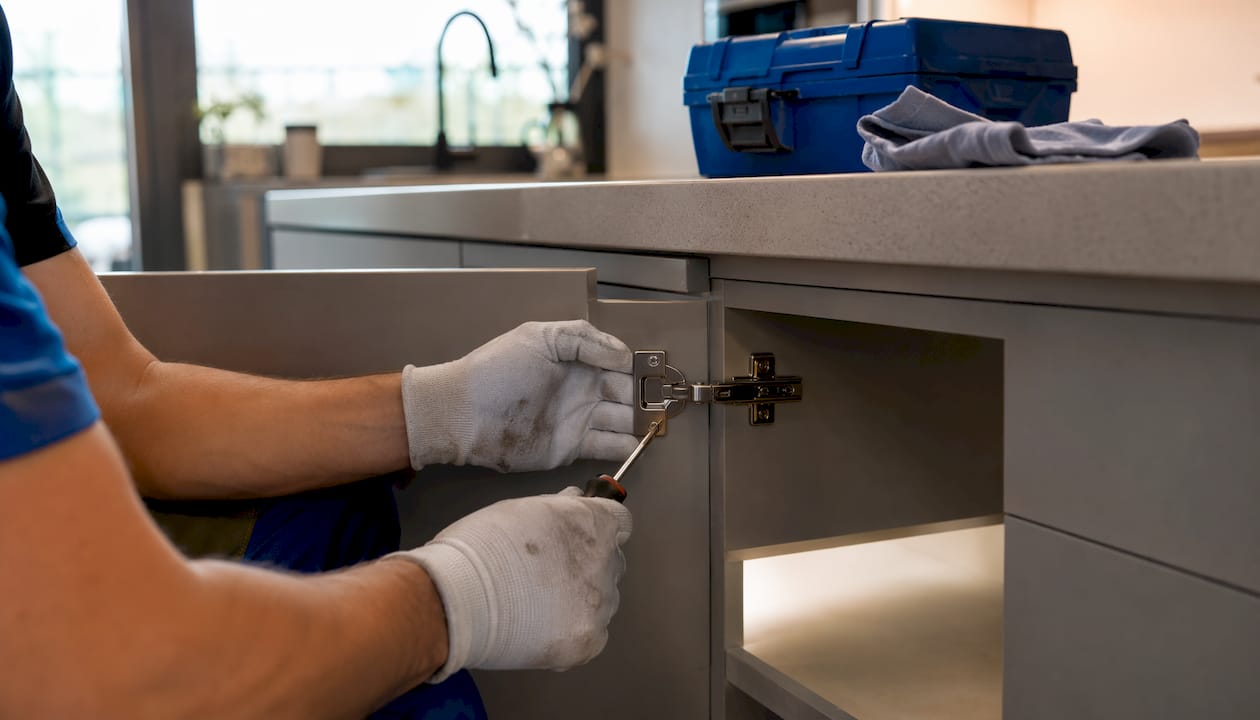
Soft-close technology is now a standard expectation in quality kitchen refacing. The integrated damper in the hinge arm slows the door in the final inch of travel, so it closes quietly every time. Soft-close reduces noise and prevents the repeated impact that wears down door edges, hinge screws, and cabinet box corners over years of daily use. Some hinges offer an on/off adjustment for the closing speed, letting you dial in behavior based on door weight and personal preference.
3D or 6-way adjustability is the feature that separates a professional-looking installation from a frustrating one. Modern concealed hinges allow you to adjust doors in six directions: horizontally, vertically, in depth, and with tilt correction. That means you can fine-tune every door after mounting without removing it, achieving consistent gaps across an entire run of cabinets.
Key features to evaluate when shopping:
- Soft-close with on/off control: Lets you customize closing speed for heavy or lightweight doors
- 6-way cam adjustment: Covers height, side, depth, and tilt for precise alignment
- Opening angle: Most full overlay hinges open to 110°; some specialty versions reach 165°
- Door thickness range: Standard compatibility runs from 15 mm to 24 mm
- Material: Galvanized steel or nickel-plated steel for corrosion resistance and durability
- Finish options: Nickel, matte black, brushed brass, and chrome to match your hardware pulls
Pro Tip: When choosing between clip-on and screw-on mounting plates, clip-on baseplates are worth the slight extra cost. They let you snap doors on and off without tools, which makes future adjustments and cleaning far less tedious.
Where full overlay hinges work best
Full overlay hinges belong on frameless cabinets, and that covers a wider range of applications than most homeowners initially realize. The frameless construction style, sometimes called European-style cabinetry, builds the box without a face frame attached to the front. The door itself becomes the finished surface, and the hinge must support that fully covered look.
Common applications where full overlay hinges perform well:
- Kitchen cabinets: Upper and lower runs where a seamless, flat-front appearance is the goal
- Bathroom vanities: Frameless vanity boxes benefit from the clean edge coverage and moisture-resistant finishes
- Pantry and utility cabinets: Heavier doors in these spaces benefit from soft-close damping and durable steel construction
- Built-in furniture: Bookcases, media units, and laundry room cabinetry built without face frames
- Custom cabinetry: Any project where the door panel is sized to cover the full cabinet opening edge
The aesthetic advantage is real. European concealed hinges produce a notably narrower door-to-door gap compared to compact face frame hinges, contributing to a higher-end appearance. That tighter gap is what gives frameless kitchens their high-end, furniture-like appearance.
Full overlay hinges are not the right fit when your cabinets have a face frame. In that case, a 1/2 overlay hinge or inset hinge is the correct match. Forcing a full overlay hinge onto a face frame cabinet causes the door to sit proud of the frame, creating uneven gaps and a door that may not close properly. Matching the hinge type to the cabinet construction is the single most important compatibility decision you will make.
How to choose the right full overlay hinges for your project
Choosing correctly comes down to four things: cabinet type, overlay measurement, door thickness, and the features you actually need. Getting any one of these wrong means buying again.
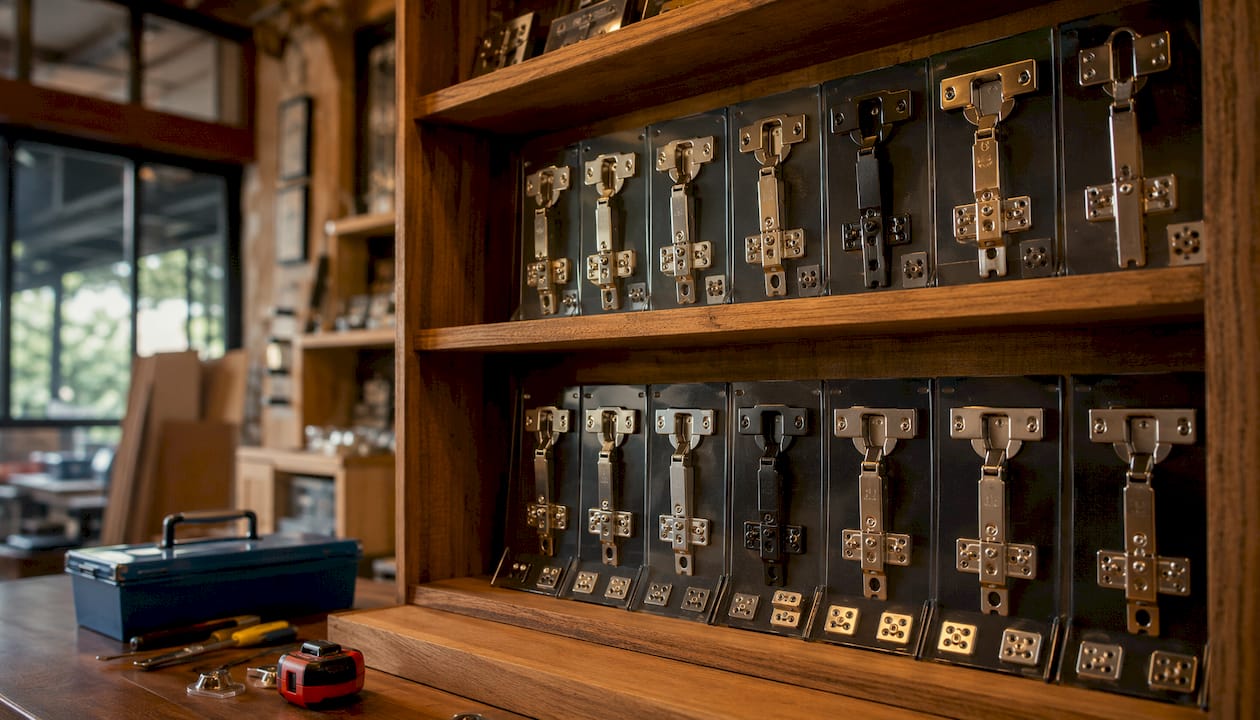
Start with cabinet type. Before you order anything, confirm whether your cabinets are frameless or face frame. Mixing hinge types with the wrong cabinet construction prevents proper door mounting and creates overlay gap problems that no amount of adjustment will fix.
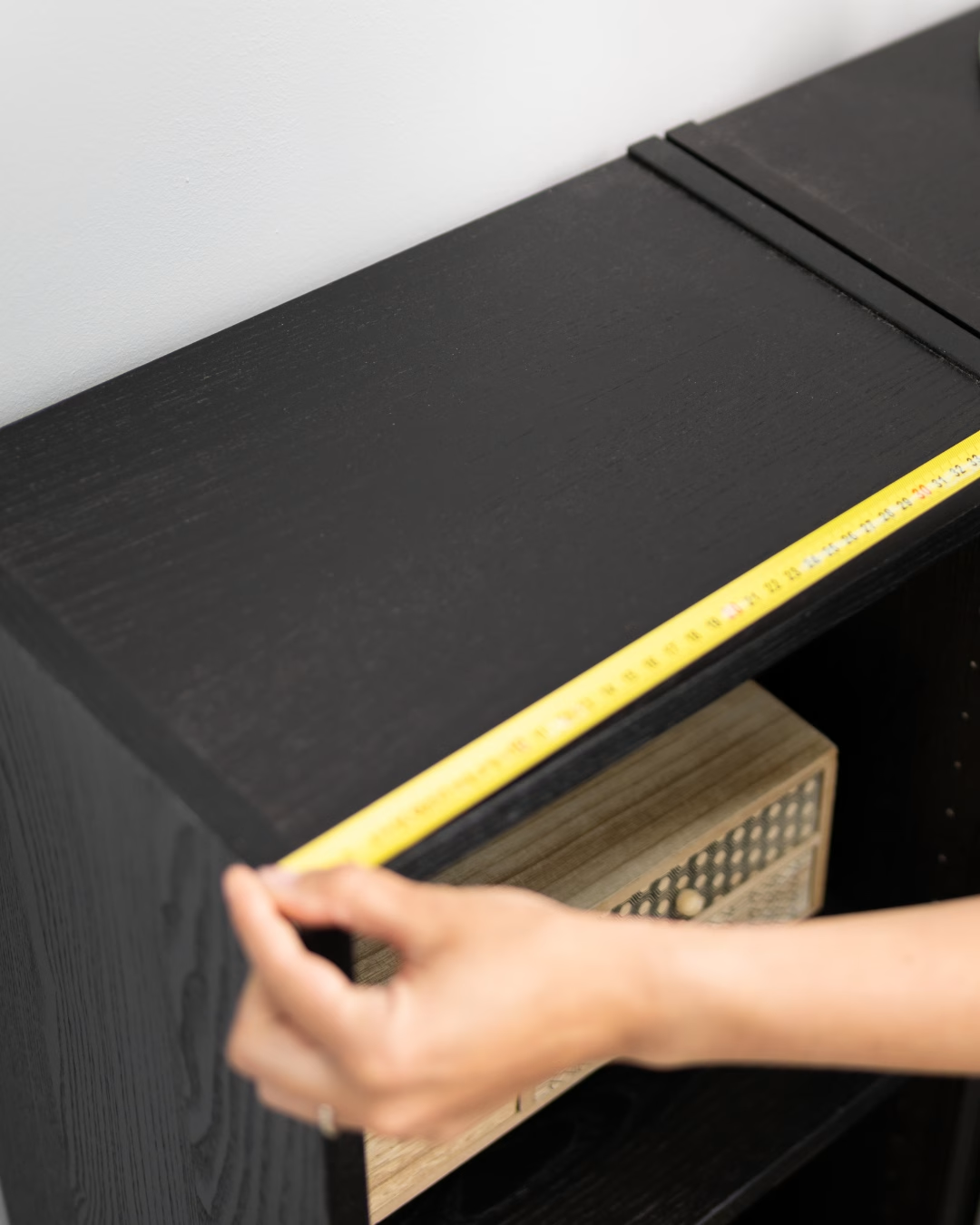
Measure your overlay carefully. Full overlay means the door covers the entire front edge of the cabinet box. If you are retrofitting existing cabinets, measure the actual overlap of the door over the cabinet edge. A hinge rated for 1/2-inch overlay may only apply to the top and bottom of the door, while the sides overlay by a full inch, so precise measurement before purchase prevents a mismatch.
Key selection criteria:
- Cup hole diameter: Confirm your door material accepts a 35 mm bore; this is the universal standard for concealed European hinges
- Door thickness: Most full overlay hinges accommodate 15 mm to 24 mm door thickness; verify your doors fall in that range
- Soft-close preference: Decide whether you want soft-close only, self-close only, or a combination with on/off speed control
- Mounting plate type: Clip-on for easy future removal; screw-on for a more fixed installation
- Finish: Match to your existing pulls and knobs for a cohesive look
- Opening angle: 110° covers most standard cabinets; go wider if doors are near walls or appliances
Pro Tip: Before purchasing, check whether your cabinet box is plywood, MDF, or particleboard. Particleboard holds hinge screws less securely, so you may need longer screws or a reinforcing insert at the mounting plate location.
Step-by-step installation guide for full overlay hinges
Installing concealed full overlay hinges is a manageable DIY project when you work through it methodically. The most common mistakes happen at the measuring and drilling stage, so take your time there.
What you need before you start:
- 35 mm Forstner bit and drill
- Drilling template or jig (most hinge manufacturers include one, or sell it separately)
- Screwdriver or drill with appropriate bit
- Tape measure and pencil
- Level or straightedge
Step 1: Mark the cup hole location. The standard boring distance from the door edge to the center of the cup hole is 37 mm, though some hinge models specify 35 mm or 38 mm. Check your hinge’s spec sheet. Mark the center point on the back face of the door, typically 3–5 inches from the top and bottom edges.
Step 2: Drill the 35 mm cup hole. Use a 35 mm Forstner bit at a consistent depth, usually 12–13 mm. A drilling jig keeps the bit perpendicular and prevents tearout on the door face. Drill slowly and back out frequently to clear chips.
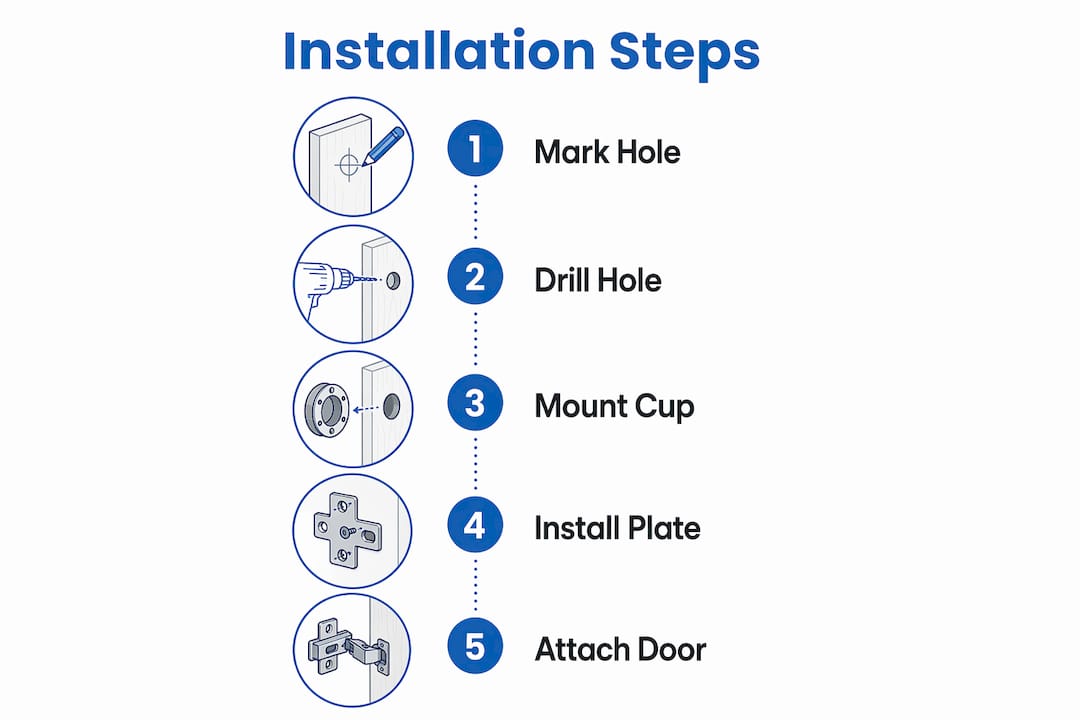
Step 3: Mount the hinge cup. Press the hinge cup into the bore hole and secure it with the provided screws. The arm should fold flat against the door back when closed.
Step 4: Install the mounting plate. Attach the baseplate to the interior side wall of the cabinet box at the correct height. Most plates have slotted holes for initial positioning before final tightening.
Step 5: Attach the door. Clip or screw the hinge arm onto the mounting plate. For clip-on systems, you simply press until you hear a click.
Step 6: Adjust for alignment. Use the 6-way adjustability screws to dial in the door position. Adjust height first, then side-to-side, then depth. Check the gap between adjacent doors with a consistent spacer, such as a folded piece of cardboard.
Common pitfalls to avoid:
- Drilling the cup hole too deep causes the hinge arm to sit proud and prevents the door from closing flush
- Incorrect overlay measurement leads to doors that overlap each other or leave a gap at the cabinet edge
- Skipping the drilling jig results in angled holes that misalign the hinge arm
- Over-tightening mounting plate screws in particleboard strips the hole; use a hand screwdriver for final tightening
Pro Tip: Video tutorials from hinge manufacturers walk through the drilling and adjustment steps in real time. Watching one before you pick up the drill is worth 10 minutes of your time, especially if this is your first concealed hinge installation.
Understanding the main cabinet hinge types
Knowing the difference between hinge types helps you buy the right hardware the first time and makes it easier to identify what you already have when replacing worn hinges.
Full overlay hinges are built for frameless cabinets. The door covers the entire front edge of the cabinet box, and the hinge sits fully concealed inside when the door is closed. This is the style behind the flat-front, handle-free kitchens common in contemporary design.
Half overlay hinges (1/2 overlay hinges) are designed for face frame cabinets where two doors share a center stile. Each door overlays the stile by approximately 1/2 inch, leaving the stile visible between the doors. These hinges are the standard in traditional American kitchen cabinetry and are not interchangeable with full overlay versions without modification.
Inset hinges position the door inside the cabinet opening, flush with the face frame. The door does not overlay the frame at all. Inset installations require the most precise fitting and are common in furniture-style cabinetry and period-appropriate kitchen designs.
A quick comparison:
| Hinge type | Cabinet style | Door position | Gap appearance |
|---|---|---|---|
| Full overlay | Frameless | Covers full box edge | 2 mm between doors |
| Half overlay (1/2 overlay) | Face frame | Covers half the stile | Stile visible between doors |
| Inset | Face frame | Sits inside opening | Frame fully visible |
When replacing existing hinges, look at how the door sits relative to the cabinet frame. If the door covers the entire front edge with no frame showing, you have a full overlay setup. If you can see a strip of wood between adjacent doors, that is a face frame cabinet with partial overlay hinges. Identifying this correctly before you order saves a return trip to the hardware store.
How Tdm-thedoormaker can take your cabinet upgrade further
Replacing hinges is often the first step in a larger cabinet refresh, and new hardware alone can only do so much. If your cabinet doors are dated, damaged, or simply the wrong style for the look you want, Tdm-thedoormaker offers a practical path forward through custom cabinet door refacing.
The process works in three steps: measure your existing openings, design your doors using the online configurator, and place your order. Tdm-thedoormaker cuts every door to 1/10,000-inch precision, so the fit against your new full overlay hinges is exact. You choose from over 30 styles and 130+ colors and finishes, from flat-panel slab doors that suit frameless cabinets perfectly to shaker profiles and raised-panel options.
The cost advantage over a full cabinet replacement is real. You keep the existing cabinet boxes, replace only the doors and drawer fronts, and update the hardware at the same time. The result looks like a full renovation at a fraction of the price. Tdm-thedoormaker also offers add-on hinge hole boring, so your new doors arrive ready to accept the 35 mm concealed hinges you have already selected.
Pairing new doors with quality full overlay hinges and soft-close mechanisms gives you a kitchen or bathroom that functions as well as it looks. If you want to see how the door styles and colors work in your space before committing, Tdm-thedoormaker offers sample doors and color swatches. You can also explore the full cabinet refacing versus replacement comparison to decide which approach fits your budget and timeline.
Key Takeaways
Full overlay cabinet hinges are the correct hardware for frameless cabinets, and choosing the right type, measuring accurately, and pairing them with quality doors produces a durable, professional result.
| Point | Details |
|---|---|
| Match hinge to cabinet type | Full overlay hinges only work correctly on frameless cabinets; face frame cabinets require half overlay or inset hinges. |
| Standard cup size is 35 mm | All modern concealed European hinges use a 35 mm bore hole; confirm your drill bit and jig match before starting. |
| 6-way adjustability simplifies installation | Height, side, depth, and tilt adjustments let you correct door alignment after mounting without removing the door. |
| Clip-on baseplates save maintenance time | Clip-on mounting plates allow tool-free door removal, making future adjustments and cleaning much easier. |
| Pair new hinges with new doors for best results | Combining full overlay hinges with custom-sized replacement doors from Tdm-thedoormaker delivers a complete, cohesive upgrade. |