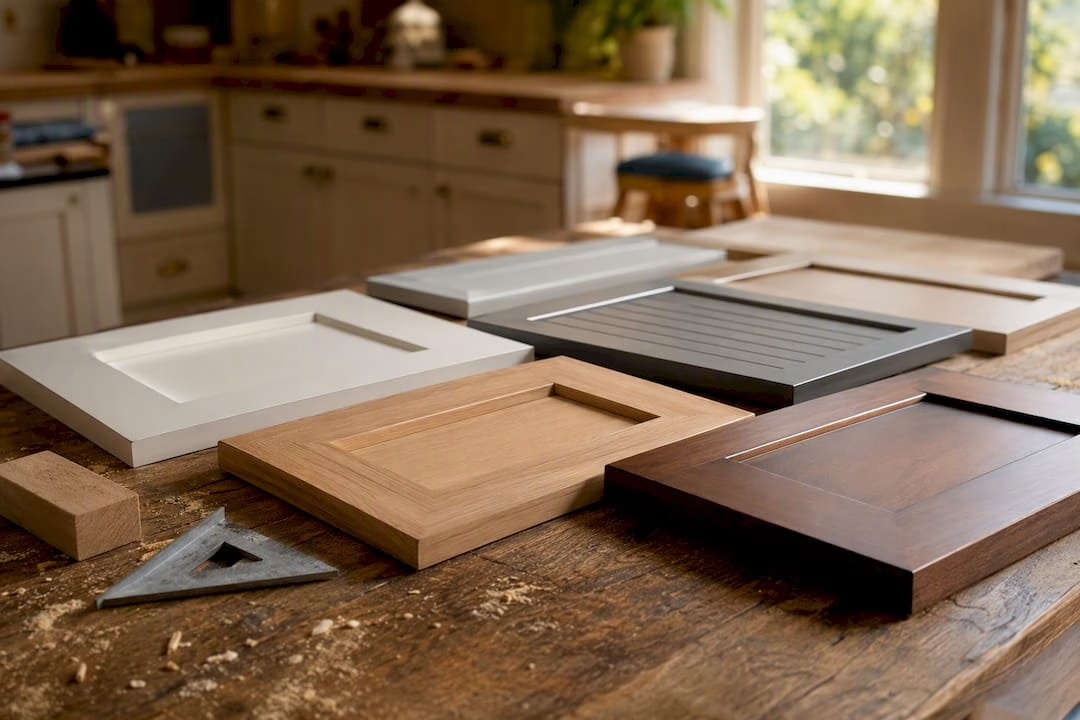
Custom cabinet doors in Canada typically run from roughly $7 to $15 per square foot for raw MDF materials, with finishing adding another $10 to $53 per square foot depending on paint or stain complexity. A standard kitchen door often lands in a wide price range when finished, influenced by size, material, and finish type, though quotes vary based on whether shipping and minimums are included. Get exact measurements before requesting quotes so the numbers you’re comparing actually mean the same thing.
TL;DR:
- Raw MDF cabinet doors typically cost between $7 and $15 per square foot, with finishing adding $10 to $53 per square foot depending on complexity.
- Material prices increase from MDF to plywood and solid wood, with solid options like maple or oak exceeding $20 to $30 per square foot before finishing.
- Larger orders generally qualify for better per-square-foot rates, but minimum door sizes and freight costs can significantly raise overall prices.
- Choosing simpler styles and standard finishes can reduce costs, while accurate measurements and itemized quotes prevent unexpected expenses.
- Canadian-made doors usually come with a slightly higher price but offer benefits like shorter delivery times and better quality control.
Table of Contents
- How Much Do Custom Cabinet Doors Cost in Canada?
- What Six Factors Drive Custom Cabinet Door Costs?
- What Do Three Sample Canadian Kitchen Budgets Look Like?
- How Can You Lower Your Custom Cabinet Door Costs?
- How Do You Measure and Order Custom Cabinet Doors Correctly?
- Do Cabinet Door Prices Vary by Region in Canada?
- Does a Warranty Change What You Pay for Cabinet Doors?
- Are Canadian-Made Doors Worth More Than Imported Options?
- What’s the One Thing Every Canadian Homeowner Should Verify First?
- Ready to Get an Accurate Quote for Your Kitchen?
- Sources
How Much Do Custom Cabinet Doors Cost in Canada?
The range is wide because “custom cabinet door prices” covers everything from a flat MDF slab to a hand finished solid maple panel with glazing. Understanding where your project sits on that spectrum is the first step toward a realistic budget.
Raw MDF doors, the most common starting point for refacing projects, generally run $7 to $15 per square foot, with professional-grade CNC-cut MDF closer to $12 to $13 per square foot. Plywood doors sit a step above that, and solid wood options, especially maple or oak, often exceed $20 to $30 per square foot before any finish is applied.
Here’s a general breakdown of raw material pricing across the three most common substrates:
- MDF (slab or shaker): roughly $7 to $15 per square foot
- Plywood: roughly $15 to $22 per square foot
- Solid wood (maple, oak, cherry): roughly $22 to $35+ per square foot
Pro Tip: A door that measures less than the supplier’s minimum still gets billed at the minimum rate. Most Canadian suppliers apply a 1.5 square foot minimum per door or drawer front, so a tiny spice-drawer front can cost the same as a much larger piece.
Do the math on an average kitchen door, roughly 3 square feet, and you’re looking at $21 to $45 in raw material at typical MDF rates. Add finishing, which can run $10 to $53 per square foot depending on whether it’s a simple painted finish or a multi-coat lacquer with glazing, and a single finished door can land anywhere from $60 to well over $200. That spread is exactly why two quotes for “the same door” can look wildly different: one includes finish and shipping, the other doesn’t.
What Six Factors Drive Custom Cabinet Door Costs?
Material is the obvious lever, but it’s rarely the only one moving your total. Six variables typically decide where your final invoice lands.
Material choice sets the floor. MDF costs less than plywood, which costs less than solid wood, and that order rarely flips regardless of supplier.
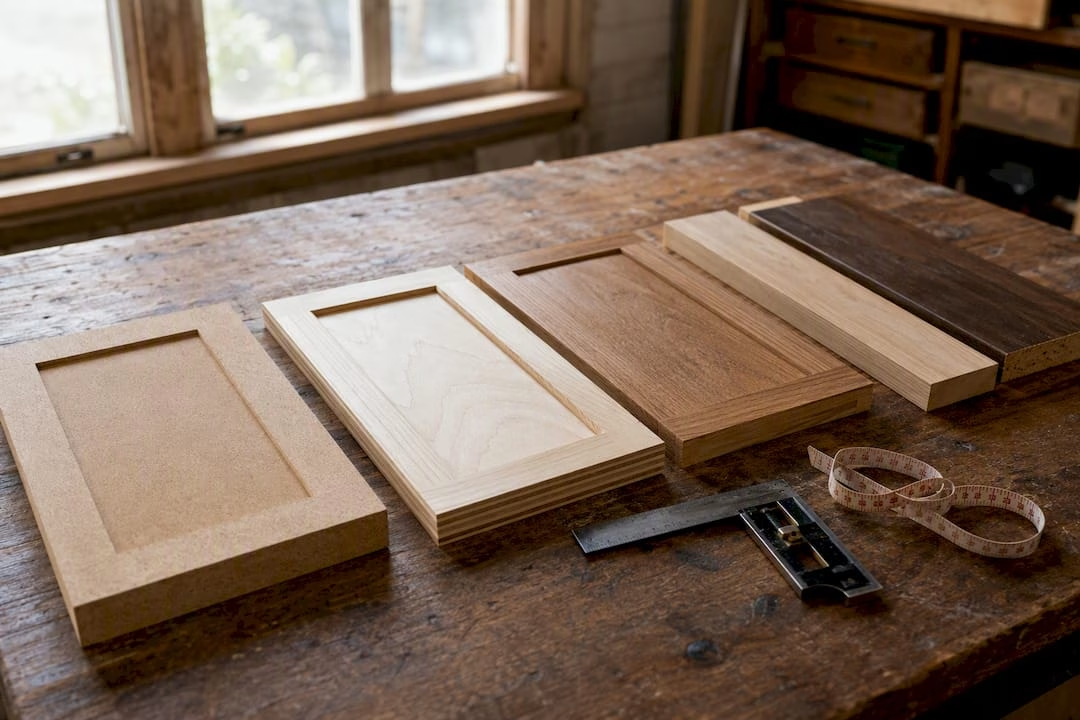
Style complexity adds labor time. A flat slab door takes far less machining than a five-piece shaker, and a raised panel or specialty profile with decorative routing pushes costs higher still.
Finish type is often the single biggest swing factor, since professional finishes and glazing can add $10 to $53 per square foot on top of the raw door price.
Order size and volume matter more than most homeowners expect. Suppliers frequently offer better per-square-foot rates on larger orders because setup costs get spread across more doors.
Rush fees and shipping can quietly inflate a quote. Expedited production and freight to rural addresses both carry accessorial charges that don’t always show up until checkout.
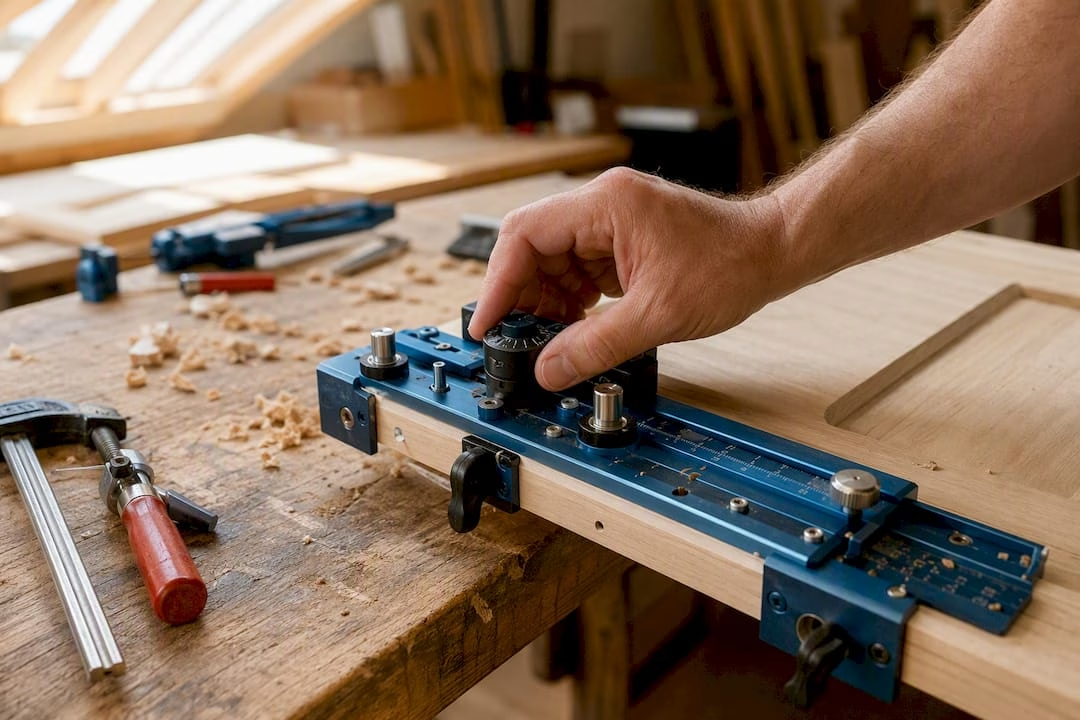
Add-ons round out the list: hinge boring for popular systems like Blum, custom sizing outside standard dimensions, and special edge profiles each carry their own small per-door fee that adds up across a full kitchen.
Choices around style and finish, not material alone, tend to move a quote the most.
What Do Three Sample Canadian Kitchen Budgets Look Like?
Real numbers help more than percentages. Here’s how three different approaches play out for a mid-size Canadian kitchen with 20 doors and drawer fronts.
-
Economy: MDF slab or basic shaker. At $7 to $10 per square foot raw and a simple painted finish, expect $60 to $90 per door for an average 3 square foot door. Twenty doors runs roughly $1,200 to $1,800 before shipping. Skipping glazing and keeping the profile flat is what keeps this tier affordable.
-
Midrange: painted MDF or plywood shaker. Raw costs climb to $12 to $18 per square foot, and a quality painted finish adds another $15 to $25 per square foot. That puts a single door in the $80 to $130 range, with a full 15 to 20 door order landing between $1,600 and $2,600.
-
Premium: solid wood or decorative profiles. Solid maple with a raised panel and custom stain typically costs more, and premium finishing or glazing adds considerably on top. Some Canadian manufacturers list solid wood options well above $22 to $23 per square foot before finish, so a full kitchen in this tier commonly runs $3,500 to $6,000 or more.
Minimums and shipping shift every one of these totals. A kitchen with several small drawer fronts under the 1.5 square foot minimum will price higher per piece than the square-foot math above suggests, and freight to a rural address adds another variable worth confirming upfront.
How Can You Lower Your Custom Cabinet Door Costs?
Refacing instead of full cabinet replacement is the single biggest lever available. Swapping doors and drawer fronts while keeping your existing cabinet boxes typically costs a fraction of a full teardown and rebuild, since you’re avoiding new cabinet carcasses, plumbing disconnection, and countertop removal entirely. Our cabinet refacing cost comparison breaks down where those savings actually come from.
Beyond that broader decision, a few smaller choices add up fast:
- Choose simpler styles. A shaker or slab profile costs less to machine than a raised panel or custom glazed finish.
- Stick with standard finishes. Custom color matching and multi-coat lacquer both carry labor premiums that flat paint or stain don’t.
- Consolidate your order. Grouping similar door sizes and ordering everything at once often qualifies for better per-square-foot pricing than ordering in batches.
- Request itemized quotes. Ask suppliers to break out material, finish, hardware add-ons, and shipping separately so you’re comparing true apples to apples, not just a bottom-line number.
A low headline price with no breakdown is often hiding a thinner finish or a shipping surprise waiting at checkout.
How Do You Measure and Order Custom Cabinet Doors Correctly?
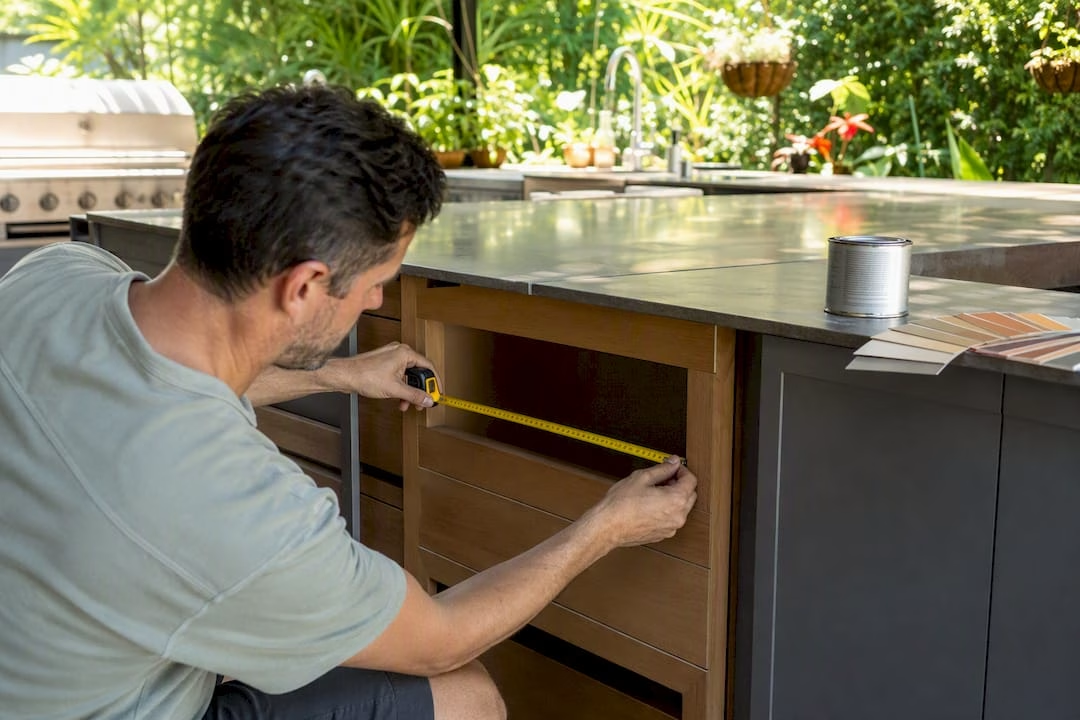
Custom doors are cut to your exact dimensions, and accurate measuring is the single most common factor in avoiding costly reorders. Suppliers work to tight manufacturing tolerances, and a measurement off by even a fraction of an inch can mean a door that doesn’t sit flush.
Before you request a quote, walk through this sequence:
- Measure every door and drawer front individually using a step-by-step measurement guide for new cabinet doors rather than eyeballing from a single template.
- Order a sample door or color swatch to confirm the finish matches what you’re picturing before committing to a full kitchen.
- Confirm whether your quote includes finishing, hinge boring, and shipping, not just raw material.
- Ask about production lead times and whether rush fees apply if your timeline is tight.
Pro Tip: Precision matters more than people expect. Doors are cut to fine tolerances, and a supplier’s online calculator catches sizing mistakes before they become an expensive reorder.
Do Cabinet Door Prices Vary by Region in Canada?
Yes, and the gap can be meaningful depending on where you live. Homeowners in major urban centers like Toronto, Vancouver, and Calgary often see slightly higher labor and finishing rates baked into local supplier pricing, reflecting higher regional overhead and shop rent.
Rural and remote areas face a different cost pressure: freight. Shipping cabinet doors to smaller communities in Northern Ontario, the Maritimes, or interior British Columbia typically adds more to the final bill than any regional labor difference does, since doors are bulky, need careful packaging, and travel further from manufacturing hubs concentrated in Ontario and Quebec.
This is part of why comparing quotes across Canada purely on a per-square-foot basis can mislead you. A supplier quoting a lower base price in one province might offset that entirely with a higher shipping charge to your address. The more useful comparison factors in your all-in landed cost, meaning raw material, finish, and freight combined, not just the number printed at the top of the quote.
Online suppliers who ship nationally tend to standardize pricing more than local shops do, since their cost structure isn’t tied to a single region’s labor market. That can work in your favor if you’re in a smaller market where local cabinet shops are scarce and pricing power sits with just one or two providers.
Does a Warranty Change What You Pay for Cabinet Doors?
It usually does, and that’s not a bad thing. A supplier backing their doors with a meaningful warranty, covering delamination, finish cracking, or warping, is signaling confidence in their materials and construction, and that confidence typically comes with a slightly higher price than an unwarrantied budget option.
The tradeoff is usually worth it. Cabinet doors take daily abuse: steam from cooking, grease, humidity swings between seasons, and constant hand contact around handles and edges. A door with a thin veneer or poorly sealed MDF core can start showing damage within a couple of years, while a warrantied product with proper edge banding and sealed substrates is built to hold up far longer.
When you’re comparing quotes, ask specifically what the warranty covers and for how long. Some suppliers only guarantee against manufacturing defects, which is a much narrower promise than a warranty covering finish performance over five or ten years of normal kitchen use. A vague “satisfaction guarantee” without specifics is worth far less than a written warranty that names what’s covered.
Paying slightly more upfront for a supplier with a clear, documented warranty is often cheaper over the life of your cabinets than replacing a budget door that fails in year three. Treat warranty terms as part of the price comparison, not an afterthought you check after you’ve already decided.
Are Canadian-Made Doors Worth More Than Imported Options?
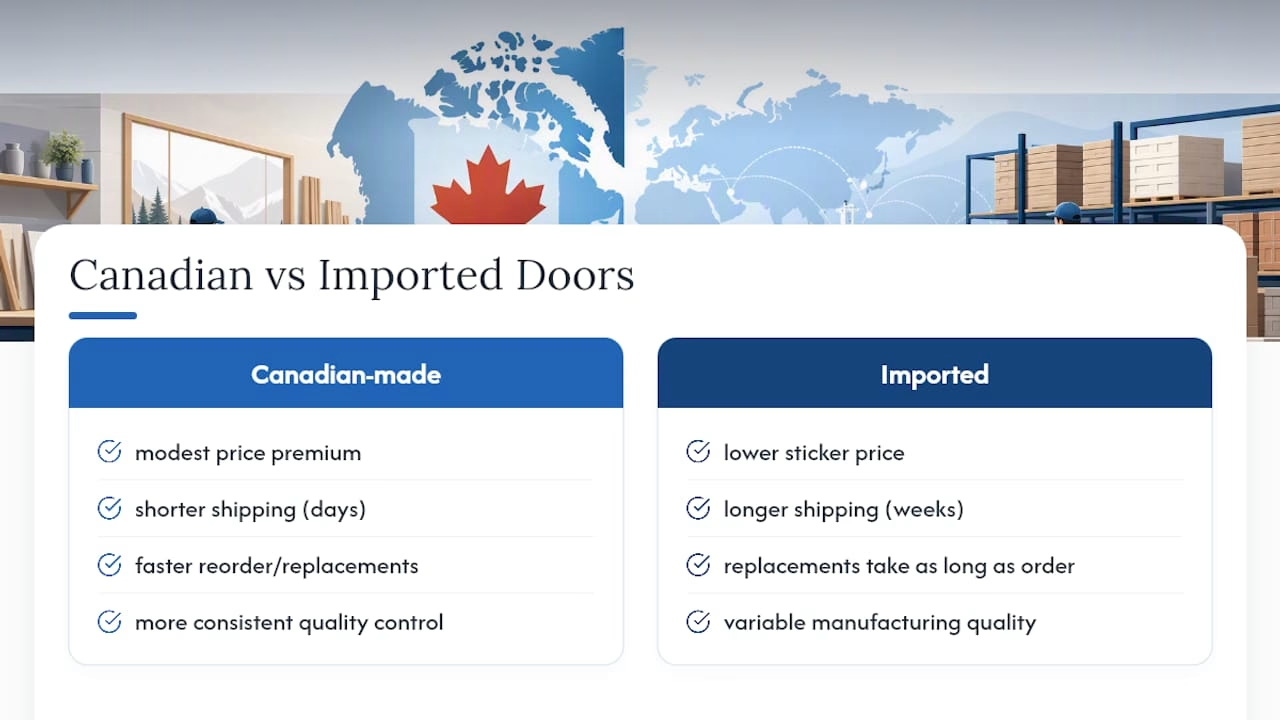
Often, yes, though not always for the reason homeowners expect. Canadian-manufactured doors typically carry a modest premium over imported alternatives, and that gap usually reflects shorter shipping distances, more consistent quality control, and faster turnaround on reorders or replacement parts, not necessarily superior raw material.
Imported doors, frequently sourced from overseas manufacturers, can undercut Canadian pricing on paper. But that lower sticker price often comes with longer lead times, since freight from overseas takes weeks rather than days, and less flexibility if a piece arrives damaged or doesn’t match your original order. Getting a replacement door from an overseas supplier can take as long as the original order did.
There’s also a quality consistency argument worth weighing. Manufacturing quality and finish expectations vary significantly between suppliers, and a low per-square-foot price on an imported door doesn’t guarantee the same core density, edge sealing, or finish durability you’d get domestically. Canadian manufacturers working to North American humidity and temperature conditions also tend to build doors that hold up better to the specific climate swings homeowners here deal with each winter.
For most homeowners, the smarter comparison isn’t Canadian versus imported on price alone. It’s landed cost plus turnaround time plus how easily you can get support if something arrives wrong.
What’s the One Thing Every Canadian Homeowner Should Verify First?
Budget for $60 to $150 per finished door in the midrange tier, and get your measurements locked down before you request a single quote. Confirming whether finish and shipping are included is the step most homeowners skip, and it’s the one that causes the biggest sticker shock later. The Door Maker’s measure, design, order process, backed by a wide selection of styles and finishes, exists specifically to make that sequence painless. Request a sample door or a measured quote before committing to a full kitchen order.
— David
Ready to Get an Accurate Quote for Your Kitchen?
Tdm-thedoormaker is the alternative to guessing at a cabinet shop’s quote sheet: our online configurator gives you real, itemized pricing for your exact door sizes in Canadian dollars, before you commit to anything. Instead of waiting on a contractor callback or driving to three different showrooms to compare finishes, you measure your own doors using our guided tools, design them from over 30 styles and 130+ colors and finishes, and see your total cost before you order.
That measure, design, order workflow is built around precision sizing to 1/10,000 of an inch, so the door that arrives fits the opening you measured, not an approximation of it. You can request sample doors and color swatches first to confirm finish quality in person, which removes the guesswork that comes with ordering sight unseen. If you’re still weighing whether refacing or full replacement makes more sense for your kitchen, our refacing versus replacement comparison lays out the cost difference plainly. When you’re ready, head to our custom cabinet door ordering page and start with a free measured quote.
Sources
The pricing ranges and finishing costs cited throughout this guide draw from published Canadian supplier data. TrueCore’s MDF pricing breakdown supports the raw material per-square-foot figures. Cutting Edge’s cost guide informed the minimum square-footage explanation, while their standard grade doors page supports the finishing add-on ranges. Their measurement information guide informed the measuring guidance above.
- How Much Do MDF Cabinet Doors Cost in Canada? (Pricing Explained)
- Cost Of Canadian Custom Cabinet Doors