Blog

Can You Replace Cabinet Drawer Fronts?

Can You Replace Cabinet Drawer Fronts?

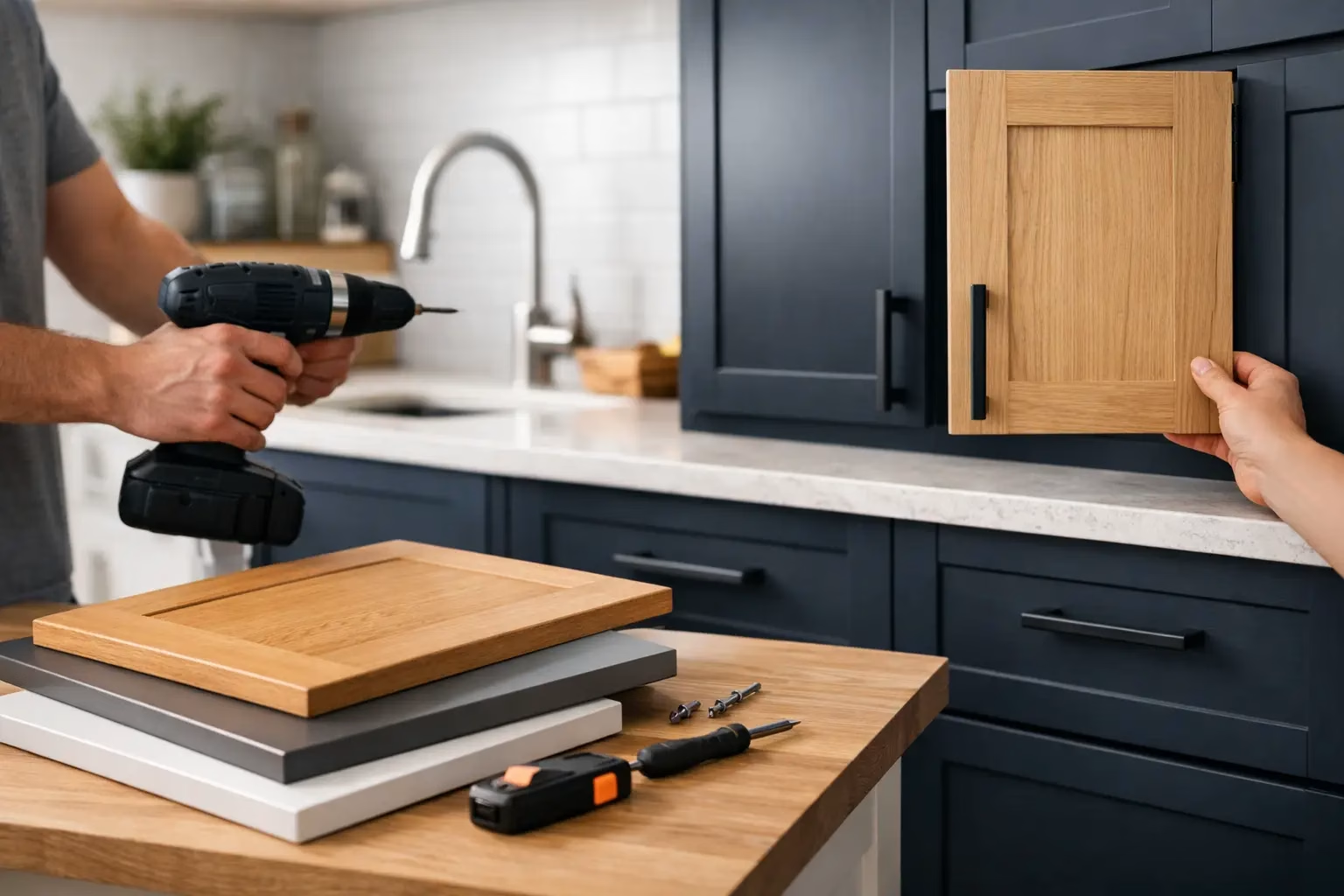
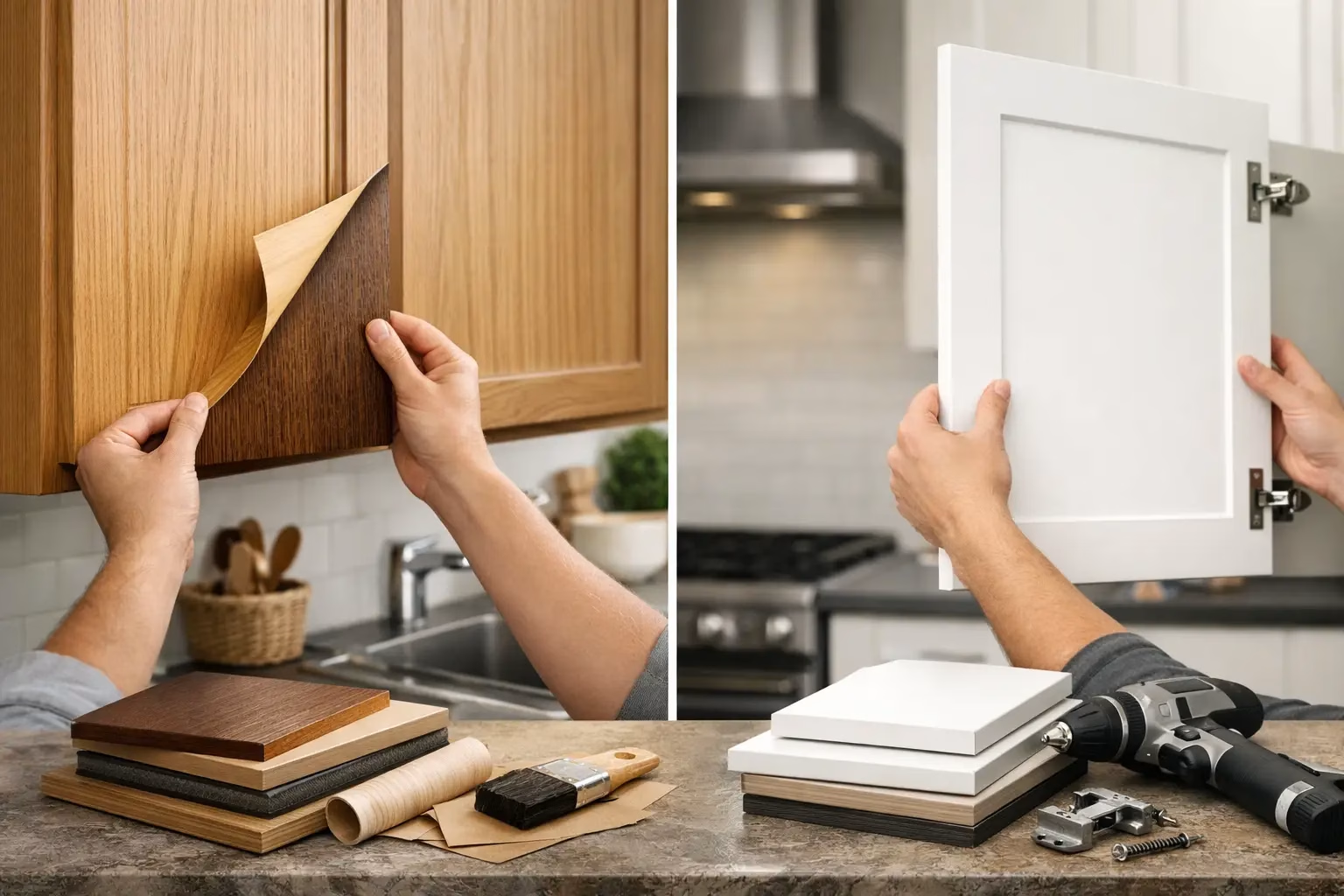
That old kitchen may not need new cabinets at all. If the cabinet boxes are still solid, one of the smartest upgrades you can make is much smaller: can you replace cabinet drawer fronts and keep the rest of the cabinetry in place? In many cases, yes – and that single change can make a dated room look cleaner, more custom, and far more current without the cost and disruption of a full remodel.

For homeowners weighing refacing against replacement, drawer fronts are often where the visual wear shows up first. Scratches near the pulls, chipped corners, faded finishes, and styles that clearly belong to another decade can make the whole room feel tired. Replacing those fronts lets you refresh the part you see every day while keeping the cabinet structure that is still doing its job.

Can you replace cabinet drawer fronts without replacing cabinets?

Yes, you can replace cabinet drawer fronts without replacing the full cabinets, and that is exactly why refacing has become such a practical option for DIY renovators. If your cabinet boxes are level, secure, and not suffering from water damage or structural failure, swapping drawer fronts is usually a very workable project.

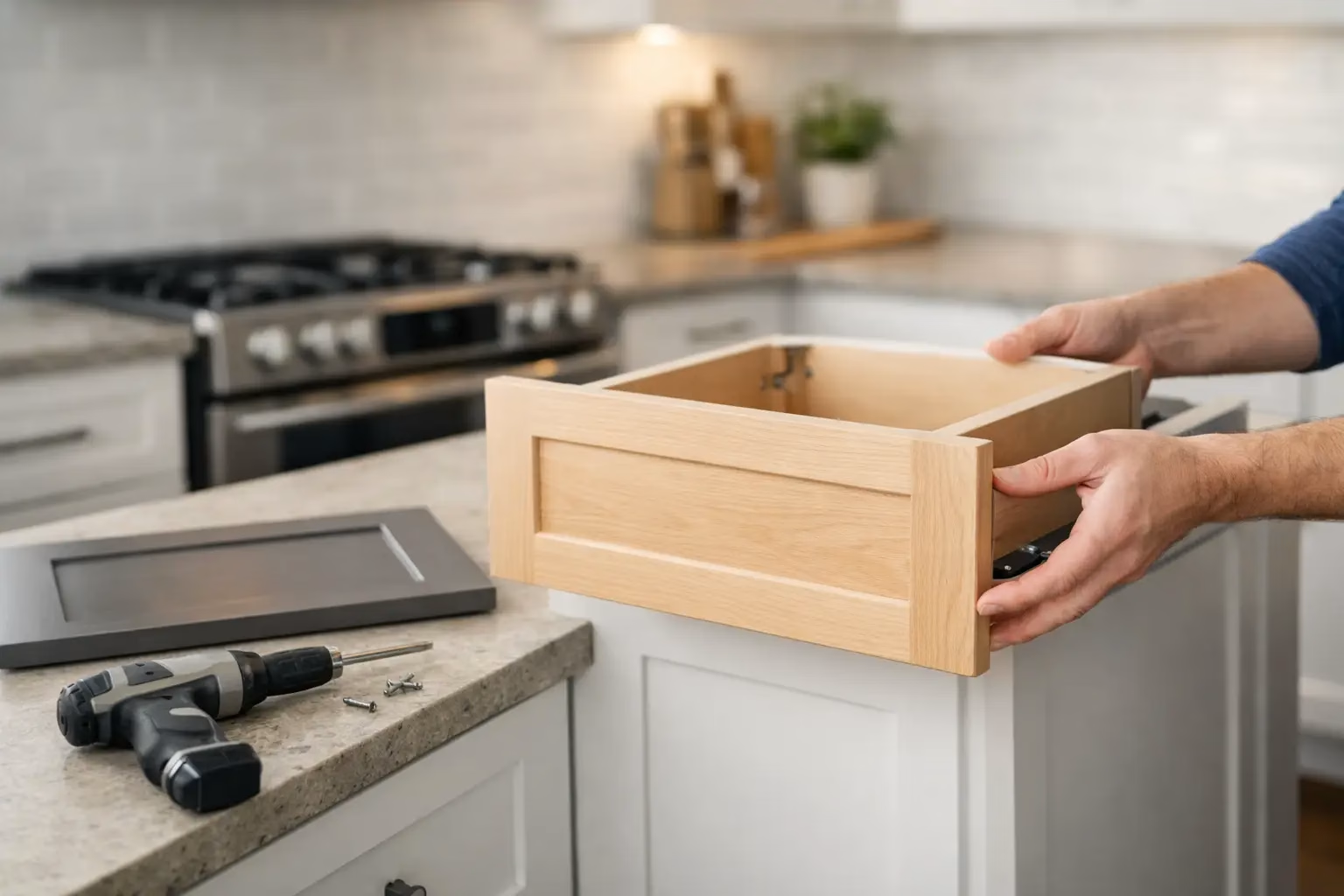
The key distinction is this: the drawer front is the visible face, while the drawer box is the working component that slides in and out. In many cabinets, those two pieces can be separated. That means you may be able to keep the existing drawer box and install a new front over it, or replace the front with a custom-sized piece designed to match new cabinet doors.

This is especially useful in kitchens, bathrooms, home offices, laundry rooms, and built-ins where the layout works fine but the finish does not. You are not paying to tear out functioning cabinetry just because the style feels outdated.

When replacing drawer fronts makes sense

The best candidates for replacement are cabinets with solid boxes, reasonably smooth drawer operation, and a layout you still like. If the drawers open properly and the frames are square, new fronts can deliver a major visual upgrade with much less labor than full replacement.

It also makes sense when you want a design change. Maybe you are moving from raised panel fronts to a clean shaker style. Maybe the old thermofoil finish is peeling. Maybe the original fronts were stock sizes that never looked quite right in an older home. A custom drawer front gives you more control over style, profile, and finish.

Where homeowners sometimes run into trouble is assuming every drawer front is interchangeable. It depends on how the drawers were built. Some fronts are attached as separate pieces. Others are part of the drawer box itself. That construction detail matters.

How to tell if your drawer fronts can be replaced

Start by opening a drawer and looking at the inside front of the drawer box. If you see screws coming through the box into the back of the drawer front, that is usually a good sign. It often means the decorative front can be removed and replaced.

If the front looks integrated into the drawer box with no separate attachment, replacement may be more involved. In that case, you might need to modify the drawer box, rebuild it, or replace the entire drawer instead of just the front.

You should also check for overlay style. Full overlay, partial overlay, and inset drawers all require different measurements and reveal allowances. Even a beautiful new drawer front will look off if the spacing around it is inconsistent.

For many DIY homeowners, this is the stage where careful measuring matters more than any tool. A fraction of an inch can change how the final project looks, especially when several drawer fronts line up side by side.

Measuring for replacement drawer fronts

If you want the finished project to look custom, measuring is not the place to guess. Measure each drawer opening or each existing drawer front individually. Do not assume every drawer in a run is exactly the same size, especially in older cabinetry.

Take width and height measurements in at least two places and note any variation. If you are matching cabinet doors in a refacing project, consider the desired overlay and the spacing between adjacent doors and drawers. This is where custom sizing becomes a major advantage over stock options.

Many homeowners start this project thinking all drawer fronts are standard. They are not. Even cabinets that look typical from the outside may have odd dimensions that make off-the-shelf replacements frustrating. A made-to-order drawer front is often what turns a decent refresh into a polished finished result.

Choosing the right style and material

Once you know replacement is possible, the next question is what the new fronts should look like. This is where function meets design.

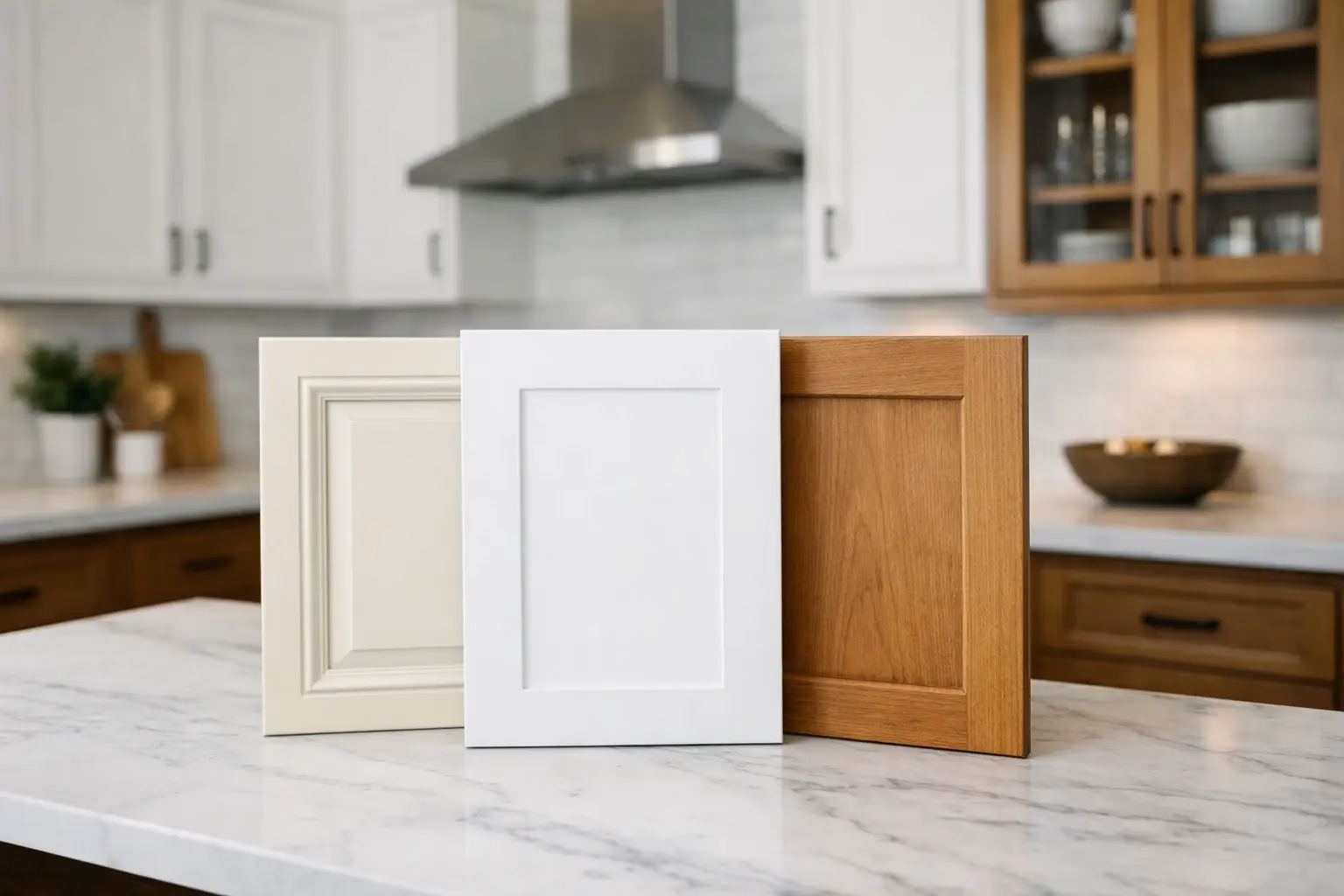
If your goal is a timeless update, shaker drawer fronts remain a popular choice because they work well in both modern and transitional spaces. If you want a more traditional look, raised panel styles can add depth and formality. Slab fronts create a cleaner, more contemporary appearance.

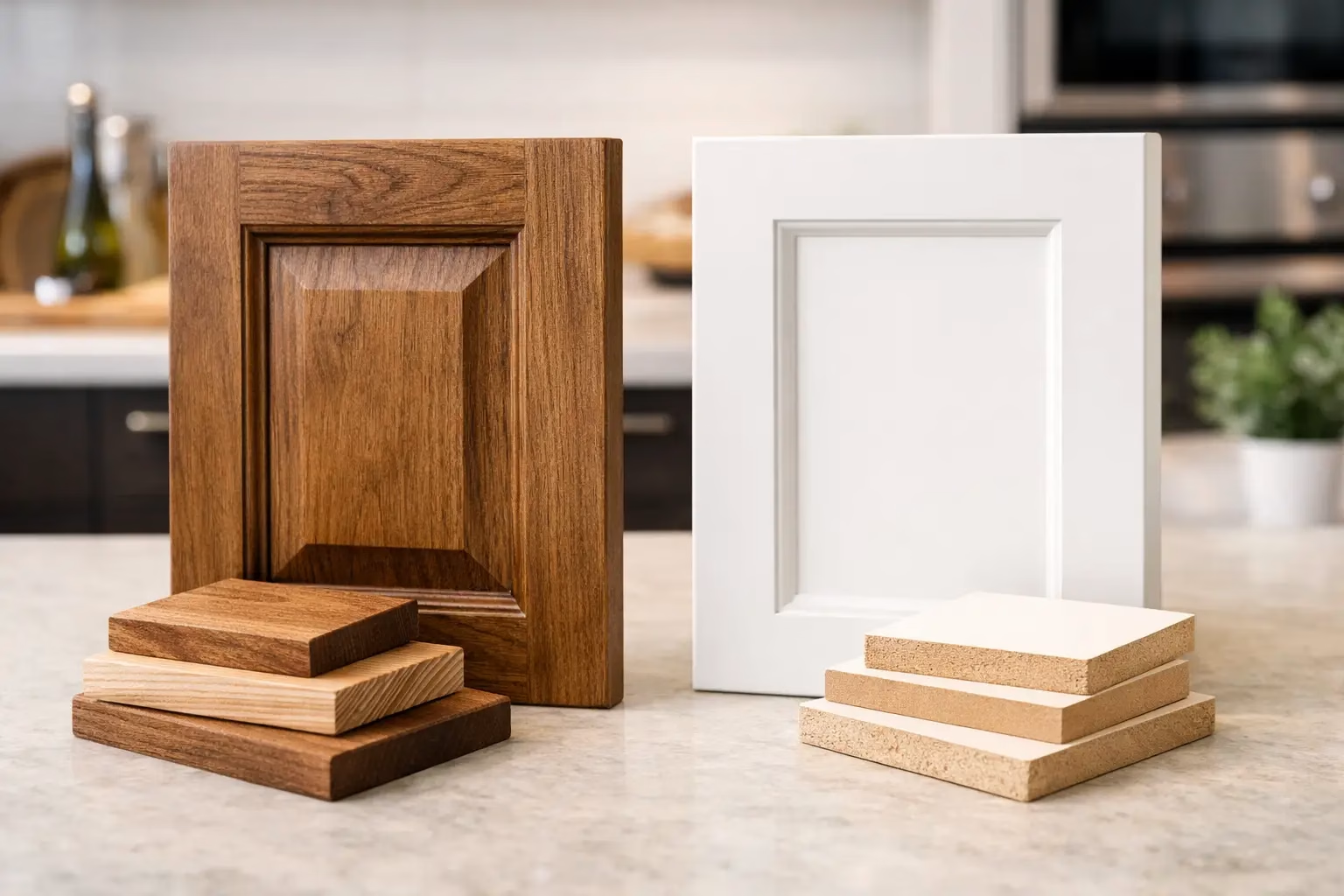
Material matters too. Solid wood and MDF each have their place depending on the finish you want, the environment, and the style profile. Painted projects often lean one direction, stained wood another. In moisture-prone spaces like bathrooms or laundry rooms, durability and finish performance deserve extra attention.

Color and finish should also relate to the rest of the room. New drawer fronts can either blend with existing cabinetry or act as part of a larger refacing update with matching doors, panels, and trim details. If you are already upgrading doors, handles, and exposed ends, coordinating the whole package usually gives the best visual payoff.

Installing new drawer fronts

Installation is usually straightforward, but precision matters. After removing the old front, position the new one carefully so the spacing around it is even. Temporary clamps or double-sided mounting aids can help hold the front in place while you attach it from inside the drawer box.

Before tightening everything fully, step back and check alignment. Drawers that sit next to one another need consistent reveals or the project can look amateur even if the materials are excellent. Small adjustments at this point make a big difference.

You may also need to drill new hardware holes if the handle placement changes. That is common when updating from older decorative pulls to a cleaner knob or bar pull. Take the time to mark hole placement accurately so the hardware lines up across the full cabinet run.

What replacing drawer fronts will not fix

New drawer fronts improve appearance, but they do not solve every cabinet problem. If drawer slides are failing, boxes are swollen from moisture, or the cabinet frames are out of square, those issues need separate attention.

This is where honest assessment pays off. Refacing is a strong value when the bones of the cabinetry are good. It is less effective when the entire system is worn out. If a drawer sticks because the box is damaged or the slide hardware is broken, a new front alone will not change that.

Still, many homeowners find they only need a mix of upgrades: new fronts for appearance, fresh hardware, and occasional slide replacement for function. That approach can cost far less than full cabinet replacement while still delivering a major transformation.

Why custom drawer fronts are often the better route

Stock replacements can work in some cases, but custom sizing is what gives a refacing project that fitted, intentional look. It also removes the headache of trying to force standard dimensions onto cabinets that were never truly standard.

That is one reason many DIY renovators choose a made-to-order approach. With a company like TDM – The Door Maker, you can match drawer fronts to new doors, choose from multiple styles and color options, and order to the exact size your project requires. That level of precision is especially valuable when you are updating older homes, built-ins, or anything with non-standard measurements.

Just as important, custom drawer fronts let you control the final design instead of settling for the closest available option. If you are investing the time to reface your cabinets, the finished look should feel deliberate.

Is replacing cabinet drawer fronts worth it?

For many homeowners, yes. It is one of the most practical ways to improve the look of cabinetry without taking on a full tear-out project. You save money, avoid unnecessary waste, and keep a functional layout that already works in your home.

The real value comes from pairing that cost savings with precision. Good measurements, the right style choice, and quality construction can make new drawer fronts look like part of a complete custom renovation rather than a quick cosmetic patch.

If your cabinet boxes are solid and your goal is to update the look rather than rebuild the room from scratch, replacing drawer fronts is often a smart next step. A better kitchen or bathroom does not always start with demolition. Sometimes it starts with one carefully measured front at a time.
FROM THE SAME CATEGORY

Jun 15 2026 BY Ksenija Lebec, Blog

Learn what cabinet doors fit framed cabinets, how overlay affects sizing, and how to choose the right custom door style for a clean refacing result.

Jun 11 2026 BY Ksenija Lebec, Blog

Comparing solid wood cabinet doors versus MDF? Learn the real differences in durability, cost, paint finish, moisture resistance, and value.

Jun 9 2026 BY Ksenija Lebec, Blog

See kitchen refacing color trends for 2026, from warm whites to deep greens, and learn how to choose cabinet colors that fit your space and budget.

Build a Door MADE TO FIT YOU

How to Upgrade Kitchen Cabinet Fronts

How to Upgrade Kitchen Cabinet Fronts

If your kitchen feels dated every time you walk into it, the problem often is not the cabinet boxes. It is the faces you see every day. Knowing how to upgrade kitchen cabinet fronts can give you a cleaner, more custom look without the cost, mess, and downtime of a full cabinet replacement.

For many homeowners, that is the sweet spot. You keep the existing layout that already works, avoid tearing out usable cabinetry, and put your budget where the visual impact actually happens. New doors and drawer fronts can make an older kitchen look sharper, brighter, and far more intentional, especially when the original cabinets are structurally sound.

Why upgrading cabinet fronts works so well

Cabinet refacing is one of the most efficient cosmetic upgrades in a kitchen because the front of the cabinet does most of the visual heavy lifting. Style, color, edge profile, panel design, and hardware all live on the surface. When those pieces change, the entire room reads differently.

This approach also makes sense when you have older cabinets in non-standard sizes. Stock replacements from a big-box store may not fit correctly, and forcing standard sizes into an older kitchen can create gaps, alignment problems, or a pieced-together look. Custom cabinet fronts solve that issue by matching the cabinet openings you already have.

That said, refacing is not the right move for every project. If your cabinet boxes are warped, water-damaged, poorly installed, or the layout no longer functions for your household, replacing fronts alone may not go far enough. The best results happen when the cabinet structure is solid and you want a major style update without a full demolition.

How to upgrade kitchen cabinet fronts the right way

The process is straightforward, but precision matters. A good-looking result starts before you choose a style or color.

Step 1: Check whether your cabinet boxes are worth keeping

Open every door and drawer. Look for sagging shelves, broken drawer slides, soft spots from water damage, loose face frames, and cabinets that are out of square. Minor wear is normal and usually manageable. Structural damage is a different story.

If the boxes are sturdy and securely attached, replacing the fronts is usually a smart investment. If the boxes are failing, new fronts will not fix the underlying problem.

Step 2: Decide what level of change you want

Some homeowners want a simple refresh with the same door style in a new color. Others want a full design shift, such as moving from arched raised panel doors to a cleaner Shaker profile. There is no single correct choice. It depends on your kitchen, your budget, and how long you plan to stay in the home.

A more dramatic change can make the kitchen feel fully renovated, but even a subtle upgrade can look high-end if the fit is precise and the finish is consistent. Matching drawer fronts, end panels, and trim details can make the difference between a basic facelift and a finished custom look.

Step 3: Measure carefully

This is the part that deserves your full attention. Accurate measurements are what separate a smooth DIY project from a frustrating one.

For each door and drawer front, measure width and height exactly as needed for the replacement style you are ordering. Do not assume every opening is identical, even if two cabinets appear to match. Older homes and hand-built cabinetry often vary more than expected.

Measure twice, write everything down clearly, and label each opening. A quick sketch of the kitchen with cabinet numbers can save a lot of confusion later. If you are ordering custom fronts, precision gives you the fit and alignment that stock products often cannot.

Step 4: Choose a door style that fits the room

Door style has a bigger effect than most people expect. A flat slab door creates a modern, minimal look. Shaker doors are versatile and work in traditional, transitional, and modern farmhouse kitchens. Raised panel doors feel more classic and decorative.

This is also where you should think about the age of your home and the surrounding finishes. If the countertops, backsplash, and flooring are staying, your new cabinet fronts should work with them rather than fight them. A very ornate door in a simple kitchen can feel out of place. On the other hand, a sleek slab front may look too stark in a warm, traditional space.

Material and finish choices matter

When people think about how to upgrade kitchen cabinet fronts, they often focus first on style. Material and finish deserve just as much attention because they affect durability, maintenance, and overall value.

Solid wood and quality wood-based cabinet fronts offer a classic, furniture-grade look and can suit a wide range of designs. Thermofoil or PVC options can be a good fit when you want a smooth, consistent finish and easy maintenance. Painted finishes create a clean, updated feel, while stained wood highlights natural grain and can add warmth.

There are trade-offs. Painted doors can show chips more readily in high-traffic homes. Dark finishes can reveal dust and fingerprints. Some highly detailed door styles collect grease and require more cleaning. Lighter, simpler designs tend to feel fresher and are often easier to live with day to day.

If you are unsure, samples can help you compare colors and textures in your own kitchen lighting. That step is worth it, especially if your kitchen gets a lot of natural light or shifts dramatically from morning to evening.

Don’t overlook hinges, hardware, and finishing details

New cabinet fronts installed with old, worn hardware can limit the final result. If your hinges are visible, tarnished, or inconsistent, replacing them can instantly sharpen the look. The same goes for handles and knobs.

Hardware is one of the easiest ways to push the style in a specific direction. Brushed finishes tend to feel current and forgiving. Matte black can add contrast. Traditional pulls can support a classic design. Just make sure the hardware choice fits the door style instead of competing with it.

Finishing details matter too. If your cabinet sides are exposed, you may want matching end panels. If there is a gap between the cabinets and ceiling, adding crown molding can make the kitchen feel more built-in. Decorative components are not mandatory, but in the right kitchen they can elevate the entire project.

Paint the boxes or reface them to match

A common mistake is installing beautiful new doors on cabinet boxes that still look tired. If the visible cabinet frames and sides are scratched, yellowed, or mismatched, address them as part of the project.

In some kitchens, painting the cabinet boxes to coordinate with the new fronts is enough. In others, especially with laminate or damaged surfaces, applying a matching veneer or refacing material creates a more complete transformation. The right choice depends on your cabinet construction, your skill level, and how polished you want the final look to be.

Consistency is what makes the kitchen feel intentional. Even excellent doors can look off if the surrounding surfaces do not support them.

Installation is manageable if you stay organized

Most DIY homeowners can handle cabinet front replacement successfully, but organization matters more than speed. Label every old door before removal. Keep screws and hinges sorted. Install one section at a time rather than scattering parts across the kitchen.

Drawer fronts usually go quickly. Doors take a little more adjustment to get reveals even and alignment clean. Soft-close hinges can improve the feel of the kitchen right away, but they still need careful setup.

Do not rush the final tweaks. Small adjustments in hinge position can make a major difference in how professional the kitchen looks. This is one of those jobs where patience shows.

Where custom fronts make the biggest difference

Custom sizing is especially valuable in older homes, semi-custom kitchens, built-ins, laundry rooms, and office cabinetry where stock options rarely fit quite right. It is also the better choice when you want a specific panel style, color, or overlay that supports the rest of the room.

That is where a made-to-order approach can save time and compromise. Instead of adapting your project to what is sitting on a shelf, you order fronts built for your exact openings and design goals. For homeowners who want the refacing route to look intentional rather than improvised, that precision matters.

At The Door Maker, that custom approach is designed to give DIY renovators more control without making the process harder. You measure, choose your style and options, and order fronts built for your project instead of settling for the closest match.

What kind of budget should you expect?

Upgrading cabinet fronts usually costs far less than replacing full cabinetry, but prices vary based on size, material, finish, and how many components you are replacing. A basic refresh with standard-looking profiles will naturally cost less than a whole-kitchen makeover with custom paint, matching end panels, new molding, and upgraded hardware.

The key is to compare the spend against the visual return. In many kitchens, replacing the doors and drawer fronts delivers most of the transformation at a fraction of full replacement cost. If the layout works and the boxes are solid, that value is hard to ignore.

A kitchen does not need to be gutted to feel new. When the bones are good, upgrading the fronts is often the smartest move – cleaner, faster, and far more custom-looking than most homeowners expect.

FROM THE SAME CATEGORY

Jun 15 2026 BY Ksenija Lebec, Blog

Learn what cabinet doors fit framed cabinets, how overlay affects sizing, and how to choose the right custom door style for a clean refacing result.

Jun 11 2026 BY Ksenija Lebec, Blog

Comparing solid wood cabinet doors versus MDF? Learn the real differences in durability, cost, paint finish, moisture resistance, and value.

Jun 9 2026 BY Ksenija Lebec, Blog

See kitchen refacing color trends for 2026, from warm whites to deep greens, and learn how to choose cabinet colors that fit your space and budget.

Build a Door MADE TO FIT YOU

Built In Cabinet Door Replacement Made Simple

Built In Cabinet Door Replacement Made Simple

That wall of built-ins might still be solid, but if the doors are warped, dated, or just plain tired, the whole room pays for it. Built in cabinet door replacement is often the fastest way to change the look of a home office, living room, mudroom, or dining area without tearing out well-built cabinet boxes.

For many homeowners, that is the sweet spot. You keep the structure that already fits the space, skip the mess of a full replacement, and focus your budget where people actually notice it first – the visible front of the cabinetry. When the doors are custom-made to the right size and style, the result can look far more like a full renovation than a simple update.

Why built in cabinet door replacement makes sense

Built-ins are different from freestanding furniture and stock cabinets. They are usually designed around the room, often with odd widths, uneven openings, or trim details that would be expensive to recreate from scratch. That is exactly why replacing only the doors makes so much sense.

If the cabinet boxes are level, secure, and in decent condition, there is rarely a good reason to remove everything. New doors and drawer fronts can dramatically improve appearance while avoiding demolition, drywall repair, flooring patches, and the cost of new cabinet construction. In older homes especially, built-ins may have non-standard dimensions that make stock replacement options frustrating or impossible.

This approach also gives you more design freedom than many homeowners expect. A built-in that feels traditional today can be updated with a clean Shaker door, a slim modern profile, or a more decorative front that better matches the architecture of the room. The transformation comes from the fit and finish, not from replacing every cabinet component.

When replacing the doors is enough

Not every project needs a full rebuild. In many cases, the existing framework is doing its job just fine, and the problem is cosmetic.

Built in cabinet door replacement is usually the right move when your cabinet boxes are structurally sound, the shelves still function well, and the layout works for your needs. Maybe the finish is worn, the hinges are failing, or the door style dates the room. Those issues can often be solved without touching the bones of the built-in.

It is also a strong choice if you are trying to match a new design direction in the home. A once-popular raised panel door may feel heavy next to newer trim and flooring. Swapping in updated custom doors can bring the built-ins in line with the rest of the space at a much lower cost than starting over.

There are times when replacement alone is not enough. If the cabinet boxes have water damage, serious sagging, broken face frames, or a layout that no longer works, you may need a bigger renovation. The same is true if hinge locations are badly worn out and the surrounding material cannot reliably hold new hardware. Still, most homeowners are surprised by how often the boxes are worth keeping.

Measuring is where good results start

The difference between cabinet doors that look custom and cabinet doors that look almost right usually comes down to measuring. Built-ins are rarely as uniform as they appear from across the room, so you want exact opening sizes and a clear understanding of overlay.

For overlay doors, you are measuring the cabinet opening and then determining how much larger the door should be on each side. For inset doors, you measure with even more care because the door sits inside the frame and reveals are visible all around. Inset can look beautiful on built-ins, but it is less forgiving. If your project involves older cabinetry with slight inconsistencies, overlay doors are often the simpler path.

It also helps to inspect each opening individually rather than assuming all upper or lower doors are the same size. Built-ins may have been site-built, adjusted over time, or trimmed to fit uneven walls. Small variations are normal. Ordering custom-sized doors based on each opening prevents the headaches that come with trying to make stock sizes work.

If you are replacing drawer fronts too, measure those separately. A built-in desk, entertainment wall, or window seat may combine doors and drawers in ways that do not follow standard kitchen sizing. Precision matters here because the eye notices misalignment quickly.

Choosing a style that fits the room

The best door style is not always the trendiest one. Built-ins usually play a strong visual role in a room, so the replacement doors should work with nearby trim, molding, flooring, and furniture.

Shaker-style doors remain a popular choice because they bridge traditional and modern spaces well. They can make an older built-in feel cleaner without looking out of place. Slab doors create a more contemporary look, especially in offices or media walls. Raised panel or more detailed profiles may suit formal living rooms, libraries, or homes with classic millwork.

Color and finish matter just as much as profile. A bright painted finish can make a heavy built-in feel lighter. Wood grain or warm neutral tones can add depth and furniture-like character. If your built-in includes glass sections, mullion doors can break up solid expanses and give display areas more intention.

This is also where custom ordering earns its value. Built-ins are often focal points, and generic doors can make them feel like an afterthought. A made-to-order door lets you match the proportions of the piece instead of forcing the piece to accept a standard size.

Hardware, hinges, and the details that change everything

New doors alone help, but the finished result depends on the small decisions too. Hinges, knob placement, drawer pull sizing, and even reveal consistency all affect whether the project feels polished.

If you are reusing hinge locations, make sure the new doors are prepared correctly for your existing hardware or confirm that the cabinets can accept updated concealed hinges. Many homeowners use door replacement as an opportunity to improve function as well as appearance. Soft-close hardware and properly aligned hinges can make an older built-in feel much newer in daily use.

Decorative accents may also be worth considering if you are refreshing a larger wall unit. Crown molding, valances, columns, or matching drawer fronts can help the entire installation feel intentional rather than pieced together. That does not mean every project needs embellishment. Sometimes a cleaner door style and fresh finish are enough. It depends on the room and how built-up the original cabinetry is.

Stock doors vs. custom doors for built-ins

This is where many projects go sideways. Stock doors can seem like the budget option at first, but built-ins often expose their limitations fast.

Most built-ins were not built to standard modular sizes. Even when a stock door is close, close is not the same as correct. You may end up adjusting overlays, living with uneven gaps, redrilling hardware locations, or compromising on the style you actually want. By the time you factor in the extra work and the visual trade-offs, the savings can disappear.

Custom doors are built for the exact opening and the look you are trying to achieve. That is especially important for older homes, one-off office built-ins, entertainment centers, and alcove cabinetry where every fraction matters. A company like The Door Maker supports that process with made-to-order sizing and a Build a Door system that helps DIY homeowners move from measurements to finished design with more confidence.

What to expect from the project

Built in cabinet door replacement is manageable for many DIY homeowners, but it still rewards patience. The project usually involves removing existing doors and drawer fronts, checking openings, confirming measurements, choosing style and finish, ordering the new components, then installing and adjusting for even alignment.

The timeline depends on whether you are also painting boxes, changing hardware, or adding decorative pieces. If the cabinet frames need refinishing, plan for that before installation. If the boxes are already in good shape, the project can move quickly once the new doors arrive.

The biggest payoff is visual. Built-ins take up a lot of wall space, so even a door-only update has outsized impact. Rooms feel cleaner, more current, and more custom. And because you are keeping the cabinet structure, your budget stretches further than it would with a full replacement.

If your built-ins still serve the room but no longer match your standards, replacing the doors is not a shortcut. Done well, it is a smart renovation choice that respects what already works and upgrades what people actually see every day.

FROM THE SAME CATEGORY

Jun 15 2026 BY Ksenija Lebec, Blog

Learn what cabinet doors fit framed cabinets, how overlay affects sizing, and how to choose the right custom door style for a clean refacing result.

Jun 11 2026 BY Ksenija Lebec, Blog

Comparing solid wood cabinet doors versus MDF? Learn the real differences in durability, cost, paint finish, moisture resistance, and value.

Jun 9 2026 BY Ksenija Lebec, Blog

See kitchen refacing color trends for 2026, from warm whites to deep greens, and learn how to choose cabinet colors that fit your space and budget.

Build a Door MADE TO FIT YOU

Cabinet Doors for Older Homes That Fit Right

Cabinet Doors for Older Homes That Fit Right

Older homes have a way of exposing every shortcut. A door opening that looks square may be off by a quarter inch. One cabinet run may sit slightly proud of the next. And the moment you try to replace worn fronts with stock sizes, the project stops feeling simple. That is exactly why cabinet doors for older homes need a different approach – one that respects the house you have and the finish you want.

If your cabinet boxes are still solid, replacing the doors and drawer fronts is often the smarter move than tearing everything out. You keep the structure, avoid unnecessary demolition, and get a major visual upgrade without paying for a full custom cabinet install. The key is choosing doors that fit the realities of an older space, not forcing the space to fit modern stock options.

Why cabinet doors for older homes need a custom mindset

In newer homes, cabinetry is more likely to follow standard dimensions. In older homes, that consistency is never guaranteed. Openings can vary from cabinet to cabinet, face frames may have shifted over time, and previous repairs can leave you with a mix of hinge locations, overlays, and reveals.

That does not mean your kitchen or built-ins are a lost cause. It means precision matters more. Custom cabinet doors let you order to the exact size you need, which is especially valuable when one opening measures differently from the one right beside it. For older homes, that level of accuracy is often what separates a polished refacing project from one that always looks slightly off.

There is also the style question. Many older homes have details worth preserving. A plain slab door can work beautifully in some spaces, but in others it may feel disconnected from the architecture. The best results usually come from balancing updated function with a door style that belongs in the room.

Start with the cabinet boxes, not the old doors

Homeowners often focus first on what they want the new doors to look like. That makes sense, but the better starting point is the condition of the cabinet boxes. If the boxes are structurally sound, securely mounted, and worth keeping, refacing is usually a strong investment.

Check for water damage, sagging bottoms, broken face frames, and major warping. Surface wear is one thing. Structural failure is another. If the boxes are stable, new doors, drawer fronts, panels, and matching trim pieces can transform the room at a fraction of full replacement cost.

This is where older homes often surprise people. Even cabinets that look dated can have strong bones. If the layout still works and the boxes are solid, replacing the visible components gives you the biggest visual impact for the money.

How to choose a door style that respects the home

The goal is not to turn every old kitchen into a museum piece. It is to make the cabinetry feel intentional in the house it lives in. Some homeowners want a faithful look that suits the age of the home. Others want a cleaner update that still does not feel out of place. Both approaches can work.

Raised panel doors can complement more traditional homes, especially where original trim, molding, or built-ins are part of the character. Shaker doors are popular for good reason – they are versatile, clean, and work well in homes that mix old architecture with updated finishes. Slim-profile styles can be a smart middle ground if you want something fresh without stripping away all traditional detail.

What matters most is proportion. In older homes, oversized profiles or highly contemporary finishes can sometimes fight the room. On the other hand, going too ornate can make the space feel heavy. Samples help here. Looking at a finish and profile in your actual lighting is more useful than guessing from a screen.

Sizing issues are where stock options usually fall short

One of the biggest frustrations in refacing older cabinetry is discovering that standard sizes are close, but not quite right. Close is not good enough for cabinet doors. An eighth of an inch can affect spacing, swing, and the overall look across a run of cabinets.

Custom sizing solves that problem directly. Instead of redesigning around stock inventory, you measure the cabinet openings, determine your overlay, and order doors built for those dimensions. That matters even more if you are working with older built-ins, butler’s pantries, laundry cabinetry, or bathroom vanities that were never designed around today’s standard modules.

It is also worth checking hinge compatibility before ordering. Older cabinets may use exposed hinges, partial overlay hinges, or hardware locations that do not match current drilling patterns. Sometimes you will want to preserve the existing look. Other times it makes sense to update the hinges along with the doors for better function and a cleaner finish. Neither choice is universally right – it depends on your style goals and the cabinet construction.

Material and finish choices matter in older spaces

Older homes can be less forgiving when materials expand, contract, or show wear quickly. Kitchens and baths still need durability, but they also need finishes that look at home with the rest of the house.

Wood doors remain a strong choice when you want warmth, paintability, and a more furniture-like feel. MDF can be a good option for painted projects where a smooth, consistent surface is a priority. Rigid thermofoil and other wrapped finishes may appeal if you want low maintenance and a broad range of color choices. The best material depends on the room, your budget, and the look you want.

Paint color also carries more weight in older homes. Bright white can sharpen a dark, dated kitchen, but in some homes a softer white, warm greige, or muted tone sits better with original floors, trim, or wall color. Wood tones can be beautiful too, especially if the home already has natural millwork worth complementing rather than competing with.

Matching period character without copying every old detail

One common mistake is assuming you have only two choices: make everything look exactly old, or make everything look completely new. Most successful refacing projects land somewhere in between.

You might keep the warmth and proportion of traditional doors while introducing a cleaner paint color and updated hardware. You might choose a classic profile for perimeter cabinets and use glass mullion doors in a hutch or built-in to bring in a little contrast. Decorative components like crown molding, valances, or fluted details can help bridge the gap between old architecture and refreshed cabinetry when used with restraint.

Restraint is the important part. Older homes usually already have visual character. Cabinet details should support that, not pile on top of it.

The measuring step deserves your full attention

If there is one place not to rush, it is measuring. Older homes reward patience and punish assumptions. Measure each opening individually. Do not assume the cabinet on the left matches the one on the right. Check width and height more than once, and confirm whether your doors will be inset, partial overlay, or full overlay.

For many DIY homeowners, the process feels much more manageable once it is broken into clear steps: measure carefully, choose the style and finish, then order with confidence. That is the value of using a system designed around customization rather than trying to make a shelf product work in a non-standard space. At TDM – The Door Maker, that is exactly the point of the online Build a Door process. It gives homeowners a straightforward path to made-to-order doors without losing control of the details.

Why refacing older homes is often the better renovation value

Full cabinet replacement has its place. If the layout is broken, the boxes are failing, or you are doing a complete redesign, replacement may be the right move. But many homeowners with older homes do not need new boxes. They need better-looking, better-fitting fronts.

That distinction matters for cost, timeline, and disruption. Refacing avoids the mess of ripping out usable cabinetry. It can preserve the charm of built-in elements that would be expensive to recreate. And because custom doors can be made to your measurements, you are not boxed into the compromises that come with stock products.

There is also a less obvious benefit: older homes tend to reward thoughtful updates. When a renovation keeps what is solid and upgrades what is visible, the result often feels more authentic than a full replacement that erases every original proportion in the room.

The best cabinet project for an older home is rarely the flashiest one. It is the one that fits correctly, looks like it belongs there, and makes the room feel cared for again. If your cabinet boxes still have life left in them, new doors may be all it takes to bring that character back into focus.

FROM THE SAME CATEGORY

Jun 15 2026 BY Ksenija Lebec, Blog

Learn what cabinet doors fit framed cabinets, how overlay affects sizing, and how to choose the right custom door style for a clean refacing result.

Jun 11 2026 BY Ksenija Lebec, Blog

Comparing solid wood cabinet doors versus MDF? Learn the real differences in durability, cost, paint finish, moisture resistance, and value.

Jun 9 2026 BY Ksenija Lebec, Blog

See kitchen refacing color trends for 2026, from warm whites to deep greens, and learn how to choose cabinet colors that fit your space and budget.

Build a Door MADE TO FIT YOU

PVC Cabinet Door Colors That Work

PVC Cabinet Door Colors That Work

The wrong cabinet color can make a clean refacing job feel off the minute it goes on the wall. The right one does the opposite – it makes the whole room look more current, more intentional, and more expensive than the project budget suggests. That is why choosing pvc cabinet door colors is not just a style decision. It is a practical one that affects how bright the room feels, how often you notice fingerprints, and how well your updated cabinets hold up visually over time.

If you are refacing instead of replacing cabinet boxes, color matters even more. You are not starting from scratch. You are working with existing flooring, counters, backsplash tile, wall paint, and lighting. A good color choice helps all those fixed elements work together. A bad one can make every old finish around it stand out for the wrong reason.

How to Choose PVC Cabinet Door Colors

Most homeowners start by asking which color is most popular. That is understandable, but it is rarely the best first question. The better question is what your room needs.

A small kitchen with limited natural light usually benefits from lighter pvc cabinet door colors because they help bounce light around the room and reduce visual heaviness. A larger kitchen with strong daylight can handle deeper tones without feeling closed in. Bathrooms and laundry rooms often need a similar approach, especially when square footage is tight and overhead lighting does most of the work.

The next thing to consider is how permanent your surrounding finishes are. If your countertops, flooring, or backsplash are staying put, your cabinet color needs to respect them. Warm-toned floors often pair better with creamy whites, taupes, and warmer grays. Cooler countertops and modern tile tend to work better with crisp whites, charcoal tones, and cleaner neutral shades.

Then there is daily life. If your kitchen is busy, if kids are opening doors with snack-covered hands, or if the cabinets around the trash pullout get constant use, maintenance should influence your decision. Some colors hide smudges and dust better than others. Style matters, but so does living with the finished result.

The Most Reliable Color Families

There is no single best color for every project, but a few categories consistently work well because they solve common design problems.

White and Off-White

White remains one of the safest and strongest choices for cabinet refacing. It brightens older kitchens, helps compact rooms feel larger, and works with a wide range of countertop materials. If you are updating oak-era spaces or trying to make a dated kitchen feel cleaner and more current, white often gets you there fastest.

That said, not every white behaves the same way. A bright, cool white can look sharp and modern, but it may feel stark next to beige flooring or warmer granite. An off-white or soft cream usually feels more forgiving in homes with traditional finishes. If your fixed materials lean warm, a warmer white often produces a better result than a pure one.

Gray and Greige

Gray had a long moment in remodeling, and it is still useful when chosen carefully. In the right setting, it gives cabinets a tailored, updated look without going too dark. The catch is undertone. Some grays read blue, some green, some brown. That undertone needs to make sense with the rest of the room.

Greige often solves this problem. It sits between gray and beige, which makes it more flexible in homes that mix warm and cool finishes. If you are trying to bridge older flooring with newer counters, greige can be a smart middle ground.

Taupe and Warm Neutrals

Warm neutrals have become more appealing as homeowners move away from colder, overly stark interiors. Taupe, mushroom, and other soft earthy shades can make cabinetry feel custom without demanding attention. They work especially well in homes where natural wood accents, brushed brass, or warmer paint colors are part of the plan.

These shades are also practical. They tend to hide light dust, mild wear, and day-to-day smudging better than very bright whites or very dark finishes. If you want a color that feels current but less trend-sensitive, this family deserves a serious look.

Dark Colors

Charcoal, espresso-toned neutrals, and other dark cabinet colors can look striking, especially in larger kitchens, home offices, and built-ins. They add contrast and can create a furniture-like appearance that feels more custom.

But darker colors ask more from the room. They usually work best when there is enough natural or layered light to keep the space from feeling heavy. They can also show dust, fingerprints, and edge wear more quickly, especially in high-touch areas. If you love the look but want less upkeep, consider using dark tones on lower cabinets or in a larger room where the visual weight feels balanced.

Matching Color to Cabinet Style

Color never works alone. Door style changes how that color reads.

A simple shaker door in white or gray feels clean and versatile. It can lean modern, transitional, or classic depending on hardware and surrounding finishes. A raised panel door in the same color will usually feel more traditional. Slab or flat-panel doors often make bold or darker colors look more contemporary.

This matters because some homeowners choose a color they love in a photo, then feel disappointed when it looks different in their own project. Often the issue is not the color itself. It is the combination of color, door profile, room lighting, and hardware. A practical way to avoid that mismatch is to look at the whole package, not just the color chip.

What Lighting Changes

Lighting can shift cabinet color more than people expect. A warm bulb can make a neutral white look creamy. Cool daylight can make the same finish look sharper and cleaner. North-facing rooms often pull colors cooler, while strong afternoon sun can warm them up considerably.

That is why samples matter. Looking at a color online is a start, but it is not the same as seeing it in your actual room at 8 a.m., noon, and evening. If you are investing in custom doors, taking time to view color in your own space is one of the smartest steps you can take. It reduces guesswork and helps you feel confident before ordering.

When Two-Tone Cabinets Make Sense

Not every project needs one cabinet color throughout. Two-tone kitchens can work very well, especially when you want contrast without making the space feel too dark.

A common approach is lighter uppers with darker lowers. This keeps the room open at eye level while giving the base cabinets more depth and durability from a visual standpoint. It can also help if your kitchen has a lot of upper cabinetry and you want to avoid a wall of color.

Two-tone designs are not always the best answer, though. In smaller spaces with lots of visual breaks already, they can feel busy. If your counters, backsplash, and flooring all have movement, one strong cabinet color may create a calmer result.

Practical Trade-Offs Homeowners Should Know

This is the part that often gets skipped, but it matters. The prettiest option is not always the easiest to live with.

Bright white shows grime around pulls and high-touch corners more quickly than mid-tone neutrals. Very dark finishes can highlight dust and fingerprints. Trend-driven shades may feel exciting now but harder to coordinate with later updates. Safer neutrals may have more staying power, but if they are too cautious, the final room can feel flat.

There is no perfect choice without compromise. The goal is to pick the compromise that fits your home and your habits. If you cook constantly, maintenance may rank higher. If you are updating for resale, broad appeal may matter more. If this is your long-term home, choosing the color that makes you happy every time you walk in might be the right call.

Getting the Look Right the First Time

Custom cabinet refacing gives you more control than stock replacements, which is a major advantage when color is part of the transformation. Precise sizing, the right door style, and a finish that works with your room can make existing cabinet boxes look entirely new. That is where planning pays off.

Before you order, step back and assess the fixed elements in the room, the amount of natural light, and how much maintenance you are willing to tolerate. Then narrow your options to the colors that genuinely support those conditions. If you are using a custom configuration tool like the one available at TDM – The Door Maker, that process becomes much easier because you can focus on fit, style, and finish together instead of treating them as separate decisions.

The best cabinet color is usually not the boldest or the trendiest. It is the one that makes your room feel finished, fits the way you live, and still looks right after the excitement of the remodel wears off. That is the kind of choice you will appreciate every single day.

FROM THE SAME CATEGORY

Jun 15 2026 BY Ksenija Lebec, Blog

Learn what cabinet doors fit framed cabinets, how overlay affects sizing, and how to choose the right custom door style for a clean refacing result.

Jun 11 2026 BY Ksenija Lebec, Blog

Comparing solid wood cabinet doors versus MDF? Learn the real differences in durability, cost, paint finish, moisture resistance, and value.

Jun 9 2026 BY Ksenija Lebec, Blog

See kitchen refacing color trends for 2026, from warm whites to deep greens, and learn how to choose cabinet colors that fit your space and budget.

Build a Door MADE TO FIT YOU

9 Kitchen Cabinet Makeover Ideas That Last

9 Kitchen Cabinet Makeover Ideas That Last

If your kitchen still works but looks stuck in another decade, the problem may not be the layout at all. In many cases, the smartest kitchen cabinet makeover ideas focus on what people actually see and touch every day – the doors, drawer fronts, finish, hardware, and trim – rather than tearing out cabinet boxes that are still structurally sound.

That distinction matters, especially if you want a kitchen that looks custom without paying for a full custom install. A good cabinet makeover can dramatically change the feel of the room, but the right approach depends on your cabinet condition, your budget, and how polished you want the final result to look.

Kitchen cabinet makeover ideas that change the whole room

Some upgrades are cosmetic. Others create the kind of visual shift that makes the kitchen feel brand new. The best results usually come from combining two or three changes that work together instead of making one isolated update.

1. Replace the cabinet doors instead of replacing the cabinets

This is often the highest-impact option for homeowners who have solid cabinet boxes but dated fronts. If your current cabinets are worn, builder-grade, or stuck in a style you no longer want, changing the doors and drawer fronts can completely reset the design.

This is where refacing stands apart from repainting. Paint can improve the look of existing doors, but it cannot change a busy raised-panel profile into a clean Shaker design, fix warped fronts, or solve mismatched sizing in older homes. New custom doors give you control over style, edge detail, panel configuration, and finish direction from the start.

For many DIY renovators, this is the sweet spot between cost and transformation. You avoid the mess and expense of a full tear-out while getting a more tailored result than stock replacement options typically offer.

2. Paint or re-finish the cabinet boxes for a clean, matched look

If you replace your doors, the cabinet boxes still need to visually belong in the same kitchen. Painting or refinishing the frames and exposed sides helps everything look intentional.

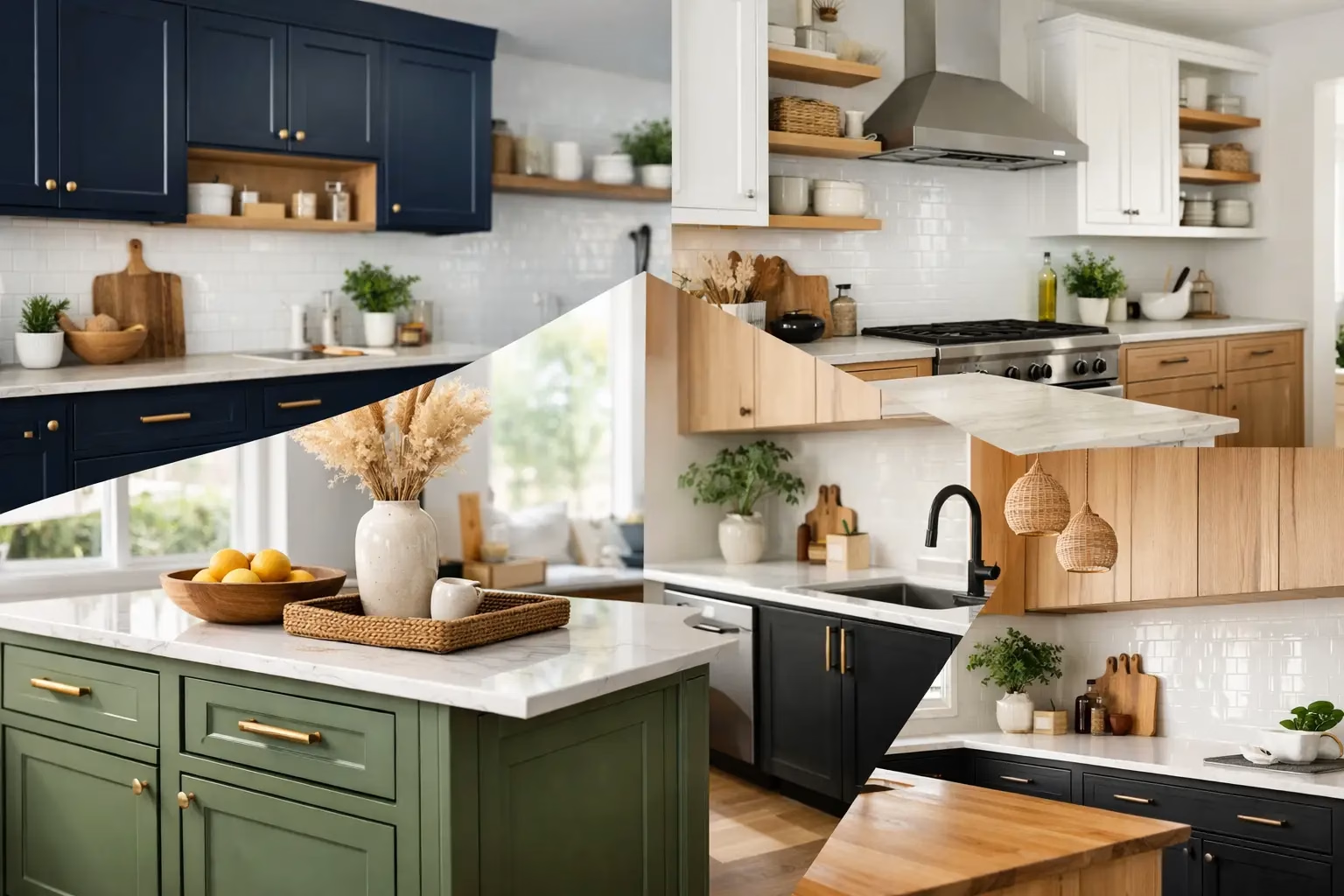
White remains a reliable choice for brightening darker kitchens, but warmer neutrals, soft grays, deep greens, and muted blues can add more character without dating the room quickly. The right color depends on your countertop, flooring, backsplash, and natural light. A dark cabinet color can look rich and high-end, but it tends to show dust and fingerprints more readily. Lighter finishes open up small kitchens, though they may require more frequent wipe-downs in busy households.

Preparation matters here. A rushed paint job can undercut every other upgrade in the room.

3. Switch to hidden hinges or updated hardware

Hardware is not the most dramatic makeover by itself, but it can sharpen the entire kitchen. New knobs and pulls help reinforce the style direction you want, whether that is traditional, transitional, or modern.

If your cabinets still use exposed hinges, updating to concealed hinges can make the cabinetry look cleaner and more current. It is a relatively small detail, but it changes how the door sits visually on the cabinet face. Pair that with simple pulls or understated knobs, and dated cabinetry starts looking far more intentional.

The trade-off is that hardware should support the overall design, not fight it. Oversized modern pulls on ornate traditional doors usually feel off. The best kitchens are consistent.

Makeover ideas that add custom character

A cabinet makeover does not have to stop at doors and paint. If you want a built-in, furniture-style look, a few well-chosen additions can make standard cabinets feel more finished.

4. Add crown molding, light rail, or valances

Trim details help bridge the gap between basic cabinetry and a more custom appearance. Crown molding at the top of upper cabinets draws the eye upward and gives the installation a built-in look. Light rail molding can hide under-cabinet lighting while creating a more finished edge. Valances can soften open areas, especially over sink windows or decorative niches.

These details work best when the proportions are right. In a kitchen with low ceilings, heavy crown can feel crowded. In taller spaces, a more substantial profile may be exactly what makes the cabinets look complete.

5. Use decorative panels on exposed cabinet ends

One of the fastest ways to spot a budget kitchen is a visible cabinet side left plain while everything else gets upgraded. End panels, beadboard details, or matched finished panels can make islands and exposed cabinet runs look more intentional.

This is especially useful if your kitchen opens to a dining or living area where cabinet ends are more visible. You may not notice the difference in a product photo, but in a real home, this detail adds polish.

6. Mix solid doors with glass-front cabinets

If you want to lighten the look of a wall of cabinetry, adding a few glass-front doors can help. This works well on upper cabinets where you want to display glassware, serving pieces, or neatly organized everyday items.

The key is restraint. Too many glass doors can make a kitchen feel visually busy, especially if storage inside is not consistently organized. Used in the right spots, though, they break up solid runs and add dimension.

Practical kitchen cabinet makeover ideas for function too

A kitchen makeover should not only photograph better. It should work better. If you are already updating cabinet fronts, it makes sense to look at the daily use issues that have been bothering you.

7. Upgrade drawer fronts and improve storage access

Drawer fronts are easy to overlook, but they carry a lot of visual weight. Replacing them to match new cabinet doors helps the entire kitchen feel cohesive.

This is also a good time to think about what is behind those fronts. If you have deep cabinets that waste space or drawers that never fully open, a makeover can be the point where appearance and function finally line up. Even simple changes like better drawer organization or soft-close hardware can improve how the kitchen feels to use every day.

8. Create an island focal point with a contrasting finish

If your kitchen has an island, you do not have to treat it exactly like the perimeter cabinets. A contrasting color or door style can create a focal point without making the room feel disjointed.

For example, perimeter cabinets in a warm white with an island in a muted navy or charcoal can add depth while keeping the kitchen grounded. This works best when at least one other element in the room ties back to the contrast color, such as bar stools, lighting, or a countertop veining tone.

It is a strong look, but not always the right one. In smaller kitchens, too much contrast can make the layout feel chopped up.

9. Add specialty details where they actually matter

Wine racks, fluted columns, appliance panels, and decorative accents can all contribute to a more custom look. The trick is using them with purpose.

A few specialty pieces in the right places can elevate a kitchen. Too many decorative additions can make it feel overdesigned. If you are aiming for timeless, start with the core elements – doors, finish, hardware, and trim – then add one or two accents that support the style rather than dominate it.

How to choose the right cabinet makeover approach

Not every kitchen needs the same solution. If the cabinet boxes are damaged, poorly installed, or the layout no longer works for your household, a makeover may not go far enough. But if the bones are good, cabinet refacing and custom replacement fronts often give homeowners the biggest visual return for the money.

This is also where precise measuring becomes part of the design process, not just a technical step. A kitchen can only look high-end if the fit is right. Gaps, misaligned reveals, and off-size replacement parts tend to stand out immediately, especially once everything is freshly painted or finished.

For homeowners comparing stock options with custom-made components, the difference often comes down to flexibility. Standard sizes can work in some kitchens, but older homes, modified layouts, and non-standard openings usually benefit from made-to-order sizing. That is one reason many DIY customers turn to custom solutions from specialists such as TDM – The Door Maker when they want a better fit without committing to a full cabinet replacement.

What makes a cabinet makeover look expensive

It is rarely one premium feature. Usually, it is consistency.

When the door style matches the age and architecture of the home, the finish is applied carefully, the hardware feels intentional, and the trim details are proportioned well, the whole kitchen reads as higher quality. On the other hand, if one part is modern, another is ornate, and another still looks unfinished, the space can feel pieced together even if each item was expensive on its own.

That is why the strongest makeover plans start with a clear direction. Decide whether you want classic Shaker simplicity, a more traditional profile, or a sleek contemporary look. Then carry that choice through the visible details.

A kitchen does not need a full gut renovation to feel fresh, tailored, and worth showing off. Often, the best makeover is the one that respects what is already working, upgrades what people notice most, and leaves you with a space that feels more like your home every time you walk into it.

FROM THE SAME CATEGORY

Jun 15 2026 BY Ksenija Lebec, Blog

Learn what cabinet doors fit framed cabinets, how overlay affects sizing, and how to choose the right custom door style for a clean refacing result.

Jun 11 2026 BY Ksenija Lebec, Blog

Comparing solid wood cabinet doors versus MDF? Learn the real differences in durability, cost, paint finish, moisture resistance, and value.

Jun 9 2026 BY Ksenija Lebec, Blog

See kitchen refacing color trends for 2026, from warm whites to deep greens, and learn how to choose cabinet colors that fit your space and budget.

Build a Door MADE TO FIT YOU

How to Order Custom Cabinet Doors Right

How to Order Custom Cabinet Doors Right

If your cabinet boxes are still solid but the doors make the whole room feel dated, refacing is usually the smarter move. Knowing how to order custom cabinet doors the right way can save you from expensive mistakes, long delays, and that sinking feeling when a nearly perfect door arrives just a little too small.

The good news is that ordering custom doors is not complicated once you understand what actually matters. Most problems come down to a few details: measuring the existing opening correctly, choosing the right overlay, matching the style to the space, and confirming every spec before production starts. Get those pieces right, and you can give your kitchen, bathroom, office, or built-ins a custom look without replacing the cabinet boxes.

How to order custom cabinet doors without guesswork

The easiest way to think about the process is in three parts: measure, design, and order. That sounds simple because it is simple, but each step needs a little care.

Measuring comes first because every later choice depends on it. Design comes next because the style, panel profile, material, and finish all need to fit the way your cabinets are built. Ordering is the final confirmation stage, where you review sizes, quantities, hinge boring, and any matching components like drawer fronts or end panels.

If you rush the first step, the rest of the project gets harder. If you slow down long enough to verify your dimensions and understand your options, custom ordering becomes very manageable.

Start with the cabinet type you have

Before you pull out the tape measure, identify whether you have framed or frameless cabinets. This affects how doors sit on the cabinet and how you calculate sizing.

Framed cabinets have a face frame on the front of the cabinet box. They are common in many American homes, especially older kitchens. With framed cabinets, you will usually order doors based on the opening size plus your chosen overlay.

Frameless cabinets do not have that front frame. The door sizing is based more directly on the cabinet box dimensions and the hardware setup. If you are replacing doors on frameless cabinets, precision matters even more because reveals tend to be tighter.

If you are not sure which type you have, look closely at the cabinet front with the door open. A visible frame around the opening means framed construction.

Measure the opening, not just the old door

One of the most common DIY mistakes is measuring an existing door and assuming that number is enough. Sometimes it is close, but old doors are not always the best source of truth. Hinges, past adjustments, warping, and previous replacement work can all throw things off.

For framed cabinets, measure the width and height of the cabinet opening itself. Then determine the overlay you want on each side. For example, if you want a 1/2-inch overlay on all four sides, you add 1 inch to the opening width and 1 inch to the opening height.

For frameless cabinets, measure the cabinet box opening or use the existing door size only if you are confident the fit is correct and the reveals are consistent.

Measure each opening individually. Even in the same kitchen, cabinets can vary. Never assume two side-by-side doors are exactly the same size because they look the same.

A few practical habits make this easier. Measure to the nearest 1/16 inch. Write every dimension down immediately. Label each cabinet location so you know which door goes where. If you are ordering drawer fronts too, measure those separately rather than estimating from the doors.

Choose the right style for the cabinet and the room

Once measurements are handled, the fun part starts. This is where the project begins to feel real.

Door style should match both the cabinet structure and the look you want in the room. Shaker styles remain popular because they work in almost any setting, from a simple white kitchen to a warmer, more traditional office built-in. Raised panel doors add more detail and a classic look. Flat slab doors can feel clean and modern, especially in contemporary spaces.

This decision is partly aesthetic and partly practical. More detailed profiles create a richer look, but they also create more edges and grooves to clean. Simpler doors are easier to maintain and often fit best in smaller rooms where heavy detail can feel busy.

If you are updating only the doors and not doing a full room redesign, work with what is already in the space. Countertops, flooring, wall color, and trim all influence which style will feel right. Samples can help a lot here because color and texture are hard to judge on a screen alone.

Material and finish matter more than many buyers expect

The look of a cabinet door gets attention, but the material determines a lot about performance and value.

Solid wood, MDF, and various engineered options each have strengths. Painted projects often benefit from materials that provide a smoother painted finish. Stained wood projects highlight grain and natural variation, which many homeowners want. PVC and other durable surface options can be a strong fit when you want color consistency and easy maintenance.

There is no single best material for every order. It depends on the room, the finish, your budget, and the look you want. A bathroom with higher moisture exposure may call for different priorities than a built-in office wall. A busy family kitchen may benefit from durable, easy-clean surfaces over a more delicate decorative choice.

Don’t overlook hinge boring and hardware setup

A custom-sized door still will not work if the hinge prep is wrong. This is one of those details that sounds small until it stops installation cold.

If you are reusing existing hinges, confirm that the new doors are compatible with your hardware. Pay attention to hinge boring diameter, boring depth, and the distance from the edge of the door to the bore location. You also need to know how many hinges each door requires.

If you are changing hinge types, be sure the cabinet and door setup support that change. Some homeowners use refacing as a good time to upgrade to concealed hinges with soft-close features, but that choice needs to line up with the door construction and cabinet layout.

When in doubt, slow down and verify. Hardware assumptions create more problems than style decisions ever do.

Review the full order like it is a blueprint

This is the stage where careful buyers protect themselves. Before you place the order, review every line.

Check door sizes, drawer front sizes, quantities, hinge boring details, style selections, material choices, finish colors, and grain direction if applicable. Confirm whether any cabinets need matching accessories such as panels, valances, mullions, or decorative trim pieces.

It also helps to think through the project as an installation, not just a purchase. Are you replacing all visible fronts in the room, or only some? Will your new doors make old end panels or moldings look out of place? Sometimes ordering one or two additional coordinating pieces creates a much more finished result.

This is also where an online tool can make the process easier. A builder that walks you through sizing, style, and options step by step removes a lot of uncertainty. At https://www.tdm-thedoormaker.com, the process is built around that kind of clarity, which is especially helpful for first-time refacing customers.

What to expect on timeline, price, and fit

Custom means made to your specifications, not pulled from warehouse stock. That is the advantage, but it also means production time matters. Build lead times, finishing schedules, and shipping windows should all be part of your project planning, especially if your kitchen or bathroom is mid-renovation.

Price depends on size, material, style complexity, finish choice, and quantity. Stock doors from big-box stores may seem easier at first glance, but they often force compromises on fit, style, or color. Custom doors usually make more sense when your cabinet boxes are worth keeping and you want the final result to look intentional rather than patched together.

As for fit, precision ordering gives you the best chance at a smooth install, but custom manufacturing still depends on the information you provide. That is why accurate measurement matters so much. A well-made door cannot correct a wrong number.

Common mistakes to avoid when ordering custom doors

Most ordering issues are preventable. Buyers run into trouble when they round measurements too aggressively, copy old door sizes without checking the opening, forget to account for overlay, or skip hardware details.

Another common issue is choosing style before solving function. A door may look great online, but if it does not fit the cabinet construction or your hardware plan, it is the wrong choice for the project.

It also helps to resist the urge to “ballpark” anything. Custom work rewards exactness. If one cabinet seems odd-sized, measure it again rather than forcing it into the nearest standard dimension.

The best cabinet refacing projects look effortless when they are done. What makes them successful is not luck. It is a careful order built on real measurements, smart design choices, and a little patience up front. Get that part right, and your old cabinet boxes can carry a completely new room with them.

FROM THE SAME CATEGORY

Jun 15 2026 BY Ksenija Lebec, Blog

Learn what cabinet doors fit framed cabinets, how overlay affects sizing, and how to choose the right custom door style for a clean refacing result.

Jun 11 2026 BY Ksenija Lebec, Blog

Comparing solid wood cabinet doors versus MDF? Learn the real differences in durability, cost, paint finish, moisture resistance, and value.

Jun 9 2026 BY Ksenija Lebec, Blog

See kitchen refacing color trends for 2026, from warm whites to deep greens, and learn how to choose cabinet colors that fit your space and budget.

Build a Door MADE TO FIT YOU

How Cabinet Door Sample Colors Help You Choose

How Cabinet Door Sample Colors Help You Choose

Picking a cabinet color from a screen is where a lot of good remodel plans go sideways. What looks like a warm white on your phone can turn cream in your kitchen, and a gray that felt modern online can read blue once it sits next to your flooring. That is exactly why cabinet door sample colors matter. They let you see the finish in your own light, against your counters, walls, and hardware, before you commit to a full order.

If you are refacing instead of replacing your cabinet boxes, color choice carries even more weight. You are not starting from scratch. You are working with existing flooring, backsplash, paint, and room layout, and the new doors have to make all of it feel intentional. A sample is not a small extra. It is one of the smartest parts of the project.

Why cabinet door sample colors matter more than online swatches

Digital swatches are useful for narrowing down options, but they are not reliable enough for final decisions. Every screen displays color differently. Brightness settings, device quality, and even the time of day can shift how a finish appears.

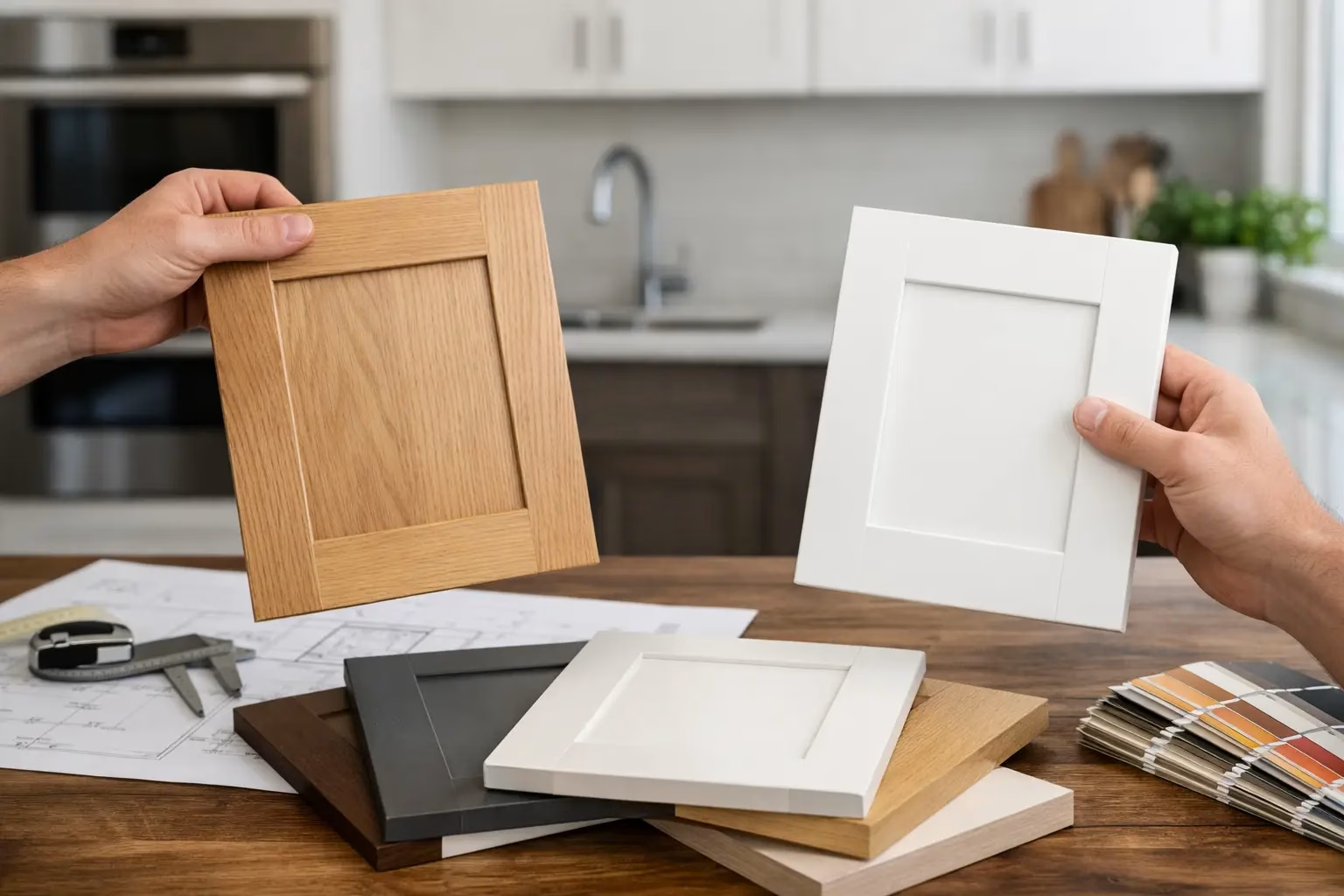
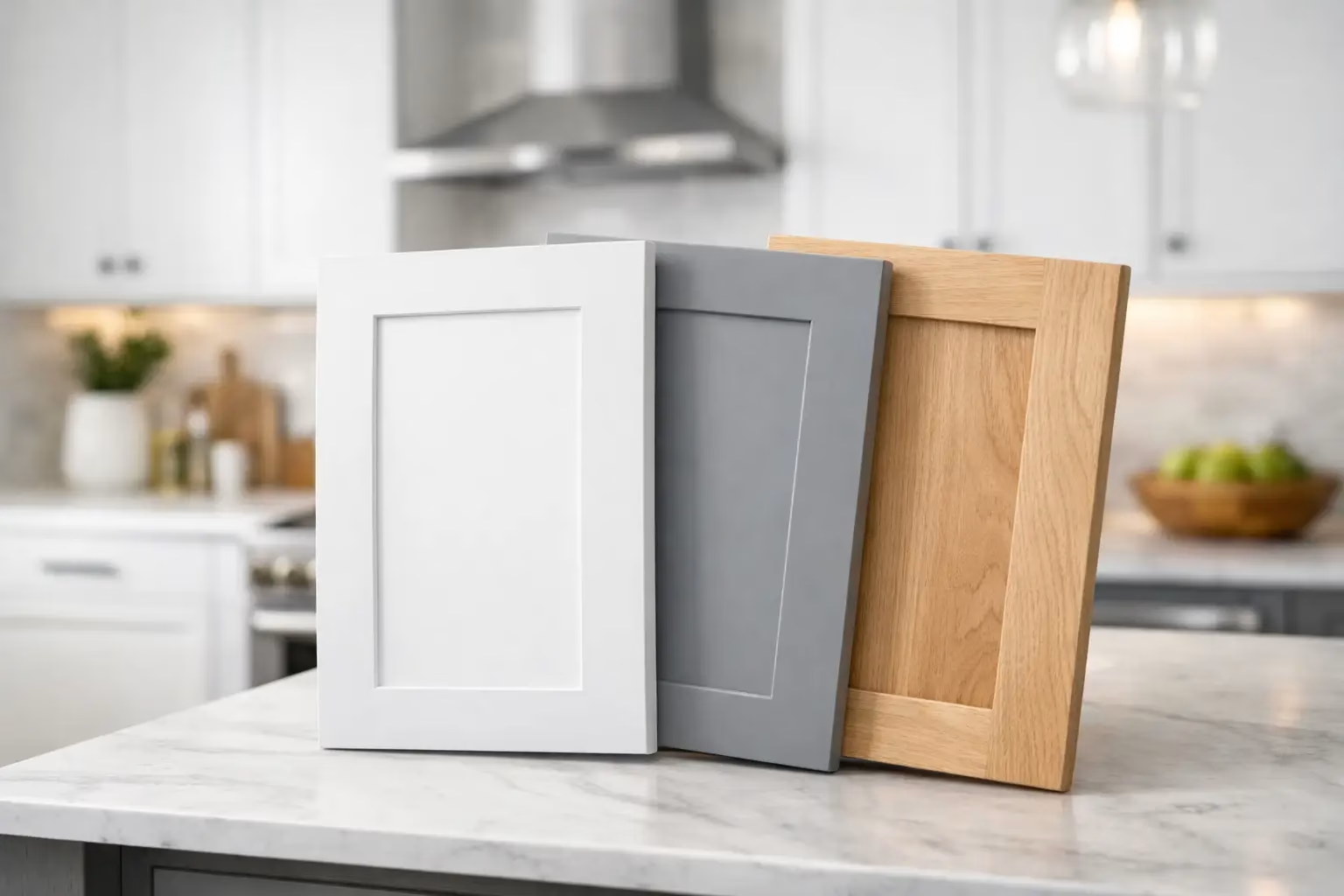
A physical sample gives you something much more useful – a real surface with real texture, sheen, and undertone. That matters because cabinet finishes do not live in isolation. A white door can look crisp next to marble but yellow next to a cool quartz. A wood-tone PVC finish can feel rich in daylight and muddy under warm recessed lighting. Sample colors let you test those changes before your order goes into production.

For DIY homeowners, samples also reduce the kind of mistake that gets expensive fast. Cabinet refacing saves money because you keep the boxes and replace what people actually see. If the color is off, the whole upgrade can feel disappointing even if the fit and style are perfect.

What to look for when comparing cabinet door sample colors

The first thing to pay attention to is undertone. Two colors can both be labeled white, gray, or beige and still behave very differently in a room. One white may lean creamy. Another may lean icy. One gray may carry a green base while another looks taupe. Those subtle differences are usually what decide whether a kitchen feels clean and current or slightly off.

Finish is the next factor. Matte, textured, and smoother surfaces reflect light differently. A color with a low-sheen finish often reads softer and more forgiving. A smoother or brighter finish can feel more modern, but it may also show fingerprints and glare more clearly depending on the room.

Then there is context. Hold samples next to the elements you are keeping. That usually means countertop material, wall paint, flooring, and backsplash. If you are adding new hardware, place the finish beside the sample too. Brushed gold, black, chrome, and bronze can all push the same cabinet color in a different visual direction.

How to test sample colors in your space

The best way to evaluate samples is simple. Move them around. Set them in the kitchen in the morning, again in the afternoon, and once more at night with the overhead lights on. Light is not consistent throughout the day, and your cabinet color will not be either.

Try placing the sample vertically as well as flat. Cabinet doors are seen upright, so a finish may catch light differently when held against the face of a cabinet box or wall. If possible, view it from a few steps back instead of only at arm’s length. That gives you a better sense of how the color will read across an entire run of cabinetry.

It also helps to compare fewer options at once. Homeowners often start with six or eight colors, which is fine for browsing, but final decisions are easier when you narrow it down to two or three. Too many samples side by side can make small differences feel bigger than they really are.

Popular directions homeowners take with cabinet color

Most cabinet projects fall into a few broad color directions, but each one comes with trade-offs.

White and off-white finishes remain popular because they brighten a room and work with many design styles. They are especially strong for smaller kitchens, darker spaces, and homeowners who want a clean update without chasing a short-term trend. The trade-off is that whites are the most sensitive to undertone. A white that looks safe online can be the trickiest color to get right in person.

Gray tones still appeal to homeowners who want something neutral but less expected than white. They can feel tailored and contemporary, especially with simple shaker-style doors. The challenge is that some grays age better than others. A warm greige can feel timeless, while a cooler blue-gray may depend more heavily on the rest of the room.

Wood-look finishes and warm neutrals have gained ground because they add depth without making a space feel heavy. These colors work well in kitchens where people want warmth, especially when paired with white counters or lighter walls. The key is balance. Too much warmth in the floor, door finish, and paint can make the room feel dated instead of inviting.

Darker finishes create contrast and can look high-end in the right layout. They often work best where there is good natural light or when used selectively, such as on an island or lower cabinets. In a smaller or dim kitchen, going too dark across every cabinet can make the room feel tighter.

Matching sample colors to cabinet style

Color is only half the decision. Door style changes how that color feels once installed.

A shaker door in a soft white usually reads classic and versatile. The same color on a slab door looks cleaner and more modern. Raised panel doors can make traditional colors feel richer, while flatter profiles often support a simpler, more contemporary palette.

This is why sample colors should be considered alongside the door design you plan to order. A warm beige on an ornate door may lean formal. On a sleek, flat-front style, it may feel understated and current. When homeowners think a color is wrong, sometimes the issue is really the combination of style and finish.

Why samples help budget-conscious remodelers make better decisions

One of the biggest advantages of cabinet refacing is value. You keep the cabinet structure that still works and upgrade the visible pieces for a dramatic change without the cost of a full tear-out. But that value only holds if the final result looks right.

Ordering cabinet door sample colors first is a practical step that protects your budget. It is far less expensive to test colors up front than to second-guess a full custom order later. Samples also make decision-making faster once you are ready to choose your exact measurements, door style, and finish.

For homeowners comparing custom refacing against stock options from a big-box store, this is where custom often shows its strength. Stock cabinetry limits your sizing and finish choices. Custom doors let you tailor the fit and the look, but that flexibility works best when you use samples to confirm your direction with confidence.

Turning inspiration into a confident final choice

A good cabinet update is not about chasing the trend of the month. It is about choosing a finish that works in your home, with your lighting, your layout, and the features you are keeping. Cabinet door sample colors give you a chance to slow down and make that call based on what you actually see, not what a product image suggests.

If you are planning a refacing project, start with the room you have. Look at what stays, gather a few strong sample options, and test them honestly in real conditions. Once the right color becomes obvious, the rest of the project tends to move much more smoothly. At The Door Maker, that kind of clarity is what turns a DIY upgrade into a finished space that looks custom, feels intentional, and stays satisfying long after the install is done.

FROM THE SAME CATEGORY

Jun 15 2026 BY Ksenija Lebec, Blog

Learn what cabinet doors fit framed cabinets, how overlay affects sizing, and how to choose the right custom door style for a clean refacing result.

Jun 11 2026 BY Ksenija Lebec, Blog

Comparing solid wood cabinet doors versus MDF? Learn the real differences in durability, cost, paint finish, moisture resistance, and value.

Jun 9 2026 BY Ksenija Lebec, Blog

See kitchen refacing color trends for 2026, from warm whites to deep greens, and learn how to choose cabinet colors that fit your space and budget.

Build a Door MADE TO FIT YOU

Custom Shaker Cabinet Doors That Fit Right

Custom Shaker Cabinet Doors That Fit Right

When cabinet boxes are still solid but the fronts look tired, shaker cabinet doors custom made for your exact openings can change the whole room without dragging you into a full remodel. That matters even more in older homes, where stock sizes rarely line up cleanly and “close enough” usually turns into filler strips, uneven reveals, and frustration.

Shaker style has staying power for a reason. It is simple, balanced, and flexible enough to work in farmhouse kitchens, transitional bathrooms, home offices, laundry rooms, and built-ins. But the style only looks polished when the fit is right. A beautiful profile cannot fix a door that is undersized, oversized, or misaligned with your existing cabinet boxes.

Why custom shaker cabinet doors make more sense than stock

Stock cabinet doors seem convenient at first. You can compare a few sizes, pick a finish, and imagine the project moving quickly. The problem shows up when your cabinets were built decades ago, installed by a previous owner, or modified over time. Many homes have openings that are off by fractions of an inch, and those fractions matter.

Custom shaker cabinet doors are built to your measurements, not the other way around. That means better spacing between doors, cleaner lines around drawer fronts, and a finished look that feels intentional. If you are refacing instead of replacing cabinet boxes, custom sizing is often the difference between a project that looks updated and one that looks patched together.

There is also the value side. Replacing an entire kitchen because the doors are dated is expensive and wasteful when the cabinet structure is still in good condition. Refacing with custom doors lets you keep what works and upgrade what people actually see every day.

The appeal of shaker style is simple, but not basic

Shaker doors are known for a recessed center panel and clean frame. That simplicity is exactly why they work in so many spaces. They do not fight with countertops, backsplash tile, hardware, or flooring. They give a room structure without making it feel busy.

That said, not all shaker doors feel the same. Rail widths, stile proportions, panel details, edge profiles, and finish choices all affect the final look. A narrow frame can feel more contemporary. A wider frame can lean more classic. White remains a favorite, but wood tones, painted colors, and durable PVC options can shift the style dramatically.

This is where custom ordering helps again. You are not limited to whatever a store decided to stock. You can choose a look that fits your space instead of trying to force your space to fit a preset collection.

What to know before ordering shaker cabinet doors custom

The most important step is measuring. That sounds obvious, but it is where many refacing projects are won or lost. A door that is even slightly off can create uneven gaps or interfere with nearby doors and drawers. If you are ordering replacement fronts for existing cabinets, you need exact dimensions and a clear understanding of overlay.

Overlay affects how much the door covers the cabinet opening and frame. In a framed cabinet, that determines how much face frame remains visible. In a frameless cabinet, it affects spacing and swing clearance. If you are matching existing doors, you will want to measure current overlays carefully. If you are redesigning the look, you may have more flexibility, but the hinge choice still needs to match the plan.

You should also think through door thickness, hinge boring, drawer front sizes, and whether you want a matching style across the kitchen, bath, and other built-ins. Many homeowners start with the kitchen and then realize the pantry, laundry room, mudroom, or office would benefit from the same upgrade. Planning those spaces together often creates a more cohesive home and can simplify ordering.

Material and finish choices affect durability as much as style

A shaker profile can be made in different materials, and each option has trade-offs. Solid wood offers warmth and classic character, but like any natural material, it can respond to humidity and temperature changes. MDF is often chosen for painted finishes because it provides a smooth surface and avoids grain telegraphing through paint. Rigid thermofoil and PVC options can be attractive for homeowners who want consistent color and easier maintenance.

There is no one-size-fits-all answer here. A busy family kitchen may prioritize low-maintenance surfaces. A custom office or bar area may lean more toward a furniture-like wood finish. Bathrooms bring moisture into the equation, so finish performance matters there too.

The right choice depends on where the doors will be used, how the room is ventilated, and what kind of maintenance you are comfortable with. A good custom order is not just about what looks best on day one. It is about what will still look good after years of daily use.

Refacing works best when the details match the vision

Homeowners often think of cabinet doors first, but the finished result comes from the whole front-facing package. Drawer fronts, end panels, moldings, valances, mullions, and decorative accents can take a basic refresh and make it feel truly complete. If your goal is a high-end result without replacing cabinet boxes, these details matter.

For example, a kitchen with new shaker doors but old, worn drawer fronts will still feel incomplete. The same goes for exposed cabinet ends that do not match the new door style. On the other hand, when the fronts, panels, and trim are coordinated, the room reads as a full renovation rather than a compromise.

That is one reason many DIY homeowners prefer working with a custom manufacturer instead of piecing together parts from multiple sources. Consistency in sizing, style, and finish reduces the risk of mismatched tones or awkward proportions.

A better process makes a DIY project feel manageable

Most homeowners are not professional cabinet makers, and they should not have to be. The best custom ordering experience gives you a clear path from measurements to design to final order. That is especially helpful if you are comparing options against big-box stores, where support can be limited and custom choices may still feel surprisingly rigid.

A tool that lets you build your door, select your style, confirm dimensions, and choose finish options takes a lot of uncertainty out of the process. Just as important, educational support matters. Measuring guides, tutorials, and real customer service can save time and prevent expensive mistakes.

At TDM – The Door Maker, that practical support is part of the value. Homeowners want custom results, but they also want confidence that they are ordering the right product for the project in front of them.

When custom is worth it, and when it might not be

In most refacing projects, custom is the smart move because cabinets are rarely as standard as they seem. If your home has non-standard openings, older cabinet boxes, or a layout you want to preserve, custom shaker doors usually deliver a far better result than stock sizes.

There are cases where stock could work. If you have newer cabinets built around common dimensions and you are comfortable making visual compromises, a ready-made option may get you by. But that is usually a short-term decision based on convenience, not finish quality.

If you are investing time into repainting boxes, updating hardware, and improving the look of a room you use every day, the front-facing pieces should fit correctly. Doors are the first thing people see. They should not be the place where the project cuts corners.

Getting the look right without overspending

A full cabinet replacement can quickly push a renovation budget out of reach. Refacing with custom shaker doors gives you a more controlled investment while still delivering major visual impact. You are not paying to tear out usable cabinet boxes, replace countertops unnecessarily, or rework the room around new casework.

That makes custom refacing especially appealing for homeowners who want a tailored finish but still care about value. You can put your budget into the surfaces and details that create the biggest transformation. In many homes, that means new doors, drawer fronts, hardware, and a coordinated finish plan.

Good design does not always come from spending more. Often it comes from making smarter decisions about where precision matters most.

Shaker cabinet doors custom built for your project give you that precision. They respect the cabinet boxes you already have, solve sizing issues stock options cannot, and help you create a cleaner, more finished space without taking on the cost of a full replacement. If your cabinets are structurally sound and your style needs an update, that is a practical place to start.

FROM THE SAME CATEGORY

Jun 15 2026 BY Ksenija Lebec, Blog

Learn what cabinet doors fit framed cabinets, how overlay affects sizing, and how to choose the right custom door style for a clean refacing result.

Jun 11 2026 BY Ksenija Lebec, Blog

Comparing solid wood cabinet doors versus MDF? Learn the real differences in durability, cost, paint finish, moisture resistance, and value.

Jun 9 2026 BY Ksenija Lebec, Blog

See kitchen refacing color trends for 2026, from warm whites to deep greens, and learn how to choose cabinet colors that fit your space and budget.

Build a Door MADE TO FIT YOU

Cabinet Refacing Cost vs Replacing

Cabinet Refacing Cost vs Replacing

If your kitchen cabinets look tired but the boxes are still solid, the real question usually is not whether to update them – it is whether the money is better spent on refacing or full replacement. When homeowners compare cabinet refacing cost vs replacing, they are really weighing three things at once: budget, disruption, and how much change they actually need.

For many homes, especially older homes with cabinets that were built better than what you would buy off the shelf today, refacing can deliver the visual transformation people want without tearing out perfectly usable cabinet boxes. But that does not mean replacing is never the right call. The best choice depends on cabinet condition, layout goals, and how customized you want the final result to be.

Cabinet refacing cost vs replacing: what changes the price?

The price gap between refacing and replacing can be significant, but it is not just about materials. You are also paying for labor, demolition, disposal, installation complexity, and how far the project reaches beyond the cabinets themselves.

With cabinet refacing, you typically keep the existing cabinet boxes and update the visible exterior. That often means new custom cabinet doors, drawer fronts, matching veneer or end panels, updated hinges, and new hardware. If the cabinet frames are in good shape and the layout works, this approach removes a huge portion of the expense that comes with a full tear-out.

Replacing cabinets is a bigger project by nature. You are paying for new boxes, removal of old cabinetry, hauling debris away, and often adjustments to flooring, countertops, plumbing, or electrical depending on the new layout. Even when the new cabinets are stock units, the total can climb quickly once installation and finish details are added.

That is why a simple side-by-side price comparison can be misleading. Refacing costs less in many cases because you are preserving what is still working and investing only where the transformation shows.

When refacing is usually the better value

Refacing makes the most sense when your cabinet boxes are structurally sound, securely installed, and still function well. If the doors are outdated, the drawer fronts are worn, or the finish no longer matches the look you want, replacing those visible components can dramatically change the room.

This is where many DIY homeowners find the sweet spot. Instead of paying for entirely new cabinetry, they order made-to-size doors and drawer fronts, choose a style that fits the home, and update the cabinet exterior for a far lower total investment. In practical terms, you are putting your money into appearance and finish rather than rebuilding the whole system.

Refacing also tends to be a smart choice when your cabinet sizes are unusual. Older homes often have non-standard openings, and trying to replace those cabinets with stock options can create awkward gaps, fillers, or extra carpentry. Custom refacing keeps the original layout while giving you a more tailored look.

There is also a waste factor that matters. If the boxes are strong and serviceable, removing them just to change the style can be an expensive and unnecessary reset. Refacing lets you preserve the usable structure and still get a clean, updated result.

When replacing cabinets earns its higher cost

There are times when replacement is worth every extra dollar. If your cabinet boxes are water-damaged, sagging, poorly built, or badly out of square, refacing may only cover up deeper problems. A fresh exterior will not fix weak construction.

Replacement is also the better route if you want to change the kitchen layout in a meaningful way. If you plan to move appliances, add an island, rework storage zones, or improve traffic flow, keeping the existing boxes may hold the whole project back. In that case, full replacement supports a functional redesign, not just a cosmetic update.

Homeowners sometimes assume replacement automatically means better quality, but that depends on what you buy. A well-built existing cabinet box can outperform a lower-grade replacement cabinet. So the real comparison is not old versus new. It is solid structure plus custom updating versus starting over from scratch.

The hidden costs people forget

The biggest budgeting mistakes happen when people compare only product prices and ignore project costs around them.

With replacement, demolition is the obvious one. Old cabinets need to come out, and someone has to haul them away. Then come the adjustments. If flooring does not run under the old cabinets, a new layout may expose unfinished areas. Countertops may need to be removed and replaced. Backsplash repairs may follow. Small changes can trigger a chain reaction.

Refacing usually avoids much of that disruption. Since the cabinet boxes stay in place, the project can remain focused on doors, drawer fronts, panels, and finishing details. That often means less downtime in the kitchen and fewer surprise costs.

There is also the labor variable. A homeowner with accurate measurements, patience, and the right support can take on parts of a refacing project and reduce overall expense. Full cabinet replacement is much harder to simplify. Once removal, leveling, fitting, and layout corrections enter the picture, the skill requirement goes up fast.

How to decide if your cabinets are good candidates for refacing

A cabinet does not need to be pretty to be worth keeping. It needs to be sound.

Open the doors and look at the boxes themselves. Are the side panels stable? Do the shelves hold weight without bowing badly? Are the cabinet frames attached firmly? Do drawers open properly, even if the fronts are dated? If the answer is yes, refacing is often still on the table.

Surface wear is not usually the deal breaker. Chipped doors, faded finishes, old hinge styles, and out-of-date profiles are exactly the kinds of problems refacing is meant to solve. Structural issues are different. Water damage under sinks, severe warping, and cabinets pulling away from the wall point to replacement instead.

A lot of homeowners are surprised to learn how much the right doors can change the entire room. Door style, panel profile, finish, and hardware do most of the visual work. Once those elements are updated, the kitchen often feels custom without the cost of a full custom cabinet install.

Cost is important, but so is return on effort

The better question is not just, which option is cheaper? It is, which option gets you the result you want for the amount you want to spend and the amount of work you are willing to take on?

If you love your kitchen layout and want a major style upgrade without a major construction project, refacing usually gives you the strongest return. You can focus on custom sizing, better design choices, and cleaner finishes without paying for a full reset.

If your kitchen no longer works for your household, or the cabinets are failing, replacement gives you a chance to fix the underlying issues. It costs more because it solves more. That can be the right investment when function is the real problem.

For many DIY renovators, the best value sits in the middle: keep the cabinet boxes that still serve you well, then upgrade the parts that define the look every day. That is why custom-fit doors and drawer fronts matter. Precision sizing helps older cabinets feel new instead of patched together.

At TDM – The Door Maker, that is the advantage homeowners are after. They want the flexibility to choose the style, color, and fit that works for their space without being pushed into full replacement just to get a fresh look.

Which option makes sense for your home?

If your cabinet boxes are solid, your layout still works, and your goal is a dramatic visual update at a better value, refacing is often the smarter spend. If the boxes are damaged, storage is poorly planned, or you are redesigning the room from the ground up, replacement may justify the extra cost.

The key is to be honest about what is actually wrong. If the problem is mostly appearance, replacing everything can be overkill. If the problem is structure or function, refacing may only delay the bigger fix.

A good renovation decision feels clear once you separate cosmetic changes from structural ones. Start there, measure carefully, and choose the option that improves the space without paying for work you do not need.

FROM THE SAME CATEGORY

Jun 15 2026 BY Ksenija Lebec, Blog

Learn what cabinet doors fit framed cabinets, how overlay affects sizing, and how to choose the right custom door style for a clean refacing result.

Jun 11 2026 BY Ksenija Lebec, Blog

Comparing solid wood cabinet doors versus MDF? Learn the real differences in durability, cost, paint finish, moisture resistance, and value.

Jun 9 2026 BY Ksenija Lebec, Blog

See kitchen refacing color trends for 2026, from warm whites to deep greens, and learn how to choose cabinet colors that fit your space and budget.

Build a Door MADE TO FIT YOU