
Blog

Top 3 Fast Cabinet Doors Review Alternatives 2026

Top 3 Fast Cabinet Doors Review Alternatives 2026

Custom cabinet door projects too often stall waiting for precise fit, style matching, and fast turnaround. Many suppliers restrict orders to standard sizes, limit material or finish choices, and ship only within the United States. You can compare style, material, sizing, and shipping options across three direct alternatives to pick a supplier that fits your project timeline and design goals.

Table of Contents

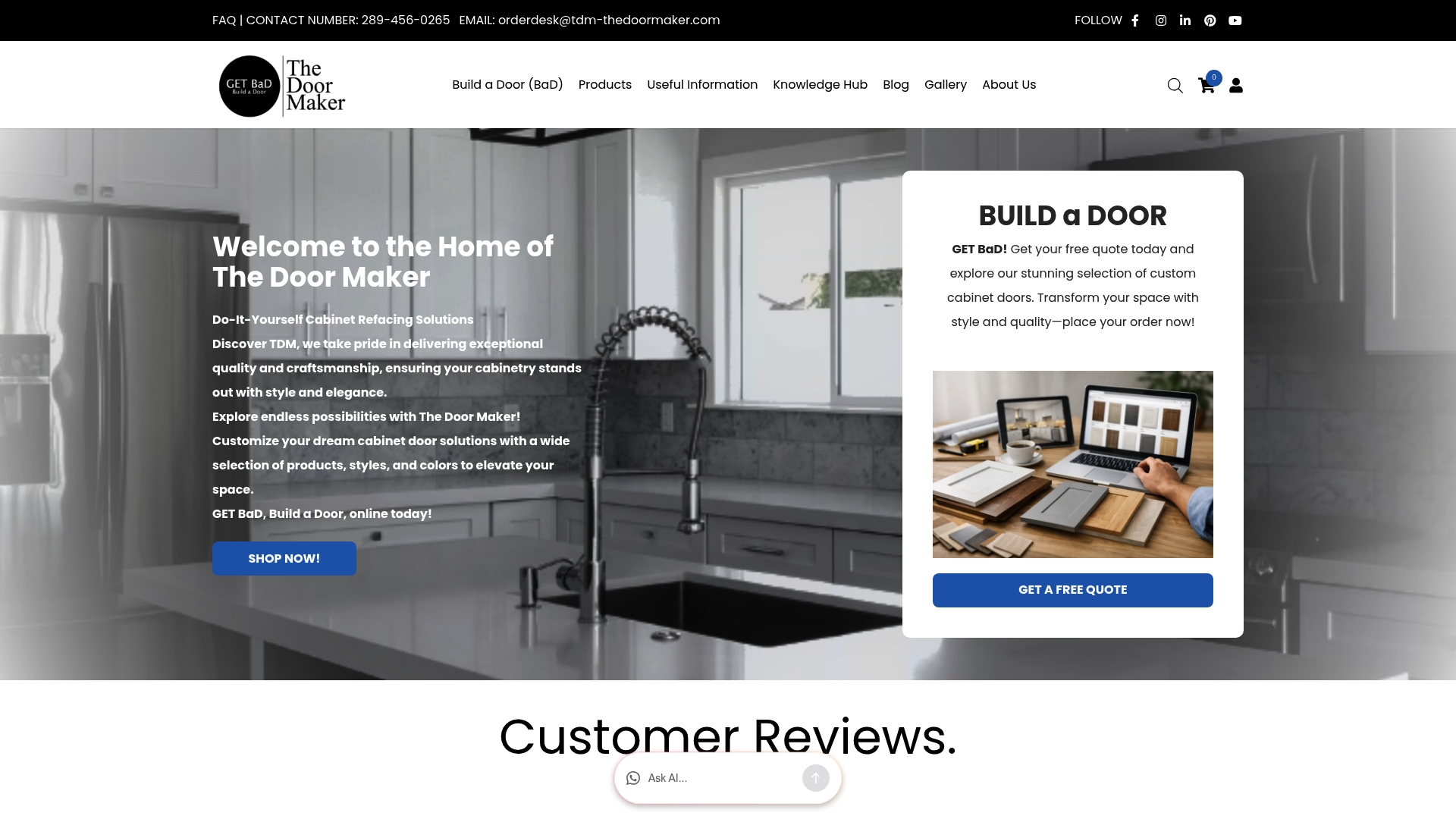
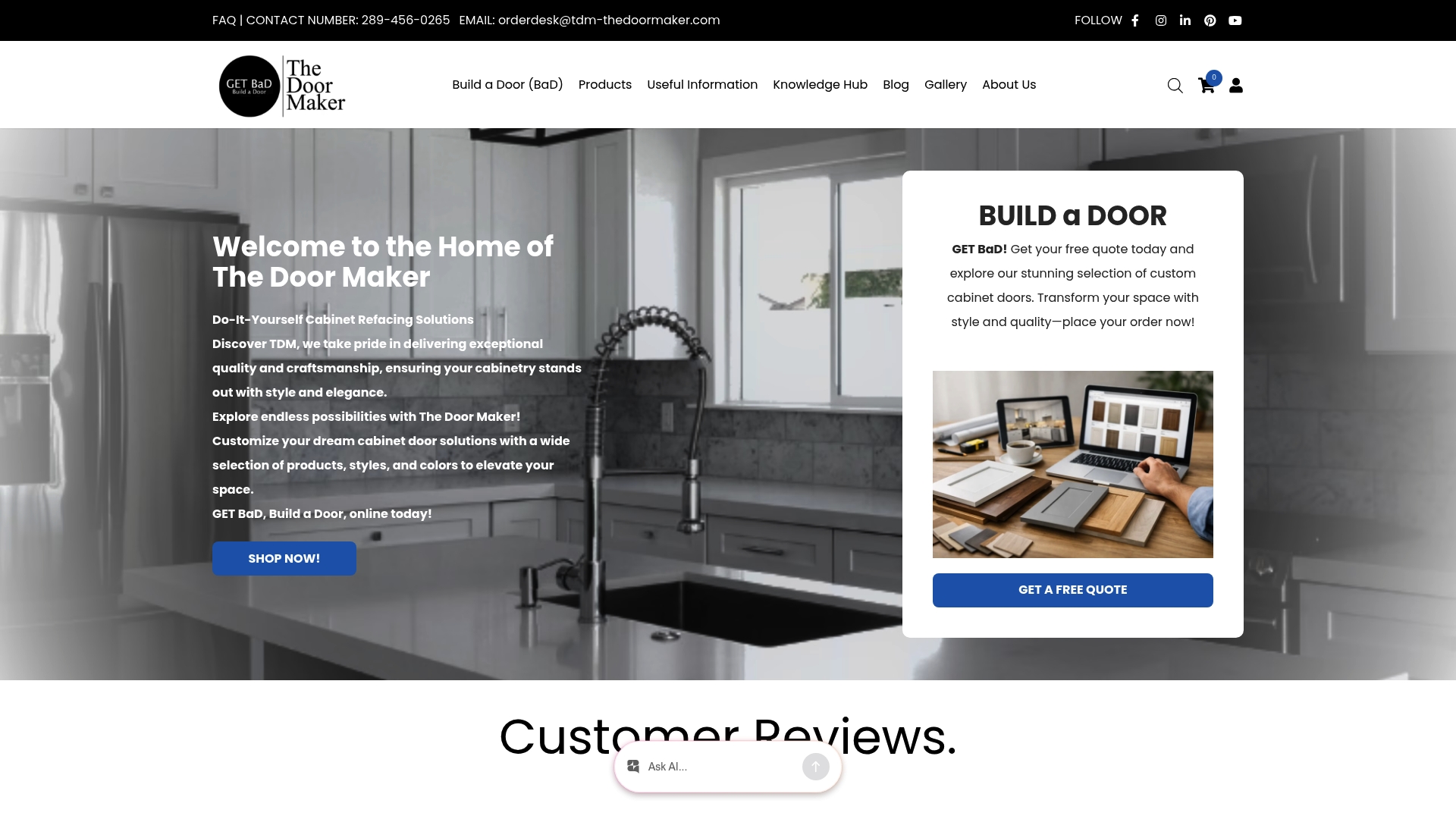
TDM – The Door Maker
https://tdm-thedoormaker.com

At a Glance

A manufacturing tolerance of 1/10000" promises an exceptionally tight fit for custom cabinet doors. The catalog lists more than 130 color options and over 30 door styles to match most décors. The vendor advertises lead times of about four weeks for standard orders.

Core Features

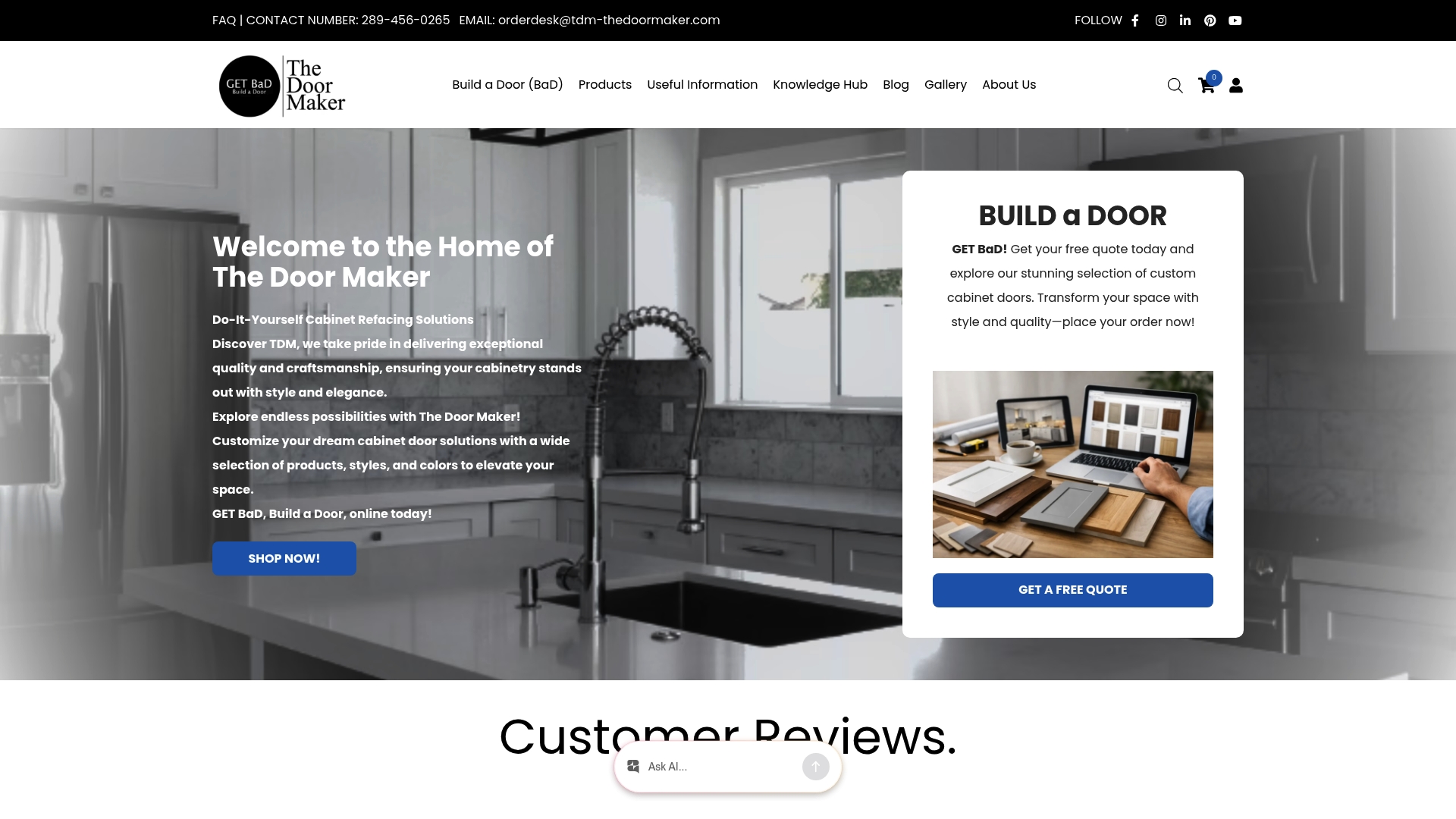
TDM centers its workflow on the Build-a-Door online configurator, which lets you enter exact measurements, pick profiles, and preview finishes before ordering. The product line emphasizes thermofoil finishes, extensive accessory options such as mullions and frames, and a library of installation tutorials. The site supports DIY homeowners, contractors, and retailers with sample doors and color swatches to verify choices.

Key Differentiator

Extensive customization paired with a precise online ordering system and nearly five decades of industry experience sets this offering apart. The combination of a large palette of finishes and tight manufacturing tolerances reduces on-site trimming and rework. That focus on measurement, design, and orderability shortens the path from concept to installed door.

Pros

You get a very broad aesthetic selection, from classic profiles to modern slab doors, backed by over 130 colors and 30 plus styles. High precision cutting at the stated tolerance improves fit for retrofits and refacing projects, which reduces installation time. The configurator and the available tutorials make custom ordering accessible to homeowners and small contractors, and the company advertises positive customer reviews that praise quality and service.

Cons

  • Limited to North America with no international shipping options.

Who It’s For

You should pick TDM if you are a DIY homeowner or a small contractor who values precise, ready to install cabinet fronts. Retail buyers seeking wholesale quantities will find the catalog suited to resale. Choose this brand when you want to replace door faces without replacing box carcasses.

Unique Value Proposition

The Build-a-Door configurator lets you skip much of the guesswork by accepting precise measurements and returning an order-ready specification and visual preview. That workflow reduces the need for in-person templating and lowers the risk of costly resizing during installation. The vendor advertises that its pricing often undercuts larger retailers by thousands, which can make custom refacing more affordable than full replacement.

Real World Use Case

A homeowner planning a kitchen refresh uses the configurator to select a shaker profile in a specific thermofoil color. They order a sample door and color swatches to confirm the cabinet finish. After placing the bulk order and following online installation guides, the homeowner receives the doors within the advertised timeline and completes the refacing job.

Pricing

Pricing typically ranges from approximately $15 to $53 per square foot depending on style and finish. Sample doors cost about $27, color swatches are $2 each, and gift cards come in fixed denominations; free shipping may apply to larger orders.

Website: https://tdm-thedoormaker.com

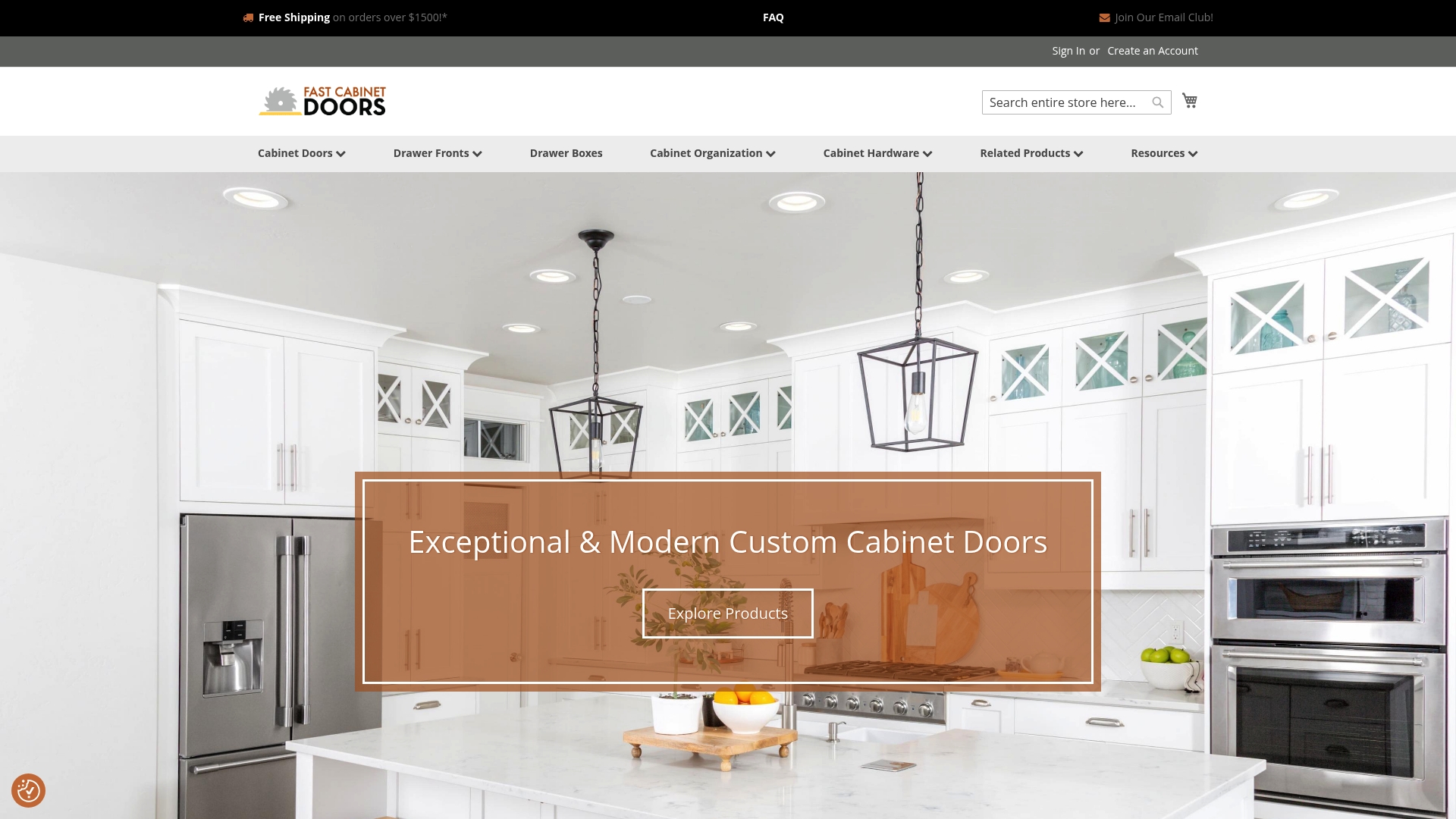
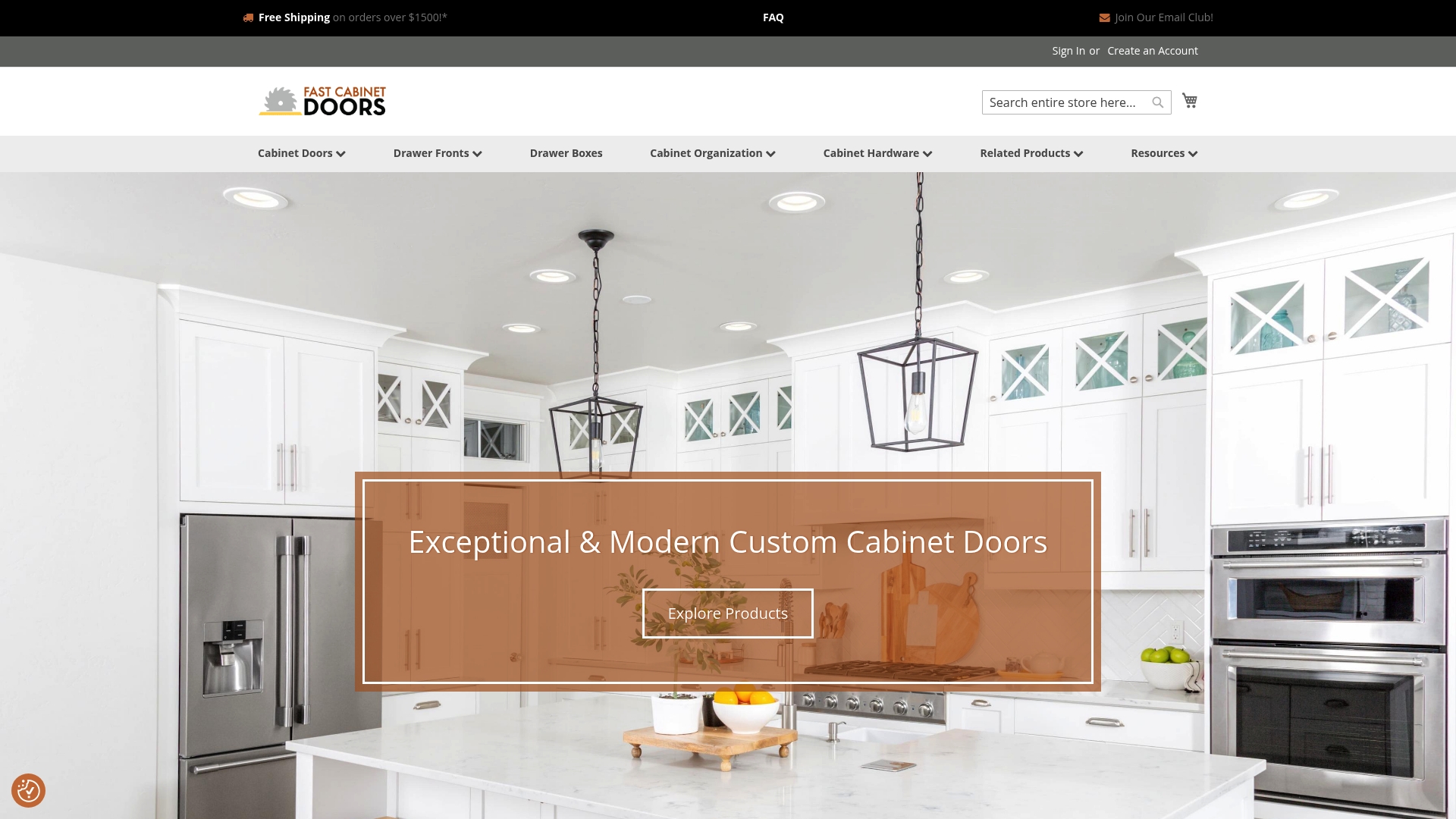
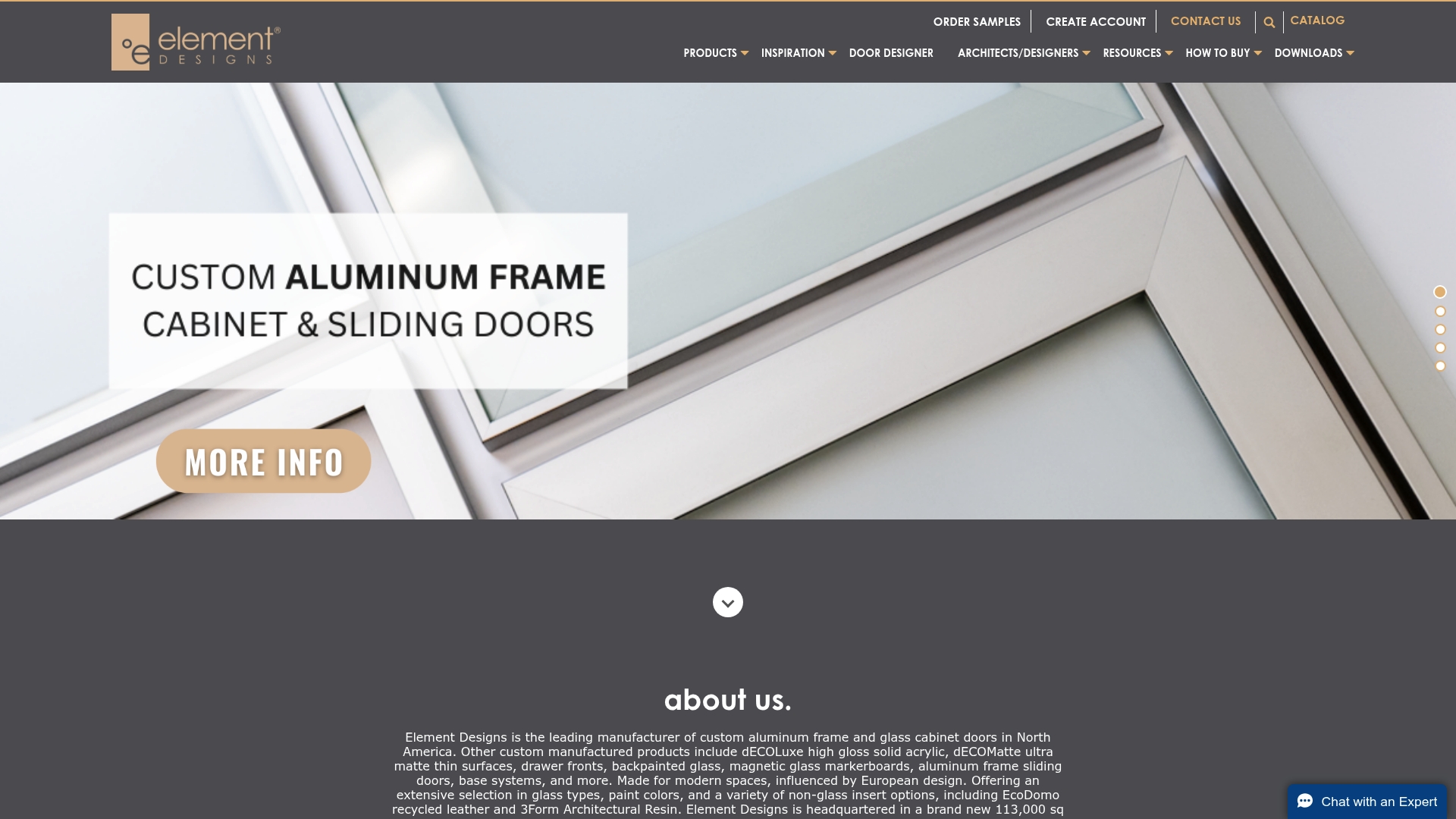
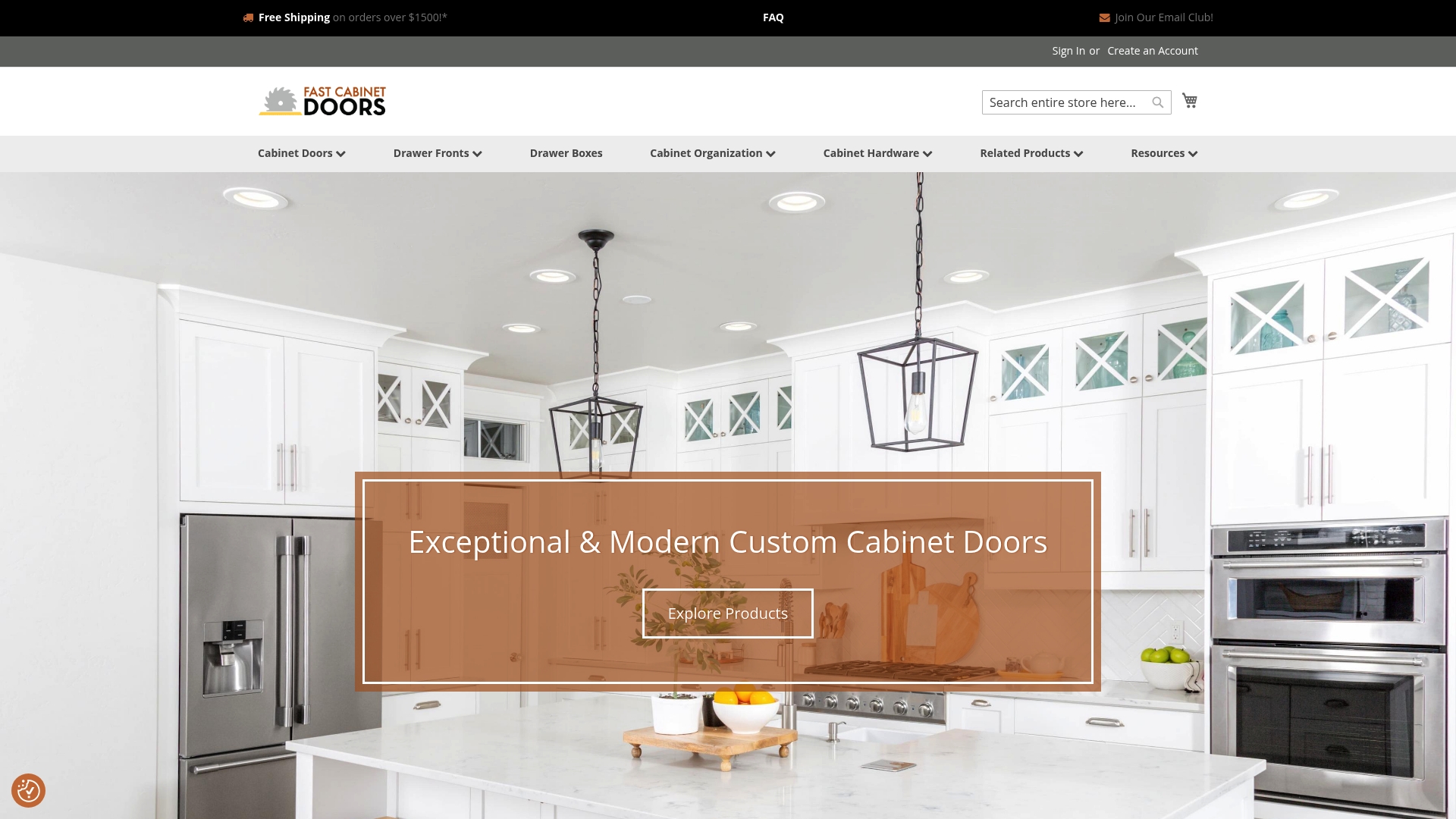
Fast Cabinet Doors
https://fastcabinetdoors.com

At a Glance

All cabinet doors, drawer fronts, and related components are handcrafted in the USA and shipped from California or North Carolina. The company dates back to 2008 and focuses on custom sizing, a wide selection of wood species, and fast regional delivery. This setup suits projects that need tailored door sizes and a clear match to existing cabinets.

Core Features

Fast Cabinet Doors pairs in-house craftsmanship with an extensive selection of wood species and classic to modern profiles. The site supports custom sizing and finishing options and sells complementary hardware such as hinges, slides, and knobs. An educational blog and customer support are available to guide measurement and installation decisions.

Key Differentiator

The vendor advertises a broad selection of US-made wood styles and custom sizes backed by local manufacturing. That emphasis on regional craftsmanship and a long style catalog sets the company apart from national big-box suppliers. The approach favors projects that require precise sizing and coordinated finishes.

Pros

The product range gives you strong style flexibility, from traditional raised panels to modern flat profiles, which helps match older frames or create a cleaner look. Prices stay competitive because the company manufactures in-house and sells direct to buyers, which can lower costs for bulk orders. Fast Cabinet Doors reports free shipping on orders over $1500, which reduces total cost for large remodels.

Cons

  • Page errors and broken links can interrupt browsing and make it harder to compare styles online.
  • Shipping outside the United States is limited, so international buyers will face higher cost or no service.
  • The company focuses on door and component supply rather than full cabinet assemblies or appliances.
  • Occasional website technical issues, such as “Page Not Found” messages, can delay ordering or quoting.

When It May Not Fit

If you need full cabinet boxes, integrated appliances, or a single-source cabinet install package, this supplier will not meet that need. If you manage an international portfolio of properties, limited global shipping rules will complicate logistics. If your project depends on flawless online navigation, the reported website issues could slow planning and ordering.

Who It’s For

You if you are a DIY homeowner refreshing cabinet fronts, a property manager replacing dozens of doors, or a small contractor sourcing custom face frames. You value local manufacturing, multiple species and finishes, and the ability to order nonstandard sizes. You also prefer guidance by phone or blog articles during installation.

Real World Use Case

A homeowner replacing tired doors chose modern shaker fronts and ordered custom sizes for mismatched cabinets. They read installation tips on the blog, called support about hinge placement, and placed a bulk order that qualified for free shipping. The doors arrived from a regional facility and fit with minimal trimming.

Pricing

According to the company, most cabinet doors and drawer fronts range from $XX to $XX per piece, with discounts for larger orders and custom quotes for bulk projects. The vendor reports free shipping on orders over $1500. Exact pricing requires selecting species, profile, finish, and custom dimensions.

Website: https://fastcabinetdoors.com

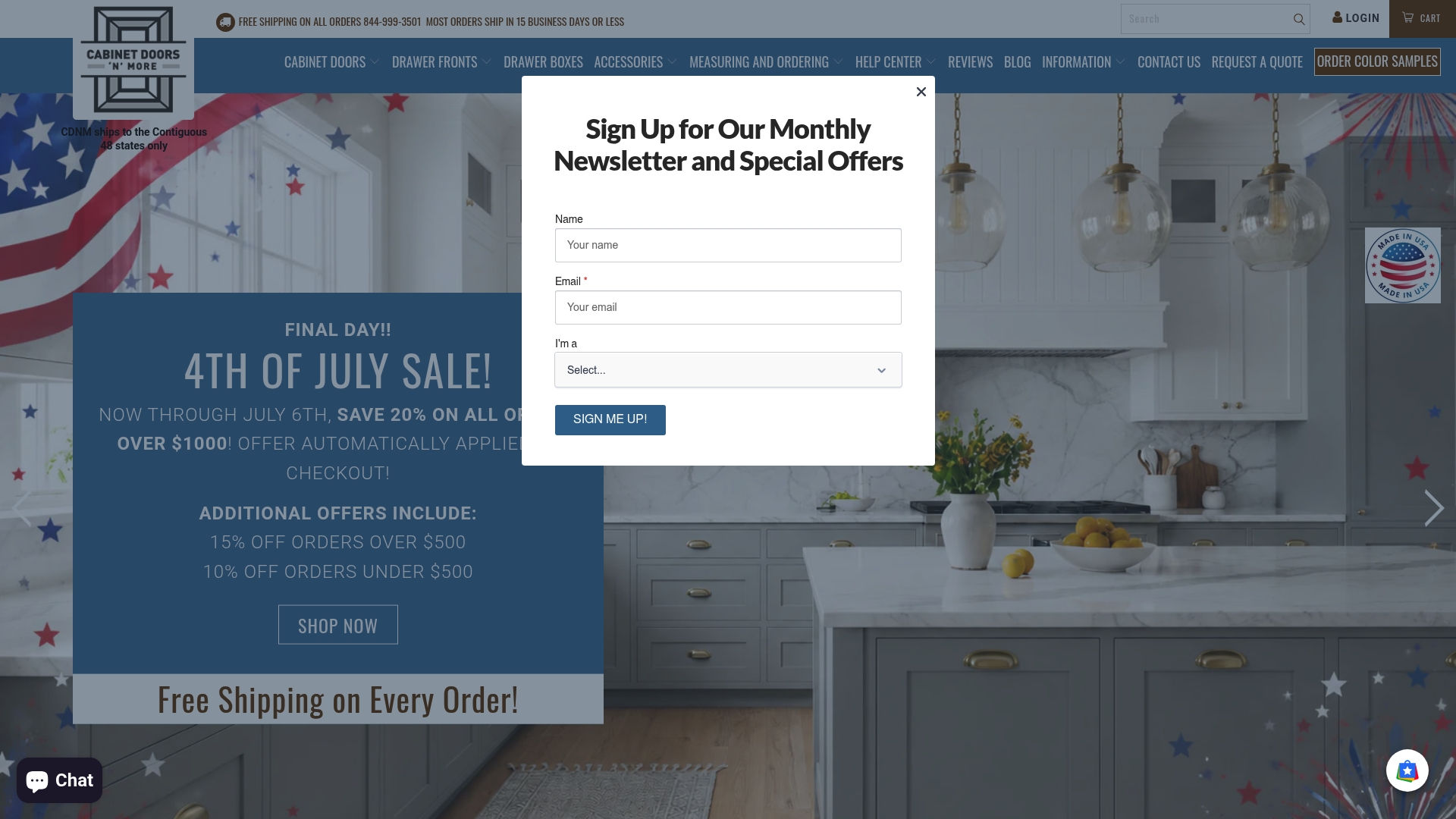
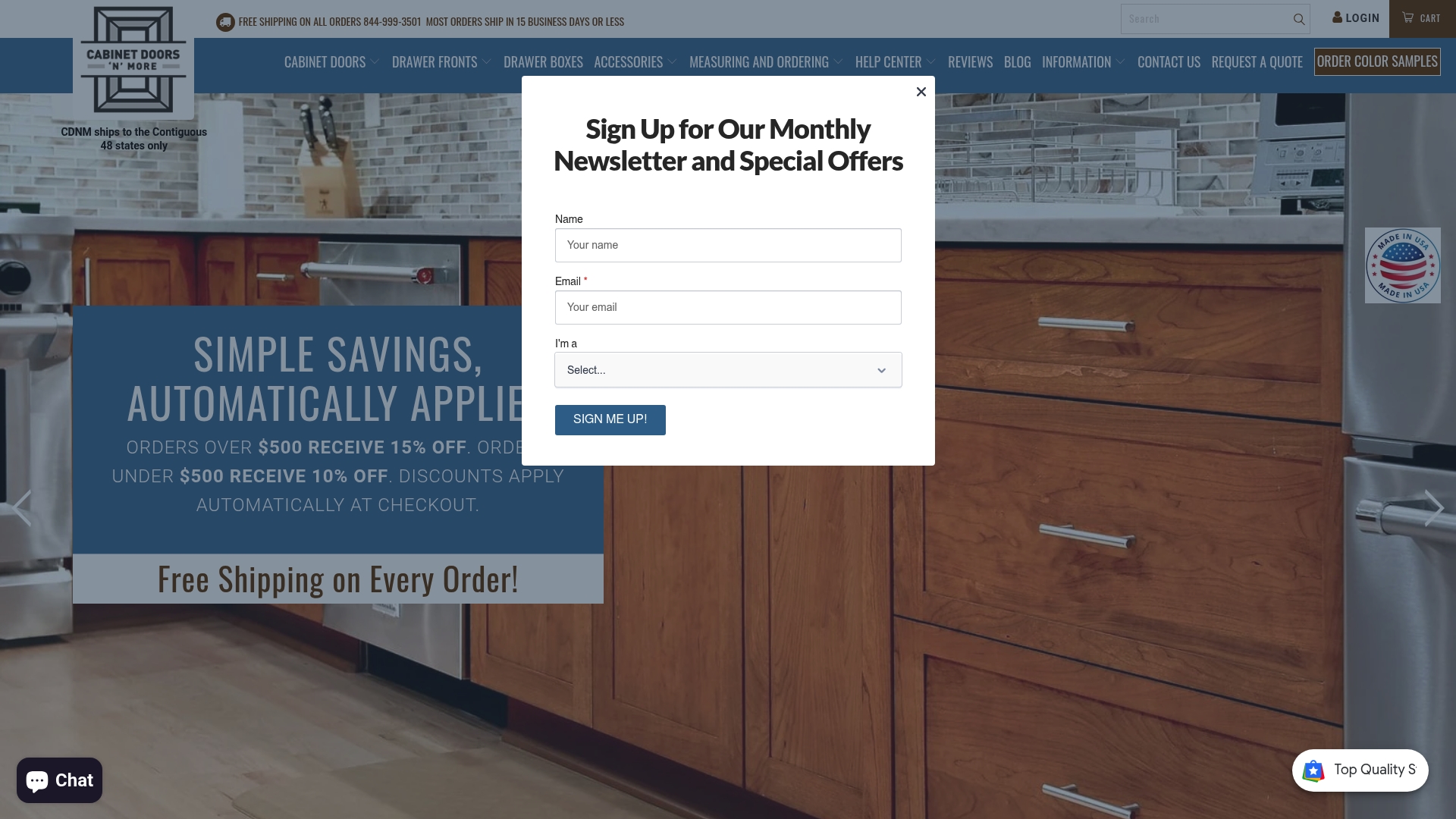
cabinetdoorsnmore.com
https://cabinetdoorsnmore.com

At a Glance

cabinetdoorsnmore.com claims a 15 business day turnaround for custom cabinet components. Orders ship from the United States and include free shipping and automatic discounts for orders over $500. The store focuses on replacement doors, drawer fronts, and drawer boxes available in solid wood, MDF, thermofoil, and veneer options.

Core Features

Custom parts are cut to precise customer measurements and shipped as individual doors, drawer fronts, and drawer boxes. Materials include solid wood, MDF, thermofoil, and veneers, and the catalog covers shaker, raised panel, arched, and slab profiles. The online ordering process supplies measurement guides to reduce rework and speed installation.

Key Differentiator

The defining trait is precisely measured, custom-built components paired with a rapid production window and free shipping. That focus makes cabinetdoorsnmore.com a narrower choice than Tdm-thedoormaker, which emphasizes a full refacing workflow and an end-to-end measure design order service. This vendor suits projects that only need replacement fronts rather than a full refacing package.

Pros

Materials and fabrication are sourced and built in the United States to target consistent fit and long service life for replacement parts. The selection of styles and materials lets you match common kitchen looks without custom cabinet construction. Fast production, clear measurement guides, and free shipping simplify logistics for DIYers and contractors working on tight timelines.

Cons

  • Limited to US shipping, which restricts international projects.
  • Parts ship unfinished, so painting or staining and related labor fall to the customer or a hired professional.
  • Focuses on components rather than full kitchen systems, so you will need separate services for cabinet boxes or installation.
  • Wholesale or commercial tiering beyond bulk discounts for larger orders is not heavily advertised.

When It May Not Fit

If you want finished, painted, and installed cabinets ready for immediate use, these components add extra labor and cost. Projects outside the United States may not receive shipping options or may face complex freight arrangements. Large commercial procurement that needs published tiered pricing might prefer a vendor with explicit wholesale programs.

Who It’s For

This offering fits DIY homeowners who can measure accurately and finish parts themselves. Remodelers and contractors benefit when they need custom sizes and consistent materials for multiple units. Buyers who prioritize precise fit, material choice, and a fast shop turnaround see the most practical value.

Real World Use Case

A homeowner follows the online guides, orders custom shaker doors and drawer fronts, and chooses expedited shipping. They receive parts within that timeline, finish the doors at home, and install them without major cabinet modification. The result cuts renovation costs compared with full cabinet replacement while matching the desired style.

Pricing

Pricing runs from $40 to $60 per square foot depending on material and profile. Orders over $500 trigger automatic discounts at checkout, and free shipping applies to every order. Expedited production options are available for faster delivery.

Website: https://cabinetdoorsnmore.com

Comparison of alternatives

Choosing the right custom cabinet door provider involves evaluating key aspects such as design precision, product variety, and overall process ease-of-use. Below, we compare three key providers to help clarify their specific strengths and niches.

Precision design and ordering workflow

Tdm-thedoormaker.com excels in this dimension, offering the Build-a-Door online configurator, which accepts exact measurements and provides visual previews of selected finishes and profiles. This capability minimizes errors and reduces the need for manual rework during installation, advantaging homeowners managing projects independently. Conversely, although the other providers offer measurement tools, they lack advanced configurator visualization features.

Material selection and accessibility

Fast Cabinet Doors stands out for its extensive variety of wood species, catering to buyers focused on using classic materials. This characteristic enriches its appeal to those restoring older cabinets or seeking high craftsmanship. Meanwhile, while the material diversity at cabinetdoorsnmore.com includes multiple budget-conscious options such as MDF and veneers, they expect customers to handle the finishing process, which may not appeal to less experienced DIYers.

Best fit

  • For homeowners or contractors focused on design accuracy and reducing installation complexities, Tdm-thedoormaker.com offers capabilities with its Build-a-Door configurator and precision manufacturing.
  • When wood species variety and traditional craftsmanship take priority, Fast Cabinet Doors provides an exclusive focus on US-made wooden components crafted locally.
  • Projects needing a speedy turnaround and minimized shipping costs benefit significantly from cabinetdoorsnmore.com due to its rapid production and free shipping.

Our pick

For customization that demands precision and efficient coordination, tdm-thedoormaker.com is a standout option. Although competitors offer strongly valued material variety or expedited timelines, the combination of tailored design tools, detailed options, and exceptional accuracy establishes Tdm-thedoormaker.com as the top choice.

For those comparing options for custom cabinet doors, here is a breakdown of three notable providers focusing on precision, material variety, and user convenience.

Provider Primary Feature Differentiator Pricing Limitation
Tdm-thedoormaker Build-a-Door configurator with precise customization options Extensive style choices with tight tolerances $15–$53 per square foot Limited to North American shipping
Fast Cabinet Doors Handcrafted US-made options in various wood species Local craftsmanship with bulk discounts Price not published Occasional website issues hinder ordering
cabinetdoorsnmore.com Rapid production of custom-sized components Precise fit-focused fabrication $40–$60 per square foot Ships unfinished, requiring added labor

Choosing Fast Cabinet Doors That Fit Your Project Needs

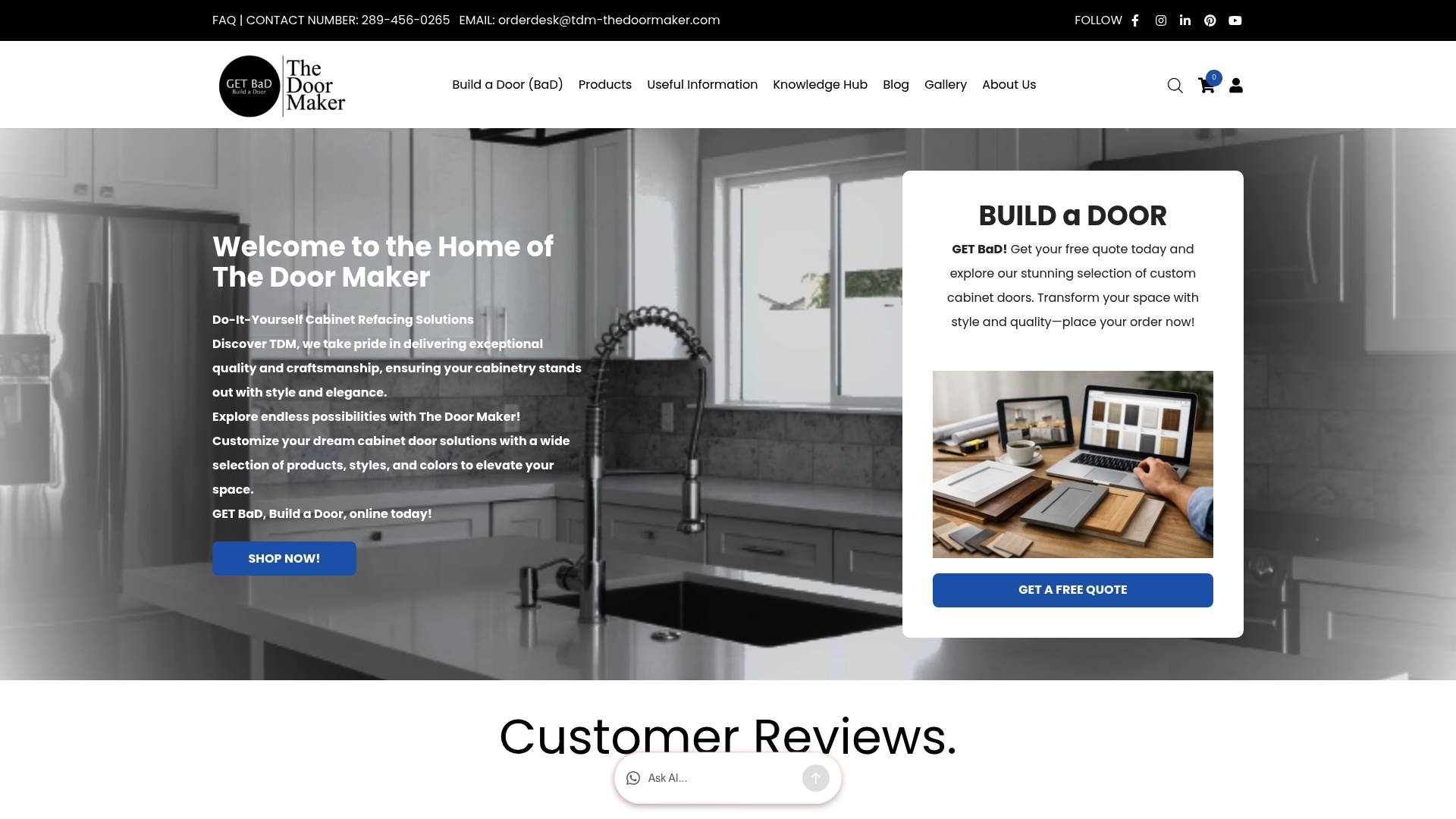
Refacing cabinetry with fast cabinet doors can be complex if you face fitting errors or limited style choices. Tdm-thedoormaker addresses these challenges by offering precise custom sizing with a manufacturing tolerance of 1/10000" and over 130 color options. For DIY homeowners and small contractors, this means less trimming on site and a better match to your design vision.
https://tdm-thedoormaker.com

Explore the Build-a-Door tool at Tdm-thedoormaker to submit exact measurements, preview styles, and order confidently. Act now for competitive pricing and a quick turnaround that often beats larger retailers—bringing your cabinet upgrade from concept to completion with ease.

FAQ

What makes Tdm-thedoormaker an ideal choice for custom cabinet doors?

Tdm-thedoormaker offers a manufacturing tolerance of 1/10000" for an exceptionally tight fit in custom cabinet doors. This high precision reduces the need for on-site trimming and improves installation efficiency. If you’re looking for cabinet doors that fit perfectly without extensive adjustments, Tdm-thedoormaker is an excellent choice.

How does Fast Cabinet Doors compare to Tdm-thedoormaker?

Fast Cabinet Doors excels in craftsmanship and offers a wide variety of wood species for customization in cabinet doors. While Fast Cabinet Doors provides a solid selection of handcrafted options, Tdm-thedoormaker’s strengths lie in its broad aesthetic selections and precise online configurator. You might prefer Fast Cabinet Doors if you prioritize specific wood types in your project.

What installation resources does Tdm-thedoormaker provide?

Tdm-thedoormaker supports DIY homeowners and contractors with installation tutorials available on their website. These resources are designed to guide you through the installation process, ensuring you feel confident handling your cabinet doors. Engaging with these tutorials can make your refacing project smoother and more manageable.

What benefits do custom sizes provide with Tdm-thedoormaker?

Custom sizes from Tdm-thedoormaker eliminate the need for extensive rework during installation. You get precisely measured doors tailored to fit your existing cabinets, significantly reducing installation time and effort. This makes Tdm-thedoormaker a practical option for homeowners tackling cabinet updates.

What pricing structure should I expect from Tdm-thedoormaker?

Tdm-thedoormaker’s pricing typically ranges from approximately $15 to $53 per square foot based on style and finish. The pricing structure is beneficial for DIY homeowners and contractors looking to budget effectively for their projects. If you’re considering a bulk order, you can also take advantage of potential discounts.
FROM THE SAME CATEGORY

Sep 8 2026 BY Ksenija Lebec, Blog

Landlords: inspect cabinets, run vacancy based ROI, budget $1,000–$13,000, and plan 1–3 day refacing installs with bulk order tips.

Build a Door MADE TO FIT YOU!

Slim Shaker Cabinets: A 2026 Homeowner’s Guide

Slim Shaker Cabinets: A 2026 Homeowner’s Guide

Slim shaker cabinets are defined by their narrower frame rails and stiles, typically measuring 0.75 to 1.75 inches wide compared to the 2 to 2.5 inch frames found on traditional shaker doors. That reduction in frame width is not just cosmetic. It shifts the visual weight of each door toward the center panel, creating a cleaner, more architectural look that works especially well in modern and compact kitchens. In 2026, slim shaker cabinet doors rank among the most requested styles for budget-conscious kitchen remodels, offering a middle ground between classic craftsmanship and contemporary minimalism.

What are slim shaker cabinets made of?

The substrate you choose for slim shaker cabinets determines how long they last and how well they hold their finish. The most common options are MDF (medium-density fiberboard), HDF (high-density fiberboard), engineered wood, and solid hardwoods like oak, maple, and walnut. Each material carries different trade-offs in cost, stability, and appearance.

MDF and HDF are the most popular choices for painted finishes. They resist grain telegraphing and accept paint evenly, which matters a great deal on slim profiles where surface imperfections are more visible. Solid hardwood frames offer natural beauty and strength, but they expand and contract with humidity changes, which can stress the joints on narrower rails.

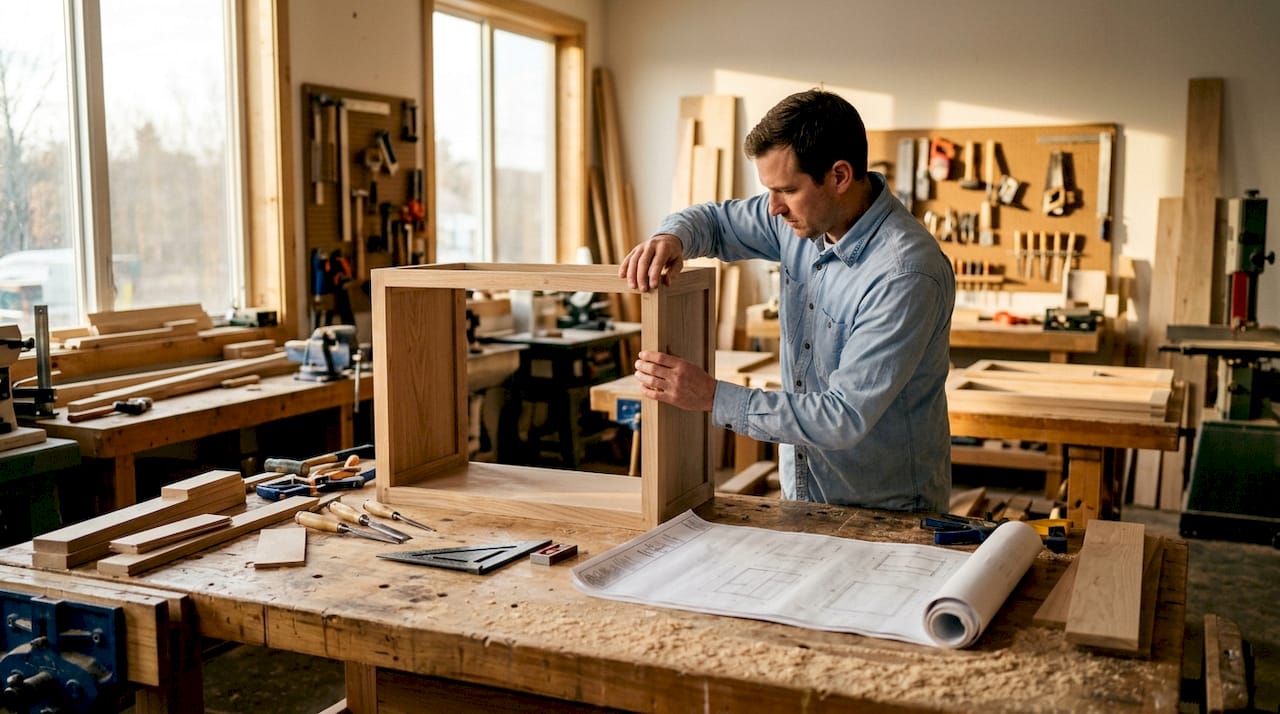
Craftsman assembling MDF slim shaker cabinet door

Construction method also plays a major role. Slim shaker doors are built using one of two approaches: a traditional five-piece frame-and-panel assembly, or a one-piece CNC-carved MDF design that eliminates the seam between frame and panel entirely. The one-piece method reduces cracking risk because there are no separate pieces to shift with temperature and moisture changes.

Finish choices affect both maintenance and longevity. Painted matte finishes on MDF or HDF routed as a single piece prevent the cracking common in multi-piece wood doors caused by expansion and contraction. Natural wood veneers offer warmth and character while keeping costs lower than solid wood.

  • MDF/HDF: Best for painted finishes; stable and budget-friendly
  • Solid hardwood (oak, maple, walnut): Premium look and feel; higher cost; requires climate control
  • Wood veneer over MDF core: Good balance of appearance and stability
  • Five-piece frame-and-panel: Traditional construction; allows real wood frames
  • One-piece CNC-carved MDF: Consistent finish; lower cracking risk

Pro Tip: Pros recommend using a high-quality veneer center panel instead of solid wood in slim shaker designs. MDF center panels combined with solid wood frames offer the best balance of stability and visual appeal, especially in kitchens with fluctuating humidity.

How much do slim shaker cabinets cost?

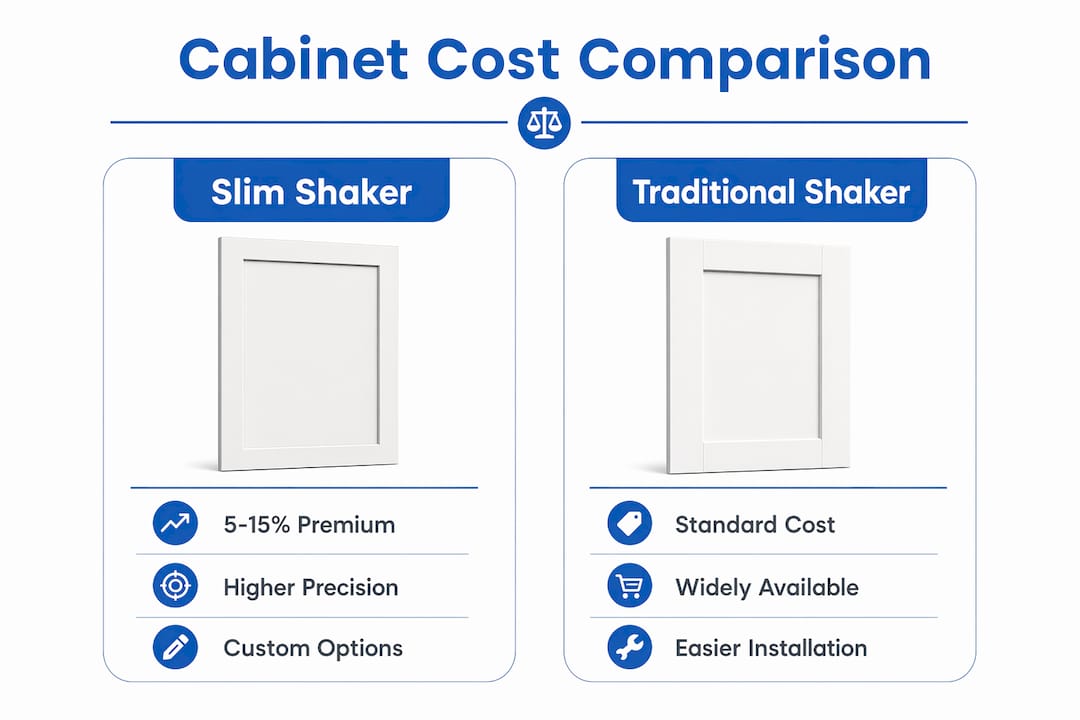
Slim shaker cabinets cost 5–15% more than traditional shaker cabinetry on average. That premium reflects tighter manufacturing tolerances and the precision cutting equipment required to produce narrower rails consistently. For most homeowners, the price difference is manageable, especially when weighed against the visual upgrade.

Infographic comparing slim and traditional shaker cabinet costs

Stock slim shaker cabinets start at around $150 per linear foot. Semi-custom options typically fall in the $300 to $600 range per linear foot. Full custom work, where you specify exact dimensions, materials, and finishes, can run from $500 to over $1,200 per linear foot. The gap between stock and custom is wide, so knowing your priorities before you shop saves real money.

Several factors push costs up or down within those ranges:

  • Material choice: Solid hardwood costs more than MDF or veneer
  • Finish type: Painted finishes cost less than stained or specialty coatings
  • Customization level: Non-standard sizes and configurations add to manufacturing time
  • Door construction method: CNC-carved one-piece doors often cost less than hand-assembled five-piece doors at scale
Cabinet type Stock price per linear foot Custom price per linear foot
Traditional shaker $130–$550 $450–$1,100
Slim shaker $150–$600 $500–$1,200+

The table makes the cost gap clear. For most remodels, the difference between traditional and slim shaker options is modest at the stock level. The gap widens significantly in the custom tier, where precision manufacturing commands a higher price. If budget is your primary concern, exploring refacing versus full remodel options can cut total project costs substantially.

What installation details matter most for slim shaker cabinets?

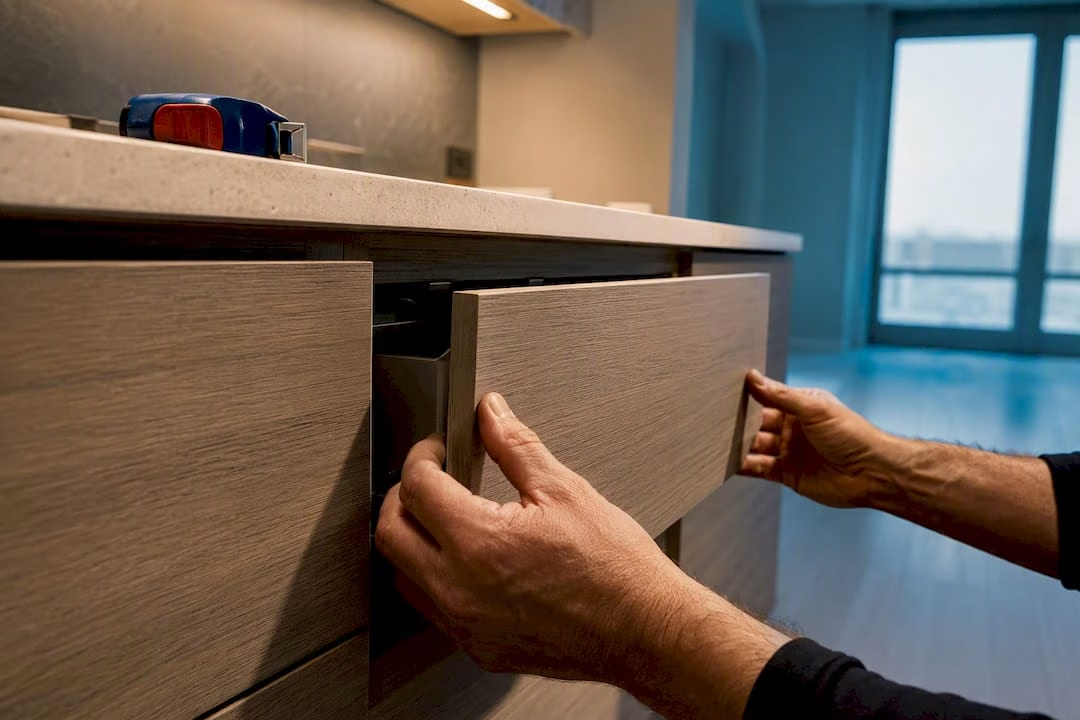
Slim shaker doors require a higher level of installation precision than traditional cabinetry. Minor cabinet misalignments become very noticeable on narrow frames. Uneven reveals and sagging that might go unnoticed behind a 2.5-inch frame stand out clearly on a 1.5-inch rail.

Reveal consistency is the most critical factor. The reveal is the gap between adjacent doors and between a door and its cabinet box. On slim shaker cabinets, that gap needs to stay uniform across every door in the run. Even a 1/16-inch variation reads as a visible flaw. This is why many experienced remodelers recommend professional installation for full kitchen runs, even if individual cabinet boxes are DIY-friendly.

Hinge selection also matters more than most homeowners expect. Soft-close concealed hinges distribute stress evenly across the door and reduce the risk of warping over time. Overlay amount affects how much of the cabinet box the door covers, and getting that measurement right before ordering prevents costly remakes.

Hardware choice completes the picture. Chunky or oversized hardware looks disproportionate on slim shaker profiles. Minimal bar pulls, small knobs, or finger-edge hardware maintain the clean silhouette the style is designed to deliver.

  • Check cabinet box squareness before hanging any doors
  • Use a laser level to confirm consistent reveal across the full run
  • Choose concealed soft-close hinges rated for your door weight
  • Measure overlay precisely and confirm with your door supplier before ordering
  • Select hardware scaled to the frame width to keep proportions balanced

Pro Tip: Bar pulls in the 3-inch to 4-inch range or simple finger-edge pulls work best on slim shaker cabinet doors. They add function without competing visually with the narrow frame profile.

How do slim shaker cabinets fit into modern kitchen design?

Slim shaker cabinets increase the perceived surface area of the center panel by reducing the visual mass of the frame. That shift makes compact kitchens feel more open and organized without any structural changes to the room. For urban kitchens and smaller homes, that optical effect is one of the strongest arguments for choosing this style.

The style sits comfortably in modern, transitional, and even some traditional kitchen designs. Its middle-ground appeal comes from preserving the classic recessed-panel structure that homeowners recognize while stripping away the visual heaviness of wider frames. That balance makes slim shaker cabinetry broadly accepted across remodeling projects, regardless of the home’s overall architectural style.

Color and finish choices reinforce the modern feel. Matte painted finishes in white, soft gray, navy, and sage green are the most popular options in 2026. Natural wood veneers in oak and walnut add warmth without adding visual clutter. Both directions pair well with quartz or concrete countertops and minimal hardware.

  • White and off-white matte paint: Timeless, brightens small spaces
  • Sage green and navy: On-trend for 2026, works in transitional kitchens
  • Natural oak veneer: Warm, organic, pairs well with black hardware
  • Walnut veneer: Rich tone, best in larger kitchens to avoid feeling heavy
  • Two-tone combinations: Upper cabinets in white, lower in a deeper color, adds depth without complexity

Pairing slim shaker cabinet doors with flat-front drawers and integrated appliances creates a fully cohesive modern look. The reduced frame width aligns visually with the flat surfaces around it, making the kitchen feel intentionally designed rather than assembled from mismatched parts. You can explore popular finish options to see how different materials photograph in real kitchen settings before committing.

Key Takeaways

Slim shaker cabinets deliver a modern, minimalist look through narrower frames, and their success depends on precise installation, smart material choices, and hardware scaled to the profile.

Point Details
Frame width defines the style Slim shaker rails measure 0.75–1.75 inches, versus 2–2.5 inches on traditional shaker doors.
Material choice drives durability MDF or HDF with veneer panels resists warping better than solid wood in slim profiles.
Cost premium is modest at stock level Slim shaker cabinets cost 5–15% more than traditional options, starting around $150 per linear foot.
Installation precision is non-negotiable Narrow frames expose misalignments that wider traditional frames would hide.
Hardware must match the scale Bar pulls of 3–4 inches or finger-edge pulls keep the slim profile visually balanced.

Why slim shaker cabinets reward careful planning

I have seen a lot of kitchen remodels go sideways not because of the cabinets themselves, but because of the decisions made before a single door was hung. Slim shaker cabinetry is genuinely one of the best style choices available to homeowners in 2026. It threads the needle between traditional and contemporary better than almost any other door profile. But it is also less forgiving than most people expect.

The installation precision requirement is real, not a technicality. I have watched beautiful slim shaker doors lose their entire visual effect because the cabinet boxes were not perfectly plumb and level. On a wide traditional frame, a small error disappears. On a 1.5-inch rail, it becomes the first thing every visitor notices. If you are a confident DIYer, take extra time on the box installation before the doors go on. That investment pays off every day you walk into your kitchen.

Material selection is the other decision that separates a good outcome from a great one. Choosing a quality veneer panel over solid wood for the center panel is not a compromise. It is the technically correct choice for a slim profile in a kitchen environment. The frame can be solid wood for strength and beauty. The panel should be stable. That combination gives you the look you want and the durability your kitchen demands.

— David

Custom slim shaker doors from Tdm-thedoormaker

Tdm-thedoormaker specializes in custom cabinet doors built to your exact measurements, including slim shaker profiles in a wide range of materials and finishes. The ordering process covers three steps: measure your existing cabinet openings, choose your style and finish, and place your order. That process is designed to fit both full remodels and targeted door replacements.

https://tdm-thedoormaker.com

If you are weighing a full cabinet replacement against a door refacing project, Tdm-thedoormaker’s refacing versus remodel guide lays out the cost and scope differences clearly. For most homeowners, replacing just the doors delivers the visual upgrade they want at a fraction of the full remodel cost. Tdm-thedoormaker’s pricing is built to make that option accessible without sacrificing craftsmanship or fit.

FAQ

What is the standard frame width for slim shaker cabinet doors?

Slim shaker cabinet doors feature frame rails and stiles measuring 0.75 to 1.75 inches wide, with 1.5 inches being the most common. Traditional shaker frames measure 2 to 2.5 inches wide by comparison.

Are slim shaker cabinets more expensive than traditional shaker cabinets?

Slim shaker cabinets cost 5–15% more than traditional shaker options due to tighter manufacturing tolerances. Stock units start around $150 per linear foot, while custom work can exceed $1,200 per linear foot.

Can I install slim shaker cabinet doors myself?

DIY installation is possible, but slim shaker doors require very precise alignment because narrow frames make even small errors visible. Confirm your cabinet boxes are perfectly plumb and level before hanging any doors.

What hardware works best with slim shaker cabinets?

Bar pulls in the 3-inch to 4-inch range, small knobs, or finger-edge hardware work best. Oversized or chunky hardware looks disproportionate on narrow frames and undermines the clean look the style is designed to create.

What finish holds up best on slim shaker cabinet doors?

Matte painted finishes on one-piece MDF or HDF doors offer the best durability for slim shaker profiles. Single-piece construction eliminates the seams where cracking typically starts in multi-piece wood doors.

FROM THE SAME CATEGORY

Sep 8 2026 BY Ksenija Lebec, Blog

Landlords: inspect cabinets, run vacancy based ROI, budget $1,000–$13,000, and plan 1–3 day refacing installs with bulk order tips.

Build a Door MADE TO FIT YOU!

Top 5 Cabinet Louvered Doors Alternatives 2026

Top 5 Cabinet Louvered Doors Alternatives 2026

Finding custom cabinet doors that fit non-standard tastes or project specifications often leads to limited design or material choices. Many suppliers require choosing from a narrow finish selection or slow production that increases costs and drags out delivery. This comparison covers style variety, turnaround time, and ordering process so you can pick a custom door source that suits your project without defaulting to louvered options.

Table of Contents

The Door Maker

https://tdm-thedoormaker.com

At a Glance

The Door Maker reports more than 130+ thermofoil colors across matte, sheen, textured, and high gloss finishes. Its catalog pairs those finishes with a configurator and video tutorials aimed at DIYers and contractors. The offering targets custom cabinet door refacing rather than ready-to-install replacement boxes.

Core Features

Build a Door is an online configurator that accepts custom measurements and produces tailored door, panel, and accessory options. The product line includes multiple profiles, mullions, and a broad palette of thermofoil finishes alongside educational video tutorials on measurement and installation. The vendor advertises a production and delivery lead time of approximately four weeks for custom orders.

Key Differentiator

The Door Maker combines granular color and profile choices with measurement-focused design tools so customers can specify shop-ready doors to their exact dimensions. That design-to-order path reduces guesswork in measurement and helps keep finishes and profiles consistent across a full kitchen. The approach suits projects where precise sizing and repeatable finishes matter more than off-the-shelf convenience.

Pros

The company reports more than 48 years of manufacturing experience, which shows in consistent sizing and secure packaging that reduce on-site fitting work. The Build a Door configurator simplifies design decisions by showing profiles, edge details, and finish previews as you enter measurements. Educational videos walk through measurement, installation, and maintenance so first-time refacers can follow a clear sequence. The product mix and packaging make this a practical option for contractors ordering multiple matching doors.

Cons

  • Primarily serves the North American market, so international shipping options are limited.

Who It’s For

Homeowners and small contractors in North America who want a DIY-friendly route to custom cabinet fronts will benefit most. People with basic measurement confidence will see the biggest cost and time savings compared with full cabinet replacement. Those wanting natural wood veneer instead of thermofoil finishes may prefer a different supplier.

Unique Value Proposition

A three-step measure, design, and order flow converts homeowner measurements into custom door specs ready for production. That workflow removes a common handoff between measuring and fabrication and keeps finish choices consistent across a project. The company states it often undercuts larger retailers by thousands, making custom refacing financially attractive for value-conscious renovations.

Real World Use Case

A homeowner measures existing cabinets using the site tutorials, designs doors in the configurator, and orders swatches to confirm color. After final selection they place a custom order and receive doors in about four weeks. They follow the installation videos to replace door faces without replacing cabinet boxes.

Pricing

Swatches are offered for quality checks; the vendor lists them at $2.00 each and advertises three to five business day delivery. Custom doors are priced by size and finish with per-piece or per-square-foot estimates depending on style. Final cost varies with profile complexity, finish, and shipping.

Website: https://tdm-thedoormaker.com

Estate Millwork

https://estatemillwork.com

At a Glance

The vendor states a typical made to order turnaround of about four weeks. They build pieces from hardwoods such as mahogany, cherry, walnut, and Spanish cedar. Craftsmanship pairs traditional mortise and tenon joinery with CNC milling to deliver detailed, repeatable parts.

Core Features

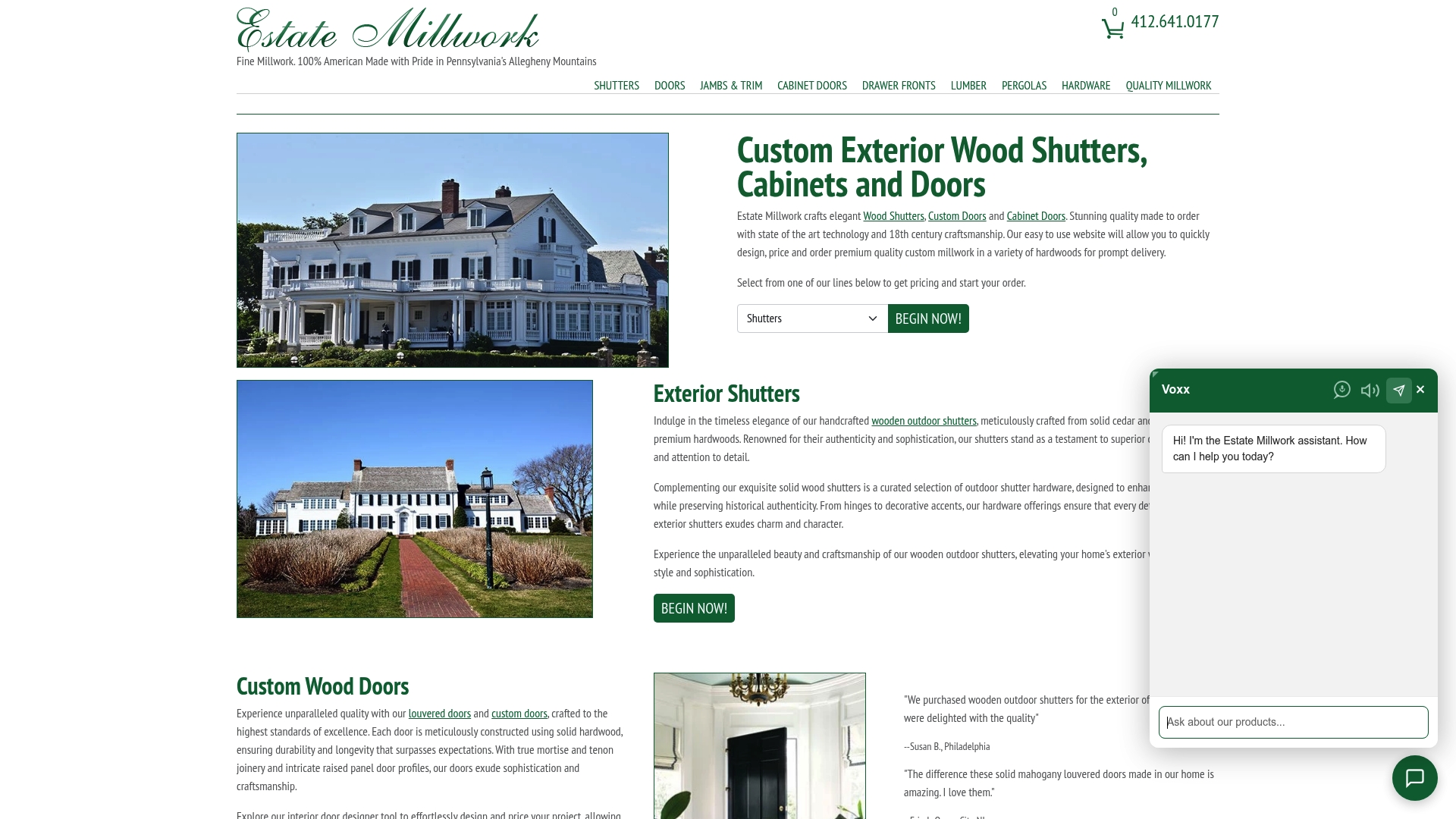
Estate Millwork provides an online design tool that shows instant pricing and visual previews for custom shutters, doors, and cabinet fronts. Every item ships after individual inspection and uses North American hardwoods finished to order. The product line covers exterior and interior shutters, functional and decorative doors, cabinet doors, drawer fronts, pergolas, and architectural millwork.

Key Differentiator

Combining traditional craftsmanship with modern CNC technology sets this maker apart. The workflow preserves visible joinery while using CNC for repeatable, tight tolerances. That approach caters to restoration work and projects where authentic materials and joinery matter.

Pros

The vendor reports thousands of shipped orders and positive customer reviews. Craftsmanship blends mortise and tenon joinery with CNC accuracy, producing consistent fit and strong joints. Premium North American hardwoods deliver natural grain and long service life under finish. Orders are inspected individually to reduce fitting surprises during installation.

Cons

  • Premium materials and handcrafting raise costs compared with mass-produced options.
  • Longer lead times apply, and that timeframe can be a problem for urgent remodels.
  • Product selection is limited to wood, so customers needing vinyl or composite options must look elsewhere.
  • Availability is restricted to the United States, which excludes international buyers.

When It May Not Fit

Do not pick Estate Millwork when you need fast, low-cost, mass-produced shutters or doors. The product is not for projects that require alternative materials such as vinyl or composite. Higher price points and that production timeframe mean the offering suits planned renovations rather than emergency replacements.

Who It’s For

Homeowners restoring historic properties and architects specifying authentic joinery will get the most value. Luxury builders integrating custom millwork into high-end homes will find the materials and finish options useful. DIYers who can plan around lead times and want exact sizing will also benefit.

Real World Use Case

A homeowner renovating a historic-style house uses the online design tool to specify Spanish Cedar exterior shutters with a hand-rubbed stain. They place the order and receive handcrafted shutters after that timeframe. Installation shows detailed joinery and accurate fit that match the houses period architecture.

Pricing

Prices reflect a high-end position. The vendor gives examples such as $466 for a custom Sapele exterior shutter, and doors often start around $835 depending on size and species. Shipping estimates appear at checkout and final cost varies with customization and finish.

Website: https://estatemillwork.com

Brooks Hardwood Products

https://brookshardwood.com

At a Glance

Website links are broken, which limits online browsing and stops direct ordering for many buyers. Brooks Hardwood Products emphasizes handcrafted, customizable hardwood doors made with local sourcing and traditional woodworking techniques. The business targets homeowners, architects, and designers who want durable and aesthetic wooden doors.

Core Features

Brooks Hardwood Products offers custom woodworking options and a visual gallery that showcases past projects. The shop highlights handcrafted materials and local manufacturing, and it pairs production with personalized customer service to refine custom specifications. Product listings lack detailed online specs and e-commerce functionality, so conversations happen offline.

Key Differentiator

The defining trait is a focus on handcrafted and customizable hardwood doors tied to a local craftsmanship identity. That approach prioritizes finish detail and joinery over mass production. For buyers who value a bespoke entryway or interior door, this artisan emphasis is the main reason to contact them.

Pros

The company centers craftsmanship and high quality materials, which produces doors with visible attention to joinery and finish. Custom options let you specify dimensions, wood species, and surface treatments for a tailored fit. Local sourcing supports regional mills and short production networks, which can help with lead time communication and material traceability. The gallery gives examples of previous work, and the brand reports a long standing presence since 2012, which suggests experience in custom door projects.

Cons

  • Website links are broken, limiting online browsing and making research slow.
  • No e-commerce or direct online ordering means you must contact the shop for quotes and timelines.
  • Digital product information is sparse, so specifications and door schedules are not available on the site.
  • Pricing is likely premium because of handcrafted work, which may exceed budget remodel plans.

When It May Not Fit

If you need immediate online quotes or same day ordering, this provider will not match that workflow. Large projects that require standardized, catalog pricing will face friction because product details are not published. Buyers on a tight budget should expect higher pricing when choosing bespoke hardwood over factory produced alternatives.

Who It’s For

You should consider Brooks Hardwood Products if you want a custom hardwood door with specific dimensions, wood species, or historic profiles. The shop suits homeowners and interior designers who value craft and are willing to discuss details by phone or email. Contractors working on high end residential or commercial projects will find the personalized process useful for unique specifications.

Real World Use Case

A homeowner planning a front entry upgrade contacts Brooks Hardwood Products, discusses the desired wood and stile, and reviews the gallery for similar examples. The team refines the profile, measures the opening, and produces a single bespoke door that matches the house character. Final delivery and installation follow direct coordination between you and the shop.

Pricing

Pricing details are not publicly available online. Expect premium pricing because the work is handcrafted and customized, and you will need to request a quote to get exact figures.

Website: https://brookshardwood.com

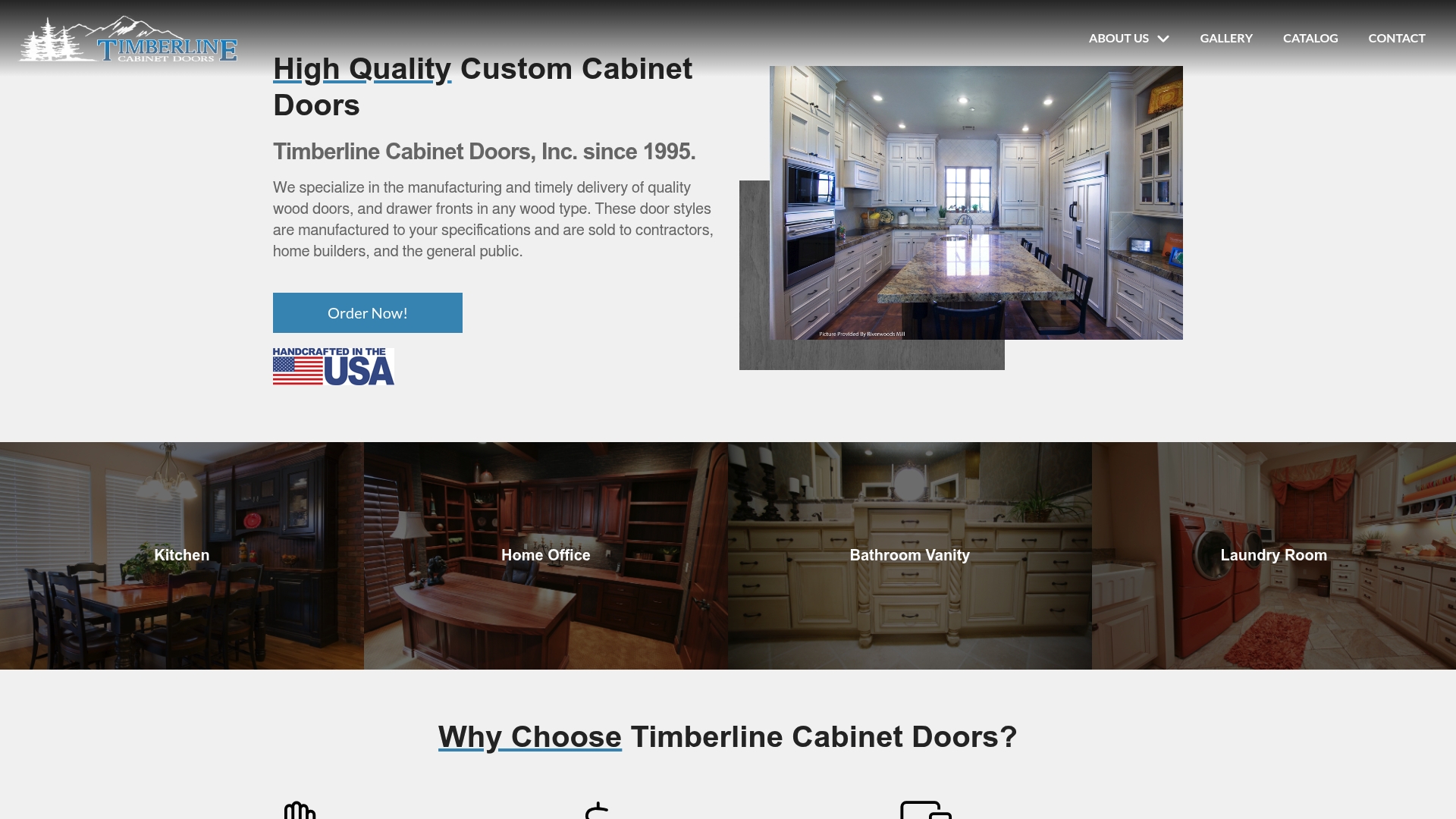
Timberline Cabinet Doors, Inc.

https://timberlinecabinetdoors.com

At a Glance

Timberline’s marketing materials state a guaranteed 7-day lead time on jobs delivered by their own trucks. The company has produced custom wood cabinet doors and millwork since 1995 from Cedar City, Utah. They serve cabinetmakers, contractors, builders, and homeowners across the western United States with a mix of handcraft and modern machining.

Core Features

Timberline operates a factory direct manufacturing model that produces custom cabinet doors, drawer fronts, panels, and trim in a wide range of wood species and profiles. Their online ordering system provides estimates, job tracking, and payment options so you can manage multiple jobs without phone tag. Bulk procurement and in-house production keep costs predictable while supporting both local delivery in Utah and nationwide shipping options.

Key Differentiator

The defining element is the pairing of traditional woodworking with an integrated online ordering workflow and local delivery capability. That combination lets Timberline handle bespoke sizes and profiles while keeping lead times short. It suits projects where precise custom work and straightforward job management matter more than commodity pricing.

Pros

Craftsmanship stands out. Timberline emphasizes wood selection and milling detail that match trade expectations for fit and finish. The online platform reduces administrative back-and-forth by offering immediate estimates and job tracking so you can plan installs with a single reference. The vendor advertises fast turnaround and local delivery, which helps shops and remodelers stay on schedule when they use the in-house truck service.

Cons

  • Regional shipping can be costly. Customers outside Utah and the western United States may face higher freight fees and longer transit times.
  • Not a mass-producer. Prices are higher than off-the-shelf doors because production focuses on custom work and material quality.
  • Limited components. The product line centers on doors and related millwork rather than full cabinet boxes or hardware.

When It May Not Fit

If you need the lowest possible unit cost for simple slab doors, a mass-produced supplier will fit better. Large national remodel chains that require stocked, identical doors on short notice may find the custom lead time unnecessary. Projects needing complete cabinetry packages with boxes, hinges, and hardware in one shipment will need a different vendor.

Who It’s For

You are a professional cabinetmaker, contractor, or a serious DIY homeowner who values custom sizing, wood species choice, and consistent milling. You want clear job tracking and fast local delivery for regional projects. You accept a premium for tailored craftsmanship and the ability to specify unusual profiles or nonstandard sizes.

Real World Use Case

A cabinetmaker in the western United States orders a batch of custom-sized doors via Timberline’s site, receives an immediate estimate, and watches the job move through production with online updates. The shop schedules installation based on the job tracker and uses Timberline’s local truck delivery to meet a tight client deadline. That lead-time claim is what allows the installer to plan confidently for a near-term install window.

Pricing

Unfinished cabinet doors and drawer fronts are priced by size and wood species, with discounts for bulk orders. Shipping costs vary by distance and chosen delivery method, and in-house delivery is available for Utah jobs at different rates. Timberline positions pricing against the value of custom work rather than commodity door pricing.

Website: https://timberlinecabinetdoors.com

FastCabinetDoors

https://fastcabinetdoors.com

At a Glance

FastCabinetDoors reports delivery typically within two weeks across the U.S. The company emphasizes U.S. craftsmanship and made-to-measure cabinet doors and drawer fronts. Orders over $1,500 qualify for free shipping, which helps larger remodels keep logistics simple and affordable.

Core Features

FastCabinetDoors sells a broad selection of styles including shaker, raised panel, inset, solid panel, thermofoil, and glass-cut doors combined with made-to-measure sizing and a range of finishes. The brand highlights handcrafted in the U.S.A. production and a straightforward online ordering flow that covers measurements, finish choice, and support. The site lists a starting price near $16.40 per sq ft for certain shaker styles.

Key Differentiator

The clearest distinction is the depth of style options and the tight production window. FastCabinetDoors pairs many style choices with in-house production and an emphasis on quick delivery. That combination suits projects where matching existing runs and reducing downtime matter most.

Pros

Selection and speed are the primary strengths. You can pick from many door profiles and finishes and still receive help with measurements and installation questions. Quality control benefits from U.S. production, which customers report as consistent. Pricing is competitive for custom fronts, and free shipping on large orders reduces total remodel cost.

Cons

  • Limited to U.S. shipments. International customers cannot order directly.
  • Product focus leans toward doors and drawer fronts rather than complete cabinet systems or large furniture pieces.
  • Final cost varies with material and finish choices, and premium options can raise the price noticeably.
  • Hardware assortment is more limited than full-service cabinet makers, so you may need separate sourcing for specialty pulls or hinges.

When It May Not Fit

This product is not a good match if you need full cabinetry assembled and installed. It also does not serve international projects. If your remodel relies on bundled hardware, integrated shelving, or complex cabinet boxes, a full-service cabinet manufacturer will better match those needs.

Who It’s For

You if you are a homeowner, contractor, or interior designer working inside the U.S. and want custom cabinet fronts without replacing cabinet boxes. You will benefit most when you already have accurate measurements or can use the vendor support for sizing. The offering fits remodels that prioritize quick turnaround and precise matching of existing runs.

Real World Use Case

A homeowner measures existing cabinet faces, orders shaker doors and matching drawer fronts, and chooses a midrange painted finish. The order exceeds $1,500 to trigger free shipping. The doors arrive in the reported two-week window and install with basic tools, cutting both cost and downtime for the kitchen remodel.

Pricing

Pricing depends on material, style, and size with a reported starting figure near $16.40 per sq ft for some shaker doors. Free shipping applies to orders over $1,500, which changes total cost for larger jobs. Final estimates require entering exact sizes and finish options on the site.

Website: https://fastcabinetdoors.com

Comparison of alternatives

The diversity of options among top custom cabinet door providers highlights distinct advantages in material quality, customization, and accessibility for homeowners and contractors.

Material Quality and Custom Craftsmanship

Among competitors, Estate Millwork stands out for its use of high-grade North American hardwoods, hand-selected for their natural grain and authenticity. This approach appeals to restoration projects and premium specifications requiring visible joinery and long-lasting materials. In contrast, tdm-thedoormaker.com emphasizes the use of durable thermofoil finishes with configurators aiding precision, but lacks the authentic wood options that professional restoration often mandates.

Speed and Accessibility

FastCabinetDoors leads in delivery speed, offering a reported two-week turnaround for U.S. customers. This timeline suits urgent remodels and bulk purchases where downtime should be minimized. Alternatively, Timberline Cabinet Doors showcases a guaranteed seven-day lead time for regional deliveries, catering to professionals managing schedules tightly. tdm-thedoormaker.com provides a dependable yet longer manufacturing lead time of four weeks, favoring non-rushed custom remodeling plans.

Best fit

  • Homeowners seeking customizable thermofoil cabinet fronts with a broad palette of finishes will find tdm-thedoormaker.com most accommodating.
  • Renovations that demand authentic hardwood joinery and visible craftsmanship are better suited to Estate Millwork.
  • Professionals requiring quick custom cabinet door turnaround benefit from FastCabinetDoors’ efficient two-week delivery.
  • Large remodels prioritizing handcrafted U.S.A. cabinet doors align with Timberline Cabinet Doors’ balance of craftsmanship and speed.

Our pick

tdm-thedoormaker.com’s configurator and granular thermofoil options support precise custom refacing workflows at cost-effective rates. However, those pursuing authentic hardwood restoration or rapid delivery might prefer competing providers for those specific projects.

When examining custom cabinet door providers, focusing on configurability, material options, and regional availability can help identify the best supplier for your project.

Brand Key Differentiator Best For Pricing Notable Limitation
Tdm-thedoormaker Detailed online configurator with custom measurements Advanced DIYers and small contractors Custom pricing by size Limited international shipping
Estate Millwork Mortise and tenon joinery combined with CNC technology Historic restorations and authenticity-focused builds Starts at $835 for doors Higher price points and longer production times
Brooks Hardwood Products Handcrafted hardwood doors for custom applications Artisanal projects demanding high-end craftsmanship Quote required Limited online presence and ordering functionality
Timberline Cabinet Doors Quick lead times with local delivery in Utah Professionals valuing timely updates and deliveries Prices vary by customization Limited to custom doors and drawer fronts, higher freight costs regionally
FastCabinetDoors Broad range and swift U.S. shipping options Quick remodels needing on-time, custom doors From $16.40 per sq ft Limited hardware options and U.S.-only shipping

Choosing Custom Cabinet Doors Without the Usual Challenges

Cabinet louvered doors offer a classic look but can pose difficulties with sizing and finish matching. Many homeowners and small contractors struggle when replacing these doors on their own. Tdm-thedoormaker simplifies this process through an easy three-step system: measure, design, and order. This method helps avoid common problems with inconsistent profiles or colors and suits projects where precise sizing matters.

Explore the broad range of over 130 thermofoil colors and multiple profiles available at Tdm-thedoormaker. Their educational videos further support first-time refacers in measuring and installation. For a cost-effective, custom solution that often costs less than full cabinet replacement, visit Tdm-thedoormaker and start your design today.

Planning your cabinet upgrade thoughtfully reduces the chance of costly errors. Visit The Door Maker to design your custom cabinet fronts and receive shop-ready doors tailored precisely for your space.

FAQ

What features make Tdm-thedoormaker a strong choice for custom cabinet doors?

Tdm-thedoormaker excels in providing a wide variety of over 130+ thermofoil colors with options for matte, sheen, textured, and high gloss finishes. Their Build a Door configurator allows users to input custom measurements for tailored door options. Consider using Tdm-thedoormaker for a complete, customized solution to match your cabinet needs.

How does Estate Millwork compare to Tdm-thedoormaker in terms of material quality?

Estate Millwork emphasizes premium craftsmanship using traditional mortise and tenon joinery with North American hardwoods, ensuring a high-quality finish. Tdm-thedoormaker is ideal for those needing a broad selection of thermofoil finishes and colors, while Estate Millwork suits those who prioritize authentic wood options in their projects.

Can I expect short lead times with Tdm-thedoormaker for custom cabinet doors?

Yes, Tdm-thedoormaker advertises a production and delivery lead time of approximately four weeks for custom orders. This timeframe allows homeowners and contractors to plan their renovation projects effectively.

What should I know about pricing when choosing Tdm-thedoormaker?

Tdm-thedoormaker offers pricing that varies based on custom door size and finish, with estimates available during the ordering process. Understanding these specifics can help you budget effectively for your custom cabinet doors.

How does Timberline Cabinet Doors’ service differ from that of Tdm-thedoormaker?

Timberline Cabinet Doors provides a guaranteed 7-day lead time for jobs delivered by their own trucks, which is significantly shorter than the four weeks offered by Tdm-thedoormaker. Choose Timberline for quick turnarounds, while Tdm-thedoormaker may fit better for more custom color and profile choices.

FROM THE SAME CATEGORY

Sep 8 2026 BY Ksenija Lebec, Blog

Landlords: inspect cabinets, run vacancy based ROI, budget $1,000–$13,000, and plan 1–3 day refacing installs with bulk order tips.

Build a Door MADE TO FIT YOU!

Inset Cabinets: A Homeowner’s Complete Guide

Inset Cabinets: A Homeowner’s Complete Guide

Inset cabinets are defined by doors and drawers that sit fully inside the cabinet face frame, creating a flush, furniture-grade surface across the entire cabinet front. This construction style is the hallmark of traditional American cabinetry and delivers a timeless, furniture-like appearance that overlay and frameless designs simply cannot replicate. The look is precise, architectural, and unmistakably intentional. If you are planning a kitchen remodel and want cabinetry that reads more like built-in furniture than standard millwork, inset cabinets are worth understanding in full before you commit.

What are inset cabinets and how are they built?

Inset cabinets are framed cabinets where the door fits inside the face frame rather than covering it. The face frame is a solid wood border attached to the front of the cabinet box. It provides structural support and, in the inset style, remains fully visible around each door and drawer. That visible frame is what gives these cabinets their distinctive, paneled look.

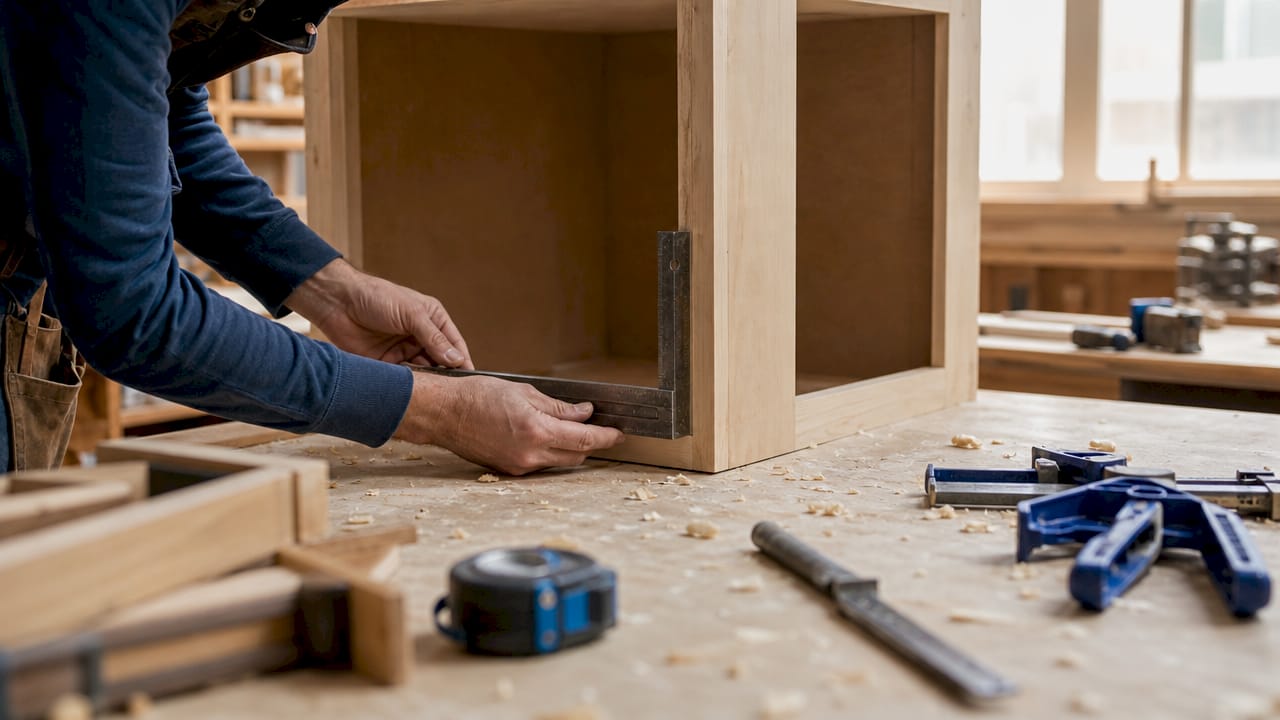
The construction demands cabinet squareness within fractions of a sixteenth of an inch. Any deviation shows up immediately as an uneven gap around the door. This level of precision is why inset cabinetry is considered a benchmark of skilled woodworking.

Carpenter checking cabinet frame squareness with square tool

A continuous face frame spanning multiple cabinet boxes creates consistent reveals and a unified, furniture-grade look across the entire run. This is different from isolated cabinet units, where each box stands alone. The result is a kitchen that looks like it was built in place, not assembled from parts.

Key construction details include:

  • Face frame material: Solid hardwood, typically maple, cherry, or oak, for dimensional stability
  • Reveal gap: A recommended 1/8" reveal around each door to allow for seasonal wood movement without binding
  • Hinge type: Decorative exposed hinges, often in brass or nickel, which serve as both functional hardware and a stylistic detail
  • Joinery quality: Mortise-and-tenon or dowel joinery in the face frame for long-term rigidity

Pro Tip: When reviewing inset cabinet samples, check the reveal gap at all four corners of the door. An uneven gap is a direct sign of poor squareness in the cabinet box, and that problem only gets worse after installation.

The decorative exposed hinges on inset cabinets are a design feature you cannot replicate with overlay or frameless styles. Finial-style hinges in antique brass or polished nickel add a period-appropriate detail that elevates the entire kitchen. They are functional jewelry for your cabinetry.

How do inset cabinets compare to overlay cabinets?

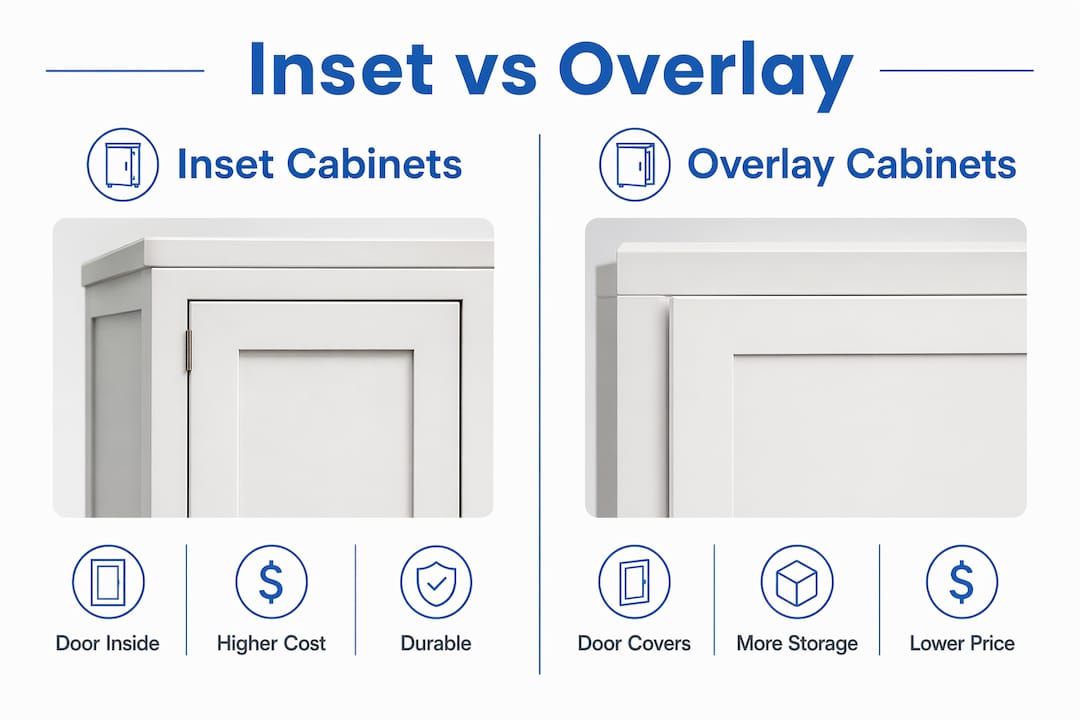
The core difference between inset and overlay cabinets comes down to where the door sits relative to the face frame. Overlay doors cover the frame. Inset doors sit inside it. That single construction choice affects style, storage, cost, and maintenance in meaningful ways.

Comparison infographic of inset and overlay cabinets

Feature Inset cabinets Overlay cabinets
Door position Sits inside the face frame Covers the face frame
Aesthetic Furniture-grade, traditional Clean, modern, or transitional
Cost premium 25–35% higher than overlay Standard baseline cost
Interior storage Slightly reduced (about 1–1.5 inches per cabinet) Full depth available
Maintenance More frequent cleaning of ledge; hinge adjustments needed Easier to clean; more forgiving
Installation Requires skilled labor; tight tolerances More forgiving of minor imperfections

The cost premium for inset cabinetry runs 25–35% above comparable overlay cabinets. That increase reflects the higher precision required in manufacturing and the specialized labor needed for installation. For a full kitchen, that gap can represent thousands of dollars.

Storage is a real trade-off. Inset doors reduce usable interior space by roughly 1–1.5 inches per cabinet. Across a full kitchen, that adds up. If you are working with a smaller kitchen and need every inch of storage, overlay cabinets give you more room inside each box.

Maintenance is another honest consideration. The small ledge between the door and the frame tends to collect dust and debris more than overlay designs. You will wipe down that ledge more often. Overlay cabinets are simply more forgiving on the cleaning front.

Pro Tip: If you love the inset look but want easier maintenance, choose a painted finish over a stained wood finish. Paint makes the reveal ledge easier to wipe clean and hides minor dust accumulation better than a natural wood grain.

What are the real advantages and challenges of inset cabinetry?

The strongest argument for inset cabinets is durability. The visible face frame protects door edges from daily contact, which is the most common source of wear on cabinet doors. Overlay doors take every bump and knock directly. Inset doors are shielded by the frame on all four sides. That protection adds up over years of daily use.

Space efficiency in tight layouts is a genuine advantage. Inset doors require less clearance in corners, reducing the need for filler strips and saving 1–2 inches in corner configurations. If you have an L-shaped or U-shaped kitchen where corner clearance is tight, that savings matters for both function and appearance.

The challenges are real and worth planning for:

  • Humidity sensitivity: Door binding or rubbing can occur as wood expands and contracts with seasonal humidity changes. Climate control in your kitchen helps, but periodic hinge adjustments are part of owning inset cabinets.
  • Reduced interior depth: The face frame takes up space at the front of the cabinet box. Shelves and pull-out organizers may need to be sized slightly smaller.
  • Installation accuracy: Professional installation is critical because misalignment shows immediately. A door that is off by 1/16 of an inch looks crooked. There is no hiding imprecision with this style.
  • Longer lead times: Custom inset cabinetry takes longer to manufacture than standard overlay options. Plan your project timeline accordingly.

Pro Tip: Ask your installer specifically about their experience with inset cabinetry before hiring. General cabinet installers who primarily work with overlay designs may not have the three-dimensional hinge adjustment skills that inset installation requires.

The long-term value argument for inset cabinets is strong. Homeowners who prioritize architectural detail and craftsmanship consistently favor this style for its design consistency over time. Trends in kitchen design shift, but the furniture-grade look of inset cabinetry has remained desirable across decades.

How do you decide if inset cabinets are right for your remodel?

Budget is the first filter. If inset cabinets cost 25–35% more than overlay, you need to decide whether that premium fits your overall remodel budget. For a kitchen where cabinetry is the centerpiece, the investment often makes sense. For a budget remodel where appliances and countertops are also being replaced, the premium may be harder to justify.

Style compatibility is the second consideration. Inset cabinets work best in:

  1. Traditional kitchens with raised panel doors, decorative molding, and period hardware
  2. Transitional kitchens where shaker style cabinets provide a clean but warm aesthetic
  3. Craftsman or farmhouse kitchens where exposed joinery and visible frames feel intentional
  4. High-end modern kitchens where flush inset cabinet doors create a minimal, architectural look

Overlay or frameless cabinets are the better choice when your priority is maximum storage, easier maintenance, or a lower upfront cost. Full-overlay cabinets are more forgiving of installation imperfections and require less ongoing maintenance. That is a genuine advantage for busy households.

Your lifestyle matters too. If you cook daily, have young children, or simply prefer low-maintenance cabinetry, the dust ledge and hinge adjustments of inset doors add friction to your routine. If you value craftsmanship and are willing to give your kitchen a little more attention, inset cabinetry rewards that care with a look that holds up beautifully over time.

Pro Tip: Before committing to inset shaker cabinet doors for your full kitchen, order a sample door and hold it against your existing cabinets or wall color. The reveal gap and frame visibility look different in person than in photos, and seeing the actual scale helps you confirm the style fits your space.

You can also explore cabinet refacing versus full remodel as a way to get the inset look without replacing every cabinet box, which can significantly reduce your total project cost.

Why I think inset cabinetry is worth the investment

Spending time around custom cabinetry teaches you something quickly: the gap between a well-built inset cabinet and a poorly built one is enormous. I have seen inset doors installed with perfect, even reveals that look like they belong in an architectural magazine. I have also seen inset doors that were slightly off-square, and the result was a kitchen that looked perpetually unfinished, no matter how beautiful the countertops or appliances were.

The craftsmanship requirement is not a flaw of the style. It is the point. Inset cabinetry forces every person in the supply chain, from the cabinet maker to the installer, to work at a higher standard. When that chain holds, the result is genuinely special. When it breaks down anywhere, the problems are visible and hard to fix.

My honest advice: do not choose inset cabinets because they are fashionable. Choose them because you want cabinetry that functions like furniture and ages like a well-built house. The inset shaker doors I find most satisfying are the ones where the homeowner understood the trade-offs, planned for the maintenance, and hired someone who had done it before. Those kitchens look just as good ten years later as they did on day one.

The cost premium is real. So is the payoff, if you go in with clear expectations.

— David

Custom inset cabinet doors from Tdm-thedoormaker

Tdm-thedoormaker specializes in custom cabinet doors built to the exact dimensions your inset cabinetry requires. The process is straightforward: measure your openings, choose your style and finish, and place your order. Tdm-thedoormaker offers inset shaker doors, flush inset profiles, and a wide range of painted and stained finishes that match the precision tolerances inset cabinetry demands.

https://tdm-thedoormaker.com

Whether you are refacing existing cabinets or starting a full kitchen remodel, Tdm-thedoormaker delivers custom doors sized to your specifications, with craftsmanship that meets the tight tolerances inset installation requires. Pricing undercuts many larger retailers, and turnaround times are built to keep your project on schedule. Visit Tdm-thedoormaker to browse styles and get started.

Key takeaways

Inset cabinets deliver a furniture-grade aesthetic that requires precision manufacturing, skilled installation, and a budget premium of 25–35% over overlay cabinetry.

Point Details
Construction precision Cabinet boxes must be square within fractions of a sixteenth of an inch for doors to fit correctly.
Cost premium Inset cabinets cost 25–35% more than overlay due to tighter tolerances and specialized labor.
Storage trade-off Inset doors reduce interior cabinet depth by roughly 1–1.5 inches per cabinet.
Maintenance needs The reveal ledge collects dust, and humidity changes may require periodic hinge adjustments.
Best style fit Inset cabinetry suits traditional, transitional, shaker, and craftsman kitchen designs best.

FAQ

What is an inset cabinet door?

An inset cabinet door sits fully inside the cabinet face frame rather than covering it, creating a flush surface across the cabinet front. This construction requires tight tolerances and is associated with traditional, furniture-grade cabinetry.

How much more do inset cabinets cost than overlay?

Inset cabinets typically cost 25–35% more than comparable overlay cabinets. The premium reflects the higher precision required in manufacturing and the specialized labor needed for installation.

Are inset shaker cabinet doors a good choice for modern kitchens?

Yes. Inset shaker doors work well in transitional and modern kitchens because the clean, flat-panel profile reads as minimal while the visible frame adds architectural warmth. They suit a wide range of design styles beyond traditional.

Do inset cabinets require more maintenance than overlay?

Inset cabinets require more frequent cleaning of the small ledge between the door and frame, and humidity changes can cause door binding that requires hinge adjustment. Overlay cabinets are more forgiving on both counts.
Can I get inset cabinet doors without replacing my entire cabinet boxes?

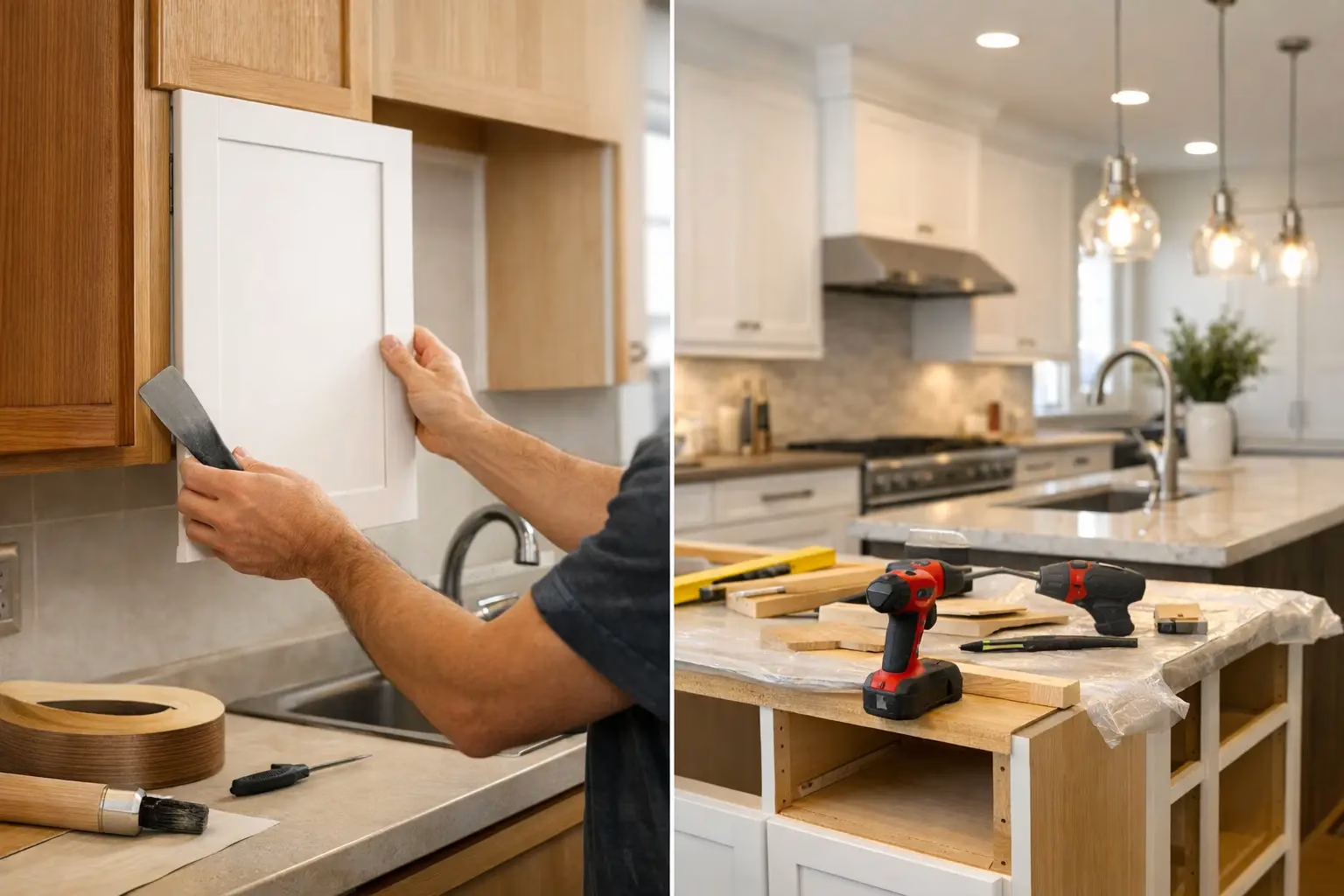
Yes. Cabinet door refacing lets you replace only the doors and drawer fronts while keeping your existing cabinet boxes. This approach delivers the inset look at a significantly lower cost than a full cabinet replacement.

FROM THE SAME CATEGORY

Sep 8 2026 BY Ksenija Lebec, Blog

Landlords: inspect cabinets, run vacancy based ROI, budget $1,000–$13,000, and plan 1–3 day refacing installs with bulk order tips.

Build a Door MADE TO FIT YOU!

Top 3 Cabinet Doors Slab Alternatives 2026

Top 3 Cabinet Doors Slab Alternatives 2026

Finding a way to update cabinets without choosing standard slab door designs limits style and function for many homeowners, contractors, and interior designers. Many suppliers focus only on either the trendiest finishes or limited-size options, which leaves gaps for custom sizing, color matching, or fast delivery. This comparison covers pricing, customization, and order speed so you can match a custom cabinet door vendor to your material, sizing, and timeline needs without settling for lookalike slab doors.

Table of Contents

The Door Maker

https://tdm-thedoormaker.com

At a Glance

The company lists over 130 colors and more than 30 door styles for thermofoil cabinet doors. The product line targets homeowners and small contractors who want to replace door fronts without full cabinet demolition. The vendor advertises a quick lead time of around four weeks for production and delivery.

Core Features

The online Build a Door configurator walks you through sizing, style selection, and ordering so you can design custom door fronts from home. The catalog pairs many profiles and finishes with accessories such as mullions, frames, and crown molding to match a full kitchen scheme. Tutorials and support resources cover measuring and installation so you can complete a refacing project with minimal outside trades.

Key Differentiator

Tdm-thedoormaker combines an extensive online customization platform with long industry tenure, which gives the largest thermofoil color and style selection in North America. That combination concentrates choice and practical how-to guidance in one place, letting DIYers and small contractors match existing cabinetry precisely while avoiding full replacements.

Pros

A wide selection of colors, door styles, and finishes lets you match current trends or classic looks without hunting multiple suppliers. The configurator simplifies custom sizing and design choices, reducing guesswork when ordering nonstandard doors. Decades of experience show up in consistent manufacturing and practical tutorials that cut common refacing errors. Faster turnaround than many custom cabinet shops helps you finish a kitchen update on a realistic schedule. The site also sells sample swatches and a full swatch book to check color and texture before you commit.

Cons

  • Requires some DIY skill for accurate measuring and installation; customers seeking full-service installation will need a separate contractor.

Who It’s For

Homeowners who want a higher-end cabinet finish without replacing boxes will get the most value. Small contractors who need customizable thermofoil doors for client projects will appreciate the configurator and accessory options. Interior designers specifying repeatable colors and profiles for client homes will also find the depth of choice useful.

Unique Value Proposition

The company lets you measure, design, and order custom door fronts in a single flow, so you can convert existing cabinets into a refreshed kitchen with targeted expense. The vendor claims pricing often undercuts larger retailers by thousands, which makes professional-looking refacing financially feasible for budget-conscious remodels.

Real World Use Case

A homeowner measures existing cabinet openings, orders sample swatches, configures shaker-style doors in a matching color, and places a single project order. They receive doors and trim in about a month and install them using online tutorials to complete a kitchen refresh at a fraction of full-cabinet replacement cost.

Pricing

Pricing is project dependent and varies with door size, style, and accessory choices. Sample swatches cost $2.00 each and a full swatch book is $100.00. The company prices custom doors per project, and final costs depend on the specifications and quantity ordered.

Website: https://tdm-thedoormaker.com

FastCabinetDoors.com

https://fastcabinetdoors.com

At a Glance

Prices start at $16.40 to $35.14 per square foot for custom cabinet doors and drawer fronts, giving clear entry points for budget conscious renovations. The company emphasizes Made in the USA manufacturing from California and North Carolina, which helps with quality control and domestic lead times. The vendor advertises delivery typically within two weeks, and that delivery claim appears repeatedly in customer messaging.

Core Features

FastCabinetDoors.com sells custom sized cabinet doors, matching drawer fronts, and hardware with a choice of solid wood, thermofoil, painted finishes, and glass cut options. The site supports detailed online customization and in house manufacturing in the United States, plus accessory items like drawer boxes and organizational solutions. Orders over $1500 qualify for free shipping and the store offers phone and email support for measurements and installation questions.

Key Differentiator

The clearest difference is the combination of broad style choice and domestic production aimed at accessible pricing. FastCabinetDoors.com focuses on offering a very wide selection of door styles while keeping sizes truly custom sized and manufactured locally. That mix makes it easier for homeowners and contractors to match existing cabinetry without importing parts or waiting long lead times.

Pros

The product range covers classic shaker, raised panel, inset, flat panel, thermofoil, and glass cut styles so you can match most design directions. Made in the USA production keeps quality control close and simplifies customer support for sizing or finish questions. The site offers simplified online ordering, free shipping above a threshold, and customer support geared toward DIY homeowners and contractors, with that delivery claim appearing as a selling point.

Cons

  • Limited international shipping. The company primarily ships within the continental United States which restricts buyers outside that region.

  • Pricing by square foot. The per square foot model can make quick cost comparisons harder for buyers who prefer fixed per item pricing.

  • Component focus not full cabinetry. The store emphasizes doors, drawer fronts, and hardware rather than complete cabinet boxes or full furniture units.

When It May Not Fit

If you manage projects outside the continental United States this service may not work for you. Large scale jobs seeking wholesale bulk discounts might find per square foot pricing less competitive than dedicated wholesalers. If you need full cabinet boxes or custom furniture you will need an additional supplier because this catalog focuses on components.

Who It’s For

This is a fit for hands on homeowners updating cabinet fronts, contractors replacing only visible components, and property managers refreshing multiple units affordably. You value American manufacturing and want the flexibility to order custom sizes online. You also want access to installation guidance rather than a full cabinet installation service.

Real World Use Case

A DIY homeowner measures existing cabinet openings, selects shaker style doors and matching drawer fronts, and places an order online. The doors are produced in the US and shipped within the advertised two weeks, arriving ready to install with matching hardware. The homeowner replaces the fronts and keeps the original cabinet boxes, achieving a professional looking kitchen at lower cost than a full replacement.

Pricing

Pricing is calculated by square foot with a range of $16.40 to $35.14 per square foot depending on material and style. Accessories like drawer boxes and hardware carry separate prices that vary by item. Orders above $1500 receive free shipping which reduces total cost for larger renovations.

Website: https://fastcabinetdoors.com

cabinetdoorsnmore.com

https://cabinetdoorsnmore.com

At a Glance

Drawer fronts list from about $43 per square foot for MDF to $57 per square foot for hardwood. The company offers free shipping on all orders and advertises fast production with nationwide delivery. That pricing and shipping model makes component replacement practical for budget conscious remodels.

Core Features

Products are custom made to precise measurements and arrive ready to install. You can choose from solid wood, MDF, or thermofoil across styles such as shaker, raised panel, slab, mullion, and arched doors. The vendor pairs material and style choices with fast turnaround and nationwide shipping, plus environmentally conscious manufacturing.

Key Differentiator

The strongest selling point is the depth of customization coupled with quick delivery. cabinetdoorsnmore.com focuses strictly on replacement components, letting you pick exact materials and profiles rather than buying whole cabinet boxes. That focus suits projects where precise fit and material choice matter more than full system replacements.

Pros

High customization delivers accurate fits for irregular or older cabinets, and the variety of profiles covers both modern and traditional tastes. Craftsmanship quality shows in solid wood options and careful finishing, and fast production plus free shipping reduces lead time and handling costs. The product mix suits both DIY repaint and professional installation workflows.

Cons

  • Shipping limited to the USA. International buyers will not find standard shipping options.
  • Component only offering. You cannot order full cabinet systems or appliances from this vendor.
  • Premium materials and special sizes raise the final price. Custom hardwood orders can cost noticeably more than MDF.

When It May Not Fit

If you need worldwide delivery this company will not meet that requirement because shipping is primarily within the United States. If your project needs complete cabinet boxes or integrated appliance panels you will need a different supplier. If you are strictly budget driven and will not accept higher costs for hardwood or odd sizes this offering may feel expensive.

Who It’s For

This service fits homeowners, remodelers, and contractors who need exact sized doors, drawer fronts, and drawer boxes. You are a good match if you value material selection, measured replacement parts, and replacing cabinet faces rather than replacing entire units. The offering works well for paintable MDF projects and for hardwood refinish installs.

Real World Use Case

A homeowner measures kitchen units, orders custom shaker doors and drawer fronts in MDF to paint, and receives components for retrofit installation. The vendor advertises a two week production window and ships the order free. The homeowner installs the pieces and updates the kitchen appearance without replacing cabinet boxes.

Pricing

Pricing varies by material and profile with drawer fronts starting near $43 per square foot for MDF and about $57 per square foot for hardwood. Final cost depends on door size, style, and finish choices. The company offers free shipping and discounts on larger orders that total over $500.

Website: https://cabinetdoorsnmore.com

Comparison of alternatives

Among competitors offering slab cabinet doors, “tdm-thedoormaker.com” sets itself apart with its variety of color and style options, supporting precise customization for unique kitchen aesthetics.

Depth of Choices

“The Door Maker” provides a wide selection of colors and styles, including over 130 thermofoil color options. This enables users to match diverse design goals without sourcing from multiple suppliers. “FastCabinetDoors.com” offers a broad style range, but its primary focus is on domestic production and standard materials, such as solid wood finishes. Alternatively, “cabinetdoorsnmore.com” targets precise fit customization but offers fewer color and style choices compared to “tdm-thedoormaker.com.”

Sustainable Manufacturing

cabinetdoorsnmore.com” excels in environmentally friendly production practices, catering to buyers who prioritize sustainability. Its emphasis on eco-conscious materials adds value for customers focused on minimizing environmental impact, whereas “tdm-thedoormaker.com” and “FastCabinetDoors.com” do not explicitly highlight this aspect in their offerings.

Best fit

  • Homeowners seeking professional-grade refacing without replacing cabinets will value “tdm-thedoormaker.com” due to its extensive color and style customization and straightforward DIY tools.
  • Contractors needing customizable options for various client preferences could opt for “FastCabinetDoors.com” thanks to Made in USA production and flexible dimensions.
  • Buyers prioritizing eco-friendly production methods should consider “cabinetdoorsnmore.com” for its environmentally conscious manufacturing and material range.
  • Those handling smaller turnkey projects will appreciate “FastCabinetDoors.com” for its quick lead times and accessible pricing per square foot.

Our pick

For those seeking the widest choice of customizable styles and a streamlined DIY process, “tdm-thedoormaker.com” is an ideal choice, ensuring a practical and personalized refacing journey. However, if environmental considerations are your priority, “cabinetdoorsnmore.com” remains a strong alternative.

Choosing the best provider for custom cabinet door replacements depends on evaluating features, customization options, and delivery times.

Product Key Features Best For Pricing Limitation
Tdm-thedoormaker Offers over 130 colors and 30 door styles; configurator for custom sizing online DIY homeowners, small contractors, interior designers Price not published; sample swatches $2.00, swatch book $100.00 Requires basic DIY skills for installation
FastCabinetDoors.com Custom cabinet doors from solid wood and thermofoil; free shipping over $1500 Hands-on homeowners, contractors, property managers $16.40 to $35.14 per square foot Limited to continental USA shipping
cabinetdoorsnmore.com Custom MDF and hardwood components; environmentally conscious manufacturing Remodelers needing precise replacements Starting at $43 (MDF) and $57 (hardwood) per square foot Higher costs for premium materials and special sizes

Why Cabinet Doors Slab Alternatives Matter for Your Kitchen Update

Replacing cabinet doors slab can feel complicated, especially when you want custom sizing and a fresh style without replacing whole cabinets. Many homeowners and small contractors struggle with finding options that match existing cabinetry colors and finishes while fitting their budget and timeline.

Tdm-thedoormaker addresses these challenges by offering an easy three-step process: measure, design, and order. With over 130 colors and 30 door styles available, you gain access to a broad selection combined with expert guidance on sizing and installation. This makes updating your kitchen more manageable, affordable, and precise compared to many suppliers.

Check out Tdm-thedoormaker to design your custom doors, review sample swatches, and take advantage of their fast turnaround. Get started on matching styles and colors that fit your project and budget with confidence today.

FAQ

What customization options does Tdm-thedoormaker offer for cabinet doors?

Tdm-thedoormaker provides an extensive online configurator that allows you to design custom cabinet doors based on your specific measurements and style preferences. The configurator supports over 130 colors and more than 30 door styles, catering to a wide range of design tastes. You should use this tool to create the perfect fit for your kitchen update.

How does FastCabinetDoors.com compare with Tdm-thedoormaker?

FastCabinetDoors.com emphasizes American manufacturing and typically offers delivery within two weeks, which aids in quality control and quick turnaround. Tdm-thedoormaker, on the other hand, focuses on offering a broader selection of colors and styles, which may better suit personalized design needs. Consider Tdm-thedoormaker for its extensive options tailored to your unique specifications.

Can I expect support for installation and measuring with Tdm-thedoormaker?

Yes, Tdm-thedoormaker includes tutorials and support resources that help guide you through measuring and installation. This attention to detail makes the process easier and helps minimize common refacing errors. Utilizing these resources can ensure a smoother remodeling experience.

What is the pricing range for custom cabinet doors at Tdm-thedoormaker?

Tdm-thedoormaker’s pricing depends on project specifications, but it advertises competitive rates often undercutting larger retailers by thousands. This makes professional-looking refacing feasible for budget-conscious remodels. You should explore specific quotes based on your design choices for more accurate budgeting.

Does cabinetdoorsnmore.com provide options that Tdm-thedoormaker does not?

Cabinetdoorsnmore.com offers high customization with quick delivery times, focusing strictly on replacement components. While Tdm-thedoormaker excels in offering a wider array of colors and styles, cabinetdoorsnmore.com might fit better if you are specifically looking for precise fit and materials without whole cabinet replacements. Assess your project’s needs to choose the most appropriate supplier.

FROM THE SAME CATEGORY

Sep 8 2026 BY Ksenija Lebec, Blog

Landlords: inspect cabinets, run vacancy based ROI, budget $1,000–$13,000, and plan 1–3 day refacing installs with bulk order tips.

Build a Door MADE TO FIT YOU!

Framed vs Frameless Cabinets: Your 2026 Kitchen Guide

Framed vs Frameless Cabinets: Your 2026 Kitchen Guide

Framed vs frameless cabinets is the defining structural choice in any kitchen remodel. Framed cabinets feature a solid wood face frame attached to the front of the cabinet box, giving them a traditional American look and added structural rigidity. Frameless cabinets omit that frame entirely, mounting doors directly to the box for a clean, modern European appearance and more accessible interior space. The right choice depends on your kitchen’s age, your design goals, and how much storage you need. This guide breaks down every factor so you can decide with confidence.

1. What are framed cabinets and their key features?

Framed cabinets are the dominant cabinet style in American kitchens. Framed cabinets use a solid wood face frame that attaches to the front of the box, concealing small gaps between the cabinet and the wall. That structural layer makes installation more forgiving, especially in older homes where walls are rarely perfectly plumb or level.

Carpenter assembling framed cabinet frame

The face frame also supports classic door styles like shaker, raised panel, and inset designs. Inset doors sit flush inside the frame opening, creating a furniture-grade look that many homeowners love. The trade-off is that the frame narrows the cabinet opening slightly, which limits the size of drawers and pull-out accessories you can fit inside.

Pros of framed cabinets:

  • More forgiving installation in older or uneven homes
  • Supports traditional American door styles including shaker and inset
  • Generally lower cost than frameless equivalents
  • Face frame hides minor wall imperfections
  • Easier to repair or replace individual components

Cons of framed cabinets:

  • Narrower cabinet opening reduces storage accessibility
  • Inset door styles cost significantly more due to precision labor
  • Wood expansion in humid climates can cause inset doors to stick

Pro Tip: If your home was built before 1990, framed cabinets are almost always the safer choice. Older homes rarely have walls straight enough for frameless installation without costly prep work.

2. What are frameless cabinets and their defining characteristics?

Frameless cabinets, also called European-style or full-access cabinets, have no front face frame. Doors and drawer fronts mount directly to the sides of the cabinet box using concealed hinges. The result is a flat, uninterrupted surface that suits modern and contemporary kitchen designs.

The absence of a face frame does more than change the look. Frameless cabinets provide 10–15% more usable interior storage per cabinet than framed versions. That gain comes from the wider, unobstructed opening that lets you fit larger drawers, full-size pull-out trays, and organizational hardware without restriction.

Pros of frameless cabinets:

  • 10–15% more interior storage space per cabinet
  • Full-overlay or slab doors create a sleek, modern look
  • Wider openings accommodate larger drawers and roll-out trays
  • Concealed hinges are adjustable and easy to align
  • Ideal for small kitchens where every inch of storage counts

Cons of frameless cabinets:

  • Require precise installation on level, plumb walls
  • Cost 10–15% more than comparable framed cabinets
  • Less forgiving in homes with structural irregularities
  • Fewer traditional door style options

Pro Tip: Frameless cabinets demand a skilled installer. Even a small deviation in wall or floor level creates visible misalignment across the entire run of cabinets. Get quotes from installers who specialize in European-style cabinetry.

3. How do framed and frameless cabinets compare in cost, installation, and maintenance?

Cost is one of the clearest differences between the two styles. Frameless cabinets typically cost 10–15% more than equivalent framed cabinets. If you choose inset door styles on framed cabinets, that premium jumps further. Inset styles can cost 15–50% more than overlay styles because of the precision labor required to fit doors flush inside the frame.

Installation difficulty also separates the two. Framed cabinets are more forgiving during installation and are the preferred choice for older homes with uneven walls. Frameless cabinets need precise leveling and squareness throughout the entire installation. A single misaligned cabinet box creates a ripple effect that shows up across every door and drawer front.

Maintenance differences are real but often overlooked. Inset framed cabinets have a tight tolerance of about 1/8 inch, which means wood expansion in humid climates can cause doors to rub or stick. Frameless and overlay styles avoid this problem because doors do not sit inside a frame opening.

Factor Framed cabinets Frameless cabinets
Base cost Lower 10–15% higher
Inset door premium 15–50% more than overlay Not applicable
Installation difficulty Moderate, forgiving High, requires precision
Climate sensitivity High for inset styles Low
Maintenance needs Hinge and door adjustments in humid climates Minimal with concealed hinges
Best home type Older homes, uneven walls New construction, level walls

4. Which cabinet style offers better storage and accessibility?

Frameless cabinets win on storage, and the difference is measurable. The face frame on a framed cabinet typically reduces the usable opening by 1–2 inches on each side. That reduction limits the width of drawers and pull-out organizers you can install. In a kitchen with 20 or more cabinets, those inches add up to a meaningful loss of functional space.

Frameless cabinets allow easier installation of full-size roll-out trays and standard-sized organizational accessories because nothing obstructs the opening. This matters most in base cabinets, where pull-out shelves, trash organizers, and deep drawer inserts are most commonly used. If kitchen organization is a priority for you, frameless construction gives you more options.

Framed cabinets are not without storage advantages. The face frame itself can support certain door-mounted accessories, and the structural rigidity of the box means shelves and hardware have a solid anchor point. For wall cabinets where depth is fixed, the storage difference between the two styles is less pronounced.

Storage and accessibility comparison:

  • Frameless: 10–15% more interior space per cabinet
  • Frameless: accommodates wider drawers and full-size pull-out trays
  • Framed: narrower openings limit organizational hardware options
  • Framed: door-mounted accessories attach well to the face frame
  • Both: wall cabinet storage difference is minimal

5. Inset cabinets vs overlay: understanding door placement options

Door placement is a separate but related decision that applies to both framed and frameless cabinets. The three main options are inset, full overlay, and partial overlay. Each affects how the door sits relative to the cabinet box or face frame.

Inset cabinets vs overlay is a question of precision versus practicality. Inset doors sit fully inside the face frame, flush with the cabinet front. This creates a refined, furniture-like appearance but requires exact manufacturing tolerances. Full overlay cabinets vs inset styles are easier to produce and install because the door covers the frame rather than fitting inside it.

Full overlay vs partial overlay is a simpler comparison. Full overlay doors cover nearly the entire face frame, leaving only a small gap between adjacent doors. Partial overlay doors cover only part of the frame, leaving more of the frame visible. Full overlay cabinets vs frameless styles look similar from a distance, but frameless construction still provides more interior access because no frame exists at all.

For homeowners choosing between full overlay vs inset cabinets, the decision often comes down to budget and climate. Full overlay styles cost less and perform better in humid conditions. Inset styles cost more and require more maintenance but deliver a premium, classic look that many buyers find worth the investment.

6. When should homeowners choose framed vs frameless cabinets?

The right cabinet style depends on four factors: your home’s age and condition, your local climate, your design preference, and your budget. Framed cabinets remain more resilient in high humidity or older homes where walls are not perfectly straight. Frameless cabinets perform best in newer construction where walls are level and the kitchen layout is precise.

Framed cabinets generally cost less and have broader resale appeal, which matters if you plan to sell your home within a few years. Traditional buyers in most American markets respond well to classic shaker or raised-panel framed styles. Frameless cabinets appeal strongly to buyers who prioritize modern aesthetics and storage efficiency.

Decision guide:

  • Choose framed if your home is older than 30 years or has uneven walls
  • Choose framed if you live in a humid climate and want inset doors
  • Choose frameless if you want a modern, minimalist kitchen design
  • Choose frameless if storage space is your top priority
  • Choose frameless if your kitchen is in new construction with level surfaces
  • Consider cabinet refacing vs full remodel if your existing boxes are in good condition

Pro Tip: Before committing to frameless cabinets, have a contractor assess your wall and floor levels. If the deviation exceeds 1/4 inch across a 10-foot run, budget for shimming and prep work before installation begins.

Key takeaways

The most effective cabinet choice for a kitchen remodel matches your home’s structural condition, your climate, and your design priorities rather than following trends alone.

Point Details
Framed suits older homes Face frames hide wall imperfections and make installation more forgiving.
Frameless maximizes storage Frameless cabinets offer 10–15% more interior space per cabinet.
Cost difference is real Frameless costs 10–15% more; inset framed styles cost 15–50% more than overlay.
Climate affects maintenance Inset framed doors can stick in humid climates due to wood expansion.
Door style is a separate choice Inset, full overlay, and partial overlay options apply across both cabinet types.

What I’ve learned after seeing both styles in real kitchens

After working with homeowners on dozens of kitchen projects, the pattern I see most often is this: people fall in love with frameless cabinets in showrooms, then run into installation surprises at home. Showrooms have perfectly level floors and straight walls. Most homes do not.

The advice I give every time is to assess your walls before you choose your cabinets, not after. A frameless run of cabinets on a wall that dips 3/8 of an inch over 12 feet will show every gap and misalignment. No amount of hinge adjustment fully corrects that. Framed cabinets absorb those imperfections quietly.

That said, I genuinely believe frameless construction is the better product in the right conditions. The storage gain is real, the hardware compatibility is better, and the clean look ages well. If you are building new or doing a full gut renovation with a skilled installer, frameless is worth the extra cost.

The factor most homeowners miss is hardware compatibility. Frameless cabinets use European-style concealed hinges that are adjustable in three directions. Framed cabinets often use traditional hinges with less adjustability. When you are planning a custom cabinet door upgrade years down the road, frameless boxes give you more flexibility.

My honest recommendation: match the cabinet style to your home, not to a magazine photo. A beautifully installed framed kitchen beats a poorly installed frameless one every time.

— David

Custom cabinet doors that work with your cabinet style

Whether you have framed or frameless boxes, the cabinet doors you choose define the final look of your kitchen. Tdm-thedoormaker specializes in custom cabinet doors built to exact measurements, so you get a precise fit regardless of your cabinet construction type.

https://tdm-thedoormaker.com

Tdm-thedoormaker’s process covers three steps: measure your existing openings, choose your door style and finish, and place your order. The result is a high-quality door that fits your specific cabinet boxes without the cost of a full cabinet replacement. If you are weighing a full remodel against a targeted upgrade, the cabinet refacing vs full remodel comparison on the Tdm-thedoormaker site walks through the cost and scope differences in detail. Custom doors are one of the most cost-effective ways to refresh a kitchen that has good bones but dated fronts.

FAQ

What is the main difference between framed and frameless cabinets?

Framed cabinets have a solid wood face frame on the front of the box; frameless cabinets do not. The face frame adds structure and a traditional look but reduces the usable interior opening.

Do frameless cabinets really offer more storage?

Yes. Frameless cabinets provide 10–15% more usable interior storage per cabinet because the full opening is accessible without a frame in the way.

Are frameless cabinets harder to install?

Frameless cabinets require precise installation on level, plumb walls. Minor unevenness creates visible misalignment, so they are best suited for new construction or fully prepped walls.

What is the difference between inset and full overlay cabinet doors?

Inset doors sit flush inside the face frame; full overlay doors cover the face frame entirely. Full overlay styles cost less and perform better in humid climates where wood expansion can cause inset doors to stick.

Which cabinet style is better for resale value?

Framed cabinets have broader resale appeal in most American markets because they suit traditional design preferences. Frameless cabinets appeal to buyers who prioritize modern aesthetics and storage capacity.

Article generated by BabyLoveGrowth

FROM THE SAME CATEGORY

Sep 8 2026 BY Ksenija Lebec, Blog

Landlords: inspect cabinets, run vacancy based ROI, budget $1,000–$13,000, and plan 1–3 day refacing installs with bulk order tips.

Build a Door MADE TO FIT YOU!

Top 4 Cupboard Doors Glass Alternatives 2026

Top 4 Cupboard Doors Glass Alternatives 2026

Finding custom cupboard doors with a glass alternative that matches modern styles and project needs is more difficult than expected. Mass-market cabinet suppliers and standard glass panels often lack enough finish choices, detailed sizing, or easy support for DIY installation. You can match one of these four alternative cabinet door brands to your budget, material preference, and desired installation method without settling for poor fit or limited selection.

Table of Contents

TDM-The Door Maker

https://tdm-thedoormaker.com

At a Glance

Over 30,000 door styles and more than 130 colors are available for custom orders. The company traces a history of over 48 years serving North American homeowners and contractors. Tdm-thedoormaker supports DIY installs with tutorials and a large accessories catalog.

Core Features

The online Build-a-Door configurator guides you through size, profile, and finish choices and generates a custom order. According to the company, manufacturing carries a four-week lead time, which covers made-to-measure doors and finishes. The offering also includes detailed how-to guides, mullions, frames, and hardware for complete refacing projects.

Key Differentiator

The most concrete edge is sheer choice. Tdm-thedoormaker combines tens of thousands of door variations with precision manufacturing to deliver doors cut to exact dimensions for DIY installation. That depth of selection and focus on precise sizing separates it from mass-market cabinet suppliers.

Pros

Extensive customization lets you match specific styles and profiles to an existing kitchen without replacing cabinet boxes. Production uses precise measurements and solid packaging, which reduces onsite trimming and avoids damage during transit. The configurator plus step-by-step tutorials make a homeowner-led refacing feasible, and quick production keeps renovation timelines compact.

Cons

  • Limited international shipping outside North America.

Who It’s For

Homeowners and DIY enthusiasts who want a tailored look without full cabinet replacement will benefit most. Small contractors who prefer ordering bespoke doors rather than stock panels will also find value. The product suits people who can measure accurately and want to install or fit hardware themselves.

Unique Value Proposition

Measure, design, and order is the explicit workflow Tdm-thedoormaker promotes to simplify custom refacing. The vendor claims pricing often undercuts larger retailers by thousands, which frames this service as a way to get custom doors at a lower total project cost. That workflow plus competitive pricing makes custom results accessible to nonprofessionals.

Real World Use Case

A homeowner measures cabinet openings, uses the Build-a-Door configurator to pick a shaker profile and painted finish, and orders sample swatches before finalizing. They follow the online tutorials for drilling and hinge placement, then install the doors themselves after receiving them within that lead time. The result looks like a professional refinish without full replacement.

Pricing

Prices change with size, style, and finish because every door is custom. Sample doors start around $27 CAD, color swatches cost $2, and a swatch book is $100. There is no single price range listed since customization drives final cost.

Website: https://tdm-thedoormaker.com

Element Designs

https://element-designs.com

At a Glance

Element Designs reports a 113,000 sq ft facility in Fort Mill, South Carolina. The company manufactures custom aluminum frame and glass cabinet doors with a European-inspired aesthetic. Its production focuses on sustainability and a broad material palette for residential and commercial projects.

Core Features

Element Designs fabricates custom aluminum frame and glass cabinet doors and related components, and it supports backpainted glass, magnetic glass markerboards, and sliding doors. The product line includes high gloss acrylics, matte surfaces, drawer fronts, recycled leather inserts, and architectural resins that expand aesthetic choices for cabinetry. The brand also provides technical resources, samples, and design presentations to help architects and fabricators specify materials.

Key Differentiator

Element Designs stands out as a leading US manufacturer with deep customization options and a clear European design influence. Its emphasis on sustainable, Made in USA production and wide finish variety suits professionals who demand specific architectural surfaces. This focus fits design firms and commercial specifiers more than the typical Tdm-thedoormaker DIY homeowner.

Pros

The product range covers many modern architectural needs while supporting custom sizes and unique inserts, giving designers real flexibility. The company highlights sustainable manufacturing and local production, which helps projects that require domestic sourcing. Strong industry reputation and active participation in trend events provide useful design references and confidence for specifiers relying on consistent quality.

Cons

  • International shipping is limited. This restricts buyers outside North America.
  • Pricing trends toward premium. Smaller, budget projects may find costs prohibitive.
  • Catalog and customization procedures are complex for first-time customers. Expect more specification work than buying standard stock doors.
  • Some web pages show occasional technical errors. That can slow sample requests or quote retrieval.

When It May Not Fit

Element Designs may not fit budget sensitive remodels where off the shelf doors suffice. It can be a poor match for international clients who need fast global shipments. Projects requiring minimal specification time and simple replacements will find the process more involved than standard retail options.

Who It’s For

Design professionals, architects, interior designers, and upscale cabinetry manufacturers in North America will extract the most value. Buyers who need custom finishes, non-glass inserts, or domestic production will appreciate the material variety and technical support. Homeowners seeking quick, low cost glass door swaps are not the primary audience.

Real World Use Case

A design firm specified custom aluminum and glass cabinet doors for an upscale kitchen remodel and contacted Element Designs through the website. The firm requested samples, reviewed finish options, and coordinated production for a precise install timeline. The team cited the brand’s material variety and production control as reasons for selection.

Pricing

Pricing varies by configuration and finish and is detailed in product catalogs and quotes. Typical ranges span moderate to high-end segments for aluminum doors and glass components, reflecting custom work and material choices. Customers can order samples and request project quotes for bulk or commercial procurement.

Website: https://element-designs.com

elaporte

https://elaporte.ca

At a Glance

Elaporte ships aluminum door systems that use patented profiles sold as Ela 1, Ela 2, and Ela 3. These profiles are tailored for modern interiors and for projects where profile detail matters. The company works mainly across North America and focuses on high-end residential and commercial fit-outs. Lead times vary with customization and project scope.

Core Features

Elaporte supplies customizable aluminum door systems with multiple profile options and matching flush door assemblies that suit minimalist interiors. The catalog includes luxury finishes such as leather panels and metal trim, plus modular shelving and display systems for integrated interiors. Products are engineered for durability, straightforward installation, and long-term performance in occupied spaces.

Key Differentiator

The single differentiator is the patented aluminum door profiles engineered to fit tight reveal tolerances and to sit flush with surrounding walls. That engineering gives installers cleaner junctions and supports frameless-looking doors without additional trim. The profiles aim to preserve the minimalist intent of high-end architectural designs.

Pros

High-quality aluminum extrusion and precise tolerances make the profiles reliable for repeatable on-site installations. The line supports a strong minimalist aesthetic through flush systems and narrow sightlines, which helps maintain consistent interior geometry. A wide selection of finishes and insert options lets designers match neighboring materials and furniture. North American fabrication reduces logistical friction for regional builders and helps align with local codes. Client testimonials emphasize product quality and the clarity of dimensional tolerances during installation.

Cons

  • Premium pricing reflecting high-end materials and craftsmanship may exceed typical cabinet or door budgets.
  • Product range focuses on aluminum doors and a few architectural elements, so buyers needing broad door styles may look elsewhere.
  • Service footprint is primarily North American, which limits direct shipping and local support outside that region.
  • Detailed customization options can extend lead times for complex projects.

When It May Not Fit

If you need off-the-shelf doors for a fast turnaround, Elaporte is not the best match. Projects constrained by tight budgets will find the premium materials and engineering costly. Large international builds that require local stocking and rapid replacements may face logistical challenges. If you need broad product diversity beyond aluminum systems, another supplier may be a better fit.

Who It’s For

Designers, architects, and upscale builders specifying bespoke interior doors and partitions will get the most value. Buyers who prioritize precise profiles, flush mounting, and matched architectural trims will appreciate the offering. The typical client runs luxury residential or commercial projects where detail and finish quality justify higher capital investment.

Real World Use Case

An interior designer commissions a custom set of aluminum glass doors and flush systems for a penthouse renovation. The team selects profiles, finishes, and glass options, then coordinates installation to hold tight reveal tolerances. The result integrates doors into wall planes while increasing daylight and visual openness across living spaces.

Pricing

Prices vary by product complexity, profile choice, finish, and glass or insert selection. Typical projects fall into moderate to high-end luxury ranges, and Elaporte provides detailed quotes on request. Shipping and installation services are available and are priced per project scope.

Website: https://elaporte.ca

Aluminum Systems

https://aluminumsys.com

At a Glance

Aluminum Systems provides an interactive online design tool that lets you build custom aluminum frame cabinet doors with acrylic or glass inserts. The company emphasizes anodized coatings, textured surfaces, and a wide catalog that covers mirrors, sliding doors, and modular panels. That mix makes the brand useful for homeowners who want modern, low maintenance surfaces that resist corrosion and stay consistent over time.

Core Features

The product line pairs lightweight aluminum construction with varied surface choices including acrylic, veneer, and laminate, and supports glass inserts for display or visual depth. Specialized modular systems such as QBit let you configure storage and display layouts while the catalog covers doors, mirrors, sliding panels, and accessories in one place. Custom options route through the web design tool so you can specify sizes, finishes, and insert types before ordering.

Key Differentiator

Aluminum Systems centers on aluminum first and customization second. Its real angle is the combination of high quality metal frames plus an interactive design experience that lets you preview finish and insert combinations prior to purchase.

Pros

Craftsmanship leans modern and minimalist, which suits contemporary kitchens and closets that favor clean lines and uniform finishes. The materials perform well in humid or coastal homes because aluminum resists corrosion and requires little maintenance. Wide customization options reduce the need for onsite modification because you pick sizes and finishes before the product ships.

Cons

  • Limited material palette compared with traditional cabinetmakers. Clients who want solid wood construction will find the options restricted.

  • No installation services are offered. Buyers must plan for self installation or hire a local carpenter.

  • Product focus on aluminum may limit appeal for large commercial buyers who need bulk pricing or site services.

When It May Not Fit

If you need large commercial installation or wholesale bulk discounts this vendor may not be the right match. International buyers should check regional shipping rules because the company targets the U.S. market and may restrict some destinations. Homeowners committed to wood grain and traditional joinery will prefer different suppliers.

Who It’s For

Design focused homeowners and interior designers who want contemporary cabinet fronts and room dividers will get the most value. Architects specifying lightweight panels or corrosion resistant partitions will appreciate the material properties and finish flexibility. DIY renovators who like to measure, order, and install themselves will find the online customization workflow convenient.

Real World Use Case

A homeowner uses the door configurator to choose an anodized aluminum frame with a frosted glass insert for a compact kitchen. They specify custom widths, order fully assembled doors, and complete installation over a weekend with a local carpenter. The result reads cohesive with modern cabinetry and stays low maintenance under heavy use.

Pricing

Pricing is not listed on the site. Costs depend on material choice, finish, and size so expect premium pricing for custom aluminum and glass combinations compared with basic stock doors. Requesting a tailored quote yields the actual figure for your specification.

Website: https://aluminumsys.com

Comparison of alternatives

Customizing cabinet refacing projects demands specialized solutions, which vary significantly among providers and target different needs. Each reviewed vendor offers distinct strengths, catering to varying project scales, aesthetic preferences, and professional requirements.

Customization Options

TDM-The Door Maker excels in customization for homeowners and small contractors by offering a highly detailed configurator and guided resources. It supports tailored cabinet door designs with precise manufacturing standards. In comparison, Element Designs prioritizes a broad array of materials and sustainable practices, including high-quality aluminum and glass features suitable for upscale commercial projects. Alternatively, elaporte provides unique flush systems tailored to minimalist interiors, ensuring clean and precise installations. Aluminum Systems combines modern design principles with practical configurations via its user-friendly online tool, catering effectively to DIY renovators.

Cost and Design Accessibility

For budget-conscious homeowners, TDM-The Door Maker’s affordability is noteworthy, making bespoke cabinet door designs achievable without exceeding reasonable expense calculations. By contrast, Element Designs caters to premium market segments, offering luxury design solutions which may not fit smaller remodels. Elaporte’s pricing aligns with high-end interiors, often exceeding typical cabinet budgets due to enhanced engineering and premium finishes, while Aluminum Systems maintains middle-ground pricing appropriate for efficient DIY upgrades.

Best fit

  • Homeowners prioritizing tailored yet affordable cabinet upgrades will find TDM-The Door Maker’s precision manufacturing and accessible pricing superior.
  • Architects and design firms requiring diverse material combinations, including aluminum, glass, and recycled inserts, may prefer Element Designs.
  • Luxury interior projects specifying flush aluminum systems benefit from Elaporte’s engineering precision and minimalist profiles.
  • DIY renovators seeking functional yet stylish replacements with a corrosion-resistant finish will favor Aluminum Systems.

Our pick

TDM-The Door Maker offers depth in custom cabinet door design for everyday homeowners and small contractors. The platform’s user-centric configurator coupled with its guided tutorials ensures both artistic freedom and functional accuracy, resulting in bespoke cabinetry solutions that align well with customer aspirations and budgets. For individuals who seek personalized designs with accessible tools, TDM-The Door Maker proves to be the most practical choice, though professional designers and luxury projects may find appeal in other providers.

Determine which custom cabinet door solution suits your project using the comparison insights below.

Product Core Feature Key Differentiator Best For Notable Limitation
Tdm-thedoormaker Build-a-Door configurator and tutorials Tens of thousands of variations and exact-sizing DIY enthusiasts and homeowners Limited international shipping outside North America
Element Designs Custom aluminum frames and glass doors Sustainable US production and European aesthetic Design professionals and fabricators Pricing trends toward premium segments
elaporte Patented aluminum profiles Frameless flush mounting for minimalist designs Architects and upscale builders Premium pricing may exceed typical budgets
Aluminum Systems Online design tool with aluminum and glass combinations Lightweight aluminum frames with anodized coatings DIY projects and modern renovations Limited palette compared to traditional materials

Choosing Alternatives to Cupboard Doors Glass That Fit Your Style and Budget

Finding cupboard doors glass alternatives can feel frustrating when you want style, durability, and affordability. Many homeowners and DIY enthusiasts face challenges with costly full cabinet replacements or limited options that don’t fit custom measurements. Tdm-thedoormaker offers a solution tailored just for these needs. With over 30,000 door styles and more than 130 colors, you can measure your cabinets, design the exact profile and finish you want, and order custom doors that arrive ready to install.

The Door Maker stands out by simplifying custom cabinet door refacing into three clear steps. This approach cuts costs and avoids the hassle of replacing entire cabinetry boxes. Access precise sizing and quick turnaround times that respect your renovation schedule. Discover how easy upgrading your cabinetry can be with Tdm-thedoormaker.

Own your cabinet upgrade with confidence. Visit Tdm-thedoormaker to start measuring and designing your custom doors today.

Explore custom door options

FAQ

What unique features does Tdm-thedoormaker offer for custom cabinet doors?

Tdm-thedoormaker provides an extensive selection of over 30,000 door styles and more than 130 colors for customization. This variety allows homeowners to match specific styles to existing kitchens without replacing the cabinet boxes. You can explore the options directly on the Tdm-thedoormaker website to find a perfect match for your home.

How does Element Designs compare to Tdm-thedoormaker in terms of design options?

Element Designs specializes in custom aluminum frame and glass cabinet doors, providing a European-inspired aesthetic with sustainable production practices. Meanwhile, Tdm-thedoormaker excels in offering a far broader range of styles and finishes that cater specifically to DIY homeowners seeking tailored solutions. If you prioritize diverse styles and easy home installation, Tdm-thedoormaker is the better fit.

Can I expect Tdm-thedoormaker to guide me through the installation process?

Tdm-thedoormaker supports DIY installations with detailed tutorials and a large accessories catalog. This resource ensures that homeowners feel confident tackling their refacing projects, allowing you to install cabinet doors successfully. You will find step-by-step guides that simplify the entire process.

What is the lead time for receiving custom cabinet doors from Tdm-thedoormaker?

Tdm-thedoormaker has a manufacturing lead time of four weeks for custom-made doors and finishes. This timeframe allows you to plan your renovation project effectively, so keep this in mind when deciding on your order.

Are there any limitations I should consider when choosing Tdm-thedoormaker for cabinet doors?

Tdm-thedoormaker primarily ships within North America, which might be a drawback for international homeowners or contractors. If you’re located outside this region, consider your shipping options and project timelines before placing an order.

Article generated by BabyLoveGrowth

FROM THE SAME CATEGORY

Sep 8 2026 BY Ksenija Lebec, Blog

Landlords: inspect cabinets, run vacancy based ROI, budget $1,000–$13,000, and plan 1–3 day refacing installs with bulk order tips.

Build a Door MADE TO FIT YOU!

Top 5 Cabinet Hinges Soft Close Alternatives 2026

Top 5 Cabinet Hinges Soft Close Alternatives 2026

Finding a supplier for cabinet refacing or hardware that matches your project size and design needs is complicated. Most hardware brands focus on bulk sales or limited designs and do not combine flexible order sizes with accessible customization. This comparison covers cabinet door refacing and hardware suppliers so you can match a solution to your technical skill, design preferences, and project volume without sacrificing usability.

Table of Contents

The Door Maker

https://tdm-thedoormaker.com

At a Glance

The company states over 48 years in the industry, giving it a long production track record. Its catalog includes more than 130+ thermofoil colors and over 30 panel styles for custom refacing projects. Homeowners can order samples and follow online tutorials before placing a bulk order.

Core Features

A web-based Build a Door configurator lets you pick from 30 panel styles, ten edge profiles, and the 130+ color palette in a single session. The site hosts tutorials, FAQs, and design guidance so DIYers measure and install with fewer mistakes. The vendor advertises a quick lead time of about four weeks and says doors arrive with precise sizing and solid packaging.

Key Differentiator

What sets this offering apart is the combination of an easy to use configurator and in-house production capacity. That workflow ties custom online design directly to factory manufacturing and a very large color selection. The production link reduces mismatch risk between what you design and what arrives.

Pros

A wide color palette and many panel styles let you match specific cabinet themes and paint choices. In-house manufacturing delivers consistent sizing and careful packing, which lowers rework and replacement orders. Accessible tutorials, sample ordering, and clear product pages shorten the learning curve for first time refacers.

Cons

  • Mostly limited to thermofoil finishes, which do not suit homeowners who prefer painted or real wood grain and cannot be refinished like solid wood.

Who It’s For

This fits DIY homeowners and contractors who are comfortable measuring and installing cabinet doors themselves. It also suits interior designers who need a broad palette for client presentations. Ideal customers value online ordering, sample swatches, and a quick production cadence.

Unique Value Proposition

The configurator combines panel choice, edge profiles, and color selection into one build step, so you finalize details before ordering. That approach reduces ordering errors and keeps change orders to a minimum. Tdm-thedoormaker also frames the process as three steps measure, design, and order to make projects predictable for homeowners.

Real World Use Case

A homeowner measures cabinet openings, orders sample swatches to verify color, and builds every door in the configurator. They place the order and receive the doors in about four weeks, then follow step by step installation videos. The result is a modern kitchen look without replacing the cabinet boxes.

Pricing

The vendor lists swatch books at about $100 and individual samples for a few dollars each. Most cabinet doors and components are priced within a broad range suitable for DIY projects, with final cost driven by style, size, and finish choices.

Website: https://tdm-thedoormaker.com

Blum

https://blum.com

At a Glance

Blum builds an extensive hardware catalog that includes hinges, lift systems, box systems, and runner systems sold through a global distributor network. The company pairs mechanical parts with digital resources such as CAD files, product configurators, and an assembly app. That mix positions Blum as a hardware-first supplier for professionals who need reproducible, high-quality fittings and installation guidance.

Core Features

Blum offers an expansive selection of cabinet hardware and organization tools combined with advanced motion options like BLUMOTION for soft close and SERVO-DRIVE for electrical opening. The product line extends to runners, box systems, and lift mechanisms that integrate into both framed and frameless cabinetry. Digital services include downloadable CAD data, a web configurator to plan assemblies, and an app with installation templates for shop and job site use.

Key Differentiator

Blum emphasizes continuous improvement of motion components and ergonomics to make cabinets easier to use. The company pairs metal fittings with design documentation to let cabinetmakers specify exact performance and fit. That focus on harmonizing mechanical motion with install data separates Blum from suppliers who sell parts without matching technical support.

Pros

Blum delivers a broad, professional-grade selection of components that fit custom cabinetry and production runs. The motion technologies reduce door slam and improve daily usability for homeowners and designers. A strong distributor network and the availability of CAD files speed procurement and integration into shop workflows. The digital configurator and assembly app help maintain consistent results when installers follow templated steps. The vendor also highlights sustainability practices across manufacturing and packaging.

Cons

  • Premium pricing can put Blum out of reach for budget remodels or low-cost refacing projects.
  • The product range is large, so first-time buyers may find selection and specification confusing.
  • Direct consumer purchase options are limited because sales run mostly through trade channels.
  • The company focuses on hardware rather than selling complete cabinet doors or full refacing packages.

When It May Not Fit

Blum is not the best choice when you want an all-in-one refacing supplier that sells consumer-ready doors with matching hardware. Projects with tight budgets will meet sticker shock from premium hinge and lift options. Homeowners who prefer buying online with free returns may find Blum awkward because many items route through local distributors. If you need one-stop cabinet door manufacturing plus hardware and installation services, a different supplier may be easier to work with.

Who It’s For

Blum suits professional cabinet makers, interior designers, and carpenters who need dependable fittings with installation documentation. It also fits homeowners who order through a tradesperson or a retailer and who value motion performance and long-term durability. Retailers offering premium hardware will use Blum to stock solutions that pair with high-end cabinet projects.

Real World Use Case

A custom shop uses Blum’s product configurator to select hinges and lift systems for a high-end kitchen. The team downloads CAD files to place hardware precisely in their cabinet drawings. Installers then follow the assembly app templates to achieve consistent door alignment and soft close operation across multiple runs.

Pricing

Pricing varies by product family with hinge and lift systems running from moderate to high-end cost tiers. Most items are priced for the professional and premium market rather than entry-level DIY budgets. Exact retail prices depend on distributor markup and regional availability.

Website: https://blum.com

Titus Group

https://titusplus.com/uk/en

At a Glance

Titus integrates hydraulic damping and ultrasonics into furniture hardware production. That integration supports precision cabinet hinges’ soft-close performance, consistent operation, and easier assembly at scale. The company focuses on high-volume manufacturing for manufacturers and tradespeople across multiple regions.

Core Features

High volume manufacturing, a wide range of concealed hinges, connectors, drawer slides, and shelf supports form the product base. Advanced technologies such as hydraulic damping, ultrasonics, and automated assembly help maintain tight tolerances and repeatable damping behavior. Regional distribution centers and technical selection tools support specification and procurement for production runs.

Key Differentiator

The clearest difference is the pairing of hydraulic damping with ultrasonic assisted production to deliver consistent performance across large batches. That mix reduces variance in closing speed and makes assembly more predictable for automated lines. Manufacturers focused on repeatable output will see the technical emphasis reflected in part-to-part consistency.

Pros

Components undergo rigorous testing and the brand emphasizes durability and consistent operation in production environments. The catalog covers core furniture hardware needs so manufacturers can source hinges, slides, damping modules, and connectors from a single supplier. Global support and downloadable product guides simplify specification, while investments in production try to reduce assembly rejects and service callbacks.

Cons

  • Primarily focused on large scale industrial clients, so individual DIY buyers may find purchasing and support less convenient.
  • Product complexity can overwhelm casual users who expect simple off the shelf parts.
  • Limited direct consumer retail channels. Most sales run through OEM and wholesale routes.

When It May Not Fit

If you are an individual homeowner or a small DIYer buying single hinge sets, Titus may not be the right fit. Ordering often assumes OEM quantities and procurement workflows rather than single item checkout. Technical documentation can be detailed and may feel dense if you only need a quick replacement part.

Who It’s For

Titus suits manufacturers, large cabinetry producers, and tradespeople who run regular production and need parts that perform consistently. You will appreciate the technical support, selection tools, and the ability to buy in bulk. Designers who want space saving hardware and reliable damping also fit this profile.

Real World Use Case

A major kitchen cabinet manufacturer sources concealed hinges and soft closing systems from Titus for a new product line. Titus manages large production runs and delivers consistent tolerances so assembly lines run without frequent adjustments. That supply reliability helps the manufacturer ship finished cabinets with predictable fit and feel.

Pricing

Pricing varies by product category and order volume. The vendor offers OEM and wholesale pricing with bulk discounts for larger orders. Exact quotes are available on request through sales channels.

Website: https://titusplus.com/uk/en

FGV America Inc.

https://fgvamerica.com

At a Glance

Multiple warehouses in Georgia, North Carolina, and California support faster fulfillment for U.S. customers. The company focuses on straightforward furniture hardware such as lifts, slides, and hinges. You can request quotes and physical samples online to vet parts before bulk ordering.

Core Features

FGV supplies an extensive range of furniture hardware including lifts, drawer slides, and door hinges, with a design emphasis on durability and simple installation. The site allows quote and sample requests online, and the vendor maintains dedicated customer support to handle specifications and delivery. Strategic warehouse locations speed distribution to regional manufacturers and workshops.

Key Differentiator

FGV centers on simple, value driven hardware and a network of multiple US based warehouses to shorten lead times for production customers. That focus makes FGV a parts supplier for manufacturers rather than a consumer refacing service. Tdm-thedoormaker concentrates on custom cabinet door refacing while FGV supplies the componentry used in fabrication and assembly.

Pros

The product lineup suits furniture manufacturers and cabinet shops that need reliable parts and consistent fit. Regional warehouses reduce transit time and cut logistical uncertainty for bulk orders. Products emphasize durability and ease of installation, which saves assembly time on the shop floor. Customer support accepts sample and quote requests, so you can test hardware before committing to large runs.

Cons

  • Limited online catalog details due to site errors. This makes specification checks slower.
  • Pricing is not shown publicly, so you must request quotes for exact costs.
  • International shipping options are not clearly listed, implying U.S. focused distribution.
  • No visible certifications or sustainability claims on the site to validate compliance preferences.

When It May Not Fit

If you need transparent online pricing and downloadable spec sheets, FGV may delay procurement because details are not fully available on the site. Projects with international sourcing needs could face higher shipping complexity. Clients who require documented certifications for suppliers will find no visible certificates on the public pages.

Who It’s For

FGV fits furniture manufacturers, cabinetry professionals, interior designers, and distributors who buy components in volume. You should consider FGV when you value quick regional delivery, simple reliable parts, and the ability to test samples before ordering. The product suits production environments that prioritize straightforward specs over consumer retail presentation.

Real World Use Case

A custom furniture maker in Georgia requests a sample lift and a quote through the website. After evaluating the sample, they place a bulk order shipped from the nearby warehouse to match their assembly schedule. The parts integrate into production with minimal adjustment and cut final fit time on the workbench.

Pricing

Public pricing is not available on the website. Costs appear to be quote based and likely vary with volume and specifications. Contact FGV for sample pricing and a formal quote for project quantities.

Website: https://fgvamerica.com

Nisko Hardware Tech Co., Ltd.

https://niskohardware.com

At a Glance

Nisko reports manufacturing facilities that cover over 120,000 square meters and roughly 600 employees. The company has operated since 2000 and sells furniture hardware worldwide through agents and dealers. The head office showroom in Guangzhou gives buyers a place to inspect samples before ordering.

Core Features

The product line includes hinges, drawer slides, wardrobe fittings, and kitchen organization hardware. Nisko holds ISO9001 and TUV certifications and maintains an in house research and development program that has produced multiple patents. Sales flow through a global agent network that supplies manufacturers, designers, and retailers.

Key Differentiator

Nisko’s edge lies in combining patented product design with factory level quality control and broad production capacity. That focus positions the company for OEM work and bulk supply rather than direct consumer retail. Unlike Tdm-thedoormaker, which centers on custom cabinet door refacing services, Nisko focuses on components and systems for builders and manufacturers.

Pros

Certified manufacturing and a long operating history give Nisko credibility with professional buyers. Their R and D emphasis leads to patented products that reduce common fit and wear issues. Large production capacity and a global dealer network make it straightforward for manufacturers and renovation firms to source consistent batches of hinges and slides.

Cons

  • Limited direct brand presence outside established agent networks may slow lead times for smaller buyers.
  • The catalog focuses on hardware and organizational accessories rather than finished furniture or full refacing kits.
  • Public information on bespoke or fully custom solutions is limited, which complicates exact quoting for atypical projects.

When It May Not Fit

If you need single unit retail pickup in a region without an agent, Nisko may add shipping and support friction. If your project demands complete cabinet doors rather than hardware components, this supplier will not cover that need. Custom one off finishes or unique sizes may require extra coordination with local agents.

Who It’s For

Nisko fits professional furniture makers sourcing reliable hinges and slides in bulk. Interior designers who specify certified components for high use kitchens will find the product range useful. Renovation companies and retailers building organizational accessory lines will also benefit from the factory scale and dealer support.

Real World Use Case

A custom cabinet maker inspects hinge and slide samples at the Guangzhou showroom and confirms fit and finish. They place a bulk order through their local agent to supply a new kitchen cabinet line. The shipment arrives ready for installation, and the hardware performs consistently across builds.

Pricing

Price varies across product categories from affordable stock items to premium engineered components. Specific prices and volume discounts are available on inquiry through agents or the Guangzhou showroom.

Website: https://niskohardware.com

Comparison of alternatives

The Door Maker excels in custom cabinet door refacing due to its integrated configurator and direct factory production for consistency. However, competitors like Blum, Titus Group, FGV America Inc., and Nisko Hardware Tech Co., Ltd. offer unique qualities that cater to different requirements.

Customization and Hardware Integration

Tdm-thedoormaker.com integrates an intuitive end-to-end design configurator with in-house manufacturing capacities, providing precise color and panel style matching. Titus Group, on the other hand, emphasizes production consistency using hydraulic damping technology and ultrasonics, which is suitable for repeatable manufacturing workflows. Blum distinguishes itself with advanced motion systems like BLUMOTION and SERVO-DRIVE, emphasizing ease in cabinet usability.

Sourcing and Production

FGV America offers strategically located warehouses enabling quick delivery for regional manufacturers, which highlights optimized logistics. Nisko Hardware leverages its ISO-certified facilities and research innovations, providing reliable quality at scale for bulk procurement needs.

Best fit

  • DIY homeowners preferring easy online design tools for cabinet projects will find tdm-thedoormaker.com most suited to their needs.
  • Professional designers requiring custom hardware with advanced motion systems should opt for Blum hardware.
  • Manufacturers seeking consistent production yields paired with hydraulic damping integration might choose Titus Group.
  • Cabinet shops valuing quick regional delivery within the United States will appreciate FGV America.
  • Wholesale buyers or furniture makers needing certified components and patented designs might prefer Nisko Hardware.

Our pick

The Door Maker is the go-to choice for homeowners and DIY enthusiasts who want tailored refacing projects with design flexibility. Its unique configurator simplifies the process from design to delivery, ensuring precise results. Nonetheless, those focusing on intricate hardware motion technologies or bulk production may find Blum or Titus Group better suited alternatives.

Choosing the right product involves considering features, usage, pricing, and limitations comprehensively to align with your project goals.

Product Core Feature Key Differentiator Pricing Limitation
Tdm-thedoormaker DIY cabinet door customization Configurator linking design to manufacturing Cost varies by style Limited primarily to thermofoil finishes
Blum Professional-grade cabinet hardware Ergonomically designed motion components Premium priced Limited direct consumer purchase channels
Titus Group Advanced hardware for manufacturers Hydraulic damping for consistent performance Price not published Primarily serves large-scale industrial manufacturers
FGV America Inc. Straightforward furniture hardware Strategic US-based warehousing Price not published Requires quotes for exact pricing
Nisko Hardware Tech Bulk hardware with certified quality Integration of patented design with volume production Price not published Not suited for single-unit or direct-to-consumer sales

Choosing the Right Soft Close Solution for Your Cabinets

Many homeowners want cabinet hinges soft close features that combine quiet operation and durability without complicated installations. The challenge lies in finding affordable cabinet door upgrades that match existing designs while improving function. Tdm-thedoormaker addresses these concerns by offering custom cabinet door refacing with an extensive color palette and precise sizing, avoiding the hassle of full cabinet replacement.

Tdm-thedoormaker simplifies the process into three clear steps: measure, design, and order. You can experiment with over 130 thermofoil colors and 30 panel styles right on their website before placing an order. This method helps you select doors that fit your style and enhance your cabinet hardware choices for a quiet, smooth soft close experience.

Explore how Tdm-thedoormaker transforms kitchens with affordable, custom doors designed to fit perfectly. Visit Tdm-thedoormaker to request samples, view tutorials, and begin your design today.

FAQ

What is a key feature of Tdm-thedoormaker’s cabinet hinges soft close offerings?

Tdm-thedoormaker provides a web-based Build a Door configurator that allows users to choose from over 30 panel styles, 10 edge profiles, and a palette of 130+ colors. This feature streamlines the design process for custom cabinet door refacing, making it easy for DIYers to create exactly what they need.

How does Tdm-thedoormaker compare to Blum in terms of offerings?

Blum offers a broad catalog of professional-grade hardware and motion technologies, making it ideal for professionals needing detailed fitting solutions. Tdm-thedoormaker excels in providing an easy-to-use configurator that directly integrates custom designs with in-house production for straightforward refacing projects.

What should I expect in terms of lead time when using Tdm-thedoormaker?

Tdm-thedoormaker advertises a quick lead time of about four weeks for deliveries. This allows homeowners to complete their projects in a timely manner without long delays.

Are there alternatives for homeowners preferring finishes other than thermofoil?

Homeowners who prefer painted or real wood grain cannot find suitable options with Tdm-thedoormaker, which primarily specializes in thermofoil finishes. If that matches your style preference, alternatives should be explored for options.

What is the pricing for swatch books from Tdm-thedoormaker?

Swatch books from Tdm-thedoormaker are priced at about $100, and individual samples typically cost a few dollars each. This allows homeowners to verify color choices before committing to larger orders.

Article generated by BabyLoveGrowth

FROM THE SAME CATEGORY

Build a Door MADE TO FIT YOU!

Cabinet Refacing Versus Full Remodel

Cabinet Refacing Versus Full Remodel

If your kitchen feels dated but your cabinet boxes are still solid, the biggest decision often comes down to cabinet refacing versus full remodel. That choice affects your budget, your timeline, the amount of demolition in your home, and how much of your existing layout you can keep. For many homeowners, the right answer is not the most dramatic option. It is the one that gives you the look you want without paying to replace parts of the kitchen that are still doing their job.

Cabinet refacing versus full remodel: what changes?

Cabinet refacing keeps your existing cabinet boxes in place and updates the visible surfaces. That usually means replacing cabinet doors and drawer fronts, covering exposed cabinet face frames or side panels, and finishing the look with matching accessories, trim, or moldings where needed. If the cabinet structure is sound, refacing can create a major visual transformation without tearing out the entire system.

A full remodel is a much broader project. It can include replacing cabinets completely, changing the kitchen layout, updating plumbing and electrical, installing new countertops, and often reworking flooring, lighting, or wall finishes. New cabinets are only one part of the scope. Once you remove the boxes, the project tends to expand.

That is the first practical difference. Refacing is a finish-driven upgrade. A full remodel is a construction project.

When refacing makes the most sense

Refacing is usually the better fit when your cabinet boxes are level, secure, and worth keeping. If the layout already works for how you cook and move through the room, replacing the fronts can give you the modernized look you want without rebuilding the whole kitchen around it.

This option is especially appealing in homes with older cabinet boxes that were built well but now look tired. Many homeowners have sturdy cabinets with dated oak doors, worn finishes, or styles that make the whole room feel stuck in another decade. In that situation, custom-sized replacement doors and drawer fronts can change the appearance far more than people expect.

Refacing also makes sense when you want more control over cost. Instead of paying for demolition, disposal, new boxes, and labor-heavy installation, you are investing in the surfaces people actually see every day. That can free up budget for better hardware, upgraded countertops, fresh paint, or finishing details that make the room feel custom.

For DIY-minded homeowners, refacing offers another major advantage. It is a manageable project compared with a full cabinet replacement. Measuring carefully, choosing a door style, selecting a color or finish, and installing components in stages is a very different experience from coordinating a full renovation. If you like hands-on projects and want a high-end look without turning your house into a job site for weeks, refacing deserves a serious look.

When a full remodel is the better choice

Refacing is not the answer for every kitchen. If your cabinet boxes are damaged, poorly built, or badly laid out, covering them with new fronts will not solve the core problem. Cabinets with water damage, sagging bottoms, failing joinery, or major structural issues are usually better candidates for replacement.

A full remodel also makes more sense when the room itself is not functioning well. Maybe you need to move appliances, add more storage, create a larger island, or open the kitchen to another living area. If your goal is to change the footprint or fix a layout that frustrates you daily, refacing can only do so much. It improves the look, but it does not reinvent the structure.

There is also the question of consistency. If you are already replacing floors, moving plumbing, updating electrical, and changing countertops, a full remodel may be the cleaner path. Once the project reaches that scale, keeping old cabinet boxes may not save enough to justify working around them.

Cost is not just about the cabinets

Homeowners often compare prices too narrowly. They look at the cost of new cabinet doors versus new cabinets and stop there. But cabinet refacing versus full remodel is really a comparison between two very different spending patterns.

Refacing tends to keep costs concentrated on visible upgrades. You pay for custom doors, drawer fronts, matching components, hardware, and finishing materials. If you install them yourself, you can save even more. The value comes from avoiding the chain reaction that starts when cabinets are removed.

A full remodel includes many hidden costs that show up after demolition begins. Walls may need repair. Plumbing lines may need to move. Electrical may need to be brought up to code. Countertops often have to be replaced to fit a new cabinet layout. Flooring transitions become part of the discussion. Even if your original plan was cabinet replacement, the final bill usually reflects much more.

That does not mean a full remodel is a bad investment. It means you should compare total project cost, not just cabinet line items. If your boxes are in good shape and your layout works, refacing often delivers the strongest visual return for the money.

Timeline, disruption, and daily life

A kitchen remodel is not only a budget decision. It is a lifestyle decision.

Refacing is typically faster and less disruptive because the cabinet boxes stay in place. You are not gutting the room. There is less demolition debris, less noise, and fewer trades moving through the house. In many cases, homeowners can keep their routines far more intact while the project moves forward.

A full remodel demands more patience. Even a well-planned project can create weeks of inconvenience, and larger projects can stretch longer. If your kitchen is your home’s central workspace, family hub, or everyday gathering spot, that downtime matters. The cost of takeout meals, temporary setups, and schedule disruptions adds up quickly, even if it does not appear on the contractor estimate.

For homeowners who want a noticeable upgrade without living through a full renovation cycle, refacing has a clear practical edge.

Appearance: can refacing really look high-end?

Yes, if the work is done well and the materials are chosen carefully.

The quality of a refacing project depends heavily on precision. Custom sizing matters. Clean alignment matters. Matching components matter. When doors, drawer fronts, panels, moldings, and decorative elements are selected intentionally, the finished room can look polished and fully updated rather than patched together.

This is where made-to-order components make a real difference. Stock sizes can create awkward reveals and uneven spacing, especially in older homes where cabinets are rarely perfectly standard. Custom doors allow you to work with the cabinets you have while still achieving a tailored look. If you are trying to create a fresh style without replacing your cabinet boxes, that level of fit is what separates a budget shortcut from a result you are proud to show off.

At TDM – The Door Maker, that is exactly why the process starts with accurate measuring and design choices that fit your space rather than forcing your space to fit a stock option.

The decision usually comes down to three questions

If you are stuck between the two paths, ask yourself three things.

First, are the cabinet boxes worth keeping? If they are strong, level, and functional, refacing stays on the table. If not, replacement is usually smarter.

Second, do you like your current layout? If your workflow works and the problem is mainly appearance, refacing can be the efficient answer. If the room needs to function differently, a full remodel may be worth the added cost.

Third, what kind of project do you actually want to live through? Some homeowners are ready for a major renovation. Others want a better-looking space with less waste, less expense, and less disruption. Being honest about your tolerance for time, mess, and moving parts can make the decision much easier.

Which option gives better value?

Value depends on what you are trying to fix.

If your cabinets are structurally sound and you want a dramatic style upgrade, refacing often gives better value because it focuses spending where it shows. You can achieve a fresh, custom look without paying to replace cabinet boxes that still have years of life left.

If your kitchen has deeper problems such as poor layout, weak storage, or damaged cabinetry, a full remodel may offer better long-term value because it solves the right problem the first time. Spending less on refacing does not help if you still dislike how the room works.

The smartest projects are not always the biggest ones. They are the ones that match the condition of the space, the goals of the homeowner, and the budget available.

A good kitchen upgrade should leave you feeling like you improved your home, not like you overbought the solution. If your cabinet boxes are solid, custom refacing can be a very sharp way to get the transformation you want while keeping the project practical.

FROM THE SAME CATEGORY

Sep 8 2026 BY Ksenija Lebec, Blog

Landlords: inspect cabinets, run vacancy based ROI, budget $1,000–$13,000, and plan 1–3 day refacing installs with bulk order tips.

Build a Door MADE TO FIT YOU!

9 Cabinet Crown Molding Ideas That Finish the Room

9 Cabinet Crown Molding Ideas That Finish the Room

A kitchen can have beautiful cabinet doors, fresh paint, and updated hardware, yet still feel slightly unfinished. That last 5 percent often comes down to the top line of the cabinetry. The right cabinet crown molding ideas can make standard cabinets look taller, custom, and far more intentional without changing the cabinet boxes.

Crown molding is one of those details that does a lot of visual work. It closes the gap between cabinets and ceiling, adds shape where flat runs feel plain, and helps a refacing project look like a complete renovation instead of a partial update. The key is choosing a style that fits your cabinet design, your ceiling height, and the level of detail in the room.

Why cabinet crown molding changes the whole look

When upper cabinets stop short of the ceiling, the room can read as boxy or top-heavy. Crown molding softens that transition. It gives the cabinetry a finished edge and creates a stronger architectural presence, especially in kitchens with long wall runs or large focal points like range hoods and refrigerator surrounds.

It also helps tie old and new elements together. If you are refacing existing cabinet boxes, adding crown can bridge the gap between the structure you already have and the upgraded style you want. That matters in older homes, where cabinet sizes are rarely standard and where small finishing details often make the difference between “good enough” and “built for the space.”

Cabinet crown molding ideas for different styles

1. Simple crown for a clean, updated look

If your cabinet doors are shaker, slab, or otherwise minimal, a simple crown profile usually looks best. A modest curve or stepped edge adds dimension without competing with the door style. This approach works especially well in transitional kitchens where you want the room to feel fresh and tailored, not overly formal.

The trade-off is subtlety. Simple crown will not create the dramatic custom effect of a larger layered build-up, but it is easier to live with across changing trends. If you want a finish that feels timeless and works with most hardware and paint colors, this is a strong place to start.

2. Stacked crown for taller, custom-looking cabinetry

Stacked crown uses more than one molding component to build height and depth at the top of the cabinets. This is one of the most effective cabinet crown molding ideas when you want stock-height cabinetry to look more substantial.

In rooms with higher ceilings, stacked crown helps fill visual space so the cabinets do not look undersized. It can also add weight to a large kitchen island wall or a full bank of pantry cabinets. The main consideration is proportion. Too much build-up in a kitchen with 8-foot ceilings can make the space feel crowded, so this style works best when there is enough vertical room to support it.

3. Crown with a riser for full-height impact

If your cabinets do not reach the ceiling but you want that full-height appearance, crown paired with a riser is a smart solution. The riser is a flat extension above the cabinet, and the crown sits on top of it. This gives the molding room to project properly and creates the look of taller cabinetry.

This is a practical option for refacing projects because it allows you to improve the silhouette of existing cabinets without replacing the boxes. It is especially useful when there is an awkward gap above the uppers that collects dust and dates the room.

4. Traditional crown for raised panel doors

Raised panel doors and more decorative cabinet fronts usually benefit from a fuller, more classic crown profile. In these kitchens, ornate or traditional molding feels consistent with the door style rather than excessive.

You do want some restraint here. If the doors, light fixtures, backsplash, and molding all carry heavy detail, the room can start to feel busy. Traditional crown looks best when it echoes the cabinet style and supports the design instead of trying to become the main feature.

5. Flat crown for a modern or craftsman feel

Not every crown molding idea needs curves and layered profiles. Flat crown, sometimes paired with a simple top trim, creates a squared-off look that works well in modern, craftsman, and understated transitional spaces.

This style is particularly useful when you want a clean top line but still need a finished transition at the ceiling. It tends to pair well with shaker doors and painted finishes. It is also more forgiving in rooms where highly decorative profiles would feel out of place.

6. Crown around a range hood for a focal point

One of the best ways to make crown molding feel intentional is to carry it into a focal area. A range hood surround with matching crown can anchor the whole kitchen and give the cabinetry a more custom-built appearance.

This works best when the hood area already has some visual weight. If the hood is very small or the surrounding cabinetry is minimal, too much molding can overwhelm it. But in kitchens with a centered cooking wall, this detail often makes the whole design feel more cohesive.

7. Continuous crown across cabinets and panels

If your kitchen includes tall pantry cabinets, refrigerator panels, or decorative end panels, running the crown continuously across all of them creates a more furniture-like result. Instead of treating each section separately, the entire wall reads as one unified installation.

This is a strong choice for larger kitchens and open-concept layouts, where cabinetry is visible from living or dining areas. It creates cleaner sightlines and a more polished finish. It does take planning, though, especially when different cabinet heights meet in one area.

8. Crown that stops short in low-ceiling rooms

Sometimes the best cabinet crown molding ideas are the ones that respect the room. In kitchens with soffits, low ceilings, or uneven ceiling lines, full projecting crown may not be the right answer. A smaller profile or a crown that dies into the wall before a tight area can look far better than forcing a larger molding where it does not fit.

This is one of those situations where “custom” really matters. Homes are full of quirks, and good finishing work accounts for them instead of pretending they are not there.

9. Matching crown and light rail for a complete finish

Top trim gets most of the attention, but the bottom edge of upper cabinets matters too. Pairing crown molding at the top with light rail underneath gives cabinets a more complete, balanced look.

This combination is especially effective in refacing projects, because it helps upgraded doors feel fully integrated into the cabinet structure. If you are already investing in custom fronts, finishing both the top and bottom edges can make the result feel much more deliberate.

How to choose the right cabinet crown molding ideas for your space

Start with the cabinet door style. Shaker and slab doors usually look best with simpler crown profiles, while raised panel and more traditional door styles can support additional detail. The molding should feel related to the door, not disconnected from it.

Then look at ceiling height. In an 8-foot room, oversized stacked crown can eat up too much space. In a 9-foot or taller room, small crown may look skimpy. Scale matters more than people expect.

Paint color also affects the outcome. White or light-painted cabinets can handle a bit more profile because shadows help define the shape. Dark finishes tend to hide small details, so if you want the crown to stand out, the profile needs enough depth to be visible.

Finally, think about how much transformation you are really after. If you want a subtle finish, simple crown may be enough. If you are trying to make older cabinet boxes feel fully custom, a riser with stacked molding often gives you more impact.

Installation details that affect the final result

Even the best molding choice can fall flat if the fit is off. Ceiling lines are not always level, corners are not always square, and older cabinets may have slight variations that become obvious once trim is installed. Precision matters here.

That is why planning the entire top section before ordering is worth the effort. Measure cabinet height, note the gap to the ceiling, and decide whether the crown will sit directly on the cabinet or on a riser. If your layout includes corners, refrigerator panels, or a range hood, those transitions need to be considered from the start.

For DIY homeowners, this is also the stage where custom components can save a lot of frustration. A made-to-order approach helps the decorative pieces work with your existing cabinetry instead of forcing your project into stock dimensions. Companies like TDM – The Door Maker serve this kind of project well because the goal is not just replacing doors. It is creating a finished, fitted result that looks intentional from every angle.

When crown molding may not be the right move

Crown is a great finishing detail, but it is not mandatory in every space. In very modern kitchens, especially those using slab fronts and horizontal lines, no crown at all may be the cleaner choice. The same can be true in utility rooms, garages, or laundry spaces where a streamlined and functional look makes more sense.

You may also want to skip crown if your ceilings are highly uneven and you are not prepared to scribe or adjust the trim carefully. Poorly fitted crown draws attention for the wrong reasons. In that case, a smaller top trim or flat finished edge may give you a better result.

The best cabinet crown molding ideas are the ones that match the room you actually have, not the one in a showroom photo. When the style, scale, and fit all work together, crown molding does more than decorate the cabinets – it helps the whole project feel complete.

FROM THE SAME CATEGORY

Sep 8 2026 BY Ksenija Lebec, Blog

Landlords: inspect cabinets, run vacancy based ROI, budget $1,000–$13,000, and plan 1–3 day refacing installs with bulk order tips.

Build a Door MADE TO FIT YOU!