
Blog

Cabinet Side Panel Guide for Kitchen Remodelers

Cabinet Side Panel Guide for Kitchen Remodelers

A cabinet side panel is a full-height, depth-matching finishing panel that covers the exposed edge of a kitchen cabinet, creating a clean and polished look where cabinet ends meet open space. Without these panels, you see raw particleboard or plywood edges, which look unfinished and collect grease and moisture over time. Side panels work across base, wall, and tall cabinet configurations, and they come in materials ranging from MDF to solid wood veneer. Choosing the right panel and installing it correctly makes the difference between a kitchen that looks custom-built and one that looks assembled.

What are cabinet side panels and how do they differ from fillers?

A cabinet side panel is a full-sized finishing piece that matches the height and depth of the cabinet it covers. Filler panels differ significantly: fillers are narrow strips, typically 5–15 cm wide, used to close gaps between cabinets and walls so drawers can open freely. Side panels, by contrast, span the full cabinet face and depth. Beginners frequently confuse the two, which leads to ordering the wrong product and wasting money.

The industry term for these pieces is “end panels” or “cabinet end panels,” and you will see that language used by cabinet manufacturers and millwork suppliers. The phrase “side panel” is the common homeowner term, and both refer to the same product. Knowing both terms helps when you are shopping or asking a supplier for help.

Side panels serve two purposes: aesthetics and protection. They give exposed cabinet edges a finished appearance that matches your doors and drawer fronts. They also protect the cabinet substrate from moisture, impact, and everyday wear.
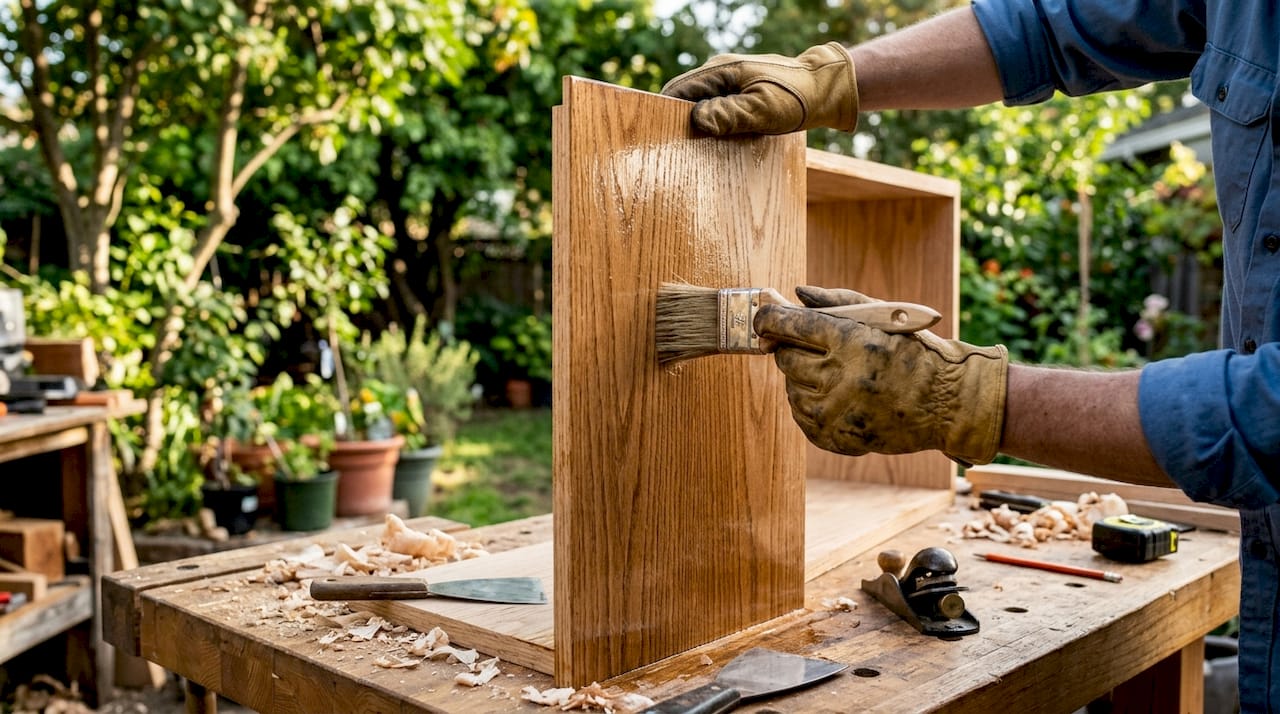
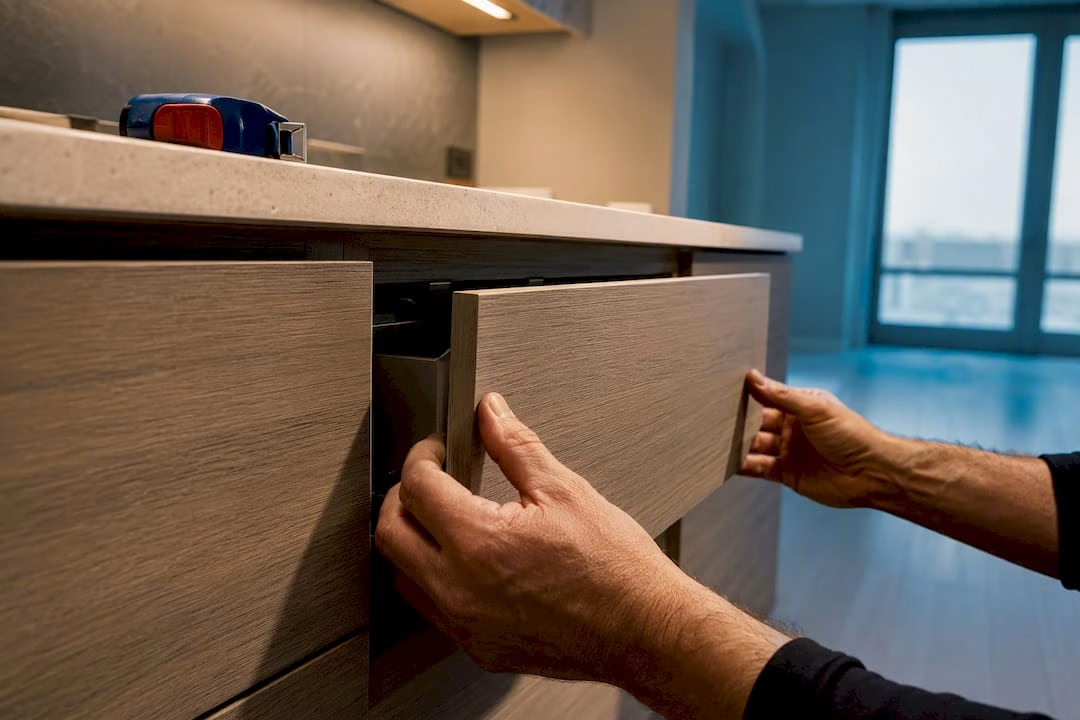
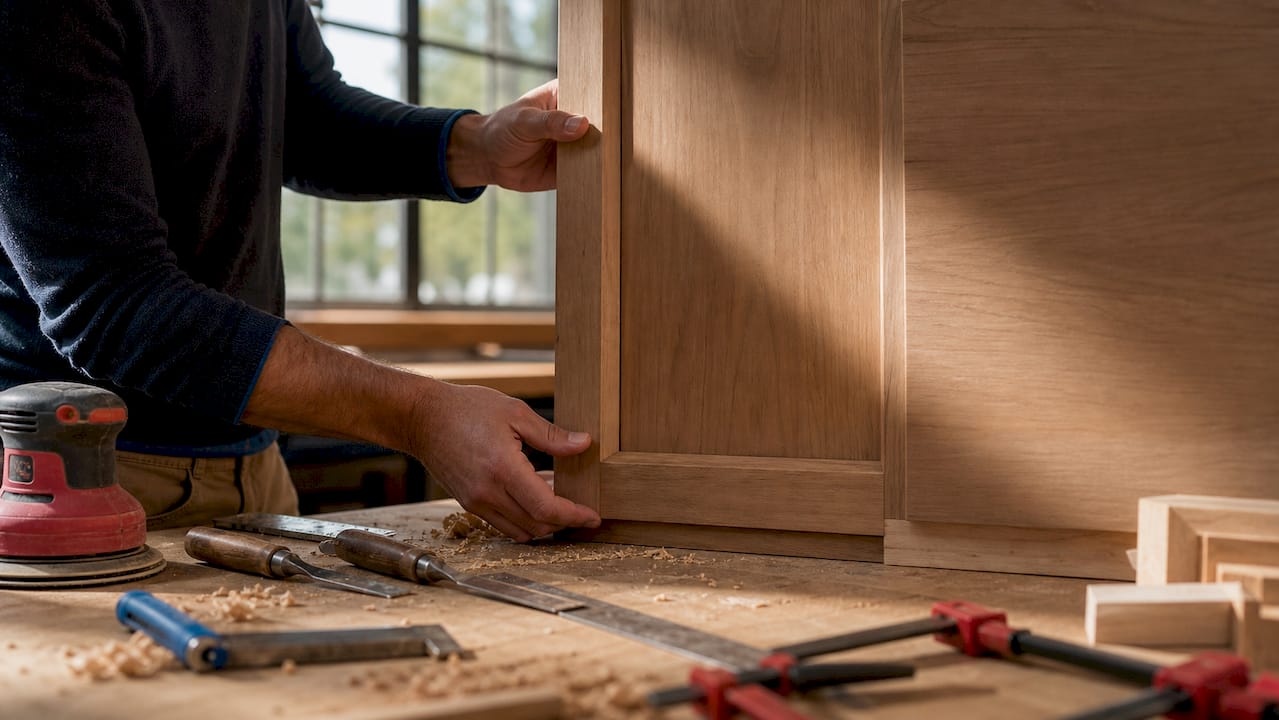
Hands finishing wood cabinet side panel

Standard sizes for kitchen cabinet side panels

Cabinet end panels follow standard dimensions tied to the three main cabinet types found in most American kitchens. Base cabinet panels run approximately 34.5 inches high. Wall cabinet panels range from 30 to 36 inches high depending on ceiling height and layout. Tall and pantry cabinet panels reach 84 to 96 inches high.

Cabinet Type Panel Height Typical Depth
Base cabinet ~34.5 inches 24 inches
Wall cabinet 30–36 inches 12 inches
Tall/pantry cabinet 84–96 inches 24 inches

These dimensions are starting points, not guarantees. You still need to measure your specific cabinets before ordering. Account for countertop overhang on base cabinets and door overlay on all cabinet types. A panel cut too short leaves a gap at the top; one cut too narrow exposes the cabinet edge.

Modular systems add another layer of complexity. IKEA METOD side panels are typically 62 cm deep, which differs from standard American cabinet depths. If you are working with a modular system, always verify the manufacturer’s panel specifications rather than assuming standard sizing applies.

Pro Tip: Add 1/4 inch to your measured height and depth when ordering. This small allowance gives you room to scribe and trim the panel for a perfect fit without leaving it short.
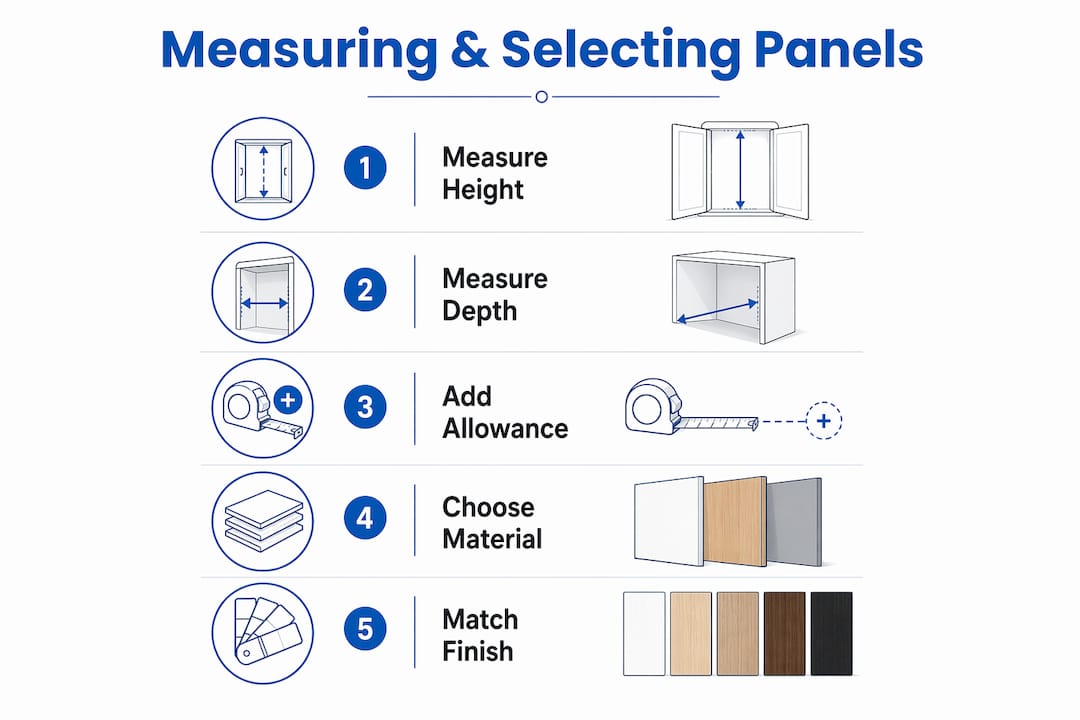
Infographic showing measuring and selecting cabinet side panels

What materials and finishes work best for side panels?

The substrate you choose determines how the panel performs over time. Plywood and moisture-resistant particleboard resist warping better than standard particleboard in high-humidity kitchen environments. Standard particleboard absorbs moisture and swells, which causes the finish to bubble and peel within a few years near a sink or dishwasher.

MDF is the most common substrate for painted panels. It takes paint well, holds a smooth finish, and costs less than plywood. The tradeoff is weight and moisture sensitivity at the edges. Solid wood veneer panels offer a premium look and accept stain naturally, but they cost more and require careful finishing.

Your finish options break down into four main categories:

  • Prefinished panels: Factory-applied finish, consistent color, ready to install. Best for homeowners who want a fast result with no painting required.
  • Raw MDF or oak panels: Cost-effective and refinishable, these give you full control over color and sheen. Ideal for DIY finishing.
  • Thermofoil panels: A vinyl film heat-pressed over MDF. Durable, easy to clean, and moisture-resistant. Common in contemporary kitchens.
  • Paintable panels: Primed MDF or wood, ready for your chosen paint color. Useful when you want a custom color that matches your doors exactly.

Matching your panel and door styles is the single most important design decision you will make. Mixing a flat-panel door with a raised-panel side piece creates visual clutter that no amount of good paint can fix. When you choose cabinet door materials, apply the same logic to your side panels.

Pro Tip: Order a sample of your chosen panel finish before committing to a full order. Lighting in a kitchen changes how colors read, and a sample lets you confirm the match before you cut anything.

How to measure and install cabinet side panels

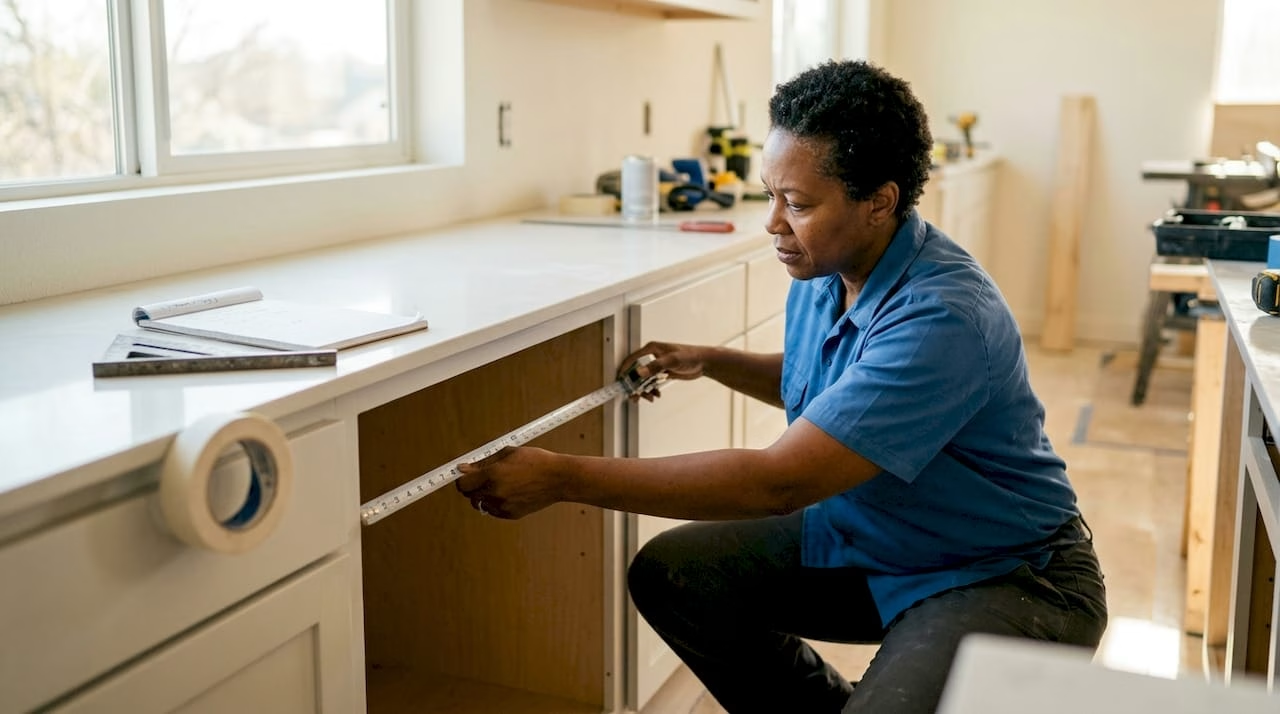
Accurate measurement is the foundation of a clean installation. Measure the height, width, and depth of the exposed cabinet side. Add 1/4 inch to height and depth for scribing allowance. Secure panels using screws or construction adhesive, depending on your cabinet material and access.

Follow these steps for a reliable DIY installation:

  1. Measure twice. Record height, width, and depth with a tape measure. Note any obstructions like toe kicks or crown molding.
  2. Cut the panel to size. Use a circular saw with a fine-tooth blade to minimize tear-out on prefinished surfaces.
  3. Dry-fit the panel. Hold it in place without adhesive or screws to confirm the fit before committing.
  4. Apply adhesive or pre-drill screw holes. Construction adhesive works well when screw access is limited. Screws give a stronger mechanical hold.
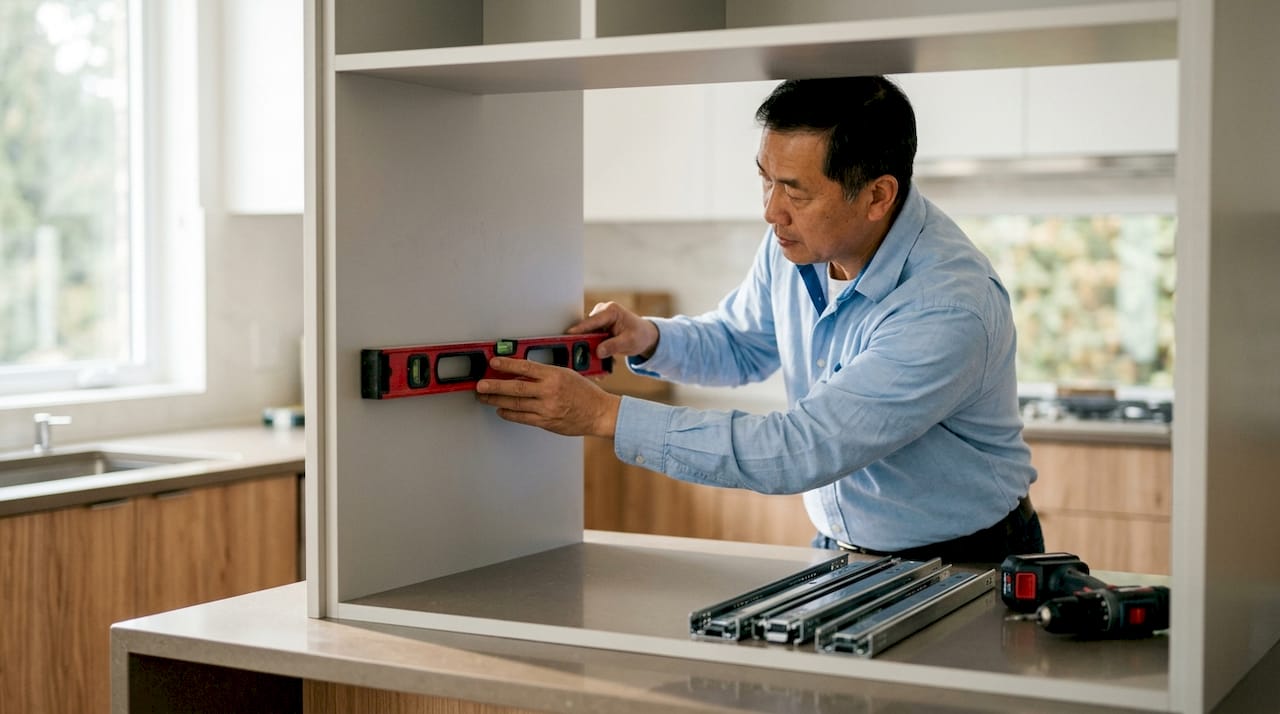
  5. Set the panel flush with the cabinet face frame. Use a level to confirm the panel is plumb before the adhesive sets.
  6. Secure and finish. Drive screws through the interior of the cabinet into the panel, or clamp the adhesive joint until cured. Fill any visible fastener holes with color-matched filler.

Avoid drilling through areas where shelf pin holes are located. Hitting a shelf pin hole with a screw weakens the panel and leaves an ugly gap. Also avoid visible fasteners on the exterior face. If you cannot hide screws, use adhesive only on the outer face and screws on the interior.

Pro Tip: Dry-fit every panel before final fastening. A panel that looks right in your hand can reveal a gap or misalignment once held against the cabinet. Catching this before adhesive sets saves you significant rework.

Customizing and refinishing side panels on a budget

Unfinished panels are the most budget-friendly starting point for a custom look. Raw MDF costs less than prefinished stock, and you control the final color and sheen. The refinishing process follows a straightforward sequence:

  • Sand the panel surface with 120-grit sandpaper, then finish with 220-grit for a smooth base.
  • Apply a water-based primer formulated for MDF. Oil-based primers also work but take longer to dry.
  • Paint with a water-based alkyd or acrylic enamel. These paints cure hard and resist kitchen grease and moisture better than standard latex wall paint.
  • Apply two coats minimum, sanding lightly between coats with 320-grit paper.

Island cabinets require special consideration. When a cabinet is visible from multiple sides, a standard single-sided prefinished panel looks unfinished from the back. Two-sided lacquer panels solve this problem. They cost more, but the finished appearance from every angle justifies the expense for a kitchen island that sits in open space.

Contrasting colors on island panels are a popular design choice in 2026. Painting the island panels a different color from the perimeter cabinets adds visual interest without requiring new cabinet boxes. This works best when the door style on the island matches the perimeter cabinets, keeping the overall design cohesive. You can find color guidance through Tdm-thedoormaker’s cabinet color selection resources.

Common mistakes that ruin cabinet side panel installations

The most frequent mistake is confusing filler panels with side panels and ordering the wrong product. Mixing incompatible cabinet brands is the second most costly error. Panel dimensions, finish colors, and door overlay tolerances vary between manufacturers. A panel from one brand rarely fits flush against cabinets from another.

Mistake What goes wrong Corrective action
Ordering filler instead of side panel Panel too narrow, edge exposed Verify full cabinet height and depth before ordering
Mixing cabinet brands Visible seams, color mismatch Order panels from the same manufacturer as your cabinets
Ignoring moisture conditions Panel warps or finish bubbles Use plywood or moisture-resistant particleboard near sinks
Visible exterior fasteners Screw heads show on finished face Use adhesive on outer face, screws through cabinet interior
Skipping the dry-fit Gaps or misalignment after adhesive sets Always dry-fit before committing to adhesive or screws

Edge banding is another detail that homeowners overlook. When you cut a prefinished panel, the raw edge is exposed. Iron-on edge banding in a matching finish covers the cut edge cleanly. Skipping this step leaves a raw MDF or particleboard edge that absorbs moisture and looks unfinished.

Key Takeaways

The right cabinet side panel, properly measured, matched to your cabinet system, and installed with a dry-fit first, delivers a finished kitchen look without the cost of full cabinet replacement.

Point Details
Know the difference Side panels are full-sized; filler panels are narrow gap covers. Order the correct product.
Match your system Always source panels from the same manufacturer as your cabinets to avoid fit and finish mismatches.
Choose substrate wisely Use plywood or moisture-resistant particleboard near sinks and dishwashers to prevent warping.
Dry-fit before fastening Test the panel position without adhesive or screws to catch alignment issues before they are permanent.
Island panels need two sides Cabinets visible from multiple angles require two-sided finished panels for a complete look.

What I have learned from watching homeowners tackle this project

The homeowners who get the best results share one habit: they treat measurement as the most important step, not an afterthought. I have seen beautifully chosen panels arrive at a kitchen and end up looking wrong because the buyer measured the cabinet box but forgot to account for the door overlay or the countertop lip. Those small details add up to gaps that no caulk can fix gracefully.

The other thing I keep coming back to is material choice. Most people focus entirely on the finish color and ignore the substrate. A thermofoil panel in the right color looks great on day one. But if it is standard particleboard and it sits next to a dishwasher, you are looking at a bubbling, peeling surface within two or three years. Spending a little more on a moisture-resistant substrate is one of the most practical decisions you can make in a kitchen remodel.

My honest recommendation for anyone unsure about refinishing or custom fabrication: get a sample first, and do not skip the dry-fit. These two steps alone prevent the majority of costly mistakes I see homeowners make. If the project feels beyond your comfort level, consulting a professional for the installation while handling the design and ordering yourself is a perfectly reasonable approach. You still save money, and you get a result you are proud of.

— David

How Tdm-thedoormaker can help with your cabinet upgrade

Updating your kitchen cabinet sides is one part of a larger refacing project that can completely change how your kitchen looks without the cost of a full remodel.
https://tdm-thedoormaker.com

Tdm-thedoormaker specializes in custom cabinet doors and refacing solutions built for homeowners who want a high-end result at a fraction of replacement cost. The process is straightforward: measure, design, and order. You get custom sizing, a wide selection of styles and finishes, and craftsmanship that matches what you would expect from a professional kitchen installer. If you are ready to take the next step, the DIY cabinet refacing guide at Tdm-thedoormaker walks you through the full process with practical detail. For homeowners weighing their options, the cabinet refacing vs. replacement page lays out the cost and effort comparison clearly.

FAQ

What is a cabinet side panel used for?

A cabinet side panel covers the exposed edge of a kitchen cabinet, giving it a finished appearance that matches the cabinet doors and drawer fronts. It also protects the cabinet substrate from moisture and impact.

What is the standard size for a base cabinet side panel?

Base cabinet panels are typically 34.5 inches high and 24 inches deep, matching standard base cabinet dimensions. Always measure your specific cabinets and add 1/4 inch for scribing allowance.

What is the difference between a side panel and a filler panel?

A side panel is a full-height, full-depth finishing piece that covers an exposed cabinet edge. A filler panel is a narrow strip, typically 5–15 cm wide, used to close gaps between cabinets and walls.

Can I paint an unfinished cabinet side panel?

Yes. Raw MDF or wood panels accept primer and paint well. Use a water-based alkyd or acrylic enamel for durability, and apply at least two coats with light sanding between them.

Do island cabinets need special side panels?

Island cabinets visible from multiple sides require two-sided finished panels so every visible face looks complete. Standard single-sided prefinished panels leave the back face unfinished and raw-looking.
FROM THE SAME CATEGORY

Sep 8 2026 BY Ksenija Lebec, Blog

Landlords: inspect cabinets, run vacancy based ROI, budget $1,000–$13,000, and plan 1–3 day refacing installs with bulk order tips.

Build a Door MADE TO FIT YOU!

Modern Raised Panel Cabinet Doors: 2026 Buyer’s Guide

Modern Raised Panel Cabinet Doors: 2026 Buyer’s Guide

What makes a raised panel cabinet door “modern”?

Modern raised panel cabinet doors keep the dimensional center panel that defines the traditional style, but strip away the ornate details that make older versions feel dated. The result is a door with real depth and shadow play, paired with clean, squared profiles and minimal edge ornamentation. That combination is exactly why these doors work so well in transitional kitchens, where you want character without clutter.

The defining traits of a modern raised panel door come down to four things:

  • Square or subtly beveled edges instead of ornate ogee or cove profiles
  • Tight reveals between the panel and the surrounding frame, which read as more contemporary than wide, decorative reveals
  • Matte, soft neutral, or monochromatic finishes that shift attention to texture and shadow rather than wood grain
  • Understated hardware in brushed nickel, matte black, or brass to complete the updated look

These doors suit transitional and contemporary styles equally well. Maple, oak, cherry, hickory, and walnut are the most common wood species used, each offering different grain patterns and stain compatibility. MDF and thermofoil (RTF) versions expand the options further for painted finishes.


Which raised panel cabinet door products lead the U.S. market?

The Canadian market offers a wide range of raised panel door options in thermofoil. Customer reviews consistently highlight craftsmanship, finish quality, free shipping, and return policies as the deciding factors alongside price.

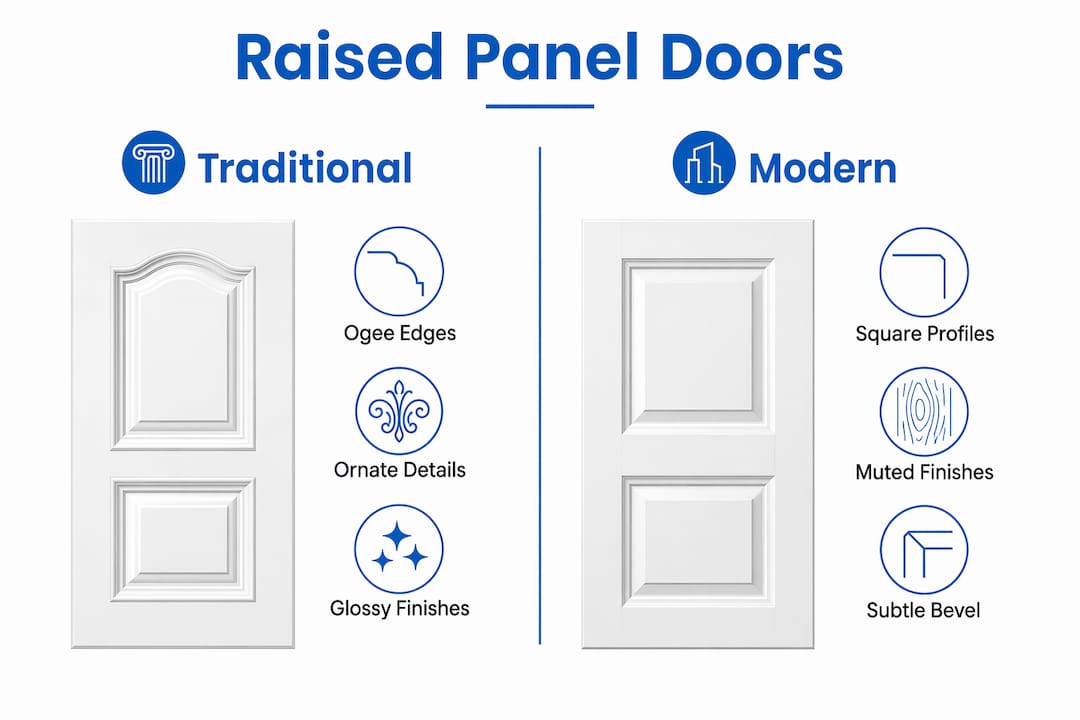
Infographic comparing traditional versus modern raised panel cabinet doors


How to choose the right modern raised panel cabinet doors for your home

The profile is the first decision. Square-edged doors like the Asheville Raised Square, Pinnacle, Camden, and Freedom Cabinet Door deliver the tightest modern look. If you want a subtle nod to tradition, a shallow arch like the Shelby Raised Arched or Concord Raised Cathedral adds visual interest without feeling ornate.

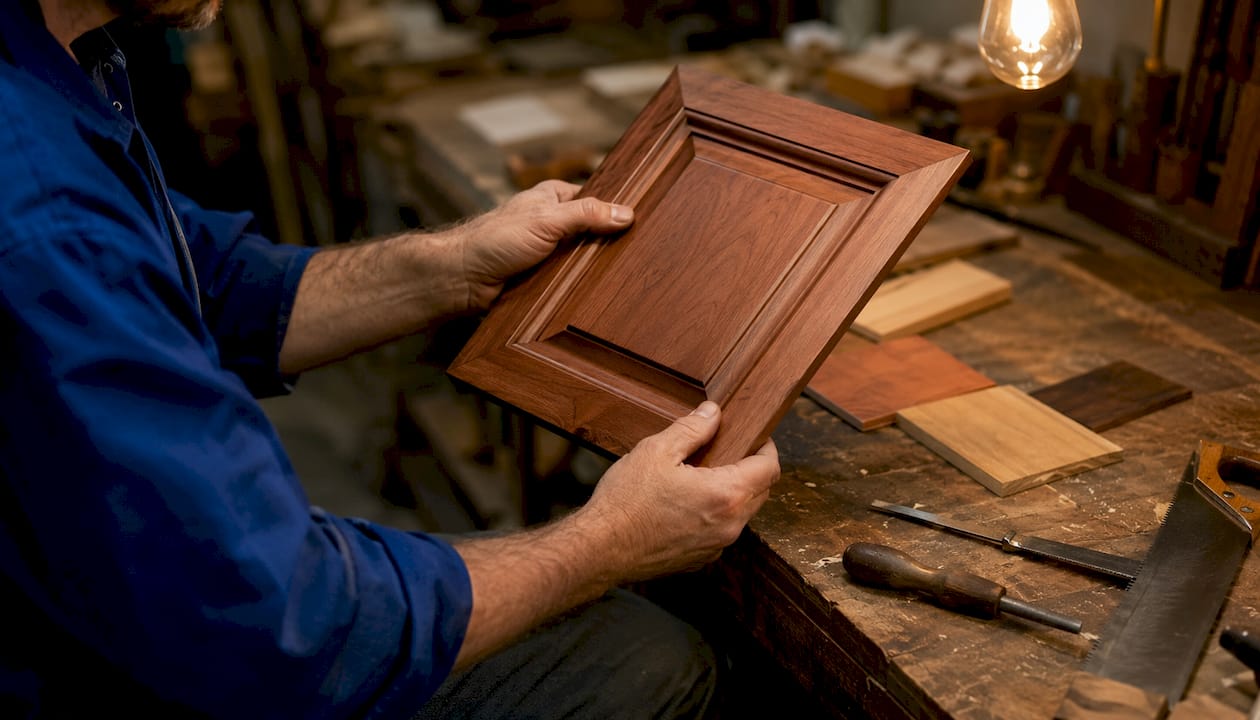
Craftsman holding cherry wood raised panel door profile

Reveal size matters more than most homeowners realize. A smaller reveal between the panel and frame reads as contemporary, while a wide reveal with decorative edge work pushes the door toward a traditional aesthetic. When you are comparing options, look at the reveal dimension before anything else.

Wood species shapes your finish options. Maple takes paint evenly and is the go-to for matte or soft neutral finishes. Cherry and walnut are better suited for stained finishes where grain is part of the appeal. If you plan to paint, MDF or RTF doors like the Naples and Daytona lines offer a smoother surface and tend to hold paint longer without grain telegraphing through.

Hardware completes the look. Matte black pulls on a white or gray raised panel door create a sharp contrast that reads as thoroughly modern. Brushed brass adds warmth without feeling traditional. For guidance on pairing hardware with your door profile, the knobs and handles guide from Tdm-thedoormaker covers the combinations that work best.

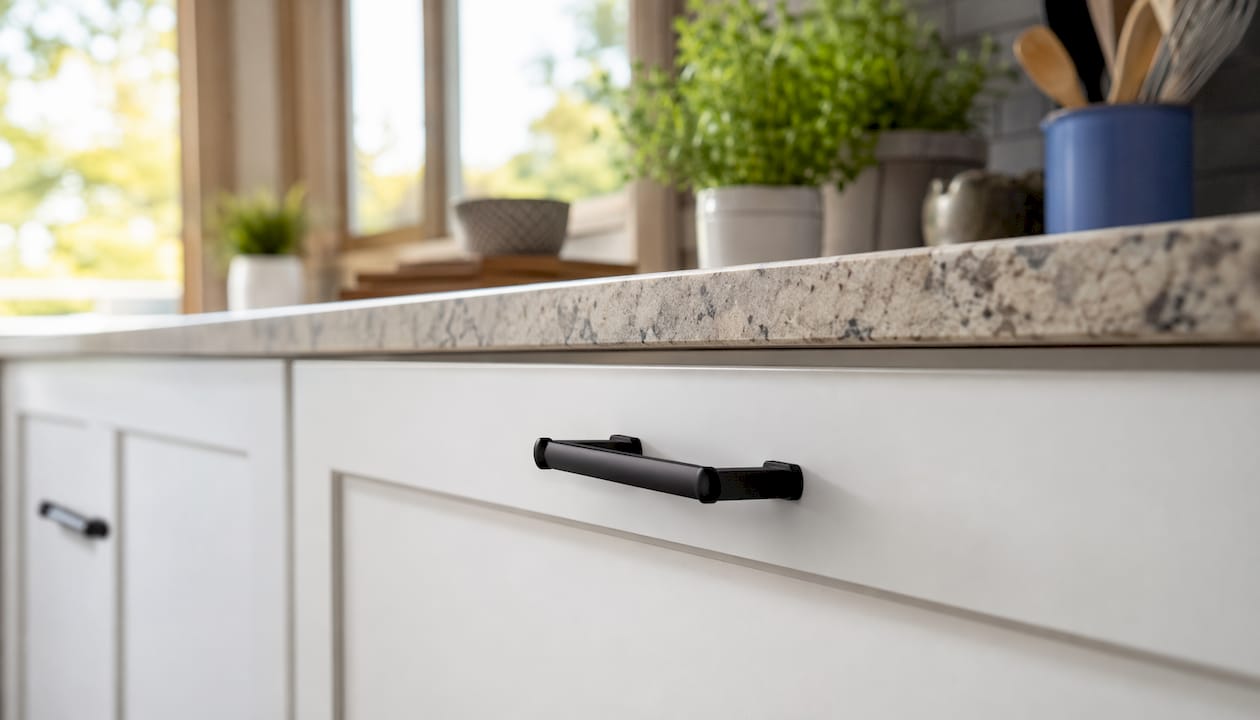
Modern kitchen drawer with matte black pulls and raised panel

Pro Tip: Choose a square-profile raised panel door with a subtle bevel rather than an ogee or cove edge. That single detail is what separates a door that reads as modern from one that reads as traditional, regardless of the finish you apply.

Maintenance is a real consideration with raised panel doors. Cleaning around the edges takes more effort than with slab or shaker doors, and damaged raised panels cost more to repair. If your kitchen sees heavy daily use, a painted MDF or RTF door is easier to wipe down than a stained solid wood option.


The dominant 2026 trend is transitional design: raised panel doors with restrained detail, paired with contemporary hardware and soft finishes. Highly ornate profiles are giving way to square-edged panels with tight reveals, and the color palette has shifted toward soft whites, warm grays, and earthy neutrals in matte or satin sheens.

Current finishing trends worth knowing:

  • Matte and satin finishes reduce visual complexity and let the panel’s shadow lines do the work
  • Monochromatic color schemes pair the door color with the wall or trim for a cohesive, calmer look
  • Two-tone cabinetry uses a darker lower cabinet paired with a lighter upper, both in raised panel profiles
  • Natural wood stains on walnut or hickory raised panels are gaining ground in kitchens that want warmth without going fully traditional

Frequently asked questions

Are raised panel cabinet doors still in style for 2026? Yes, when the profile is square and the finish is muted. Ornate raised panels with wide reveals feel dated; square-edged versions with tight reveals fit comfortably into transitional and even contemporary kitchens.

How do you make raised panel cabinets look modern? Matte or soft neutral paint shifts the focus from wood grain to the door’s dimensional shadow lines. Pair that with simple bar pulls or minimal knobs and the result reads as current.

What is the difference between traditional and modern raised panel doors? Traditional versions use ornate ogee or cove edges and wide reveals. Modern versions use square or subtly beveled edges with tight reveals. The construction is the same; the profile details are what change the perceived style.


What do you need to know before installing modern raised panel cabinet doors?

Installation for raised panel doors follows the same basic process as any replacement cabinet door, but a few details specific to this style are worth addressing before you start.

Accurate measurement is the most critical step. Raised panel doors have a fixed panel size relative to the overall door size, so ordering the wrong dimensions means the reveal proportions will look off even if the door fits the opening. Measure the cabinet opening width and height, then confirm the overlay or inset specification with your supplier before placing the order.

Hinge selection depends on your cabinet box type. European cup hinges work for frameless cabinets and allow adjustment after installation. Face-frame cabinets use traditional or semi-concealed hinges. Many suppliers, including those offering the Customizable Raised Panel and Custom Raised Panel (Barker Door) options, offer pre-drilled hinge holes as an add-on, which saves time and reduces alignment errors.

Weight is a factor with solid wood raised panel doors. Thicker solid wood doors in species like walnut or cherry are heavier than MDF or RTF versions, so confirm your hinge weight rating before installing. For a full walkthrough on upgrading cabinet fronts and getting the reveal alignment right, Tdm-thedoormaker’s installation guidance covers the process clearly.

If you are hiring a painter to finish unfinished doors after installation, coordinate the sequence carefully. Some homeowners prefer to refinish cabinet surfaces before hanging the doors to get cleaner edges and avoid masking the cabinet box.


Tdm-thedoormaker gives you a faster path to custom raised panel doors

Ordering custom raised panel doors through a traditional supplier often means long lead times, minimum order quantities, and limited finish choices. Tdm-thedoormaker takes a different approach: you measure, design, and order entirely online, with sizing accurate to 1/10,000 of an inch and over 130 colors and styles available through the configurator.

https://tdm-thedoormaker.com

The pricing undercuts many larger retailers without sacrificing craftsmanship, and the turnaround is faster than most custom wood shops. Whether you want a square-profile raised panel in a matte painted finish or a stained solid wood door sized to an unusual opening, the process handles it without back-and-forth with a sales rep. For homeowners comparing the cost of full cabinet replacement against refacing, the custom cabinet doors online page lays out the options clearly.


Key takeaways

Modern raised panel cabinet doors achieve a contemporary look through square profiles, tight reveals, and muted finishes rather than through any change in construction.

Point Details
Profile drives perceived style Square edges and tight reveals make a raised panel door read as modern; ornate ogee edges push it toward traditional.
Finish choice matters as much as profile Matte and soft neutral paints shift focus to shadow lines and reduce visual complexity on raised panel doors.
Wood species shapes your options Maple suits painted finishes; walnut and cherry work best for stained looks with visible grain.
Installation requires accurate sizing Raised panel proportions depend on correct overlay or inset measurements; pre-drilled hinge holes reduce alignment errors.
Tdm-thedoormaker for custom refacing Tdm-thedoormaker’s online configurator offers precise custom sizing across 130+ colors, with competitive pricing and fast turnaround.
FROM THE SAME CATEGORY

Sep 8 2026 BY Ksenija Lebec, Blog

Landlords: inspect cabinets, run vacancy based ROI, budget $1,000–$13,000, and plan 1–3 day refacing installs with bulk order tips.

Build a Door MADE TO FIT YOU!

Full Overlay Cabinet Hinges: A Complete DIY Guide

Full Overlay Cabinet Hinges: A Complete DIY Guide

Full overlay cabinet hinges are the go-to hardware for frameless cabinets, where the door panel completely covers the front edge of the cabinet box. Unlike half overlay cabinet hinges designed for face frame cabinets, full overlay hinges create a flush, uninterrupted surface across the cabinet front. The result is a clean, modern look that has made frameless construction the dominant choice in contemporary kitchen renovations.

Here is what sets full overlay hinges apart at a glance:

  • Door coverage: The door fully covers the cabinet box edge, leaving no visible frame gap
  • Cabinet type: Designed for frameless (European-style) construction
  • Standard cup size: 35 mm diameter borehole, the industry standard for concealed European hinges
  • Mounting: Concealed inside the cabinet when closed, preserving a sleek exterior
  • Contrast with half overlay: A 1/2 overlay hinge leaves the center stile of a face frame cabinet exposed between adjacent doors, while a full overlay hinge covers the entire edge

If you are upgrading a kitchen or bathroom with frameless cabinets, full overlay hinges are the correct choice. Getting this right from the start saves you from mismatched gaps, misaligned doors, and a frustrating reinstall.


What makes full overlay cabinet hinges worth the upgrade?

The features built into modern full overlay hinges go well beyond simply holding a door open. Soft-close mechanisms, multi-directional adjustability, and thoughtful mounting options combine to make these hinges genuinely functional hardware, not just a commodity part.

Adjusting soft-close cabinet hinge

Soft-close technology is now a standard expectation in quality kitchen refacing. The integrated damper in the hinge arm slows the door in the final inch of travel, so it closes quietly every time. Soft-close reduces noise and prevents the repeated impact that wears down door edges, hinge screws, and cabinet box corners over years of daily use. Some hinges offer an on/off adjustment for the closing speed, letting you dial in behavior based on door weight and personal preference.

3D or 6-way adjustability is the feature that separates a professional-looking installation from a frustrating one. Modern concealed hinges allow you to adjust doors in six directions: horizontally, vertically, in depth, and with tilt correction. That means you can fine-tune every door after mounting without removing it, achieving consistent gaps across an entire run of cabinets.

Key features to evaluate when shopping:

  • Soft-close with on/off control: Lets you customize closing speed for heavy or lightweight doors
  • 6-way cam adjustment: Covers height, side, depth, and tilt for precise alignment
  • Opening angle: Most full overlay hinges open to 110°; some specialty versions reach 165°
  • Door thickness range: Standard compatibility runs from 15 mm to 24 mm
  • Material: Galvanized steel or nickel-plated steel for corrosion resistance and durability
  • Finish options: Nickel, matte black, brushed brass, and chrome to match your hardware pulls

Pro Tip: When choosing between clip-on and screw-on mounting plates, clip-on baseplates are worth the slight extra cost. They let you snap doors on and off without tools, which makes future adjustments and cleaning far less tedious.


Where full overlay hinges work best

Full overlay hinges belong on frameless cabinets, and that covers a wider range of applications than most homeowners initially realize. The frameless construction style, sometimes called European-style cabinetry, builds the box without a face frame attached to the front. The door itself becomes the finished surface, and the hinge must support that fully covered look.

Common applications where full overlay hinges perform well:

  • Kitchen cabinets: Upper and lower runs where a seamless, flat-front appearance is the goal
  • Bathroom vanities: Frameless vanity boxes benefit from the clean edge coverage and moisture-resistant finishes
  • Pantry and utility cabinets: Heavier doors in these spaces benefit from soft-close damping and durable steel construction
  • Built-in furniture: Bookcases, media units, and laundry room cabinetry built without face frames
  • Custom cabinetry: Any project where the door panel is sized to cover the full cabinet opening edge

The aesthetic advantage is real. European concealed hinges produce a notably narrower door-to-door gap compared to compact face frame hinges, contributing to a higher-end appearance. That tighter gap is what gives frameless kitchens their high-end, furniture-like appearance.

Full overlay hinges are not the right fit when your cabinets have a face frame. In that case, a 1/2 overlay hinge or inset hinge is the correct match. Forcing a full overlay hinge onto a face frame cabinet causes the door to sit proud of the frame, creating uneven gaps and a door that may not close properly. Matching the hinge type to the cabinet construction is the single most important compatibility decision you will make.


How to choose the right full overlay hinges for your project

Choosing correctly comes down to four things: cabinet type, overlay measurement, door thickness, and the features you actually need. Getting any one of these wrong means buying again.

Full overlay cabinet hinges on display

Start with cabinet type. Before you order anything, confirm whether your cabinets are frameless or face frame. Mixing hinge types with the wrong cabinet construction prevents proper door mounting and creates overlay gap problems that no amount of adjustment will fix.

Measure your overlay carefully. Full overlay means the door covers the entire front edge of the cabinet box. If you are retrofitting existing cabinets, measure the actual overlap of the door over the cabinet edge. A hinge rated for 1/2-inch overlay may only apply to the top and bottom of the door, while the sides overlay by a full inch, so precise measurement before purchase prevents a mismatch.

Key selection criteria:

  • Cup hole diameter: Confirm your door material accepts a 35 mm bore; this is the universal standard for concealed European hinges
  • Door thickness: Most full overlay hinges accommodate 15 mm to 24 mm door thickness; verify your doors fall in that range
  • Soft-close preference: Decide whether you want soft-close only, self-close only, or a combination with on/off speed control
  • Mounting plate type: Clip-on for easy future removal; screw-on for a more fixed installation
  • Finish: Match to your existing pulls and knobs for a cohesive look
  • Opening angle: 110° covers most standard cabinets; go wider if doors are near walls or appliances

Pro Tip: Before purchasing, check whether your cabinet box is plywood, MDF, or particleboard. Particleboard holds hinge screws less securely, so you may need longer screws or a reinforcing insert at the mounting plate location.


Step-by-step installation guide for full overlay hinges

Installing concealed full overlay hinges is a manageable DIY project when you work through it methodically. The most common mistakes happen at the measuring and drilling stage, so take your time there.

What you need before you start:

  • 35 mm Forstner bit and drill
  • Drilling template or jig (most hinge manufacturers include one, or sell it separately)
  • Screwdriver or drill with appropriate bit
  • Tape measure and pencil
  • Level or straightedge

Step 1: Mark the cup hole location. The standard boring distance from the door edge to the center of the cup hole is 37 mm, though some hinge models specify 35 mm or 38 mm. Check your hinge’s spec sheet. Mark the center point on the back face of the door, typically 3–5 inches from the top and bottom edges.

Step 2: Drill the 35 mm cup hole. Use a 35 mm Forstner bit at a consistent depth, usually 12–13 mm. A drilling jig keeps the bit perpendicular and prevents tearout on the door face. Drill slowly and back out frequently to clear chips.

Step-by-step installation process infographic

Step 3: Mount the hinge cup. Press the hinge cup into the bore hole and secure it with the provided screws. The arm should fold flat against the door back when closed.

Step 4: Install the mounting plate. Attach the baseplate to the interior side wall of the cabinet box at the correct height. Most plates have slotted holes for initial positioning before final tightening.

Step 5: Attach the door. Clip or screw the hinge arm onto the mounting plate. For clip-on systems, you simply press until you hear a click.

Step 6: Adjust for alignment. Use the 6-way adjustability screws to dial in the door position. Adjust height first, then side-to-side, then depth. Check the gap between adjacent doors with a consistent spacer, such as a folded piece of cardboard.

Common pitfalls to avoid:

  • Drilling the cup hole too deep causes the hinge arm to sit proud and prevents the door from closing flush
  • Incorrect overlay measurement leads to doors that overlap each other or leave a gap at the cabinet edge
  • Skipping the drilling jig results in angled holes that misalign the hinge arm
  • Over-tightening mounting plate screws in particleboard strips the hole; use a hand screwdriver for final tightening

Pro Tip: Video tutorials from hinge manufacturers walk through the drilling and adjustment steps in real time. Watching one before you pick up the drill is worth 10 minutes of your time, especially if this is your first concealed hinge installation.


Understanding the main cabinet hinge types

Knowing the difference between hinge types helps you buy the right hardware the first time and makes it easier to identify what you already have when replacing worn hinges.

Full overlay hinges are built for frameless cabinets. The door covers the entire front edge of the cabinet box, and the hinge sits fully concealed inside when the door is closed. This is the style behind the flat-front, handle-free kitchens common in contemporary design.

Half overlay hinges (1/2 overlay hinges) are designed for face frame cabinets where two doors share a center stile. Each door overlays the stile by approximately 1/2 inch, leaving the stile visible between the doors. These hinges are the standard in traditional American kitchen cabinetry and are not interchangeable with full overlay versions without modification.

Inset hinges position the door inside the cabinet opening, flush with the face frame. The door does not overlay the frame at all. Inset installations require the most precise fitting and are common in furniture-style cabinetry and period-appropriate kitchen designs.

A quick comparison:

Hinge type Cabinet style Door position Gap appearance
Full overlay Frameless Covers full box edge 2 mm between doors
Half overlay (1/2 overlay) Face frame Covers half the stile Stile visible between doors
Inset Face frame Sits inside opening Frame fully visible

When replacing existing hinges, look at how the door sits relative to the cabinet frame. If the door covers the entire front edge with no frame showing, you have a full overlay setup. If you can see a strip of wood between adjacent doors, that is a face frame cabinet with partial overlay hinges. Identifying this correctly before you order saves a return trip to the hardware store.


How Tdm-thedoormaker can take your cabinet upgrade further

Replacing hinges is often the first step in a larger cabinet refresh, and new hardware alone can only do so much. If your cabinet doors are dated, damaged, or simply the wrong style for the look you want, Tdm-thedoormaker offers a practical path forward through custom cabinet door refacing.

The process works in three steps: measure your existing openings, design your doors using the online configurator, and place your order. Tdm-thedoormaker cuts every door to 1/10,000-inch precision, so the fit against your new full overlay hinges is exact. You choose from over 30 styles and 130+ colors and finishes, from flat-panel slab doors that suit frameless cabinets perfectly to shaker profiles and raised-panel options.

https://tdm-thedoormaker.com

The cost advantage over a full cabinet replacement is real. You keep the existing cabinet boxes, replace only the doors and drawer fronts, and update the hardware at the same time. The result looks like a full renovation at a fraction of the price. Tdm-thedoormaker also offers add-on hinge hole boring, so your new doors arrive ready to accept the 35 mm concealed hinges you have already selected.

Pairing new doors with quality full overlay hinges and soft-close mechanisms gives you a kitchen or bathroom that functions as well as it looks. If you want to see how the door styles and colors work in your space before committing, Tdm-thedoormaker offers sample doors and color swatches. You can also explore the full cabinet refacing versus replacement comparison to decide which approach fits your budget and timeline.


Key Takeaways

Full overlay cabinet hinges are the correct hardware for frameless cabinets, and choosing the right type, measuring accurately, and pairing them with quality doors produces a durable, professional result.

Point Details
Match hinge to cabinet type Full overlay hinges only work correctly on frameless cabinets; face frame cabinets require half overlay or inset hinges.
Standard cup size is 35 mm All modern concealed European hinges use a 35 mm bore hole; confirm your drill bit and jig match before starting.
6-way adjustability simplifies installation Height, side, depth, and tilt adjustments let you correct door alignment after mounting without removing the door.
Clip-on baseplates save maintenance time Clip-on mounting plates allow tool-free door removal, making future adjustments and cleaning much easier.
Pair new hinges with new doors for best results Combining full overlay hinges with custom-sized replacement doors from Tdm-thedoormaker delivers a complete, cohesive upgrade.
FROM THE SAME CATEGORY

Sep 8 2026 BY Ksenija Lebec, Blog

Landlords: inspect cabinets, run vacancy based ROI, budget $1,000–$13,000, and plan 1–3 day refacing installs with bulk order tips.

Build a Door MADE TO FIT YOU!

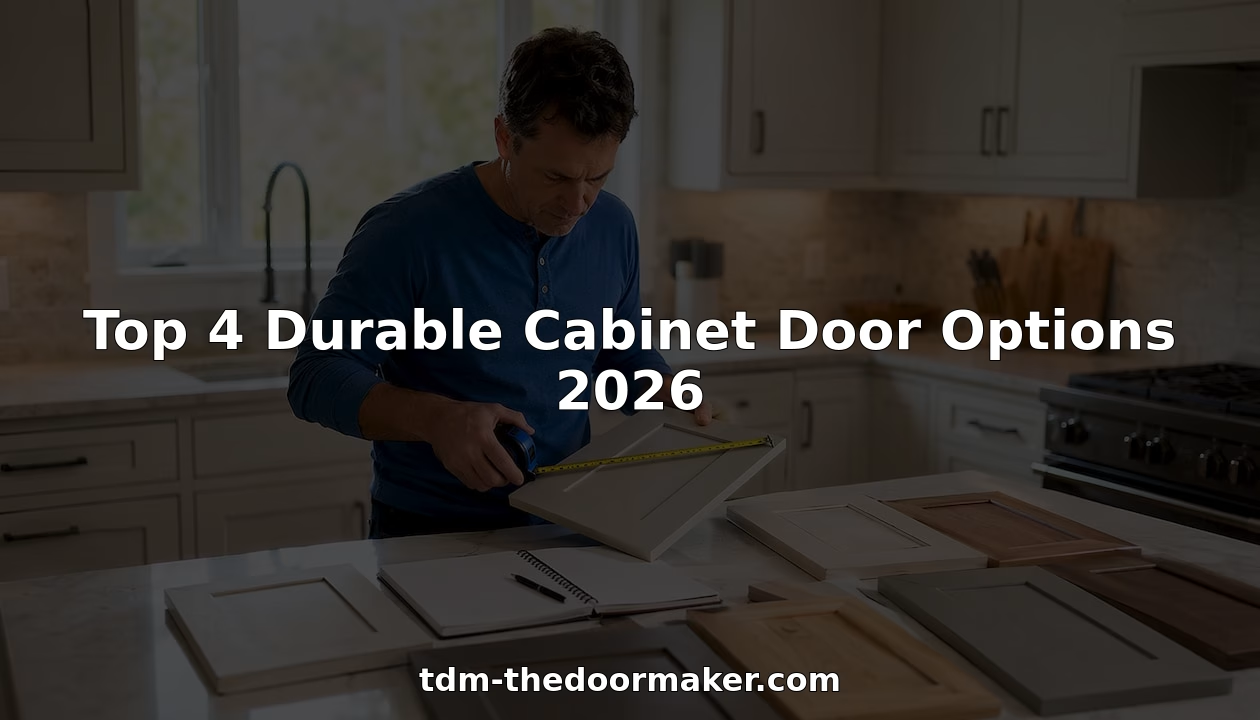
Top 4 Durable Cabinet Door Options 2026

Top 4 Durable Cabinet Door Options 2026

Finding durable cabinet door components that fit existing layouts and budgets takes too much trial and error. Many vendors restrict choices to prebuilt sets, offer limited color and style selection, or make ordering custom sizes complicated for homeowners and small contractors. You can compare precise lead times, configuration tools, and price ranges across four direct-to-customer cabinet door sources to match your renovation needs.

Table of Contents

TDM – The Door Maker

https://tdm-thedoormaker.com

At a Glance

The vendor reports a 99.8% quality rate for finished cabinet components. According to the company, typical lead times run about four weeks for custom orders. The online Build a Door configurator and a palette of more than 130 colors let you design precise cabinet fronts without guessing finishes.

Core Features

The Build a Door configurator walks you through sizing, style selection, and finish choices while linking to tutorials and technical documentation. You can choose from over 130 colors and multiple finishes, plus 30 panel styles, eight inner profiles, and eleven edge profiles. Manufacturing focuses on precision production and careful packaging to help homeowners and small contractors get install-ready parts.

Key Differentiator

More than 130 thermofoil color options paired with an interactive configurator define TDM’s core advantage. That combination lets you match or update an existing palette while controlling profile, panel style, and edge detail. The configurator reduces guesswork and speeds specification for custom cabinet fronts.

Pros

TDM claims over 2 million units delivered, which supports its position as an experienced manufacturer. The company keeps a deep in-stock color palette and offers sample doors and swatch books to confirm finishes before a full order. Detailed tutorials and technical resources help first-time refacers measure and install, and packaging and quality checks aim to protect parts during transit.

Cons

  • Limited shipping to North America, which restricts buyers outside that region.

Who It’s For

Homeowners who want bespoke cabinet doors but prefer to avoid full cabinet replacement will find TDM practical. Small contractors and DIY renovators who value precise sizing, a wide finish selection, and hands-on configuration also benefit. Interior designers sourcing specific profiles and colors will appreciate the configurator and documentation.

Unique Value Proposition

Sample doors start around $27.38, making low-cost testing feasible before a full purchase. That pricing lowers risk when you try new finishes or edge profiles on actual cabinetry. Combined with swatch books for $100, the model lets you confirm appearance and fit before committing to larger orders.

Real World Use Case

A homeowner uses the Build a Door tool to match new doors to existing trim and color. They order sample doors, watch measuring and installation tutorials, and then place a full order sized to their cabinets. The parts arrive packaged for careful handling, and the homeowner installs the doors with basic carpentry tools.

Pricing

Pricing varies by door style, size, and finish choices rather than a single flat rate. Sample doors start around $27.38, and some door profiles list prices near $15.14 per square foot. Swatch books cost $100, and gift cards are available up to $10,000; shipping and handling are included in most quotes and that lead time is typically about 20 business days.

Website: https://tdm-thedoormaker.com

FastCabinetDoors.com

https://fastcabinetdoors.com

At a Glance

FastCabinetDoors.com reports most orders ship within two weeks. The company has operated since 2008 and focuses on custom cabinet doors, drawer fronts, drawer boxes, and hardware. Its U.S. production and in-house experts support both homeowners and contractors with measurement and installation guidance.

Core Features

FastCabinetDoors.com accepts precise measurements and offers a wide style selection that includes shaker, raised panel, inset, and glass-cut doors. Materials range from solid wood to thermofoil and painted finishes, and the site pairs parts with extensive hardware and accessory choices. The vendor also publishes guides and offers in-house expert support to help with selection and installation.

Key Differentiator

FastCabinetDoors.com emphasizes handcrafted, customizable components produced in the United States and timed for quick delivery. That focus narrows the offer to cabinet components rather than complete cabinet systems. For projects where you want to retain existing boxes and doors or swap fronts quickly, that specialization speeds procurement and simplifies installation.

Pros

The product catalog covers a broad mix of styles and materials, which makes matching an existing kitchen or dialing in a new look straightforward. Made in the USA production gives tighter quality control and easier communication with the factory. Personalized help from in-house experts reduces measurement errors and shortens the back-and-forth that often stalls DIY projects. Fast shipping supports renovation timelines when the shipping claim matters to contractors or homeowners.

Cons

  • Limited international shipping. Noncontinental or overseas buyers will not find broad options.
  • Prices vary by customization and material. Premium solids or custom finishes can raise costs above entry-level alternatives.
  • Focused product range. The catalog centers on doors, drawer fronts, and hardware rather than full cabinet sets.

When It May Not Fit

This vendor is not the right choice if you need full cabinetry delivered and installed as a single package. It also does not serve many international addresses. If your project budget is extremely tight and you need the lowest possible component price for premium materials, compare multiple suppliers before ordering.

Who It’s For

Homeowners and DIY enthusiasts who want high-quality, custom cabinet fronts on a budget will find this useful. Professional contractors and property managers seeking reliable U.S.-made components and predictable lead times will also benefit. The offering matches projects that reuse existing cabinet boxes or where selective upgrades are planned.

Real World Use Case

A homeowner measures existing boxes, selects shaker doors and matching drawer fronts, and orders custom pieces with precise sizes. They consult the site’s experts for hinge placement and receive the shipment within the advertised timeline. The new fronts and hardware install on the original boxes, transforming the kitchen for far less than a full replacement.

Pricing

Doors and drawer fronts are priced per square foot, with reported typical ranges around $16 to $35+ per sq. ft. Free shipping applies on orders over $1,500, and final cost depends on size, material, and finish selections.

Website: https://fastcabinetdoors.com

cabinetdoorsnmore.com

https://cabinetdoorsnmore.com

At a Glance

cabinetdoorsnmore.com reports drawer fronts start around $43 per square foot for MDF and go up to $58 for solid wood options. According to the company, production and shipping take about 10–15 business days and orders ship with free shipping. That combination of accessible pricing and a short lead time makes it practical for homeowners who want a fast, affordable refresh without replacing full cabinets.

Core Features

The product line is custom made to exact specifications, covering cabinet doors, drawer fronts, and drawer boxes in solid woods and engineered materials. The site pairs a wide selection of styles and finishes with an online ordering flow that includes measurement guidance so you can match existing cabinetry or configure a new look. The offering also includes bulk discounts and clear shipping policies for orders placed within the US.

Key Differentiator

What sets cabinetdoorsnmore.com apart is its focus on parts rather than full cabinet systems, with domestically crafted components and a short turnaround. That narrower focus serves DIYers and small remodel teams who only need replacement fronts and boxes rather than the full refacing service offered by Tdm-thedoormaker. The result is simpler ordering and lower total cost when the cabinet carcasses are already serviceable.

Pros

High-quality materials include solid maple, cherry, and oak plus engineered MDF and RTF options, so you can match grain and finish to existing cabinetry. Custom sizing and online measurement guidance reduce the risk of ordering incorrect dimensions, and the vendor emphasizes fast production and free shipping to the continental US. The website is straightforward to use, which speeds decision making for homeowners tackling a staged remodel or a single-cabinet repair.

Cons

  • Limited to cabinet components, not complete cabinetry or appliances. This is not a source for full cabinet boxes or installation services.

  • Primarily serves the US market, with limited information about international shipping options. Overseas buyers will need to contact the company for availability.

  • No detailed independent user reviews or third-party validation are publicly listed. Buyers must rely on company materials and individual testimonials.

When It May Not Fit

If you need full cabinetry packages or built-in appliances, this supplier will not meet that need. Buyers outside the United States who require clear international shipping terms should look elsewhere. Contractors seeking installed turnkey solutions will find the parts-only model incomplete for their workflow.

Who It’s For

This product suits US-based homeowners and DIY enthusiasts replacing worn doors or changing finishes without the expense of full cabinet replacement. It also fits small contractors who source custom fronts in bulk for client projects. Choose this if you already like your cabinet layout and only need new faces and drawer fronts.

Real World Use Case

A homeowner measures cabinet openings, orders custom doors and drawer fronts online, and receives the shipment in roughly two weeks. They swap the old faces for the new parts and reuse the existing hinges and drawer boxes for a professional-looking refresh. That timeline and the parts-only approach keep labor and disposal costs low.

Pricing

Prices vary by material and size, with those earlier figures indicating MDF starting around $43 per square foot and solid wood options near $58. Free shipping to US addresses applies to standard orders, and the vendor advertises discounts for bulk orders over $500. Exact quotes depend on dimensions, material choice, and any specialty finishes.

Website: https://cabinetdoorsnmore.com

WalzCraft

https://walzcraft.com

At a Glance

WalzCraft has served North American custom cabinetry since 1982 and operates from La Crosse, Wisconsin. The company positions itself as a single source for door faces, drawer boxes, moldings, and cabinet components. Its product line emphasizes high customization and regional manufacturing rooted in Midwest craftsmanship.

Core Features

WalzCraft offers a wide variety of door styles, materials, and finishes alongside matching drawer boxes and moldings. The company provides design aids, technical documentation, and dealer resources to help cabinetmakers specify precise dimensions and finishes. Regional production supports custom orders tailored to professional workflows and larger volume projects.

Key Differentiator

WalzCraft focuses on highly customizable cabinet components produced with a Midwest craftsmanship approach, targeting professional cabinetmakers and custom shops. That emphasis shows up in options for bespoke door profiles, finish matching, and component pairings. The product mix suits projects that require consistent parts across multiple cabinets or coordinated furniture pieces.

Pros

WalzCraft produces parts that fit professional shop workflows, so fabricators can order components to match custom joinery and assemblies. The range of materials and finishes helps match architect or designer specs while keeping parts consistent across a full kitchen. Design resources and technical documents reduce guesswork on sizing and finishing for trained cabinetmakers. The suppliers long history supports its reputation among industry buyers seeking dependable component sources.

Cons

  • Outdated and complex online ordering that slows small orders and frustrates individual homeowners.
  • Limited direct sales to consumers, since the business prioritizes B2B relationships with shops and contractors.
  • Some custom options have intermittent availability, which can delay project schedules.
  • Reported challenges with pre drilling and finishing compatibility for certain parts.

When It May Not Fit

WalzCraft is not a good match if you are an individual homeowner wanting one off doors with a simple online checkout. Small remodelers who need quick retail style ordering will find the ordering system cumbersome. Projects that require immediate small quantities or consumer friendly support will likely need an alternative supplier.

Who It’s For

The ideal buyer is a professional cabinetmaker, custom furniture shop, or large renovation contractor. These buyers value precise customization, consistent component runs, and part compatibility for complex assemblies. They also work at an order scale where dealer relationships and regional manufacturing matter.

Real World Use Case

A cabinetry shop specifies custom door profiles and matched moldings for a luxury kitchen. The shop uses WalzCrafts technical guides to set exact dimensions and finish selections. Delivered components arrive sized for the shops workflow and integrate into the project with minimal rework.

Pricing

Pricing varies by customization and order volume and is set for wholesale and professional orders. WalzCraft typically sells midrange to premium components for bulk orders rather than publishing standard retail prices. Individual retail pricing is not listed because the company primarily serves cabinetmakers.

Website: https://walzcraft.com

Comparison of alternatives

Tdm-thedoormaker.com stands out with its extensive array of thermofoil color choices and interactive configurator for precise cabinet customization. This vendor caters to homeowners and professionals seeking bespoke cabinet fronts with design tools. While competitors bring notable strengths, the specific capabilities of each offer alternatives for distinct priorities.

Customization and Color Variety

Tdm-thedoormaker.com provides customization options through its Build a Door configurator, offering over 130 thermofoil finishes and various profiles. This feature allows detailed selections for creating cabinet fronts that match existing decor or introduce designs. Conversely, FastCabinetDoors.com and cabinetdoorsnmore.com offer a wide range of materials, including solid wood and MDF, catering to varied aesthetic preferences but lack the expansive color palette of Tdm.

Production Speed

FastCabinetDoors.com exhibits leadership in production turnaround, fulfilling orders within approximately two weeks, compared to Tdm-thedoormaker.com’s typical timeframe of four weeks. For projects with pressing deadlines, this faster delivery option makes FastCabinetDoors.com a formidable competitor. Furthermore, cabinetdoorsnmore.com’s shipping timeline of 10-15 business days closely rivals FastCabinetDoors.com’s efficiency, albeit with a slightly narrower material assortment.

Best fit

  • Homeowners or contractors wanting precise color matching and design flexibility will benefit from tdm-thedoormaker.com’s expansive configurator and thermofoil options.
  • DIY renovators with short project timelines should consider FastCabinetDoors.com due to its quick production and shipping times, making it ideal for fast kitchen upgrades.
  • Professional cabinetmakers and fabricators sourcing bulk orders of high-quality, customizable parts may find WalzCraft’s offerings best suited to their operational needs.
  • Budget-conscious homeowners looking for approachable costs and quality engineered materials can explore cabinetdoorsnmore.com as a value-driven choice.
  • Remodelers prioritizing reliable North American manufacturing and expert support will appreciate FastCabinetDoors.com’s craftsmanship and guidance.

Our pick

Tdm-thedoormaker.com excels as an overall choice for homeowners seeking durable and stylish cabinet fronts tailored to their unique preferences. The interactive configurator and extensive selection of finishes and profiles simplify customization, reducing risk through cost-effective sample testing. However, when pressing delivery schedules are the critical factor, FastCabinetDoors.com’s faster turnaround may better accommodate tight renovation timelines.

Comparing these providers highlights the diversity in custom cabinet door options tailored to specific user needs.

Provider Core Feature Key Differentiator Pricing Notable Limitation
Tdm-thedoormaker Over 130 colors and 30 panel styles Interactive design configurator Starting at $15.14/sq ft Limited shipping to North America
FastCabinetDoors.com Extensive style and material options U.S.-made handcrafted components $16–$35 per sq ft Limited international shipping
cabinetdoorsnmore.com Custom sizes from MDF and solid wood Fast production and free U.S. shipping MDF from $43/sq ft Domestic market focus
WalzCraft High customization for pros Midwest craftsmanship for professional cabinetmakers Price not published Outdated consumer-facing online tools

Choosing Durable Cabinet Doors That Fit Your Style and Budget

Durable cabinet doors face daily wear and tear, so finding options that combine lasting quality with a custom fit matters. You want cabinet fronts that match your vision without the high cost of full replacements. Tdm-thedoormaker lets you measure, design, and order precisely sized doors with over 130 color and style choices. This approach helps homeowners and small contractors refresh cabinetry efficiently while maintaining fine craftsmanship and competitive pricing.

Explore how Tdm-thedoormaker reduces challenges related to sizing and design with an easy online interface and detailed guidance. You can check sample doors and color swatches to confirm your selections before committing. Learn more about the process and options in the Uncategorized Archives | The Door Maker and visit Tdm-thedoormaker’s homepage for full details.

https://tdm-thedoormaker.com

Take control of your cabinet upgrade by measuring your door openings and designing your customized durable doors online. Visit https://tdm-thedoormaker.com to start designing with confidence and see how easy cabinet door refacing can be.

FAQ

What features make Tdm-thedoormaker a good choice for durable cabinet doors?

Tdm-thedoormaker offers a custom Build a Door configurator that allows you to design precise cabinet fronts, enabling exact sizing and style selections. This configurator, paired with over 130 color options, helps you achieve your desired finish easily. You can confidently create bespoke doors tailored for your space.

How does FastCabinetDoors.com compare to Tdm-thedoormaker in terms of shipping times?

FastCabinetDoors.com reports that most orders ship within two weeks, supporting quick project timelines. Tdm-thedoormaker, while offering high customization, typically has lead times around four weeks. Consider FastCabinetDoors.com if rapid delivery is a priority for your project.

What is the quality guarantee offered by Tdm-thedoormaker for its custom cabinet doors?

Tdm-thedoormaker boasts a 99.8% quality rate for finished cabinet components, ensuring a high standard for durability and appearance. You can expect durable and well-made cabinet doors that are ready for immediate installation upon arrival.

Can I expect design guidance with Tdm-thedoormaker’s services?

Yes, Tdm-thedoormaker provides detailed tutorials and technical resources that guide you through measuring and installing your custom cabinet doors. This support aids first-time refacers in securing a successful cabinet transformation.

How does cabinetdoorsnmore.com’s pricing compare to Tdm-thedoormaker’s?

Cabinetdoorsnmore.com lists prices for drawer fronts starting around $43 per square foot for MDF and up to $58 for solid wood options. Tdm-thedoormaker features sample doors starting around $27.38, offering a lower entry point for testing finishes. This makes Tdm-thedoormaker a more accessible option for those looking to experiment with different styles.

FROM THE SAME CATEGORY

Sep 8 2026 BY Ksenija Lebec, Blog

Landlords: inspect cabinets, run vacancy based ROI, budget $1,000–$13,000, and plan 1–3 day refacing installs with bulk order tips.

Build a Door MADE TO FIT YOU!

Cabinet Door Calculator: Your DIY Sizing Guide

Cabinet Door Calculator: Your DIY Sizing Guide

A cabinet door calculator is a specialized tool that computes accurate door dimensions from cabinet opening measurements by factoring in overlay, reveal, and hinge specifications. Getting these numbers right is the difference between doors that swing freely and doors that bind, gap, or refuse to close. Most homeowners assume measuring a cabinet opening is enough. It is not. The final door size depends on overlay type, reveal gaps, and hinge boring distance, all working together. This guide explains exactly how the math works, what standard dimensions to expect, and how to measure with confidence before you order.

How does a cabinet door calculator determine door dimensions?

A cabinet door calculator applies a standard industry formula to turn your opening measurements into finished door sizes. The core formula for a full overlay door is: Door Width = Opening Width + (2 × Overlay) minus (2 × Gap). Height follows the same logic. With a standard 1/8-inch gap and a typical 1/2-inch overlay, the door ends up about 3/4 inch wider than the opening on each dimension. That extra width is intentional. It covers the face frame edge and creates a clean, finished look.

Overlay type changes everything. Full overlay doors cover nearly the entire face frame, leaving only a small reveal between adjacent doors. Partial overlay doors sit closer to the opening center, leaving more frame visible. Inset doors sit flush inside the opening, requiring reveal gaps of about 1/16 inch to prevent binding. Lip or rabbet doors have a small step cut into the back edge that drops into the opening. Each style produces a different door size from the same opening measurement.

Hands fitting full-overlay cabinet door onto frame

The reveal gap is a functional requirement, not a design preference. A gap that is too tight causes doors to rub or collide. A gap that is too wide looks sloppy and lets light through. For double doors sharing one opening, you also need to account for a center gap of 2–3mm between the two doors. That gap reduces each individual door’s width. Forgetting it is one of the most common ordering mistakes homeowners make.

Here is a sample calculation for a full overlay single door:

  1. Measure the cabinet opening width: 15 inches
  2. Choose overlay: 1/2 inch per side
  3. Set reveal gap: 1/8 inch per side
  4. Apply the formula: 15 + (2 × 0.5) minus (2 × 0.125) = 15 + 1 minus 0.25 = 15.75 inches
  5. Round to the nearest 1/16 inch for your order

Pro Tip: Always measure to the nearest 1/16 inch. Rounding to the nearest 1/4 inch is the single most common source of poor-fitting doors in DIY projects.

What are the standard cabinet and door size increments in residential kitchens?

Standard US kitchen cabinets follow predictable size increments, which makes calculator inputs much easier to verify. Cabinet widths increase in 3-inch steps from 9 inches to 36 inches. Upper cabinet heights run from 12 to 42 inches in 3-inch or 6-inch steps. Base cabinets are typically 30 or 36 inches high, not counting the countertop. These standards exist because they simplify manufacturing, installation, and replacement.

Cabinet typeWidth rangeHeight rangeCommon increments
Upper wall cabinet9–36 in12–42 in3-in width, 3- or 6-in height
Base cabinet9–36 in30 or 36 in3-in width
Tall pantry unit18–36 in84–96 in3-in width
Drawer front9–36 in5–10 inVaries by drawer count
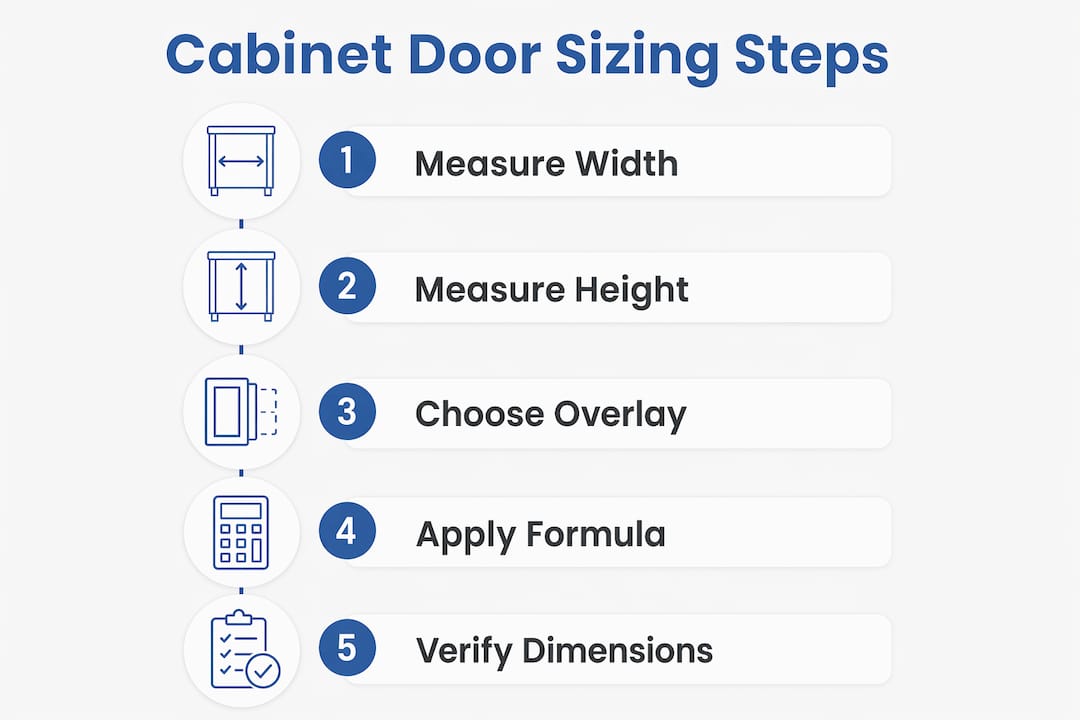
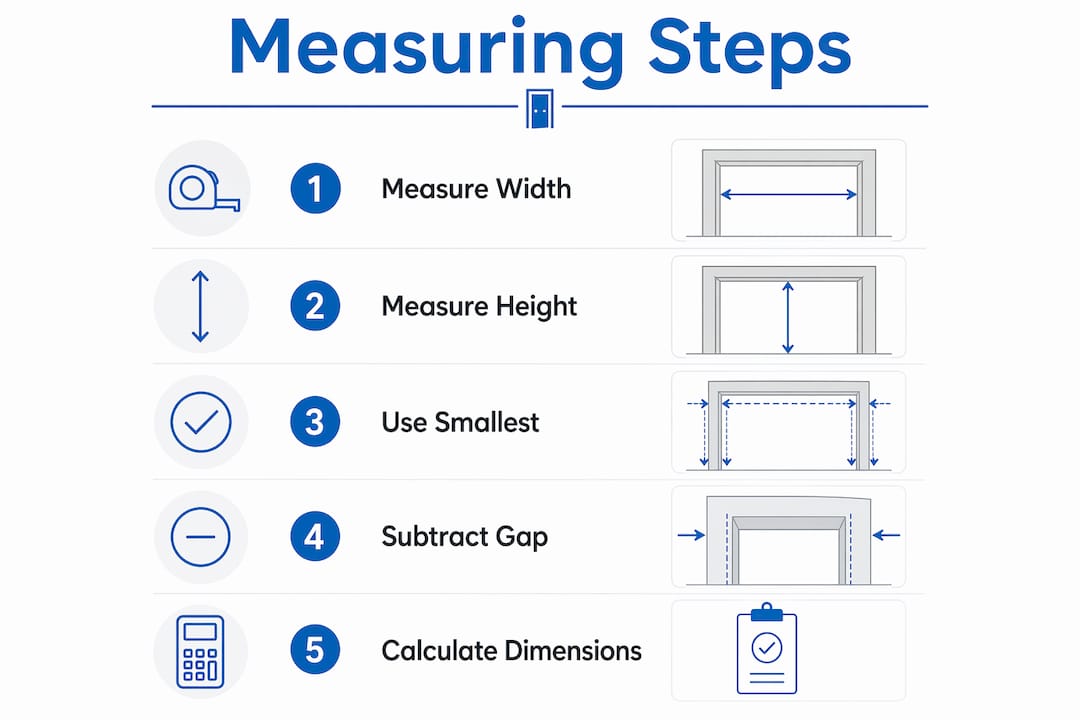
Infographic outlining steps to size cabinet doors

Knowing these increments helps you catch measurement errors before they reach the calculator. If your measured opening width is 17 inches, something is likely off. Standard cabinets do not come in 17-inch widths. A reading like that usually means you measured to the wrong point, such as the outside of the face frame instead of the inside opening. Checking your numbers against standard increments acts as a built-in confidence check.

Tall units and drawer fronts are the two areas where homeowners most often get tripped up. Tall pantry cabinets can reach 84 or 96 inches, and their door heights need to account for the full opening minus any fixed shelves or structural rails. Drawer fronts are sized differently from doors. They are measured by the drawer box opening, not the cabinet frame, and they often stack in groups of two or three. A custom cabinet door sizing approach handles each of these cases separately rather than applying one formula to all.

How to measure your cabinet openings and hinges accurately for the calculator

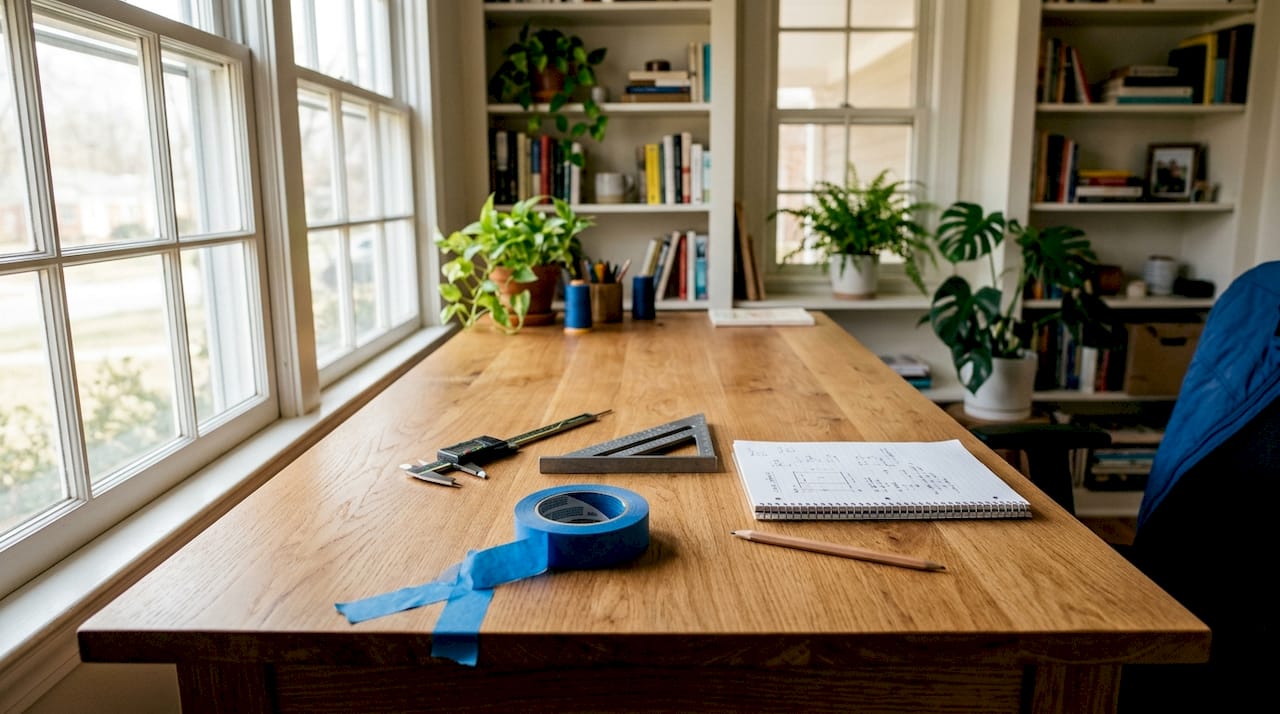
Accurate measurement is the foundation of every good cabinet door calculation. The tools you need are a fractional tape measure calibrated to 1/16-inch increments, digital calipers and a steel ruler for hardware, and a notepad to record each measurement individually. Do not rely on memory or a single measurement per opening.

The process differs slightly depending on whether your cabinets are framed or frameless:

  • Framed cabinets: Measure the opening between the inside edges of the face frame, both width and height. The face frame is the flat border you see around each door.
  • Frameless (European-style) cabinets: Measure the full interior width and height of the cabinet box opening. There is no face frame, so the door covers the entire front.
  • Replacement doors: Measure the back of the existing door rather than the front. The back surface is flatter and gives a more accurate reading.
  • Overlay check: Subtract the opening width from the door width, then divide by two. That number is your current overlay per side.
  • Hinge cup diameter: Most kitchen cabinet hinges use a 35mm cup diameter, while smaller vanity cabinets often use 26mm. Confirm this before ordering.
  • Boring distance: Measure from the door edge to the center of the hinge hole. This typically runs 3–6mm and must match your new hinge specification exactly.
  • Measure every door individually. Openings in the same run of cabinets are rarely identical. Settlement, installation variation, and past repairs all create small differences that add up.

Pro Tip: Take three measurements across each opening, at the top, middle, and bottom for width, and at the left, center, and right for height. Use the smallest reading. Doors need to fit the tightest point.

How does hinge type and overlay style influence cabinet door calculations?

Hinge choice and overlay style are directly linked. Changing one without adjusting the other produces doors that sit unevenly or rub the frame. The boring distance must align precisely with the hinge specification. Even a 1mm mismatch can cause a door to sit proud of the frame on one side while sitting flush on the other.

Key relationships between hinges and overlay:

  • Full overlay hinges are designed for doors that cover the full face frame. They require a specific boring distance, typically 3mm from the door edge.
  • Half overlay (partial overlay) hinges are used when two doors share a single cabinet partition. Each door overlaps the partition by half, and the hinge is set accordingly.
  • Inset hinges mount inside the cabinet opening and require very tight tolerances. The door must fit the opening with only a 1/16-inch gap on all sides.
  • Hinge count by door height: Doors up to 24 inches use two hinges; doors from 24 to 36 inches use three; doors over 36 inches need four or more depending on weight.
  • Door weight matters. Solid wood doors are heavier than MDF or thermofoil doors. Heavier doors may require an additional hinge even within the standard height range. You can compare solid wood versus MDF options to understand how material affects hinge requirements.

A cabinet door calculator gives you the correct nominal size. It does not verify that your chosen hinge physically fits that size. Calculators are planning tools, not final authorities. Always confirm hinge specifications against your calculated door dimensions before placing an order or making a cut.

Practical tips for using a cabinet door calculator effectively in your DIY project

A calculator produces accurate results only when the inputs are accurate. These habits protect you from the most common and costly mistakes:

  • Verify every measurement twice before entering it into the calculator. A single transposed digit can produce a door that is an inch too wide.
  • Understand what overlay and gap values the calculator assumes by default. Some tools default to 1/2-inch overlay and 1/8-inch gap. If your cabinets use different values, override the defaults manually.
  • Account for double-door center gaps of 2–3mm when splitting a wide opening into two doors. The calculator should subtract this gap from each door’s width.
  • Check your hinge specifications against the calculator output before ordering. The boring distance and cup diameter must match the door thickness and edge distance.
  • Consider material thickness. A 3/4-inch thick door behaves differently from a 5/8-inch door when paired with the same hinge. Thicker doors may need a different boring distance.
  • Confirm final measurements on-site after any cabinet repairs, leveling, or shimming. Openings can shift slightly during prep work.
  • Use the calculator result as your order specification, but walk the measurement tape one more time before you submit. That final check takes two minutes and prevents weeks of delays.

Key takeaways

A cabinet door calculator produces accurate door dimensions only when overlay type, reveal gaps, and hinge specifications are all entered correctly alongside the measured opening size.

PointDetails
Use the correct formulaDoor size equals opening plus overlay minus gap; full overlay typically adds 3/4 inch per dimension.
Follow standard size incrementsUS cabinets increase in 3-inch width steps; verify your measurements match these increments as a competency check.
Measure every door individuallyOpenings in the same cabinet run vary; always use the smallest reading across three measurement points.
Match hinge specs to door sizeBoring distance and cup diameter must align with your overlay choice; mismatches cause uneven door hang.
Treat the calculator as a planning toolConfirm hardware compatibility and site conditions before ordering or cutting any material.

Why I always double-check the calculator before ordering

I have seen homeowners order a full kitchen’s worth of doors based on a single pass through a calculator, only to find that three or four doors do not fit. The math was right. The inputs were wrong. Someone measured the outside of the face frame instead of the inside opening, or they forgot to account for the center gap on a double-door pantry. The calculator did exactly what it was told. It just was not told the right things.

The most underestimated step in any cabinet door project is verifying the hinge boring distance. Homeowners focus on width and height, which makes sense. But a door that is the right size and hung on the wrong hinge sits crooked, rubs the frame, or will not close flush. I have watched people reorder doors when the real fix was a $4 hinge adjustment. Spending ten minutes with digital calipers on your existing hinges before you calculate anything saves that kind of frustration.

My honest advice: use a calculator early and use it often, but treat every output as a draft. The final number comes from a tape measure held against the actual opening on the day you order. Cabinets settle. Walls are not always plumb. Kitchens that were installed fifteen years ago have had repairs, paint layers, and small shifts that no calculator can account for. The tool is genuinely useful. It is not a substitute for showing up with a tape measure.

— David

Tdm-thedoormaker makes custom sizing straightforward

Once you have your measurements confirmed, the next step is turning those numbers into doors that actually arrive correctly sized. Tdm-thedoormaker specializes in custom cabinet door refacing with a process built around three steps: measure, design, and order. Every door is cut to your exact dimensions, so the overlay and gap values you calculated translate directly into the finished product.

https://tdm-thedoormaker.com

Tdm-thedoormaker’s website includes detailed measurement guides and a custom ordering process that walks you through submitting your dimensions correctly. The selection covers a wide range of styles, colors, and materials, including MDF and thermofoil options, at pricing that consistently undercuts larger retailers. If you have done the measuring work and confirmed your specs, Tdm-thedoormaker handles the rest with fast turnaround and precision craftsmanship.

FAQ

What is a cabinet door calculator used for?

A cabinet door calculator computes the correct door width and height from your cabinet opening measurements by applying overlay, gap, and hinge specifications. It eliminates manual formula errors and speeds up the planning process for DIY and professional projects.

What is the standard gap around cabinet doors?

The standard reveal gap is 1/8 inch for overlay doors and 1/16 inch for inset doors. These gaps prevent doors from binding against the frame or colliding with adjacent doors during normal use.

How many hinges does a cabinet door need?

Doors up to 24 inches tall use two hinges; doors from 24 to 36 inches use three; doors over 36 inches require four or more, depending on door weight and material.

What is the standard hinge cup size for kitchen cabinets?

The standard hinge cup diameter for kitchen cabinets is 35mm. The boring distance from the door edge to the hinge hole center runs 3–6mm and must match your hinge specification exactly.

Should I measure the front or back of an existing cabinet door?

Measure the back of the door. The back surface is flatter and gives a more accurate reading than the front, which may have decorative profiles, paint buildup, or edge banding that distorts the true dimension.

FROM THE SAME CATEGORY

Sep 8 2026 BY Ksenija Lebec, Blog

Landlords: inspect cabinets, run vacancy based ROI, budget $1,000–$13,000, and plan 1–3 day refacing installs with bulk order tips.

Build a Door MADE TO FIT YOU!

Top 6 Veneer Samples Alternatives 2026

Top 6 Veneer Samples Alternatives 2026

Ordering custom cabinet doors to update existing cabinetry usually means limited choices and slow turnaround. Many shops restrict buyers to fixed styles or force complete cabinet replacement instead of letting you pick only new fronts. Comparing these alternatives lets you find a supplier that fits your sizing, finish, and scheduling needs without extra steps or compromise.

Table of Contents

TDM – The Door Maker

https://tdm-thedoormaker.com

At a Glance

TDM – The Door Maker’s marketing materials state a lead time of 20 business days for custom cabinet doors. That speed shortens the period your kitchen sits unfinished. The catalog lists more than 130+ colors and over 30 door styles for thermofoil and related finishes.

Core Features

The site centers on a Build-a-Door configurator that walks you through sizing, profiles, and edge choices while keeping options visible during selection. The product range pairs more than 30 styles with wide profile and finish choices, plus sample doors and swatch books. Online tutorials cover measuring, installation, and maintenance, and precise manufacturing supports tight tolerances and that production cadence.

Key Differentiator

According to the company, TDM combines over 48 years of manufacturing experience with a deep customization platform. That history underpins a large parts and profile library and the vendor claim of the broadest thermofoil color and style selection in North America.

Pros

The selection of styles and finishes reduces compromise when matching existing cabinets or a new scheme. The Build-a-Door tool and the tutorials lower common measurement and ordering errors for first time DIY installers. Family owned operations provide direct customer support and consistent craftsmanship, and the faster production timeline helps keep remodel schedules on track.

Cons

  • Limited international shipping outside North America.

Who It’s For

Homeowners who want to reface cabinets without replacing boxes will find the offering practical and cost effective. Small contractors needing custom sizes and consistent finishes can order bulk runs. Interior designers specifying unique colors and profiles will value the sample and swatch options.

Unique Value Proposition

The Build-a-Door configurator lets you specify precise door dimensions and finishes online, avoiding custom shop visits or back-and-forth quoting. Ordering custom doors and installing them yourself produces a high end look while keeping total project cost below full cabinet replacement.

Real World Use Case

A homeowner measures existing cabinet fronts, uses the configurator to pick a profile and finish, and orders swatches before placing a full order. They receive doors within that production window and install them themselves, achieving a showroom look without replacing cabinet boxes.

Pricing

Prices vary by style and material. Most cabinet doors list between $15 and $50 per square foot depending on profile and finish. Sample swatches, sample doors, and swatch books range from $2 to $100.

Website: https://tdm-thedoormaker.com

cabinetdoorsnmore.com

https://cabinetdoorsnmore.com

At a Glance

Cabinet Doors ‘N’ More reports a production turnaround of approximately 15 business days and offers free shipping on every order. The shop focuses on replacement cabinet doors, drawer fronts, and drawer boxes made to exact measurements. That combination of speed and no-shipping-costs makes it easy for DIYers to keep remodel timetables tight.

Core Features

Orders are custom-made to the exact specifications you provide, with options for solid wood, MDF, thermofoil, and painted or unfinished finishes. The product line includes shaker, raised panel, arched, and mullion styles and covers doors, drawer fronts, and drawer boxes. The site supports a straightforward online ordering flow and claims a fast production path plus faster shipping options if you need them.

Key Differentiator

The standout is the focus on handcrafted, precisely measured components that arrive ready to install. That specialization means the company concentrates on parts instead of whole-kitchen solutions, so it fits projects where you only replace fronts rather than refacing entire cabinets. It therefore serves a different niche than full-refacing providers like Tdm-thedoormaker.

Pros

Custom sizing reduces fitting headaches that come with off-the-shelf doors, and the company advertises close maker support during measurement and ordering. Materials include durable choices such as solid wood and MDF, giving you the option to match existing cabinets or choose an upgraded finish. Fast production and the shipping policy above shorten project lead times and can lower total project cost when compared with replacing whole cabinet boxes.

Cons

  • Limited independent reviews or third-party validation of customer satisfaction. This makes it harder to confirm long-term durability from unbiased sources.

  • The catalog focuses on cabinet doors and related components rather than complete cabinetry or kitchen fixtures. Buyers seeking full cabinet replacements will need a different vendor.

  • Primary operation within the United States restricts international shipping. Overseas customers may face higher costs or delivery limitations.

When It May Not Fit

If you need a full cabinet replacement, integrated appliances, or complete refacing services, this company is not a one-stop solution. Customers located outside the United States may encounter shipping restrictions or added expense. Large remodels that demand on-site fit adjustments or coordinated subtrades might prefer a local cabinetmaker or a full-service refacing provider.

Who It’s For

Homeowners, contractors, and DIY remodelers who want precise, plug-and-play cabinet fronts will find the offering useful. Ideal buyers value accurate sizing, clear material choices, and the ability to order only the parts they need. People replacing worn doors or updating a kitchen color without replacing cabinet boxes get the most value.

Real World Use Case

A homeowner measures existing cabinet openings and orders shaker doors and matching drawer fronts in a painted MDF finish. The shop fabricates the panels to the supplied sizes and ships them within the advertised production window. The homeowner installs the new fronts, refreshes the kitchen appearance, and avoids the cost of a full cabinet replacement.

Pricing

The company lists drawer fronts starting around $43 per square foot for MDF and notes that painted or primed upgrades add cost. Free shipping applies to all orders, and bulk purchases over $500 qualify for a 15% discount, according to the vendor. Final price depends on material, finish, and size.

Website: https://cabinetdoorsnmore.com

FastCabinetDoors.com

https://fastcabinetdoors.com

At a Glance

Manufactured in California and North Carolina, FastCabinetDoors.com produces custom cabinet doors and drawer fronts domestically. The company traces its retail presence back to 2008 and stocks styles such as shaker, raised panel, inset, and thermofoil. Free shipping applies to orders over $1500 and the site supports custom sizes and prefinished options.

Core Features

The catalog supports custom measurement and sizing for doors, drawer fronts, and drawer boxes, and it offers predilling for hardware to save installation time. Materials include solid wood, MDF, painted finishes, and thermofoil, with online selection for finish and style. Manufacturing happens domestically and the site ships across the continental United States.

Key Differentiator

The defining advantage is domestic, in house production combined with a very broad style catalog. That pairing gives homeowners and contractors access to handcrafted choices in exact sizes without relying on import lead times. Fast ordering, measurement support, and a clear finish selection make custom refacing practical for projects that need a reliable supplier.

Pros

Style and material variety is a clear strength, ranging from classic shaker style to raised panel and thermofoil options. Made in USA production yields consistent fit and finish, and customization includes exact sizing, finish choices, and predrilling for hardware. Fast shipping and accessible customer support reduce uncertainty for DIY installs and contractor schedules.

Cons

  • Primarily ships within the continental United States, with limited international options.
  • Price points skew toward premium materials and prefinished options, which may exceed strict budgets.
  • No subscription plan or bulk discount program for repeat professional customers.
  • Lacks physical showrooms, which makes judging finish and texture before purchase harder for tactile buyers.

When It May Not Fit

If you need international delivery, this supplier is not a good match. Buyers working under tight cost constraints will find price levels challenging. Contractors who rely on subscription pricing or bulk account discounts should look elsewhere for volume incentives.

Who It’s For

This store fits DIY homeowners who want custom sizing and a wide style selection made domestically. It also suits contractors and property managers who value dependable fit and timely delivery for refacing projects. People who prefer inspecting finishes in person may prefer a local supplier instead.

Real World Use Case

A homeowner measures their kitchen and selects shaker style doors and matching drawer fronts online. According to the company, the order ships within a couple of weeks and qualifies for free shipping when it exceeds $1500. The homeowner installs the new doors using online guides and support, updating the kitchen without full cabinet replacement.

Pricing

Typical pricing starts around $16 to $28+ per square foot for cabinet doors and drawer fronts, depending on style, material, and finish. Free shipping applies on orders over $1500. Prefinished and thermofoil options commonly cost more than unfinished wood.

Website: https://fastcabinetdoors.com

Cabinet Components Innovations

https://cabdoors.com

At a Glance

According to the company, typical lead times are approximately 7 days, with an expedited 3-day option available. Cabinet Components Innovations produces custom cabinet doors, drawer fronts, and architectural accents for professional trades. The operation ships nationwide from Bessemer, Alabama using a company fleet and third-party carriers.

Core Features

The shop provides custom cabinet door and drawer front manufacturing and a comprehensive catalog that covers architectural accents and trim. They offer custom design services and hands-on project support during quoting and ordering to reduce specification errors. Nationwide delivery comes via the company fleet or carrier partners, which helps coordinate multiunit and commercial deliveries.

Key Differentiator

The primary difference is the combination of fast, bespoke production and a broad parts offering tailored to trade schedules. That emphasis on quick turnaround supports installers and contractors working against tight finish dates. Extensive experience with custom sizes and finishes lets them handle unusual millwork and restoration work reliably.

Pros

Specialization in custom cabinet components results in fabrications that match precise project specifications for doors, drawer fronts, and custom trim. That lead time helps trades meet tight finish schedules and reduces downtime on staged remodels. A broad product catalog and design support reduce the need to source multiple vendors and speed selection for designers and contractors. Company fleet plus carrier partnerships provide predictable deliveries for multiunit and commercial orders.

Cons

  • Limited third-party reviews or external validation are available online.

  • The company focus on wholesale and professional clients restricts access for individual hobbyists and small DIY projects.

  • No explicit sustainability certifications or eco-friendly material claims are listed.

  • Pricing details are not published; custom work can result in premium costs.

When It May Not Fit

Not suited for hobbyists who want walk-in retail or consumer bulk discounts. Buyers who need instant online pricing or self-serve quotes will find the process consultative and phone or email driven. Projects with a strict consumer budget may prefer off-the-shelf cabinetry from big box retailers.

Who It’s For

Professional cabinet makers, interior designers, and contractors who require precise, made-to-order cabinet components will get the most value. Restoration specialists and commercial contractors who need repeatable deliveries also fit well. Buyers who prioritize craftsmanship and schedule adherence over upfront price match this profile.

Real World Use Case

A bespoke kitchen renovator uploads sketches and specifications through the website and requests a custom quote. The shop produces the specified doors and drawer fronts and ships them via its fleet to the installer. Timely delivery lets the contractor meet a tight schedule and complete high-quality finishes for the client.

Pricing

Pricing is available by custom quote on request. Those lead times run about 7 days, with an expedited 3-day option available. Final cost depends on materials, finish complexity, and order quantity.

Website: https://cabdoors.com

Cutting Edge Doors & Woodworking

https://cuttingedgeinc.ca

At a Glance

Cutting Edge reports a 95% on-schedule shipping rate. The company ships from Maple Creek, Saskatchewan to customers across Canada and the US. They focus on custom cabinet doors, drawer boxes, and woodworking components for contractors and cabinet makers.

Core Features

Cutting Edge produces custom cabinet doors in wood, MDF, melamine, and thermofoil and offers drawer boxes with dovetail and box joint options. The catalog includes moldings and accessories and a hassle free warranty with quick replacements. Shipping is prepaid and managed through established logistics partners.

Key Differentiator

The strongest difference is a vendor emphasis on reliable shipping and personal service backed by more than two decades of shop experience. That shipping rate supports contractors who run tight project schedules. Personalized account support and partnership style service separate the company from commodity suppliers.

Pros

Decades of shop experience translate to consistent build quality and practical finish options for high end cabinetry. The product mix covers standard and custom doors plus dovetail drawer boxes and matching accessories. That shipping rate and managed logistics reduce surprise delays for multiple job sites. Warranty support and a partner oriented approach make post delivery issues easier to resolve.

Cons

  • Higher price point compared to some mass market suppliers. This reflects material quality and service but raises project costs.

  • Limited presence on major third party review sites. Independent performance evidence is sparse.

  • Shipping hub concentrated in Saskatchewan may add lead time for remote locations. Longer transit can raise total project schedule risk.

When It May Not Fit

If you need rock bottom pricing and do most sourcing from large national distributors this vendor may not suit your budget. Buyers outside North America or those expecting flat rate shipping regardless of order size may face longer lead times or higher freight costs. High volume Just In Time workflows that cannot tolerate regional transit variability will find this model restrictive.

Who It’s For

Cutting Edge fits professional contractors and cabinet makers who value dependable deliveries and a collaborative supplier relationship. It suits teams that specify custom finishes and durable construction and who accept a premium for schedule certainty. Designers who need specific wood species and matched components will also find the offering useful.

Real World Use Case

A kitchen contractor in Ontario opens a contractor account and places bulk door and drawer orders for staggered renovation projects. The contractor schedules deliveries to arrive before installation windows and relies on the warranty when a damaged panel appears. This setup lets the contractor focus on installation and client communication.

Pricing

Pricing varies by product and customization. Cabinet doors range from $22 to over $115 per square foot and drawer boxes range from $80 to over $179 per piece. Orders over $1,000 CAD receive free shipping in qualifying regions and custom accessories are priced to specification.

Website: https://cuttingedgeinc.ca

Valley Custom Door

https://valleycustomdoor.com

At a Glance

Based in De Pere, Wisconsin, Valley Custom Door manufactures custom cabinet doors, drawer fronts, mouldings, and accessories. They handle orders that range from single custom pieces to large production runs. Customers receive design flexibility, technical support, and fast quotes.

Core Features

The operation centers on custom manufacturing of cabinet doors, drawer fronts, mouldings, and accessory pieces across many wood species and finish profiles. The company publishes a downloadable catalog and provides technical support alongside quick, personalized quotes for both small and large orders. Hardware options and refacing products appear in the catalog so you can match components.

Key Differentiator

A primary advantage is the manufacturing workflow that accepts detailed specifications and adapts to unusual profiles and finishes. Personalized technical support helps translate designer intent into producible parts and avoids common fit problems. That focus makes the vendor well suited for projects needing bespoke sizing and finish matching.

Pros

The product line covers a wide selection of wood species, profiles, and finish choices so designers can match nearly any interior theme. Craftsmanship standards emphasize durability and attractive appearance so finished cabinet fronts resist daily wear in kitchens and bathrooms. Customer service is responsive with technical guidance and fast quotes, which helps cabinetmakers and contractors keep tight project schedules. The ability to handle single orders or large production runs suits both bespoke renovations and repeat commercial installations.

Cons

  • Limited third party reviews make independent quality validation difficult.

  • Pricing often reflects custom craftsmanship and may be higher than mass produced cabinet components.

  • Information on international shipping and export options is limited in public materials.

  • No fixed price ranges are listed, so customers must request quotes and plan for unknown costs.

When It May Not Fit

This supplier primarily serves North America, and international shipping or export services appear limited. Buyers on tight budgets will likely find the pricing above the scope of mass produced alternatives. Large volume discounts are not publicly detailed, so high volume procurement teams should ask for specific terms.

Who It’s For

Cabinetmakers, interior designers, and remodelers who need tailored door and drawer solutions will find these offerings relevant. Contractors working on high end renovations or commercial fit outs will value the design flexibility and technical support. Homeowners coordinating with contractors can use the portal to get quotes for custom sized parts.

Real World Use Case

A cabinetry shop partners with Valley Custom Door to order finished cabinet doors and drawer fronts for a high end kitchen remodel. The shop specifies wood species, finish, and profile through the customer portal and receives a tailored quote. Valley Custom Door manufactures parts to exact sizes and provides technical guidance for installation.

Pricing

Pricing varies by specifications, finish choices, and order volume and is not listed publicly in fixed ranges. You request a quote on the website or download the catalog for detailed pricing and product information. No starting price is published, so plan to request a quote for each project.

Website: https://valleycustomdoor.com

Comparison of Alternatives

Style diversity is a key consideration for homeowners researching custom cabinet door providers, where tdm-thedoormaker.com excels in its extensive range of thermofoil finishes and profiles. However, speed and support are advantageous through certain competitors, addressing specific preferences effectively.

Style and Finish Variety

Homeowners planning a varied cabinet refacing project will appreciate the depth of selection offered by tdm-thedoormaker.com, featuring over 130 thermofoil colors and 30 styles. Cutting Edge Doors & Woodworking surpasses in offering custom wood selections including dovetail details, connecting with designs that require handcrafted aesthetics. FastCabinetDoors.com integrates domestic supply chains for responsive availability.

Delivery Support and Lead Times

Providers like CabinetDoorsNMore.com emphasize efficiency, delivering components suitable for tight schedules, enjoying the benefit of complimentary shipping for all orders. Cabinet Components Innovations’ expedited options cater to contractors balancing inventory across concurrent builds. Each emphasizes project adherence patterns for time-sensitive renovations.

Best Fit

  • Homeowners pursuing intricate design schemes with varied thermofoil colors should utilize tdm-thedoormaker.com for its complete color range coupled with user-friendly ordering portals.
  • Contractors centering scheduling certainty should consider CabinetDoorsNMore for precise dimensions and consistent arrival timings.
  • Designers specifying wood demands throughout premium installations benefit from resources at Cutting Edge Doors & Woodworking and Valley Custom Door for bespoke solutions.
  • Large trades or designers prioritizing accelerated innovation deference find Cabinet Components Innovations optimized per task detail.

Our Pick

Homeowners planning intricate designs or aiming to precisely match an original color palette should explore tdm-thedoormaker.com for the widest selection of thermofoil styles. Keep in consideration requirements exceeding color selection—other vendors address narrowed distinctive patterns inclusively.

When considering options for custom cabinet doors, the following comparison highlights key attributes of each candidate.

Product Key Differentiator Best For Pricing Notable Limitation
Tdm-thedoormaker Broadest selection of thermofoil finishes Matching existing cabinets or profiles $15–$50 per square foot Limited international shipping
Cabinet Doors ‘N’ More Precise handcrafted replacements Replacement cabinet components $43+ per square foot Limited independent reviews
FastCabinetDoors.com Domestic manufacturing with fast lead times Custom sizing and style variety $16–$28+ per square foot Shipping limited to the continental US
Cutting Edge Doors Reliable shipping support for contractors Professional contractors and cabinetmakers $22–$115 per square foot Service centered in Saskatchewan, Canada
Valley Custom Door Detailed specifications and finish matching High-end bespoke cabinetry projects Price not published Limited pricing transparency

Choosing Veneer Samples Alternatives That Match Your Cabinet Refacing Needs

Selecting the right cabinet door material can be difficult when faced with numerous veneer samples. Many homeowners and contractors want a precise color match, durable finish, and faster delivery times. Tdm-thedoormaker meets these demands by offering over 130 colors and styles paired with a Build-a-Door configurator that eliminates measurement errors and streamlines ordering. This reduces delays and ensures your cabinet fronts arrive ready to install with consistent quality.

If you are looking for an alternative that simplifies cabinet door refacing while offering customization and craftsmanship at a competitive price, visit Tdm-thedoormaker. Their system cuts down long lead times and eases material selection by providing swatches and samples before you commit. Get started today to see how Tdm-thedoormaker keeps your project on schedule and elevates your kitchen’s appearance.

FAQ

What makes Tdm-thedoormaker a great option for custom cabinet doors?

Tdm-thedoormaker offers a Build-a-Door configurator that allows you to specify precise door dimensions and finishes online. This tool simplifies the ordering process and avoids the need for time-consuming custom shop visits. Consider using Tdm-thedoormaker to quickly achieve the high-end look you desire without the hassle of traditional customization.

How does Cabinet Doors ‘N’ More compare to Tdm-thedoormaker?

Cabinet Doors ‘N’ More excels with a production turnaround of approximately 15 business days and offers free shipping on every order. Tdm-thedoormaker, while slightly slower with a lead time of 20 business days, focuses on extensive customization features that may better serve detailed projects. Consider your project’s specific needs when choosing between these options.

What should I expect regarding pricing for custom cabinet doors from Tdm-thedoormaker?

Most cabinet doors from Tdm-thedoormaker are priced between $15 and $50 per square foot, depending on style and material. This pricing structure allows you to choose options that fit various budget constraints while ensuring high quality.

What unique features does Tdm-thedoormaker provide that support DIY installation?

Tdm-thedoormaker provides online tutorials covering measuring, installation, and maintenance. These resources are especially beneficial for first-time DIY installers, helping you to avoid common errors during the ordering and installation process. Consider utilizing these tutorials to enhance your confidence when tackling your project.

FROM THE SAME CATEGORY

Sep 8 2026 BY Ksenija Lebec, Blog

Landlords: inspect cabinets, run vacancy based ROI, budget $1,000–$13,000, and plan 1–3 day refacing installs with bulk order tips.

Build a Door MADE TO FIT YOU!

How to Measure for Inset Cabinet Doors: DIY Guide

How to Measure for Inset Cabinet Doors: DIY Guide

Measuring for inset cabinet doors is defined as calculating door dimensions by subtracting precise clearance gaps from your cabinet opening size to achieve a flush, custom fit. Inset doors sit fully inside the cabinet frame, which means even a 1/16-inch error can cause binding, gaps, or a door that simply won’t close. The standard clearance gap for inset doors is 1/16 inch on all four sides, totaling 1/8 inch subtracted from both width and height. Getting this right the first time saves you from costly remakes and the frustration of a door that looks off. This guide walks you through every step, from tools to final calculations, so you can order with confidence.

What tools and prep steps do you need before measuring?

The right tools make the difference between a measurement you can trust and one you’ll second-guess at the lumber yard. Gather these before you start:

  • Tape measure (metal, locking, at least 12 feet)
  • Carpenter’s square to check if cabinet openings are truly square
  • Steel ruler for short, precise measurements near hinges
  • Calipers for measuring hinge thickness accurately
  • Pencil and notepad for recording every measurement
  • Painter’s tape to label measurements directly on the cabinet
  • Smartphone to photograph labeled measurements before you walk away

Cabinet frames in older kitchens are rarely perfectly square. Checking squareness with a carpenter’s square before you measure saves you from ordering a door that fits the math but not the opening. Precision measuring tools like calipers and steel rulers increase the likelihood of a flawless installation.

Pro Tip: Write each measurement on a strip of painter’s tape and stick it directly inside the cabinet opening. Then photograph it. This simple habit eliminates the most common workshop error: misreading your own handwriting.

Close-up of measuring tools on workbench with notes

How to measure cabinet openings accurately for inset doors

Measuring at multiple points is the single most important technique for getting inset door sizing right. Cabinet boxes shift, settle, and warp over time. A single measurement at the center tells you almost nothing useful.

Follow these steps in order:

  1. Measure the width at three heights. Place your tape measure at the top of the opening, then the middle, then the bottom. Record all three numbers.
  2. Record the smallest width. This is your working width. Using the smallest number prevents the door from binding at the tightest point.
  3. Measure the height at three positions. Measure on the left side, the center, and the right side of the opening.
  4. Record the smallest height. Same logic applies. The door must clear the tightest spot.
  5. Check for square. Place your carpenter’s square in each corner of the opening. If any corner is noticeably off, note it. You may need to scribe the door edge later.
  6. Double-check every number. Measure twice, record once. Then measure again before you finalize anything.

The reason you always choose the smallest measurement is straightforward. Cabinet imperfections mean the opening is not uniform. A door sized to the largest measurement will bind at the smallest point. A door sized to the smallest measurement will fit everywhere, with the reveal gap covering any minor variation.

Pro Tip: Use a digital caliper to measure the depth of the cabinet face frame. Inset doors need enough depth to swing open without catching on adjacent frames or countertops.

Infographic illustrating five-step inset door measurement process

How to calculate final inset door dimensions

Once you have your smallest opening measurements, the math is simple but must be done carefully. The standard reveal gap is 1/16 inch per side, meaning you subtract 1/8 inch total from both width and height.

Formulas for single inset doors

Measurement Formula Example (opening = 15" W x 24" H)
Door width Opening width minus 1/8" 15" minus 1/8" = 14-7/8"
Door height Opening height minus 1/8" 24" minus 1/8" = 23-7/8"

Formulas for double inset doors

Double doors require one extra step. You subtract two edge reveals and one center gap from the total opening width, then divide by two.

Measurement Formula Example (opening = 30" W x 24" H)
Total width reduction Two edge reveals plus center gap 1/16" + 1/16" + 1/8" = 1/4"
Each door width (Opening width minus 1/4") divided by 2 (30" minus 1/4") divided by 2 = 14-7/8"
Door height Opening height minus 1/8" 24" minus 1/8" = 23-7/8"

For double inset doors, the center gap is typically 1/8 inch. This gap prevents the doors from rubbing each other when they close.

Adjusting reveal size for wood species and climate

The 1/16-inch reveal works well for MDF and thermofoil doors because those materials are dimensionally stable. Solid wood doors expand and contract with humidity. In high-humidity areas, a 3/32-inch reveal per side gives the wood room to move without sticking. Never go below 1/16 inch for solid wood, regardless of how dry your climate feels in the summer.
Pro Tip: If you live in a climate with significant seasonal humidity swings, order your doors in the summer when wood is at its largest. A door that fits in July will have comfortable clearance in January.

What are the most common measuring mistakes to avoid?

Even careful homeowners run into the same problems. Knowing these pitfalls in advance saves time and money.

  • Measuring old doors instead of the opening. Old doors may be warped, trimmed, or replaced incorrectly. Always measure the cabinet opening itself, not the existing door.

  • Using only one measurement point. A single width or height reading misses any taper or bow in the frame.
  • Ignoring out-of-square openings. If your carpenter’s square reveals a corner that is off by more than 1/8 inch, plan to scribe the door edge. Scribing trims door edges to match frame irregularities for a tight fit.
  • Forgetting to account for wood movement. Solid wood doors in humid kitchens need the larger 3/32-inch reveal.
  • Recording measurements unclearly. A “1” that looks like a “7” in your handwriting costs you a full door remake.

“The most expensive mistake in cabinet door work is measuring the old door. The frame is the truth. The old door is just a guess someone made years ago. Measure the opening, record the smallest number, and subtract your reveal. Everything else is commentary.”

This principle holds whether you are refacing a 1970s kitchen or fitting doors in a new build. The opening is your only reliable reference point.

How does hinge type affect your measurements?

Hinge selection directly influences how much clearance you need and where the door sits in the opening. Getting this wrong means your door calculations are off before you even start cutting.
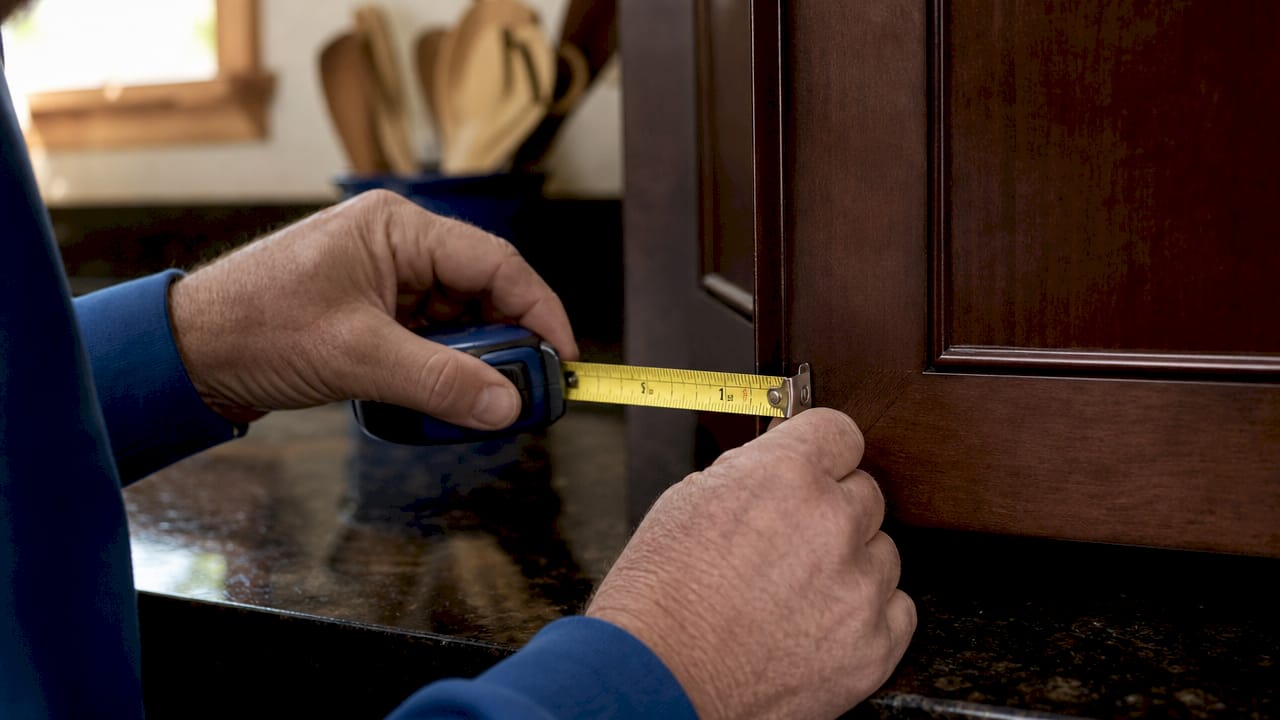
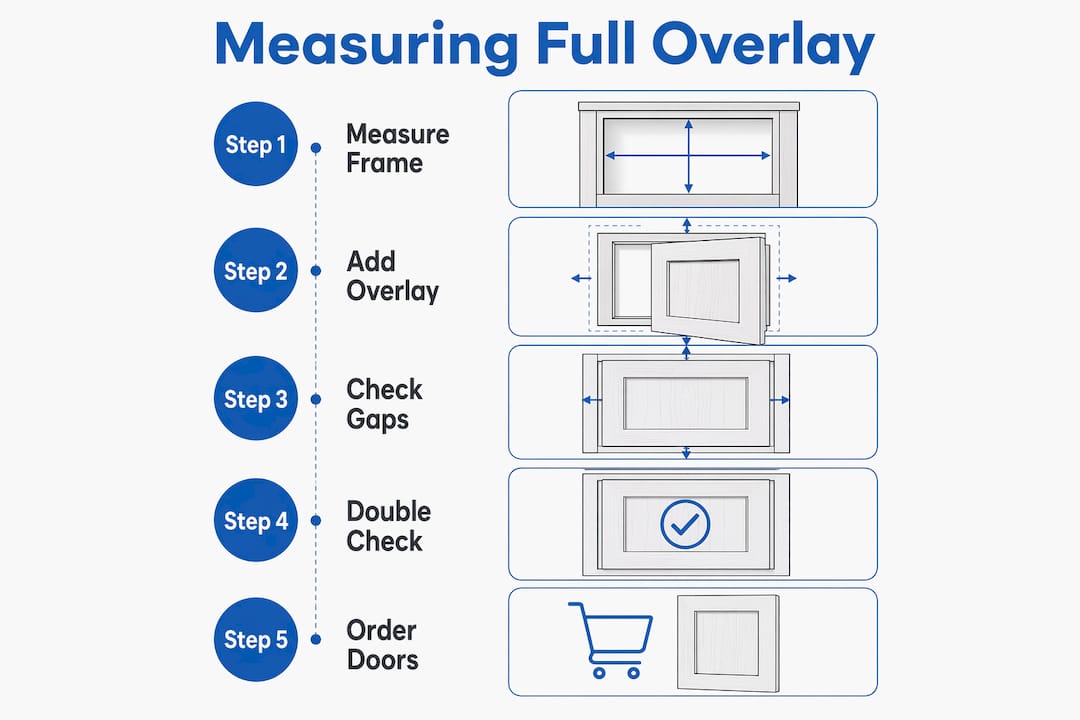
The three hinge types most commonly used for inset cabinet doors each behave differently:

  • Butt hinges mount on the edge of the door and the face frame. They require a precise reveal because the hinge barrel sits in the gap. The barrel diameter determines the minimum reveal you can use.

  • European cup hinges (also called concealed hinges) mount inside a drilled cup on the door back. They offer more adjustment range after installation, which gives you a small margin for error. They work well for MDF and thermofoil doors.
  • Knife hinges are a traditional choice for inset doors. They are mortised into both the door and the frame, requiring very tight tolerances and careful layout.

Different hinge types require specific clearance gaps, so always check the manufacturer’s specifications before finalizing your reveal size. A butt hinge with a 3/8-inch barrel needs more gap than a slim knife hinge. Use calipers to measure hinge thickness before you commit to a final door size. This one step prevents a door that physically cannot close because the hinge barrel has nowhere to go.

For a deeper look at how inset and overlay doors differ in terms of hardware and fit, the inset cabinets homeowner guide at Tdm-thedoormaker covers the full comparison.

Key Takeaways

Accurate inset door measurement requires taking the smallest of three width and three height readings, then subtracting a minimum 1/16-inch reveal per side before ordering.

Point Details
Use smallest measurement Measure width and height at three points each; always use the smallest number to prevent binding.
Standard reveal is 1/16 inch Subtract 1/8 inch total from width and height; use 3/32 inch per side for solid wood in humid climates.
Double doors need a center gap Subtract two edge reveals plus a 1/8-inch center gap from total width, then divide by two.
Hinge type changes your math Check hinge manufacturer specs for barrel size before finalizing reveal dimensions.
Always measure the opening Never size doors from old doors; measure the cabinet frame opening for accurate dimensions.

Why I always measure three times before ordering anything

I’ve watched homeowners order beautiful custom doors only to find they bind at the top corner because they measured once at the center and called it done. The cabinet frame looked square. It wasn’t. That single measurement cost them a two-week wait and a full remake.

The habit I’ve built over years of cabinet work is simple: measure three times at three points, record the smallest number, then walk away and come back to measure again the next morning. Fresh eyes catch errors that tired eyes miss. I’ve caught my own mistakes this way more than once.

The other thing most guides skip is the humidity factor. I’ve seen solid wood inset doors installed in a dry February that fit perfectly, then swell shut by August. The homeowner blamed the doors. The doors were fine. The reveal was just too tight for the climate. A 3/32-inch reveal on solid wood is not excessive. It’s the right call in most American homes.

If your opening is out of square by more than 1/8 inch, don’t try to compensate entirely in the math. Order the door slightly oversized and plan to scribe the edges after delivery. A scribed fit looks better than a door that’s been calculated into a compromise. The custom cabinet door sizing guide at Tdm-thedoormaker walks through this process clearly if you want a reference before you order.

— David

Custom inset doors made to your exact measurements

Once you have your measurements locked in, the next step is finding doors built to those exact dimensions without paying for a full cabinet replacement.

https://tdm-thedoormaker.com

Tdm-thedoormaker specializes in custom cabinet doors sized to your precise specifications, with a straightforward three-step process: measure, design, and order. Whether you’re refacing a full kitchen or replacing a single door, the doors are built to the dimensions you provide. For homeowners weighing the cost of new cabinets against refacing, the cabinet replacement vs. refacing guide lays out the real numbers. If you’re ready to take the DIY route with professional-quality results, the DIY cabinet refacing guide at Tdm-thedoormaker is a practical next step.

FAQ

What is the standard reveal gap for inset cabinet doors?

The standard reveal gap is 1/16 inch per side, totaling 1/8 inch subtracted from both the width and height of the cabinet opening. Solid wood doors in humid climates use a slightly larger 3/32-inch gap per side to allow for wood movement.

How do I measure for double inset cabinet doors?

Subtract two edge reveals and one center gap (typically 1/8 inch) from the total opening width, then divide by two to get each door’s width. The height calculation is the same as a single door: opening height minus 1/8 inch.

Should I measure the old doors or the cabinet opening?

Always measure the cabinet opening, not the existing doors. Old doors may be warped, trimmed, or incorrectly sized, which means they give you inaccurate dimensions for new custom doors.

How does wood species affect inset door measurements?

Solid wood expands and contracts with humidity, so it requires a larger reveal gap of 3/32 inch per side rather than the standard 1/16 inch. MDF and thermofoil doors are dimensionally stable and work well with the standard 1/16-inch reveal.

Why do I need to measure at three points instead of one?

Cabinet frames are rarely perfectly uniform. Measuring at three points for both width and height reveals any taper or bow in the frame. Using the smallest of those measurements prevents the door from binding at the tightest point in the opening.

FROM THE SAME CATEGORY

Sep 8 2026 BY Ksenija Lebec, Blog

Landlords: inspect cabinets, run vacancy based ROI, budget $1,000–$13,000, and plan 1–3 day refacing installs with bulk order tips.

Build a Door MADE TO FIT YOU!

Top 5 Custom Cabinet Doors Glass Alternatives 2026

Top 5 Custom Cabinet Doors Glass Alternatives 2026

Finding a custom cabinet door alternative to glass that fits style, color, and precision sizing needs can take weeks of research and missed fit. Most suppliers limit choices to a single material or style, refuse custom sizes, or restrict shipping to only large bulk buyers. This comparison covers style range, material options, sizing flexibility, and DIY fit so you can select a custom cabinet door alternative that matches your remodel needs.

Table of Contents

TDM-The Door Maker

https://tdm-thedoormaker.com

At a Glance

The vendor reports over 48 years of manufacturing experience. The catalog lists more than 30 door profiles and 130 color options, and production lead time is advertised at about four weeks. That depth and relatively quick turnaround give DIYers substantial design choice without a full cabinet replacement.

Core Features

TDM-The Door Maker sells custom cabinet doors in a wide range of styles and finishes and supports selection with sample swatches and swatch books. The online Build a Door configurator guides you through measuring, designing, and ordering, and accessories include mullions, panels, and moldings for complete refacing. The company emphasizes precision manufacturing to match custom sizes for retrofit installs.

Key Differentiator

The vendor claims its catalog depth and configurator options exceed other North American manufacturers. That larger palette of styles, colors, and accessories combined with decades of shop experience lets you match period details or modern minimal designs with a single supplier.

Pros

According to the company, pricing often undercuts major big box retailers like Home Depot and Lowe’s, which can reduce project cost when you keep existing cabinet boxes. The configurator plus sample swatches help you dial in color and profile choices before ordering, reducing fit and finish surprises. Precision cutting and custom sizing help the doors fit with minimal trim work, and the ordering workflow supports DIY installation with online measurement guides and tutorials.

Cons

  • Limited international shipping outside North America may rule out buyers abroad.

Who It’s For

This product fits DIY homeowners, renovation hobbyists, and small contractors who want high quality cabinet doors without replacing cabinet boxes. You value broad style and color choices, precise custom sizing, and the ability to install doors yourself using guided instructions. If you need full cabinetry or worldwide shipping, this is not the right match.

Unique Value Proposition

The three step measure, design, and order workflow lets you replace cabinet doors rather than entire cabinets, and the vendor advertises savings of thousands compared with full replacements and larger retailers. That workflow shortens decision friction for DIYers and keeps labor costs down when you install on your own.

Real World Use Case

A homeowner measures existing door openings, orders color swatches, and uses the online configurator to pick profiles and accessories. They place a full order, receive parts in about four weeks, and follow video tutorials to install the doors themselves. The result is a bespoke kitchen appearance without hiring a cabinetmaker.

Pricing

The vendor lists sample doors at $27.38, color swatches at $2, and swatch books at $100. Final door prices vary by style and size, and shipping plus customization affect total project cost.

Website: https://tdm-thedoormaker.com

cabinetdoorsnmore.com

https://cabinetdoorsnmore.com

At a Glance

cabinetdoorsnmore.com reports turnaround times of 15 days or less for custom cabinet components. The site focuses on doors, drawer fronts, and drawer boxes made to exact specifications. Orders ship free within the United States, which reduces total project cost for homeowners. Fast delivery and a broad material selection make it a practical option for tight remodel schedules.

Core Features

The store offers custom made cabinet doors and drawer fronts in solid wood species and RTF Thermofoil, plus MDF options for painted finishes. Customers choose from shaker, recessed panel, arched, mullion, and slab styles and submit measurements through an online ordering flow. The service includes free shipping and a promise of quick delivery, paired with online guidance to help homeowners measure accurately.

Key Differentiator

What sets cabinetdoorsnmore.com apart is the combination of fully customizable components and a short production window, plus free shipping for every order. That timeframe helps remodelers and DIY homeowners who must coordinate installers and appliance deliveries. The emphasis on exact sizing reduces the need for field trimming during installation.

Pros

High quality materials, including hard maple, cherry, and oak, give solid wood doors a durable finish and long service life. The range of styles and finishes covers classic and contemporary looks, which lets you match existing cabinetry or create a new focal point. Fast production and free shipping cut lead time and logistics hassles for small contractors and homeowners. The company reports strong customer satisfaction, which supports confidence in product fit and finish.

Cons

  • Limited product scope means the company supplies components only, not full kitchen cabinet boxes or installation services.
  • International shipping is limited, with primary service focused on the United States.
  • Pricing can be higher than mass produced options, especially for solid wood species.
  • Accurate customization requires precise measurements from the buyer to avoid remakes.

When It May Not Fit

Large commercial projects requiring thousands of cabinet units will find the offering narrow in scale. If you need a full cabinet system with factory assembled boxes and on site installation, this vendor is not a match. International buyers who need consolidated freight and customs handling should look elsewhere. Contractors who prefer turnkey supply chains may prefer a wholesaler that handles installation and volume discounts.

Who It’s For

This product fits DIY homeowners updating a kitchen or bathroom who can measure existing openings and install doors themselves. It also suits remodeling contractors and property managers who order custom sized components for multiple small units. Buyers who value a wide material selection, precise sizing, and faster delivery will get the most value.

Real World Use Case

A homeowner measures existing frames, selects shaker doors in maple, and orders matching drawer fronts for a full refresh. The doors arrive within the promised timeframe, match specified dimensions, and install with standard hinges and drawer slides. The result updates the kitchen look at a fraction of the cost of cabinet replacement.

Pricing

Prices vary by material and size and are charged per square foot for many components. Typical ranges for drawer fronts start around $43.20 for MDF and about $57.60 for hard maple per square foot. Free shipping applies to all orders placed within the United States.

Website: https://cabinetdoorsnmore.com

FastCabinetDoors

https://fastcabinetdoors.com

At a Glance

Prices start at $16.40 per square foot for basic shaker doors, with more complex styles rising above $32 per square foot. The company crafts doors and drawer fronts made in the USA and ships across the continental US, offering free shipping on orders over $1500. The setup suits single-door replacements and full refacing projects for homeowners and contractors.

Core Features

FastCabinetDoors sells a broad selection of cabinet styles, including shaker, raised panel, inset panel, and thermofoil options, and it offers made to measure sizing for each order. The online ordering flow lets you enter custom measurements, choose materials and finishes, and request guidance from the in-house customer support team. The vendor also advertises fast shipping within the continental US and tailored installation advice when you need it.

Key Differentiator

FastCabinetDoors focuses on variety and American craftsmanship, positioning itself around a very broad catalog of handcrafted custom fronts and drawer faces. That emphasis on domestic production pairs with a straightforward online ordering system. The result is a product set meant to fit both small DIY updates and larger contractor refacing jobs with consistent lead times.

Pros

The product line matches many interior styles, so you can find a traditional raised panel or a modern shaker within the same storefront. Because pieces are made in the USA, turnaround and quality control tend to be consistent and easier to follow than offshore options. The site supports custom sizing and the customer support team will assist with measurements and installation questions, which reduces guesswork for DIYers. Pricing targets budget conscious homeowners and contractors, and the free shipping on orders over $1500 lowers total cost for larger remodels.

Cons

  • Shipping is limited to the continental US, which leaves out Alaska, Hawaii, and international buyers.
  • The catalog centers on doors, drawer fronts, and hardware only, so you cannot buy full cabinet boxes from them.
  • Lead times vary by order complexity, so tight schedules for large projects may not fit their production window.
  • The company does not advertise wholesale bulk discounts for large contractor orders.

When It May Not Fit

If you need full cabinet assemblies rather than replacement doors, this supplier will not meet that need. Large property managers with urgent turnarounds could find lead times restrictive for simultaneous multiunit flips. Buyers outside the continental US must look elsewhere due to geographic shipping limits.

Who It’s For

You are likely a budget conscious homeowner, a DIY enthusiast, or a contractor who wants custom replacement doors without replacing cabinets. You value clear online ordering, domestic craftsmanship, and a variety of finish and style options. You also want support for measuring and installation rather than going it completely alone.

Real World Use Case

A homeowner measures existing cabinet faces, selects custom shaker doors and matching drawer fronts, and uploads measurements through the ordering form. The customer calls the support team for a measurement check and schedules delivery within the advertised shipping window. The homeowner then installs the fronts and new hardware, updating the kitchen appearance without new cabinet boxes.

Pricing

Price depends on style and material, quoted per square foot. Basic shaker doors typically start at $16.40 per square foot, while complex harmony or mitered styles can exceed $32 per square foot. Orders over $1500 qualify for free shipping; custom sizes and specialty finishes add fees.

Website: https://fastcabinetdoors.com

Belmont Doors

https://belmontdoors.ca

At a Glance

Belmont Doors reports more than 15 years serving Canadian cabinetmakers with custom MDF doors, drawer fronts, and components. The company offers free rail and stile size adjustments and runs an online ordering and sample system aimed at trade professionals. Production uses CNC machining in Mississauga for consistent part dimensions.

Core Features

Belmont supplies custom MDF cabinet doors, drawer fronts, and specialty components across shaker, flat panel, raised panel, and transitional styles. The catalog includes online sample requests and an ordering portal that speeds repeat purchases for shops. Manufacturing centers on CNC machining and local production to keep dimensions consistent and lead times predictable.

Key Differentiator

The clear distinction is that Belmont focuses on being Canadian-made with deep customization for professionals, including free profile adjustments. That approach suits cabinet shops that need precise, repeatable parts rather than a retail consumer selection. This narrows its audience compared with Tdm-thedoormaker, which targets homeowners and DIY remodelers.

Pros

Belmont brings trade-ready features and a wide set of MDF profiles that appeal to designers and cabinetmakers. The free stile and rail adjustments remove a common customization obstacle and save fabrication decisions at quoting time. The online ordering flow and sample options reduce guesswork before a large production run, and local manufacturing supports consistent sizing and easier communication with a Canadian factory.

Cons

  • Focused on MDF only, so you will not find solid wood or thermofoil alternatives here.

  • The business primarily serves professionals, so retail shoppers may not get the same account support or consumer pricing.

  • The website has reported server errors and missing pages, which can disrupt browsing or placing orders.

When It May Not Fit

If you are a homeowner who wants direct retail purchase or a broad material palette, Belmont is not the best match. Shops that require non MDF substrates will need a different supplier. Teams that rely on flawless self-serve ordering may encounter interruptions while the vendor resolves website issues.

Who It’s For

Belmont suits Canadian kitchen designers, cabinetmakers, and builders who need reliable, customizable MDF parts produced to tight dimensions. It fits professionals who prefer local manufacturing, sample verification, and the ability to tweak profiles without extra fees.

Real World Use Case

A cabinetmaker orders a large run of primed MDF shaker doors and requests a free primed sample to check paint adhesion. They specify adjusted stile and rail widths to match a client detail and receive uniformly machined parts that fit their existing production fixtures.

Pricing

Pricing varies by style and level of customization and ranges from moderate to premium depending on options. Free samples are available, and online ordering supports volume pricing and trade accounts for regular buyers.

Website: https://belmontdoors.ca

cncwoodcraft

https://cncwoodcraft.com

At a Glance

According to the company, CNC Woodcraft has operated since 1992 and offers more than 40 door styles. The shop runs multiple CNC routers in St. Catharines, Ontario, with a team reported at over 10 employees. The firm emphasizes precision routing, quick turnarounds, and competitive pricing for custom MDF work.

Core Features

CNC Woodcraft uses CNC routing to cut custom MDF doors and components to precise dimensions, which reduces fit issues on site. The catalog spans raised panel, flat panel, shaker, glass frame, and decorative options while supporting custom sizes and detailed edge profiles. The company can handle high volume and intricate machining and publishes a free brochure that outlines its portfolio and capabilities.

Key Differentiator

The standout angle is a focus on high precision CNC routing that drives consistent tolerances across bespoke door runs. That emphasis makes the shop a fit for renovation firms and builders who need many identical parts or tightly toleranced components rather than one-off retail purchases. The workflow prioritizes repeatability and speed for professional trades.

Pros

Customization covers size, profile, and style so projects that require unusual dimensions or matching existing cabinetry benefit directly. The vendor reports several decades of manufacturing experience and a longstanding presence in North America, which supports predictable production and finish handling. Fast turnaround and competitive quoting make it practical for contractors working to tight schedules and budgets. Using CNC routers reduces manual trimming at the job site and helps parts arrive ready to assemble.

Cons

  • The shop primarily works with MDF and other wood based products, limiting choices for buyers wanting solid wood or metal alternatives.
  • The emphasis on custom MDF doors means small retail buyers seeking off the shelf units may find ordering and minimums awkward.
  • Visibility to homeowners is lower because the business targets B2B channels and trade customers more often.

When It May Not Fit

If you need authentic hardwood or veneer face stock, this vendor will not be the right match. For single-piece retail purchases where speed and a stocked finish matter, a local cabinet shop or big box retailer may be more convenient. If your project requires in person showrooms and walk in selection, the B2B oriented setup could feel cumbersome.

Who It’s For

This maker suits professional woodworkers, contractors, and interior designers specifying custom MDF door runs and trim for renovations. It also fits renovation companies that need multiple identical panels or contractors who value delivered, ready to finish parts. High volume jobs and projects with nonstandard sizes benefit most from the facility’s tooling.

Real World Use Case

A renovation company orders a batch of custom MDF cabinet doors and microwave frames for a kitchen remodel. They submit exact dimensions and edge profiles through an order form. CNC Woodcraft cuts the parts to spec, performs quality control, and ships completed components to the job site so the contractor can install on schedule.

Pricing

Pricing is custom and varies by size, style, and order volume, with typical project costs provided on request. The company offers free initial consultations and quotes rather than standard item pricing. Expect the final price to reflect material, complexity, and quantity.

Website: https://cncwoodcraft.com

Comparison of alternatives

When selecting the custom kitchen cabinet doors, product catalogs, material variety, and pricing offer prominent factors to evaluate. Each provider analyzed presents unique benefits tailored to different audiences and renovation needs.

Catalog depth and configuration flexibility

TDM-The Door Maker stands out for its impressive variety of available styles and finishes, offering over 30 door profiles and 130 color choices. This extensive selection allows customers to design highly personalized cabinets matching any desired aesthetic. Additionally, their proprietary Build a Door configurator guides users through styles, sizing, and ordering—perfect for DIY homeowners aiming for precision without professional installation costs. However, FastCabinetDoors features a similarly broad catalog with efficient customer support for design assistance, making it an appealing option as well.

Production timelines and shipping coverage

cabinetdoorsnmore.com distinguishes itself with a production time of just 15 days, significantly shorter than TDM-The Door Maker’s four-week timeline. This capability is particularly advantageous for contractors with tight deadlines or schedules dependent upon quicker delivery. Furthermore, cabinetdoorsnmore.com and FastCabinetDoors offer free shipping, either for all orders or those exceeding specific values, reducing total costs for high-volume purchases.

Best fit

  • For DIY homeowners visualizing a custom kitchen transformation with detailed color and style matching, TDM-The Door Maker offers personalization and guidance resources.
  • For contractors requiring rapid, consistent delivery to maintain project schedules efficiently, consider cabinetdoorsnmore.com for its 15-day production capability and free shipping.
  • For trade professionals requiring unique door dimensions and detailed specifications for large-scale projects, Belmont Doors’ free profile adjustments and CNC Woodcraft’s extensive expertise in high-volume, precise customizations present strong benefits.

Our pick

TDM-The Door Maker excels at offering extensive customization options paired with accessible guidance for DIY kitchen renovations. Their combination of an expansive catalog with an intuitive ordering system supports personalized and high-quality renovations. However, if expedited timelines or specific material needs such as solid wood are priorities, consider alternatives like cabinetdoorsnmore.com. Each user’s unique needs determine their ideal provider.

Compare options based on style variety, materials, and turnaround times.

Product Core Features Key Differentiator Pricing Notable Limitation
Tdm-thedoormaker Custom cabinet doors and finishes Extensive style and color options Sample doors from $27.38 Limited international shipping
cabinetdoorsnmore.com Solid wood, MDF, RTF options Quick delivery and free US shipping Price starts at $43.20/sq ft Requires precise buyer measurements
FastCabinetDoors Shaker, raised panel, inset panel designs Broad catalog and domestic craftsmanship Price starts at $16.40/sq ft Geographic shipping limits (continental US only)
Belmont Doors Custom MDF cabinet doors and drawer fronts Canadian-made and professional trade focus Price not published MDF only, no solid wood or thermofoil alternatives
cncwoodcraft Precision CNC routed MDF doors and trim High precision and repeatability for B2B Price not published Limited focus on MDF, fewer options for retail buyers

Challenges Choosing Durable Alternatives to Custom Cabinet Doors Glass

Selecting a lasting glass alternative for custom cabinet doors presents specific challenges for homeowners and DIY remodelers. You want broad style choices that suit your kitchen’s look, precise sizing to fit existing frames, and clear guidance to avoid mistakes during installation. The risk of costly errors or mismatched finishes often makes this process feel overwhelming.

Tdm-thedoormaker offers an approach designed for these concerns. Their three-step measure, design, and order system helps you pick from over 30 door profiles and 130 colors, all tailored to your exact dimensions. This reduces surprises in fit or finish and keeps costs lower than full cabinet replacements. See how Tdm-thedoormaker’s solutions support custom cabinet door refacing at Uncategorized Archives | The Door Maker and learn more on their main site Tdm-thedoormaker.

Ready to replace cabinet doors without full remodeling costs or delays?

https://tdm-thedoormaker.com

Explore Tdm-thedoormaker’s precise sizing and extensive style options now. Begin measuring to achieve the cabinet look you want with confidence and less risk.

FAQ

What are the benefits of choosing Tdm-thedoormaker for custom cabinet doors?

Tdm-thedoormaker offers a wide range of custom cabinet doors, including over 30 door profiles and 130 color options, providing substantial design choices. Their precise manufacturing helps ensure a perfect fit for retrofit installs, allowing you to enhance your kitchen without a full cabinet replacement. You can access their online configurator to easily measure, design, and order your doors.

How does cabinetdoorsnmore.com compare to Tdm-thedoormaker in turnaround time?

Cabinetdoorsnmore.com promises a quick turnaround time of 15 days or less for custom cabinet components, which is impressive for those on tight schedules. Tdm-thedoormaker, on the other hand, has a longer production lead time of about four weeks, making it better suited for projects that can accommodate a bit more time and require a wider array of styles and custom options.

What features make Tdm-thedoormaker ideal for DIY homeowners?

Tdm-thedoormaker provides a combination of customizable cabinet doors and online measurement guides, making it ideal for DIY homeowners. Their online Build a Door configurator allows you to design and order without the need for professional assistance, ensuring that you can achieve a bespoke kitchen appearance with confidence.

Does FastCabinetDoors provide any advantages for contractors?

FastCabinetDoors focuses on a variety of cabinet styles and offers free shipping on orders over $1500. While Tdm-thedoormaker excels in its catalog depth and configurator features, FastCabinetDoors might appeal to contractors looking for budget-friendly pricing and free shipping for larger orders. This makes FastCabinetDoors a competitive choice for those managing multiple projects simultaneously.

How does the pricing of Tdm-thedoormaker compare to others?

Tdm-thedoormaker offers sample doors starting at $27.38, along with a wide range of prices for final door orders based on style and size. This competitive pricing often undercuts major retailers like Home Depot and Lowe’s, providing you with an affordable option for high-quality cabinet doors.

FROM THE SAME CATEGORY

Sep 8 2026 BY Ksenija Lebec, Blog

Landlords: inspect cabinets, run vacancy based ROI, budget $1,000–$13,000, and plan 1–3 day refacing installs with bulk order tips.

Build a Door MADE TO FIT YOU!

Full Overlay Cabinets: A Complete Homeowner’s Guide

Full Overlay Cabinets: A Complete Homeowner’s Guide

Full overlay cabinets are defined as a cabinet door style where the doors and drawer fronts cover nearly the entire face frame, leaving gaps as small as 1/8 inch between adjacent doors. That near-total coverage is what creates the clean, continuous surface that defines modern kitchen design. If you are planning a kitchen renovation or a cabinet refacing project, understanding how full overlay works will directly affect your measurements, your hardware choices, and your final result. This guide covers everything from accurate door sizing to installation pitfalls, so you can make a confident decision before ordering a single door.

What are full overlay cabinets and how do they differ?

Full overlay is the dominant style in contemporary and transitional kitchen design. The doors and drawer fronts cover nearly all of the face frame, so very little of the cabinet’s structural frame shows when the doors are closed. The result is a flat, uniform surface across the entire run of cabinetry.

The industry standard overlay measurement for this style is approximately 1-1/4 inches per side, compared to roughly 1/2 inch for partial overlay and zero for inset cabinetry. That difference in coverage is what separates the three styles visually and functionally. Inset doors sit flush inside the frame opening, while partial overlay doors cover only part of the frame, leaving a visible border around each door. Full overlay eliminates most of that border.

Close-up measuring cabinet door overlay

Choosing the right style before you order matters more than most homeowners realize. Overlay style determines door size, hinge placement, and hardware selection, so changing your mind after ordering creates costly rework. Locking in your overlay decision early is one of the most practical cabinet installation tips you can follow.

How do you measure full overlay cabinet doors accurately?

Accurate measurement is the single most critical step in a full overlay project. Because the gaps between doors are so narrow, even a small error in sizing creates a visible misalignment across an entire wall of cabinets.

Follow these steps to measure correctly:

  1. Measure the cabinet box, not the opening. Start from the outer edges of the face frame on each side of the opening. The door needs to cover the frame, not just fill the hole.
  2. Add the standard overlay on each exposed side. The standard overlap is 1/2 to 1 inch on all exposed sides. For a single door on a 15-inch-wide cabinet, you would add overlay to the left and right sides of the frame.
  3. Account for shared edges between adjacent doors. Where two doors meet at a center stile, each door typically gets a 1/4-inch overlay on that shared edge, leaving a 1/8-inch gap between the two closed doors.
  4. Factor in hinge clearance. Concealed European-style hinges require specific boring locations based on door thickness and overlay depth. Confirm the hinge manufacturer’s specifications before finalizing door dimensions.
  5. Verify measurements across the full run. Measure every opening individually. Cabinet boxes in older homes are rarely identical in width, even when they appear to be.

Pro Tip: Measure each cabinet opening at least twice, once at the top and once at the bottom of the frame. Frames that are slightly out of square will give you different numbers, and you need to account for the larger dimension.

Drawer fronts follow the same logic. Measure the drawer box opening in the face frame, then add the overlay on all four sides. For custom drawer front sizing, the same 1/2-to-1-inch overlay rule applies, adjusted for any shared edges with adjacent doors or drawers below.

Infographic showing full overlay cabinet door measurement steps

Why do homeowners choose full overlay for kitchen design?

The visual case for this style is straightforward. Full overlay creates a unified kitchen aesthetic that reduces visual clutter and makes smaller kitchens feel larger. When the face frame nearly disappears behind the doors, the eye reads the cabinet run as one continuous surface rather than a series of individual boxes.

The practical benefits are equally real:

  • Easier cleaning. Fewer exposed ledges and crevices mean less grease and dust accumulation between doors.
  • Wider door and drawer openings. Because the door covers the frame rather than stopping at the frame edge, the actual opening width is slightly larger than with partial overlay, giving you better access to cabinet contents.
  • Design flexibility. The style works across contemporary cabinet door styles, from flat-panel Shaker to high-gloss slab, making it compatible with modern, transitional, and even some traditional kitchens.
  • Color and material impact. Because so little frame shows, your door material and finish dominate the visual. This is why full overlay is favored for bold colors, wood grains, and textured finishes.

Full overlay cabinets are particularly effective in smaller kitchens. The reduction in visual fragmentation lets colors and materials read clearly across the space, rather than being broken up by visible frame lines. If your kitchen feels choppy or dated, switching to this style during a refacing project can produce a dramatic change without touching the cabinet boxes themselves.

What installation details make or break full overlay cabinets?

Full overlay is an unforgiving style that exposes every flaw in cabinet alignment. The narrow 1/8-inch gaps between doors act like a ruler across your wall. If one cabinet box sits even slightly out of level or plumb, the gap between its door and the neighboring door will be visibly uneven.

Key installation requirements include:

  • Level and plumb cabinet boxes. Every box must be shimmed and secured to the wall before doors are hung. Post-install shimming is far more difficult once doors are in place.
  • Concealed soft-close hinges. Concealed hinges are the industry standard for this style. They provide up/down, left/right, and in/out adjustment, which is the only practical way to fine-tune gap consistency after installation. Exposed hinges are not compatible with the look.
  • Quality hardware is not optional. Because the door edges are almost entirely covered by adjacent doors or the cabinet frame, knobs or pulls are necessary for practical access. The door edge offers almost no grip. Hardware also becomes a major design element since it sits prominently against the flat door surface.
  • Humidity and wall variation. Homes with uneven walls or significant seasonal humidity changes present real challenges. Wood doors expand and contract, and a gap that looks perfect in winter may tighten in summer. Choosing stable materials like MDF or thermofoil-wrapped doors reduces this risk.

Pro Tip: Before hanging a single door, use a long straightedge or laser level across the full run of cabinet boxes. Any box that is out of alignment by more than 1/16 inch will show up in the finished door gaps. Fix it at the box stage, not the door stage.

For homeowners tackling a refacing project, switching from partial overlay to full overlay requires re-measurement of every opening and possible adjustment to hinge boring locations. The door sizing process changes completely when you change overlay styles, so treat it as a fresh measurement project rather than an adjustment to existing numbers.

How do full overlay, partial overlay, and inset cabinets compare?

Each of the three main overlay styles serves a different aesthetic and budget profile. The table below summarizes the key differences.

Feature Full overlay Partial overlay Inset
Frame visibility Minimal (1/8-inch gaps) Moderate (visible border) None (door sits inside frame)
Overlay per side ~1-1/4 inches ~1/2 inch Zero
Visual style Modern, transitional Traditional, transitional Traditional, craftsman
Installation difficulty High Moderate Very high
Relative cost Moderate to high Lower Highest
Best for Smaller kitchens, modern design Budget renovations High-end traditional kitchens

Full overlay costs 10–16% more than partial overlay due to larger door sizes and tighter alignment requirements. That cost difference is meaningful on a full kitchen, but it is significantly less than the cost of inset cabinetry, which requires the most precise frame construction of the three styles.

Partial overlay remains a practical choice for traditional kitchen designs or budget-focused renovations. The visible frame around each door is a deliberate design feature in many classic styles, not a flaw. Inset cabinets deliver the most refined look but demand the highest level of craftsmanship and carry the highest price. For a detailed comparison of inset options, the inset cabinet guide from Tdm-thedoormaker covers the style thoroughly.

Key Takeaways

Full overlay cabinets deliver a modern, cohesive kitchen look, but they require precise measurement, quality concealed hinges, and level cabinet boxes to perform as intended.

Point Details
Gap precision matters Gaps as small as 1/8 inch make any alignment error immediately visible across the cabinet run.
Measure the frame, not the opening Add 1/2 to 1 inch of overlay on each exposed side of the cabinet face frame for correct door sizing.
Concealed hinges are required Soft-close concealed hinges provide the adjustment range needed to maintain uniform gaps after installation.
Hardware is functional, not decorative Knobs or pulls are necessary because the covered door edges offer almost no grip for opening.
Cost runs 10–16% above partial overlay Larger door sizes and tighter tolerances drive the price difference between full and partial overlay styles.

Why I think most homeowners underestimate this style

The most common mistake I see with full overlay projects is treating them like a straightforward swap. Homeowners assume they can pull old doors off, order new ones in a larger size, and hang them. The gaps tell a different story within the first hour of installation.

What makes this style demanding is not the doors themselves. It is the cabinet boxes behind them. A partial overlay door is forgiving because the visible frame absorbs small inconsistencies in box alignment. Full overlay has no such buffer. Every box needs to be true before the first hinge goes in. I have seen beautiful, expensive doors hung on boxes that were 1/4 inch out of level, and the result looked worse than the original kitchen.

My honest advice: if your existing cabinet boxes are solid and level, full overlay refacing is one of the best value upgrades you can make to a kitchen. The visual payoff is real, and the cost is a fraction of full replacement. If your boxes are uneven or damaged, fix them first. No door style can compensate for a bad foundation.

Hardware selection is the other area where I see homeowners shortchange themselves. Because the door surface is so prominent and flat, the pulls and knobs you choose become a defining design element. Thin, cheap hardware looks out of place on a flat slab door. Invest in hardware that has visual weight proportional to the door size.

— David

Custom full overlay doors from Tdm-thedoormaker

Tdm-thedoormaker builds custom cabinet doors online to your exact overlay specifications, so you get the precise sizing this style demands without the guesswork of standard sizing.

https://tdm-thedoormaker.com

The ordering process at Tdm-thedoormaker follows three steps: measure, design, and order. You supply the dimensions based on your face frame measurements and overlay requirements, and the doors are built to match. The selection covers a wide range of door styles and materials, from flat-panel MDF to wood species suited for painted or stained finishes. If you are refacing an existing kitchen or building from scratch, Tdm-thedoormaker’s team can walk you through the sizing process to make sure your doors arrive ready to hang. Reach out directly to discuss your project and get a quote tailored to your cabinet layout.

FAQ

What is the standard gap between full overlay cabinet doors?

The standard gap between adjacent full overlay cabinet doors is 1/8 inch. This narrow clearance is what creates the seamless, modern appearance that defines the style.

Can I switch from partial overlay to full overlay during a refacing project?

Yes, but it requires complete re-measurement of every cabinet opening. Changing overlay styles affects door size, hinge boring location, and hardware placement, so treat it as a fresh project rather than a simple adjustment.

Do full overlay cabinets need special hinges?

Full overlay cabinets require concealed European-style hinges, typically soft-close. These hinges stay hidden when the door is closed and provide the three-way adjustment needed to maintain consistent gaps across the full cabinet run.

Are full overlay cabinets more expensive than partial overlay?

Full overlay cabinets cost 10–16% more than partial overlay on average. The larger door sizes and tighter installation tolerances account for the price difference.

What door materials work best for full overlay cabinets?

MDF and thermofoil-wrapped doors are the most dimensionally stable options for full overlay installations. Solid wood doors work well but require careful attention to seasonal expansion, particularly in kitchens with significant humidity variation.

FROM THE SAME CATEGORY

Sep 8 2026 BY Ksenija Lebec, Blog

Landlords: inspect cabinets, run vacancy based ROI, budget $1,000–$13,000, and plan 1–3 day refacing installs with bulk order tips.

Build a Door MADE TO FIT YOU!

How to Replace Kitchen Drawers: A DIY Weekend Guide

How to Replace Kitchen Drawers: A DIY Weekend Guide

Replacing kitchen drawers is defined as the process of removing worn or damaged drawer boxes, slides, or fronts and installing new components to restore full function and appearance. You can complete this project in a single afternoon when you measure correctly and select compatible hardware. Most homeowners skip full cabinet replacement entirely because only the drawer components are worn, making targeted replacement the smarter, more affordable fix. Knowing how to replace kitchen drawers correctly means understanding three things: accurate measurement, hardware compatibility, and proper installation sequence.

What tools and materials do you need to replace kitchen drawers?

Gathering the right tools before you start saves you from stopping mid-project. A missing drill bit or the wrong screw length causes more delays than the actual installation work.

Essential tools:

  • Tape measure (at least 25 feet)
  • Power drill with Phillips and flat-head bits
  • Screwdriver set
  • Level (a 4-foot level works best for slide alignment)
  • Clamps (for holding slides in position while drilling)
  • Pencil for marking drill points
  • Safety glasses

Materials you will need:

  • New drawer box or drawer kit
  • Drawer slides (matched to your cabinet type)
  • Drawer front (if replacing the face)
  • Wood screws in the correct length for your slide hardware
  • Double-sided tape (for drawer front alignment)

Pro Tip: Buy your drawer slides and drawer box from the same supplier or at least verify they are rated for the same clearance spec. Drawer boxes and slides act as a matched system, and incompatible combinations cause binding or installation failure.

Choosing the right slide type

The slide type you choose depends on your cabinet construction. Frameless cabinets allow easier undermount slide installation, while face-frame cabinets typically require side-mount or center-mount hardware. Cabinet construction type dictates which drawer slide types you can use and how you install them.

Slide Type Best For Key Advantage
Side-mount Face-frame and frameless Widely available, easy to adjust
Undermount Frameless cabinets Hidden from view, smooth action
Center-mount Older or lighter-duty drawers Simple installation, low cost

Infographic showing kitchen drawer replacement steps

Hardwood and plywood are the best materials for drawer boxes. Hardwood and plywood drawer boxes outlast cheaper alternatives like MDF or particleboard, especially under the daily stress of kitchen use. Dovetail joinery adds the most structural strength and is worth the extra cost for heavy-use drawers.

How do you accurately measure kitchen cabinets for drawer replacement?

Measurement accuracy is the single most critical factor separating a successful drawer replacement from a frustrating one. Rushing the measurement phase is the main cause of improper drawer fit and daily functional problems. A drawer that is even a fraction too wide will bind against the cabinet frame and never operate smoothly.

Step-by-step measurement process

  1. Measure the cabinet opening width. Measure from the inside left wall to the inside right wall at the widest point. Write this number down.
  2. Calculate the drawer box width. For side-mount slides, subtract 1 inch from the cabinet opening width to account for the slide hardware on each side. Side-mount slides require about 1 inch total clearance, so your drawer box width equals the opening minus that clearance.
  3. Measure the cabinet opening height. Measure from the bottom of the opening to the top. Your drawer box height should be at least 1/2 inch shorter than this measurement.
  4. Measure the cabinet depth. Measure from the front face of the cabinet to the back wall. Your drawer box depth should be 1 inch shorter than this to allow for the slide mechanism at the back.
  5. Measure the existing drawer box. Compare your cabinet opening measurements to the old drawer box. If they match your calculations, you have a reliable reference for ordering.

Pro Tip: Always measure twice and write both measurements down before ordering anything. A quick guide to measuring cabinets can help you avoid the most common sizing errors homeowners make.

The key distinction most beginners miss is the difference between the cabinet opening size and the drawer box size. Cabinet opening and drawer box measurements are not the same number. The slide hardware always consumes some of that space, and ignoring this step leads to a drawer that simply will not fit.

Quick measurement checklist:

  • Cabinet opening width, height, and depth recorded
  • Slide clearance subtracted from width
  • Drawer box depth confirmed against cabinet depth
  • Old drawer box dimensions compared as a cross-check

How do you remove old drawers and install new kitchen drawers?

The installation process follows a clear sequence. Skipping steps or working out of order is the fastest way to end up with a misaligned drawer that sticks or falls off its track.

Step 1: Remove the old drawer

Pull the drawer out as far as it will go. Most modern slides have a release tab or lever on each side. Press or lift these tabs simultaneously and pull the drawer box free. If the drawer uses older wooden runners, simply lift and pull. Set the drawer box aside and unscrew the old slides from the cabinet walls using your drill.

Step 2: Install the new drawer slides

Position the cabinet-side slide member along the inside wall of the cabinet at the correct height. Use your level to confirm it is perfectly horizontal before drilling any screws. A slide that is even slightly off level will cause the drawer to tilt and bind. Screw the slide into place using the pre-drilled holes in the slide hardware. Repeat on the opposite wall, checking that both slides sit at exactly the same height.

Hands leveling drawer slide inside cabinet

Pro Tip: Use a clamp to hold the slide in position while you drill the first screw. This prevents the slide from shifting and keeps your alignment accurate.

Step 3: Attach the drawer-side slide members

Mount the drawer-side portion of each slide to the outside walls of your new drawer box. Follow the manufacturer’s spacing instructions, as the mounting position varies by slide brand and type. Confirm the slides are flush with the front edge of the drawer box.

Step 4: Insert and test the drawer box

Align the drawer-side slides with the cabinet-side slides and push the drawer box in until it clicks into place. Open and close the drawer several times. It should glide smoothly with no side-to-side wobble or vertical tilt. If it sticks, check that both cabinet-side slides are at the same height and that the drawer box width is correct.

Common troubleshooting issues:

  • Drawer sticks on one side: One slide is higher than the other. Loosen the screws on the higher slide and adjust down.
  • Drawer tilts forward when open: The drawer-side slides are mounted too far back on the box. Reposition them forward.
  • Drawer will not close fully: The drawer box depth is too long. Measure again and trim or reorder.

Step 5: Attach the drawer front

Attaching the drawer front comes after the drawer box is installed and operating correctly. Apply strips of double-sided tape to the back of the drawer front. Position the front against the drawer box with the correct reveal spacing on all sides, then press firmly to let the tape hold it temporarily. Open and close the drawer to confirm the alignment looks right. Once satisfied, drill screws from inside the drawer box through into the drawer front to make it permanent. You can find custom-sized drawer fronts that match your exact measurements if you are updating the kitchen’s look at the same time.

What drawer materials and styles last the longest?

The material you choose for your drawer box directly affects how long it holds up under daily kitchen use. Kitchen drawers live a hard life. They carry heavy pots, utensils, and groceries, and they open and close hundreds of times a year.

Hardwood and plywood are the top choices for durability. Hardwood species like maple and birch resist warping and hold screws firmly. Plywood offers similar strength at a lower price point and resists moisture better than solid wood in some conditions. MDF and particleboard cost less upfront but swell when exposed to moisture and do not hold screws as well over time. For a kitchen, the extra investment in plywood or hardwood pays off in longevity.

Joinery type matters as much as material. Dovetail joints interlock mechanically, making them the strongest option for drawer corners. Doweled joints are common in mid-range drawer boxes and perform well for standard loads. Stapled or glued butt joints are the weakest and tend to fail first in high-use drawers.

For drawer fronts, the style you choose should complement your existing cabinet doors. Shaker-style fronts work with almost any kitchen design and remain popular for their clean lines. Flat-panel fronts suit modern kitchens. Raised-panel fronts add traditional character. If you are upgrading kitchen cabinet fronts at the same time as replacing the drawer boxes, matching the front style to your cabinet doors creates a unified look without a full remodel.

Key Takeaways

Replacing kitchen drawers successfully requires accurate measurement, compatible hardware, and a careful installation sequence from slides to drawer front.

Point Details
Measure cabinet opening, not drawer box Subtract slide clearance from the opening width before ordering any hardware.
Match drawer box to slide type Order the drawer box and slides as a compatible system to avoid binding.
Level slides before drilling Both cabinet-side slides must sit at the same height for smooth operation.
Attach drawer front last Use double-sided tape to confirm alignment before screwing the front permanently.
Choose hardwood or plywood These materials outlast MDF and particleboard under daily kitchen use.

What I have learned from replacing kitchen drawers

After working through more drawer replacements than I can count, the lesson that sticks hardest is this: most people underestimate how much the measurement phase matters and overestimate how complicated the installation is. The installation itself is straightforward once your numbers are right. The measurement phase is where projects succeed or fail.

The second thing I have seen trip up homeowners is treating the drawer box and slides as separate purchasing decisions. They are not. Ordering a drawer box without specifying the hardware style leads to clearance and mounting problems that are genuinely difficult to fix after the fact. Buy them together or at minimum confirm compatibility before anything ships.

My honest advice on cost: do not cut corners on the drawer box material. The price difference between a particleboard box and a plywood box is small. The difference in how long they last is significant. Kitchens are high-moisture, high-traffic environments. Spend the extra $15–$20 per drawer box on quality material and you will not be doing this project again in three years.

Finally, many homeowners replace full cabinets when only the drawer components are worn. That adds unnecessary expense. If your cabinet boxes are structurally sound, replacing only the drawers and fronts is the right call. It is faster, cheaper, and the result looks just as good.

— David

Refresh your kitchen with Tdm-thedoormaker

Once your drawer boxes are in and operating smoothly, the drawer fronts are the next place to focus your attention. A new drawer front changes how your entire kitchen looks, and getting the size exactly right is what separates a clean result from one that looks patched together.

https://tdm-thedoormaker.com

Tdm-thedoormaker makes it straightforward to order replacement drawer fronts in custom sizes that match your exact measurements. You choose the style, finish, and dimensions, and Tdm-thedoormaker handles the craftsmanship. If you want to take the refresh further, their custom cabinet doors online let you update every cabinet front in the kitchen without a full remodel. The process is measure, design, and order, with competitive pricing and fast turnaround.

FAQ

How long does a kitchen drawer replacement take?

A kitchen drawer replacement is a manageable weekend project. With accurate measurements in hand, most homeowners complete a single drawer in an afternoon.

Do I need to replace the whole cabinet if my drawer is broken?

No. Only the drawer box, front, or slides typically need replacement when a drawer fails. Cabinet boxes are usually structurally sound and do not need to be replaced.

What is the correct drawer box width for side-mount slides?

Subtract 1 inch from your cabinet opening width. Side-mount slides require about 1 inch total clearance across both sides, so the drawer box must be that much narrower than the opening.

What is the best material for a replacement drawer box?

Hardwood or plywood is the best choice for kitchen drawer boxes. Both materials resist warping, hold screws firmly, and outlast MDF or particleboard under daily use.

Can I just replace the drawer front without replacing the whole drawer?

Yes. Replacing just the drawer front is a cost-effective option when the drawer box is still structurally sound. It updates the kitchen’s appearance without the full replacement process.

FROM THE SAME CATEGORY

Sep 8 2026 BY Ksenija Lebec, Blog

Landlords: inspect cabinets, run vacancy based ROI, budget $1,000–$13,000, and plan 1–3 day refacing installs with bulk order tips.

Build a Door MADE TO FIT YOU!