Blog

What Cabinet Door Style Looks Timeless?

What Cabinet Door Style Looks Timeless?

A lot of kitchens give away their age in one place first – the cabinet doors. Countertops can be changed, paint can be refreshed, and hardware can be swapped out, but the door style sets the tone. If you’re asking what cabinet door style looks timeless, you’re really asking which choice will still feel right years from now, even as trends shift around it.

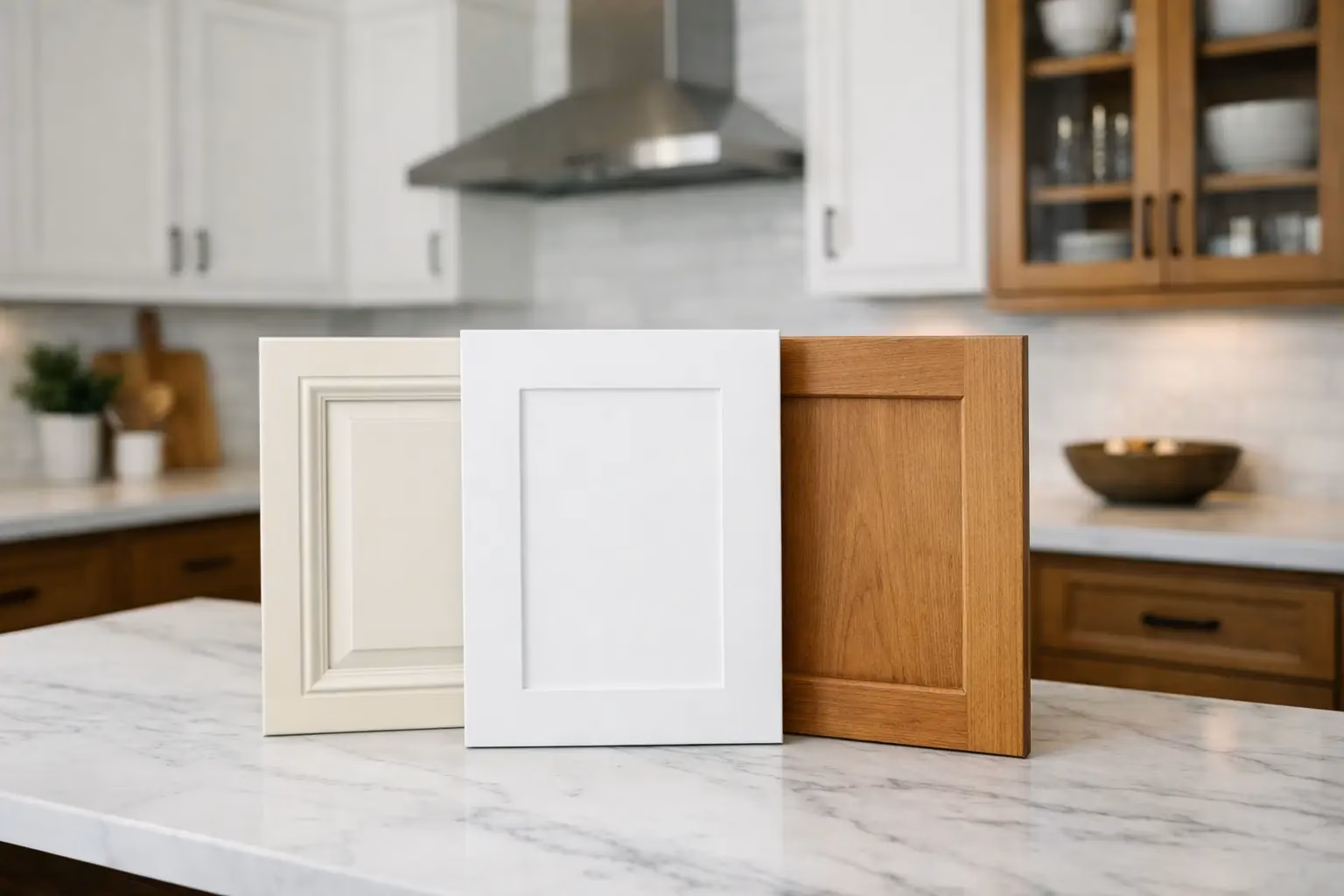
The short answer is this: simple, well-proportioned cabinet doors tend to look the most timeless. In most homes, that means Shaker-style doors lead the pack. They have clean lines, balanced framing, and enough character to feel finished without looking busy. But timeless doesn’t always mean one exact profile for every room. The right choice depends on your home’s architecture, the finish you choose, and how decorative you want the space to feel.

What cabinet door style looks timeless in most homes?

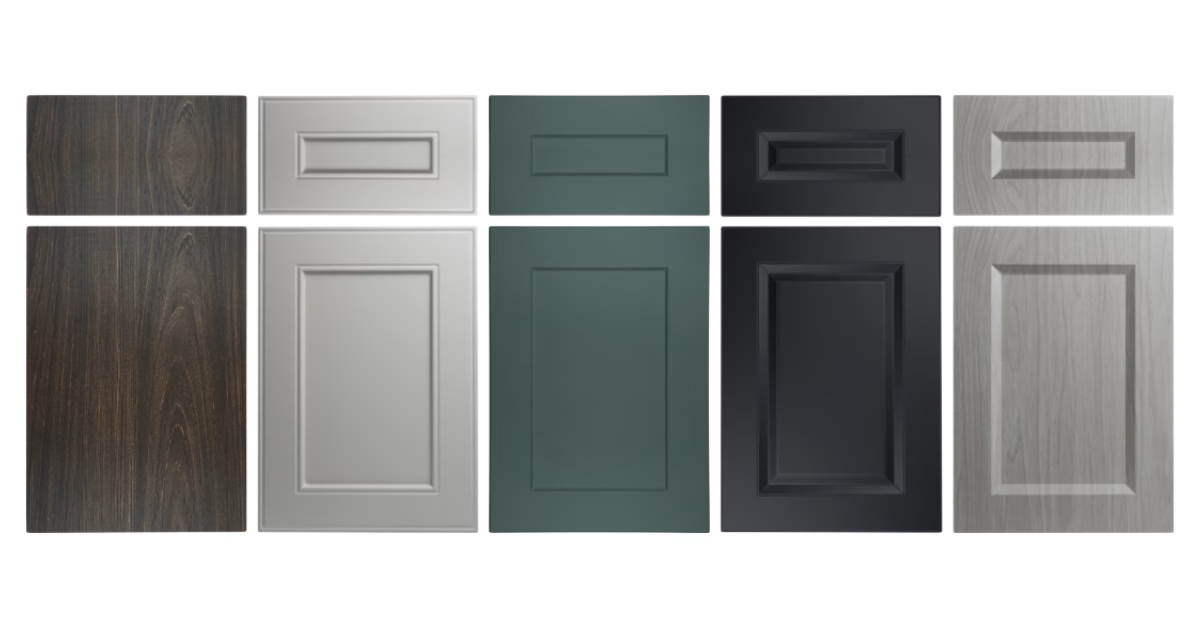
If one style consistently earns the label timeless, it’s the Shaker door. A true Shaker profile is straightforward – a flat center panel with a square, modest frame. That simplicity is the reason it lasts. It works in traditional kitchens, transitional spaces, modern farmhouse designs, and even more contemporary rooms when paired with the right color and hardware.

Shaker doors avoid the extremes that tend to date cabinetry. They are not overly ornate, so they do not lock you into a very formal or old-fashioned look. They are also not so stark that they feel cold or trend-driven. They sit in the middle, which is usually where longevity lives.

For many homeowners, that balance matters more than chasing the newest style. If you’re refacing existing cabinet boxes and want the finished result to look current now and still attractive later, a clean Shaker door is often the safest and smartest investment.

Why simple door profiles age better

Timeless design usually comes down to restraint. Cabinet doors that hold up over time have a few things in common: clear lines, consistent proportions, and details that support the room rather than dominate it.

Highly detailed raised panel doors can be beautiful, especially in classic homes, but heavy contouring often ties the kitchen to a specific decade. The same goes for ultra-slab, high-gloss looks in spaces that are not truly modern in architecture. When a door style leans too hard in one direction, it can feel dated faster.

Simple profiles give you more flexibility. You can update paint color, backsplash, lighting, or pulls later without fighting the door design itself. That makes cabinet refacing a better long-term value, because the doors are not the part you’ll want to change first.

Timeless does not always mean plain

Some homeowners hear timeless and picture something basic or safe to the point of being forgettable. That is not the goal. A timeless cabinet door should still feel intentional and well-designed.

For example, a narrow-frame Shaker door can read more tailored and current than a wider, chunkier version. A beveled inside edge can soften the look without pushing it into ornate territory. Even a recessed panel door with a little more profile can still feel timeless if the detailing is subtle and the proportions are right.

This is where custom sizing and customization make a difference. A door style may be timeless in theory, but if the rails and stiles are out of scale for your cabinet openings, the result can still feel off. Precision matters. Good craftsmanship tends to look timeless because it looks correct.

Other cabinet door styles that can look timeless

Shaker gets most of the attention for good reason, but it is not the only option.

A classic recessed panel door can also look timeless, especially in traditional or transitional homes. The key is moderation. If the profile is soft and not overly decorative, it can give you a more formal look without becoming fussy.

A slim slab door can be timeless in the right setting too, particularly in mid-century, Scandinavian, or contemporary homes. But this is more architecture-dependent. In a very traditional house, slab doors may feel out of place. In a clean-lined home, they can look exactly right and stay relevant for years.

Beadboard-style doors are more of a style-specific choice. They can work beautifully in cottages, coastal homes, and farmhouse spaces, but they are less universal. If your goal is the broadest possible staying power, Shaker or a restrained recessed panel is usually the better bet.

What makes cabinet doors look dated faster?

If you want a timeless result, it helps to know what usually shortens a style’s lifespan.

Overly ornate routed details are one common issue. Deep arches, heavy rope-like edging, and complex raised panels can make cabinetry feel locked into an older aesthetic. That does not mean those looks are wrong, but they are less adaptable.

On the other end, trend-heavy finishes can date a timeless door style. For example, a classic Shaker door painted in a color that has a short trend cycle may not feel as lasting as the same door in a warmer white, soft greige, natural wood tone, or muted painted finish.

Proportion is another factor that gets overlooked. Extra-wide frames, awkward panel sizing, or decorative choices that feel too busy for the room can make even a good style feel temporary. Timeless design is usually quieter and more confident than that.

Color, finish, and hardware matter just as much

When people ask what cabinet door style looks timeless, they often focus only on the profile. But door style is only part of the answer. A timeless look comes from the combination of door design, finish, and hardware.

A Shaker door in a bright, highly trendy color may not read timeless. The same door in a white, soft taupe, deep navy used thoughtfully, or a natural wood finish often has more staying power. Wood tones are especially strong right now because they add warmth, and many species and stains have a classic quality that outlasts paint trends.

Hardware also changes the read of the door. Simple knobs or clean bar pulls usually support timeless cabinetry better than novelty shapes or overly decorative finishes. If you want flexibility, choose hardware that feels understated and easy to update later.

How to choose the right timeless style for your home

The best timeless cabinet door is not just the one that looks good online. It is the one that fits your home, your goals, and your tolerance for future changes.

If your house is traditional, a soft recessed panel may feel more natural than a very crisp modern slab. If your space is more transitional, Shaker is often the easiest fit. If you are refacing cabinets in an older home with odd-sized openings, custom-sized doors can help the final look feel more polished and less pieced together.

It also helps to think about the rest of the room. Flooring, trim, wall color, and even window style all influence whether a cabinet door reads timeless or disconnected. The more the cabinetry works with those fixed elements, the longer it will feel right.

For DIY renovators, this is where slowing down pays off. It is easy to get pulled toward whatever is trending in social feeds, but cabinets are a larger commitment than paint or decor. A style you still like after looking at it for months is usually a better choice than one that only looked exciting for five minutes.

The practical answer for most refacing projects

For most homeowners updating a kitchen, bath, office, or built-in cabinetry, the most dependable answer to what cabinet door style looks timeless is a well-made Shaker door or a similarly simple recessed panel. Both offer clean structure, broad design flexibility, and strong long-term appeal.

That is especially true in cabinet refacing projects, where the goal is often to transform the look of the room without replacing solid cabinet boxes. Choosing a timeless door style gives that investment a longer runway. It lets you freshen the space now while keeping future updates simple and affordable.

At TDM – The Door Maker, that kind of project works best when style and sizing come together. A timeless profile only reaches its full potential when the fit is precise and the finish feels intentional.

The good news is that timeless does not have to mean boring, expensive, or out of reach. It usually means choosing a door style with enough simplicity to adapt, enough craftsmanship to look custom, and enough restraint to let the whole room age gracefully. If you keep coming back to clean lines and balanced design, you’re probably already heading in the right direction.
FROM THE SAME CATEGORY

Sep 8 2026 BY Ksenija Lebec, Blog

Landlords: inspect cabinets, run vacancy based ROI, budget $1,000–$13,000, and plan 1–3 day refacing installs with bulk order tips.

Build a Door MADE TO FIT YOU!

PVC Cabinet Finishes Versus Paint

PVC Cabinet Finishes Versus Paint

You usually notice the finish on cabinet doors right after you notice the color. That is why pvc cabinet finishes versus paint is not a small design decision – it changes how your cabinets wear, clean up, and hold their look over time. If you are planning a reface instead of tearing out perfectly good cabinet boxes, this choice deserves a closer look.

For many homeowners, the question starts with appearance. Painted cabinet doors have a familiar custom look, especially in classic whites, soft grays, and deep statement colors. PVC finishes, on the other hand, are often chosen for their consistency, durability, and low-maintenance performance. Both can look excellent. The better option depends on how you use your space, how much upkeep you want, and what kind of finish matters most to you.

PVC cabinet finishes versus paint: what is the difference?

Paint is exactly what it sounds like – a coating applied to the cabinet door surface to create color and finish. On cabinet doors, a quality paint process typically includes prep, primer, multiple coats, and curing. When done well, painted doors can look refined and furniture-like, with a smooth finish that feels tailored to the room.

A PVC cabinet finish is different. Instead of applying paint to the surface, a decorative and protective PVC layer is bonded to the face of the door. This gives the door a finished color and surface treatment as part of the manufacturing process. The result is a highly uniform appearance with strong day-to-day durability, which is one reason PVC has become a popular choice for cabinet refacing projects.

That difference in how the finish is created affects nearly everything else – durability, consistency, touch-up options, and cost.

How each option performs in a real home

A kitchen is not a showroom. Cabinet doors get touched constantly, cleaned often, and exposed to moisture, grease, heat, and sunlight. In a bathroom, humidity becomes a bigger factor. In a home office or built-in storage area, wear may be lighter, but the finish still needs to stay attractive over time.

PVC tends to perform well in busy spaces because the surface is made to resist everyday wear. It is less likely to show minor scuffs the way some painted surfaces do, and it generally cleans up easily with regular care. For homeowners who want a finish that keeps its look with less attention, that is a practical advantage.

Paint can absolutely hold up well too, but it is usually more vulnerable to chips, scratches, and edge wear over time, especially in high-traffic kitchens. Dark painted finishes can show marks differently than light ones, and lighter colors may reveal grime sooner around handles and lower cabinets. None of that makes paint a bad option. It simply means paint asks more from the homeowner in return for its look.

Appearance matters – and this is where preferences split

If your goal is a classic painted kitchen aesthetic, paint has a strong appeal. It offers a handcrafted, traditional feel that many homeowners still prefer, particularly with shaker-style doors and timeless color palettes. Painted finishes can also create a softer visual effect because they do not feel as manufactured to the eye.

PVC finishes usually win on consistency. The color is even, the sheen is controlled, and matching from door to door is typically very reliable. If you are refacing a full kitchen and want a clean, polished, uniform result, that consistency can be a major benefit. It is especially helpful in larger projects where visible variation would stand out.

This is where samples matter. On a screen, a painted finish and a PVC finish can look similar. In person, the light reflection, texture, and overall character are often different. Homeowners who are sensitive to surface detail usually have a clear preference once they see both.

Durability and maintenance: where PVC often pulls ahead

When customers compare pvc cabinet finishes versus paint, durability is usually the turning point. Most people refacing cabinets want the upgrade to last, not just look good for the reveal photo.

PVC finishes are often chosen because they are straightforward to live with. They resist everyday wear well, and routine cleaning is simple. In a family kitchen where cabinet doors are opened all day, that matters. The finish is built for use, not just appearance.

Painted cabinet doors can still be a great choice, but they require a bit more grace from the homeowner. You may need to be more careful with impact, more selective with cleaning products, and more accepting of small signs of wear as the years go on. Some people are perfectly comfortable with that because they value the painted look enough to make the trade.

If your priority is low maintenance, PVC is usually the easier answer. If your priority is a particular painted style, you may be happy to accept the added upkeep.

Cost is not just about the initial price

It is tempting to compare only the upfront cost of paint versus PVC, but the smarter comparison includes long-term value. A finish that needs more touch-up work, more careful maintenance, or earlier replacement can cost more over time even if it seemed appealing at the start.

PVC often delivers strong value because it combines finished appearance with practical durability. For homeowners refacing cabinet boxes rather than replacing the whole kitchen, that can be the sweet spot – custom sizing, updated style, and a finish that stands up to normal use.

Paint may make sense if you are committed to a specific aesthetic and understand the trade-offs. In the right setting, especially a lower-traffic space or a design-focused room, that choice can still be worth it. But if you are making decisions through the lens of performance per dollar, PVC is often easier to justify.

Best uses for painted doors

Painted cabinet doors are a strong fit when design character leads the decision. If you want a traditional kitchen, a soft custom look, or a finish with a more classic furniture-style feel, paint can be the right call. It also works well in spaces that do not take the same daily abuse as a busy family kitchen.

That could mean a butler’s pantry, laundry room, home office, or bathroom vanity where the visual style matters more than heavy wear resistance. In these settings, the extra maintenance may feel minor compared to the design payoff.

Paint is also worth considering if exact color flexibility is a priority. Homeowners trying to coordinate cabinetry with wall color, trim, or a very specific palette often start here.

Best uses for PVC cabinet finishes

PVC cabinet finishes are especially well suited to refacing projects where homeowners want a major visual upgrade without adding avoidable maintenance. Kitchens, mudrooms, kids’ bathrooms, rental properties, and high-use built-ins are all good examples.

They are also a practical fit for homeowners who care about a clean, finished look but do not want to worry about babying cabinet doors. If that sounds like your project, custom-made PVC doors can offer a high-end result without the fragility some people associate with painted surfaces.

For DIY renovators, this can remove a lot of uncertainty. You are not trying to create a perfect sprayed finish at home. You are ordering doors made to size with the finish already handled in a controlled manufacturing process. That saves time and reduces the risk of a project that looks almost right but not quite finished.

The decision gets easier when you think about your habits

A lot of finish decisions become clear once you stop thinking like a shopper and start thinking like the person who will clean, use, and live with the cabinets every day. Do you want a finish that gives you more style flexibility, even if it shows wear sooner? Or do you want a finish that is easier to maintain and more forgiving in a busy household?

There is no universal winner. A design-focused homeowner renovating a lower-traffic space may genuinely prefer paint. A family updating an older kitchen for everyday use may be much happier with PVC. The right choice is the one that matches your priorities honestly.

At TDM – The Door Maker, that is often where custom refacing becomes such a smart middle ground. You get the benefit of made-to-order doors sized for your cabinets, without the cost and disruption of replacing the entire layout. Once you pair the right door style with the right finish, the room can feel completely different.

If you are deciding between PVC and paint, do not just ask which one looks good on day one. Ask which one fits your space, your routine, and the way you want the project to perform a year from now.

FROM THE SAME CATEGORY

Sep 8 2026 BY Ksenija Lebec, Blog

Landlords: inspect cabinets, run vacancy based ROI, budget $1,000–$13,000, and plan 1–3 day refacing installs with bulk order tips.

Build a Door MADE TO FIT YOU!

Cabinet Refacing Kit Review: What Holds Up

Cabinet Refacing Kit Review: What Holds Up

If you have solid cabinet boxes but dated doors, a cabinet refacing kit review matters a lot more than glossy before-and-after photos. The real test is simpler: does the kit give you a clean, lasting finish without turning your kitchen into a weekslong correction project? That comes down to fit, material quality, color consistency, and how forgiving the system is when real-world cabinets are not perfectly square.

For most homeowners, cabinet refacing sits in the sweet spot between a cosmetic patch and a full remodel. You keep the existing cabinet structure, replace visible fronts, cover exposed cabinet frames, and update hardware for a new look at a lower cost than replacing everything. But not every kit gets you there with the same level of precision.

Cabinet refacing kit review: what actually matters

A lot of refacing kits look similar at first glance. They promise a fresh finish, easy installation, and savings over new cabinets. Those claims can be true, but the differences show up fast once you start measuring and installing.

The first thing to look at is whether the kit is based on stock sizing or made-to-order components. Stock kits can work in straightforward kitchens, especially if your cabinet openings match common dimensions. In older homes, custom layouts, or kitchens with filler strips and uneven reveals, stock sizing often creates the kind of small mismatches your eye catches immediately. Gaps that look minor on paper can make the whole project feel off.

Material quality is the next big separator. Thin veneers can look good on day one and disappoint later if edges lift, colors vary, or the surface scratches too easily. Better refacing systems use durable finishes, stable core materials, and components designed to stand up to normal kitchen wear. If you’re investing time into the project yourself, the finish needs to feel worth that effort.

Then there is installation realism. Some kits market themselves as beginner-friendly, but they assume accurate measuring, clean prep work, and a cabinet layout with very few surprises. If the product only works well under perfect conditions, that is not really a forgiving DIY system.

Where cabinet refacing kits perform well

A good kit can deliver a dramatic transformation without the cost, demolition, and downtime of a full replacement. If your cabinet boxes are structurally sound, refacing is often the smarter spend. You are paying for the visible upgrade rather than rebuilding what still works.

This is especially attractive in kitchens, bathrooms, offices, and laundry rooms where the layout already functions well. You may not need new cabinet boxes. You may just need cleaner lines, updated door styles, better color choices, and a finish that feels current.

Well-designed kits also help homeowners stay in control of the project. You can phase hardware updates, choose your style direction, and avoid the disruption that comes with tearing out a working kitchen. For budget-conscious remodels, that flexibility is a real advantage.

Where many refacing kits fall short

The biggest weak point in many kits is the assumption that cabinet refacing is mainly a materials problem. In practice, it is a precision problem. If your measurements are off, if the doors are generic instead of built for your openings, or if the finish materials are inconsistent, the project can quickly shift from upgrade to compromise.

Peel-and-stick surfaces are one example. Some work reasonably well on smooth, well-prepped frames. Others struggle around corners, near sinks, or in high-use areas where moisture and repeated contact test the adhesive over time. If the surface prep is not perfect, the results usually show.

Another issue is limited design flexibility. Some kits offer only a narrow range of sizes, profiles, and colors. That may be fine if your goal is basic refresh. It is less appealing if you want a tailored look that matches the style of your home. Kitchens are visual spaces. Small design limitations can have a big impact on the final result.

What to check before you buy

The best cabinet refacing kit review is the one you do against your own kitchen before ordering. Start by looking at your cabinet boxes honestly. Are they level enough, square enough, and in good condition? Refacing improves appearance, but it does not fix structural problems.

Next, consider whether your kitchen has standard dimensions. Many homes do not. If your cabinets were site-built, modified over time, or installed decades ago, custom sizing may save you frustration later. That is where made-to-order doors and drawer fronts have a clear advantage over boxed kits built around standard assumptions.

Pay close attention to finish options. The color on a website can be helpful, but samples tell the truth. In a kitchen, lighting changes everything. White can turn creamy, gray can read blue, and wood tones can shift dramatically between morning and evening light. A finish that looks right online may not feel right in your space.

You should also look at what support is available. Clear measuring help, installation guidance, and responsive customer service are not extras. For DIY homeowners, they are part of the product. A kit with limited support may cost less upfront and more in mistakes.

Stock kit vs. custom refacing components

This is where many shoppers end up making the real decision. A stock kit usually wins on speed and apparent simplicity. If your layout is predictable and you are comfortable adapting around limitations, it can be a workable path.

Custom refacing components usually win on fit, finish, and design control. Instead of forcing your cabinets to match a preset range, the doors and drawer fronts are built to your measurements. That matters if you want tighter reveals, cleaner alignment, and a more professional final look.

For homeowners comparing big-box options to custom ordering, the trade-off is straightforward. Stock products may feel easier at the start. Custom products tend to look better at the end. If your goal is a result that feels high-end rather than just updated, precision matters more than convenience marketing.

That is one reason many DIY renovators move toward custom-sized solutions from specialists such as The Door Maker. When the cabinet boxes are worth keeping, custom-built doors and matching components often produce the strongest value because they solve the fit problem instead of working around it.

How we would rate a cabinet refacing kit

In a practical cabinet refacing kit review, we would score products on five areas: accuracy, finish quality, install difficulty, design flexibility, and long-term value.

Accuracy is first because fit affects everything else. Even a beautiful door style loses impact if spacing is inconsistent or drawer fronts do not sit cleanly.

Finish quality comes next. You want surfaces that feel durable, edges that look intentional, and color consistency across all visible components. A kitchen upgrade should hold up to traffic, cleaning, and daily use.

Install difficulty should be judged honestly, not by marketing copy. A truly DIY-friendly solution gives clear measuring guidance, reasonable tolerances, and a process that does not collapse over one minor cabinet irregularity.

Design flexibility matters because homeowners are not all trying to build the same kitchen. Shaker, raised panel, slab, glass-ready options, decorative components, and color choices all affect whether the project feels customized or generic.

Long-term value is the final score, and it usually decides the winner. The cheapest route is not always the best buy if it leads to visible shortcuts or earlier replacement.

Who should buy a cabinet refacing kit

If your cabinet boxes are in good condition, your layout works, and you want a major visual upgrade without a full remodel, a refacing kit can be a very smart move. It is especially appealing for homeowners who want to control costs while still making meaningful design improvements.

If your kitchen has unusual dimensions, though, the better choice may not be a one-size-fits-most kit. It may be a custom refacing approach built around your exact measurements. That path usually asks for a little more care upfront and rewards you with a cleaner result.

If the cabinet boxes are damaged, poorly installed, or no longer functional for your storage needs, refacing may not go far enough. In that case, replacement deserves a serious look. The right choice depends on whether you are solving an appearance issue or a layout problem.

Final take

Most cabinet refacing kits deliver what they promise only when the kitchen is simple and the expectations are modest. If you want a finish that looks intentional, fits correctly, and holds up over time, the strongest results usually come from precise measurements, durable materials, and customization that respects the realities of your space.

A good project starts with honest measuring and clear priorities. If you get those right, cabinet refacing can be one of the most satisfying upgrades you make to your home.

FROM THE SAME CATEGORY

Sep 8 2026 BY Ksenija Lebec, Blog

Landlords: inspect cabinets, run vacancy based ROI, budget $1,000–$13,000, and plan 1–3 day refacing installs with bulk order tips.

Build a Door MADE TO FIT YOU!

Thermofoil Versus Painted Cabinet Fronts

Thermofoil Versus Painted Cabinet Fronts

If you’re standing in the middle of a kitchen update trying to decide between thermofoil versus painted cabinet fronts, you’re already asking the right question. The finish you choose affects how your cabinets look on day one, how they hold up after years of cooking and cleaning, and how much maintenance you’re willing to live with. For a refacing project, that choice matters just as much as door style or color.

Both options can give your space a clean, updated look without tearing out your cabinet boxes. But they behave very differently in real homes. One is usually favored for easy care and consistency. The other is often chosen for design flexibility and a more furniture-like finish. The better fit depends on your budget, your kitchen habits, and how exacting you are about the final look.

Thermofoil versus painted cabinet fronts: the real difference

Thermofoil cabinet fronts are typically made by applying a thin vinyl layer over an engineered wood core using heat and pressure. The result is a smooth, sealed surface with a consistent color and finish. It is commonly used for slab doors, simple profiles, and many contemporary styles, though it can also work in some traditional looks.

Painted cabinet fronts start with a wood or MDF door and go through a finishing process that includes prep, primer, and paint. When done well, painted fronts can look refined and custom, especially on shaker, raised panel, or detailed profiles. They offer a broader design range, but they also come with the normal realities of painted surfaces.

The main distinction is not just appearance. Thermofoil is a wrapped finish. Painted fronts are a coated finish. That changes how they respond to heat, impact, moisture, touch-ups, and time.

Cost and value for a refacing project

For many homeowners, price is where the decision starts. Thermofoil cabinet fronts are often more budget-friendly than painted options, especially when you are updating an entire kitchen, bathroom, office, or built-in wall of cabinetry. If your goal is a major visual change without the cost of full cabinet replacement, thermofoil can make a lot of sense.

That lower cost does not automatically mean lower value. In the right setting, thermofoil gives you a polished, finished appearance with predictable results. The color is factory-applied, the surface is uniform, and there is less variation from one door to the next.

Painted cabinet fronts usually cost more because the finish process is more labor-intensive. There is more prep involved, more handling, and more opportunity for the kind of detail work that people expect from a painted cabinet surface. If you’re after a higher-end, custom look and want specific color control, that added cost may feel justified.

Value, then, is not just about the invoice. It is about whether the finish matches the way you use the room and what you expect from it over time.

Appearance and style flexibility

This is where painted fronts often pull ahead. If you want a very specific shade, a classic shaker kitchen, or a detailed profile with crisp visual depth, paint usually gives you more room to get there. It tends to suit homeowners who care about design nuance and want the cabinet fronts to feel more like custom millwork.

Paint can also create a softer, more traditional look. Even in modern spaces, many homeowners prefer the visual character of a painted surface over the cleaner, more uniform appearance of thermofoil.

Thermofoil, on the other hand, shines when you want consistency. Whites are even. Solid colors are smooth. The finish is often sleek and controlled, which works especially well in contemporary, transitional, or utility-focused spaces. If your priority is a fresh, bright update that looks clean and finished without a lot of fuss, thermofoil may be the more practical choice.

There is a trade-off here. Painted fronts usually offer more design freedom. Thermofoil usually offers more finish consistency.

When painted fronts make more sense visually

Painted cabinet fronts are often the better option if you want decorative detailing, a custom color direction, or a more upscale furniture-style appearance. They also appeal to homeowners who are matching existing trim, island cabinetry, or built-ins where exact visual coordination matters.

When thermofoil fits the look

Thermofoil works especially well when the goal is a crisp, durable, low-maintenance finish in a straightforward color. It is a strong fit for simple shaker-inspired updates, flat-panel styles, laundry rooms, bathrooms, rental properties, and family kitchens where easy upkeep matters as much as appearance.

Durability in everyday use

Cabinet fronts live a hard life. They get touched with wet hands, bumped by dishes, splashed with grease, and cleaned over and over. So durability should be judged by real household use, not showroom impressions.

Thermofoil has a smooth outer layer that resists many everyday messes well. It is easy to wipe down, and it does not have the same kind of exposed painted surface that can chip at an edge from impact. For busy households, that can be a real advantage.

But thermofoil has a known weakness: heat. If cabinet fronts are installed too close to ovens, toaster ovens, ranges, or other high-heat areas without proper protection, the vinyl layer can loosen or peel over time. That does not mean thermofoil is a bad product. It means installation conditions matter. In a well-planned layout, it can perform very well. In a high-heat zone, it needs extra attention.

Painted cabinet fronts do not peel in the same way, but they can chip, scratch, or show wear at corners and edges. Darker painted colors may reveal marks more readily, while lighter colors may show grime around high-touch areas. Paint is durable when properly applied, but it is not maintenance-free.

This is one of those cases where neither option is perfect. Thermofoil is often easier to clean and less likely to show small finish inconsistencies. Painted fronts may age more gracefully in some heat-sensitive areas but can be more vulnerable to visible surface wear.

Maintenance and repair expectations

If you want the easier day-to-day finish, thermofoil usually has the edge. A damp cloth and mild cleaner are often enough to keep it looking good. Its non-porous surface is one reason many homeowners like it for kitchens, baths, and other high-use spaces.

Painted fronts require a little more care. You still do not need anything complicated, but harsher cleaning products and repeated scrubbing can wear on the finish. Over time, painted surfaces may also need touch-ups in active households.

That said, touch-up is where painted fronts have an advantage. Small chips or dings can often be repaired or improved. If thermofoil gets damaged, repair is usually less forgiving. Once the surface is compromised, you are more likely to be looking at replacement rather than a simple cosmetic fix.

So the maintenance question is really two questions: Which finish is easier to live with every week, and which one is easier to recover if something goes wrong?

Best uses for each option

If you are refacing cabinets in a busy family kitchen and want a clean update at a strong value, thermofoil is often a smart choice. It works well when you want custom-sized doors, a dependable finish, and straightforward care. For many DIY homeowners, that combination hits the sweet spot.

If you are designing a more tailored kitchen, matching a specific style, or prioritizing premium aesthetics over lowest cost, painted fronts may be the better investment. They are also worth considering for statement spaces where detailed profiles and color control carry more weight.

A lot depends on where the cabinets are located. Bathrooms, offices, mudrooms, and laundry spaces can be excellent candidates for thermofoil. Showcase kitchens, islands, and design-driven built-ins may be better suited to painted fronts if your budget allows.

How to choose with confidence

The most practical way to decide is to stop asking which finish is better in general and ask which one is better for your project. Consider how close your doors will be to heat. Think about who uses the room, how often you cook, and whether you care more about a highly customized appearance or a durable, easy-care finish.

It also helps to think in terms of the full refacing result. Door style, color, cabinet box condition, and accurate sizing all play a part in how professional the finished project feels. A well-measured, well-chosen cabinet front can completely change the look of a room without the cost and disruption of replacing everything.

That is why many homeowners start with samples, compare finishes in their own lighting, and choose based on how they actually live. At TDM – The Door Maker, that kind of decision-making is part of building a cabinet update that looks right, fits right, and holds up to real use.

If you are choosing between thermofoil versus painted cabinet fronts, the best answer is usually the one that balances style, durability, and budget without forcing compromise where it matters most to you. The right cabinet front should not just look good in a photo. It should make the whole room feel finished every time you walk into it.

FROM THE SAME CATEGORY

Sep 8 2026 BY Ksenija Lebec, Blog

Landlords: inspect cabinets, run vacancy based ROI, budget $1,000–$13,000, and plan 1–3 day refacing installs with bulk order tips.

Build a Door MADE TO FIT YOU!

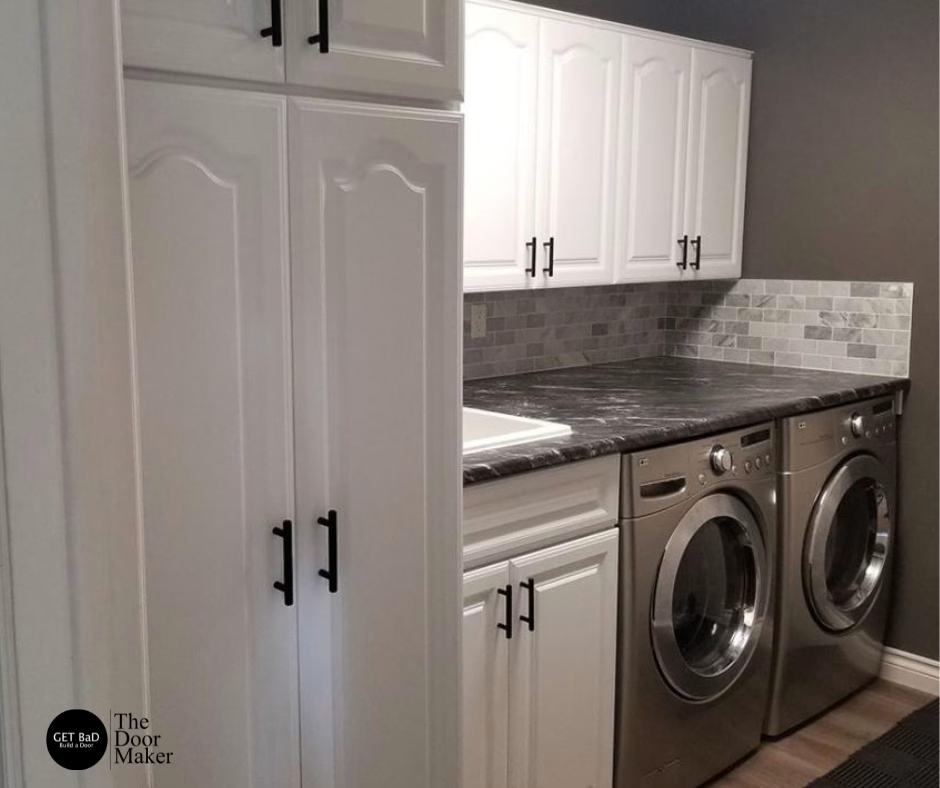
How to Update Laundry Room Cabinets

How to Update Laundry Room Cabinets

If your laundry room cabinets still work but make the whole space feel dated, you do not need to tear everything out to get a better result. Knowing how to update laundry room cabinets the right way can save money, avoid unnecessary demolition, and give you a finished look that feels far more custom than a quick cosmetic patch.

Laundry rooms are easy to overlook because they are utility spaces first. But they also get hard daily use. Doors get bumped by baskets, finishes take abuse from moisture and detergent spills, and older cabinet styles can make the room feel darker and more cramped than it is. That is why the best cabinet updates are not just about color. They improve function, durability, and the overall feel of the room.

Start by deciding what actually needs updating

Before you buy paint or start removing hardware, take a close look at what you already have. Cabinet boxes, doors, drawer fronts, hinges, and trim can all age differently. Sometimes the cabinet boxes are still solid and square, while the doors are the real problem. Other times the doors are usable, but the finish is worn and the layout feels awkward.

This step matters because the right update depends on the cabinet condition. If the boxes are sturdy and properly installed, refacing or replacing the doors is often the smartest move. If the doors are warped, chipped, or have an outdated profile, painting them may only improve things so much. A cleaner transformation often comes from keeping the existing cabinet structure and updating the visible pieces with better-fitting custom components.

That is the trade-off many homeowners miss. Painting is usually the lowest upfront cost, but it is not always the best long-term value if you are trying to modernize the room and fix years of wear at the same time.

How to update laundry room cabinets without replacing everything

Most laundry room cabinet projects fall into one of three paths. You can repaint what you have, reface the cabinets with new doors and drawer fronts, or do a mix of both. The best choice depends on your budget, timeline, and how much change you want.

If your current doors have a good shape and smooth surface, paint can work well. A fresh white, soft gray, muted green, or warm greige can immediately brighten the room. New hardware helps too, especially if the old knobs or pulls are dated, mismatched, or loose.

If your cabinet boxes are solid but the doors look tired, replacing the doors and drawer fronts usually creates a bigger visual upgrade. This is where many DIY renovators get the best value. You keep the existing cabinet framework, but the room gets a cleaner and more intentional style. A simple shaker profile, for example, can make an older laundry room feel current without making it look trendy in a way that will age quickly.

A hybrid approach is often the sweet spot. Paint or veneer the cabinet frames, then install new custom doors, drawer fronts, and hardware. That gives you the look of a much larger remodel while keeping the project manageable.

Paint can work, but prep is what decides the result

If you choose to paint, the prep work is the whole project. Laundry room cabinets tend to collect more residue than people expect. Fabric softener, detergent dust, and humidity can all interfere with adhesion. If you paint over that buildup, the finish may chip or peel faster than it should.

Start by removing doors, drawer fronts, and hardware. Clean every surface thoroughly with a degreasing cleaner that is safe for cabinets. Sand enough to dull the existing finish, repair any dents or cracks, and use a quality bonding primer if the material calls for it. Then apply a cabinet-grade paint designed for durability, not just wall coverage.

There is also a realism check here. Painted old doors will still look like old doors if the style is the main issue. Fresh color helps, but it will not change an arched raised panel into a more modern flat or shaker design. If style is what bothers you most, new doors may be the better investment.

Replacing the doors gives the biggest visual change

When homeowners ask how to update laundry room cabinets in a way that looks custom, door replacement is usually the answer. It changes the part of the cabinetry you see first, and it avoids the cost and mess of full cabinet replacement.

This approach works especially well in laundry rooms because the footprint is often small. You can make a dramatic difference with a relatively modest number of doors and drawer fronts. The result feels intentional rather than temporary.

Custom sizing is important here. Laundry rooms often include older cabinets, stacked storage, utility sink bases, or non-standard widths. Stock replacement doors can be hit or miss. When doors are sized correctly and matched to the style you want, the finished project looks cleaner, operates better, and feels worth the effort.

That precision is where a made-to-order approach stands out. A company like The Door Maker helps DIY homeowners update cabinet exteriors without settling for whatever happens to be available off the shelf. When you can measure, choose a style, and order the exact size you need, you get a result that looks built for the space instead of adapted to it.

Hardware, hinges, and small details matter more than you think

Cabinet updates often succeed or fail on the details. New doors with old crooked hinges or undersized hardware can make the project feel unfinished. If you are already updating the cabinets, this is the time to correct those issues.

New pulls or knobs can shift the style of the room fast. Matte black feels crisp and modern. Brushed nickel is versatile and forgiving. Brass can add warmth if the rest of the room is simple and restrained. There is no single right answer, but it helps to match the hardware to the overall tone of the home rather than treating the laundry room like a separate design experiment.

Soft-close hinges are another upgrade worth considering. In a hardworking room, they add a more finished feel and reduce wear over time. If your current hinges are visible and dated, switching to concealed hinges can also sharpen the overall look.

Then there is trim. Crown molding, light valances, or simple finished panels at cabinet ends can elevate basic cabinetry without overwhelming a small room. This is one of those updates that depends on your space. In a compact laundry closet, extra trim may feel fussy. In a larger laundry room with upper cabinets and open wall area, it can create a more built-in appearance.

Choose finishes that hold up in a working room

Laundry rooms are practical spaces, and the finish choices should respect that. Bright white cabinets can look clean and fresh, but they may show drips and scuffs more quickly. Mid-tone neutrals tend to be more forgiving. Wood-look finishes or durable thermofoil-style surfaces can also make sense if you want easy maintenance.

Think about the whole room while you choose cabinet updates. If the flooring is busy, simpler cabinet colors usually work better. If the walls are plain and the room lacks natural light, a lighter cabinet finish can help open it up. If your washer and dryer are in a tight alcove, slab or shaker doors often keep the room looking less crowded than ornate profiles.

This is also where budget and longevity meet. The least expensive finish is not always the most economical if it requires touch-ups in a year. A well-made door with a durable surface can save frustration later, especially in a room that sees regular traffic.

Measure carefully before you order anything

One of the biggest mistakes in cabinet updating is guessing. Even a small laundry room can include multiple door sizes, different hinge overlays, and filler areas that affect the final fit. Accurate measuring is what separates a smooth refacing project from an expensive headache.

Measure each opening and each existing door individually. Do not assume matching cabinets are identical. Older homes and previous remodels often leave small variations. Label everything clearly before removing parts, and take photos so reinstallation is easier.

If you are replacing doors only, make sure you understand whether you need standard overlay, full overlay, or inset dimensions. Hinge boring and drill placement matter too. This is one of those moments where careful planning saves real time.

A smarter update is usually the one with the best finish-to-cost ratio

Full cabinet replacement makes sense in some situations, especially if the boxes are damaged, poorly placed, or too shallow to be useful. But in many laundry rooms, the smarter move is to improve what is already there. Keeping sound cabinet boxes and updating the exterior lets you focus your budget where it shows most.

That is what makes cabinet refacing and door replacement so appealing for DIY homeowners. You get a visible transformation, more style control, and custom-fit results without paying for a full tear-out. It is a practical renovation decision, not a compromise.

If you want your laundry room to feel cleaner, brighter, and more finished, start with the cabinets you already have and look at them with fresh eyes. The best update is not always the biggest one. It is the one that gives you a room you enjoy using every week.

FROM THE SAME CATEGORY

Sep 8 2026 BY Ksenija Lebec, Blog

Landlords: inspect cabinets, run vacancy based ROI, budget $1,000–$13,000, and plan 1–3 day refacing installs with bulk order tips.

Build a Door MADE TO FIT YOU!

9 Best Cabinet Upgrades Without Replacing

9 Best Cabinet Upgrades Without Replacing

If your cabinet boxes are still solid, tearing out the whole setup is usually the most expensive way to fix a cosmetic problem. The best cabinet upgrades without replacing everything focus on what you actually see and use every day – the doors, drawer fronts, finish details, and hardware. That approach saves money, avoids unnecessary demolition, and gives you far more control over the final look.

For most homeowners, the smartest upgrade is not a full replacement. It is a better-looking, better-fitting cabinet exterior built on the structure you already have. That matters even more in older homes, home offices, laundry rooms, and built-ins where cabinet sizes are often non-standard and stock options rarely fit the way you want.

Why cabinet upgrades beat full replacement in many homes

A full cabinet replacement makes sense when boxes are damaged, badly laid out, or structurally failing. But if the cabinet frames are level, secure, and functional, replacing them can be overkill. You pay for demolition, disposal, installation, and often countertop or flooring adjustments that had nothing to do with the original problem.

Upgrades let you put your budget where it shows. New doors can change a dated oak kitchen into a clean shaker design. New drawer fronts can sharpen the entire room. Added trim can take plain cabinets closer to a built-in custom look. You still get a dramatic transformation, but you are not paying to rebuild boxes that were never the issue.

The best cabinet upgrades without replacing the boxes

1. Replace cabinet doors and drawer fronts

This is the upgrade that changes the room fastest. Cabinet doors take up most of the visual space, so swapping outdated styles for custom-made replacements has a bigger impact than almost anything else you can do.

If your current doors are arched, heavily detailed, worn out, or simply stuck in another decade, replacing them with a cleaner profile instantly updates the cabinetry. Shaker doors remain a strong choice because they fit modern, transitional, farmhouse, and even more traditional spaces depending on finish and hardware. Slim-profile styles can make a small kitchen feel lighter. Raised panel doors can still work well in homes where you want a more classic look.

The biggest advantage of custom sizing is fit. Older homes and builder-grade cabinets are not always standard. When doors are made to your measurements, the finished result looks intentional instead of patched together.

2. Reface the exposed cabinet frames

New doors alone help, but they look best when the cabinet face frames match. Refacing covers the visible cabinet structure with a new veneer or matching surface so the entire exterior reads as one finished system.

This is where many DIY remodels either look polished or fall short. If you install beautiful new doors and leave scratched, faded, or orange-toned frames around them, the contrast is hard to ignore. Refacing brings everything into the same design language.

It does take patience. Good prep and careful application matter. But when done well, it creates a high-end result without replacing the cabinet boxes themselves.

3. Upgrade hardware with purpose

Hardware is a smaller investment, but it affects both style and daily use. Replacing old knobs and pulls is one of the easiest ways to sharpen the look of cabinets, especially after new doors or paint.

The key is choosing hardware that fits the scale of the door style and the room. Oversized bar pulls can look great on wide drawers, but they may feel too industrial in a more classic kitchen. Small round knobs may suit a traditional vanity, but they can underwhelm a larger pantry wall. Finish matters too. Matte black adds contrast. Brushed nickel stays versatile. Warm brass can bring depth to painted cabinets.

If your doors already have drilled holes, your hardware choice may be guided by existing spacing unless you plan to fill and redrill. That is a small detail, but it affects how simple the project really is.

4. Add soft-close hinges and drawer slides

Not every upgrade is visual. If your cabinets slam, stick, or feel rough in daily use, new motion hardware can make the entire room feel better built.

Soft-close hinges are especially worthwhile in busy kitchens and bathrooms. They reduce noise, cut down on wear, and give even an older cabinet setup a more current feel. Upgraded drawer slides are just as valuable if your drawers drag or wobble.

This is one of those improvements that homeowners appreciate more over time. It may not be the first thing guests notice, but you will notice it every day.

5. Paint or finish the cabinet exterior

A new finish can completely reset the mood of a room. White and off-white still brighten darker kitchens. Warm greige, mushroom, soft green, and deeper blue-gray tones have also become popular for homeowners who want something updated without chasing short-lived trends.

Paint works especially well when the door style is still appealing but the color is wrong. It is also a practical option for bathrooms, laundry rooms, and built-ins where a full door replacement may not be necessary.

That said, paint is not always the best answer. If doors are warped, damaged, low quality, or have an outdated profile, painting them can improve color but not design. In that case, replacing the fronts first usually gives you a stronger end result.

6. Add crown molding, light rail, or valances

Trim is one of the most overlooked cabinet upgrades. The right finishing details can make basic cabinetry look more custom and more integrated with the room.

Crown molding helps close the gap between upper cabinets and the ceiling or gives that area a more intentional finish. Light rail can conceal under-cabinet lighting and clean up the underside of uppers. Valances can soften window areas or sink spaces when used appropriately.

These details are especially effective in kitchens that feel builder-basic. You are not changing the footprint, but you are changing the visual quality.

7. Upgrade decorative components for built-in appeal

Some spaces need more than a door swap to feel complete. End panels, fluted columns, wine storage pieces, open frames, and glass-ready cabinet options can turn ordinary cabinetry into something with more architectural presence.

This works well in kitchen islands, entertainment walls, offices, and dining-area built-ins. A few well-placed decorative upgrades often do more than homeowners expect. Instead of looking like a row of boxes, the cabinetry starts to feel designed for the room.

The trade-off is restraint. Too many decorative elements can make a clean design feel busy. Usually, one or two well-chosen additions are enough.

8. Install glass-front doors selectively

Glass-front cabinet doors can break up a heavy run of solid cabinetry and add dimension to the room. They work best when used in moderation – maybe on a pair of upper cabinets, a hutch section, or a built-in bar area.

This is not just a style decision. Glass fronts put contents on display, so they are best for cabinets that stay organized. If you need maximum concealment for everyday storage, solid doors may still be the better choice for most of the layout.

When used strategically, though, glass adds lightness and can make a smaller kitchen feel less closed in.

9. Improve function inside the cabinets

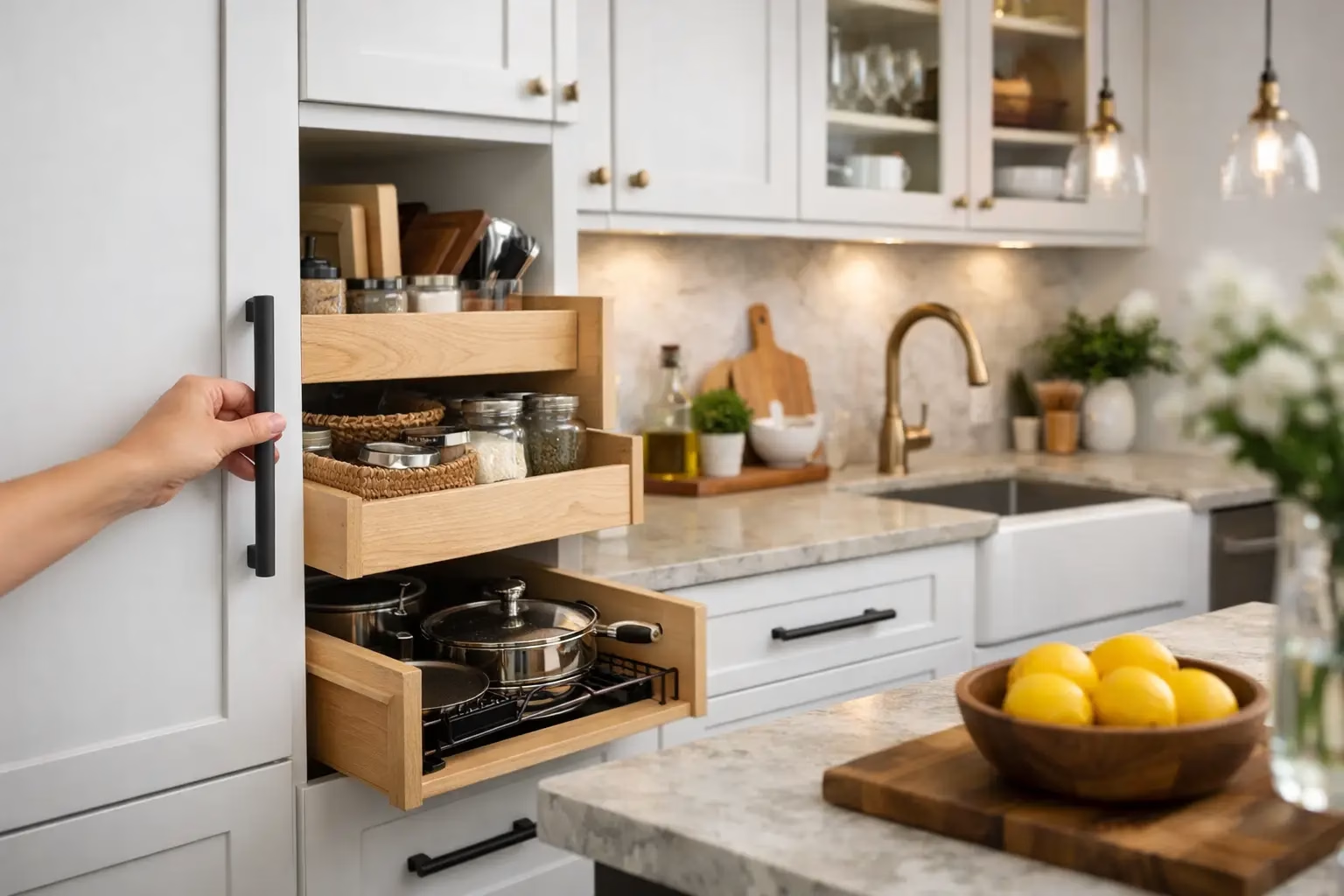
The outside gets the attention, but interior improvements can make old cabinets far more useful. Pull-out trays, trash rollouts, drawer organizers, and better shelving can solve daily frustrations without changing the cabinet footprint.

This upgrade matters most when the layout still works but storage feels inefficient. If you have to kneel down and dig through deep base cabinets every day, interior accessories may improve your kitchen more than another cosmetic change.

How to choose the right upgrade for your cabinets

The best answer depends on what is actually wrong. If the cabinets look dated but function fine, start with doors and drawer fronts. If they look good but feel annoying to use, focus on hinges, slides, and interior storage. If they still feel incomplete after a door upgrade, trim and decorative elements may be the missing piece.

Budget also matters. Hardware and paint are lower-cost entry points. Custom replacement doors cost more, but they usually deliver a bigger visual return. Refacing and trim work sit somewhere in the middle depending on scope and material choices.

It also helps to be honest about your DIY comfort level. Measuring and ordering custom doors is very manageable when you take your time, but precision matters. The same goes for hinge alignment, refacing, and trim installation. A careful DIY homeowner can absolutely get professional-looking results, but rushing measurements is where projects go sideways.

For homeowners who want a major transformation without replacing the boxes, custom refacing components often give the best balance of value, appearance, and control. That is why so many DIY renovators start with made-to-order doors and drawer fronts from a specialist like The Door Maker rather than settling for limited stock sizes.

A cabinet upgrade does not have to mean starting over. When the bones are good, the better move is often to rebuild the look – one precise, visible, high-impact change at a time.

FROM THE SAME CATEGORY

Sep 8 2026 BY Ksenija Lebec, Blog

Landlords: inspect cabinets, run vacancy based ROI, budget $1,000–$13,000, and plan 1–3 day refacing installs with bulk order tips.

Build a Door MADE TO FIT YOU!

Cabinet Glass Frame Options That Fit Your Style

Cabinet Glass Frame Options That Fit Your Style

A glass-front cabinet can change the whole feel of a room faster than most homeowners expect. Swap a few solid doors for the right cabinet glass frame options, and a heavy kitchen starts to feel lighter, more custom, and more intentional without tearing out the cabinet boxes you already have.

That is why frame choice matters just as much as the glass itself. The frame sets the style, affects how much glass you see, and helps determine whether the finished look feels traditional, modern, farmhouse, or somewhere in between. If you are planning a refacing project, understanding your options upfront makes the design process smoother and helps you order with confidence.

How cabinet glass frame options change the look

When people picture glass cabinet doors, they usually think about clear glass versus frosted glass first. In practice, the frame does a lot of the visual work. A wider frame creates a more substantial, furniture-style look. A narrower frame puts more focus on the glass and tends to feel cleaner and more contemporary.

Frame profile matters too. A simple flat frame reads modern and understated. A more detailed routed profile leans classic and decorative. Neither is better across the board. It depends on the room, the cabinet layout, and whether you want the glass doors to stand out or blend in with the rest of the run.

The other key factor is proportion. A small upper cabinet with an oversized frame can look busy. A tall pantry door with too little frame can feel visually weak. Good cabinet glass frame options work with the size of the door, not against it.

The main cabinet glass frame options to consider

Most homeowners are really choosing between a few core directions. Once you understand those, it gets much easier to narrow down what fits your space.

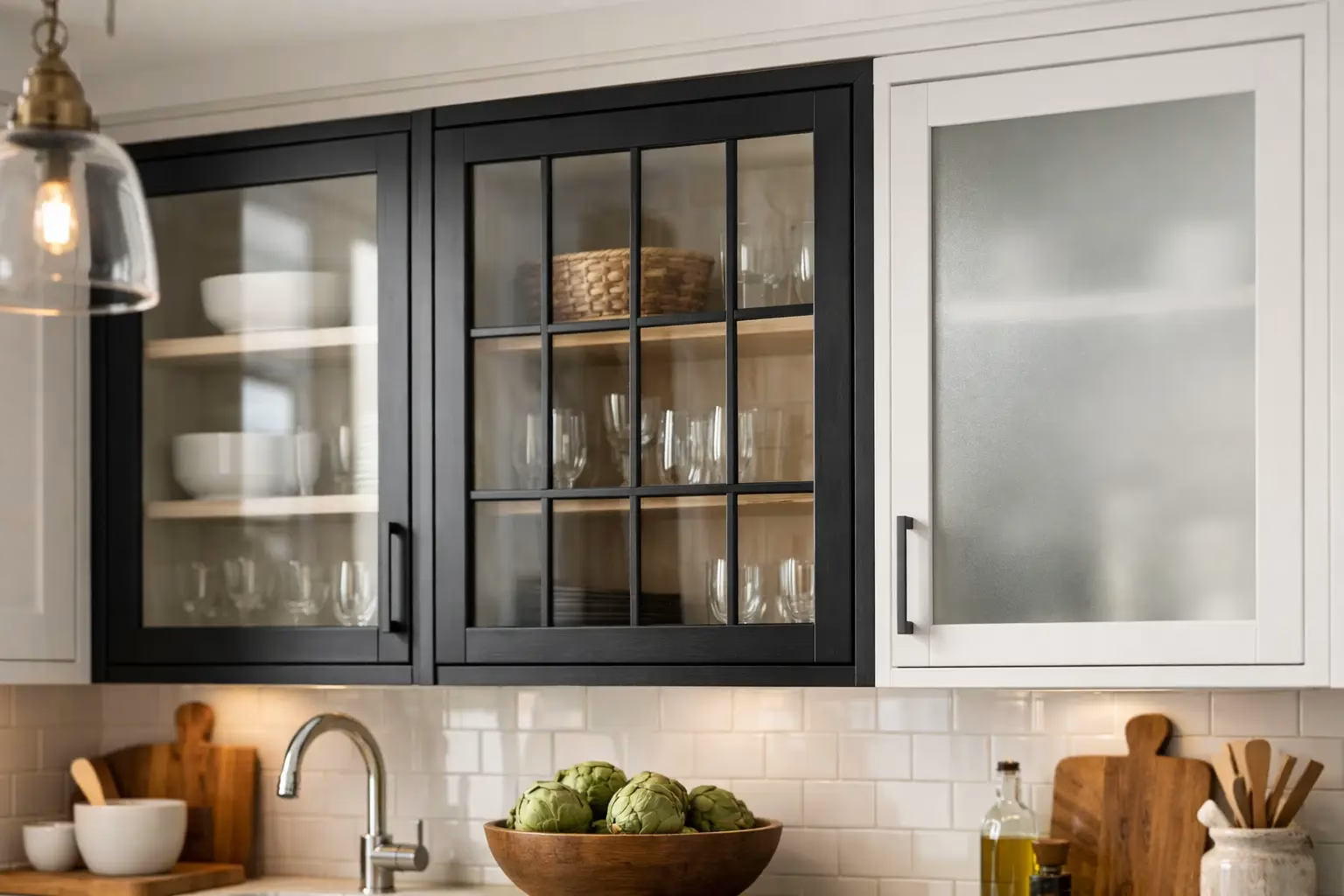
Full glass frame doors

A full glass frame door features a perimeter frame with one large glass opening in the center. This is the cleanest and most versatile option for many kitchens. It works well in traditional, transitional, and modern spaces because the final look shifts based on the frame profile and finish.

If you want to display dishes, glassware, or decorative serving pieces, this is often the best place to start. It gives you the most visibility and keeps the door design simple. The trade-off is that what is inside the cabinet stays more visible, so organization matters.

Mullion or divided-light frames

Mullion doors include wood dividers within the glass opening. These create multiple panes and add more architectural detail. They can feel formal, classic, cottage-inspired, or even slightly historic depending on the pattern.

This option is especially useful when you want glass cabinets to feel decorative rather than minimal. It can also be a smart fit for larger doors, since the divisions break up the scale nicely. On the other hand, mullions partially block the view into the cabinet, so if your goal is to showcase a clean collection of dishes, a single opening may work better.

Narrow-frame glass doors

A narrow-frame glass door puts more emphasis on the insert and less on the wood around it. This style often suits contemporary kitchens, home bars, offices, and built-ins where you want a lighter visual footprint.

The appeal is obvious: more glass, less bulk. But it is not always the best match for every room. In a very traditional kitchen with raised panel doors and ornate moldings, a narrow glass frame can feel out of step unless the overall design intentionally mixes styles.

Decorative profile frames

Some glass frame doors use more pronounced edge details, inside profiles, or routed shaping to match raised panel or more traditional cabinet styles. These are a strong choice when you are replacing or refacing only part of a kitchen and need the glass doors to coordinate with adjacent solid doors.

That continuity matters. A glass door should not look like an afterthought. If the rest of your cabinetry has a classic profile, choosing a complementary glass frame usually creates a more polished result than switching to something ultra-modern just because it looks good on its own.

Matching the frame style to the room

The right choice depends on what the room already has going for it. In kitchens with shaker doors, simple glass frames or light mullion patterns often fit best. They keep the look clean while adding interest. In more ornate or traditional kitchens, decorative profiles and divided-light frames tend to feel more at home.

Bathrooms and laundry rooms usually benefit from restraint. A clean frame with obscure or frosted glass can soften the cabinetry without making storage feel exposed. In a home office or built-in cabinet wall, glass frames can bring a furniture-like quality, especially when paired with thoughtful lighting and consistent hardware.

If you are refacing older cabinets, this is where custom sizing becomes especially valuable. Older cabinet boxes are not always standard, and forcing a stock solution into a non-standard opening can throw off the look. A properly sized custom frame keeps reveals even and the finished project looking intentional.

Glass type and frame design work together

Choosing from cabinet glass frame options is only half the decision. The glass insert changes the final effect.

Clear glass gives you the most open look and works well when the cabinet interior is tidy or styled. Frosted or obscure glass offers more privacy and is forgiving in everyday-use spaces. Seeded or textured glass adds character and can make a simple frame feel more distinctive.

The frame and glass should support each other. A highly decorative frame with heavily textured glass can sometimes feel too busy. A plain frame with clear glass can look crisp and timeless. If you want detail, it often helps to let either the frame or the glass be the main feature, not both competing at once.

Practical questions before you order

A beautiful cabinet door still has to perform well in real life. Before settling on a style, think about what you are storing, how often the doors get opened, and where they sit in the room.

In a high-use kitchen, glass doors near the range may need more frequent cleaning. In homes with children, lower glass cabinets may not be the first place to experiment. For upper cabinets, though, glass frame doors are often an easy win because they add style without getting in the way of daily function.

You should also think about visibility. Glass doors draw attention, which is great for dishes, stemware, or decor. It is less helpful for snack storage, plastic containers, or mismatched pantry items. Many homeowners get the best result by mixing solid doors and glass doors rather than converting everything.

When to use glass doors sparingly

One of the most common mistakes is using glass on too many cabinets at once. A few well-placed glass doors can create contrast and give the room a more custom feel. Too many can make the space feel cluttered, especially if the cabinet contents are varied.

Good locations include upper corner cabinets, cabinets flanking a range hood, a section above a coffee station, or built-ins around a dining or living area. These placements create visual rhythm without asking every cabinet to become a display cabinet.

If your kitchen is small, strategic use matters even more. A couple of glass-front doors can visually open the room. Filling every upper cabinet with glass can have the opposite effect if the shelves behind them look crowded.

Custom framing makes the finished look better

This is where a lot of DIY projects either look polished or look pieced together. Cabinet refacing gives you a major visual upgrade without replacing the boxes, but the finished result depends on precision. Frame proportions, profile consistency, and exact sizing all show once the doors are installed.

That is one reason many homeowners choose custom-built doors instead of trying to adapt stock pieces. With made-to-order sizing, you can match your cabinet layout, choose a frame style that fits the rest of the room, and get a result that feels tailored rather than close enough. For a project centered on appearance, that difference is worth paying attention to.

At TDM – The Door Maker, that custom approach is what helps DIY homeowners get a more professional-looking finish while still staying in control of the project.

Choosing cabinet glass frame options with confidence

If you want the safest choice, start with the style of your existing cabinetry and look for a glass frame that echoes it. If you want the biggest visual impact, use glass in a few focal-point locations and keep the rest of the doors solid. If you want a cleaner, more current look, lean toward simpler frames with larger glass openings.

The best cabinet glass frame options are not just attractive on a sample. They fit your cabinet size, support the room style, and make sense for how you actually use the space. When those details line up, glass-front cabinets stop feeling like a design extra and start looking like the feature that makes the whole room feel finished.

A good door does more than cover an opening. It helps your cabinets feel built for your home, not borrowed from a shelf.

FROM THE SAME CATEGORY

Sep 8 2026 BY Ksenija Lebec, Blog

Landlords: inspect cabinets, run vacancy based ROI, budget $1,000–$13,000, and plan 1–3 day refacing installs with bulk order tips.

Build a Door MADE TO FIT YOU!

What Cabinet Doors Fit Framed Cabinets?

What Cabinet Doors Fit Framed Cabinets?

If you are staring at older cabinet boxes and wondering what cabinet doors fit framed cabinets, the short answer is this: framed cabinets typically take overlay or inset cabinet doors sized around the face frame opening, not just the box itself. That detail matters more than most homeowners expect, because the wrong overlay, hinge choice, or measurement can throw off the entire look of a refacing project.

Framed cabinets are built with a face frame on the front of the cabinet box. That frame creates structure, but it also determines how the new doors sit, swing, and cover the opening. So when you shop for replacement doors, you are not just choosing a style. You are choosing how that style will work with the frame already in place.

What cabinet doors fit framed cabinets best?

In most cases, framed cabinets work best with overlay doors. These doors sit on top of the face frame and cover part of it when closed. This is the most common choice for cabinet refacing because it gives you flexibility in sizing, works with many hinge types, and delivers a clean finished look without changing the cabinet boxes.

Inset doors can also fit framed cabinets, but they are a more exacting option. Instead of laying over the frame, inset doors sit inside the frame opening. That creates a classic furniture-style look, but it requires very precise measuring and tighter installation tolerances. Even small inconsistencies in older cabinet frames can show up quickly with inset doors.

Partial overlay and full overlay are both possibilities on framed cabinets, but they create different visual results. Partial overlay leaves more of the face frame visible. Full overlay covers more of the frame and usually gives a more updated appearance. Neither is universally better. It depends on the style you want, the hinges you plan to use, and how much of the frame you want to see.

Why the face frame changes everything

With frameless cabinets, door sizing is based more directly on the cabinet box opening. Framed cabinets are different because the face frame becomes the reference point. That means your replacement door size has to account for how much overlay you want on each side of the frame opening.

For example, if your cabinet opening measures 12 inches wide by 24 inches high, the correct door size is rarely exactly 12 by 24. If you want a 1/2-inch overlay on all four sides, the finished door would typically be 13 by 25. If you want a larger overlay, the door gets larger too.

This is where many DIY projects go sideways. People measure the old door, reorder the same size, and assume that will work. Sometimes it does. Sometimes it does not, especially if the old doors were undersized, misaligned, or part of a previous repair. Measuring from the actual cabinet opening and face frame is the better approach.

Overlay doors for framed cabinets

Overlay doors are the practical favorite for most refacing projects. They are forgiving, versatile, and available in nearly every style, from simple shaker doors to raised panel and solid MDF designs.

A partial overlay door is a traditional choice and often pairs with visible hinges or standard concealed hinges designed for framed construction. It leaves a border of face frame showing around the door. That can be a good fit if you want to preserve a more classic kitchen look or match existing cabinetry in another part of the home.

A larger overlay creates a more current appearance. It reduces the amount of visible frame and can make older cabinets feel less dated without replacing the cabinet boxes. For many homeowners, this is the sweet spot – updated style, custom fit, and no full tear-out.

Inset doors for framed cabinets

Inset doors absolutely can fit framed cabinets, but they are not the easy path. The door must sit neatly within the frame opening with even reveals on all sides. On older cabinets, face frames are not always perfectly square, and that makes inset more challenging.

If you love the look, it can be worth it. Inset doors have a tailored, high-end feel that works especially well in traditional, transitional, and furniture-inspired spaces. Just know that they require more precision in both manufacturing and installation. If your goal is straightforward refacing with less room for adjustment, overlay is usually the safer choice.

How to tell what your framed cabinets need

The right answer depends on the cabinets you have now and the finish you want when the project is done. Start by looking at three things: the face frame opening, your hinge setup, and the amount of overlay on your existing doors.

If your current doors close over the frame and leave part of the frame visible, you likely have partial overlay doors. If they cover most of the frame, you likely have a larger overlay. If the doors sit flush inside the frame, they are inset.

Hinges offer clues too. Exposed decorative hinges are often used on partial overlay or inset doors. Concealed hinges can work with framed cabinets as well, but the hinge type has to match the overlay and the frame construction.

It is also worth asking whether you want to keep the same look or improve it. Matching your existing setup is one route. Upgrading from a smaller overlay to a larger one is another, and it is often a smart move if you are trying to modernize the room during refacing.

Measuring replacement doors for framed cabinets

When homeowners ask what cabinet doors fit framed cabinets, the real question is usually how to size them correctly. The process is simple once you know the logic behind it.

Measure the width and height of the cabinet opening, not just the old door. Then determine your desired overlay. Add that overlay amount to both sides of the opening width, and to both the top and bottom of the opening height.

So if the opening is 15 inches wide and 28 inches high, and you want a 1/2-inch overlay on all sides, your door size would be 16 by 29. If you want different overlay amounts because of cabinet spacing, adjoining doors, or drawer fronts, those numbers change accordingly.

Double doors need a little more attention. You have to account for the opening, the overlay on the outside edges, and the gap between the two doors in the center. That center reveal affects both appearance and function, especially on framed cabinets where alignment is more visible.

If your kitchen has older cabinets, measure more than one opening. Do not assume every cabinet is identical. Small variations are common, and custom sizing is one of the biggest advantages of ordering doors made for your exact project instead of forcing stock sizes to work.

Style matters, but fit matters first

Almost any door style can be made to fit framed cabinets if the sizing and construction are correct. Shaker, raised panel, recessed panel, slab, and beadboard styles can all work beautifully on framed cabinet boxes.

The bigger decision is how the style interacts with the overlay. A slim shaker profile with a larger overlay often feels clean and current. A more detailed raised panel with partial overlay leans traditional. Inset pairs well with both classic shaker and formal profiles, but only if the cabinet frames are suitable for that level of precision.

This is also where custom manufacturing makes a real difference. Older homes rarely follow standard dimensions perfectly, and refacing works best when doors are built to your measurements rather than selected from the closest available size. That is one reason many DIY homeowners choose custom replacement doors from specialists like TDM – The Door Maker instead of trying to adapt big-box options.

Common mistakes to avoid

The most common mistake is ordering based on old door size alone. Another is choosing hinges before settling on overlay, when the two decisions should work together. Homeowners also run into trouble when they ignore face frame irregularities, especially if they are aiming for inset doors.

There is also a visual mistake that shows up late in the process: mixing overlays without planning the overall look. One cabinet with a larger overlay beside another with a smaller one can make the run look inconsistent, even when each door fits individually.

A better approach is to decide on the finished appearance first, then measure and order accordingly. That gives you a result that looks intentional, not patched together.

The right fit is the one built for your cabinets

Framed cabinets are not limiting, but they are specific. They usually work best with overlay doors, can support inset doors when conditions are right, and always depend on careful measurement around the face frame. Once that part is handled correctly, you can focus on the more satisfying decisions like style, color, and the overall transformation.

A good refacing project does not start with tearing everything out. It starts with doors that fit the cabinets you already have – and fit them well enough to make the whole room feel new.

FROM THE SAME CATEGORY

Sep 8 2026 BY Ksenija Lebec, Blog

Landlords: inspect cabinets, run vacancy based ROI, budget $1,000–$13,000, and plan 1–3 day refacing installs with bulk order tips.

Build a Door MADE TO FIT YOU!

Solid Wood Cabinet Doors Versus MDF

Solid Wood Cabinet Doors Versus MDF

If you are planning a cabinet refacing project, the material choice matters more than most people expect. Solid wood cabinet doors versus MDF is not just a style question – it affects durability, finish quality, maintenance, cost, and how your cabinets will look a few years from now.

For many homeowners, this decision comes up right after measuring. You know the look you want. You may even know the color. But choosing between wood and MDF is where the project starts to feel real, because each material performs differently in everyday use. The best option depends on where the cabinets are going, what kind of finish you want, and how much wear the space gets.

Solid wood cabinet doors versus MDF: what changes in real life?

On paper, both materials can produce attractive cabinet doors. In real life, they behave very differently.

Solid wood is exactly what it sounds like – doors made from natural hardwood components. It has grain, character, and variation from piece to piece. That natural movement is part of what makes wood feel premium, but it also means wood expands and contracts with humidity changes.

MDF, or medium-density fiberboard, is an engineered wood product made from wood fibers and resin compressed into a dense, smooth panel. It does not have a visible grain pattern, and it stays more uniform across the surface. That consistency is one reason MDF is popular for painted cabinet doors.

If your goal is a stained finish that shows off natural grain, solid wood is the clear choice. If your goal is a smooth painted finish with minimal texture, MDF often has the advantage.

Appearance: painted versus stained makes a big difference

This is usually the first fork in the road. A lot of the wood-versus-MDF debate gets settled by your finish choice.

Solid wood brings warmth and natural variation that many homeowners want in kitchens, offices, and built-ins. Even when painted, wood can show some grain texture over time. Some people like that because it looks authentic and classic. Others want a cleaner, more uniform painted surface.

MDF is especially strong when the design calls for paint/thermofoil. Because the surface is smooth and free from grain, painted MDF doors can deliver a crisp, even look. That can be a great fit for modern kitchens, transitional styles, and projects where a sleek finish matters.

The trade-off is that MDF does not offer the visual depth of real wood. It is not the material for a stained, natural, or wood-tone finish. If you want the character of maple, oak, cherry, or another species, MDF will not give you that result.

Why painted shaker doors often start the MDF conversation

Many refacing customers are updating older raised-panel kitchens to a painted shaker style. That is exactly where MDF enters the discussion, because shaker doors in paint-grade applications often benefit from a smoother face and a more consistent finish.

Still, this is not an automatic win for MDF. If the kitchen gets heavy use, if the doors may take more impact, or if you simply prefer the substance and craftsmanship of real wood, solid wood remains a strong contender.

Durability and wear: strength depends on the kind of stress

Homeowners often assume solid wood is stronger in every way. That is not quite the full story.

Solid wood is durable, long-lasting, and better at resisting certain kinds of edge damage or impact. In busy kitchens, mudrooms, and family spaces, that matters. Wood can also be repaired more naturally in some cases, especially when the finish and species allow touch-ups.

MDF is dense and stable, but it can be more vulnerable at edges and corners if it takes a hard hit. A dent or chip in MDF may be harder to disguise. So if you have young kids, high-traffic cabinets, or doors that get a lot of rough handling, solid wood can feel more forgiving over time.

At the same time, MDF has one durability advantage that matters in painted applications. Because it does not have the same grain movement as wood, it is less prone to visible hairline cracking at joints on painted door styles. That is a real benefit if your top priority is a smooth, consistent painted finish.

Moisture and humidity: this part depends on the room

Kitchens and bathrooms are not identical environments, and material choice should reflect that.

Solid wood reacts to humidity. That does not make it a bad cabinet material – far from it. Quality wood doors have been used for generations. But wood is a natural material, and seasonal movement is normal. In spaces with fluctuating humidity, that movement can affect fit and finish over time.

MDF is dimensionally stable, which can be helpful in climate-controlled interiors. However, MDF is more vulnerable if exposed to significant water intrusion. If moisture gets into unfinished or damaged areas, the material can swell. That is why the quality of the finish and the environment both matter.

For a powder room or bathroom vanity, the better choice depends on ventilation and use. For a kitchen near a sink or dishwasher, careful finishing and proper maintenance are important no matter what material you choose. Neither material should be treated like it is immune to water damage.

Cost and value: cheaper upfront is not always better

Budget matters, especially when you are refacing an entire kitchen instead of replacing a few doors.

MDF is often more affordable than solid wood, particularly in painted door styles. If you are renovating on a budget and want a custom look without overspending, MDF can make sense. It gives homeowners access to a clean, finished appearance at a lower price point.

Solid wood typically costs more, but it also carries a different value proposition. You are paying for natural material, visible craftsmanship, and a look that many buyers still associate with higher-end cabinetry. If you plan to stay in your home for years, or if the room is a standout space where materials matter, the extra investment may feel worthwhile.

For many DIY renovators, the smartest move is not asking which material is best overall. It is asking which material gives the best return for this specific project.

Where each material tends to work best

Solid wood cabinet doors are often the better fit when you want a stained finish, a furniture-style look, more natural character, or stronger resistance to everyday bumps. They also appeal to homeowners who want a traditional or custom-built feel.

MDF tends to shine in painted applications, especially when the goal is a smooth surface and a more budget-conscious upgrade. It can be a practical choice for laundry rooms, offices, bathrooms, and kitchens where painted style is the priority.

This is why custom ordering matters. The right answer is not universal. One homeowner may want painted shaker doors for a bright kitchen refresh. Another may want warm wood tones for a built-in office wall. The material should support the finish, the room, and the long-term use.

How to choose without second-guessing yourself

A good decision usually comes down to four questions. Do you want paint or stain? How much wear will the doors get? How controlled is the room environment? And what matters more to you – the natural appeal of real wood or the smooth consistency of an engineered painted surface?

If you want stain, choose solid wood. If you want paint, compare the look you prefer with the level of use the cabinets will get. If you are after a sleek painted finish and want to manage costs, MDF may be the better fit. If you want natural character, stronger edge durability, and a more traditional cabinet feel, solid wood is hard to beat.

For many homeowners, cabinet refacing is about getting a custom result without replacing perfectly usable cabinet boxes. That makes material choice even more important, because the doors become the visible centerpiece of the project. At TDM – The Door Maker, that is why precision sizing and finish goals matter just as much as style selection.

The right cabinet door material should make your project feel better every time you open the room, not just better on order day. Choose the option that matches how you live, how you want the space to look, and how long you want that finish to keep working for you.

FROM THE SAME CATEGORY

Sep 8 2026 BY Ksenija Lebec, Blog

Landlords: inspect cabinets, run vacancy based ROI, budget $1,000–$13,000, and plan 1–3 day refacing installs with bulk order tips.

Build a Door MADE TO FIT YOU!

Kitchen Refacing Color Trends for 2026

Kitchen Refacing Color Trends for 2026

A kitchen can feel dated even when the cabinet boxes are still solid. That is why kitchen refacing color trends matter so much right now. The right door style and color can shift a room from tired to current without the cost, mess, and downtime of a full cabinet replacement.

For most homeowners, color is the biggest decision in a refacing project because it changes how the whole kitchen reads. It affects light, perceived size, resale appeal, and how premium the finished space feels. The good news is that current color trends are more flexible than the all-gray era. Homeowners are leaning warmer, more personal, and more intentional, which makes refacing a smart way to update the look without rebuilding the room from scratch.

What kitchen refacing color trends are really telling us

The biggest shift is not just about one hot shade replacing another. It is about moving away from cold, one-note kitchens and toward color choices that feel grounded, livable, and tailored to the home. That means warm neutrals are replacing stark tones in many spaces, rich colours are showing up on islands and lowers, and natural-looking wood tones are back in a serious way.

This is good news for DIY renovators because cabinet refacing gives you room to be selective. You do not have to accept stock colors in stock sizes. You can choose a finish that works with your counters, flooring, backsplash, and lighting, then order doors built to fit your existing cabinets correctly. That custom fit is what helps a color trend look polished instead of temporary.

Warm whites are replacing bright, sterile whites

White kitchens are not going away, but the version of white is changing. Bright blue-based whites can make a kitchen feel sharp or flat, especially under LED lighting. The newer direction is softer and warmer. Think creamy whites, off-whites, and light tones with a touch of beige or greige underneath.

These shades work well because they reflect light without feeling clinical. They also play more nicely with wood flooring, brass or black hardware, and warmer countertop patterns. If your kitchen has limited natural light, a warm white can still brighten the room while keeping it comfortable.

There is a trade-off, though. A very creamy white can look slightly yellow if paired with cooler backsplash tile or stark white walls. Samples matter here. What reads like a soft neutral online can shift once it is placed next to your fixed finishes.

Greige and taupe are taking over where gray used to be

For years, cool gray cabinets were the safe choice. Now many homeowners want something with more depth and less chill. That is where greige, taupe, mushroom, and other in-between neutrals are gaining traction.

These colors are practical because they bridge warm and cool elements. If you have stainless appliances, mixed metals, or a countertop that pulls several undertones, greige can tie the room together. It also tends to hide everyday dust and smudges better than flat white or very dark colors.

This is one of the strongest kitchen refacing color trends for homeowners who want longevity. A well-chosen greige does not scream trend, but it still feels current. It is especially effective on Shaker-style doors, where the simple profile lets the color do the work.

Deep green has become a standout cabinet color

Green has moved from accent color to main character. Deep olive, forest, and muted sage tones are showing up on full kitchens, not just islands. The appeal is easy to understand. Green adds richness without feeling as heavy as black, and it brings a natural, grounded look that pairs well with wood, stone, and brushed metal finishes.

In refacing projects, green is often strongest on lower cabinets or paired with a lighter upper color. That combination keeps the room open while still adding contrast. In larger kitchens with good light, an all-over green can look custom and high-end.

Still, green is not one-size-fits-all. A dark green in a kitchen with poor lighting may feel too dense, especially with heavy door styles. If you want the color but are unsure about committing fully, using it on the island or lowers first is a smart middle ground.

Blue is getting softer and more muted

Navy had a long run, and it still has a place, but the trend is shifting toward more softened blues. Dusty blue, blue-gray, and muted slate tones feel calmer and easier to live with than highly saturated shades.

These colors work especially well in transitional kitchens where you want some personality without overpowering the space. They also complement white counters, light quartz patterns, and chrome or brushed nickel hardware.

If your kitchen opens into the main living area, a muted blue can be easier to coordinate with surrounding rooms than a bold jewel tone. That matters in open floor plans, where cabinet color affects more than just the kitchen.

Natural wood looks are back, but cleaner than before

One of the most important trends in cabinet design is the return of wood tones. This does not mean orange oak from decades past. The newer look is cleaner, lighter, and more refined. White oak-inspired tones, natural-looking finishes, and medium wood colors with visible grain are coming back because they add texture and warmth that painted cabinets sometimes lack.

For many homeowners, wood-grain doors are the answer to trend fatigue. They feel current, but they also feel timeless. They can lean modern, Scandinavian, transitional, or even rustic depending on the door profile and the surrounding materials.

This approach works particularly well if you want your kitchen to feel less manufactured. It also helps soften hard surfaces like stone counters and tile backsplashes. If your home already has natural wood beams, flooring, or built-ins, refacing with a complementary wood tone can make the entire house feel more cohesive.

Two-tone kitchens are staying, but the contrast is smarter

Two-tone kitchens are still popular, but the combinations are becoming more balanced. Instead of sharp black-and-white contrast, homeowners are choosing pairings that feel layered and intentional. Warm white uppers with taupe lowers, light wood uppers with green lowers, or a solid color perimeter with a wood island all feel updated without trying too hard.

This is one of the most useful options in a refacing project because it lets you solve visual problems. Dark lowers can anchor the room and hide wear. Lighter uppers can keep the kitchen feeling open. An island in a different color can create a focal point without forcing the whole room into a bold finish.

The key is restraint. Too many colors or too much contrast can make a kitchen feel chopped up. Usually, two finishes are enough.

How to choose a trend that will still look good in five years

Start with what is not changing. Your flooring, countertops, backsplash, and wall color will have a huge effect on how a cabinet finish looks. A trend only works if it fits the fixed elements already in the room.

Next, think about the amount of light in your kitchen. Dark cabinet colors can look dramatic and beautiful, but they need enough light to show their depth. Soft neutrals and natural wood tones are generally more forgiving in smaller or darker kitchens.

Door style matters too. A modern slab door in deep taupe gives a very different result than the same color on a detailed raised-panel profile. If you want a more timeless result, simpler door styles usually leave more room for color to shine.

And be honest about maintenance. Very dark finishes can show dust, fingerprints, and scratches more readily. Very light finishes can show spills and wear around handles. There is no perfect answer, but there is usually a best fit for how your household actually lives.

Why custom sizing makes color choices look better

Even the best cabinet color can fall short if the finished project does not fit correctly. Gaps, uneven reveals, and poorly matched replacement pieces make a kitchen look patched together. Precision matters because color draws attention to form. When the lines are clean, the finish looks more expensive.

That is where made-to-order cabinet doors make a difference. With custom sizing, you are not forcing your kitchen to work around stock options. You are choosing the style and color you want, then building around the exact measurements of your existing cabinet boxes. For DIY homeowners, that can be the difference between a project that looks homemade and one that looks professionally finished.

If you are comparing refacing to full replacement, this is also where the value becomes clear. You can follow current kitchen refacing color trends, get a tailored fit, and transform the room without paying for a complete tear-out.

The best color trend is the one that makes your kitchen feel intentional every time you walk in. Choose the finish that fits your home, your light, and your long-term taste, and your refacing project will feel current long after the trend cycle moves on.

FROM THE SAME CATEGORY

Sep 8 2026 BY Ksenija Lebec, Blog

Landlords: inspect cabinets, run vacancy based ROI, budget $1,000–$13,000, and plan 1–3 day refacing installs with bulk order tips.

Build a Door MADE TO FIT YOU!