Blog

What Cabinet Doors Fit Framed Cabinets?

What Cabinet Doors Fit Framed Cabinets?

If you are staring at older cabinet boxes and wondering what cabinet doors fit framed cabinets, the short answer is this: framed cabinets typically take overlay or inset cabinet doors sized around the face frame opening, not just the box itself. That detail matters more than most homeowners expect, because the wrong overlay, hinge choice, or measurement can throw off the entire look of a refacing project.

Framed cabinets are built with a face frame on the front of the cabinet box. That frame creates structure, but it also determines how the new doors sit, swing, and cover the opening. So when you shop for replacement doors, you are not just choosing a style. You are choosing how that style will work with the frame already in place.

What cabinet doors fit framed cabinets best?

In most cases, framed cabinets work best with overlay doors. These doors sit on top of the face frame and cover part of it when closed. This is the most common choice for cabinet refacing because it gives you flexibility in sizing, works with many hinge types, and delivers a clean finished look without changing the cabinet boxes.

Inset doors can also fit framed cabinets, but they are a more exacting option. Instead of laying over the frame, inset doors sit inside the frame opening. That creates a classic furniture-style look, but it requires very precise measuring and tighter installation tolerances. Even small inconsistencies in older cabinet frames can show up quickly with inset doors.

Partial overlay and full overlay are both possibilities on framed cabinets, but they create different visual results. Partial overlay leaves more of the face frame visible. Full overlay covers more of the frame and usually gives a more updated appearance. Neither is universally better. It depends on the style you want, the hinges you plan to use, and how much of the frame you want to see.

Why the face frame changes everything

With frameless cabinets, door sizing is based more directly on the cabinet box opening. Framed cabinets are different because the face frame becomes the reference point. That means your replacement door size has to account for how much overlay you want on each side of the frame opening.

For example, if your cabinet opening measures 12 inches wide by 24 inches high, the correct door size is rarely exactly 12 by 24. If you want a 1/2-inch overlay on all four sides, the finished door would typically be 13 by 25. If you want a larger overlay, the door gets larger too.

This is where many DIY projects go sideways. People measure the old door, reorder the same size, and assume that will work. Sometimes it does. Sometimes it does not, especially if the old doors were undersized, misaligned, or part of a previous repair. Measuring from the actual cabinet opening and face frame is the better approach.

Overlay doors for framed cabinets

Overlay doors are the practical favorite for most refacing projects. They are forgiving, versatile, and available in nearly every style, from simple shaker doors to raised panel and solid MDF designs.

A partial overlay door is a traditional choice and often pairs with visible hinges or standard concealed hinges designed for framed construction. It leaves a border of face frame showing around the door. That can be a good fit if you want to preserve a more classic kitchen look or match existing cabinetry in another part of the home.

A larger overlay creates a more current appearance. It reduces the amount of visible frame and can make older cabinets feel less dated without replacing the cabinet boxes. For many homeowners, this is the sweet spot – updated style, custom fit, and no full tear-out.

Inset doors for framed cabinets

Inset doors absolutely can fit framed cabinets, but they are not the easy path. The door must sit neatly within the frame opening with even reveals on all sides. On older cabinets, face frames are not always perfectly square, and that makes inset more challenging.

If you love the look, it can be worth it. Inset doors have a tailored, high-end feel that works especially well in traditional, transitional, and furniture-inspired spaces. Just know that they require more precision in both manufacturing and installation. If your goal is straightforward refacing with less room for adjustment, overlay is usually the safer choice.

How to tell what your framed cabinets need

The right answer depends on the cabinets you have now and the finish you want when the project is done. Start by looking at three things: the face frame opening, your hinge setup, and the amount of overlay on your existing doors.

If your current doors close over the frame and leave part of the frame visible, you likely have partial overlay doors. If they cover most of the frame, you likely have a larger overlay. If the doors sit flush inside the frame, they are inset.

Hinges offer clues too. Exposed decorative hinges are often used on partial overlay or inset doors. Concealed hinges can work with framed cabinets as well, but the hinge type has to match the overlay and the frame construction.

It is also worth asking whether you want to keep the same look or improve it. Matching your existing setup is one route. Upgrading from a smaller overlay to a larger one is another, and it is often a smart move if you are trying to modernize the room during refacing.

Measuring replacement doors for framed cabinets

When homeowners ask what cabinet doors fit framed cabinets, the real question is usually how to size them correctly. The process is simple once you know the logic behind it.

Measure the width and height of the cabinet opening, not just the old door. Then determine your desired overlay. Add that overlay amount to both sides of the opening width, and to both the top and bottom of the opening height.

So if the opening is 15 inches wide and 28 inches high, and you want a 1/2-inch overlay on all sides, your door size would be 16 by 29. If you want different overlay amounts because of cabinet spacing, adjoining doors, or drawer fronts, those numbers change accordingly.

Double doors need a little more attention. You have to account for the opening, the overlay on the outside edges, and the gap between the two doors in the center. That center reveal affects both appearance and function, especially on framed cabinets where alignment is more visible.

If your kitchen has older cabinets, measure more than one opening. Do not assume every cabinet is identical. Small variations are common, and custom sizing is one of the biggest advantages of ordering doors made for your exact project instead of forcing stock sizes to work.

Style matters, but fit matters first

Almost any door style can be made to fit framed cabinets if the sizing and construction are correct. Shaker, raised panel, recessed panel, slab, and beadboard styles can all work beautifully on framed cabinet boxes.

The bigger decision is how the style interacts with the overlay. A slim shaker profile with a larger overlay often feels clean and current. A more detailed raised panel with partial overlay leans traditional. Inset pairs well with both classic shaker and formal profiles, but only if the cabinet frames are suitable for that level of precision.

This is also where custom manufacturing makes a real difference. Older homes rarely follow standard dimensions perfectly, and refacing works best when doors are built to your measurements rather than selected from the closest available size. That is one reason many DIY homeowners choose custom replacement doors from specialists like TDM – The Door Maker instead of trying to adapt big-box options.

Common mistakes to avoid

The most common mistake is ordering based on old door size alone. Another is choosing hinges before settling on overlay, when the two decisions should work together. Homeowners also run into trouble when they ignore face frame irregularities, especially if they are aiming for inset doors.

There is also a visual mistake that shows up late in the process: mixing overlays without planning the overall look. One cabinet with a larger overlay beside another with a smaller one can make the run look inconsistent, even when each door fits individually.

A better approach is to decide on the finished appearance first, then measure and order accordingly. That gives you a result that looks intentional, not patched together.

The right fit is the one built for your cabinets

Framed cabinets are not limiting, but they are specific. They usually work best with overlay doors, can support inset doors when conditions are right, and always depend on careful measurement around the face frame. Once that part is handled correctly, you can focus on the more satisfying decisions like style, color, and the overall transformation.

A good refacing project does not start with tearing everything out. It starts with doors that fit the cabinets you already have – and fit them well enough to make the whole room feel new.
FROM THE SAME CATEGORY

Jun 11 2026 BY Ksenija Lebec, Blog

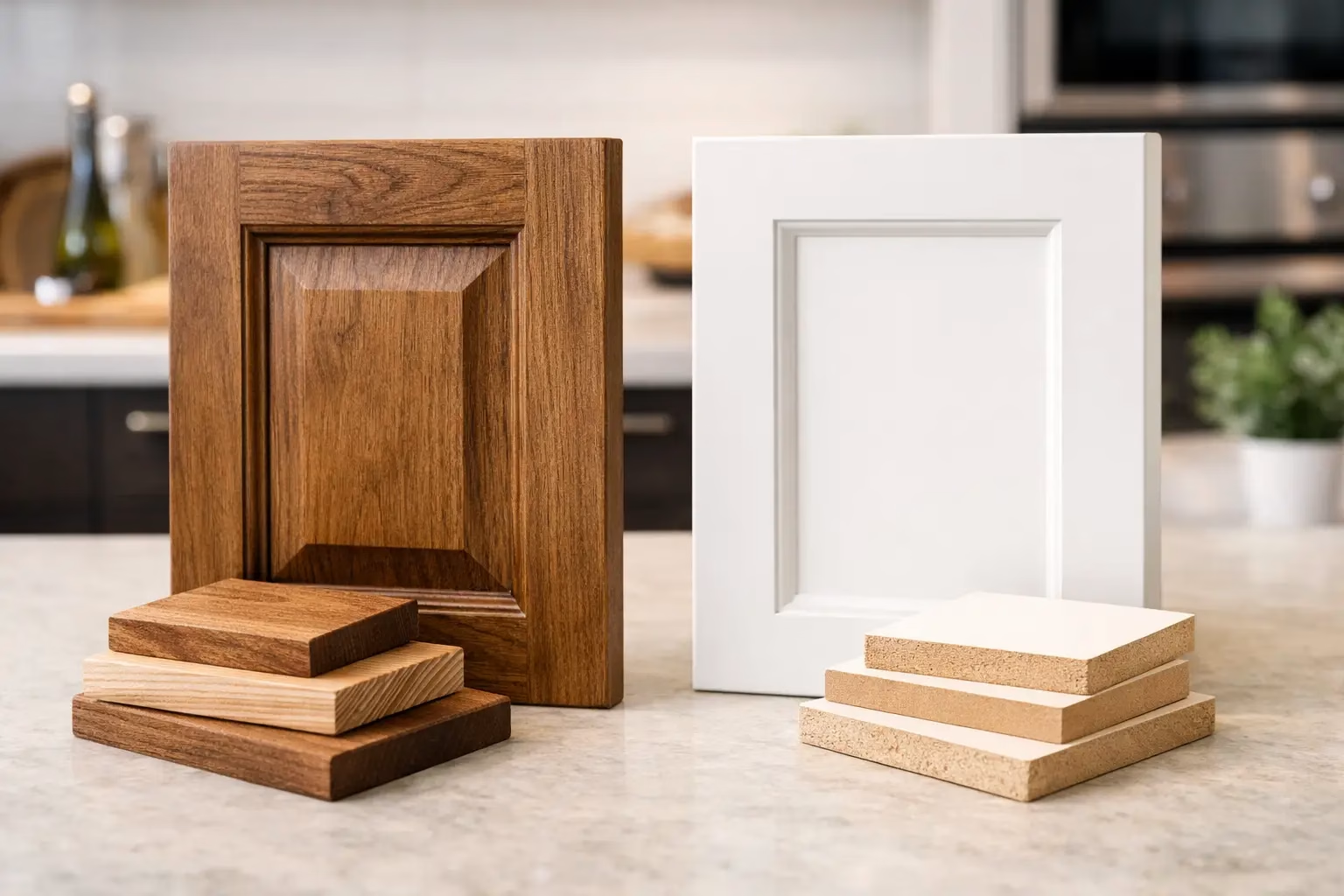
Comparing solid wood cabinet doors versus MDF? Learn the real differences in durability, cost, paint finish, moisture resistance, and value.

Jun 9 2026 BY Ksenija Lebec, Blog

See kitchen refacing color trends for 2026, from warm whites to deep greens, and learn how to choose cabinet colors that fit your space and budget.

Jun 6 2026 BY Ksenija Lebec, Blog

Find the best cabinet doors for bathrooms with smart picks for style, moisture resistance, and budget-friendly refacing results that last.

Build a Door MADE TO FIT YOU

Solid Wood Cabinet Doors Versus MDF

Solid Wood Cabinet Doors Versus MDF

If you are planning a cabinet refacing project, the material choice matters more than most people expect. Solid wood cabinet doors versus MDF is not just a style question – it affects durability, finish quality, maintenance, cost, and how your cabinets will look a few years from now.

For many homeowners, this decision comes up right after measuring. You know the look you want. You may even know the color. But choosing between wood and MDF is where the project starts to feel real, because each material performs differently in everyday use. The best option depends on where the cabinets are going, what kind of finish you want, and how much wear the space gets.

Solid wood cabinet doors versus MDF: what changes in real life?

On paper, both materials can produce attractive cabinet doors. In real life, they behave very differently.

Solid wood is exactly what it sounds like – doors made from natural hardwood components. It has grain, character, and variation from piece to piece. That natural movement is part of what makes wood feel premium, but it also means wood expands and contracts with humidity changes.

MDF, or medium-density fiberboard, is an engineered wood product made from wood fibers and resin compressed into a dense, smooth panel. It does not have a visible grain pattern, and it stays more uniform across the surface. That consistency is one reason MDF is popular for painted cabinet doors.

If your goal is a stained finish that shows off natural grain, solid wood is the clear choice. If your goal is a smooth painted finish with minimal texture, MDF often has the advantage.

Appearance: painted versus stained makes a big difference

This is usually the first fork in the road. A lot of the wood-versus-MDF debate gets settled by your finish choice.

Solid wood brings warmth and natural variation that many homeowners want in kitchens, offices, and built-ins. Even when painted, wood can show some grain texture over time. Some people like that because it looks authentic and classic. Others want a cleaner, more uniform painted surface.

MDF is especially strong when the design calls for paint/thermofoil. Because the surface is smooth and free from grain, painted MDF doors can deliver a crisp, even look. That can be a great fit for modern kitchens, transitional styles, and projects where a sleek finish matters.

The trade-off is that MDF does not offer the visual depth of real wood. It is not the material for a stained, natural, or wood-tone finish. If you want the character of maple, oak, cherry, or another species, MDF will not give you that result.

Why painted shaker doors often start the MDF conversation

Many refacing customers are updating older raised-panel kitchens to a painted shaker style. That is exactly where MDF enters the discussion, because shaker doors in paint-grade applications often benefit from a smoother face and a more consistent finish.

Still, this is not an automatic win for MDF. If the kitchen gets heavy use, if the doors may take more impact, or if you simply prefer the substance and craftsmanship of real wood, solid wood remains a strong contender.

Durability and wear: strength depends on the kind of stress

Homeowners often assume solid wood is stronger in every way. That is not quite the full story.

Solid wood is durable, long-lasting, and better at resisting certain kinds of edge damage or impact. In busy kitchens, mudrooms, and family spaces, that matters. Wood can also be repaired more naturally in some cases, especially when the finish and species allow touch-ups.

MDF is dense and stable, but it can be more vulnerable at edges and corners if it takes a hard hit. A dent or chip in MDF may be harder to disguise. So if you have young kids, high-traffic cabinets, or doors that get a lot of rough handling, solid wood can feel more forgiving over time.

At the same time, MDF has one durability advantage that matters in painted applications. Because it does not have the same grain movement as wood, it is less prone to visible hairline cracking at joints on painted door styles. That is a real benefit if your top priority is a smooth, consistent painted finish.

Moisture and humidity: this part depends on the room

Kitchens and bathrooms are not identical environments, and material choice should reflect that.

Solid wood reacts to humidity. That does not make it a bad cabinet material – far from it. Quality wood doors have been used for generations. But wood is a natural material, and seasonal movement is normal. In spaces with fluctuating humidity, that movement can affect fit and finish over time.

MDF is dimensionally stable, which can be helpful in climate-controlled interiors. However, MDF is more vulnerable if exposed to significant water intrusion. If moisture gets into unfinished or damaged areas, the material can swell. That is why the quality of the finish and the environment both matter.

For a powder room or bathroom vanity, the better choice depends on ventilation and use. For a kitchen near a sink or dishwasher, careful finishing and proper maintenance are important no matter what material you choose. Neither material should be treated like it is immune to water damage.

Cost and value: cheaper upfront is not always better

Budget matters, especially when you are refacing an entire kitchen instead of replacing a few doors.

MDF is often more affordable than solid wood, particularly in painted door styles. If you are renovating on a budget and want a custom look without overspending, MDF can make sense. It gives homeowners access to a clean, finished appearance at a lower price point.

Solid wood typically costs more, but it also carries a different value proposition. You are paying for natural material, visible craftsmanship, and a look that many buyers still associate with higher-end cabinetry. If you plan to stay in your home for years, or if the room is a standout space where materials matter, the extra investment may feel worthwhile.

For many DIY renovators, the smartest move is not asking which material is best overall. It is asking which material gives the best return for this specific project.

Where each material tends to work best

Solid wood cabinet doors are often the better fit when you want a stained finish, a furniture-style look, more natural character, or stronger resistance to everyday bumps. They also appeal to homeowners who want a traditional or custom-built feel.

MDF tends to shine in painted applications, especially when the goal is a smooth surface and a more budget-conscious upgrade. It can be a practical choice for laundry rooms, offices, bathrooms, and kitchens where painted style is the priority.

This is why custom ordering matters. The right answer is not universal. One homeowner may want painted shaker doors for a bright kitchen refresh. Another may want warm wood tones for a built-in office wall. The material should support the finish, the room, and the long-term use.

How to choose without second-guessing yourself

A good decision usually comes down to four questions. Do you want paint or stain? How much wear will the doors get? How controlled is the room environment? And what matters more to you – the natural appeal of real wood or the smooth consistency of an engineered painted surface?

If you want stain, choose solid wood. If you want paint, compare the look you prefer with the level of use the cabinets will get. If you are after a sleek painted finish and want to manage costs, MDF may be the better fit. If you want natural character, stronger edge durability, and a more traditional cabinet feel, solid wood is hard to beat.

For many homeowners, cabinet refacing is about getting a custom result without replacing perfectly usable cabinet boxes. That makes material choice even more important, because the doors become the visible centerpiece of the project. At TDM – The Door Maker, that is why precision sizing and finish goals matter just as much as style selection.

The right cabinet door material should make your project feel better every time you open the room, not just better on order day. Choose the option that matches how you live, how you want the space to look, and how long you want that finish to keep working for you.

FROM THE SAME CATEGORY

Jun 15 2026 BY Ksenija Lebec, Blog

Learn what cabinet doors fit framed cabinets, how overlay affects sizing, and how to choose the right custom door style for a clean refacing result.

Jun 9 2026 BY Ksenija Lebec, Blog

See kitchen refacing color trends for 2026, from warm whites to deep greens, and learn how to choose cabinet colors that fit your space and budget.

Jun 6 2026 BY Ksenija Lebec, Blog

Find the best cabinet doors for bathrooms with smart picks for style, moisture resistance, and budget-friendly refacing results that last.

Build a Door MADE TO FIT YOU

Kitchen Refacing Color Trends for 2026

Kitchen Refacing Color Trends for 2026

A kitchen can feel dated even when the cabinet boxes are still solid. That is why kitchen refacing color trends matter so much right now. The right door style and color can shift a room from tired to current without the cost, mess, and downtime of a full cabinet replacement.

For most homeowners, color is the biggest decision in a refacing project because it changes how the whole kitchen reads. It affects light, perceived size, resale appeal, and how premium the finished space feels. The good news is that current color trends are more flexible than the all-gray era. Homeowners are leaning warmer, more personal, and more intentional, which makes refacing a smart way to update the look without rebuilding the room from scratch.

What kitchen refacing color trends are really telling us

The biggest shift is not just about one hot shade replacing another. It is about moving away from cold, one-note kitchens and toward color choices that feel grounded, livable, and tailored to the home. That means warm neutrals are replacing stark tones in many spaces, rich colours are showing up on islands and lowers, and natural-looking wood tones are back in a serious way.

This is good news for DIY renovators because cabinet refacing gives you room to be selective. You do not have to accept stock colors in stock sizes. You can choose a finish that works with your counters, flooring, backsplash, and lighting, then order doors built to fit your existing cabinets correctly. That custom fit is what helps a color trend look polished instead of temporary.

Warm whites are replacing bright, sterile whites

White kitchens are not going away, but the version of white is changing. Bright blue-based whites can make a kitchen feel sharp or flat, especially under LED lighting. The newer direction is softer and warmer. Think creamy whites, off-whites, and light tones with a touch of beige or greige underneath.

These shades work well because they reflect light without feeling clinical. They also play more nicely with wood flooring, brass or black hardware, and warmer countertop patterns. If your kitchen has limited natural light, a warm white can still brighten the room while keeping it comfortable.

There is a trade-off, though. A very creamy white can look slightly yellow if paired with cooler backsplash tile or stark white walls. Samples matter here. What reads like a soft neutral online can shift once it is placed next to your fixed finishes.

Greige and taupe are taking over where gray used to be

For years, cool gray cabinets were the safe choice. Now many homeowners want something with more depth and less chill. That is where greige, taupe, mushroom, and other in-between neutrals are gaining traction.

These colors are practical because they bridge warm and cool elements. If you have stainless appliances, mixed metals, or a countertop that pulls several undertones, greige can tie the room together. It also tends to hide everyday dust and smudges better than flat white or very dark colors.

This is one of the strongest kitchen refacing color trends for homeowners who want longevity. A well-chosen greige does not scream trend, but it still feels current. It is especially effective on Shaker-style doors, where the simple profile lets the color do the work.

Deep green has become a standout cabinet color

Green has moved from accent color to main character. Deep olive, forest, and muted sage tones are showing up on full kitchens, not just islands. The appeal is easy to understand. Green adds richness without feeling as heavy as black, and it brings a natural, grounded look that pairs well with wood, stone, and brushed metal finishes.

In refacing projects, green is often strongest on lower cabinets or paired with a lighter upper color. That combination keeps the room open while still adding contrast. In larger kitchens with good light, an all-over green can look custom and high-end.

Still, green is not one-size-fits-all. A dark green in a kitchen with poor lighting may feel too dense, especially with heavy door styles. If you want the color but are unsure about committing fully, using it on the island or lowers first is a smart middle ground.

Blue is getting softer and more muted

Navy had a long run, and it still has a place, but the trend is shifting toward more softened blues. Dusty blue, blue-gray, and muted slate tones feel calmer and easier to live with than highly saturated shades.

These colors work especially well in transitional kitchens where you want some personality without overpowering the space. They also complement white counters, light quartz patterns, and chrome or brushed nickel hardware.

If your kitchen opens into the main living area, a muted blue can be easier to coordinate with surrounding rooms than a bold jewel tone. That matters in open floor plans, where cabinet color affects more than just the kitchen.

Natural wood looks are back, but cleaner than before

One of the most important trends in cabinet design is the return of wood tones. This does not mean orange oak from decades past. The newer look is cleaner, lighter, and more refined. White oak-inspired tones, natural-looking finishes, and medium wood colors with visible grain are coming back because they add texture and warmth that painted cabinets sometimes lack.

For many homeowners, wood-grain doors are the answer to trend fatigue. They feel current, but they also feel timeless. They can lean modern, Scandinavian, transitional, or even rustic depending on the door profile and the surrounding materials.

This approach works particularly well if you want your kitchen to feel less manufactured. It also helps soften hard surfaces like stone counters and tile backsplashes. If your home already has natural wood beams, flooring, or built-ins, refacing with a complementary wood tone can make the entire house feel more cohesive.

Two-tone kitchens are staying, but the contrast is smarter

Two-tone kitchens are still popular, but the combinations are becoming more balanced. Instead of sharp black-and-white contrast, homeowners are choosing pairings that feel layered and intentional. Warm white uppers with taupe lowers, light wood uppers with green lowers, or a solid color perimeter with a wood island all feel updated without trying too hard.

This is one of the most useful options in a refacing project because it lets you solve visual problems. Dark lowers can anchor the room and hide wear. Lighter uppers can keep the kitchen feeling open. An island in a different color can create a focal point without forcing the whole room into a bold finish.

The key is restraint. Too many colors or too much contrast can make a kitchen feel chopped up. Usually, two finishes are enough.

How to choose a trend that will still look good in five years

Start with what is not changing. Your flooring, countertops, backsplash, and wall color will have a huge effect on how a cabinet finish looks. A trend only works if it fits the fixed elements already in the room.

Next, think about the amount of light in your kitchen. Dark cabinet colors can look dramatic and beautiful, but they need enough light to show their depth. Soft neutrals and natural wood tones are generally more forgiving in smaller or darker kitchens.

Door style matters too. A modern slab door in deep taupe gives a very different result than the same color on a detailed raised-panel profile. If you want a more timeless result, simpler door styles usually leave more room for color to shine.

And be honest about maintenance. Very dark finishes can show dust, fingerprints, and scratches more readily. Very light finishes can show spills and wear around handles. There is no perfect answer, but there is usually a best fit for how your household actually lives.

Why custom sizing makes color choices look better

Even the best cabinet color can fall short if the finished project does not fit correctly. Gaps, uneven reveals, and poorly matched replacement pieces make a kitchen look patched together. Precision matters because color draws attention to form. When the lines are clean, the finish looks more expensive.

That is where made-to-order cabinet doors make a difference. With custom sizing, you are not forcing your kitchen to work around stock options. You are choosing the style and color you want, then building around the exact measurements of your existing cabinet boxes. For DIY homeowners, that can be the difference between a project that looks homemade and one that looks professionally finished.

If you are comparing refacing to full replacement, this is also where the value becomes clear. You can follow current kitchen refacing color trends, get a tailored fit, and transform the room without paying for a complete tear-out.

The best color trend is the one that makes your kitchen feel intentional every time you walk in. Choose the finish that fits your home, your light, and your long-term taste, and your refacing project will feel current long after the trend cycle moves on.

FROM THE SAME CATEGORY

Jun 15 2026 BY Ksenija Lebec, Blog

Learn what cabinet doors fit framed cabinets, how overlay affects sizing, and how to choose the right custom door style for a clean refacing result.

Jun 11 2026 BY Ksenija Lebec, Blog

Comparing solid wood cabinet doors versus MDF? Learn the real differences in durability, cost, paint finish, moisture resistance, and value.

Jun 6 2026 BY Ksenija Lebec, Blog

Find the best cabinet doors for bathrooms with smart picks for style, moisture resistance, and budget-friendly refacing results that last.

Build a Door MADE TO FIT YOU

Best Cabinet Doors for Bathrooms

Best Cabinet Doors for Bathrooms

Bathroom cabinets fail in predictable ways. The finish starts to dull near the sink, corners take on moisture, and a once-clean style can suddenly make the whole room feel dated. If you’re comparing the best cabinet doors for bathrooms, the right choice comes down to more than looks. You need a door style and material that can handle humidity, fit your existing cabinet boxes precisely, and give the room an updated finish without pushing you into a full remodel.

For most homeowners, that means balancing three things at once – moisture resistance, easy maintenance, and the design impact you want from a relatively small space. A bathroom is not a kitchen, but it still sees daily wear, frequent cleaning, and plenty of temperature swings. Choosing well here pays off every single day.

What makes the best cabinet doors for bathrooms?

The best bathroom cabinet doors are the ones that match the room’s conditions and your renovation goals. In a busy family bathroom, durability and easy cleanup usually matter most. In a powder room, style may carry more weight because the cabinet is part of the overall look guests notice.

Humidity is the first factor to respect. Bathrooms naturally deal with steam, splashes, and damp air, especially if ventilation is not ideal. That doesn’t mean every bathroom needs ultra-industrial materials, but it does mean you should be cautious with anything that can swell, crack, or wear unevenly when exposed to moisture over time.

The second factor is scale. Many bathroom vanities are smaller than kitchen cabinet runs, so the door style has a stronger visual effect. A heavy, ornate door can make a compact vanity feel crowded. A clean profile often helps the room feel larger, brighter, and more current.

The third factor is fit. Bathroom cabinetry in older homes often comes with odd dimensions, and stock replacements do not always line up cleanly. Custom-sized doors matter here because uneven reveals and poor alignment are much more obvious in a small room.

Material matters more in bathrooms than most people expect

If you want cabinet doors that look good and hold up, start with the door construction and surface finish.

Solid wood remains a popular choice because it offers a high-end appearance and can be crafted in a wide range of styles. It is a strong option for bathrooms when it is properly finished and maintained, especially in well-ventilated spaces. The trade-off is that wood naturally responds to moisture changes. In a bathroom with constant steam and poor airflow, that movement can become more noticeable over time.

MDF is often a smart option for painted bathroom cabinet doors because it provides a smooth, consistent surface and resists the grain telegraphing you sometimes see with wood under paint. For homeowners who want a crisp painted Shaker or a clean contemporary profile, MDF can deliver a very polished look. The main caution is exposure. While finished MDF doors can perform well, standing water and damaged edges are never a good mix.

Rigid thermofoil and other PVC-based surfaces are especially appealing in bathrooms because they offer strong moisture resistance and easy cleaning. If your priority is low maintenance and a durable finish, this category deserves serious attention. It also works well for homeowners who want a modern appearance without the maintenance expectations of painted wood.

So what is the best material? It depends on the bathroom. For a primary bath with heavy daily use, moisture-resistant, easy-clean surfaces often make the most practical sense. For a guest bath or powder room, you may have more room to prioritize a specific wood species or decorative detail.

Best cabinet door styles for bathrooms

Style has to work with the size of the room. In bathrooms, simpler profiles usually age better and make the space feel cleaner.

Shaker doors

Shaker doors are one of the safest and strongest choices for bathroom refacing. They have enough detail to feel finished, but not so much that they look busy on a small vanity. They work well in traditional, transitional, farmhouse, and modern spaces depending on the width of the frame and the color you choose.

For many homeowners, Shaker lands in the sweet spot. It updates the room without locking you into a trend that may feel dated in a few years.

Slim-frame and modern flat panel doors

If your bathroom is small, flat panel or slim-frame doors can make it feel more open. These styles suit contemporary spaces and pair well with simple hardware, light finishes, and floating vanity looks. They are also easy to wipe down because there are fewer grooves and corners to collect dust or residue.

This is often the best direction if you want a calm, minimal look.

Raised panel doors

Raised panel doors can work in larger bathrooms or more traditional homes, but they need careful handling. In a tight bathroom, they can feel visually heavy. They also introduce more detail, which means more shadow lines and a more formal appearance.

If the rest of your home leans classic, raised panel may still be the right fit. Just make sure the vanity size can support the style without making the room feel crowded.

The best colors and finishes for bathroom cabinet doors

Bathroom lighting tends to be unforgiving. That is why finish choice matters almost as much as door style.

White remains a top pick because it reflects light, looks clean, and works in nearly every bathroom style. Soft warm whites can keep the room from feeling sterile, while bright whites create a sharper, more modern look.

Light gray, greige, and natural wood tones are also strong choices. They add warmth and sophistication without overwhelming the room. If you want a bolder vanity, navy, charcoal, and forest green can look excellent, especially in larger bathrooms with good lighting.

In terms of finish performance, smoother surfaces are usually easier to maintain. Bathrooms see toothpaste, soap splashes, hand lotion, and water spots. A finish that wipes clean without much effort is a real advantage.

Refacing is often the smarter bathroom upgrade

A lot of homeowners start out thinking they need an entirely new vanity when the real issue is the cabinet doors. If the cabinet boxes are still structurally sound, refacing can deliver the visual transformation people want at a much better value.

That matters in bathrooms, where replacement can quickly lead to extra plumbing work, countertop changes, flooring repairs, and wall touchups. New custom doors let you change the style of the room without opening up a larger renovation than you planned.

This is also where custom sizing makes a difference. Bathrooms are full of little alignment details that affect the final look. When doors are made to the right dimensions from the start, the finished vanity feels intentional instead of patched together.

How to choose the best cabinet doors for bathrooms in your home

Start by being honest about the room. Is it a high-humidity primary bath used by multiple people every morning? Is it a powder room where appearance matters more than wear resistance? Is the vanity in good shape, or are the cabinet boxes also failing?

Next, think about maintenance. If you want something easy to live with, lean toward simpler profiles and moisture-friendly finishes. If you love the look of painted wood and are willing to care for it properly, that can still be an excellent option.

Then look at the room’s visual weight. Smaller bathrooms usually benefit from cleaner lines, lighter colors, and doors that do not compete with mirrors, lighting, and tile. In larger bathrooms, you have more flexibility to introduce richer colors or more detailed profiles.

Finally, do not underestimate measurement accuracy. A beautiful door style will not save a project if the fit is off. That is one reason custom ordering is so valuable. At The Door Maker, homeowners can take a refacing project from measurements to a finished design with more control and better precision than they typically get from stock options.

A bathroom door choice that still looks good a few years from now

The best bathroom cabinet door is rarely the flashiest one. It is the one that suits the room, stands up to moisture, and gives you a finished look you will still like after the novelty wears off. For most bathrooms, that points to clean styling, dependable materials, and a custom fit that makes the whole vanity look upgraded rather than replaced in pieces.

If you are planning a bathroom refresh, choose a door that works as hard as the room does. The right one can make the space feel cleaner, newer, and more custom every time you walk in.

FROM THE SAME CATEGORY

Jun 15 2026 BY Ksenija Lebec, Blog

Learn what cabinet doors fit framed cabinets, how overlay affects sizing, and how to choose the right custom door style for a clean refacing result.

Jun 11 2026 BY Ksenija Lebec, Blog

Comparing solid wood cabinet doors versus MDF? Learn the real differences in durability, cost, paint finish, moisture resistance, and value.

Jun 9 2026 BY Ksenija Lebec, Blog

See kitchen refacing color trends for 2026, from warm whites to deep greens, and learn how to choose cabinet colors that fit your space and budget.

Build a Door MADE TO FIT YOU

Refacing Kitchen Cabinets on a Budget

Refacing Kitchen Cabinets on a Budget

Sticker shock usually hits right after the first full kitchen remodel quote. If your cabinet boxes are still solid, refacing kitchen cabinets on budget is often the smarter move. You keep the existing cabinet structure, replace the visible parts that date the room, and put your money where it shows most – on doors, drawer fronts, finish details, and fit.

That approach matters because most kitchens do not need to be torn down to feel new. They need better proportions, cleaner lines, updated colors, and components that actually fit the openings correctly. For homeowners trying to improve the look of a kitchen without stepping into full custom-cabinet pricing, refacing can deliver a surprisingly high-end result.

Why refacing makes sense when the budget is tight

A full cabinet replacement includes demolition, disposal, new boxes, installation, and often plumbing, countertop, backsplash, or flooring complications that were never part of the original plan. Costs tend to expand fast once one change forces the next.

Refacing avoids much of that chain reaction. When the cabinet boxes are structurally sound and the layout works, there is no reason to pay for parts of the kitchen that are still doing their job. Instead, you focus on what your eye sees every day: cabinet doors, drawer fronts, exposed end panels, trim, and hardware.

This is where budget projects usually go right or wrong. If you cut corners on the visible pieces, the kitchen can still look like a compromise. If you invest in well-made, properly sized replacement fronts and coordinate the finish details carefully, the room can look custom without the full custom price.

What refacing kitchen cabinets on budget really includes

The basic idea is simple, but the execution is where value shows up. Cabinet refacing generally means replacing old doors and drawer fronts, covering exposed cabinet face frames or ends to match, updating hinges and pulls, and adding trim details where needed.

Some homeowners also take the opportunity to improve function. Soft-close hinges, better drawer hardware, glass-ready doors, or decorative components can make the kitchen feel more finished without crossing into full remodel territory. The key is choosing upgrades that change the daily experience, not just the shopping cart total.

If your cabinet layout is awkward, your boxes are damaged, or the interior storage is failing, refacing may not solve every problem. But if the structure is good and the goal is visual transformation, it is one of the most cost-effective upgrades available.

Where to spend and where to save

The best budget strategy is not buying the cheapest option across the board. It is knowing which choices create the biggest visual payoff.

Doors and drawer fronts are the first place to spend carefully. They define the style of the kitchen more than anything else. Shaker remains popular because it works in modern, transitional, and classic spaces, but slab, raised panel, and more detailed profiles can all work depending on the home. What matters most is getting the sizing right and choosing a style that fits the architecture of the space.

Finish is the next big decision. Painted looks are clean and current, while woodgrain and PVC options can offer durability and consistency, especially in high-use kitchens. If your budget is tight, it often makes more sense to simplify the door style and keep the finish quality strong rather than choosing a more elaborate profile with a lower-end look.

Hardware is an easy place to control cost without sacrificing impact. New pulls and knobs can dramatically update the kitchen, but they do not need to be the most expensive item in the project. Pick a finish that complements your cabinet color and stays consistent with your faucet and lighting.

Trim and decorative pieces should be chosen with restraint. Crown molding, valances, fluted columns, or glass accents can elevate the design, but too many extras can push a budget project into unnecessary spending. One or two well-placed details usually work better than trying to add every available feature.

Measuring well is what protects your budget

Nothing eats into savings faster than ordering the wrong size. Accurate measuring is not the glamorous part of the project, but it is the part that keeps your refacing plan affordable.

Measure each door and drawer opening carefully and record dimensions clearly. Do not assume every opening in an older kitchen is identical just because it looks close. Small differences matter, especially in homes where cabinets were installed years ago or built to non-standard sizes.

You also need to confirm overlay, hinge style, and how the doors function in corners or near appliances. A custom-sized replacement front can solve many fit problems that stock options cannot. That is one of the biggest advantages of ordering made-to-order cabinet components instead of trying to force a standard size into a kitchen that was never standard to begin with.

For DIY homeowners, this is often the difference between a project that feels professional and one that feels patched together. Precision is not just about appearance. It prevents rework, delays, and extra cost.

Choosing custom instead of stock can save money

At first glance, stock cabinet doors from a big-box source can seem like the cheaper route. Sometimes they are, but only if your kitchen happens to match their sizing and style limitations. Many do not.

When sizes are off, homeowners start improvising. They change hinge plans, adjust gaps, settle for a close-enough style, or replace more of the kitchen than they intended just to make stock parts fit. That is where an apparently cheap option gets expensive.

Custom cabinet doors and drawer fronts let you spend with more control. You order what your kitchen actually needs, not what a shelf happens to carry. That can be especially valuable in older homes, built-ins, office cabinetry, bathrooms, or any project where the existing layout is worth keeping but the visible surfaces are overdue for an update.

For homeowners who want the look of a higher-end renovation without paying for all-new cabinetry, a made-to-order approach often lands in the sweet spot. TDM – The Door Maker is built around that exact idea: helping DIY renovators measure, design, and order custom-sized components that upgrade the space without replacing everything behind them.

How to keep a budget reface from looking cheap

A budget kitchen can still look refined if the details are consistent. Problems usually happen when styles compete with each other or when old elements are left behind without a plan.

If you are replacing doors, look at the whole visual field. Old yellowed hinges, worn toe kicks, mismatched end panels, and faded trim can make new doors stand out in the wrong way. You do not need to replace every single component, but the finished space should feel coordinated.

Color choice also affects how expensive the kitchen feels. Warm whites, clean painted neutrals, natural wood tones, and well-chosen grays tend to age better than trendy shades that can quickly date the room. If resale matters, lean toward broad appeal. If this is your long-term home, choose what fits your style and the surrounding finishes.

Lighting helps too. Refacing transforms the cabinetry, but under-cabinet lighting or a better ceiling fixture can make those updates read more clearly. It is a small supporting upgrade that often improves the result more than another decorative add-on would.

When refacing is the right budget move – and when it is not

Refacing is a strong option when your cabinet boxes are level, secure, and worth keeping. It is ideal when the layout functions reasonably well and the biggest issue is appearance. In that scenario, replacing visible components gives you the highest design return for the money.

It is less effective if the cabinets are warped, water-damaged, poorly installed, or simply wrong for how you use the kitchen. If drawers barely function, storage is deeply inefficient, or the room needs a total reconfiguration, refacing may only delay a larger change.

There is also a middle ground. Some homeowners reface most of the kitchen and selectively replace one problem area, such as a sink base or damaged pantry cabinet. That hybrid approach can protect the budget while still correcting the spots that truly need more than a cosmetic update.

A smart budget plan starts with the visible transformation

When homeowners talk about wanting a new kitchen, they usually mean they want a kitchen that looks cleaner, more current, and more tailored to the home. They do not always need new boxes, new demolition, and a long construction timeline.

That is why refacing kitchen cabinets on budget continues to make sense for so many DIY renovation projects. It lets you preserve what still works, upgrade what people actually see, and choose custom details that create a finished look instead of a temporary fix.

If you take your time with measurements, choose quality fronts, and stay disciplined about where your dollars go, you can get a kitchen that feels dramatically different without spending like you started from scratch. The best budget projects are not the ones that look inexpensive. They are the ones that make every choice count.

FROM THE SAME CATEGORY

Jun 15 2026 BY Ksenija Lebec, Blog

Learn what cabinet doors fit framed cabinets, how overlay affects sizing, and how to choose the right custom door style for a clean refacing result.

Jun 11 2026 BY Ksenija Lebec, Blog

Comparing solid wood cabinet doors versus MDF? Learn the real differences in durability, cost, paint finish, moisture resistance, and value.

Jun 9 2026 BY Ksenija Lebec, Blog

See kitchen refacing color trends for 2026, from warm whites to deep greens, and learn how to choose cabinet colors that fit your space and budget.

Build a Door MADE TO FIT YOU

9 Cabinet Refacing Mistakes to Avoid

9 Cabinet Refacing Mistakes to Avoid

A refacing project can look like a simple door swap right up until one drawer front sits crooked, a hinge binds, or the new finish makes the old cabinet boxes look worse instead of better. That is why knowing the most common cabinet refacing mistakes to avoid before you order anything can save money, time, and a lot of frustration.

Cabinet refacing is one of the smartest ways to transform a kitchen, bath, office, or built-in without tearing out solid cabinet boxes. But the finished result depends on precision. When the measurements are right, the style is cohesive, and the install is planned carefully, refacing can look custom. When those details get rushed, the project starts to fight back.

Cabinet refacing mistakes to avoid before you order

The biggest problems usually start long before installation day. They happen during planning, measuring, and product selection, when it is easy to assume all cabinets are standard or that small details will work themselves out later.

Mistake 1: Measuring once and assuming the cabinets are square

Older homes rarely cooperate with assumptions. Openings can vary from one side to the other, face frames may not be perfectly consistent, and drawer fronts that look identical at a glance may be slightly different sizes. If you measure casually or rely on one quick pass, those small errors show up in a big way when custom parts arrive.

Measure every door and drawer opening carefully, and verify each dimension before ordering. It also helps to check for out-of-square conditions and make notes about anything unusual. A custom refacing project works best when the measurements reflect the real cabinet, not the cabinet you expected to find.

Mistake 2: Choosing door styles before thinking about the whole room

A new shaker door can look fantastic on its own, but that does not automatically mean it fits your flooring, countertop, backsplash, wall color, or trim. One of the most common design mistakes is picking a cabinet door style or color in isolation, then trying to force everything else around it.

Refacing works best when you treat it like a full visual update, even if you are not doing a full remodel. Think about how the panel profile, finish, and hardware will read across the entire space. A sleek modern slab may look clean and current, but in a traditional kitchen with ornate details, it can feel disconnected. On the other hand, a raised panel door can add richness, but in a smaller room it may feel heavy.

There is no single right choice here. It depends on the home, the lighting, and the look you want. The key is to make the decision in context.

Mistake 3: Ignoring overlay and hinge compatibility

This is one of those technical details that can quietly derail a project. Door size is only part of the equation. Overlay, hinge type, drilling requirements, and frame conditions all need to work together.

If you order doors without confirming how much overlay you need, or whether your existing hinge setup is compatible, installation can become much harder than expected. You may end up with uneven reveals, doors that hit each other, or hardware that does not sit properly.

Before ordering, confirm the cabinet construction, hinge style, and how the doors are meant to sit on the frame. Refacing can absolutely be DIY-friendly, but it rewards careful planning. Precision here makes alignment easier later.

Mistake 4: Refacing doors and forgetting the cabinet boxes matter too

New cabinet doors do a lot of visual work, but they cannot carry the whole project by themselves. If the cabinet boxes are scratched, yellowed, faded, or clearly dated, brand-new doors may only highlight the contrast.

That is one of the most overlooked cabinet refacing mistakes to avoid. A polished finished look usually comes from treating the doors, drawer fronts, and exposed cabinet surfaces as one coordinated system. If your box surfaces need matching panels, veneer, paint, or end treatments, plan that from the start.

This is especially important in kitchens with visible sides, islands, or exposed refrigerator panels. The goal is not just to replace parts. It is to create a cohesive result that looks intentional.

Mistakes that show up during installation

A lot of DIY homeowners do the hard part well, then lose ground during install because they rush the last 20 percent. Refacing is not only about ordering the right pieces. It is also about giving yourself a clean path to install them accurately.

Mistake 5: Skipping prep work because you want faster results

It is tempting to get the new doors in hand and start hanging them right away. But prep work is where many better-looking projects are won. Old hardware holes, damaged surfaces, grease buildup, uneven frames, and loose hinges should all be addressed before the new components go on.

Cabinets in kitchens especially collect years of residue that can interfere with adhesives, finishes, and overall fit. Cleaning, repairing, and leveling the surfaces first may add time up front, but it reduces the chance of rework.

Fast is good when the process is organized. Fast without prep usually becomes slow later.

Mistake 6: Reusing worn-out hardware that no longer performs well

There are times when existing hardware can stay, but not always. If hinges are loose, corroded, bent, or inconsistent, keeping them just to save a little money can undercut the entire project.

This is a place where appearance and function overlap. Even beautifully made custom doors will not feel high-end if they sag, swing unevenly, or refuse to stay aligned. The same goes for handles and pulls that are visibly dated or mismatched with the new style.

If your goal is a fresh, durable result, evaluate the hardware honestly. Sometimes reusing it makes sense. Sometimes it is the part holding the whole project back.

Mistake 7: Not checking door and drawer clearances

Cabinets do not operate in a vacuum. Doors open near walls, appliances, crown molding, neighboring doors, and projecting handles. Deep drawer fronts may also interact differently with nearby trim or hardware than the old ones did.

It is easy to focus on width and height and forget movement. But clearances matter. A refacing plan should account for how each door opens and how each drawer slides once everything is installed. This becomes even more important in corner cabinets, islands, and tighter layouts.

When homeowners run into trouble here, it is often because they planned for the cabinet face but not for the cabinet in use.

Material and finish choices that can create regret

Some mistakes are not technical. They come from choosing products based only on a trend, a photo, or a short-term budget decision.

Mistake 8: Picking the cheapest option instead of the best value

Budget matters. That is one reason refacing is so appealing compared with full cabinet replacement. But there is a difference between controlling cost and choosing parts that may not hold up the way you expect.

Low-quality materials can chip more easily, finishes may wear unevenly, and the final fit may not deliver the tailored look people want from custom refacing. In a high-use kitchen, those weaknesses show up quickly.

The better question is not just, “What costs less today?” It is, “What will still look good and function well a few years from now?” For most homeowners, value comes from accurate sizing, dependable construction, and finishes that support everyday use.

Mistake 9: Choosing a trendy color without considering staying power

Color can completely transform cabinetry, and sometimes a bold choice is exactly right. But trend-driven colors deserve a little extra thought, especially in larger kitchens or spaces you are not planning to update again anytime soon.

A finish that looks exciting on social media may feel harder to live with every day. Lighting also changes everything. A color that appears warm and soft online may read flat, cool, or overly bright in your room.

Samples, existing materials, and natural light should guide the decision. If you love a stronger color, that can work beautifully. Just make sure it fits your space and not only the current trend cycle.

How to avoid cabinet refacing mistakes and get a better result

The strongest refacing projects usually follow a simple pattern. The homeowner measures carefully, checks the construction details, plans the finish across the full cabinet system, and leaves enough time for prep and installation. That sounds basic, but it is exactly what creates a cleaner, more professional look.

If you are ordering custom components, use every support tool available to verify dimensions and design choices before production begins. That is especially helpful in homes with non-standard cabinets or rooms where every fraction matters. A company built around custom sizing and DIY support, like The Door Maker, can make the process much more manageable when accuracy matters and stock options fall short.

Refacing is not about cutting corners. It is about investing in the parts people actually see and use every day, while keeping the cabinet structure that still has life left in it. Done right, it delivers a major visual upgrade without the cost and waste of a full tear-out.

Take your time on the front end. The best-looking cabinet transformations usually come from a steady hand, a careful tape measure, and a plan that respects the details.

FROM THE SAME CATEGORY

Jun 15 2026 BY Ksenija Lebec, Blog

Learn what cabinet doors fit framed cabinets, how overlay affects sizing, and how to choose the right custom door style for a clean refacing result.

Jun 11 2026 BY Ksenija Lebec, Blog

Comparing solid wood cabinet doors versus MDF? Learn the real differences in durability, cost, paint finish, moisture resistance, and value.

Jun 9 2026 BY Ksenija Lebec, Blog

See kitchen refacing color trends for 2026, from warm whites to deep greens, and learn how to choose cabinet colors that fit your space and budget.

Build a Door MADE TO FIT YOU

Guide to Ordering Drawer Fronts Online

Guide to Ordering Drawer Fronts Online

A drawer front that is off by even a quarter inch can throw off the whole look of a kitchen. Gaps look uneven, lines stop matching, and what should feel like a clean upgrade starts to feel like a compromise. That is why a good guide to ordering drawer fronts online starts with one simple idea: custom work only looks custom when the measurements, style choices, and finish details all work together.

If you are updating cabinet boxes that are still in good shape, replacing drawer fronts is one of the smartest ways to change the look of a room without taking on a full remodel. It costs less than replacing cabinetry, creates far less mess, and gives you control over the final style. The key is knowing exactly what to order before you click buy.

Why order drawer fronts online instead of buying stock sizes?

For many homeowners, stock options sound easier at first. Then the measuring starts. Older homes often have non-standard openings, previous remodels can leave you with inconsistent drawer sizes, and builder-grade cabinets rarely match current style goals. That is where online custom ordering makes more sense.

A made-to-order drawer front gives you the flexibility to match your existing cabinet layout instead of forcing your project into preset dimensions. You can choose the right width and height, coordinate the profile with cabinet doors, and select a finish or material that fits the room you are actually designing.

There is also a value advantage. If your cabinet boxes are structurally sound, replacing just the visible fronts can dramatically improve the appearance of the space for a fraction of the cost of full replacement. For DIY homeowners, that balance of customization and cost is often what makes refacing worth doing.

The guide to ordering drawer fronts online begins with measuring

Before you think about styles or colors, measure carefully. This is the step that affects everything else.

If you are replacing an existing drawer front, the safest starting point is to measure the current front itself, not just the drawer box behind it. Measure width and height to the nearest one sixteenth of an inch. Double-check each piece individually. Even in the same kitchen, drawer fronts are not always identical.

If the old fronts are missing or you are changing the overlay, measure the cabinet opening and determine how much reveal you want around each drawer front. In many projects, the desired look is based on consistent spacing between adjoining doors and drawers. That means the right size is not just about covering the opening. It is about creating balanced lines across the entire cabinet run.

This is where many first-time buyers get tripped up. A drawer front may technically fit, but still look wrong if the overlay does not align with neighboring doors. If your project includes both cabinet doors and drawer fronts, order them as part of one coordinated plan rather than as isolated pieces.

Know whether you need slab, raised panel, or recessed panel fronts

Style matters, but so does compatibility. The drawer front should work with the rest of the cabinetry, not compete with it.

Slab drawer fronts are clean and simple. They work well in modern kitchens, contemporary offices, and projects where you want a minimal look. They are also a practical choice if you are trying to refresh dated cabinets without adding visual weight.

Raised panel drawer fronts have a more traditional appearance. They add depth and detail and often suit classic kitchens, formal built-ins, or homes with more decorative trim throughout.

Recessed panel, often associated with Shaker styling, sits in the middle. It is versatile, widely used, and fits both transitional and farmhouse-inspired spaces. For many homeowners, it offers the best mix of timeless design and broad appeal.

There is no single right answer here. If you are refacing only part of a room, matching the existing profile usually makes the most sense. If you are redoing the whole kitchen or bath, choose the style that supports the overall feel you want and can live with for years.

Material and finish choices affect durability as much as appearance

Online ordering gives you more options than the average shelf at a big-box store, but more options also mean more decisions.

Wood species, paint-grade materials, and rigid thermofoil or PVC-based options all have different strengths. Real wood can offer warmth, grain character, and a furniture-quality look, but it may require more finish planning if you are staining or trying to match other wood tones in the room.

Paint-grade options are popular when the goal is a smooth, consistent painted finish. They can be ideal for bright whites, soft neutrals, and other colors where grain visibility is not part of the design.

Rigid surface finishes can be especially appealing in high-use areas because they offer a clean, uniform look and can be easier to maintain. If durability, color consistency, and lower maintenance are high priorities, that may be the better fit.

The trade-off is mostly about look, budget, and how exact you want the finish to be. If you are unsure, samples can save you from an expensive wrong turn. A finish that looks perfect on a screen can read very differently in your kitchen lighting.

Don’t overlook drawer front thickness and edge details

This is one of the most overlooked parts of ordering custom components online. Thickness and edge profile affect both appearance and how the drawer front feels in daily use.

A thicker drawer front can create a more substantial, higher-end look. It may also better match existing cabinet doors if those doors have a certain profile depth. Edge details matter just as much. A square edge feels simpler and more modern, while a softened or decorative edge can make the cabinetry feel more traditional.

If your goal is a polished refacing result, these details should be chosen as part of the full design, not as afterthoughts. Consistency across doors and drawer fronts is what gives cabinetry that built-for-the-room appearance.

Hardware planning should happen before you place the order

Some homeowners choose hardware-free slab fronts for a sleek look. Others are updating pulls and knobs at the same time. Either way, your hardware plan should be settled before ordering.

Why? Because drawer front size, style, and rail width can affect hardware placement. If you love a long bar pull, make sure the front proportions support it. If you are reusing existing hardware, confirm hole spacing and think through whether the old placement still makes sense with the new style.

This is especially important in larger drawer stacks. Oversized drawers often need a different visual approach than small top drawers. What looks balanced on one front may look undersized or awkward on another.

Use an online configurator, but do not rush through it

A build tool is helpful because it turns a custom order into a step-by-step process. You choose dimensions, style, material, and finish in a structured way instead of trying to piece together a product spec on your own.

Still, convenience is not a substitute for review. Before submitting the order, go back through every selection. Confirm width and height. Check quantity. Make sure the style matches what you intended. Verify that the finish selected is correct for every piece.

This is where a lot of avoidable mistakes happen. People move too fast because the ordering process feels easy. Custom manufacturing is precise, which is exactly why your input has to be precise too.

For homeowners who want more confidence, The Door Maker’s approach of measuring, designing, and ordering reflects the right order of operations. It sounds simple because it should be simple, but each step still deserves careful attention.

Common mistakes people make when ordering drawer fronts online

The biggest mistake is assuming all drawers in one room are the same size. They often are not. Measure each front separately.

The second is focusing only on dimensions and ignoring reveals, door alignment, and overall layout. Good cabinetry is about proportion as much as fit.

Another common issue is choosing a finish without considering the room. Bright white under cool showroom lighting can look stark at home. Warm painted tones, wood grain, and matte surfaces all shift depending on surrounding materials.

And finally, some homeowners order drawer fronts without planning the full project. If your cabinet doors are worn, mismatched, or visually outdated, new drawer fronts alone may not give you the transformation you want. Sometimes replacing both at once gives the best value because the result feels complete.

What a confident order looks like

A confident order is not one where you guessed right. It is one where you measured carefully, matched the style to the room, selected the right material for your priorities, and reviewed every detail before checkout.

That process may take a little more time up front, but it saves frustration later. More importantly, it gives you a finished result that looks intentional. That is the whole point of refacing – not just to replace old parts, but to make the room feel newer, cleaner, and more tailored to your home.

When you order well, drawer fronts do more than cover drawer boxes. They sharpen the lines of the room, support the style you want, and make the cabinets you already have worth keeping.

FROM THE SAME CATEGORY

Jun 15 2026 BY Ksenija Lebec, Blog

Learn what cabinet doors fit framed cabinets, how overlay affects sizing, and how to choose the right custom door style for a clean refacing result.

Jun 11 2026 BY Ksenija Lebec, Blog

Comparing solid wood cabinet doors versus MDF? Learn the real differences in durability, cost, paint finish, moisture resistance, and value.

Jun 9 2026 BY Ksenija Lebec, Blog

See kitchen refacing color trends for 2026, from warm whites to deep greens, and learn how to choose cabinet colors that fit your space and budget.

Build a Door MADE TO FIT YOU

Custom Cabinet Doors vs Home Depot

Custom Cabinet Doors vs Home Depot

If you’re weighing custom cabinet doors vs Home Depot, you’re probably not looking for a full kitchen replacement. You want the cabinets you already have to look better, fit right, and feel worth the money. That usually means comparing two very different paths – big-box convenience versus made-to-order precision.

For many homeowners, this decision comes down to one practical question: are you updating standard cabinet boxes in a newer home, or are you trying to make older, imperfect, real-life cabinets look custom again? That answer changes everything.

Custom cabinet doors vs Home Depot: what you’re really comparing

At first glance, both options seem to solve the same problem. You need new cabinet doors, maybe drawer fronts, and a cleaner style than what is currently in your kitchen, bathroom, office, or built-ins. But the buying experience and the final result are not the same.

Home Depot is built around accessibility. You can browse familiar brands, compare options in one place, and often start quickly. That works well when your project fits standard sizes, standard finishes, and standard expectations.

Custom cabinet doors are different. They are built to your exact measurements, your chosen style, and your finish preferences. That matters when your cabinet openings are slightly off, your home is older, or your design goals go beyond what stock or semi-custom retail options can cover.

This is why the better choice is not always the cheapest line item. It’s the option that gives you the fit, look, and project outcome you actually want.

Fit is where custom usually wins

Cabinet refacing lives or dies on measurement accuracy. A door that is even slightly off can create uneven reveals, rubbing hinges, awkward gaps, and a finished look that never quite feels right.

Big-box options often work best within preset sizing programs or limited customization ranges. If your cabinet boxes were built recently and follow common dimensions, that may be enough. But many homes do not cooperate. Older kitchens, built-ins, laundry rooms, and office cabinetry often have slight inconsistencies that stock ordering systems are not designed to solve gracefully.

Custom doors are made around your exact specs. That gives you more control over overlay, door height and width, drawer front sizing, and alignment across an entire run of cabinets. The visual difference is hard to miss. Instead of looking like replacement parts, the doors look like they belonged there from the start.

For DIY renovators, this is one of the biggest advantages. You are already investing time in painting frames, changing hardware, and updating the room. Precise sizing protects that effort.

Why exact sizing matters in refacing

Refacing is not the same as replacing cabinets. You are working with existing boxes, which means you need the new components to respect the realities of what is already installed. If those boxes are slightly out of square or non-standard, a custom approach gives you room to correct visually without rebuilding the room.

That is a major reason homeowners choose made-to-order doors instead of settling for the closest available match.

Style selection is broader with custom, but it depends on your priorities

Home Depot can be a solid choice if you want a familiar, mainstream style and you want to see broad product categories in one shopping environment. For simple shaker doors or common finishes, that can feel straightforward.

But if you want more design control, custom tends to open the door wider. You can usually choose from more panel profiles, edge details, wood types or alternative materials, paint-grade options, color selections, and decorative accessories that help the whole room feel coordinated instead of pieced together.

That matters when you’re after a specific look. Maybe you want slim shaker lines instead of a heavier profile. Maybe you need matching drawer fronts, mullion doors, appliance panels, or trim pieces that bring the project together. Those details are where custom projects start to look noticeably more finished.

This is also where many homeowners realize they are not comparing apples to apples. A lower-priced retail option may cover the basics, but not the exact style combination needed for a polished refacing result.

Price is not as simple as it looks

A lot of shoppers assume Home Depot will automatically be cheaper. Sometimes it is. Sometimes it only appears that way at the start.

If your project is small, your sizes are standard, and your style expectations are modest, a big-box order can be a reasonable fit. You may get what you need without paying for deeper customization.

But once your project involves unusual dimensions, upgraded materials, multiple drawer fronts, specialty pieces, or attempts to make stock options work where they do not naturally fit, the math changes. Workarounds cost money. So do ordering mistakes, filler solutions, and visual compromises that leave you unhappy with the final room.

Custom cabinet doors can deliver better value because you are paying for fit and finish upfront rather than trying to fix problems later. For budget-conscious homeowners, that is an important distinction. Saving money is not just about the lowest invoice. It is about avoiding a result that makes you want to redo the project in two years.

Where DIY homeowners see the best value

The sweet spot for custom is often cabinet refacing. If your cabinet boxes are still solid, replacing only the visible components can transform the space for far less than a full tear-out. You keep the structure, skip much of the demolition, and spend your budget where it shows.

That is especially appealing in kitchens where layout changes are unnecessary and the real issue is outdated style.

Lead times and convenience have trade-offs

Home Depot has the advantage of familiarity. Many homeowners like having a local store, broad visibility into product lines, and a retail process they already understand. If convenience is your top priority, that can feel reassuring.

Custom ordering asks a little more from you. You need accurate measurements. You need to choose your specifications carefully. And because the doors are made for your project, production takes planning.

But that extra effort is often what leads to the stronger result. You are not buying a general solution. You are buying components built specifically for your cabinets.

For serious DIYers, this is usually a good trade. The project requires more attention upfront, but less compromise at installation.

Support matters more than most people expect

One overlooked part of the custom cabinet doors vs Home Depot conversation is guidance. Not every homeowner needs the same kind of help.

A big-box store can be useful when you want broad access to products, but the support experience may vary depending on who is available and how specialized your project is. Cabinet refacing, measuring overlays, choosing the right hinge boring, and coordinating multiple custom pieces often require more focused expertise than a general retail environment is built to provide.

A custom cabinet door manufacturer is usually better positioned to support that process because the entire system is centered on made-to-order doors. The guidance is more specific to your measurements, your layout, and your product configuration. For first-time refacing customers, that can make the process feel much more manageable.

At The Door Maker, that focus on education and precision is a big part of the value. When customers can measure, design, and order with confidence, the whole project moves more smoothly.

Which option makes the most sense for you?

If your cabinets use common sizes, you want a simple style, and your goal is basic improvement with minimal decision-making, Home Depot may be enough. It offers convenience, familiarity, and a good starting point for some homeowners.

If your cabinet sizes are inconsistent, your home is older, your design goals are more specific, or you want the finished room to look tailored rather than approximate, custom cabinet doors are usually the stronger choice. You get more control, better fit, and a result that looks intentional.

That is really the heart of this comparison. One option is designed to serve a wide retail audience. The other is designed to solve your exact cabinet project.

Before you order, take a hard look at your cabinet boxes, your measurements, and your expectations for the finished space. If you care most about precision, style flexibility, and getting a high-end look without replacing everything, custom often earns its place quickly. And when the doors fit the first time, the rest of the project tends to fall into place.

FROM THE SAME CATEGORY

Jun 15 2026 BY Ksenija Lebec, Blog

Learn what cabinet doors fit framed cabinets, how overlay affects sizing, and how to choose the right custom door style for a clean refacing result.

Jun 11 2026 BY Ksenija Lebec, Blog

Comparing solid wood cabinet doors versus MDF? Learn the real differences in durability, cost, paint finish, moisture resistance, and value.

Jun 9 2026 BY Ksenija Lebec, Blog

See kitchen refacing color trends for 2026, from warm whites to deep greens, and learn how to choose cabinet colors that fit your space and budget.

Build a Door MADE TO FIT YOU

Custom Cabinet Ordering Process Explained

Custom Cabinet Ordering Process Explained

Replacing cabinet boxes is expensive. Living with dated cabinet fronts is frustrating. That is exactly why the custom cabinet ordering process explained matters to so many homeowners – it shows you how to get a tailored, high-end look without tearing out a kitchen, bathroom, or built-in that still works.

If you are refacing instead of replacing, the ordering process is where the project either stays simple or becomes stressful. Good results depend less on guesswork and more on understanding what happens before you click order. Once you know how custom sizing, style selection, and final review work together, the project starts to feel a lot more manageable.

Why the custom cabinet ordering process explained matters

Stock cabinet parts work well when your layout happens to match standard sizes. Many homes do not. Older kitchens, custom-built-ins, and remodeled spaces often have openings that are just different enough to create gaps, alignment issues, or a patchwork look if you try to force an off-the-shelf solution.

Custom ordering solves that problem by building doors and drawer fronts to your actual measurements. That gives you cleaner lines, more consistent reveals, and a finished result that looks intentional. It also helps you keep the cabinet boxes you already have, which is usually where the real savings come in.

There is a trade-off, of course. Because custom products are made to order, accuracy matters more. You are not grabbing a replacement off a shelf if a measurement is wrong. That is not a reason to avoid custom work. It is simply why the process needs to be clear from the start.

Step 1: Measure before you shop

The first real step is measuring what you already have. Not browsing styles. Not choosing colors. Measuring.

For cabinet refacing, you are usually replacing doors and drawer fronts while keeping the cabinet boxes in place. That means every opening, hinge setup, and overlay decision affects what you order. A door that is even slightly off can change the way the whole run looks.

Most DIY homeowners do best when they measure slowly and write everything down in an organized way. Label each cabinet opening, note whether it is a door or drawer front, and record width and height clearly. If you have double doors, measure each opening carefully rather than assuming both sides are identical. In many older homes, they are not.

This is also the stage where you confirm practical details. Are your current doors full overlay, partial overlay, or inset? Are you reusing hinges or switching hardware? Do you need matching drawer fronts, mullions, or decorative pieces to complete the look? These are not small details. They shape the final order.

If you feel unsure here, that is normal. Measuring is the part that deserves the most patience because it supports every decision that follows.

Step 2: Choose the door style that fits the room

Once measurements are in hand, design choices become much easier. Instead of imagining possibilities in the abstract, you are selecting a style for a real project with real dimensions.

This is where many homeowners discover that custom does not just mean size. It also means control over the finished look. You can choose a shaker profile for a clean, updated kitchen, a raised panel for a more traditional space, or a slim modern style for an office or built-in. Matching the door style to the room matters just as much as matching the measurements.

Material and finish decisions come next. Painted looks, wood species, and PVC color options each have strengths depending on the space. A busy family kitchen may call for a finish that is easy to clean and durable in everyday use. A home office or bar area may leave more room for decorative detail. If you are ordering samples, this is the point where they can save you from an expensive second guess.

There is no single best choice for every home. White shaker doors remain popular for good reason, but they are not automatically the right fit for every cabinet layout or design goal. The best result usually comes from balancing style, maintenance, lighting, and the other surfaces already in the room.

Step 3: Use your measurements to build the order

This is the part many customers worry about most, but it is usually the point where the project becomes more concrete and more exciting. After measuring and choosing your style, you enter the specifications for each piece.

With a tool like a Build a Door configurator, you are not shopping by approximate category. You are building each door or drawer front to the dimensions and options your project requires. That is a major advantage over trying to adapt stock pieces from a big-box retailer.

The key here is consistency. Enter measurements exactly as recorded. Double-check fractions. Confirm quantity. Make sure the style, panel option, and finish selections match from piece to piece unless you intentionally want variation. For example, a kitchen might use one door style throughout but different drawer-front sizes depending on the cabinet base. That is normal. What you want to avoid is accidental inconsistency caused by rushing through the order.

This is also when add-on components can make sense. If your refacing project includes visible end panels, crown molding, valances, fluted columns, or other decorative elements, ordering them together can help create a more cohesive finished result. It also reduces the risk of trying to match details later.

Common mistakes during the custom cabinet ordering process explained

Most ordering problems are preventable. They usually come from moving too fast, not from the project being too complex.

One common issue is measuring the old door instead of confirming the cabinet opening and intended overlay. That shortcut can work sometimes, but not always. If the existing installation was uneven or if you are changing the style, copying the old size may repeat the same problems.

Another mistake is choosing a look before considering how the room functions. Decorative profiles can be beautiful, but a simpler style may make more sense in a smaller kitchen or a modern remodel. Likewise, a finish that looks perfect on a screen may read very differently under warm interior lighting.

The last big mistake is failing to review the order as a whole. A custom order is not just a stack of separate parts. It is a system. Doors, drawer fronts, colors, profiles, and accessories should all make sense together.

What happens after you place the order

Once the order is submitted, custom manufacturing begins. Unlike stock inventory, these pieces are made specifically for your project. That is the value of custom, and it is also why final review before purchase matters so much.

During production, your choices are translated into finished components built to your specifications. That includes the selected dimensions, style, and finish options you approved. The timeline can vary depending on the order size, product type, and level of customization.

For homeowners, this waiting period is actually useful. It gives you time to prep the space, organize hardware, paint cabinet boxes if needed, and plan installation. If you are refacing a kitchen, doing this work before the new fronts arrive can make the install feel much smoother.

How to order with more confidence

If this is your first refacing project, confidence usually comes from preparation, not experience. You do not need to be a cabinet maker to place a good order. You do need a clear measuring process, a realistic design plan, and the discipline to review your choices before submitting them.

That is where an approachable custom manufacturer makes a difference. The right support, clear product information, and an ordering system built for DIY customers can remove a lot of unnecessary friction. TDM – The Door Maker is built around that idea, helping homeowners move from measuring to design to ordering without making the process feel harder than it needs to be.

A custom project should still feel custom, but it should not feel mysterious. If you know your dimensions, understand your style goals, and take the time to verify the details, ordering becomes far less intimidating.

The real payoff of getting it right

The best part of a cabinet refacing project is not the order confirmation. It is the moment the new doors go on and the room finally looks finished.

That result starts long before installation day. It starts when you measure carefully, choose with intention, and treat the order as the foundation of the project rather than a quick transaction. When the custom cabinet ordering process is handled the right way, you get more than new doors. You get a space that looks upgraded, fits your home properly, and feels worth the effort every time you walk into the room.

FROM THE SAME CATEGORY

Jun 15 2026 BY Ksenija Lebec, Blog

Learn what cabinet doors fit framed cabinets, how overlay affects sizing, and how to choose the right custom door style for a clean refacing result.

Jun 11 2026 BY Ksenija Lebec, Blog

Comparing solid wood cabinet doors versus MDF? Learn the real differences in durability, cost, paint finish, moisture resistance, and value.

Jun 9 2026 BY Ksenija Lebec, Blog

See kitchen refacing color trends for 2026, from warm whites to deep greens, and learn how to choose cabinet colors that fit your space and budget.

Build a Door MADE TO FIT YOU

How to Match Cabinet Doors Exactly

How to Match Cabinet Doors Exactly

One cabinet door that is slightly off can make the whole room look unfinished. The reveal looks uneven, the profile does not line up, and suddenly a simple upgrade feels more complicated than it should. If you are figuring out how to match cabinet doors exactly, the good news is that it is usually very doable – but only if you pay attention to more than width and height.

Matching a cabinet door is really about recreating the full look of the original door. That includes the style, edge detail, panel shape, overlay, thickness, finish, and hinge setup. When one of those elements is overlooked, the replacement can fit the opening but still look wrong once it is installed.

What it really means to match cabinet doors exactly

Most homeowners start with measurements, and that makes sense. Size is the first checkpoint. But an exact match is part measurement job and part visual inspection. Two doors can both be 14 by 24 inches and still look noticeably different if the frame width changes, the center panel profile is flatter, or the outside edge has a different routing.

That is why matching cabinet doors exactly works best when you treat the old door like a specification sheet. You are not just replacing a rectangle. You are identifying every visible and functional detail that makes that door belong to the cabinet run around it.

If you are refacing a full kitchen, consistency matters even more. A near match may be acceptable on a utility cabinet in the laundry room. In a kitchen with bright lighting and long sight lines, small differences stand out fast.

Start with the cabinet door style

Before you measure anything, identify the style you are trying to match. Is it a raised panel, recessed panel, slab, shaker, beadboard, or something more decorative? Look closely at the center panel and the frame around it. The proportions matter just as much as the category.

A classic shaker door, for example, can still vary quite a bit from one manufacturer to another. Some have narrow rails and stiles. Others use a wider frame. Some center panels sit perfectly flat, while others have a slight recess detail that changes the look in certain light.

If your cabinets are older, the style may not match a current stock option at a big-box store. That does not mean you are stuck. It usually means you need a custom-sized, custom-styled replacement rather than a close-enough substitute.

Pay attention to edge profiles

The outside edge of the door is one of the easiest details to miss and one of the first things your eye catches. A square edge, eased edge, ogee edge, or bevel edge will change the appearance of the door face, even if the rest of the design is close.

Run your fingers along the outer edge and compare it to any sample photos or profile options you are considering. If the profile is different, the new door may look like it came from a different kitchen.

Measure the door the right way

If you want to know how to match cabinet doors exactly, accurate measuring is non-negotiable. Measure the existing door itself, not just the cabinet opening. Use a tape measure you trust, and write everything down to the nearest 1/16 inch.

You need the width, height, and thickness of the existing door. Then measure the rail and stile width if the door has a frame. These dimensions help confirm whether the proportions of the replacement will match the original.

It also helps to check for squareness. Older doors and older homes are not always perfectly consistent. If one corner has shifted over time, you want to know whether the issue is the door, the hinge, or the cabinet box before ordering a replacement.

Do not guess the overlay

Overlay is the amount the door covers the cabinet opening or face frame. This is one of the most common places DIY orders go wrong. A door can be the correct height and width overall but still look off if the overlay does not match the surrounding cabinets.

If you have partial overlay cabinets, measure how much the door overlaps the frame on all sides. If you have full overlay cabinets, check the reveal between adjacent doors and drawers. Those spacing relationships affect the finished result more than many people expect.

If you are replacing only one or two doors, matching the overlay is critical. If you are replacing every door in the room, you have more flexibility to choose a new overlay style as long as it works with the cabinet boxes and hinges.

Match the hinge setup and boring

A cabinet door is not complete until it works correctly on the cabinet. That means hinge compatibility matters just as much as appearance. Look at the back of the existing door and identify whether it has concealed hinge boring, surface-mount hinges, or another hardware setup.

For concealed hinges, measure the diameter of the cup hole, the distance from the edge of the door to the cup, and the spacing between hinge locations. If the boring pattern is off, the door may require rework during installation or fail to line up with the rest of the run.

This is where custom ordering can save a lot of frustration. When hinge boring is done to the right specifications, installation is cleaner and the finished reveal is easier to fine-tune.

Finish and color are where exact gets tricky

Style and sizing can be matched with precision. Finish is sometimes a different story. If your current cabinets have aged for 10 or 15 years, the original paint or stain may have shifted from sunlight, grease, cleaning products, and normal wear. Even a new door made in the original color may not be a perfect visual match on day one.

That does not mean you should give up on matching. It means you should be realistic about what exact means in a lived-in home. White is not always just white. Natural maple can amber over time. Painted finishes can vary by sheen level, not just by color.

Samples help more than screen images

If finish matters, and it usually does, work from physical samples whenever possible. Photos on a screen are useful for narrowing options, but they are not reliable enough for final color decisions. Lighting changes everything.

Compare the sample to your existing cabinetry in daylight, evening light, and under your kitchen fixtures. That extra step can prevent an expensive mismatch.

If an exact finish match is unlikely because your cabinets are older, think through whether repainting or refinishing the full set makes more sense than trying to blend one new door into a heavily aged group.

Material matters more than people expect

The species or material used in the original door affects both the look and the finish result. A painted MDF door and a painted hardwood door can both look good, but they may not wear the same way over time. A stained oak door will never look identical to a stained maple door because the grain pattern is part of the design.

If your goal is an exact match, identify the original material first. Look at the grain, weight, and back side of the door. If you are not sure, take clear photos and compare carefully before ordering.

This is especially important in kitchens where some doors may be solid wood and others may be thermofoil or laminate. A quick visual match from the front can fall apart once texture and sheen come into play.

When replacing one door versus all doors

The strategy changes depending on how many doors you are replacing. If you are replacing one damaged door, your job is strict matching. Every detail should be driven by the existing cabinetry.

If you are replacing all the doors for a refacing project, you have more room to improve the overall design. You still need accurate sizing and hinge prep, but you can choose a more current profile, cleaner finish, or updated overlay while keeping the cabinet boxes in place. That is often where refacing delivers the biggest visual upgrade for the money.

For many homeowners, this is the point where custom manufacturing makes more sense than searching shelf after shelf for a stock size that almost works. The Door Maker helps DIY customers take that step with made-to-order sizing and style options designed around the cabinets they already have.

How to avoid the most common matching mistakes

Most mismatches happen because of one of three problems: incomplete measurements, overlooked profile details, or finish assumptions. Homeowners often measure the opening instead of the door, forget to check overlay, or choose a style that is similar but not proportioned the same way.

Slow the process down. Take multiple measurements. Photograph the front, side, and back of the existing door. Note the hinge style, panel shape, edge profile, and thickness. If you are ordering multiple doors, label each cabinet opening so nothing gets mixed up.

Precision at the ordering stage is what creates that clean, built-for-the-space look once everything is installed. That is the difference between a refacing project that looks custom and one that looks like a compromise.

Matching cabinet doors exactly is not about chasing perfection for its own sake. It is about respecting the lines of the room so the finished result looks intentional, polished, and worth the effort. When you take the time to match the details that matter, your cabinets stop looking pieced together and start looking like they were made that way from the start.

FROM THE SAME CATEGORY

Jun 15 2026 BY Ksenija Lebec, Blog

Learn what cabinet doors fit framed cabinets, how overlay affects sizing, and how to choose the right custom door style for a clean refacing result.

Jun 11 2026 BY Ksenija Lebec, Blog

Comparing solid wood cabinet doors versus MDF? Learn the real differences in durability, cost, paint finish, moisture resistance, and value.

Jun 9 2026 BY Ksenija Lebec, Blog

See kitchen refacing color trends for 2026, from warm whites to deep greens, and learn how to choose cabinet colors that fit your space and budget.

Build a Door MADE TO FIT YOU