Blog

Custom Cabinet Doors vs Home Depot

Custom Cabinet Doors vs Home Depot

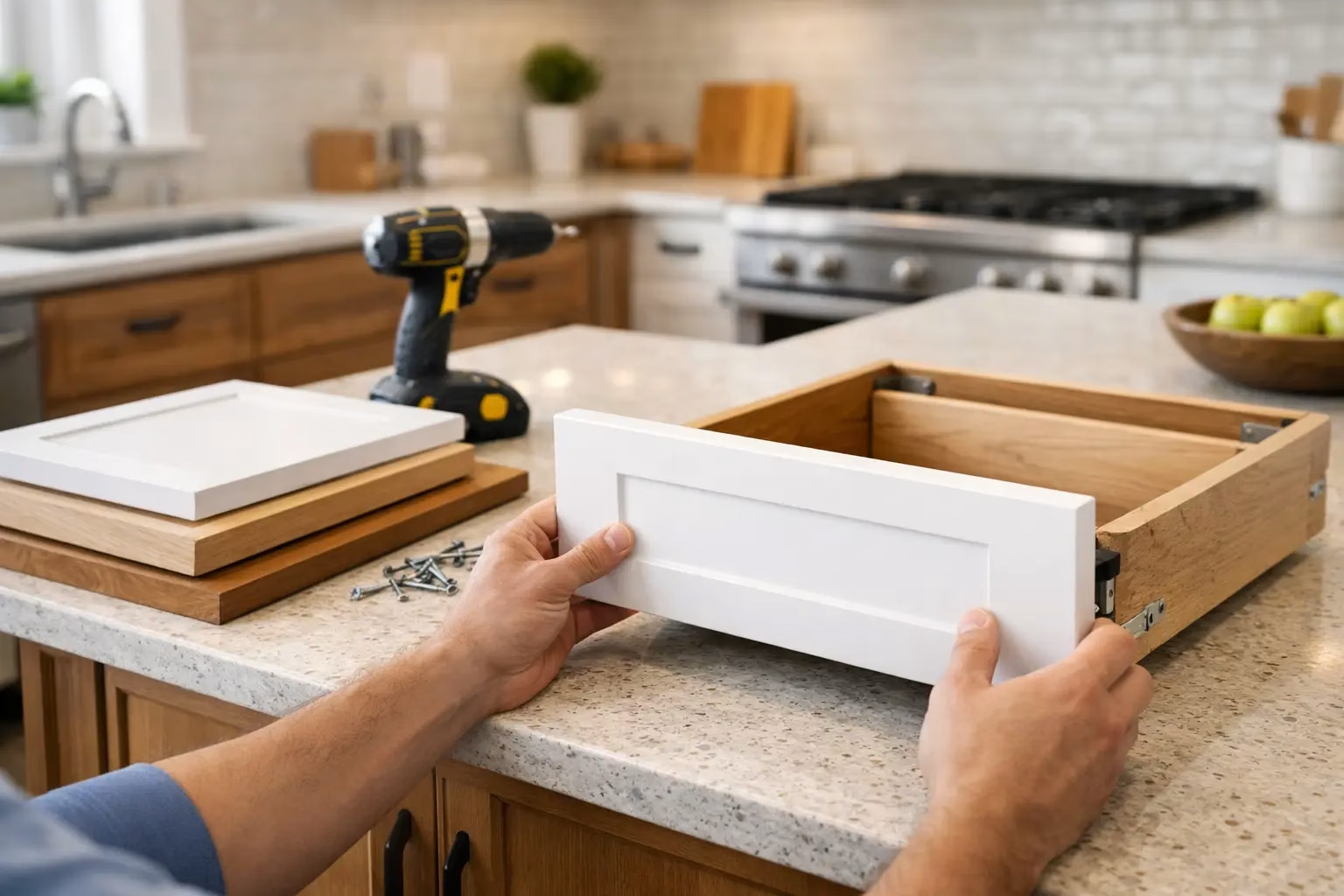
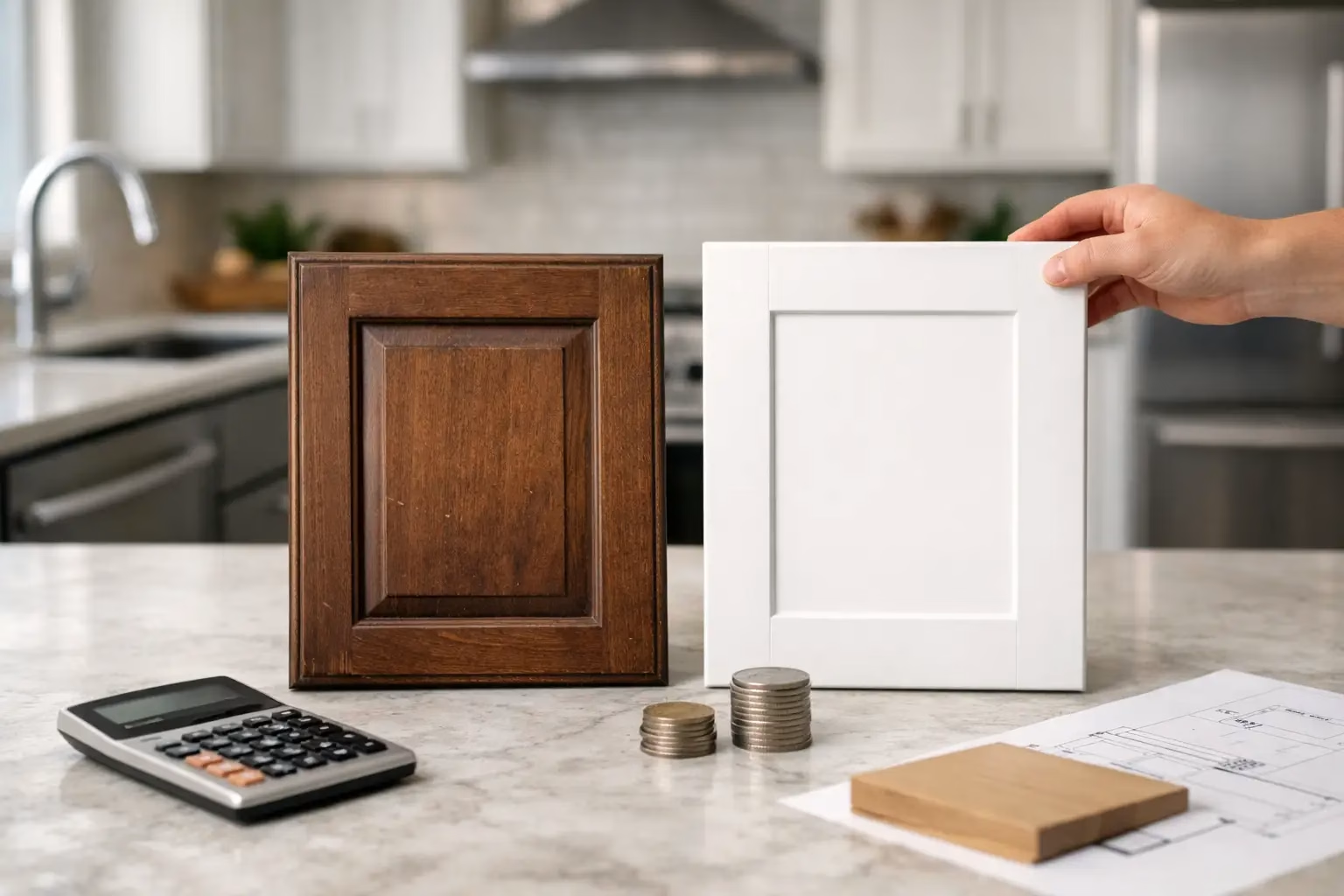
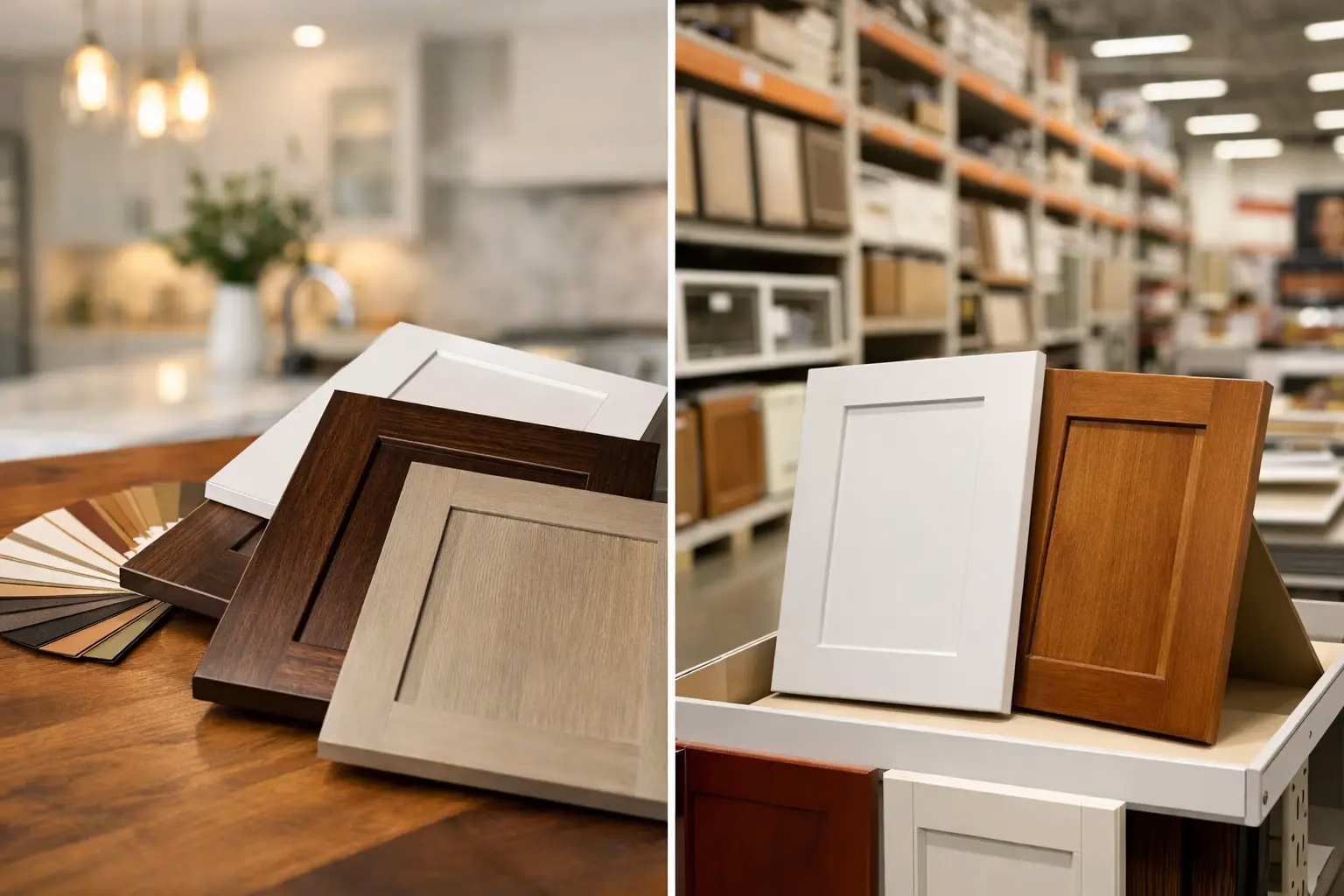
If you’re weighing custom cabinet doors vs Home Depot, you’re probably not looking for a full kitchen replacement. You want the cabinets you already have to look better, fit right, and feel worth the money. That usually means comparing two very different paths – big-box convenience versus made-to-order precision.

For many homeowners, this decision comes down to one practical question: are you updating standard cabinet boxes in a newer home, or are you trying to make older, imperfect, real-life cabinets look custom again? That answer changes everything.

Custom cabinet doors vs Home Depot: what you’re really comparing

At first glance, both options seem to solve the same problem. You need new cabinet doors, maybe drawer fronts, and a cleaner style than what is currently in your kitchen, bathroom, office, or built-ins. But the buying experience and the final result are not the same.

Home Depot is built around accessibility. You can browse familiar brands, compare options in one place, and often start quickly. That works well when your project fits standard sizes, standard finishes, and standard expectations.

Custom cabinet doors are different. They are built to your exact measurements, your chosen style, and your finish preferences. That matters when your cabinet openings are slightly off, your home is older, or your design goals go beyond what stock or semi-custom retail options can cover.

This is why the better choice is not always the cheapest line item. It’s the option that gives you the fit, look, and project outcome you actually want.

Fit is where custom usually wins

Cabinet refacing lives or dies on measurement accuracy. A door that is even slightly off can create uneven reveals, rubbing hinges, awkward gaps, and a finished look that never quite feels right.

Big-box options often work best within preset sizing programs or limited customization ranges. If your cabinet boxes were built recently and follow common dimensions, that may be enough. But many homes do not cooperate. Older kitchens, built-ins, laundry rooms, and office cabinetry often have slight inconsistencies that stock ordering systems are not designed to solve gracefully.

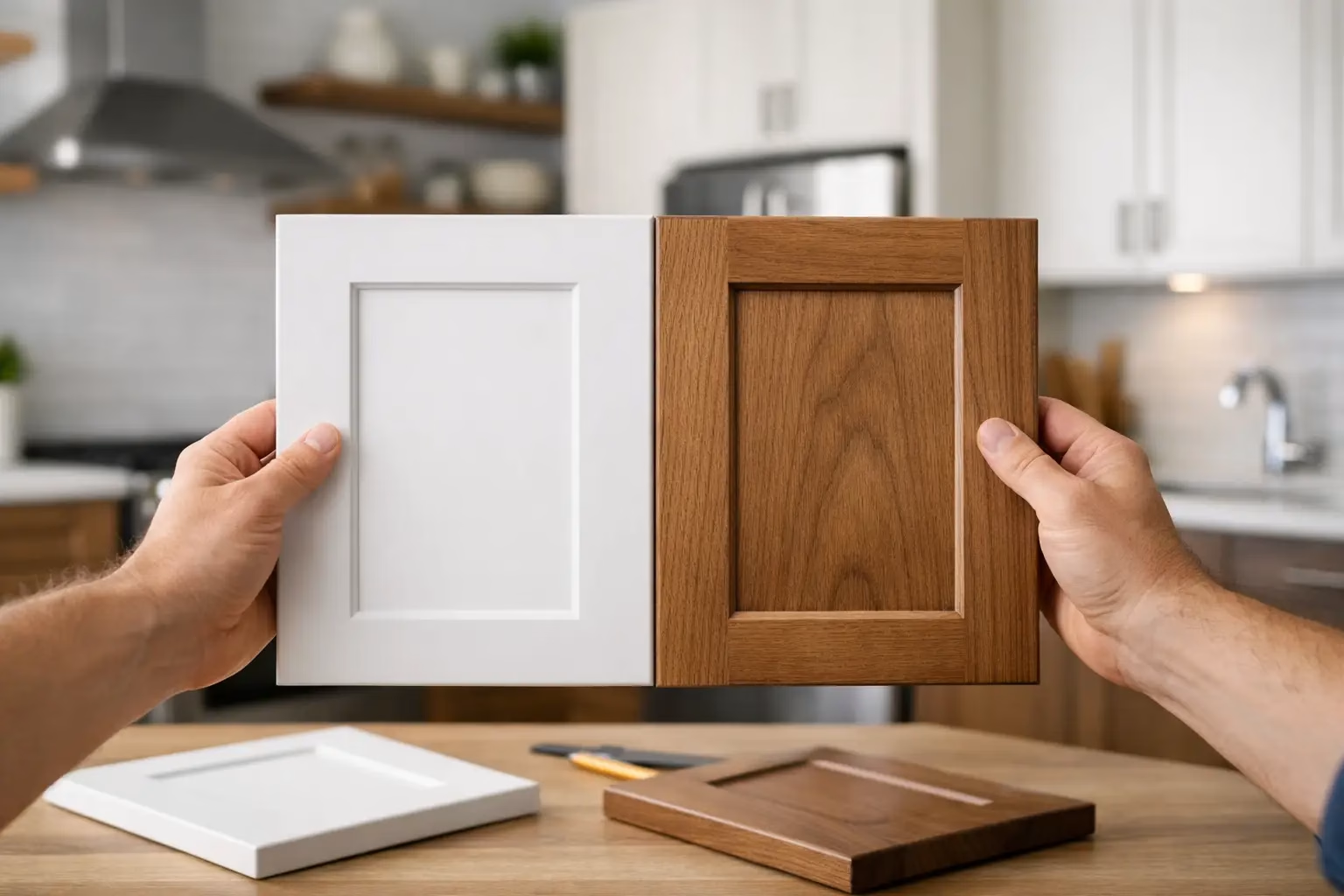
Custom doors are made around your exact specs. That gives you more control over overlay, door height and width, drawer front sizing, and alignment across an entire run of cabinets. The visual difference is hard to miss. Instead of looking like replacement parts, the doors look like they belonged there from the start.

For DIY renovators, this is one of the biggest advantages. You are already investing time in painting frames, changing hardware, and updating the room. Precise sizing protects that effort.

Why exact sizing matters in refacing

Refacing is not the same as replacing cabinets. You are working with existing boxes, which means you need the new components to respect the realities of what is already installed. If those boxes are slightly out of square or non-standard, a custom approach gives you room to correct visually without rebuilding the room.

That is a major reason homeowners choose made-to-order doors instead of settling for the closest available match.

Style selection is broader with custom, but it depends on your priorities

Home Depot can be a solid choice if you want a familiar, mainstream style and you want to see broad product categories in one shopping environment. For simple shaker doors or common finishes, that can feel straightforward.

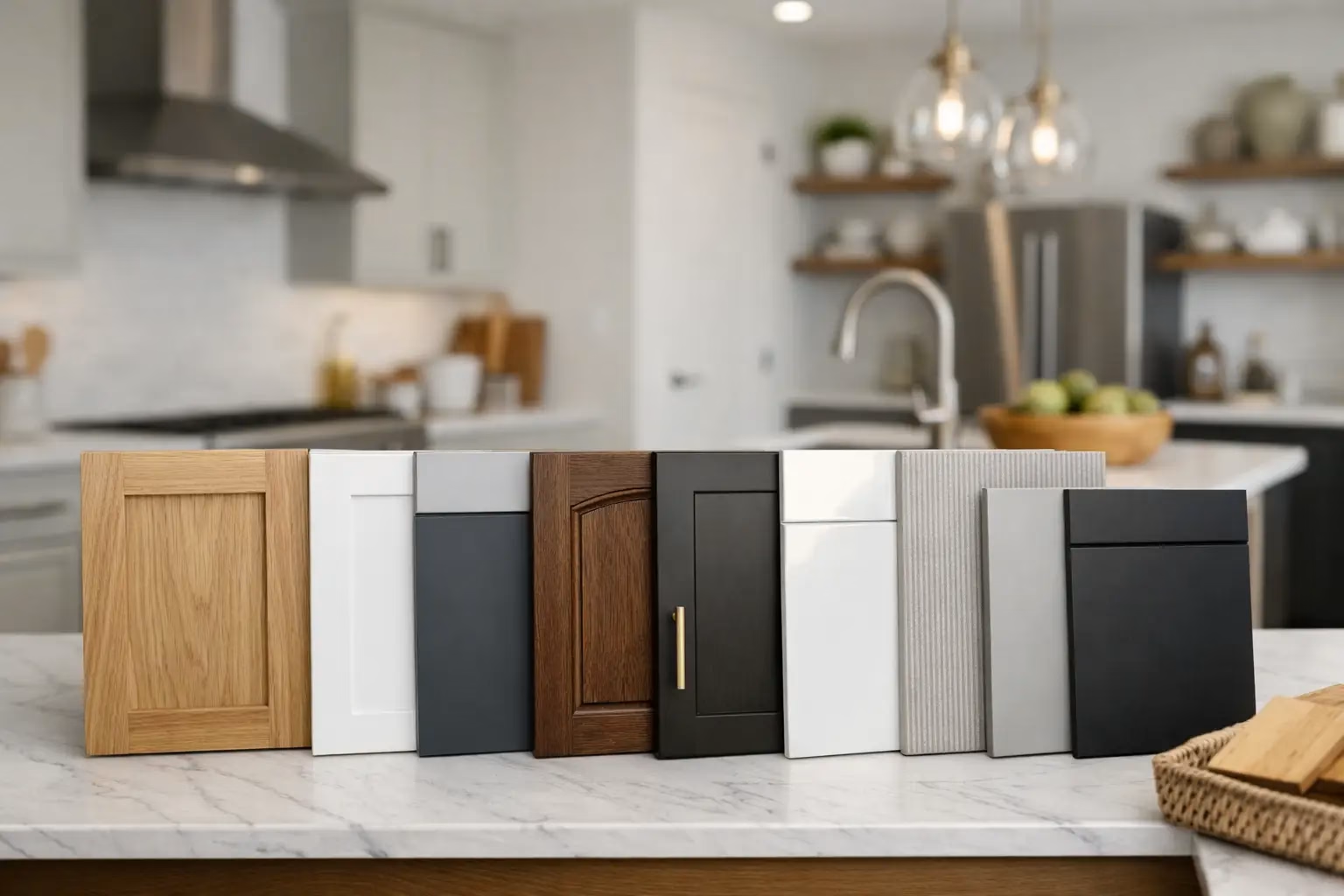
But if you want more design control, custom tends to open the door wider. You can usually choose from more panel profiles, edge details, wood types or alternative materials, paint-grade options, color selections, and decorative accessories that help the whole room feel coordinated instead of pieced together.

That matters when you’re after a specific look. Maybe you want slim shaker lines instead of a heavier profile. Maybe you need matching drawer fronts, mullion doors, appliance panels, or trim pieces that bring the project together. Those details are where custom projects start to look noticeably more finished.

This is also where many homeowners realize they are not comparing apples to apples. A lower-priced retail option may cover the basics, but not the exact style combination needed for a polished refacing result.

Price is not as simple as it looks

A lot of shoppers assume Home Depot will automatically be cheaper. Sometimes it is. Sometimes it only appears that way at the start.

If your project is small, your sizes are standard, and your style expectations are modest, a big-box order can be a reasonable fit. You may get what you need without paying for deeper customization.

But once your project involves unusual dimensions, upgraded materials, multiple drawer fronts, specialty pieces, or attempts to make stock options work where they do not naturally fit, the math changes. Workarounds cost money. So do ordering mistakes, filler solutions, and visual compromises that leave you unhappy with the final room.

Custom cabinet doors can deliver better value because you are paying for fit and finish upfront rather than trying to fix problems later. For budget-conscious homeowners, that is an important distinction. Saving money is not just about the lowest invoice. It is about avoiding a result that makes you want to redo the project in two years.

Where DIY homeowners see the best value

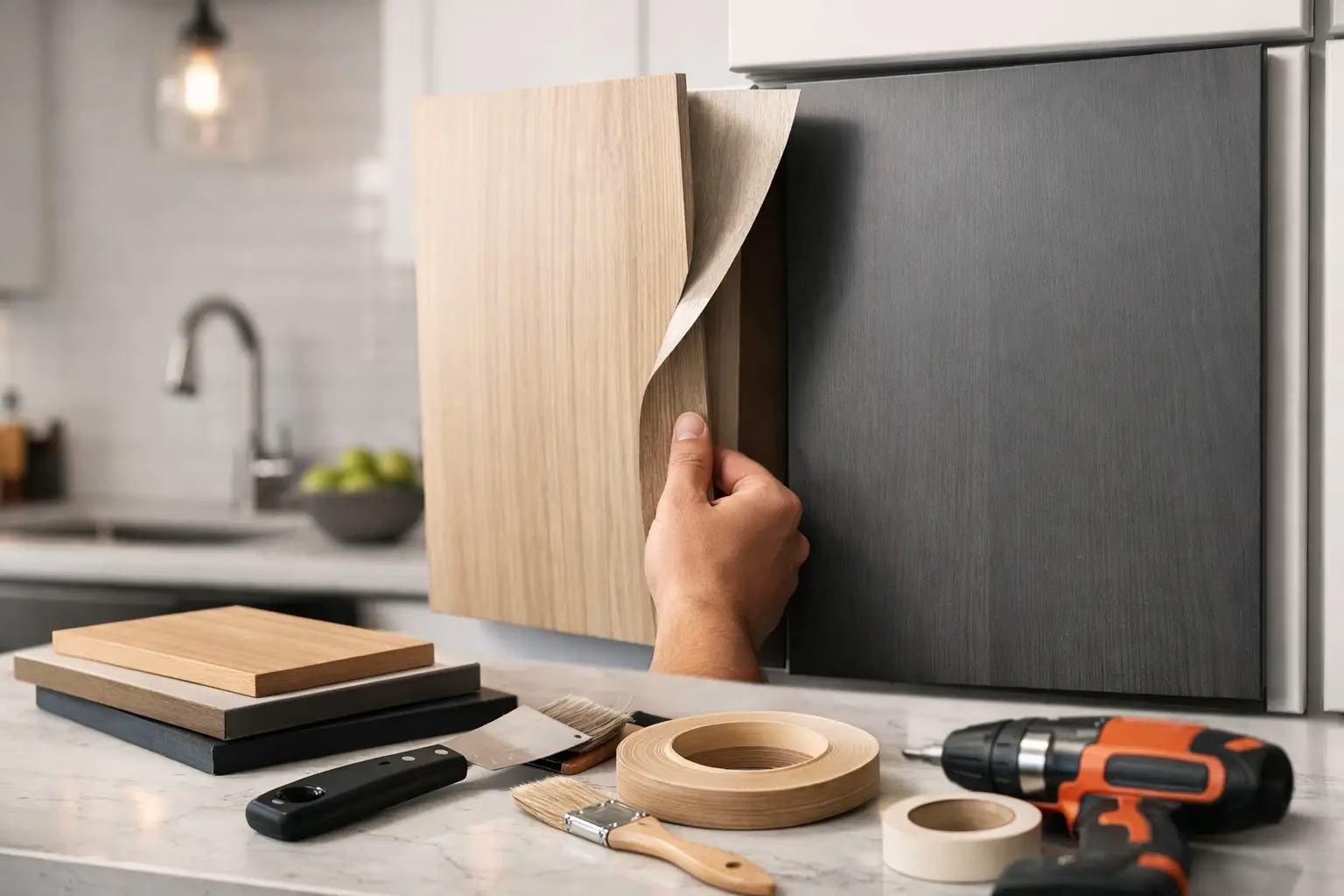
The sweet spot for custom is often cabinet refacing. If your cabinet boxes are still solid, replacing only the visible components can transform the space for far less than a full tear-out. You keep the structure, skip much of the demolition, and spend your budget where it shows.

That is especially appealing in kitchens where layout changes are unnecessary and the real issue is outdated style.

Lead times and convenience have trade-offs

Home Depot has the advantage of familiarity. Many homeowners like having a local store, broad visibility into product lines, and a retail process they already understand. If convenience is your top priority, that can feel reassuring.

Custom ordering asks a little more from you. You need accurate measurements. You need to choose your specifications carefully. And because the doors are made for your project, production takes planning.

But that extra effort is often what leads to the stronger result. You are not buying a general solution. You are buying components built specifically for your cabinets.

For serious DIYers, this is usually a good trade. The project requires more attention upfront, but less compromise at installation.

Support matters more than most people expect

One overlooked part of the custom cabinet doors vs Home Depot conversation is guidance. Not every homeowner needs the same kind of help.

A big-box store can be useful when you want broad access to products, but the support experience may vary depending on who is available and how specialized your project is. Cabinet refacing, measuring overlays, choosing the right hinge boring, and coordinating multiple custom pieces often require more focused expertise than a general retail environment is built to provide.

A custom cabinet door manufacturer is usually better positioned to support that process because the entire system is centered on made-to-order doors. The guidance is more specific to your measurements, your layout, and your product configuration. For first-time refacing customers, that can make the process feel much more manageable.

At The Door Maker, that focus on education and precision is a big part of the value. When customers can measure, design, and order with confidence, the whole project moves more smoothly.

Which option makes the most sense for you?

If your cabinets use common sizes, you want a simple style, and your goal is basic improvement with minimal decision-making, Home Depot may be enough. It offers convenience, familiarity, and a good starting point for some homeowners.

If your cabinet sizes are inconsistent, your home is older, your design goals are more specific, or you want the finished room to look tailored rather than approximate, custom cabinet doors are usually the stronger choice. You get more control, better fit, and a result that looks intentional.

That is really the heart of this comparison. One option is designed to serve a wide retail audience. The other is designed to solve your exact cabinet project.

Before you order, take a hard look at your cabinet boxes, your measurements, and your expectations for the finished space. If you care most about precision, style flexibility, and getting a high-end look without replacing everything, custom often earns its place quickly. And when the doors fit the first time, the rest of the project tends to fall into place.

FROM THE SAME CATEGORY

May 27 2026 BY Ksenija Lebec, Blog

Custom cabinet ordering process explained for DIY homeowners - from measuring and design choices to ordering custom doors with confidence.

May 25 2026 BY Ksenija Lebec, Blog

Learn how to match cabinet doors exactly with the right measurements, profiles, finishes, and overlays for a clean, custom refacing result.

May 23 2026 BY Ksenija Lebec, Blog

Replacement cabinet drawer fronts refresh worn cabinets fast with custom sizing, better style options, and a lower-cost upgrade than full replacement.

Build a Door MADE TO FIT YOU

Custom Cabinet Ordering Process Explained

Custom Cabinet Ordering Process Explained

Replacing cabinet boxes is expensive. Living with dated cabinet fronts is frustrating. That is exactly why the custom cabinet ordering process explained matters to so many homeowners – it shows you how to get a tailored, high-end look without tearing out a kitchen, bathroom, or built-in that still works.

If you are refacing instead of replacing, the ordering process is where the project either stays simple or becomes stressful. Good results depend less on guesswork and more on understanding what happens before you click order. Once you know how custom sizing, style selection, and final review work together, the project starts to feel a lot more manageable.

Why the custom cabinet ordering process explained matters

Stock cabinet parts work well when your layout happens to match standard sizes. Many homes do not. Older kitchens, custom-built-ins, and remodeled spaces often have openings that are just different enough to create gaps, alignment issues, or a patchwork look if you try to force an off-the-shelf solution.

Custom ordering solves that problem by building doors and drawer fronts to your actual measurements. That gives you cleaner lines, more consistent reveals, and a finished result that looks intentional. It also helps you keep the cabinet boxes you already have, which is usually where the real savings come in.

There is a trade-off, of course. Because custom products are made to order, accuracy matters more. You are not grabbing a replacement off a shelf if a measurement is wrong. That is not a reason to avoid custom work. It is simply why the process needs to be clear from the start.

Step 1: Measure before you shop

The first real step is measuring what you already have. Not browsing styles. Not choosing colors. Measuring.

For cabinet refacing, you are usually replacing doors and drawer fronts while keeping the cabinet boxes in place. That means every opening, hinge setup, and overlay decision affects what you order. A door that is even slightly off can change the way the whole run looks.

Most DIY homeowners do best when they measure slowly and write everything down in an organized way. Label each cabinet opening, note whether it is a door or drawer front, and record width and height clearly. If you have double doors, measure each opening carefully rather than assuming both sides are identical. In many older homes, they are not.

This is also the stage where you confirm practical details. Are your current doors full overlay, partial overlay, or inset? Are you reusing hinges or switching hardware? Do you need matching drawer fronts, mullions, or decorative pieces to complete the look? These are not small details. They shape the final order.

If you feel unsure here, that is normal. Measuring is the part that deserves the most patience because it supports every decision that follows.

Step 2: Choose the door style that fits the room

Once measurements are in hand, design choices become much easier. Instead of imagining possibilities in the abstract, you are selecting a style for a real project with real dimensions.

This is where many homeowners discover that custom does not just mean size. It also means control over the finished look. You can choose a shaker profile for a clean, updated kitchen, a raised panel for a more traditional space, or a slim modern style for an office or built-in. Matching the door style to the room matters just as much as matching the measurements.

Material and finish decisions come next. Painted looks, wood species, and PVC color options each have strengths depending on the space. A busy family kitchen may call for a finish that is easy to clean and durable in everyday use. A home office or bar area may leave more room for decorative detail. If you are ordering samples, this is the point where they can save you from an expensive second guess.

There is no single best choice for every home. White shaker doors remain popular for good reason, but they are not automatically the right fit for every cabinet layout or design goal. The best result usually comes from balancing style, maintenance, lighting, and the other surfaces already in the room.

Step 3: Use your measurements to build the order

This is the part many customers worry about most, but it is usually the point where the project becomes more concrete and more exciting. After measuring and choosing your style, you enter the specifications for each piece.

With a tool like a Build a Door configurator, you are not shopping by approximate category. You are building each door or drawer front to the dimensions and options your project requires. That is a major advantage over trying to adapt stock pieces from a big-box retailer.

The key here is consistency. Enter measurements exactly as recorded. Double-check fractions. Confirm quantity. Make sure the style, panel option, and finish selections match from piece to piece unless you intentionally want variation. For example, a kitchen might use one door style throughout but different drawer-front sizes depending on the cabinet base. That is normal. What you want to avoid is accidental inconsistency caused by rushing through the order.

This is also when add-on components can make sense. If your refacing project includes visible end panels, crown molding, valances, fluted columns, or other decorative elements, ordering them together can help create a more cohesive finished result. It also reduces the risk of trying to match details later.

Common mistakes during the custom cabinet ordering process explained

Most ordering problems are preventable. They usually come from moving too fast, not from the project being too complex.

One common issue is measuring the old door instead of confirming the cabinet opening and intended overlay. That shortcut can work sometimes, but not always. If the existing installation was uneven or if you are changing the style, copying the old size may repeat the same problems.

Another mistake is choosing a look before considering how the room functions. Decorative profiles can be beautiful, but a simpler style may make more sense in a smaller kitchen or a modern remodel. Likewise, a finish that looks perfect on a screen may read very differently under warm interior lighting.

The last big mistake is failing to review the order as a whole. A custom order is not just a stack of separate parts. It is a system. Doors, drawer fronts, colors, profiles, and accessories should all make sense together.

What happens after you place the order

Once the order is submitted, custom manufacturing begins. Unlike stock inventory, these pieces are made specifically for your project. That is the value of custom, and it is also why final review before purchase matters so much.

During production, your choices are translated into finished components built to your specifications. That includes the selected dimensions, style, and finish options you approved. The timeline can vary depending on the order size, product type, and level of customization.

For homeowners, this waiting period is actually useful. It gives you time to prep the space, organize hardware, paint cabinet boxes if needed, and plan installation. If you are refacing a kitchen, doing this work before the new fronts arrive can make the install feel much smoother.

How to order with more confidence

If this is your first refacing project, confidence usually comes from preparation, not experience. You do not need to be a cabinet maker to place a good order. You do need a clear measuring process, a realistic design plan, and the discipline to review your choices before submitting them.

That is where an approachable custom manufacturer makes a difference. The right support, clear product information, and an ordering system built for DIY customers can remove a lot of unnecessary friction. TDM – The Door Maker is built around that idea, helping homeowners move from measuring to design to ordering without making the process feel harder than it needs to be.

A custom project should still feel custom, but it should not feel mysterious. If you know your dimensions, understand your style goals, and take the time to verify the details, ordering becomes far less intimidating.

The real payoff of getting it right

The best part of a cabinet refacing project is not the order confirmation. It is the moment the new doors go on and the room finally looks finished.

That result starts long before installation day. It starts when you measure carefully, choose with intention, and treat the order as the foundation of the project rather than a quick transaction. When the custom cabinet ordering process is handled the right way, you get more than new doors. You get a space that looks upgraded, fits your home properly, and feels worth the effort every time you walk into the room.

FROM THE SAME CATEGORY

May 29 2026 BY Ksenija Lebec, Blog

Compare custom cabinet doors vs Home Depot on fit, style, price, lead time, and DIY results so you can choose the best upgrade for your cabinets.

May 25 2026 BY Ksenija Lebec, Blog

Learn how to match cabinet doors exactly with the right measurements, profiles, finishes, and overlays for a clean, custom refacing result.

May 23 2026 BY Ksenija Lebec, Blog

Replacement cabinet drawer fronts refresh worn cabinets fast with custom sizing, better style options, and a lower-cost upgrade than full replacement.

Build a Door MADE TO FIT YOU

How to Match Cabinet Doors Exactly

How to Match Cabinet Doors Exactly

One cabinet door that is slightly off can make the whole room look unfinished. The reveal looks uneven, the profile does not line up, and suddenly a simple upgrade feels more complicated than it should. If you are figuring out how to match cabinet doors exactly, the good news is that it is usually very doable – but only if you pay attention to more than width and height.

Matching a cabinet door is really about recreating the full look of the original door. That includes the style, edge detail, panel shape, overlay, thickness, finish, and hinge setup. When one of those elements is overlooked, the replacement can fit the opening but still look wrong once it is installed.

What it really means to match cabinet doors exactly

Most homeowners start with measurements, and that makes sense. Size is the first checkpoint. But an exact match is part measurement job and part visual inspection. Two doors can both be 14 by 24 inches and still look noticeably different if the frame width changes, the center panel profile is flatter, or the outside edge has a different routing.

That is why matching cabinet doors exactly works best when you treat the old door like a specification sheet. You are not just replacing a rectangle. You are identifying every visible and functional detail that makes that door belong to the cabinet run around it.

If you are refacing a full kitchen, consistency matters even more. A near match may be acceptable on a utility cabinet in the laundry room. In a kitchen with bright lighting and long sight lines, small differences stand out fast.

Start with the cabinet door style

Before you measure anything, identify the style you are trying to match. Is it a raised panel, recessed panel, slab, shaker, beadboard, or something more decorative? Look closely at the center panel and the frame around it. The proportions matter just as much as the category.

A classic shaker door, for example, can still vary quite a bit from one manufacturer to another. Some have narrow rails and stiles. Others use a wider frame. Some center panels sit perfectly flat, while others have a slight recess detail that changes the look in certain light.

If your cabinets are older, the style may not match a current stock option at a big-box store. That does not mean you are stuck. It usually means you need a custom-sized, custom-styled replacement rather than a close-enough substitute.

Pay attention to edge profiles

The outside edge of the door is one of the easiest details to miss and one of the first things your eye catches. A square edge, eased edge, ogee edge, or bevel edge will change the appearance of the door face, even if the rest of the design is close.

Run your fingers along the outer edge and compare it to any sample photos or profile options you are considering. If the profile is different, the new door may look like it came from a different kitchen.

Measure the door the right way

If you want to know how to match cabinet doors exactly, accurate measuring is non-negotiable. Measure the existing door itself, not just the cabinet opening. Use a tape measure you trust, and write everything down to the nearest 1/16 inch.

You need the width, height, and thickness of the existing door. Then measure the rail and stile width if the door has a frame. These dimensions help confirm whether the proportions of the replacement will match the original.

It also helps to check for squareness. Older doors and older homes are not always perfectly consistent. If one corner has shifted over time, you want to know whether the issue is the door, the hinge, or the cabinet box before ordering a replacement.

Do not guess the overlay

Overlay is the amount the door covers the cabinet opening or face frame. This is one of the most common places DIY orders go wrong. A door can be the correct height and width overall but still look off if the overlay does not match the surrounding cabinets.

If you have partial overlay cabinets, measure how much the door overlaps the frame on all sides. If you have full overlay cabinets, check the reveal between adjacent doors and drawers. Those spacing relationships affect the finished result more than many people expect.

If you are replacing only one or two doors, matching the overlay is critical. If you are replacing every door in the room, you have more flexibility to choose a new overlay style as long as it works with the cabinet boxes and hinges.

Match the hinge setup and boring

A cabinet door is not complete until it works correctly on the cabinet. That means hinge compatibility matters just as much as appearance. Look at the back of the existing door and identify whether it has concealed hinge boring, surface-mount hinges, or another hardware setup.

For concealed hinges, measure the diameter of the cup hole, the distance from the edge of the door to the cup, and the spacing between hinge locations. If the boring pattern is off, the door may require rework during installation or fail to line up with the rest of the run.

This is where custom ordering can save a lot of frustration. When hinge boring is done to the right specifications, installation is cleaner and the finished reveal is easier to fine-tune.

Finish and color are where exact gets tricky

Style and sizing can be matched with precision. Finish is sometimes a different story. If your current cabinets have aged for 10 or 15 years, the original paint or stain may have shifted from sunlight, grease, cleaning products, and normal wear. Even a new door made in the original color may not be a perfect visual match on day one.

That does not mean you should give up on matching. It means you should be realistic about what exact means in a lived-in home. White is not always just white. Natural maple can amber over time. Painted finishes can vary by sheen level, not just by color.

Samples help more than screen images

If finish matters, and it usually does, work from physical samples whenever possible. Photos on a screen are useful for narrowing options, but they are not reliable enough for final color decisions. Lighting changes everything.

Compare the sample to your existing cabinetry in daylight, evening light, and under your kitchen fixtures. That extra step can prevent an expensive mismatch.

If an exact finish match is unlikely because your cabinets are older, think through whether repainting or refinishing the full set makes more sense than trying to blend one new door into a heavily aged group.

Material matters more than people expect

The species or material used in the original door affects both the look and the finish result. A painted MDF door and a painted hardwood door can both look good, but they may not wear the same way over time. A stained oak door will never look identical to a stained maple door because the grain pattern is part of the design.

If your goal is an exact match, identify the original material first. Look at the grain, weight, and back side of the door. If you are not sure, take clear photos and compare carefully before ordering.

This is especially important in kitchens where some doors may be solid wood and others may be thermofoil or laminate. A quick visual match from the front can fall apart once texture and sheen come into play.

When replacing one door versus all doors

The strategy changes depending on how many doors you are replacing. If you are replacing one damaged door, your job is strict matching. Every detail should be driven by the existing cabinetry.

If you are replacing all the doors for a refacing project, you have more room to improve the overall design. You still need accurate sizing and hinge prep, but you can choose a more current profile, cleaner finish, or updated overlay while keeping the cabinet boxes in place. That is often where refacing delivers the biggest visual upgrade for the money.

For many homeowners, this is the point where custom manufacturing makes more sense than searching shelf after shelf for a stock size that almost works. The Door Maker helps DIY customers take that step with made-to-order sizing and style options designed around the cabinets they already have.

How to avoid the most common matching mistakes

Most mismatches happen because of one of three problems: incomplete measurements, overlooked profile details, or finish assumptions. Homeowners often measure the opening instead of the door, forget to check overlay, or choose a style that is similar but not proportioned the same way.

Slow the process down. Take multiple measurements. Photograph the front, side, and back of the existing door. Note the hinge style, panel shape, edge profile, and thickness. If you are ordering multiple doors, label each cabinet opening so nothing gets mixed up.

Precision at the ordering stage is what creates that clean, built-for-the-space look once everything is installed. That is the difference between a refacing project that looks custom and one that looks like a compromise.

Matching cabinet doors exactly is not about chasing perfection for its own sake. It is about respecting the lines of the room so the finished result looks intentional, polished, and worth the effort. When you take the time to match the details that matter, your cabinets stop looking pieced together and start looking like they were made that way from the start.

FROM THE SAME CATEGORY

May 29 2026 BY Ksenija Lebec, Blog

Compare custom cabinet doors vs Home Depot on fit, style, price, lead time, and DIY results so you can choose the best upgrade for your cabinets.

May 27 2026 BY Ksenija Lebec, Blog

Custom cabinet ordering process explained for DIY homeowners - from measuring and design choices to ordering custom doors with confidence.

May 23 2026 BY Ksenija Lebec, Blog

Replacement cabinet drawer fronts refresh worn cabinets fast with custom sizing, better style options, and a lower-cost upgrade than full replacement.

Build a Door MADE TO FIT YOU

Replacement Cabinet Drawer Fronts Made Easy

Replacement Cabinet Drawer Fronts Made Easy

If your cabinet boxes are still solid but the room looks dated every time you walk in, replacement cabinet drawer fronts can change the entire feel of the space faster than most homeowners expect. It is one of those upgrades that delivers an immediate visual payoff without the cost, mess, and downtime of tearing out perfectly usable cabinetry.

That matters in kitchens, bathrooms, home offices, laundry rooms, and built-ins where the structure is fine but the face of the cabinetry has seen better days. Scuffed finishes, chipped corners, old oak profiles, warped drawer fronts, and mismatched replacements all make a room feel tired. Swapping the fronts lets you keep what works and update what everyone actually sees.

Why replacement cabinet drawer fronts make sense

A full cabinet replacement is the right call when boxes are damaged, layouts need to change, or storage no longer works for the way you live. But many projects do not require that level of demolition. If the cabinet boxes are level, sturdy, and worth keeping, replacing the visible fronts is often the smarter move.

The savings are not only about materials. You also avoid much of the labor, disposal, and disruption that come with a full remodel. For DIY homeowners, that can mean finishing a project on your own schedule instead of coordinating a complete installation. For budget-conscious renovators, it means putting money into the details people notice most – style, finish, color, and fit.

There is also a customization advantage. Stock products can work in newer homes with standard sizes, but older homes and custom built-ins rarely play by those rules. Fronts that are made to your measurements help you get a clean, intentional result instead of trying to force a close-enough option into place.

What actually changes when you replace drawer fronts

Drawer fronts do more than cover a drawer box. They define the style of the room. A flat slab front reads modern. A shaker profile feels clean and versatile. Raised panel fronts can lean more traditional. The profile, edge detail, finish, and hardware placement all shape the final look.

That is why replacing drawer fronts often has an outsized impact compared to the size of the part itself. In a kitchen, they sit at eye level across islands, base cabinets, and banked drawers. In a bathroom vanity, they frame the entire cabinet face. Even in a smaller office or mudroom project, refreshed fronts make cabinetry look purpose-built instead of patched together over time.

If you are already replacing cabinet doors, matching replacement cabinet drawer fronts is what pulls the whole project together. If the doors are updated but the drawers still show an older profile or finish, the space can still feel unfinished.

When replacement cabinet drawer fronts are the right choice

The best candidates for this upgrade usually have solid cabinet boxes and functioning drawer systems. If the drawers open smoothly and the cabinet frames are in good condition, replacing the fronts is usually straightforward.

It is also a strong option when your current drawer fronts are damaged but the drawer boxes themselves are not. A cracked face, worn finish, or outdated style does not mean the whole cabinet needs to go. In many cases, the visible problem is exactly that – the visible part.

Where homeowners need to slow down is when the underlying drawer hardware is failing, the boxes are out of square, or moisture has compromised the cabinetry. New fronts can improve appearance dramatically, but they will not fix structural problems underneath. If drawers sag, rack, or stick badly, address that before ordering new fronts so your final result looks as good in use as it does on day one.

Measuring is where good projects become great ones

Custom drawer fronts only work as well as the measurements behind them. This is the step that deserves care, especially if you are refacing older cabinetry with non-standard openings.

In some projects, you are matching existing fronts exactly. In others, you are updating reveals and overlay to create a more modern look. Those are two different goals, and the measuring approach changes accordingly. That is why homeowners do better when they measure with the finished appearance in mind rather than simply copying what is there.

Take the time to confirm width and height on each drawer front, not just one from a similar bank. Small differences are common, especially in homes where cabinets were site-built or adjusted over the years. Label every opening clearly. Measure twice. If hardware holes are already drilled into the old fronts, decide whether you are reusing the same pull spacing or changing it before you finalize the order.

Precision here saves frustration later. A well-made custom front will only look right if it is made to the right dimensions.

Style choices that affect the finished look

Most homeowners start with color, but profile is just as important. If you want a cleaner, updated space, a shaker drawer front is a reliable choice because it works with transitional, farmhouse, and modern kitchens without feeling overly specific. Slab fronts create a sleeker look and are often the better fit for more contemporary spaces. More decorative profiles can add depth in traditional rooms, but they need to work with the rest of the cabinetry so the result feels intentional rather than busy.

Material and finish matter too. Painted styles can brighten a room and soften dated wood-heavy spaces. Wood species and stain choices can bring warmth, especially if you want a natural or furniture-like finish. PVC options can be appealing in projects where color consistency and easy maintenance are high priorities.

There is no single right answer. A bright painted front may look perfect in a small bathroom but feel too stark in a kitchen with warm flooring and wood trim. A rich stained front can add character in a home office but may not create the lighter look some homeowners want in a dark galley kitchen. The best choice depends on the room, the lighting, and the look you want to live with every day.

Why custom sizing beats stock options

Big-box products can be tempting because they feel quick and familiar. The trade-off is that stock sizing often asks you to compromise. Maybe the width is close but not exact. Maybe the style is acceptable but not a match. Maybe the color works under store lighting but looks off once it is installed next to your cabinet doors.

Custom-made drawer fronts are different because they start with your cabinet, not a shelf planogram. That means better alignment, more consistent reveals, and a finished look that feels built for your home. For DIY refacing projects, that difference is usually what separates a nice improvement from a result that truly looks professional.

This is where a made-to-order approach can be especially valuable. Companies such as The Door Maker focus on precise sizing and style options that support cabinet refacing rather than forcing homeowners into standard dimensions that may not fit the project.

Ordering with confidence

The process should be simple even if the product is custom. Start with accurate measurements, choose the style and finish that fit your space, and confirm details like edge profile and hardware drilling before placing the order. If you are replacing both doors and drawer fronts, make sure every selection is coordinated so the project arrives as a complete visual system instead of a collection of separate parts.

Samples can help when you are deciding between close finishes or trying to match existing elements in the room. That extra step is often worth it because paint, stain, and material can read differently in your home than they do on a screen.

A little patience also pays off. Custom manufacturing is not the same as grabbing a box off a shelf, but the result is usually far better. You are not buying filler. You are buying fit.

Installation is simpler than most homeowners think

Installing new drawer fronts is often very manageable for a DIY homeowner with basic tools and a careful approach. The key is alignment. Even a beautiful front will look off if spacing is uneven or hardware placement is inconsistent.

Take your time during installation, especially on wide drawers or stacked drawer banks where small shifts become obvious. Use temporary positioning methods if needed before final fastening. Check reveals from multiple angles, not just straight on. Once everything is lined up, the room starts to change quickly.

That is the appeal of this kind of project. You are not waiting months to enjoy the result. You can keep the cabinet boxes you already own, update the visible surfaces, and end up with a cleaner, more custom look for far less than a full replacement.

If your cabinets are structurally sound but visually stuck in another decade, replacement cabinet drawer fronts are one of the smartest ways to move the room forward without starting over.

FROM THE SAME CATEGORY

May 29 2026 BY Ksenija Lebec, Blog

Compare custom cabinet doors vs Home Depot on fit, style, price, lead time, and DIY results so you can choose the best upgrade for your cabinets.

May 27 2026 BY Ksenija Lebec, Blog

Custom cabinet ordering process explained for DIY homeowners - from measuring and design choices to ordering custom doors with confidence.

May 25 2026 BY Ksenija Lebec, Blog

Learn how to match cabinet doors exactly with the right measurements, profiles, finishes, and overlays for a clean, custom refacing result.

Build a Door MADE TO FIT YOU

Are Replacement Cabinet Doors Cheaper?

Are Replacement Cabinet Doors Cheaper?

Sticker shock usually hits the moment you price a full kitchen remodel. New boxes, demolition, countertops, installation, and finish work add up fast. That is why so many homeowners ask, are replacement cabinet doors cheaper than replacing the entire cabinets? In most cases, yes – often significantly so – but the real answer depends on the condition of your cabinet boxes, the level of customization you want, and how much of the work you plan to handle yourself.

If your existing cabinet boxes are structurally sound, replacing just the doors and drawer fronts can give you a dramatic visual upgrade without paying for a full tear-out. You keep the cabinet framework that is already doing its job and update the parts everyone actually sees. For budget-conscious homeowners who still want a custom look, that can be one of the smartest renovation decisions in the house.

Are replacement cabinet doors cheaper than new cabinets?

Most of the time, replacement cabinet doors cost less because you are not rebuilding the entire kitchen. Full cabinet replacement includes removing old cabinetry, disposing of materials, buying new cabinet boxes, paying for labor, and often dealing with wall, floor, or countertop adjustments once the old cabinets come out. Even a straightforward project can grow quickly once those related costs start piling up.

With replacement doors, the scope is much tighter. You are updating the face of the cabinets rather than the whole structure. That means your budget goes toward visible improvements like door style, finish, color, and hardware compatibility, instead of hidden structural components you may not need to replace.

The savings are often strongest in kitchens where the layout already works. If you like where your sink, pantry, and base cabinets are located, there is no financial advantage in paying to rebuild everything just to get a fresh appearance. Refacing or replacing doors lets you spend more strategically.

Why the price difference can be so big

Cabinet replacement is rarely just about cabinets. It tends to trigger a chain reaction. Remove the boxes, and now you may need drywall repair, paint touch-ups, flooring patches, plumbing adjustments, and new installation labor. If the sizes shift even slightly, countertop work may follow. That is where remodeling budgets get stretched.

Replacement cabinet doors avoid much of that disruption. Since the cabinet boxes stay in place, the project is cleaner, faster, and easier to manage. For DIY renovators, that matters as much as the materials cost. Less demolition means less mess, fewer surprises, and more control over the final budget.

Custom sizing also plays a role. Homeowners with older homes or non-standard cabinet openings often assume they need all-new cabinetry because stock options do not fit. In reality, made-to-order doors can be sized to your existing cabinets, which helps you avoid paying for a full replacement simply to solve a sizing issue.

When replacement cabinet doors are the better value

The best-case scenario is simple: your cabinet boxes are sturdy, level, and worth keeping. If they open and close properly, are securely mounted, and do not have major water damage, replacement doors are usually the better value.

This is especially true when the problem is cosmetic. Maybe your kitchen looks dated, the finish is worn, the door style feels heavy, or the color no longer fits your home. Those are appearance issues, not structural failures. Replacing doors and drawer fronts can completely change the room without forcing you into a larger renovation than you need.

It also makes sense when you want a more custom look at a better price. A new Shaker profile, slim modern slab, or updated panel design can make the kitchen feel newly built. Add matching drawer fronts and coordinated decorative pieces, and the result can look polished rather than patched together.

When replacement doors may not be cheaper

There are cases where replacing doors is not the smartest investment. If the cabinet boxes are damaged, badly warped, or poorly installed, new doors will not fix the underlying problem. You can make the fronts look better, but the cabinets still have to function properly.

Layout problems matter too. If your kitchen does not work for how you cook, store, or move through the space, keeping the existing boxes may hold you back. In that situation, a full remodel might cost more upfront but deliver better long-term value.

There is also a middle ground to consider. Some homeowners start by thinking they only need doors, then realize they also want new drawer boxes, hinges, trim, end panels, or accessories. The project can still cost less than full replacement, but the gap may narrow depending on how extensive the upgrade becomes.

What affects the cost of replacement cabinet doors?

Material is one of the biggest factors. Solid wood, MDF, thermofoil, and other options come with different price points, performance characteristics, and finish possibilities. Style matters too. A simple slab door usually costs less than a more detailed raised panel or specialty design.

Size and customization affect pricing as well. Standard openings are one thing, but custom widths, heights, and specialty shapes require made-to-order manufacturing. That said, custom sizing is often still far less expensive than replacing entire cabinet runs just to match unusual dimensions.

Finish choices can change the total quickly. Painted doors, specialty colors, wood species upgrades, and matching components all add value, but they also affect cost. Hardware preparation, hinge boring, and drawer front replacements should be part of the comparison when you build your budget.

Labor is another key variable. If you are comfortable measuring carefully, ordering accurately, and handling installation yourself, replacement doors become even more cost-effective. If you hire out every step, the savings may still be strong, but not as dramatic as a true DIY refacing project.

How to compare costs the right way

The mistake many homeowners make is comparing only product price to product price. They look at the cost of new cabinet doors versus the cost of new cabinets and stop there. That misses the full financial picture.

A better comparison includes demolition, disposal, delivery, installation, repairs, finishing work, and downtime in the room. Full replacement often has hidden costs that do not show up in the first quote. Replacement doors are usually more predictable because the project stays focused.

It helps to ask a few direct questions before deciding. Are the cabinet boxes worth keeping? Do you need a new layout or just a new look? Are your cabinet sizes standard or hard to match? Will you install the doors yourself? Those answers tell you more than a generic price range ever will.

The DIY advantage

For homeowners who like hands-on projects, replacement doors are appealing because the transformation is visible and the process is manageable. You can measure carefully, choose your door style, order to fit, and install without turning your home into a construction zone for weeks.

That control matters. You decide where to invest – cleaner lines, a warmer wood tone, a painted finish, or upgraded drawer fronts – and you are not forced to spend money on cabinet boxes you may not need. With a quality custom manufacturer, precision becomes the difference between a project that looks homemade and one that looks professionally finished.

This is where good planning pays off. Accurate measurements, a clear style direction, and support during the ordering process can help you avoid expensive mistakes. For many homeowners, that is the sweet spot: custom results, practical spending, and a project scope they can realistically handle.

So, are replacement cabinet doors cheaper?

Yes, in many situations they are cheaper – and not just a little cheaper. They can be substantially less expensive than replacing all of your cabinets, especially when your current boxes are in good condition and your goal is a visual upgrade rather than a full redesign.

The bigger point is value. Cheaper only matters if the finished result still looks right, fits right, and lasts. Custom replacement doors give homeowners a way to improve the appearance of a kitchen, bathroom, office, or built-in storage without paying for unnecessary demolition and reconstruction. That is why so many refacing projects make financial sense.

If your cabinet boxes are solid and your layout still works, replacing the doors may be the upgrade that gives you the look you want without the remodel you do not. Start with careful measurements, compare the full project cost rather than just the headline numbers, and choose components built to fit your space the first time. That is how a budget-minded update ends up looking anything but budget.

FROM THE SAME CATEGORY

May 29 2026 BY Ksenija Lebec, Blog

Compare custom cabinet doors vs Home Depot on fit, style, price, lead time, and DIY results so you can choose the best upgrade for your cabinets.

May 27 2026 BY Ksenija Lebec, Blog

Custom cabinet ordering process explained for DIY homeowners - from measuring and design choices to ordering custom doors with confidence.

May 25 2026 BY Ksenija Lebec, Blog

Learn how to match cabinet doors exactly with the right measurements, profiles, finishes, and overlays for a clean, custom refacing result.

Build a Door MADE TO FIT YOU

9 Cabinet Door Design Trends to Know

9 Cabinet Door Design Trends to Know

A kitchen can look ten years newer without moving a single wall. In many remodels, the biggest visual shift comes from the cabinet fronts, which is why cabinet door design trends matter so much for homeowners planning a reface instead of a full replacement. If your cabinet boxes are still solid, updating the doors is often the smarter move – you get a custom look, keep the layout that already works, and avoid paying for a complete tear-out.

The trick is knowing which trends actually have staying power. Some looks photograph well and fade fast. Others feel current because they solve real design problems: making a small kitchen feel lighter, helping a traditional home feel cleaner, or adding character without making the room harder to live with. The best trend for your project is the one that fits your home, your budget, and how long you want to love the result.

Cabinet door design trends are getting cleaner

The strongest shift right now is toward simpler door profiles. That does not mean every kitchen is turning stark or flat. It means homeowners are moving away from overly busy detailing and choosing styles with better proportion, cleaner lines, and a more tailored finish.

Shaker remains a leading choice for a reason. It bridges old and new better than almost any other cabinet style. In a painted finish, it can feel crisp and modern. In a warm wood tone, it reads timeless and grounded. Slim-shaker variations are especially popular because they keep the familiar framed look but reduce visual weight.

This is where restraint pays off. A heavy profile with ornate edges can make a medium-sized kitchen feel crowded. A narrower frame opens things up and lets color, hardware, and countertop materials do more of the work. For homeowners refacing existing cabinets, that cleaner profile also helps older kitchens feel updated without looking out of place.

Warm wood is back, but with a different attitude

One of the biggest changes in cabinet door design trends is the return of wood looks with warmth and texture. The all-gray era has cooled off. Homeowners still want clean design, but many are bringing back natural character through oak-inspired tones, walnut looks, and finishes that show subtle grain rather than hiding everything under thick paint.

The difference is in how wood is being used. This is not a return to orange-toned cabinets or heavily glazed finishes. Today’s warmer woods are quieter, more natural, and often paired with simple door styles. A flat panel or slim shaker in a medium wood tone feels current because the form stays clean even as the finish adds depth.

For a DIY reface project, this can be a practical decision as much as a design one. Wood tones tend to be forgiving in busy households. They are less likely to show every smudge, and they can bring balance to rooms with a lot of stone, metal, or white surfaces. If your space already feels cold, warmer cabinet fronts can fix that faster than changing the flooring or lighting.

Painted finishes are moving deeper and softer

White cabinets are still very much in play, especially for smaller kitchens and homeowners who want a bright, versatile backdrop. But the color story is expanding. More projects now lean into deeper greens, soft taupes, muted blues, and off-whites that feel less stark.

This matters because cabinet color is doing more of the design work than it used to. Instead of relying on ornate door details to create interest, many homeowners are choosing a simpler door and a more intentional color. That combination often looks more expensive because it feels custom rather than generic.

There is a trade-off, though. Darker finishes create drama, but they can also highlight dust and reduce reflectivity in rooms with limited natural light. Lighter painted doors help a kitchen feel open, but bright white can sometimes look flat if the rest of the room lacks contrast. The best choice depends on your lighting, your wall color, and whether you want the cabinets to lead the room or quietly support it.

Mixed materials make spaces feel more designed

Matching every cabinet door in every section of a room is no longer the automatic goal. One of the more useful cabinet door design trends is intentional contrast. That might mean painted perimeter cabinets with a wood island, a darker vanity with lighter linen storage, or glass-ready upper sections paired with solid lower doors.

This approach works because it adds structure to the room. It helps define focal points and prevents a wall of cabinetry from feeling too uniform. In kitchens with islands, a second finish can make the layout feel more furniture-like and less boxy.

The key is not overdoing it. Contrast works best when there is still a thread connecting the choices – similar door profiles, coordinated hardware, or a shared undertone in the finishes. If everything changes at once, the room can start to feel pieced together instead of planned.

Vertical texture is showing up in more places

Homeowners are also looking for ways to add character without going back to heavy ornament. That is one reason fluted and reeded details are getting attention. Used selectively, these details bring movement and texture to cabinetry-heavy spaces.

This trend tends to work best as an accent rather than a full-room treatment. A fluted end panel, decorative column, island detail, or furniture-style built-in can add depth without overwhelming the space. In a bathroom vanity or home office, that little bit of texture can make standard cabinetry feel far more finished.

If you like this look, placement matters. Vertical texture needs room to be noticed. In a small kitchen packed with upper cabinets and visual clutter, too much of it can compete with backsplash tile, hardware, and appliances. But in the right spot, it adds a custom touch that feels current and architectural.

Glass and open-style details are becoming more selective

A few years ago, open shelving was everywhere. Now homeowners are getting more realistic about maintenance and storage. The newer direction is selective display – using glass-ready cabinet doors, mullion frames, or a small showcase section where it adds function and polish.

That shift makes sense for real homes. Most people still need hidden storage for pantry items, plastic containers, and everyday clutter. A few glass-front doors can lighten the look of a kitchen or built-in without forcing everything to be perfectly styled.

This is a smart area for balance. Glass features can break up a run of solid doors and make cabinetry feel less heavy, especially in dark finishes. But too much glass can make a room feel busy and put pressure on you to keep everything inside neat. If your goal is a cleaner-looking space, a little display goes a long way.

Custom sizing is part of the trend, too

Not every design trend is visual. One of the biggest shifts among homeowners is the expectation that cabinet updates should actually fit. Older homes, builder-grade layouts, and past remodels often leave people with odd measurements that stock doors simply do not solve well.

That is why made-to-order cabinet doors have become such an important part of modern refacing projects. When the proportions are right, the entire room looks better. Gaps look intentional. Hardware placement feels more balanced. Tall pantry doors, vanity fronts, office built-ins, and replacement drawer fronts all read as part of one finished design instead of a patchwork fix.

For homeowners weighing stock versus custom, this is often where value becomes clear. A cheaper off-the-shelf option can cost less upfront, but if it forces design compromises, filler work, or awkward sizing, the result may still look unfinished. Custom sizing gives you more control, and in refacing, control is what turns a good idea into a polished result.

Trendy is not always right for your home

The smartest projects do not chase every trend at once. A modern slab door may look great in one home and feel too severe in another. A classic raised panel can still work beautifully in a traditional setting, especially when the profile is kept refined and the finish is updated.

Start with the style of your house and the fixed elements you are keeping. Flooring, counters, wall color, and backsplash all affect which cabinet door style will feel natural. Then think about maintenance. High-gloss finishes, very dark colors, and delicate display features can look great, but they may not suit a household with kids, pets, or a kitchen that gets used hard every day.

This is also where confidence matters. A well-made, custom-sized shaker in the right color often outperforms a more dramatic trend piece because it works with the room, not against it. Good design is not about picking the newest option. It is about choosing the one that will still feel right after the excitement of the remodel wears off.

What to take from today’s cabinet door design trends

The best cabinet updates right now share a few qualities: cleaner lines, warmer finishes, thoughtful contrast, and details that feel intentional instead of excessive. They are less about chasing a showroom look and more about creating a space that feels tailored, functional, and worth the effort.

For homeowners planning a reface, that is good news. You do not need to replace everything to get a major transformation. With the right door style, finish, and fit, even an older kitchen or bath can look custom-built. If you are comparing options, use trends as direction, not rules – then choose the cabinet doors that make your space feel finished, current, and truly yours.

FROM THE SAME CATEGORY

May 29 2026 BY Ksenija Lebec, Blog

Compare custom cabinet doors vs Home Depot on fit, style, price, lead time, and DIY results so you can choose the best upgrade for your cabinets.

May 27 2026 BY Ksenija Lebec, Blog

Custom cabinet ordering process explained for DIY homeowners - from measuring and design choices to ordering custom doors with confidence.

May 25 2026 BY Ksenija Lebec, Blog

Learn how to match cabinet doors exactly with the right measurements, profiles, finishes, and overlays for a clean, custom refacing result.

Build a Door MADE TO FIT YOU

Can You Reface Laminate Cabinets?

Can You Reface Laminate Cabinets?

If your kitchen cabinets are laminate and still structurally solid, the question usually is not whether you need a full tear-out. It is simpler than that: can you reface laminate cabinets and get a result that actually looks worth the effort? In many cases, yes. But the quality of the outcome depends on what is on your cabinets now, how well the boxes have held up, and whether you approach the project as a surface update or a true refacing job.

For many homeowners, laminate cabinets sit in that frustrating middle ground. The layout still works. The cabinet boxes are doing their job. But the doors look dated, the finish feels tired, and the room is stuck in another decade. That is exactly where refacing can make sense.

Can you reface laminate cabinets successfully?

Yes, you can reface laminate cabinets if the cabinet boxes are in good shape and the existing laminate is still firmly bonded. Refacing does not require you to replace the entire cabinet system. Instead, you keep the cabinet boxes, update the visible exterior surfaces, and install new doors, drawer fronts, and hardware for a completely different look.

That said, laminate is not always the easiest surface to work with. If it is peeling, swollen from moisture, cracked at the corners, or separating from particleboard underneath, you may need repairs before refacing even starts. In the worst cases, replacement is the smarter investment.

A good rule is this: if the cabinet boxes are level, sturdy, and dry, refacing is usually on the table. If the boxes are failing, no new door style will fix that.

What refacing laminate cabinets actually means

Some homeowners use the word refacing to mean painting the cabinets. Others mean applying a new veneer over the cabinet frames and then swapping out the doors. Those are not the same project.

True cabinet refacing usually involves covering the exposed cabinet frames with a matching material and replacing the doors and drawer fronts. On laminate cabinets, that often means adding a new rigid thermofoil, wood veneer, or laminate-compatible facing material to the cabinet face frames or exposed ends, then installing custom-sized replacement doors.

This matters because the final look comes from all those pieces working together. New doors alone can help, but if the cabinet frames still show worn almond laminate from the 1990s, the kitchen will still feel half-finished.

When laminate cabinets are good candidates for refacing

Laminate cabinets are usually good candidates when the cabinet boxes are square, the interiors are still useful, and the layout works for your space. If you are happy with where everything is but unhappy with how it looks, refacing is often the most practical path.

Older homes are a great example. You may have non-standard cabinet sizes that make stock replacements frustrating. A full remodel can quickly turn into a much bigger project once walls, flooring, countertops, and plumbing enter the picture. Refacing lets you improve the visible finish without opening that entire chain reaction.

It also makes sense when you want a more custom appearance for less money than replacing all cabinetry. New custom doors and drawer fronts can dramatically change the style of the room, especially when paired with updated hinges, pulls, and moldings.

When refacing laminate cabinets may not be worth it

There are situations where refacing is not the right answer. If water damage has caused the particleboard to swell, if the sides of the cabinets are delaminating, or if the boxes feel weak when the doors open and close, you may be spending money on cosmetics over a failing structure.

You should also think carefully if you plan to change the kitchen layout. Refacing keeps the existing footprint. If your real goal is to add drawers, move appliances, or create a better workflow, replacement or partial replacement may give you more value.

Then there is the issue of expectations. Refacing can make cabinets look dramatically better, but it does not magically turn low-quality boxes into furniture-grade construction. The result can look polished and high-end, but the foundation still matters.

The biggest challenge with laminate surfaces

The reason people hesitate over laminate is adhesion. Smooth laminate is less forgiving than raw wood. Anything applied over it has to be compatible, and the surface has to be cleaned and prepared correctly.

Grease is another common problem, especially around ranges and sink bases. What looks like a solid cabinet face may actually have years of residue that can interfere with bonding. That is why prep is not the boring part of the project. On laminate, prep is the project.

If you are adding new veneer or facing material, every exposed surface has to be clean, sound, and properly prepared. Shortcuts show up later as lifting edges, bubbles, or uneven finish lines.

A smarter way to update laminate cabinets

For many DIY homeowners, the most reliable approach is to keep the existing cabinet boxes, refresh the exposed framework, and upgrade the parts that define the look most – the doors, drawer fronts, end panels, and trim details.

This is where custom sizing makes a real difference. Laminate cabinets, especially in older kitchens, do not always match modern stock dimensions. Doors that are even slightly off can make the whole project feel homemade in the wrong way. Custom-made replacement doors give you cleaner reveals, better alignment, and a finished look that feels intentional.

That is also why many refacing projects look better when homeowners stop trying to salvage old doors. New doors provide the visual reset. Once those are paired with matching surface materials and updated hardware, the cabinet boxes recede into the background, which is exactly what you want.

Can you reface laminate cabinets yourself?

Yes, many homeowners can handle this project themselves, especially if they are comfortable measuring carefully and working methodically. But this is not a weekend shortcut if you want strong results.

The DIY-friendly part is that you are not rebuilding cabinet boxes or installing an entire new kitchen. The demanding part is precision. Measurements need to be right. Surfaces need to be prepped correctly. Door ordering needs to match overlay style, hinge choice, and opening direction.

If you can follow a process, refacing can be very manageable. If you tend to rush finish work, this project will test your patience.

What kind of finish can you expect?

A good laminate refacing job can make a kitchen, bathroom, or office feel completely updated. Clean slab doors create a modern look. Shaker-style doors can soften an older space and bring it closer to current design preferences. New drawer fronts and matching end treatments help everything read as one cohesive installation rather than a patchwork update.

The finish quality depends on consistency. If the door style, frame covering, side panels, and moldings all work together, the result can look far more expensive than it was. If the tones are close but not quite right, or the measurements are off, the project can lose that tailored appearance.

This is one reason many homeowners choose made-to-order components rather than trying to piece together replacements from multiple retail sources. Precision matters more than people think.

Cost vs. replacement

Refacing laminate cabinets is usually more affordable than full cabinet replacement, especially when your existing boxes are still serviceable. You avoid demolition, disposal, and the collateral costs that often come with removing cabinets entirely.

You also keep more control over the project. You can focus your budget on the parts people actually see every day. That often delivers a stronger visual return than spending heavily on new boxes you did not really need.

Still, cheaper is not the only reason to reface. The better reason is value. If your cabinets are structurally sound, replacing them can be unnecessary. A well-planned refacing project respects the parts of the kitchen that still work while transforming the parts that do not.

Before you start measuring

Take an honest look at your cabinets first. Check for moisture damage under the sink. Look at the cabinet sides near the dishwasher. Inspect edges for peeling laminate and corners for swelling. Open and close every door and drawer. If the boxes pass that test, refacing becomes a much stronger option.

Then think about the finished style you want, not just the immediate fix. Door profile, color, hardware, and trim details should all be part of the plan before you order anything. The most successful projects start with a clear design direction and accurate measurements. That is where a company like TDM – The Door Maker can help DIY homeowners move from “maybe” to a finished result that looks custom, fits correctly, and feels worth the investment.

If your cabinet boxes are solid, laminate does not have to be the reason you settle for an outdated room. Sometimes the smartest renovation is the one that keeps what still works and upgrades what everyone actually sees.

FROM THE SAME CATEGORY

May 29 2026 BY Ksenija Lebec, Blog

Compare custom cabinet doors vs Home Depot on fit, style, price, lead time, and DIY results so you can choose the best upgrade for your cabinets.

May 27 2026 BY Ksenija Lebec, Blog

Custom cabinet ordering process explained for DIY homeowners - from measuring and design choices to ordering custom doors with confidence.

May 25 2026 BY Ksenija Lebec, Blog

Learn how to match cabinet doors exactly with the right measurements, profiles, finishes, and overlays for a clean, custom refacing result.

Build a Door MADE TO FIT YOU

Cabinet Doors for Nonstandard Openings

Cabinet Doors for Nonstandard Openings

Older homes rarely read the rulebook. One cabinet opening is 11 7/8 inches wide, the one next to it is 12 1/16, and the drawer stack somehow lands in between. That is exactly why cabinet doors for nonstandard openings matter. If you are refacing instead of ripping out cabinet boxes that still have life left in them, getting the door size right is what makes the whole project look intentional instead of improvised.

Stock sizes work well when your cabinets were built to modern standards and stayed that way. Many homes are not that simple. Kitchens settle, original builders improvise, and past remodels leave behind odd dimensions that do not match what you will find in a big-box aisle. The good news is that a nonstandard opening is not a dead end. It is usually a measuring and design problem, not a replacement problem.

Why cabinet doors for nonstandard openings are so common

If your cabinets are older, custom-built, site-built, or modified over time, unusual openings are normal. This comes up often in kitchens from previous decades, built-ins around fireplaces, laundry rooms, offices, and bathrooms where cabinetry was made to fit around plumbing, soffits, walls, or appliances.

Even in homes that look fairly straightforward, openings can vary more than people expect. Face frames are not always perfectly even. Hinges may have been replaced. Layers of paint can hide slight differences until you start measuring. Once old doors come off, those small inconsistencies become very obvious.

This is also why homeowners get frustrated when they try to force stock replacement doors into a custom situation. A door that is close is not the same as a door that fits. Gaps look uneven, reveals shift from one cabinet to the next, and hardware alignment can become a chore. Saving a little on a standard size often costs more in time, compromise, and final appearance.

What makes a cabinet opening nonstandard

A nonstandard opening is simply one that does not align neatly with common replacement sizes or standard overlay assumptions. That can mean the width or height is unusual, but it can also mean the surrounding cabinet conditions call for a custom approach.

Sometimes the issue is size alone. A narrow spice cabinet, a shallow built-in, or a tall pantry section may need doors outside the typical range. In other cases, the opening itself is not odd, but the overlay needed to create a balanced look is. A cabinet near a wall, appliance, or decorative end panel may need a tighter overlay on one side than another.

Then there are paired doors. An opening may be wide enough for two doors, but not in a way that divides evenly once you account for desired gaps and hinges. This is where precision matters. Two doors that are technically usable can still look off if the meeting line is not centered or the reveal changes from top to bottom.

Measuring cabinet doors for nonstandard openings

This is the part that makes or breaks the project, and it is worth slowing down for. When you measure for custom replacement doors, you are not just recording the opening size. You are deciding how the finished door will sit on the cabinet and how much overlay you want around the opening.

For most face-frame cabinets, start by measuring the cabinet opening width and height to the nearest 1/16 inch. Measure each opening separately. Do not assume matching cabinets are actually the same, even if they are side by side.

Next, determine your overlay. Many homeowners want a full overlay look, but actual overlay depends on hinge choice, cabinet construction, and clearance around nearby doors, drawers, walls, and trim. A larger overlay can create a more updated appearance, but only if the cabinet layout has room for it. If two doors sit next to each other, or if a drawer front needs to line up with a door below, those relationships matter.

For inset cabinets, the process is different. The door fits inside the frame opening, so tolerances are tighter. That can look beautiful, but it leaves less room for error. If you are ordering inset doors, measure carefully and verify how much clearance is needed for operation.

One practical tip matters more than people think: measure in more than one place. Width at the top and bottom. Height on both sides. Diagonal if the cabinet seems out of square. If your numbers vary, the cabinet opening may not be perfectly true. In that case, the best door size depends on which imperfection is most important to accommodate.

Choosing the right style for unusual cabinet sizes

Custom sizing solves the fit problem, but style still shapes the final result. A door that fits perfectly can still feel awkward if the proportions are wrong for the opening.

For very narrow doors, simple styles usually look best. Wide rails or heavily detailed profiles can make a small door feel crowded. Shaker and other clean panel designs tend to scale well because they stay balanced even when dimensions get tight.

For tall doors, proportion becomes more noticeable. Some openings benefit from a longer panel layout, while others look better broken up visually with a drawer front above or a matching multi-piece arrangement. If you are refacing a whole room, think beyond one cabinet at a time. The goal is not just to make each opening work. It is to make the full run feel cohesive.

Color and finish also influence how custom sizing reads. Lighter finishes can make size differences less obvious. Darker colors and strong grain patterns can emphasize alignment, which is beautiful when everything is measured well, but less forgiving if reveals vary.

When custom beats stock every time

Cabinet doors for nonstandard openings are one of the clearest cases for going custom. Stock options are built around averages. Your cabinets are not averages.

Custom doors let you match the exact width and height each opening needs, choose a style that suits the proportions, and maintain a consistent visual rhythm across the room. That matters in refacing because the cabinet boxes stay in place. The doors and drawer fronts do most of the visual work.

This is also where value becomes real, not theoretical. Replacing full cabinets because the doors are odd-sized is usually unnecessary if the boxes are still sound. Custom replacement doors let you keep the structure you have and invest where the transformation is visible.

For many homeowners, that is the sweet spot – a high-end finished look without the cost, disruption, and waste of a full tear-out.

Common mistakes with cabinet doors for nonstandard openings

The biggest mistake is assuming one measurement method fits every cabinet. Overlay, inset, partial overlay, paired doors, corner cabinets, and drawer banks all need slightly different thinking. If you rush that part, the order can be accurate to your numbers and still wrong for the project.

Another common issue is ignoring surrounding conditions. A door might fit the opening on paper but hit an appliance handle, wall, or neighboring pull once installed. Clearances matter just as much as raw dimensions.

People also get into trouble by measuring old doors instead of openings without checking whether the existing doors were sized correctly in the first place. If the old installation had poor reveals or binding problems, copying those measurements repeats the issue.

And finally, there is the temptation to round. Do not round to the nearest quarter inch because it feels easier. Cabinet refacing rewards precision. Sixteenth-inch accuracy is not overkill here. It is what gives the finished project that custom, fitted appearance.

Ordering with confidence

If you are planning a refacing project, the best approach is to treat each opening as its own part of a larger design. Measure carefully, think through overlay and hardware, and choose a door style that suits both the cabinet size and the room around it.

This is where a made-to-order process helps. Instead of adapting your project to the door sizes available, you adapt the doors to the cabinets you already own. That is a much better fit for older homes, custom built-ins, and any space where standard dimensions fall short. With The Door Maker, homeowners can use a Build a Door process to configure exact sizes and design details before ordering, which makes custom work much more approachable than many people expect.

A nonstandard opening does not mean your cabinets are a problem. More often, it means they were built for a real house, with real conditions, and they need doors made with the same level of care. When the measurements are right and the style fits the space, those odd openings stop looking like obstacles and start looking like custom cabinetry done well.

FROM THE SAME CATEGORY

May 29 2026 BY Ksenija Lebec, Blog

Compare custom cabinet doors vs Home Depot on fit, style, price, lead time, and DIY results so you can choose the best upgrade for your cabinets.

May 27 2026 BY Ksenija Lebec, Blog

Custom cabinet ordering process explained for DIY homeowners - from measuring and design choices to ordering custom doors with confidence.

May 25 2026 BY Ksenija Lebec, Blog

Learn how to match cabinet doors exactly with the right measurements, profiles, finishes, and overlays for a clean, custom refacing result.

Build a Door MADE TO FIT YOU

Best Cabinet Doors for Refacing

Best Cabinet Doors for Refacing

If your cabinet boxes are still solid but the room feels dated, the best cabinet doors for refacing can change the entire look without the cost and mess of a full replacement. That is the real advantage of refacing – you keep the structure that still works and focus your budget on the parts everyone actually sees.

The catch is that not every door is a smart choice for every project. A door that looks great in a showroom might not suit an older kitchen, a busy family home, or a DIY install where precise sizing matters. The right pick comes down to style, construction, finish, and how well the door fits your existing layout.

What makes the best cabinet doors for refacing?

The best refacing doors do three jobs at once. They need to match the style you want, hold up to daily use, and arrive in the exact size your cabinet openings require. If one of those pieces is missing, the finished project can feel off even if the color is perfect.

For most homeowners, custom sizing is what separates a polished result from a compromise. Older homes, builder-grade kitchens, and built-ins often have slight variations that stock doors cannot solve cleanly. When doors are made to your measurements, reveals look more even, hardware placement feels intentional, and the whole room reads as upgraded rather than patched together.

Material quality also matters more than many people expect. Refacing is usually chosen because it offers better value than replacing cabinets, but value does not mean choosing the cheapest possible door. It means choosing a door that looks right, performs well, and keeps the project from needing a redo in a few years.

Best cabinet door styles for refacing projects

Door style is usually the first decision homeowners make, and it should be guided by the age of the home, the look of the space, and how dramatic you want the change to feel.

Shaker doors

Shaker remains one of the safest and strongest choices for refacing. The clean frame-and-panel design works in modern, transitional, farmhouse, and even more traditional kitchens depending on finish and hardware. It updates older spaces without making them feel trendy in a way that will date quickly.

For DIY refacing, Shaker also offers a practical advantage. Its simple lines highlight good craftsmanship and precise fit, but they do not demand the ornate detailing or styling balance that more decorative doors sometimes need. If you want a fresh, high-end look with broad design flexibility, this is often the leading option.

Raised panel doors

Raised panel doors fit best in traditional homes or spaces where you want a richer, more formal appearance. They add depth and detail, which can make a large kitchen feel more substantial and custom.

The trade-off is that raised panel profiles can make a small or dark room feel heavier. They also tend to look best when the rest of the design supports them, including trim, molding, and hardware. If your goal is light, bright, and current, they may not be the best first choice.

Recessed or slim-profile doors

If you are aiming for a more contemporary result, recessed slab-inspired styles or slimmer frame profiles can be an excellent fit. These doors keep the look cleaner and more architectural, especially in offices, bathrooms, or modernized kitchens.

They work particularly well when paired with simple finishes and minimal hardware. Just remember that a very sleek door can make surrounding flaws more visible, so accurate measuring and installation become even more important.

Slab doors

Slab doors are the most streamlined option. They are flat, simple, and well suited to modern spaces, mid-century updates, and utility areas where a crisp look matters more than decorative detailing.

They are easy to live with visually, but they are not always the most forgiving in every home. In a more traditional kitchen, slab doors can feel disconnected from the architecture. They also rely heavily on finish quality, because there is no profile detail to distract from imperfections.

Choosing the right material

Style gets attention, but material determines how the doors feel over time. The best cabinet doors for refacing are often the ones that balance appearance, durability, and budget in a way that fits the room.

Solid wood and wood-based construction

Wood doors remain a favorite because they bring warmth, character, and a furniture-grade look. They are especially attractive in stained finishes, where grain and craftsmanship are part of the final design.

That said, wood is a natural material, so some movement with humidity is normal. In most homes this is manageable, but kitchens and bathrooms do demand thoughtful finish selection and proper care. If you love natural texture and want a classic custom look, wood is hard to beat.

MDF for painted finishes

For painted cabinet doors, MDF is often a smart choice. It has a smooth surface that helps paint finishes look clean and consistent, without the grain pattern that can telegraph through some wood species.

This makes MDF especially appealing for white, cream, gray, and other solid-color refacing projects. The main consideration is environment. In areas with high moisture exposure, you want a quality product and a finish built for real household use.

Rigid thermofoil and PVC options

Thermofoil and PVC-based door options can be a practical fit for homeowners who want consistent color, easy maintenance, and a budget-conscious path to a fresh look. They are popular for sleek styles and can perform well in busy households.

The question here is less about whether they are good and more about whether they match your expectations. If you want the visual depth of real wood grain, these may feel less premium. If you want a clean, durable finish with straightforward upkeep, they can make a lot of sense.

Why finish matters as much as style

A well-chosen finish can make a simple door look expensive. A poor finish can make even a good door feel underwhelming. That is why samples are worth taking seriously before you order.

Painted finishes tend to brighten a room and give refaced cabinets a more dramatic before-and-after effect. They are especially useful when old cabinets feel dark or visually heavy. Stained finishes, on the other hand, bring out material character and often feel warmer and more timeless.

There is also a practical side to finish selection. Very glossy surfaces show fingerprints more easily. Very dark finishes can reveal dust. Bright white can look sharp and clean, but it may also highlight surrounding wear if cabinet boxes, end panels, or trim are not updated to match.

Fit and sizing are where refacing projects are won or lost

A beautiful door in the wrong size is still the wrong door. That sounds obvious, but it is where many refacing projects go sideways. Homeowners often focus on style boards and color swatches first, then discover that their existing cabinet layout has quirks that stock sizing cannot handle well.

Custom sizing solves a lot of those problems. It helps maintain even gaps, cleaner lines, and a more intentional finished look. It also gives you more flexibility when working with older cabinetry, unusual openings, or a mixed layout with drawer fronts, appliance panels, and specialty pieces.

This is also why careful measuring matters so much. If you are handling the project yourself, take your time, double-check each opening, and think through overlay and hinge requirements before ordering. Precision at the planning stage saves frustration later.

How to choose the best cabinet doors for refacing your home

The best choice depends on what you are trying to fix. If your kitchen feels dated but the layout still works, a Shaker or slim recessed door in a painted finish often delivers the strongest visual update. If you are preserving a more classic home style, raised panel or stained wood doors may feel more natural and lasting.

Budget should guide the decision, but not dominate it. Saving money by keeping your cabinet boxes only works if the doors make the final result feel intentional. In many cases, spending a little more on the right style, exact sizing, and better finish quality creates a much bigger payoff than cutting corners on the most visible part of the project.

For homeowners who want a custom look without full replacement costs, made-to-order doors are often the sweet spot. That is where a company like TDM – The Door Maker fits especially well, because customization, precise sizing, and design flexibility are what turn a refacing project from acceptable to impressive.

Refacing works best when you choose doors that respect both your space and your budget. The right door should make your cabinets look like they were built for the room, not simply updated to get by. When that happens, the project feels less like a shortcut and more like a smart renovation choice.

FROM THE SAME CATEGORY

May 29 2026 BY Ksenija Lebec, Blog

Compare custom cabinet doors vs Home Depot on fit, style, price, lead time, and DIY results so you can choose the best upgrade for your cabinets.

May 27 2026 BY Ksenija Lebec, Blog

Custom cabinet ordering process explained for DIY homeowners - from measuring and design choices to ordering custom doors with confidence.

May 25 2026 BY Ksenija Lebec, Blog

Learn how to match cabinet doors exactly with the right measurements, profiles, finishes, and overlays for a clean, custom refacing result.

Build a Door MADE TO FIT YOU

Kitchen Refacing Before and After Example

Kitchen Refacing Before and After Example

A dated kitchen usually gives itself away in seconds – heavy door profiles, worn finishes, mismatched drawer fronts, and that color that looked fine 20 years ago but now makes the whole room feel darker than it is. A good kitchen refacing before and after example shows something homeowners often miss at first: the cabinet boxes may still be perfectly usable. If the layout works and the boxes are solid, replacing the visible components can create a dramatic transformation without the mess and cost of a full tear-out.

A real kitchen refacing before and after example

Picture a typical early-2000s kitchen. The cabinet boxes are structurally sound, but the doors are arched oak with an orange-toned finish, the drawer fronts are scuffed, the hinges are visible, and the decorative trim feels bulky. The homeowner likes the footprint of the kitchen, does not want to move plumbing or appliances, and wants a cleaner, brighter style without spending on all-new cabinetry.

Before refacing, the room feels smaller than it really is. The old door style pulls attention to the age of the kitchen. Even if the counters and flooring are serviceable, outdated cabinet faces can make the entire room read as worn.

After refacing, the same kitchen can look almost entirely new. The cabinet boxes stay in place, but the doors and drawer fronts are replaced with custom-made shaker fronts in a painted white or warm neutral finish. Exposed cabinet ends are covered with matching veneer or panels. New concealed hinges tighten up the lines. Updated crown molding, light rail, or valances give the kitchen a more finished look. Add modern hardware, and suddenly the room feels brighter, more current, and far more intentional.

That is the power of refacing. The bones of the kitchen stay put, but the visual story changes completely.

What changes most in a before and after refacing project

The biggest shift is usually not one single item. It is the combination of cleaner lines, better color choices, and precise fit. Old cabinet doors often have uneven gaps, chipped corners, or styles that date the entire room. When those are replaced with well-made custom doors sized specifically for the existing openings, the kitchen starts to look custom again.

Color does a lot of heavy lifting. A medium or dark wood kitchen can become lighter and more open with painted fronts or a contemporary PVC finish. On the other hand, some homeowners want the opposite effect. A plain builder-grade kitchen may gain warmth and depth with a richer wood tone and more architectural door profile. The right choice depends on the room, the amount of natural light, and whether you want the kitchen to feel airy, classic, or bold.

Trim details also matter more than many DIYers expect. Decorative panels, crown moldings, valances, and matching end treatments help the refacing job look complete rather than pieced together. This is often the difference between a kitchen that looks refreshed and one that looks professionally transformed.

Why the layout staying the same is not a drawback

Some homeowners worry that if the cabinet boxes remain, the result will still feel like a compromise. In practice, that depends on the kitchen. If your current layout functions well, keeping it is often a smart decision. You avoid demolition, keep labor manageable, and focus your budget on the parts you see every day.

A before and after project is most impressive when the original kitchen has good structure but poor style. In that case, refacing solves the real problem. You are not paying to rebuild what is already working.

Where refacing shows its limits

Refacing is not the right answer for every kitchen. If cabinet boxes are water-damaged, badly warped, poorly installed, or no longer meet your storage needs, a full replacement may make more sense. The same is true if you want to reconfigure the room, add a large island, or move appliances significantly.

That trade-off matters. Refacing gives excellent visual value, but it does not magically fix a bad layout. It works best when the structure is sound and the goal is appearance, finish quality, and updated style.

The details behind a strong before and after result

A successful refacing project depends on more than choosing a pretty door style. Measurements have to be accurate. Overlay choices need to match the cabinet setup. Hinge boring must align with the hardware you plan to use. Drawer front sizes should be consistent and balanced across the kitchen.

This is where custom sizing makes such a difference. Stock options can force awkward compromises, especially in older homes where cabinet openings are not perfectly standard. Custom cabinet doors and drawer fronts give you a much cleaner finished look because they are built to the actual dimensions of your existing cabinetry.

For DIY homeowners, that precision is reassuring. It means you are not trying to force a big-box solution onto cabinets that were never designed for it.

Design choices that change the after photo

When homeowners compare before and after images, they often focus first on color. That makes sense, but style and proportion matter just as much.

A shaker door is a popular choice because it works in many homes. It can read modern, transitional, or classic depending on the finish and hardware. Slimmer rails can create a cleaner, more updated look. More detailed profiles can lean traditional. If your kitchen is small, a simpler door style usually helps the space feel less busy.

Finish selection also depends on how the kitchen is used. Painted finishes brighten a space and photograph beautifully, but they can show wear more readily in high-traffic homes. Textured or woodgrain-look surfaces can be forgiving and practical while still looking upscale. If you cook often, have kids, or simply want low maintenance, that should factor into the decision.

Hardware is the finishing touch, not an afterthought. New pulls or knobs can push the kitchen in a distinctly modern, farmhouse, or classic direction. You do not need oversized statement hardware unless that suits the room. Often, simple and proportional looks best.

Cost value in a before and after kitchen refacing example

One reason homeowners search for a kitchen refacing before and after example is simple: they want to know if the visual difference is big enough to justify the spend. In many cases, it is.

Refacing generally costs less than replacing all the cabinetry because you are keeping the existing boxes and avoiding a larger construction project. The exact savings depend on kitchen size, material choices, and how much of the finishing work you handle yourself. But the value is not only in dollars. You also save time, reduce disruption, and avoid sending usable cabinet boxes to the landfill.

That said, the cheapest path is not always the best one. Poorly made doors, limited sizes, or inconsistent finishes can weaken the result. If the goal is a true before-and-after transformation, quality matters. Crisp profiles, durable finishes, and exact dimensions are what make the kitchen look upgraded instead of simply patched.

How DIY homeowners can get a better after result

The strongest refacing projects usually begin with honest planning. Check every cabinet box for square, level, and damage. Decide whether your hinges, drawer glides, and end panels also need updating. Think about the room as a whole, not just the doors.

It also helps to order with confidence instead of guessing. Samples can clarify finish and color. Clear measuring steps reduce expensive mistakes. A made-to-order approach gives you more control over the final look, especially if your kitchen includes non-standard sizes or decorative elements that stock products cannot match.

For homeowners doing the project themselves, support matters. Educational resources, accurate manufacturing, and a straightforward ordering process make the job more manageable. That is one reason many DIY renovators turn to custom suppliers like TDM – The Door Maker when they want a polished result without paying for full cabinet replacement.

What to expect emotionally from the transformation

There is a practical side to refacing, but the emotional payoff is real too. A tired kitchen can make the whole house feel overdue for work. Once the doors, drawer fronts, and finishing details are updated, the room often feels cleaner, brighter, and easier to enjoy day to day.

That is why before-and-after examples resonate so strongly. They show that transformation does not always require demolition. Sometimes the smartest renovation is the one that keeps what is still good and upgrades what is holding the room back.

If your kitchen layout works and your cabinet boxes are still solid, refacing can be the kind of project that changes how your home feels every single morning.

FROM THE SAME CATEGORY

May 29 2026 BY Ksenija Lebec, Blog

Compare custom cabinet doors vs Home Depot on fit, style, price, lead time, and DIY results so you can choose the best upgrade for your cabinets.

May 27 2026 BY Ksenija Lebec, Blog

Custom cabinet ordering process explained for DIY homeowners - from measuring and design choices to ordering custom doors with confidence.

May 25 2026 BY Ksenija Lebec, Blog

Learn how to match cabinet doors exactly with the right measurements, profiles, finishes, and overlays for a clean, custom refacing result.

Build a Door MADE TO FIT YOU